Spain, Old and New, Part III: The Wines of Vina Real

9 09 2019

By Peter Vetsch

[These bottles were provided as samples for review purposes.]

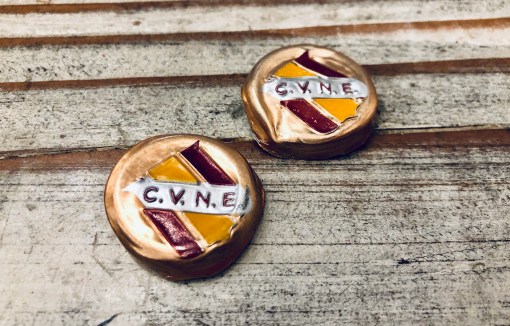
Nearly a year on from the start of this review set, through three different seasons of write-ups, I am closing in on the full story of the Cune wine lineup.  We started with the mothership itself, the Compania Vinicola del Norte de Espana (C.V.N.E.), the Riojan stalwart whose expressions cross four separate brands.  We then ascended to Imperial, the Cune adjunct focused on Reserva- and Gran Reserva-level wines from the top vineyards of Rioja Alta, the core of what most people know of Rioja as a wine region.  Tonight we move from the centre of the heartlands to Rioja’s outskirts, and from the centre of attention to a group of producers tired of being overlooked.  Cune’s Vina Real label is rooted in grapes sourced from the ever-ignored yet consistently impressive Rioja Alavesa.

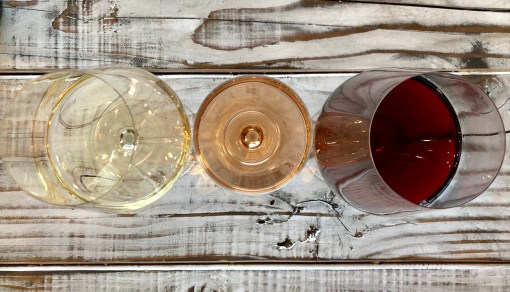
IMG_0728

This least-known Riojan subregion lies in the north-central portion of Rioja, bordered by the Ebro River to the south and the Sierra de Cantabria mountain range to the north, which protects the vineyards from the cool coastal winds above.  It is both the smallest and the most elevated of Rioja’s three sub-zones, its hilly and terraced vineyards influenced by the nearby mountains, its 40 x 8 km surface area a relative pittance compared to its much more expansive siblings Rioja Alta and Rioja Baja.  Being the smallest and most neglected in the family also tends to make you the scrappiest:  Rioja Alavesa has recently, and ever more vocally, been seeking to carve out its own identity within Spain’s most prominent wine appellation.  There has been some talk of leaving Rioja altogether, which has not been all that well-received by the region’s governing body.  Rioja Alavesa is craving respect and recognition, and that is part of what Vina Real seeks to deliver.
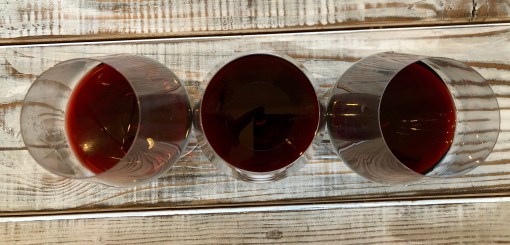
IMG_0730

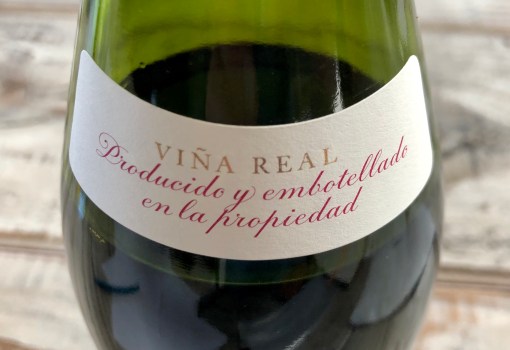
The winery is named for its vineyards’ proximity to the Camino Real, the “Royal Road”, a renowned traditional highway; its relation to the Camino de Santiago walking trail which crosses all of northern Spain is not immediately clear to me, though that pilgrimage road goes right through Logrono, the closest city to the winery.  Much of my discussion of the Cune-brand wines has alighted on that intersection between traditional and modern approaches that they seem to exemplify, but in none of Cune’s labels is this more clear than Vina Real.  The winery is part of Rioja Alavesa’s historical fabric, being among the first in the area to employ barrel aging for wines (which is now a hallmark of the whole Rioja region) and to make Crianza wines for earlier release.  But its present incarnation is unabashedly modern:  the magnificent new puck-shaped winery building, constructed out of cedar and inaugurated by the king of Spain himself in 2004, was designed as one of the first gravity-flow operations in the country and has bored out the surrounding hilltop to create state-of-the-art underground cellars.  Even this cutting-edge operation does not lose sight of its past, however:  the winery’s circular shape (as seen on Vina Real’s labels) is an homage to a traditional large Riojan fermenting vat, a physical representation of the old-meets-new dichotomy that defines this set of producers.  Do the wines follow suit? Read the rest of this entry »


Wine Review: Road 13’s Rhone-ish Reds

29 08 2019

By Raymond Lamontagne

[These bottles were provided as samples for review purposes.]

Welcome back to Road 13, with my red follow-up of Peter’s prior glowing praise for the white offerings from this Okanagan stalwart. I admit that some inevitable pangs of envy rose up when I heard about just how delicious Rousanne can be in the hands of this  particular producer. Nevertheless, I was pleased to have my opportunity with the reds, one another classic Rhone riff in the form of a GSM blend, the other a more unique joining of a classic stalwart from the same region (the “S” in the “GSM”) with Malbec, a Bordeaux grape that unexpectedly found its fortunes in the New World.

IMG_E0904

Road 13’s labels, and indeed its very name, conjure up some pleasant associations for this country boy who has for some time now been irrevocably relocated to the big city. The name came about when the operation then known as Golden Mile Cellars was sold to Pam and Mick Luckhurst in 2003, with the new proprietors wishing to emphasize the more specific location of their winery and the three vineyard sites providing them fruit. A shift to terroir-driven wines occurred, buoyed by an earnest desire to celebrate the region’s rich agricultural history. A natural born gardener, Mick hated just sitting around and loves collecting farm equipment. Pam brought bookkeeping expertise and a natural aptitude as a wine taster. Both sought to learn viticulture, a process they readily admit continued throughout their stewardship of the winery, yet the result of this humbling journey has still been numerous winemaking awards. The last Road 13 red I had, a 2011 Syrah-Mourvedre opened in 2018,  positively dazzled. Hopefully these provide more of the same. Read the rest of this entry »


By The Glass: Domaine de Pellehaut’s Harmonie de Gascogne

18 08 2019

By Peter Vetsch

[These wines were provided as samples for review purposes.]

Back!!  I have returned from overseas, feeling as refreshed as one can after multiple weeks of intercontinental travel with two kids under 9, and ready once more to dive into the glass and find words to go with it.  This return post takes me somewhere I have not often gone in the world of wine, somewhere that does not usually immediately cross my mind as a source of bottle options:  that broader informal wine zone in southwest France aptly yet uninspiringly called “Southwest France”.  (Admittedly, if all regions were so named, learning about wine would be SO much easier.)  Within the Southwest, an area nestled roughly in between Bordeaux and Languedoc-Roussillon, lies IGP Cotes de Gascogne, a quality wine area best known by a wide margin for a spirit.  As it turns out, the borders of the region precisely mirror those of Armagnac, although its production rules are far more open-ended on the non-distilled side of the spectrum.

IMG_0639

If you don’t recognize the term “IGP”, you’re not alone:  it didn’t exist when I first started studying wine with any seriousness back in 2011.  Previously wines within this classification were known as “Vin de Pays”, or “country wine”, a step up from the lowly standards-free French table wine called “Vin de France”, displaying some regional quality and character but without quite the level of history or distinction befitting a full AOC (now AOP) classification.  “IGP” stands for “Indication Géographique Protégée” (Protected Geographical Indication), which, while much harder to remember than “Vin de Pays”, probably communicates its purpose a little bit better.  The AOP-lite rules surrounding the IGP designation allow for a little more freedom when it comes to grape selection and production methods, freedom that tonight’s producer uses to its full advantage, although the Rolodex of permitted IGP grapes for the Cotes de Gascogne (19 in all, 11 red and 8 white) already seems broad enough to permit significant latitude in what comes out of this area.  It is mostly a white hotbed, with well over 80% of vineyard area planted to white grapes, which is no surprise given that these are the focus of Armagnac as well.  Two of Armagnac’s four prominent standard-bearers, Ugni Blanc (aka Trebbiano) and Colombard, are protagonists below.

IMG_0646

Domaine de Pellehaut is one of those remarkable under-the-radar family-run European estates that has been passed down from generation to generation since the 1700s, is firmly rooted in carefully tended old-vine sites, produces remarkably honest and vivid wines, yet would have remained in complete obscurity from international audiences without amplification from a more recognized voice.  That voice in this case is Maison Sichel, owners of Bordeaux’s Chateau d’Angludet and part owners of Chateau Palmer, which in addition to its own wares markets the wines of other worthy partner estates, including this one, without ripping their owners’ names from the front label.  Brothers Mathieu and Martin Béraut tend the 300+ year-old Pellehaut sites and make the wine, which has gained critical attention yet suffers primarily from the fact that it doesn’t hail from one of the dozen or so major European wine regions that casual drinkers recognize.  These kinds of outsiders, it turns out, are where the bulk of the bargains can be found.  Domaine de Pellehaut’s “Harmonie de Gascogne” collection is a prime example. Read the rest of this entry »


Wine Review: The Reds of Castoro de Oro

14 08 2019

By Raymond Lamontagne

[These wines were provided as samples for review purposes.]

Welcome back for part 2 of my coverage of a cross-section of the current lineup of the Golden Mile’s Castoro de Oro, following on the heels of last week’s assessment of a trio of their whites. Those wines were fun, clean examples of how a savvy winemaker can produce something that is capable of appealing to a rather broad swath of the wine-drinking public. One can simply enjoy such wines in a purely casual fashion, equal parts pleasant taste and social lubricant, or one can, likely on a different occasion, plumb and probe for something deeper. Will the reds (and a rosé) paint a similar picture?

IMG_E0896

Before I attempt to answer that question, a few words about the winery name (see my last post for more about the vineyard conditions). The name “Castoro de Oro” is a tribute to how Canada was founded and gives a nod to our majestic country’s national animal. Yes, the pictures on the label and your phrasebook Spanish do not deceive you: “Castoro de Oro” really does mean “golden beaver”, with a nod towards Canada’s roots in the fur trade.  Back in our colonial days, beaver pelts were deemed “soft gold” because they were in tremendous demand on the market. Additionally, it was none other than beavers who created the small lake that helps provide a key moderating influence on the climate at Castoro de Oro’s vineyards. The top hat seen on the winery mascot above embodies the fashion that was vaunted at the time of the soft gold rush. Truly, what fantastic branding. Ultimately, though, what matters to me is in the bottle. Read the rest of this entry »


Wine Review: Road 13’s Rare Whites

12 07 2019

By Peter Vetsch

[These bottles were provided as samples for review purposes.]

This may be the last post from me for a while, as I imminently prepare to head off of the continent for a little bit on a proper Viking vacation.  (If anybody knows a great wine shop in Copenhagen or Billund, let me know immediately.)  But fear not, Ray will still be here to keep the blog alive for the rest of July, and I have one last gasp of Canadiana in me before I bolt the country.  Tonight’s trio of whites from the Golden Mile Bench’s Road 13 Vineyards makes me realize that I should have been following this winery more closely before now, but I will try to make up for lost time.

IMG_0344

Clean and classic labels, eye-opening wines – but not sure about 2018’s italics.

Road 13 has had an interesting last 12 months, as it was named the Winery of the Year at Wine Align’s National Wine Awards of Canada in 2018 and was then promptly sold before the year was out.  Long-time proprietors Pam and Mick Luckhurst, who acquired the winery (then-called Golden Mile Cellars) and were responsible for first renaming it and then building it into a well-respected national brand, decided to move into retirement (the winery itself having been their first, not-that-relaxing-as-it-turns-out attempt to retire) and accepted an offer from Mission Hill’s / Mark Anthony Brands’ Anthony von Mandl to purchase the company.  The winemaking team remains intact, however, as does the winery’s vision and present focus on the potential of Rhone varieties in British Columbia, an endeavour that I back fully, having had enough marvellous Okanagan Syrah recently to make me wonder what else from the south of France would flourish here.  As it turns out, the white Rhone side of the equation is just as compelling as the red.  But we start with a scion of a Road 13 classic. Read the rest of this entry »


Wine Review: Moraine Winery Spring/Summer Set

28 06 2019

[These wines were provided as samples for review purposes.]

Wine is indelible.  It can leave impressions and fasten itself onto moments or events with surprising, graceful ease.  Show me a bottle or producer that I’ve had before and I will often be immediately taken to the scene where I had it last, even if it was otherwise unmemorable.  In the case of Naramata’s Moraine Winery, the scene already had memories to spare, and every bottle since has carried them back to me.

IMG_0254

My first encounter with the wines of then-up-and-coming Moraine was almost exactly six years ago today.  I remember because Calgary was underwater, as the great flood of 2013 wreaked havoc on the heart of my hometown.  I also remember because I had become a dad for the second time ten days prior, on Father’s Day; the power and energy of the tempests that made the waters rise seem to have imbued themselves in my son Max ever since.  The white, black and red labels of Moraine marked my first return to the blog after Max’s birth.  He just finished kindergarten two days ago.  The wheels of time continue to spin, but our wines mark our occasions.

IMG_0260

Moraine was founded by current owners Oleg and Svetlana Aristarkhov, ex-Albertans who headed west to follow their passion into the world of wine.  Their two estate vineyards, the older and larger Anastasia and the younger Pinot Noir-devoted Sophia, are named after their two daughters; the winery name reflects the glacially deposited rocks that form a key part of the terroir at their Naramata site.  When I first came across Moraine it was in its early stages of life, just finding its way as a new winery.  In this current encounter it is in a different phase of life, and in the midst of a significant transformation:  a new winemaking facility and cellar is being built, a new larger tasting room and hospitality centre has just opened, and as of last year the wines are being crafted by a new winemaker, albeit one who is a familiar face on the BC wine scene.  Dwight Sick, who spent the last decade as the winemaker at Stag’s Hollow, came to Moraine just before the 2018 harvest, the final critical piece to this next stage of the winery’s growth and development.  Yet Moraine’s focus still remains anchored in Anastasia and Sophia, and the ever-maturing vines they hold.  I got the opportunity to taste some of Sick’s first Moraine releases, as well as an early single-vineyard Pinot Noir from Sophia, to get a sense of how far Moraine Winery has come. Read the rest of this entry »


PnP Panel Tasting: Midnight’s Children – The Many Syrahs of The Hatch

14 06 2019

By Raymond Lamontagne

[These bottles were provided as samples for review purposes.]

It has been a prolific week for PnP Panel Tastings! This one was a doozy. Peter, myself, and PnP spirits guru Tyler convened to open some Okanagan wines; we also ended up taking a massively (possibly Okanagan-wine-induced) deep dive into ’90s alternative rock, which was good for a monumental spike of nostalgia and a slew of earworms for the rest of the weekend. Sometimes hangovers sound like Wide Mouth Mason. The company was of course excellent, tolerant of my occasional requests for overly long Rush tunes (OK, it wasn’t all ’90s). That aside, this was the sort of night from which memories are made, frivolously pleasant and soul-searching alike, and what better vinous companion for me than The Hatch?

The-Hatch-Wines-West-KelownaYou see, four of the suspects hailed from the cellars of the Hatch, subject of a previous PnP Panel Tasting and still my favourite BC winery. I defy you to find a similar blend of idiosyncrasy, creativity, whimsy, and sheer stubborn courage in our westernmost province. There is a true artist’s aesthetic behind the wines. These guys do what moves them, unabashedly and without any discernable pretense. That kind of genuine interface with the world at large is becoming an endangered species other than in the world of wine, where uniqueness has long been a virtue, one that has likely only gathered steam in recent years. I think The Hatch has grown by leaps and bounds since its inception, pushing well beyond some initial growing pains into the world of truly fine wine, even as they never truly forsake the uncanny, the weird. After all, “a poet’s work is to name the unnameable, to point at frauds, to take sides, start arguments, shape the world, and stop it going to sleep”. The Hatch shall continue to keep us awake (except perhaps if you kill all four of these on the same night. Not recommended.) Read the rest of this entry »


PnP Panel Tasting: Culmina Spring Releases, Part 2 – Funky Whites Edition

12 06 2019

By Peter Vetsch

[These bottles were provided as samples for review purposes.]

The last set of Culmina releases featured on PnP was so fun to taste that I felt compelled to bring in the band to share the joy of this next group, a trio of weird, wild, semi-experimental whites that are seeking to test boundaries both within and outside of the winery.  Fellow PnPers Ray Lamontagne and Tyler Derksen gathered with me to taste through a lineup that included my own personal Culmina obsession, the incredible Unicus Gruner Veltliner, as well as two even more envelope-pushing whites from Culmina’s recently unveiled small-production Number Series.  Things got fun fast.

IMG_0183

The Number Series was introduced in late 2016 as a way for Culmina’s talented winemaking team to spread its wings a bit.  Part Reserve-level offering and part experimental test drive, each Number Series wine is a limited-production rarity that may only see a single run, never to be repeated again in subsequent vintages.  It represents the best of Culmina’s developmental efforts from that year, either showcasing a standard-rotation Culmina grape in a whole new way (like the inaugural Number Series Wine No. 001, a rich, ripe Riesling styled like an Alsatian Grand Cru) or braving the unknown with a varietal that isn’t part of Culmina’s normal lineup.  The two most recent Number Series bottles below both fall into the latter camp, and show off some intriguing winemaking approaches to boot.

As with all our Panel Tastings, while we discussed the wines as we were tasting them, we came up with our own impressions and our own scores for each bottle and did not share them until everyone’s assessment was complete.  We started, as every meal and tasting and day on this Earth should, with Unicus. Read the rest of this entry »


Wine Review: Culmina Spring Releases, Part 1

30 05 2019

[These wines were provided as samples for review purposes.]

IMG_0135You have to admire a guy like Don Triggs.  After co-founding the eponymous Jackson-Triggs, taking the brand to meteoric heights and carrying the cause of Canadian wine along with it, Don parted from the brand in 2006 when it was subsumed into the massive Constellation empire, his finances and legacy secure, a career in wine that started shortly after his graduation in the late 1960s drawing to a close, retirement beckoning.  But instead of choosing that comfortable path, he threw himself back into the breach once more, this time thinking smaller in scale and fixated on quality.  This next quest started, literally, from the ground up.  With the aid of legendary vineyard consultant Alain Sutre, Triggs spent a year scouring the Okanagan Valley for just the right site, one that could reliably and properly ripen red Bordeaux varietals, including Canada’s white whale, Cabernet Sauvignon.  Finding a promising spot with southeast-facing exposure on what is now the Golden Mile Bench, the Okanagan’s first legally recognized sub-Geographical Indication (GI), they carried out a slew of temperature and soils tests and discovered that the microclimate of the site (at least in terms of degree-days, a measurement that tracks relative aggregate temperature over the course of a growing season) was very similar to that of Bordeaux.  Arise Bench, the inaugural estate vineyard of Culmina Family Estate Winery, was acquired, and Don Triggs’ newest project came to life.

Having located a potentially ideal site for big, chewy reds, Triggs and Sutre only had to look up to find complementary cooler spots for elegant whites.  Two separate and increasingly higher-altitude benches a short hike up the adjacent hillside completed the Culmina vineyard collection:  Margaret’s Bench, at almost 600 metres of elevation a truly unique Okanagan location, welcomes Riesling, Chardonnay and Canada’s top plantings of Gruner Veltliner, while mid-level Stan’s Bench splits time between these whites and Malbec and Petit Verdot to round out Culmina’s Bordeaux blends.  This three-tiered vineyard elevation stairway is the foundation of everything Culmina does, every square inch mapped and studied to maximize the location of each vine planted.

IMG_0144
As Culmina established its identity in the Okanagan, its lineup of releases began expanding: its base Winery Series line, culminating (no pun intended) with Hypothesis, the Bordeaux blend that was the mission statement for the venture, has now been joined by two other sets of releases.  The light-hearted R&D line (which stands for either “research and development” or Don and his twin brother Ron, who are featured in childhood form on the labels) allows Culmina to let its hair down a bit and focus on budget-friendlier wines that are a joy to drink; the limited-release Number Series is a set of small-lot one-offs that push the boundaries of possibility on Culmina’s trio of sites.  I had the opportunity to taste some of the winery’s latest releases, which have just started to hit shelves now, and track the continued upward trajectory of one of Canada’s most exciting wine projects. Read the rest of this entry »


Calgary Wine Life: Technical Tasting with Barolo’s Claudio Viberti

26 05 2019

By Raymond Lamontagne

It all began when Cavalier Antonio Viberti purchased a restaurant, the Locanda del Buon Padre. In 1923, Antonio decided to start making wine in the basement, as many do in this region. The original intent was to keep things simple and just sell the wine to patrons in the restaurant. Well, Antonio’s son Giovanni had other ideas. Things began to expand. Eventually cement tanks for fermentation were installed, and in 1955 wines were sold in nearby markets for the first time. By the 1970s the operation had become a full scale winery, even if the family never forgot their roots as restauranteurs. Giovanni’s son Claudio Viberti, who was our host at this past week’s tasting event at Willow Park Wines & Spirits, took over management of winery and restaurant operations in 2008. He hasn’t looked back since. The man is a dynamo.

IMG_0684

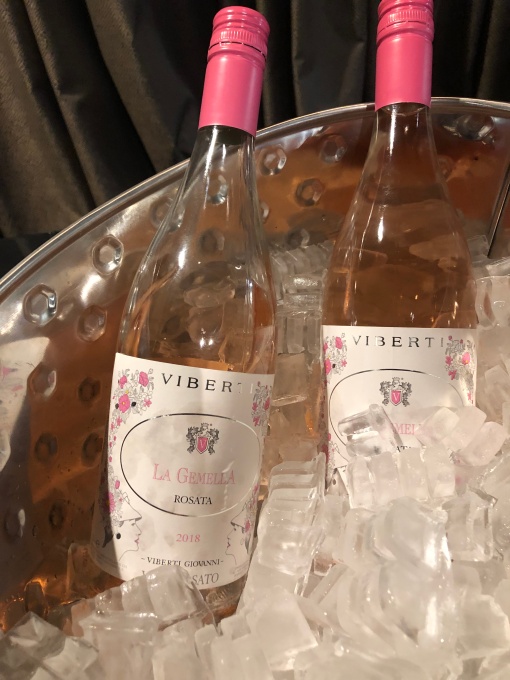
Claudio tells a few of us early birds the story behind the rosé served before the beginning of the formal proceedings. First off, and much to our surprise, this rosé is 100% Nebbiolo. Secondly, the wine is made first as a white wine from Nebbiolo juice obtained via an extremely gentle press. Claudio also makes a small amount of red wine from the same batch, using this to fix the colour of the end product. No combined maceration on the skins was involved, à la pink Champagne. I start scribbling notes. This is dry as a bone but does yield a subtle candied character, with the robust illusion of a sweet finish after a rather dense midpalate. Fairy-like whispers of strawberry, raspberry leaf, and nectarine flit about a more solid core of Parmesan cheese and those pink wintergreen mints, a rather burly rosé with a shimmering coppery finish. This is a rare wine but seems unlikely to remain so. Read the rest of this entry »


The Patient Vintner: Bodega y Cavas de Weinert

24 05 2019

By Peter Vetsch

[These bottles were provided as samples for review purposes.]

If I was to tell you that I was drinking the current release of a mid-tier offering from a well-regarded producer and from a name region, made from 70-110 year-old vines, and that the vintage date on the bottle was 2006, what would you guess the region was?  Rioja – maybe a Reserva offering from a traditional-minded producer?  Champagne, if you are extremely liberal with your definition of “mid-tier”?  Somewhere in Italy?  Portugal?  You would probably be most of the way through the global wine region Rolodex before you landed on Mendoza, Argentina, and once you did, you would probably immediately discard the possibility, knowing this to be the heart of bold, fruity, approachable Malbecs that are released and enjoyed in their youth.  Bodega y Cavas de Weinert, and its current-inventory $25 old-vine 2006 Malbec, will cause you to re-evaluate all of your presumptions; they are an anachronism in all the best ways.

IMG_0079

This classical estate actually has a rather recent history:  the winery dates back to 1890, but its current identity was tied to its acquisition by Brazilian Bernardo Weinert in 1975. Swiss winemaker Hubert Webber has been at the helm since 1996, when he was ensconced at the ripe old age of 27; his mission has been to craft wines from Malbec, Cabernet Sauvignon and Merlot wines that avoid early showmanship and start to reveal themselves after a decade or more, as it is only then that the Bodega will release them to market.  Lengthy barrel aging (up to 5-6 years in large oak foudres in Weinert’s cool granite cellars), then further time in bottle pre-release, is the estate’s hallmark — Weinert follows the old-school Spanish model of only allowing his wines into the public sphere when they are deemed ready to drink, whether or not this follows the standard chronological vintage release playbook.  In other words, don’t necessarily assume that the 2007 will follow the 2006 as the next wine on the shelf.

IMG_0085

The relatively modest prices of the finished wines might be reflective of advantageous land and labour costs in Argentina, but they are not the result of any lack of care in the vineyard:  Weinert’s vineyards, located in Mendoza’s top subregion of Lujan de Cuyo, feature largely ungrafted own-rooted vines that are a minimum of 25 years old and are exclusively hand-harvested.  Fermentation takes place in cement tanks, and Weinert’s cellar boasts both the largest barrel in Argentina (44,000 L) and the oldest barrel in the world, each of which are a reminder that the goal of the Weinert wines’ extended time in barrel is not wood flavour transference (which increases the newer and smaller the barrel is), but gentle, lightly oxidative maturation.  I had the opportunity to taste a trio of Weinert offerings, all 12-13 years old (as is par for the course in this particular corner of Mendoza), to explore this wholly unique take on Argentinian viniculture.  Malbec first, as always. Read the rest of this entry »


Pop & Repour: Preservation Experimentation – The Results

14 05 2019

By Peter Vetsch

I feel like I’m in a time warp.  In this optimistic post from early February, I advised that the blog had been silent for a while due to sickness, but that we were back up and running and that I was testing out a brand new wine preservation gadget, with results to follow shortly.  Well, after that post, about the excitingly simple Repour Wine Saver, the blog fell silent for a while due to sickness (an ear infection and then sinusitis this time, mixing it up from the bronchitis I had before), but I can now advise that we’re back up and running and that I can now report the results of said wine preservation test.  If this cycle repeats one more time, I’m quitting the wine-writing hobbyist biz, but if I can avoid antibiotics for the next hour or two, I will pass along this tale of experimental trials, inadvertent failures of the scientific method and the (largely) successful demonstration of Repour’s mettle, complete with an unexpected twist at the end.

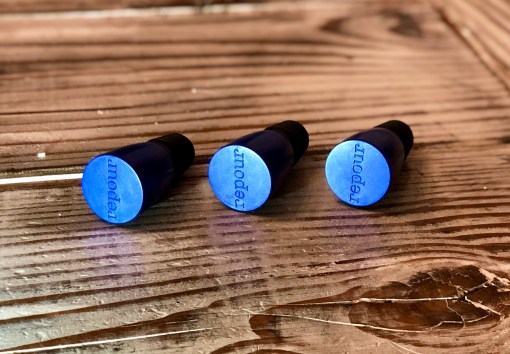
IMG_9674

For those who don’t feel like clicking on this link to catch up on my prior introduction to this ingenious device, the Repour is a single-use one-stop-shop for wine preservation, a plastic bottle stopper stuffed with oxygen-absorbing material that actively removes any oxygen remaining in the bottle after each glass pour, leaving the wine inside pristine and untouched by decay-inducing air for (they say) “days, weeks or even months”.  It costs $3-4 CAD and lasts for the entire duration of one bottle of wine, regardless of how many times you go back to the well with that bottle.  I decided to test that marketing promise rather emphatically.  I opened three bottles of 2015 Alfred Merkelbach Urziger Wurzgarten Riesling Kabinett from Germany’s Mosel Valley, drank a healthy dose out of each, then left one as a poor unguarded control bottle without any form of preservation beyond my refrigerator, dosed the second with argon gas (my personal pre-Repour preferred method of preservation) and test-drove the Repour with the third, revisiting them multiple times over the next month and tracking how well each bottle stood up.  My running preservation diary is below.  To refresh your memory, here was my initial tasting note on the Merkelbach Kabinett:

“The wine is a complete throwback to a bygone era, understated and filigreed in style, with canned golden apple, sea spray, petrichor and orange zest aromas giving way to a fragile yet enduring, heavily mineral palate, all quartz dust and steel.  The restrained residual sugar offers relief and key lime accents without weight, the acid is omnipresent but not cutting, and the finish is taut and straight-laced, perfectly formal and polite and German.” Read the rest of this entry »


Calgary Wine Life: Blaufrankisch Masterclass with Georg Prieler of Weingut Prieler

1 05 2019

By Raymond Lamontagne and Peter Vetsch

Austria is renowned for the fruit purity and fine minerality of its wines, and Blaufrankisch is the premier black grape of the region. Grown across Central Europe and going by various monikers (the wonderful “Kekfrankos” in Hungary, and the more prosaic “Lemberger” in Germany), Blaufrankisch is an early-budding, late-ripening variety sometimes dubbed the “Pinot Noir of the East”; its elegance and dexterity earns it that nickname, but its hallmark savoury mineral wildness forges an identity all its own.  Some grapes such as Cabernet Sauvignon or Campania’s Aglianico are said to swamp or overshadow terroir with their sheer varietal character, while others are more protean and can serve as a lens through which the story of their soils and site and climate are reflected.  Blaufrankisch falls firmly into the latter camp, although through its various land-driven expressions one can commonly find dark berry aromas and flavours, vibrant acidity, a pronounced spiciness and that “other” wild rocky character that can set this grape apart.  We were extremely excited to do a specialized tasting of this varietal with Georg Prieler, owner and winemaker of Burgenland’s Weingut Prieler, a dynamic, charismatic, insightful winemaker who carries his family’s history with aplomb…and who might just make the best Pinot Blanc in the world.

IMG_9979

Georg Prieler, Weingut Prieler

Yes, Pinot Blanc. We both first came to know this producer by being absolutely floored by how stunning and utterly fascinating Weingut Prieler’s Pinot Blancs can be.  This particular grape rarely wins this sort of accolade and is often considered a paler, strait-laced shadow of Chardonnay, never fully given the opportunity to take a star turn in any region…except, as it turns out, in Burgenland, where Prieler exalts it among whites and where Georg calls it “the Riesling of the Burgundy varieties”.  That got our Riesling-loving attention, and Prieler’s single-vineyard Pinot Blanc which capped off our tasting held it,  transfixed.

IMG_0576

All that said, Pinot Blanc remains both the winery’s and the region’s “second most important” variety, according to Georg, as nothing in Burgenland knocks Blaufrankisch off its throne. Georg himself hails from (and still lives in) the village of Schützen am Gebirge, population ~1500, known for steely Pinot Blanc but also the sublime Goldberg vineyard, where Blaufrankisch might reach its pinnacle.  He closely oversees operations in both vineyard and winery, inheritor of a legacy that runs from his grandfather to father to sister and now, as of 2011, to Georg himself.  The family’s time in the vineyards predates their work in the cellar — the Prielers have been planting and tending grapes in Burgenland for 150 years, which perhaps is what leads Georg to immediately describe himself as “just a farmer who takes planes and drinks wine”.  After his inaugural visit to Calgary, and with the voice of his wines preceding him, it’s clear that this particular travelling farmer has a global reach. Read the rest of this entry »


Yalumba: Coonawarra Cabernet Classes

28 02 2019

[These wines were provided as samples for review purposes.]

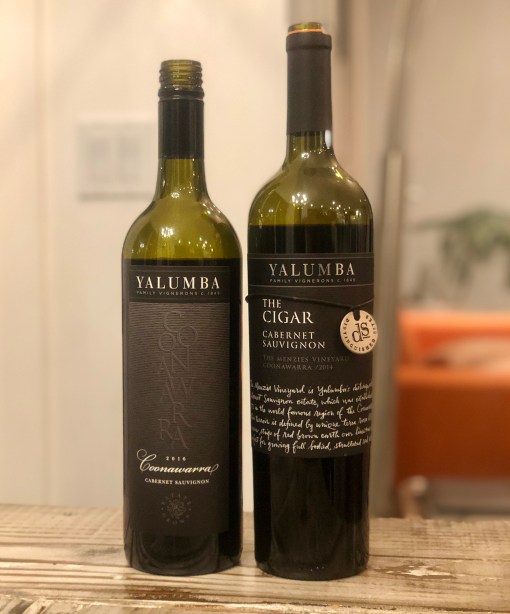
Tonight’s bottle duet replicates one of the most common questions that plagues burgeoning wine consumers:  when it is worth it to jump a tier?  If you’ve tasted and enjoyed the entry-level offering from a given producer, should you invest the extra few bucks to try their next level up?  Will you get more in return, enough more to justify the additional expense?  Value judgments and personal preference are always at least somewhat subjective, but objectively, when you move from a winery’s starter bottle to the next level up, and when you pay more for that privilege, it’s often because you’re getting one or more of:  (1) better, more consistent, more carefully sorted grapes, (2) better vineyard sources, or older vines from within the same vineyard, (3) more estate fruit grown by the producer itself, (4) better (or at least more expensive) winemaking and maturation practices, including more time aging in oak barrels (my legal career confirms that, in some ways at least, time is in fact money), and/or (5) better lots, blends or barrels from the results of the winemaking process.  You can see the similarities in style, region and approach common to the producer between the entry-level or next-level bottles, but in theory at least, due in part to the factors above, you should see some elevation in quality and product as you climb the hierarchy.

IMG_9778

That isn’t to say that pricier is always better; diminishing returns are real in the world of wine, particularly when you enter the realm of luxury wines that cannot hope to deliver the value per dollar of their earthbound affiliates.  But in my experience, the price jump from the cheapest offering of a given brand to its next level up almost always pays off in quality; the patience and precision and commitment required to make truly good wine can be strained when you’re also trying to keep below a $20 price tag, and even the slightest bit of economic leeway can make a massive difference.  Neither of tonight’s offerings fall fully into the entry-level category, but they represent the first and second rungs of Yalumba’s Coonawarra Cab quality tiers, so they will serve nicely to illustrate the considerations that go into whether to make the jump. Read the rest of this entry »


Spain, Old and New, Part II: The Wines of Imperial

14 02 2019

By Peter Vetsch

[These bottles were provided as samples for review purposes.]

This is a belated sequel to my introductory post from last November about the marvellous wines and history of Cune, the Riojan benchmark producer melding the traditional and the modern into perfect balance.  Since that post predated Wine Advent and then Vinebox, it’s about 40 posts back on the PnP timeline, and even though it’s only 3 months old it feels like 30.  Perhaps it has aged enough then to allow to slip in a slight correction.  I mentioned way back in 2018 that the Cune brand was made up of 3 different physical wineries and brands, each with their own winemaker:  Cune itself, Vina Real and Contino.  I also mentioned that the Cune brand “also encompasses the higher-level Imperial bottlings, made only in very good years”.  This is ALMOST entirely true:  the wines of Imperial have been made since 1920, only in great vintages, using Cune’s oldest vineyards in Rioja Alta and selected nearby old-vine sites.  Imperial is also still made by Cune’s winemaker, although the label only releases a Reserva and a Gran Reserva red wine, leaving the Crianzas and the whites to the others.  However, further research reveals that, as of 2005, Imperial has its own separate winemaking premises on the Cune property, as outlined in this highly confusing official graphic; it is now a winery-within-a-winery, its own bricks-and-mortar space.  The 3 Cune wineries are actually 4.

IMG_9719

Imperial is a focused and quality-driven enterprise, producing around 200,000 bottles in the vintages good enough to merit its creation, in contrast to Cune’s 5 million.  As of 2004, all fermentations now take place in new oak barrels, as a back-to-the-future nod to history — the Imperials of the pre-1940s were all produced in this fashion, and after decades of dalliances with first concrete, then steel, Cune made the very Riojan determination that sometimes the old ways really are best and went back to its roots.  The winery name comes from a unique historical bottling release for the UK market, the “Imperial pint” size (which is roughly 500mL, a highly underrated and remarkably useful size for a bottle of wine that we should see more of nowadays).  The Imperial brand made more recent history when its 2004 Gran Reserva, an utterly spectacular wine that it pains me to say I have no more of, was named the Wine Spectator Wine Of The Year in 2013, the first such global pinnacle designation for a Spanish wine.  If you ever have the chance to acquaint yourself with the Imperial lineup, do not hesitate.  The current releases continue to showcase the magnificent pedigree of the estate. Read the rest of this entry »