Co-op Wines: The Social Collection, Bin 107

14 02 2018

By Dan Steeves

[This bottle was provided as a sample for review purposes.]

img_5495
As a follow up to Peter’s review of the first Co-op Social Collection bottle, the Bin 101 Cabernet Sauvignon, we now move onto the second bottle of our trio, Bin 107 Pinot Blanc, which hits a little closer to home.  This bottle’s front label clearly shows it is a product of Canada, and upon examining the back label, you notice further clues as to the wine’s origin. Underneath the grape variety is written “Golden Mile – Oliver, BC Canada”, and further down it shows that the wine was exclusively produced and bottled by Castoro de Oro Estate Winery in Oliver BC.

The region south of the town of Oliver and north of the town of Osoyoos is commonly referred to as the Golden Mile due to the amount of wineries off the highway between the two towns. However, stating “Golden Mile” on a label does not have an official meaning — this term shouldn’t be confused with the very-similar label designation “Golden Mile Bench”, which an area up off the valley floor that shows unique climate and soil types and which is now recognized as an official sub-Geographical Indication within the Okanagan Valley GI. That said, all wines made in this part of the Okanagan are well known for their high quality due to the ideal climate:  hot daytime temperatures, cool nights, and limited rainfall (it is for all intents and purposes a desert).

Read the rest of this entry »


Co-op Wines: The Social Collection, Bin 101

12 02 2018

By Peter Vetsch

[This bottle was provided as a sample for review purposes.]

IMG_7510

Get Social.

Negociant-style wines have long been a staple of the Old World wine economy:  instead of a winery planting, tending and harvesting a vineyard then using those estate-grown grapes to make wine, an enterprising producer or brand instead either buys grapes from a grower for use in their own winemaking or, more simply, buys already-made wine from a winery that is maturing in barrel or bottle and then sticks their own label on it. This may not accord with the most romantic notions of pastoral family-farmhouse wineries that automatically spring to mind when we think about the industry in the abstract, but it has a ton of advantages as a full-estate alternative, mostly tied to the division of labour.  To create and sell your own wine, you no longer need to own any land, purchase expensive wine-making equipment (or wine-aging vessels – do you have any idea how much oak barrels cost??) or have any winemaking education or expertise; you just need to get contact with the right subject-matter experts and have a vision for how to make it all come together cohesively.  The negociant approach drastically reduces barriers to entry in the wine production industry and also provides an additional market for those who grow grapes or operate winery facilities, and while it has always been a part of the industry in the New World, it now seems to be taking on an increased presence, particularly in the realm of branded grocery store wines.

IMG_7511

Ultra-transparent for a Cab!

This is actually not a new topic to this blog — a few years ago, I had the pleasure and challenge of trying to dig behind what was behind the cover label of the PC brand of wines, which resulted in some truly entertaining (if somewhat strange) juice.  Now Co-op Wine and Spirits has released its own lineup of sommelier-curated negociant wines called The Social Collection, sourced from around the world and targeted towards “the socialite and modern wine drinker”.  Translation, I think:  these are mainstream wines intended for easy enjoyment while still striving to properly represent their varietal and region at a wallet-friendly price.  I was sent a trio of examples from this new branding effort to taste and decided to make a group event out of it.  Dan and Ray will taste and report on a couple of subsequent Co-op releases later in the week, but I’m kicking things off tonight from where it all started for The Social Collection:  Bin 101. Read the rest of this entry »


Cellar Direct: On To Italy!

24 01 2018

[These bottles were provided as samples for review purposes.]

IMG_7455

Italy is not kidding around.

Over the past couple of years, I have come to know the wares of virtual Canadian wine merchant and weekly offer club Cellar Direct pretty well.  Over the course of half a dozen reviews and nearly twice as many bottles, I’ve grown accustomed to the Old World bona fides and seemingly effortless consistency of the wines sourced by CD founder Ron Van Schilt from family estates strewn across Europe:  France all day, Germany for sure, with a bit of Spain thrown in for good measure.  But I had never yet tasted anything from the fourth pillar of Cellar Direct’s traditional sourcing ground, the most glaring omission from the vinous Euro-stars above:  Italy, the focus of multiple prior online offerings but no corks popped at my kitchen table.  That changed tonight, and my perception of what this virtual venture is bringing into the country climbed ever higher.  The focus tonight is two dynamic, bombastic Italian reds, with a wild Cellar Direct white (Arneis!!) from the same country to come a bit later.  Let’s start where my Italian heart lies. Read the rest of this entry »


Bricks Wine Advent Calendar 2017: Day 21

21 12 2017

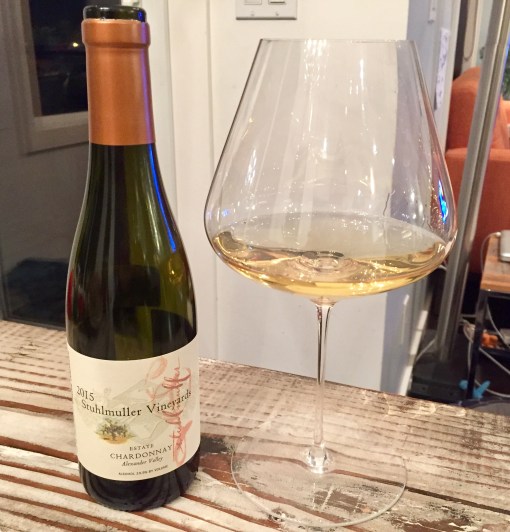
This is my second last wine post of Advent 2017:  the coming two days will see Dan and Ray post their Bricks calendar wrap-ups, and the next time you hear from me will be on Christmas Eve, for the grand half-bottle Advent finale.  It’s almost hard to believe our countdown to Christmas is almost done; it’s almost harder to believe that I actually survived it (though perhaps I shouldn’t say that yet).  And Bricks appears determined to send me off in style, because Day 21’s wrapping comes off to reveal an absolute firecracker of a Chardonnay:  the 2015 Stuhlmuller Vineyards from Sonoma’s Alexander Valley.  I think this grape is still in a down phase when it comes to much of the consumer world, but we seem to be entering a period where many of the regions previously responsible for Chard’s worst oaky boozy excesses have started to dial it in just right, at least on the quality wine side of the spectrum.  And there is no better representative of this evolution than California.

IMG_7307

Stuhlmuller Vineyards was founded by a husband and wife team who got their start in 1982 growing and supplying grapes to neighbouring wineries.  They didn’t become a full-fledged estate winery until 2000 but have already developed a reputation in the crowded California wine scene, particularly for Chardonnay, which makes up over half of its acreage.  The Alexander Valley is in the northeast corner of Sonoma, inland from the coast and due north of the better-known Russian River Ralley; its eponymous Russian River runs up and along the eastern edge of Stuhlmuller’s vineyards in Alexander’s southwest corner, where it and the Russian River Valley come together with Dry Creek Valley.  Much like Napa, the grape-growing conditions in the Alexander Valley are helped by two separate ocean-induced effects:  morning fog coursing in daily through the Chalk Hill gap, and cool nights spurred by ocean breezes, both of which provide the grapes relief from the scorching California heat, help preserve precious acidity and lead to more balanced ripening.  This bottle shows the results of all that climatic effort, clocking in at 13.9% abv.

IMG_7308

Cork Rating:  3/10 (Friendly advice – no phone numbers or websites on corks. This has both.)

This is Stuhlmuller’s “entry-level” Chardonnay, but it’s clear from the start that no shortage of care went into its creation.  It was fermented sur lie (on its spent yeast cells) over 8 months and matured in French oak, mostly small-barrel barriques but only 5% new.  It is a rich golden colour in the glass and finds that perfect harmony between Chardonnay’s careful fruit and oak’s at-times exuberant influence, mixing fresh pear, peach and Granny Smith apple pie with ginger chews, almond shortbread, oatmeal cookies and rubber boots.  Simultaneously full and cutting on the palate, the Stuhlmuller’s oak-aided roundness is run through with a table saw of slicing acidity.  It is beautifully poised on the tongue without losing the weight and body that is a defining feature of Chardonnay, a honeyed swirl of caramel apple, white flowers and a bracing quality on the finish like a cool sea breeze.  Refined and restrained but still California in essence — exactly what New World Chardonnay should be.

92 points


Bricks Wine Advent Calendar 2017: Day 15

15 12 2017

Tonight’s wine might suffer from a disconnect between actual and anticipated identity.  When the first words you note on a label are “California Viognier” and the listed alcohol clocks in above 14%, you think you’re in for a fun, flouncy, slightly provocative stone fruit and flower party.  When the label in question is from an Oakville winery, based in the heart of Napa, which is the heart of big, brash, Cali wine, you doubly brace yourself in anticipation of something raucous.  This bottle is solidly drinkable but has none of that carefree, sultry attitude.  It’s Viognier without joy.

IMG_7256

Miner Family Winery was founded by a husband and wine team in 1996, making this 2015 Miner California Viognier their 20th anniversary vintage bottling.  They make an astonishing array of wines, from Cab and the other Bordeaux varietals to Burgundy’s Pinot Noir and Chardonnay to the reds and whites of the Rhone Valley to Tempranillo and Sangiovese.  There are multiple bottlings of most of these, so their winemaker obviously stays busy.  The winery’s pride and joy is likely its 20,000 square feet of underground cellaring caves carved into a Napa rock face, which were dug at great expense shortly after Miner came to be.  Despite being Napa-based, they source from across the state of California, as evidenced by the straight “California” designation on this particular bottle.  62% of this Viognier comes from a single vineyard in Paso Robles, while the other 38% comes from the Sierra Foothills; since the wine crosses appellations, it has no choice but to revert to the broader state-wide statement of origin on the label.

IMG_7259

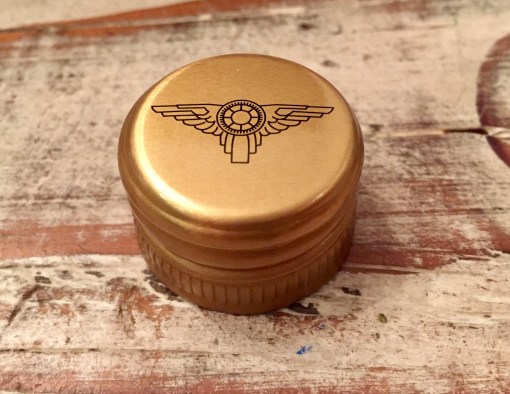
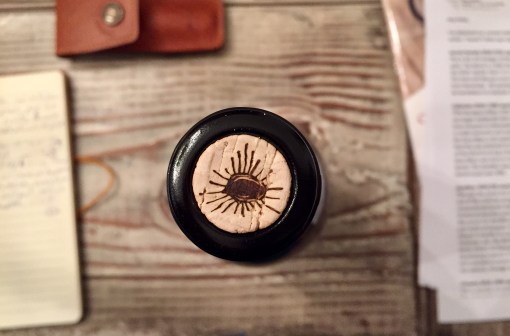
Stelvin Rating:  8/10 (Love the gold, love the sun god logo, love the interest yet simplicity.)

The 2015 Viognier is a surprisingly pale lemon colour coming out of the bottle, partly due to the lack of any oak treatment (which deepens the colour of white wines).  It is almost shockingly lean and citric for a 14+% abv California Viognier, leading with lemon zest and mountain stream aromas backed by frozen honeycomb, Tums and talcum powder.  It broadens slightly in waxy, watery ways on the tongue, adding tart pear fruit and some kind of tropical musk, but retaining an overall sense of distance and a prevailing greenness — fresh leaves and flower stems, grass and baby spinach — finishing with a touch of astringency.  Viognier’s trademark bouncy peachiness and sensual mouthfeel don’t make an appearance, almost like these grapes were picked before those elements got there (harvest dates: August 19th-27th); despite significant sugar ripeness, the phenolics and ultimate character of the wine never quite caught up.  I had no issue crushing the bottle, but this would not be the expression that Viognier sends with its cover letter to land a job interview.

87- points


Bricks Wine Advent Calendar 2017: Day 10

10 12 2017

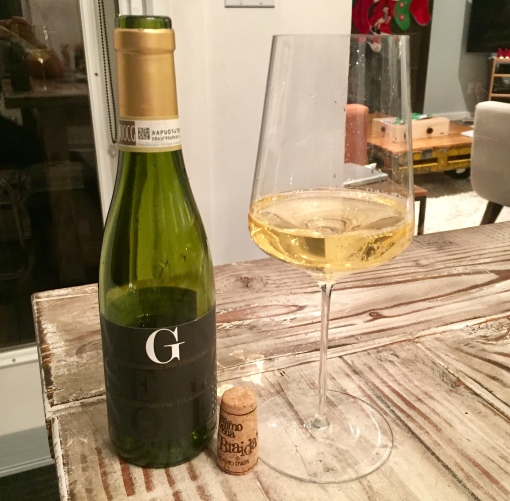
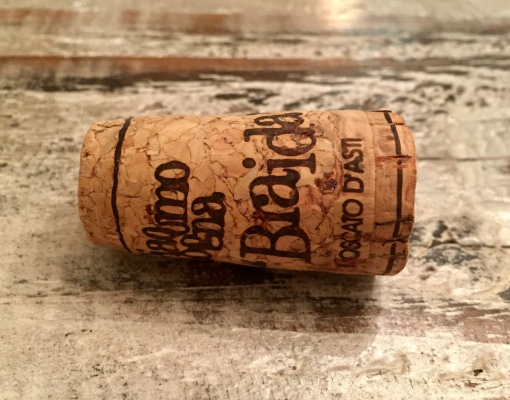
I think it is officially Sugar Coma Weekend in the Bricks Wine Advent Calendar.  When the COMBINED alcohol level of your Saturday and Sunday wines is 12%, you know you’ll be facing an armada of unfermented grape sugar in the bottle.  After last night’s 6.5% abv Auslese Riesling, I thought we had hit our December alcohol floor, but the 2015 Braida “Vigna Senza Nome” Moscato d’Asti will see that 6.5% and raise it (well, technically, lower it), clocking in at an almost juice-like 5.5%.  The wine’s name roughly translates to “Vines Without Names”; the roughly dozen online sources I consulted trying to find out why declined to say so, though most of them noted that the corresponding motto on the front label “Sator Arepo Tenet Opera Rotas” means “the farmer at the plow chooses the path”, which is reflective of this classic producer’s focus on the quality of the vineyard, even if they decline to name the vines in it.

IMG_7219

I love Moscato d’Asti.  At its best it is equally refreshing and luxuriant, searing and delectable, a frozen rope of distilled fruit essence that disappears from the glass before you even notice.  It is made from Moscato Bianco grapes grown around the famed town of Asti, in the heart of Piedmont, which are harvested then crushed and immediately refrigerated before fermentation so that the yeasts don’t immediately kick in.  The cooled must is then transferred to pressurized sealed steel tanks before fermentation is allowed to begin; as the grape sugars are converted to alcohol, carbon dioxide is released as a by-product, which can’t escape the tank and gets dissolved into the wine.  Once the alcohol content clocks above 5% (which is WAY before all of the sugars are fully converted), the whole tank is chilled down to near freezing so that fermentation stops, after which the yeasts are filtered out and the wine is bottled under pressure, leaving an intensely sweet, slightly bubbly bolt of lightning for patio enjoyment.  It is best consumed as early as possible, when acids are crisp and bubbles are buoyant, and there is little to be gained in trying to mature it.

IMG_7220

Cork Rating:  6/10 (The extra expansion and vertical writing are winning somehow, even if the cork as a whole is bland.)

This 2015 Vigna Senza Nome is a surprisingly golden colour for a Moscato and has a slightly syrupy nose of baked pear, bruised apple, honey and caramel to go with brighter tropical and Fuzzy Peach notes.  Some lift remains on the palate in the form of hedonistic melon, lychee, blood orange and bergamot, but much of the life and effervescence that normally characterizes this style and expression has been faded away, whether due to time (it’s only two years old, but Moscato’s probably best at 20 minutes old) or (more likely?) due to storage conditions between its bottling and its insertion into the calendar. I’ve had this exact bottle multiple times before, albeit never in back vintage form, and this is the first time it’s tasted heavy; the bubbles aren’t quite up to the task of scouring away the sweetness, and quiet acidity doesn’t provide enough of a helping hand.  It’s still completely delicious, but it is drained of some of its usual joy and not quite showing at its peak.

86 points


Bricks Wine Advent Calendar 2017: Day 4

4 12 2017

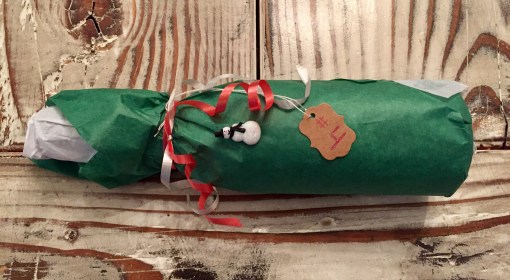
Well, after a riotously successful guest author turn yesterday, you’re stuck back with me tonight.  Thankfully, there seems to be no “stuck” and no neutral gear in the Bricks Wine Advent Calendar, which just keeps churning out half-bottles of interest on the daily like it’s no big thing.  We’re at 4 for 4 in terms of legitimately interesting, well-made, high-quality, non-seat-filler wines, and I get the feeling there’s going to be 20 more where that came from.  I should have known that tonight’s producer would end up in this calendar, as Beaujolais’ Manoir du Carra (at least in my experience with them) seems to be the king of the small-format wine.  My first interaction with the winery was in the form of a highly rare but utterly magnificent (for those solo wine-drinker households like mine) 500 mL bottling of Cru Beaujolais, a format that I would like every winery in the world to emulate, as it ends up being either a glass-and-a-bit-each weeknight dinner almost-bottle for two or a vinous feast less the hangover for one.  Turns out MdC can bring it in 375 mL format too.
IMG_7166

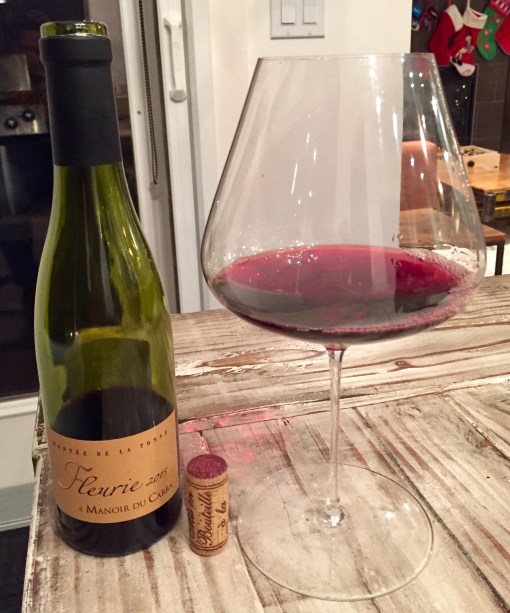
Tonight’s offering is the 2015 “Montee de la Tonne” (which roughly translates to “The Rise Of The Ton”, which I don’t understand) from Fleurie, which is one of 10 top “Cru” sub-regions of Beaujolais, known for its elegant, almost pretty, wines.  Manoir du Carra owns 50 separate vineyard plots within Beaujolais, and Montee de la Tonne is one of them, a 1.5 hectare micro-plot of 50 year-old wines just recently acquired by the producer that it holds in significant esteem.  Like all red Beaujolais, the wine is 100% Gamay, fermented partly through carbonic maceration (an intra-grape fermentation process spurred by CO2 and an absence of oxygen that enhances bubble-gummy fruit flavours) and then aged in large natural oak barrels for 3-4 months before bottling.
IMG_7168

Cork Rating:  2/10 (Can we all agree to eradicate all “Mis En Bouteille” corks from existence?)

First impressions:  this is a surprisingly deep and vivid purple colour, still mostly transparent but pretty amped up for Beaujolais.  The crisp herbal, floral nose evokes roses (complete with stalks and thorns) and potpourri, softened by felt and spiked with pepper, surrounded by a mist of strawberry and raspberry fruit and just a whiff of banana skins, the latter likely a product of the carbonic fermentation process.  Powdery yet poised on the palate, kept haughty by emery board tannin and piercing rivulets of acid, the Montee de la Tonne flashes class and subtlety with a careful flavour mix of dusty currant, sidewalk chalk, dried flowers, rocks and rain, never quite letting you in but letting you admire its sophistication from afar.  Like a black and white movie star, this is cast in hazy heroic tones, admirable but not fully reachable, a true throwback.

88 points

02155077

It’s probably not what led to the banana skin aromas in this wine, but isoamyl acetate can result in banana smells in some bottles.  The chemistry continues…


Wine Review: Black Market Wine Co. – Contraband Portfolio Tasting

15 11 2017

[These bottles were provided as samples for review purposes.]

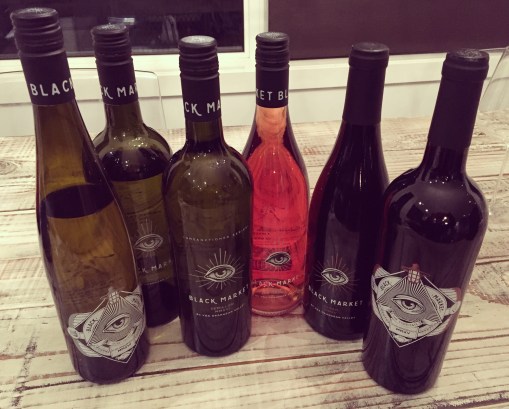
What do you do if you’re a busy Calgary-based professional with a hectic day job, multiple kids, a swath of family responsibilities, yet an ever-increasing burning passion for wine?  If you’re me, you start a small local blog and struggle to publish one post a week.  (Last post:  13 days ago.  Sorry guys.)  If you’re Rob Hammersley and Michelle Shewchuk, on the other hand, you pick up the hustle, go about 20 light-years further and start your own garagiste winery in the Okanagan on the side, while still juggling full-time careers, volunteer activities and parenthood.

IMG_7037

Branding majesty.

This cunning Calgary cabal has managed to work around their weekday gigs (Rob is in corporate finance; Michelle is a flight attendant) and their location in another province, forge relationships with local growers, learn the ropes of the winemaking business and come up with maybe the single best suite of branding for a winery anywhere in Canada, creating a bit of a cult following along the way.  Add in an early embrace of online sales and the Black Market Wine Company is quickly accelerating from illicit side dream to successful reality.

IMG_7052

I first came across Black Market a couple of years ago and was instantly drawn in by the Illuminati-meets-Ponzi-scheme labelling, looking like the back of the US dollar in some horrific alternate Dan Brown universe.  The striking images on the front labels draw people into the intentional web of secrecy and intrigue expressed in snippy verse on the back of each bottle, piquing curiosity and pulling people further into the glass for answers.  By then, you’re in the winery’s hands, waiting to be led where they want to take you.  It certainly does not hurt that the juice within does not disappoint (and that its creators are from my hometown), and I have followed their progress ever since that initial encounter.  This is the first time I have had an opportunity to taste through the entire Black Market portfolio, but not the last time I will be cracking these wines and letting the mystery wash over me. Read the rest of this entry »


Wine Review: Dirty Laundry, The Whites

2 11 2017

[These bottles were provided as samples for review purposes.]

IMG_7014

One of these things is not like the other…

Now that snow has blanketed the land and any remaining warm thoughts in Calgary’s mind have been augured away by blistering Arctic winds, I can fully admit that I tasted these Dirty Laundry wines in the wrong order.  I cracked the rosé and red portions of my sample pack back when fall was still a thing (last week) and saved the sunny patio portion of the tasting until it seemed like a cruel joke; serves me right for breaking with orthodoxy and not going lightest to heaviest like the textbooks all say.  But we persevere. I’ve always found Dirty Laundry’s white lineup to be a bit more impressive and consistent than its reds, and they have a particular affinity for Gewürztraminer, the grape that everyone seems scared to focus on too heavily but which truly rewards any such special attention.  However, tonight I got to dive into two bottles that I hadn’t tried before today, starting off with my favourite grape of them all. Read the rest of this entry »


Wine Review: Dirty Laundry, Pink & Red

26 10 2017

[These bottles were provided as samples for review purposes.]

IMG_6987

Okanagan label mastery.

Dirty Laundry is a winery best experienced in person, as it features a combination of location, history and brand awareness that is next to impossible to top.  It is perched up above the ideally named Summerland, BC, elevated over the Okanagan’s main highway, with vineyard views for miles and a patio strategically located to be drenched in scenery.  This spot was once, back in the era of the Canadian Pacific Railway’s initial construction, the home of a renowned and well-attended laundry service run by an AWOL railroad construction worker who had found a more lucrative calling; his fortune, and the popularity of his laundry business, was due in no small measure to the brothel being run discreetly on the upper floor while the clothes were cleaned below.  A couple of centuries later, the business currently occupying the land knows a good story when it sees one and has turned the tale of the dirty laundry into a branding behemoth that seeps into everything from wine names to labels to tasting room decor to the guest homes for rent on the property, the Bordello House and the Parlour House.  They commit to the identity, keep their humour on high alert and leave their prudishness at the door, and people keep coming back.

The wines themselves may be in a state of flux, caught between wanting to appeal to the widest possible audience and the crowds in for a good time and a novelty bottle-stopper and aiming for a higher level of quality, a product that captures attention in a different way.  I am rooting for them to succeed, as personality and creativity and branding effort are more than welcome in my own world of wine.  The below releases, recent rose and red offerings from Dirty Laundry and the first of a two-part review series, were an excellent chance for me to check in on the winery for the first time in a while and see where they were on their cheeky, quirky voyage. Read the rest of this entry »


Wine Review: Stag’s Hollow Fall Reds

18 10 2017

[These bottles were provided as samples for review purposes.]

IMG_6962

If this is where we are in the Okanagan, we’re in good hands.

What’s this?  Two reviews in the span of three days??  Is this inspiration or panic?  Turns out it’s a little of both.  For reasons that will shortly become clear, the next couple of months are going to be content-intense here at Pop & Pour HQ (aka my kitchen table), which has me geared up and focused on my current inventory of samples to make sure everything gets its full and proper due.  But I’ve also had a lingering eye on these particular wines ever since they landed on my doorstep, as they represent the latest missive in a wonderful conversation I’ve been having over the past months and years with one of the most intrepid, curiosity-filled, quality-focused wineries in the Okanagan Valley, Stag’s Hollow.  Over the summer I looked in on the white and pink side of their portfolio, but now that my trees no longer have leaves, the time has come to fully commit to autumn, and tonight’s trio of reds has me in the mood to cast off thoughts of T-shirts and shorts and embrace my favourite season.  This lineup features an Okanagan stalwart, only rarely done justice; an utter Okanagan rarity, borne of winemaker Dwight Sick’s unabashed intention to push viticultural limits in the region; and a burgeoning Okanagan star that will hopefully soon get the attention and acreage it deserves.  Pinot Noir, Grenache (!), Syrah. Read the rest of this entry »


Wine Review: $21 Old World Supremacy

11 07 2017

[These bottles were provided as samples for review purposes.]

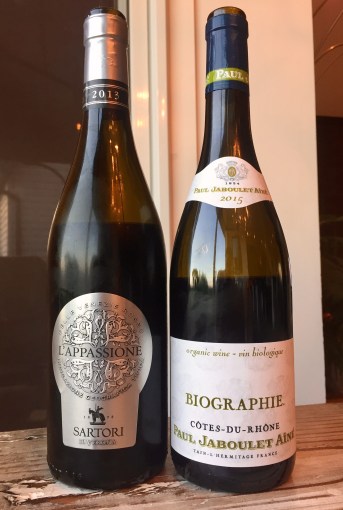
FullSizeRender-676This will be the last PnP post for a while – in a couple days I’ll be escaping the country on summer vacation and will not be thinking much at all about word counts or flavour descriptors while I’m gone.  Expect palm tree and sea turtle Instagram pictures and not much else until the end of the month.  I therefore felt compelled to send off July on the blog with a double-feature, a head-to-head review of two Old World value level wines with near-identical just-a-shade-over-$20 price tags and almost nothing else in common.  It’s Italy vs. France, a contest of different grapes, winemaking styles, vintages and approaches, with the main unifying links being longstanding traditional estates and a quest to over-deliver on quality for a supermarket price tag.  Enjoy the summer! Read the rest of this entry »


Introducing: wYneYC

21 06 2017

[These bottles were provided as samples for review purposes.]

fullsizerender-648.jpgI grew up in the days of monopolized government liquor sales and distribution in Alberta, and I distinctly remember going into the squat brick AGLC store with my parents when they were on the hunt for a new bottle of wine or spirits.  While government-controlled retail alcohol is still the norm in much of Canada, Alberta thankfully broke free of its state shackles before I hit adulthood, and now, not really that much later, it is a completely different world, with an ever-increasing number of remarkable producers from across the globe available in our market and very few barriers to introducing even more.  Slower to develop have been wine-buying alternatives to the standard visit to a retail shop:  online ordering, home delivery, personalized sourcing.  I can get almost every work of literature ever created from Amazon Prime within two business days, but our gloriously liberal wine commerce architecture has not yet fully embraced the electronic age and the consumer convenience that can come with it.  That’s why I always root for those ventures who come along and try.
wYneYC is just such a venture, an e-subscription wine club with a twist, featuring a revolving door of personally curated sommelier-chosen wines tailored to each customer’s palate and an absolute focus on eliminating hassle for buyers.  You sign up for a monthly subscription at one of three tiers, where a 2-bottle pack costs $36, $50 or $65 depending on your level of choice; you can also pick 4- or 6-bottle packs if you wish, which come with corresponding volume discounts.  But these are not just random bottles, and they are not the same for everyone:  when you subscribe on wyneyc.ca, you fill out a personalized online taste survey for each bottle (which you can later update at will), and wYneYC’s professional winos then pair your monthly selection with your palate preferences. Read the rest of this entry »


Wine Reviews: Red ShowDownUnder

13 06 2017

[These bottles were provided as samples for review purposes.]

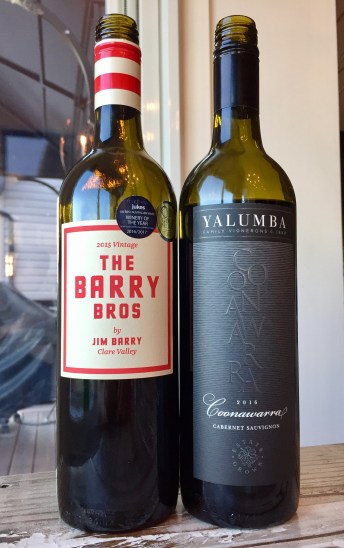
FullSizeRender-646I first got seriously into wine about 10 years ago, when the Australia Phenomenon was in its heyday and Argentinian Malbec was just a glint in some clever investor’s eye in Mendoza.  Yellow Tail Shiraz was my gateway drug, a fact that is assuredly true of more than one of you currently reading this as well.  Looking back now on the Australian wine scene then, there are still tons of similarities.  Critter wines, like it or not, are still a thing. On the quality pinnacle, the high-end wines from Down Under rocking people’s worlds in 2017 aren’t that different from those doing so in 2007.  But I’ve noticed a couple clear differences in the imports from Australia that have evolved over the last decade:  first, a welcome explosion of site-driven elegance from the cooler areas of the country, be it Pinot from Yarra or Mornington or bubbles from Tasmania or the laser purity of some of the post-modern wines coming out of the Adelaide Hills.  Second, a new focus on bottles like the ones below, step-up bottlings, a shade above entry-level in price and a world above the critters in authenticity and quality.  The $20-$30 tier of wines has never had stronger representation on our shelves from Australia than it does currently, as more and more producers zone in on these bottles as the best way to build a lasting relationship of trust with consumers as opposed to an $11 fling.

So what better way to celebrate how far Australia has come as a mature wine producer, and how far I’ve come in my 10 years of Yellow Tail-catalyzed oenophilia, than by lining up two step-up bottles, each from highly respected multi-generational family wineries and legendary regions, and tasting them side-by-side?  It’s not about picking a winner — the mere fact that the exercise is possible is a win in and of itself — but I’m sure that won’t stop Jim Barry and Yalumba from exerting full effort in this battle of reds under screwcap.  Let the showdown from Down Under begin. Read the rest of this entry »


Entering The Hatch, Spring 2017

23 05 2017

[These bottles were provided as samples for review purposes.]

IMG_6146Ever since I first saw The Hatch’s avian-Thomas-Crown-Affair primary logo shortly after it opened a couple years ago, I have been sort of transfixed from a distance, finding both the winery and its artistic ethos strangely compelling despite knowing basically nothing about them.  Based out of a rustic-modern “shack from the future” in the heights of West Kelowna and sourcing grapes from across the Okanagan and Similkameen Valleys, The Hatch initially comes across (quite intentionally) more like an artists’ collective than a commercial winery, listing Salman Rushdie on its personnel page and expounding in esoteric wine-code about “Ross O” and B. Yanco” (I’ll give you a second to sort that one out).  They confidently found their visual style from the outset thanks to the remarkable imagery provided by local western Canadian artist Paul Morstad (who is also found on The Hatch’s personnel page, playing a banjo); once people have been drawn in by the graphics, it’s up to winemaker Jason Parkes to keep their attention.  The whole artistic cacophony and the simultaneously grand yet whimsical presentation lends The Hatch a jolt of personality that the generally strait-laced BC wine scene can happily use…but does the buzz extend to what’s in the bottle?  Happily, I got to find out.

FullSizeRender-601The Hatch releases its wines in stylistic series, of which I had the opportunity to experience two:  the mid-tier Hobo Series wines, featuring a panoply of hand-drawn labels of hobos (seriously) that risk making you cry thanks to their sheer beauty (also seriously), and the ambitious Black Swift Vineyards series wines, which collectively form an expansive single-vineyard project focused on the various facets of BC’s glorious dirt.  The wine, like the winery, was never boring. Read the rest of this entry »