Calgary Wine Life: Weingut Hiedler Tasting @ Bricks Wine Co.

26 06 2017

FullSizeRender-664

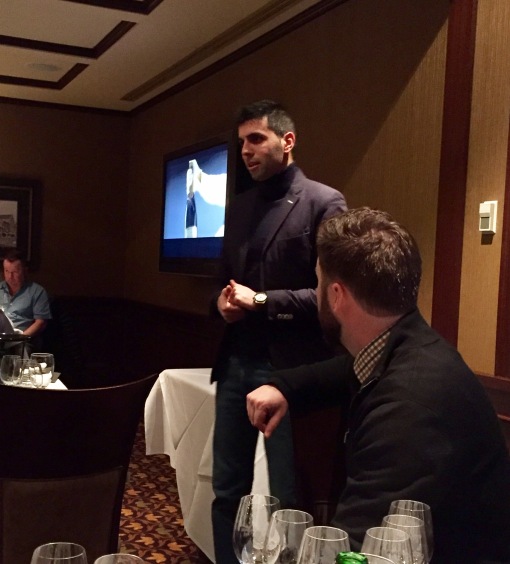
Ludwig Hiedler Jr.

When Ludwig Hiedler Jr. speaks, generations of knowledge echo in his words.  His career has spanned many years of education and experience, multiple shifts in approach, and innumerable hours spent questioning how to create and reveal the truest form of a wine.  He at first chafed against the layers of tradition quietly imposed on him like sediment by his ancestors, and pushed back against them by experimenting in all facets of his self-described “artisanal, emotional” winemaking style, only to eventually discover his own truth where it always was, embedded within his family’s values and legacy.  He is 24 years old.

Ludwig Jr., his father Ludwig Sr. and his brother Dietmar now collectively guide the course of Weingut Hiedler, which has been producing wine in northern Austria’s Kamptal region since 1856, longer than Canada has existed as a country.  Ludwig Jr. represents the fifth generation of Hiedlers to take on winemaking duties at the estate, steering the winery into the future with a nod back into the past, through sustainable chemical-free practices in the vineyard, next to no use of oak for maturation, and wines made as a pure reflection of site and vintage, with no stylistic or flavour preconceptions guiding the journey to the finished product and limited intervention during fermentation.  Hiedler uses native yeasts to ferment all of his wines, but in an interesting way:  he allows the ambient yeasts around the winery to do some of the work during fermentation, but has also harnessed certain selections of these native strains with which he also inoculates the fermenting must, propelling the ferment forward without introducing any element external to the winery.
FullSizeRender-660

Weingut Hiedler is a small piece of a 1,000+ year tradition of winemaking in Austria, and is part of a group of quality-focused producers working on taking the generational knowledge built up and passed down about vineyard sites, soils, aspects and qualities and creating a (long-overdue) formal comprehensive set of vineyard classifications for the country.  The Österreichische Traditionsweinguter (or the ÖTW for short, which translates to “Traditional Austrian Winemakers” and is roughly equivalent to Germany’s VDP) has identified a number of top “Erste Lage” (first growth) vineyards which they hope to see formalized at law in the future, bringing Burgundian rigour to Austrian soils.  Hiedler’s philosophy strives for longevity, tranquility, wisdom, harmony and elegance in its wines, a vision symbolized by the owl that graces its labels and has quickly become the most recognizable visual reference to the estate.

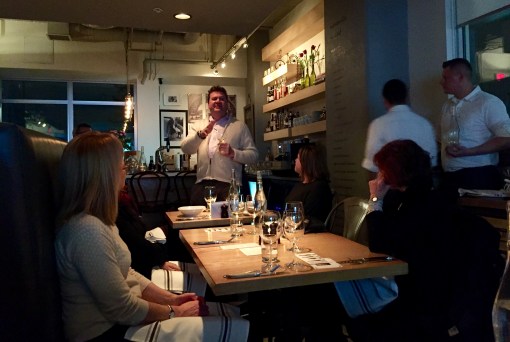
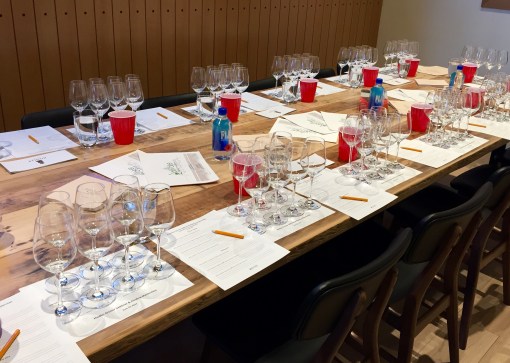
This was Ludwig Hiedler Jr.’s first ever trip to Canada, and his last stop in a hectic North American travel schedule before he returned to winemaking duties in Austria.  Before embarking on a transoceanic flight home, he graciously led us through a remarkable Gruner Veltliner and Riesling Masterclass at one of Calgary’s most impressive boutiques, Inglewood’s Bricks Wine Company.  Through four Gruners and three Rieslings, we got a clear sense of what Ludwig and Weingut Hiedler were all about, yet I still left thinking that there are many more undiscovered layers to both the man and the winery, to be unveiled in the coming decades of Hiedler releases. Read the rest of this entry »


Introducing: wYneYC

21 06 2017

[These bottles were provided as samples for review purposes.]

fullsizerender-648.jpgI grew up in the days of monopolized government liquor sales and distribution in Alberta, and I distinctly remember going into the squat brick AGLC store with my parents when they were on the hunt for a new bottle of wine or spirits.  While government-controlled retail alcohol is still the norm in much of Canada, Alberta thankfully broke free of its state shackles before I hit adulthood, and now, not really that much later, it is a completely different world, with an ever-increasing number of remarkable producers from across the globe available in our market and very few barriers to introducing even more.  Slower to develop have been wine-buying alternatives to the standard visit to a retail shop:  online ordering, home delivery, personalized sourcing.  I can get almost every work of literature ever created from Amazon Prime within two business days, but our gloriously liberal wine commerce architecture has not yet fully embraced the electronic age and the consumer convenience that can come with it.  That’s why I always root for those ventures who come along and try.
wYneYC is just such a venture, an e-subscription wine club with a twist, featuring a revolving door of personally curated sommelier-chosen wines tailored to each customer’s palate and an absolute focus on eliminating hassle for buyers.  You sign up for a monthly subscription at one of three tiers, where a 2-bottle pack costs $36, $50 or $65 depending on your level of choice; you can also pick 4- or 6-bottle packs if you wish, which come with corresponding volume discounts.  But these are not just random bottles, and they are not the same for everyone:  when you subscribe on wyneyc.ca, you fill out a personalized online taste survey for each bottle (which you can later update at will), and wYneYC’s professional winos then pair your monthly selection with your palate preferences. Read the rest of this entry »


Wine Reviews: Red ShowDownUnder

13 06 2017

[These bottles were provided as samples for review purposes.]

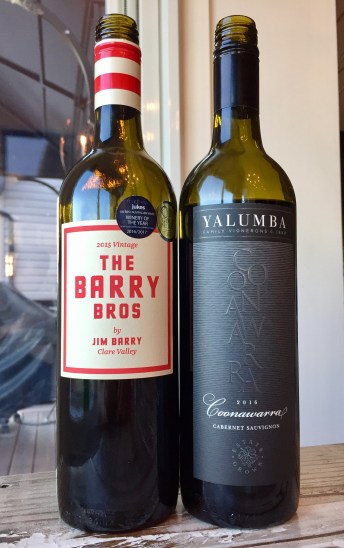
FullSizeRender-646I first got seriously into wine about 10 years ago, when the Australia Phenomenon was in its heyday and Argentinian Malbec was just a glint in some clever investor’s eye in Mendoza.  Yellow Tail Shiraz was my gateway drug, a fact that is assuredly true of more than one of you currently reading this as well.  Looking back now on the Australian wine scene then, there are still tons of similarities.  Critter wines, like it or not, are still a thing. On the quality pinnacle, the high-end wines from Down Under rocking people’s worlds in 2017 aren’t that different from those doing so in 2007.  But I’ve noticed a couple clear differences in the imports from Australia that have evolved over the last decade:  first, a welcome explosion of site-driven elegance from the cooler areas of the country, be it Pinot from Yarra or Mornington or bubbles from Tasmania or the laser purity of some of the post-modern wines coming out of the Adelaide Hills.  Second, a new focus on bottles like the ones below, step-up bottlings, a shade above entry-level in price and a world above the critters in authenticity and quality.  The $20-$30 tier of wines has never had stronger representation on our shelves from Australia than it does currently, as more and more producers zone in on these bottles as the best way to build a lasting relationship of trust with consumers as opposed to an $11 fling.

So what better way to celebrate how far Australia has come as a mature wine producer, and how far I’ve come in my 10 years of Yellow Tail-catalyzed oenophilia, than by lining up two step-up bottles, each from highly respected multi-generational family wineries and legendary regions, and tasting them side-by-side?  It’s not about picking a winner — the mere fact that the exercise is possible is a win in and of itself — but I’m sure that won’t stop Jim Barry and Yalumba from exerting full effort in this battle of reds under screwcap.  Let the showdown from Down Under begin. Read the rest of this entry »


Calgary Wine Life: Checkmate Chardonnay Global Challenge @ Sub Rosa

6 06 2017
FullSizeRender-640

Anthony Gismondi.

Checkmate Artisanal Winery has no shortage of vision or ambition.  It is both a newcomer to the Okanagan wine scene and the oldest of old hands, founded by Mission Hill proprietor Anthony von Mandl after his purchase of a pre-existing winery (Antelope Ridge, just west of Oliver) and some of its vineyards back in 2012.  Thanks in part to von Mandl’s existing land holdings, Checkmate began its life with elite sources of fruit from five top-tier vineyard parcels, the youngest of which is just shy of 20 years old and the oldest of which are some of the most senior in the country.  The vineyards scatter across the southern Okanagan:  there are two near the winery on the Okanagan’s first-ever formal sub-appellation, the Golden Mile Bench, two across the highway to the east on the neighbouring Black Sage Bench, and one literally 30 feet from the Canada/US border southeast of Osoyoos.  The fruit they produce is reflective of Checkmate’s quality vision and laser focus:  the winery makes SIX different Chardonnays and FOUR separate Merlots, and nothing else.  Their price is reflective of von Mandl’s burning ambition to elevate Canadian wine:  the Chardonnays range from $80 to $125 a bottle and the Merlots all clock in at $85.  It is probably safe to say that this country hasn’t yet seen a winery like this.

At the controls of this super-premium venture is winemaker and general manager Phil McGahan, who began his working life as a lawyer (I knew I liked him when I met him for some reason) and then switched gears and did winemaking stints in Australia’s Hunter Valley and for Sonoma cult Pinot and Chardonnay producer Williams Selyem before being lured north by Checkmate’s potential and master plan.  If your first reaction to the idea of a winemaker leaving California for Canada is surprise (or disbelief), McGahan went to great lengths to point to the Okanagan’s location vis-a-vis southern California as a selling feature:  with world temperatures rising in past decades, he saw Canada as being well-placed as a grape-growing region going forward, perhaps even better than existing warmer-climate regions that may soon find themselves outside of the ideal range for viticulture.  The Okanagan’s combination of (very) long summer days, extensive sunlight and substantial diurnal temperature shifts are proving increasingly attractive to grapes now tended with more careful farming practices, all of which makes up for the area’s shorter growing season.

FullSizeRender-635

The Checkmate wines are created with a quality focus from start to finish, consistent with the raison d’être of the winery.  The Chardonnay grapes are handpicked starting at 3:00 a.m., when it’s cooler, and the fruit is then stored in a cool room at 4 degrees Celsius for 24 hours before being hand-sorted and gently whole-bunch pressed.  Long and slow ferments ensue, mostly with wild yeasts to tease out additional flavours, after which the wines spend 16 months in barrel for better oak integration, with lees stirring towards the end before the Chardonnay is bottled unfined and unfiltered.  All six Chardonnays are made in the same fashion, leaving any distinctions or divergences in their flavour profile to be explained by the story of their site.

So how do you convince the buying public that not just one but SIX Okanagan Chardonnays are worth $80 or more a bottle, and that what is coming out of British Columbia currently can suit up with the best in the world?  You line them up with the world, don’t tell anyone which is which, and let the public see for itself.  That’s what happened this week in the James Bond villain subterranean lair that is Sub Rosa, the quasi-secret underground speakeasy beneath The Guild restaurant on Stephen Avenue, where Canadian wine luminary Anthony Gismondi and winemaker Phil McGahan led a curious crowd through a Judgment-of-Paris style blind tasting of ten Chardonnays, all at similar price points, six of which were Checkmate’s new 2014 releases and four of which were various international heavy hitters.  We had 30 panicky minutes to taste through the full set of wines and rank our favourites, after which each wine’s identity was revealed.  What did this experiment say about the present and future of cult, super-premium, site-specific Canadian Chardonnay?  Read on. Read the rest of this entry »


Calgary Wine Life: Weingut Thörle Tasting @ Vine Arts

2 06 2017
IMG_6203

Christoph Thörle

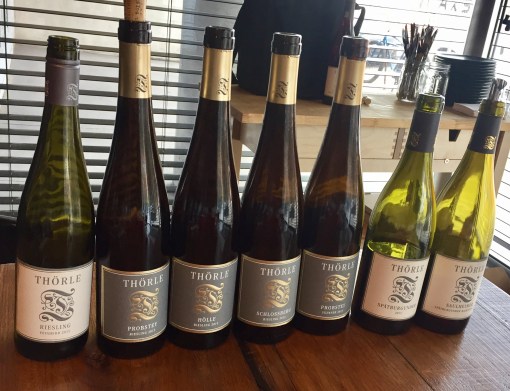
It’s been a bit of a banner wine week, seven days tailored to the precise preferences of my palate.  My personal favourite types of red and white wine are Washington Syrah and German Riesling respectively, and late May has seen visionary producers specializing in each of these areas visit our fair city.  My Washington wine prayers were answered last week when Greg Harrington of Gramercy Cellars put on a remarkable Master Class in Calgary; this week it was Germany’s turn, thanks to an eye-opening portfolio tasting put on by the dynamic Christoph Thörle of the eponymous Weingut Thörle, from the global home of Riesling’s Rheinhessen region.  Through four different earth-shattering Rieslings and seven total wines, Thörle took us through what must be some of the world’s best expressions of my first vinous love.

If you say the word “Rheinhessen” to a wine person, the tenor of their reaction might be a generational one.  The region, located in west-central Germany, due south of Rheingau and southwest of Frankfurt, is the largest in the country in terms of planted acres and is tailor-made for grape-growing:  it’s dry, sunny and relatively warm, with limestone-based soils overlaid by a variety of alluvial deposits, as long ago it was largely part of an underwater seabed.  Rheinhessen once had a reputation to match its physical advantages, and was long considered one of the pinnacle areas of German viniculture.  But a mid-20th-century flirtation with new lab-crossing grape varieties and mass-market, quantity-focused bottlings turned into a 1970s and 80s Liebfraumilch obsession that saw lesser varietals dominate much of the vineyard area and Blue Nun and Black Tower nearly obliterate the world’s prior impressions of German wine.  If you stopped paying attention to Rheinhessen then (as many did), you will have missed out on what’s going there now:  a quiet quality renaissance, and a return to the right grapes properly planted and tended on the right sites, perhaps not better personified than by Christoph Thörle and his brother Johannes.

FullSizeRender-626

They took over the operation of the Thörle family winery in 2006, when Christoph was just 22 and Johannes 24.  Together they have overseen an expansion of the estate’s vineyard holdings and a corresponding increase in annual production, paired with a return to simple, hands-off viticulture and winemaking practices:  no pesticides or herbicides in the vineyards, multiple-pass harvests, all natural yeasts and no additives in the cellar, minimal sulphur at bottling.  Weingut Thörle now has 80 acres of vine holdings, remarkably spread over 100+ different vineyard parcels but largely centered around the town of Saulheim in north-central Rheinhessen.  The area features a wide array of different slopes, soils and sun exposures, allowing for the production of multiple different varietals, and Saulheim itself is surrounded by Thörle’s three crown-jewel vineyards:  Probstey, Schlossberg and Hölle.

Thörle has been generating increasing acclaim for both its white (Riesling, Silvaner, Chardonnay and more) and red (Pinot Noir, known Germanically as Spätburgunder) wines and made its glorious entrance into the Alberta market last year.  Now some new offerings are on their way to the province, and we were fortunate enough to have Christoph talk us through most of them, including a few bottles that might change your perspective on, well, everything. Read the rest of this entry »


Calgary Wine Life: Gramercy Cellars Master Class @ Divino

26 05 2017
FullSizeRender-614

Greg Harrington, Gramercy Cellars

A month ago I had never been out to visit my all-time favourite winery, and they had not yet had the opportunity to come to Calgary for a tasting event.  Three weeks ago I finally made it out to Walla Walla for the first time, and among other amazing wine memories made, I paid a couple visits to my wine pinnacle, Gramercy Cellars, attending their Spring Release party on my birthday.  Almost immediately after I got off the plane in Washington State, I got an email inviting me to Gramercy’s first ever tasting Master Class back in Calgary, led by the winery’s founder and winemaker Greg Harrington.  That tasting was held this week at the marvellous Divino restaurant, and I left thinking that my next trip to Walla Walla couldn’t come fast enough.  It would be an understatement to say that this month has ticked a lot of boxes.

FullSizeRender-612Washington State has both the sun to grow big red grapes and the soil and climate to make them interesting.  The main wine areas are all in the southeastern part of the state, separated from lush, drizzly Seattle by the Cascade Mountain range, whose rain shadow blocks most of the coastal precipitation and creates a warm, dry canvas for grapevines to thrive.  The Walla Walla Valley, straddling the Washington/Oregon border, is bounded on the east side by another mountain range, the Blue Mountains, gaining both altitude and cool nightly winds off the slopes as a result.  Over millennia, the historically recurring Missoula floods have laid fine sandy soil, massive rocks and other alluvial deposits over an already-impressive volcanic basalt soil base.  Put all that together and you end up with an area that sees heat and sunlight during the day but features significant diurnal temperature drops at night, ideal for prolonging ripening and retaining acid in grapes; fine soils with intriguing mineral content that drain well and in which (thanks also to the cold winters) the vine scourge phylloxera cannot survive, allowing all vines to be planted on their own rootstocks; and a remarkable array of slopes, aspects, exposures and microclimates in a relatively concentrated area, letting farmers and producers match specific varietals with specific sites to maximize their potential.  In short, it screams winemaking opportunity.

FullSizeRender-616

The Gramercy winery and tasting room, Walla Walla.

And it screamed loud enough to bring Greg Harrington there.  Harrington, a Master Sommelier holding a prestigious position for a group of New York City restaurants, had a chance tasting of Walla Walla Syrah lead him to a trip to Washington State and then to a life-altering decision to change careers and time zones, all in the span of a couple years in the early 2000s.  After a crash course in winemaking and some assistance with grape sourcing from Washington wine pioneer Norm McKibben of Pepper Bridge in 2004, Gramercy Cellars came into existence and released its first vintage in 2005.  It has been honing its style and its craft since, continually looking for ways to sharpen its approach.  While Gramercy has always aimed for lower ripeness and alcohols and higher acid and longevity in their wines, as of 2014 it strove for further complexity by switching over to all native-yeast fermentation and introducing large square concrete tanks to its winemaking armada.  Future plans include going fully organic with its growers in the vineyard and gaining additional control on the farming side of the process, as evidenced by its recent acquisition of the well-regarded Forgotten Hills vineyard just south of Walla Walla.

FullSizeRender-617

Concrete.  Badass.

Greg Harrington spoke of these things and more across two riveting and information-packed hours with the Calgary wine trade, and at some point while we were at it we also found the time to taste through the bulk of Gramercy Cellars’ portfolio, starting off with the ultra-small production 2016 Picpoul (electric limes! on fire!) as we came in the door and not stopping until we had gone through FOUR consecutive groundbreaking Syrahs that firmly established Washington State’s place as a New World powerhouse.  Buckle up. Read the rest of this entry »


Entering The Hatch, Spring 2017

23 05 2017

[These bottles were provided as samples for review purposes.]

IMG_6146Ever since I first saw The Hatch’s avian-Thomas-Crown-Affair primary logo shortly after it opened a couple years ago, I have been sort of transfixed from a distance, finding both the winery and its artistic ethos strangely compelling despite knowing basically nothing about them.  Based out of a rustic-modern “shack from the future” in the heights of West Kelowna and sourcing grapes from across the Okanagan and Similkameen Valleys, The Hatch initially comes across (quite intentionally) more like an artists’ collective than a commercial winery, listing Salman Rushdie on its personnel page and expounding in esoteric wine-code about “Ross O” and B. Yanco” (I’ll give you a second to sort that one out).  They confidently found their visual style from the outset thanks to the remarkable imagery provided by local western Canadian artist Paul Morstad (who is also found on The Hatch’s personnel page, playing a banjo); once people have been drawn in by the graphics, it’s up to winemaker Jason Parkes to keep their attention.  The whole artistic cacophony and the simultaneously grand yet whimsical presentation lends The Hatch a jolt of personality that the generally strait-laced BC wine scene can happily use…but does the buzz extend to what’s in the bottle?  Happily, I got to find out.

FullSizeRender-601The Hatch releases its wines in stylistic series, of which I had the opportunity to experience two:  the mid-tier Hobo Series wines, featuring a panoply of hand-drawn labels of hobos (seriously) that risk making you cry thanks to their sheer beauty (also seriously), and the ambitious Black Swift Vineyards series wines, which collectively form an expansive single-vineyard project focused on the various facets of BC’s glorious dirt.  The wine, like the winery, was never boring. Read the rest of this entry »


Burrowing Owl Spring Releases

16 05 2017

[These bottles were provided as samples for review purposes.]

Some people chart the seasons using a calendar; others look to the melting snow and the first robins to mark the start of spring.  For me and this blog, the new season only arrives when the box of new releases from Burrowing Owl is delivered and tasted.  I can now happily announce:  spring is here.

FullSizeRender-592

OK, yes, I had a glass of the Chardonnay before the tasting started.  I regret nothing.

Burrowing Owl is one of the few Canadian wineries that has been consistently able to juggle both quantity and quality, producing 35,000 cases annually from 16 different varietals grown across 170 acres and three different estate vineyard sites encircling the scorching southern Okanagan hubs of Oliver and Osoyoos.  It is likely best known for its Bordeaux varietals, but also makes room in its vineyard sites for less expected offerings like Tempranillo and Viognier, not to mention a killer Syrah that is proof of concept of the region’s suitability for the grape.  Burrowing Owl’s two largest vineyards are scant minutes away from the US border, on western-facing slopes angling down towards the temperature-modulating Lake Osoyoos, which both restrains the Okanagan desert heat during the day and extends it at night.  The third is due west of Oliver, in the neighbouring Similkameen Valley, using its proximity to Keremeos Mountain to help grow Bordeaux whites Semillon and Sauvignon Blanc, where 2017’s spring releases conveniently start. Read the rest of this entry »


International Sauvignon Blanc Day: 2016 Adobe Reserva Sauvignon Blanc

5 05 2017

[This bottle was provided as a sample for review purposes.]

FullSizeRender-589

International SB Day 2017!

I swear that not every future entry on this blog will begin with “Happy [Varietal-Specific Holiday] Day!”, but…Happy International Sauvignon Blanc Day!  Yes, there is an entire calendar of world wine days now, each concocted by various marketing geniuses, and as it turns out, a couple weeks after World Malbec Day and a scant four days before World Moscato Day comes a designated day to celebrate the safest grape to pick out of a strange new liquor store and the varietal that first introduced the vinous world to New Zealand, the consistent and omnipresent Sauvignon Blanc.  Unlike today’s grape of honour, I am not omnipresent, and as this piece posts I am actually going to be hanging out in Walla Walla drinking world-class Syrah; International SB Day falls on my birthday this year, and I am spending this spin-around-the-sun in my personal wine Mecca.  So the blog and I will celebrate simultaneously this year, albeit in different places and for different occasions. Read the rest of this entry »


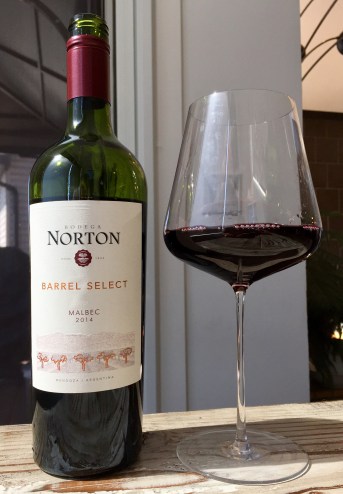
World Malbec Day Review: 2014 Bodega Norton Barrel Select Malbec

17 04 2017

[This bottle was provided as a sample for review purposes.]

FullSizeRender-587

Happy World Malbec Day!

Happy belated Easter to all – I hope your long weekend was filled with family and food and chocolate and wine in some order.  If you headed back to work on Easter Monday and were feeling the post-holiday blues, fear not, because there is another event on today that’s worth celebrating:  April 17th has been designated World Malbec Day, a designation I would bet many people choose to live out far more often.  In a blink sometime in the last decade, Malbec went from being an overlooked Bordeaux blending grape and an esoteric dark and chewy hidden treasure from Cahors to Australian Shiraz’s heir as the friendly, fruity, powerful gateway drug into the wonderful world of wine.  Whereas I stumbled onto Yellow Tail sometime in the early 2000s and worked my way up from there, nascent wine lovers today are heading to the previously non-existent Argentina section of their local liquor store and starting their odyssey with the grape, one that will hopefully last a lifetime. Read the rest of this entry »


Calgary Wine Life: Taylor Fladgate 1967 Single Harvest Port Release

11 04 2017

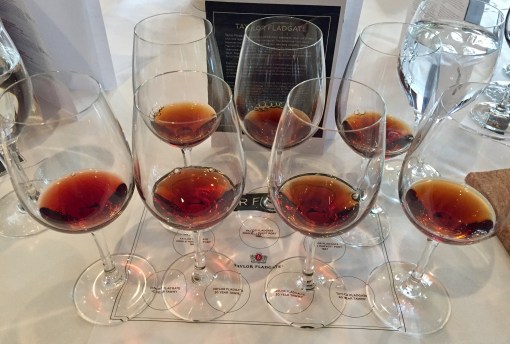
I almost always try to write up a tasting as soon as possible after I’ve experienced it, while memories are still fresh and the wines that were presented are still alive on my senses.  This is unfortunately not one of those times.  I must have triggered some kind of ancient Douro warlock’s curse upon cheerfully exiting La Chaumiere restaurant two weeks ago today, after tasting 100 combined years of Taylor Fladgate tawny Port and a trio of aged single-harvest releases that were collectively over a century and a half old, because within an hour of the tasting I was feeling queasy and unwell.  It only got grimmer and sicker after that, and I’ve only just emerged from that bleary world of nausea and cough drops and decongestants and come back to some semblance of myself.  But even if it was the Port gods who struck me down, it was totally worth it.

FullSizeRender-576

Taylor Fladgate, thanks to savvy rationing and recent acquisitions of significant quantities of extensively aged Port stocks from another historic house, has one of the largest inventories of old cask-aged Port in the world.  In 2014, it decided to make use of this bounty by launching a remarkable program:  releasing a 50 year-old Single Harvest Port on an annual basis commemorating the half-century that came before.  The 1964 Single Harvest Port was the first of the line, but has since been followed by the 1965 in 2015, the 1966 in 2016, and, this year, the impending “new” release of the 1967 Taylor Fladgate Very Old Single Harvest Port.  Each of these bottles retails for around $250 and is the best possible 50th birthday or anniversary present that could exist on this world.  As a special nod to Canada, the 1967 bottling is also a Canadian Centennial edition (at least in this country), with a maple-leaf-adorned box liner marking our country’s 100th birthday on the year of its 150th.

FullSizeRender-578A quick tangent to explain this Port’s name and aging designation.  All Port starts just like other red wines do, with crushed grapes fermented on their skins.  With Port, however, the fermentation is halted halfway through, before much of the sugar has been converted to alcohol, by spiking the juice with high-proof (75+% abv) grape brandy, which kills the yeast, retains a large part of the grapes’ natural sweetness and boosts the alcohol level of the finished product to around 20%.  The Port is then put in large oak barrels for maturation, and what happens next is what determines its final identity.  In top vintages, some of this wine only spends a couple years in wood before being put in bottle for further non-oxidative aging.  This is Vintage Port, arguably Portugal’s crown jewel.  In lesser years, or with other lots, the wine stays a few extra years in barrel before hitting the bottle 4-6 years past vintage; this is Late-Bottled Vintage Port, generally a less ageable, earlier-drinking style, and one that was actually invented by Taylor Fladgate in the 1960s, a rare innovation in a very traditional winemaking landscape. Read the rest of this entry »


Calgary Wine Life: Moet & Chandon Winemaker Tasting @ Ruth’s Chris

24 03 2017

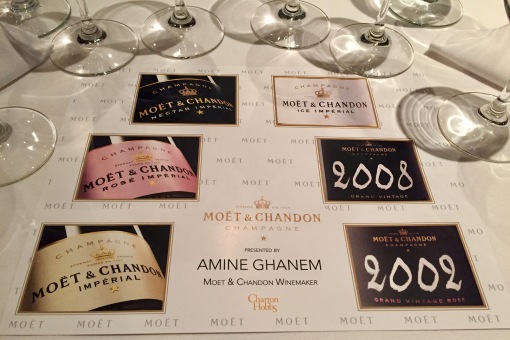
As it turns out, there is no inopportune time for Champagne.  Although the bubbly beverage has built its brand on being the drink of choice for special occasions and other times of celebration, it turns out that it’s equally nice to kick back with a glass of fine bubbles on an otherwise-normal Thursday afternoon.  It’s even better to kick back with six of them, which is what I was fortunate enough to do when Moet & Chandon winemaker Amine Ghanem came to town to lead an attentive and appreciative group through a good portion of the Champagne powerhouse’s portfolio.

FullSizeRender-565

Amine Ghanem, Moet & Chandon.

Ghanem is one of 10 winemakers employed by Moet & Chandon in addition to their cellarmaster, or chef de cave, who directs and decides on the ultimate blend for each of the house’s Champagnes.  Moet has been doing its thing for centuries (since 1743, to be exact – Ghanem informed us that the very first bottle of Moet & Chandon Champagne arrived in Canada in 1839, before we were even a country!), and as such has honed its house style to a fine point, with very clear goals as to the characteristics it seeks to draw out in its Champagnes and specific strategies in place to reach them.  The three pillars of the Moet & Chandon style are, in Ghanem’s words:  (1) “bright fruitiness”, which is attained in part by careful non-oxidative winemaking techniques, even to the point where the house has developed a technique for “jetting” oxygen out of the neck of the bottle after disgorgment to avoid degradation during the maturation process; (2) “seductive palate”, with a welcoming, easy-to-drink texture aided by full malolactic fermentation; and (3) “elegant maturity”, achieved largely through extended lees contact pre-disgorgment, for much longer periods than required by law.  These foundational principles must be working, as we were told that there is currently a bottle of Moet being popped somewhere around the world every second.

FullSizeRender-566

In case the ten full-time winemakers on staff wasn’t a tip-off, Moet & Chandon is a massive undertaking.  It is the biggest house in Champagne and the owner of its largest vineyard holdings, amounting to almost 10% of the entire area under vine in the region.  Since 1962, it has even had its own brand of proprietary yeast, which helps accentuate the characteristics that reflect the house style.  Moet’s primary brand is Imperial, so named in recognition of founder Claude Moet’s 18th century friendship with a certain French emperor, none other than Napoleon Bonaparte.  Napoleon visited the winery many times and was a steadfast consumer of Moet Champagnes, and in 1869 the Imperial brand was christened in recognition of the 100th anniversary of his birth.  The Imperial NV blend starts out as 800 different base wines, which are gradually combined into 3 proposed blends (each featuring solid proportions of all three of Champagne’s grape varieties: Pinot Noir, Pinot Meunier and Chardonnay) before one is selected.  The blending is as much of the artistry as the winemaking itself, and the efforts show in the bottle, which led off our tour-of-Moet tasting. Read the rest of this entry »


2015 Testalonga El Bandito Cortez

19 03 2017
FullSizeRender-562

What a label. What a wine.

OK, so it’s been a long time.  I wasn’t intending to drop off the map for over a month after my last post, but a work tornado and a series of weekend Timbits tournaments then morphed into bronchitis that knocked me out of commission for a couple of weeks.  Thankfully, the antibiotics have run their course, my lungs and tastebuds are back to almost-normal and Pop & Pour is again ready to roll.

And what better way to get back in the swing of things than with something fantastically different?  And what better qualifier for that category than a $48 South African natural wine Chenin Blanc with a catchy pop-art label?  Seriously, this is one of the best labels I have ever seen on a bottle of wine.  As soon as I saw it, I knew I was buying the bottle, which is about as big a compliment as you can possibly pay to a branding tool.  The label for this Cortez bottling by Testalonga changes every year, but they absolutely killed this one, which tugs on my (and presumably every other father’s) heartstrings.  I love it.

Read the rest of this entry »


Calgary Wine Life: Pierre Sparr Tasting @ Cassis Bistro

3 02 2017

Can there be any major French wine region more overlooked and underrated than Alsace?  It has all the frozen-in-time charm of Burgundy, with picturesque centuries-old villages dotting rolling hillsides of vineyards, and all the stately history of Bordeaux, but without the matching dose of self-importance.  Add in a dash of international conflict (the region has passed back and forth between France and Germany many times in the course of modern history) and a pinch of consumer friendliness (unlike almost anywhere else in France, Alsatian wines are all varietally labelled so everyone can easily see the grape that’s in the bottle) and you’d think you’d have a sensation.  But perhaps due to its location, tucked away in the northeastern corner of France, or to its primary focus on white grapes and prevailing Germanic influence, Alsace doesn’t get the hero’s welcome internationally that its fellow French stalwarts do, often left unexplored and misunderstood by New World consumers.  Thankfully, Bernard Sparr and others are out to set things right.

fullsizerender-554

Maison Pierre Sparr, 9th generation.

Bernard is part of the NINTH generation of the Sparr family that it carrying forward the legacy of Maison Pierre Sparr, the Alsatian house named after his grandfather but rooted in a winemaking family going back to 1680 (there’s that history I was talking about).  Pierre persevered through the ravaging of his domaine and vineyards in World War II, expanding the business and passing on a thriving enterprise to his two sons.  Bernard is the son of one of those scions, Rene Sparr, learning the rigours of blind tasting and the rhythms of the family winery from an early age.  Now he is helping expand the profile of the domaine overseas, settled in Quebec and taking on the role of North American ambassador for Pierre Sparr.  He is almost continually on the road, but despite the weariness of travel and an unfortunate cold that sapped his sense of smell, he was a warm and gracious host on Wednesday night, leading a cozy group through a lineup of French wines whose unifying trait was show-stopping value.

fullsizerender-549

In addition to directing international sales for the family domaine, Sparr also arranges for a small portfolio of like-minded tiny-production French producers to find their way into North America.  A few of these joined him for his visit to Calgary, so to accompany an absolutely marvellous five-course meal at Cassis Bistro, we were treated to a mixture of Pierre Sparr classics and intriguing finds from other regions, starting with a rosé with a distinct connection to a PnP favourite… Read the rest of this entry »


The Tournament of Pink (1st Ed.)

28 01 2017

[These bottles were provided as samples for review purposes.]

Rosé:  it’s not just for summer anymore.  Well, it was never just for summer, but the shelves of your local wine shop wouldn’t have given you that impression a few short years ago.  I had a tremendously difficult time a couple years back trying to source some pink wines in November/December for use in office client Christmas gifting packages, because for many retailers, the presence of rosé within store walls was decidedly seasonal.  This remains the case to some extent (because it is virtually impossible to beat a chilled rosé as an out-on-your-deck-on-a-summer-evening wine), but I had an agent tell me recently that their pink sales outlook for this winter might just outpace their summer, and I’ve seen more rosé on Calgary shelves with snow on the ground this year than ever before.  This is an enlightened change for the better:  there may be no type of wine more versatile and more universally appealable to all types of cuisines and personalities than a good rosé.

fullsizerender-539

There can be only one.

So when I noticed that I had a quartet of bottles of rosé sitting by themselves in an unassuming pink group in my cellar, the time of year did not remotely deter me in coming to the obvious conclusion:  let’s open them all and drink them all at once, and let’s do so in a Kickboxer-style fight-to-the-death tournament.  Thus the Tournament of Pink was born.

The actual Tournament took place a week or so ago and was simulcast on Twitter and Facebook, but work commitments have kept me from immortalizing the results on PnP until now.  If you weren’t following along at the time, we played our game by splitting our four rosés into two qualifying heats where they battled for the right to face off for the Tournament of Pink crown in the final.  Game on. Read the rest of this entry »