This Wine Advent is not only historic for PnP as the realization of a longstanding calendar-format dream, but it will also mark the very first time in 400+ reviews that somebody other than me will take up the virtual pen for Pop & Pour. I am honoured to be joined in this Advent blogging journey by two fellow Calgary students of wine who pair impressive technical knowledge with precise palates and a knack for communicating what they see and taste and feel: Raymond Lamontagne (follow him on Twitter and Instagram here) and Dan Steeves (follow him on Twitter and Instagram too). Their authorship journey officially starts tomorrow, as Ray will take the helm of the blog for Day 3 of Bricks’ wonderful (based on early returns) Advent Calendar. But it turns out they came in handier than I expected earlier than I expected, and their palates and tasting notes were called on sooner…

Not like I needed any more evidence that Bricks was taking this whole half-bottle Advent thing seriously after last night, but I got it the second I peeled back the wrapping paper on Day 2 and “Brunello di Montalcino” stared me back in the face. Yowza. More specifically, tonight’s bottle was the 2012 Caparzo Brunello di Montalcino, a traditional-style bottling from an old-school producer recently given new life. Many know Brunello as Italian wine royalty, and likely the apex of what the Sangiovese grape can do (more specifically, Brunello was once thought to be its own grape varietal but later shown to be a particular clone of Sangiovese called Sangiovese Grosso), but its life as a classified wine region is surprisingly short — it only received formal DOC status in 1968. Caparzo was founded at almost exactly that time, when there were only a baker’s dozen official Brunello producers in the world. It was later sold in 1998 to Elisabetti Gnudi Angelini, who had married at age 20 into a pharmaceutical empire, was widowed young, and then took a left turn with her life into the world of Tuscan oenology, where she has become a standout.
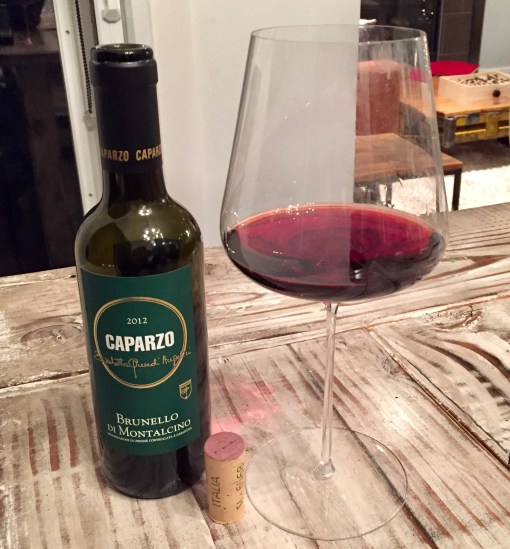
Cork Rating: 1/10 (Real Talk – This is one of the worst corks I have ever seen. “Italia”?? Really? You’re a Brunello, for god’s sake!)
I LOVE Brunello. I was not expecting to see a half-bottle of it, well, anywhere, let alone in Day TWO of this calendar, but I dove in with great anticipation, especially since 2012 was a highly esteemed vintage. The wine was a gorgeous silky ruby in the glass and smelled like…mildew? Old dirty showers? Wet newspapers? Oh come on. I have been on a solid streak of luck when it comes to avoiding wine faults recently, but this bottle was horridly, outrageously corked, infected with the fungal-induced TCA compound from the cork (incidentally, they always say that smelling the cork is a plebeian’s approach to checking for taint, but this cork smelled like a dead giveaway, so maybe check your premises). Ordinarily, throughout the entire prior history of my blogging career, my review would have been sunk — the wine was ruined. But ordinarily I did not have TWO other people drinking the exact same wine with pens at the ready! Raymond and Dan, called in on an emergency basis, sent me the following notes and (agreed) score for this bottle. You guys are lifesavers.
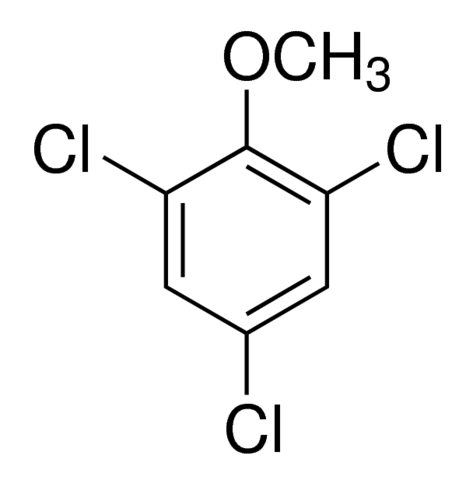
Damn you 2,4,6-Trichloroanisole (TCA). Worst molecule ever.
“Nose of dried red and blue flowers (iris, rose, potpourri), anise, white pepper, a whiff of roasted almond. Palate is loaded with tart cherry pie, cranberry, tomato, and unripe raspberry smeared on a leather-bound book. Some orange peel also emerges, along with oily tobacco, walnut, tar, coffee bean, and a handful of iron filings and road dust.” [Ray] “I get most of those descriptors as well. I would say in general it’s not a big Brunello and seems meant for more early drinking but does have solid structure. Definitely tart cherry and cranberry on the palate and then the leather, thyme, black tea and stone/rock dust flavours take over. Originally I thought the finish was a bit short but as the wine opens more it lengthens — still not overly long but enough to make you contemplate why Brunello is so good.” [Dan] I’m sad I missed the experience (mine tasted like mouldy laundry) but remarkably relieved that any readers of this post do not have to. Fingers crossed for better luck tomorrow!
89 points






 Washington State has both the sun to grow big red grapes and the soil and climate to make them interesting. The main wine areas are all in the southeastern part of the state, separated from lush, drizzly Seattle by the Cascade Mountain range, whose rain shadow blocks most of the coastal precipitation and creates a warm, dry canvas for grapevines to thrive. The Walla Walla Valley, straddling the Washington/Oregon border, is bounded on the east side by another mountain range, the Blue Mountains, gaining both altitude and cool nightly winds off the slopes as a result. Over millennia, the historically recurring Missoula floods have laid fine sandy soil, massive rocks and other alluvial deposits over an already-impressive volcanic basalt soil base. Put all that together and you end up with an area that sees heat and sunlight during the day but features significant diurnal temperature drops at night, ideal for prolonging ripening and retaining acid in grapes; fine soils with intriguing mineral content that drain well and in which (thanks also to the cold winters) the vine scourge phylloxera cannot survive, allowing all vines to be planted on their own rootstocks; and a remarkable array of slopes, aspects, exposures and microclimates in a relatively concentrated area, letting farmers and producers match specific varietals with specific sites to maximize their potential. In short, it screams winemaking opportunity.


 Ever since I first saw The Hatch’s avian-Thomas-Crown-Affair primary logo shortly after it opened a couple years ago, I have been sort of transfixed from a distance, finding both the winery and its artistic ethos strangely compelling despite knowing basically nothing about them. Based out of a rustic-modern “shack from the future” in the heights of West Kelowna and sourcing grapes from across the Okanagan and Similkameen Valleys, The Hatch initially comes across (quite intentionally) more like an artists’ collective than a commercial winery,
  The Hatch releases its wines in stylistic series, of which I had the opportunity to experience two: the mid-tier Hobo Series wines, featuring a panoply of hand-drawn labels of hobos (seriously) that risk making you cry thanks to their sheer beauty (also seriously), and the ambitious Black Swift Vineyards series wines, which collectively form an expansive single-vineyard project focused on the various facets of BC’s glorious dirt. The wine, like the winery, was never boring.



 Jaboulet’s Alberta portfolio is supplemented by a quartet of upper-echelon bottles from a group of distinctive quality regions scattered across the Rhone, each of which has its own character and legend to live up to, and each of which, I’m happy to report, Jaboulet and winemaker Caroline Frey reflect to a tee in these beautiful offerings. See my prior post for more details about this historic winery and its renaissance in our market; for now, we have a lot of wine to drink.


 cabernetdialectic (Raymond Lamontagne)
 Dan Steeves
 Peter Vetsch
 tylerderksen
 pop & pour