Wine Review: 2013 Culmina Unicus

8 06 2014
There it is:  history in a (classically presented) bottle.  BC Gruner!!

There it is: history in a (classically presented) bottle. BC Gruner!!

In my last post, I celebrated an Old World country’s rich wine history.  In this one, I get a front row seat as a New World country, my own, takes a milestone step towards charting its own course.  I may be a little more excited about this development than is strictly necessary, but I’ve (seriously) been waiting and hoping for this moment for a few years.  Finally, fantastically, Gruner Veltliner has come to the Okanagan Valley.

If you’ve heard of Gruner before, chances are you’re either at least a semi-serious wine person or you’ve been bothered about it before by me.  I adore Gruner, which is the signature white grape of Austria and is rarely found elsewhere; given that Austrian wine doesn’t exactly fill retailers’ or importers’ heads with gleeful visions of dollar signs, there tragically tends to be much less of it around locally than its quality and value would otherwise dictate.  If you’ve never tried a bottle of Gruner Veltliner, it’s sort of like if a Riesling and a Chardonnay had a rebel baby.  It combines the powerful acidity and piercing minerality of Riesling with the luxurious, silky mouthfeel of Chardonnay, then takes a left turn and offers up a remarkable set of spicy, tangy and often downright wacky flavours all its own, from white pepper to rubber boots and elastic bands (all in a good way, I swear).  The result is a sensory experience unlike any other in wine, one that keeps you constantly engaged as you try to figure out what the hell is going on in your mouth.

One of the reasons that I have often thought that Gruner Veltliner might be able to find a second home in Canada is the climatic and geographic similarities between BC wine country and Gruner’s homeland:  northern Austria and southern BC share almost the exact same latitude (48.4 degrees North in Wachau, 49.1 degrees North in Oliver), the same continental climate and high day-night temperature shifts and, in places, similar soils.  Yet until now the Okanagan has churned out every conceivable white grape under the sun, but no GV.  Thankfully, Culmina has come to the rescue.  This new high-end venture from Don, Elaine and Sara Triggs (of Jackson-Triggs fame) is based on a philosophy that combines old-school attention to detail and minimalistic winemaking with new-school scientific advancement, especially as it relates to vineyard mapping and matching grapes to sites based on detailed soil, temperature and exposure analysis.  Check out the details at Culmina’s visually stunning website – they’re fascinating, if you’re the sort of person who finds micro-block mapping and soil pit analyses fascinating (which I am).

Read the rest of this entry »


Calgary Wine Life: 1863 Taylor Fladgate Port

6 06 2014

What happened in 1863?  Henry Ford was born.  The Battle of Gettysburg helped shape the course of the US Civil War.  Canada was 4 years away from becoming its own country.  And the grapes that went into the Port that I got to try this week were harvested.  There are times when I am reminded just how transportive wine is, how it can be a liquid chronicler of history.  This was one of those times.

Eighteen. Sixty. Three.

Eighteen. Sixty. Three.

It probably goes without saying that it’s exceedingly rare for a producer to release a wine after it has turned 150.  The centuries-old Port houses in Portugal would only have extremely limited quantities of reserves even half that old, which would in most cases be used in minute quantities to add flavour and complexity to the producers’ 40-year old tawny Port release (the 40 years on the label represents the average age of the multi-vintage wines in the bottled blend).  Taylor Fladgate has added to its own reserves over the years with select lots of high-end wood-aged Port from the 19th century, and when the quality of an ancient elixir is exceptional, it will occasionally decide to bottle and release it as a stand-alone offering.  That was the case with this single-harvest Port from one of the best vintages of the 19th century, 1863, which after a century and a half is just being taken out of barrel and readied for sale this fall.  When I say “barrel”, I’m referring to one of only two in existence:  Fladgate has but a lonely pair of barrels of the 1863, which will ultimately make less than 1,500 bottles of the Port for the entire world market.

Read the rest of this entry »


Longview Showdown: 2010 Devils Elbow Cabernet Sauvignon vs. 2010 Yakka Shiraz

18 03 2014

[These bottles were provided as samples for review purposes.]

Cab. Shiraz. The ultimate battle.

Cab. Shiraz. The ultimate battle.

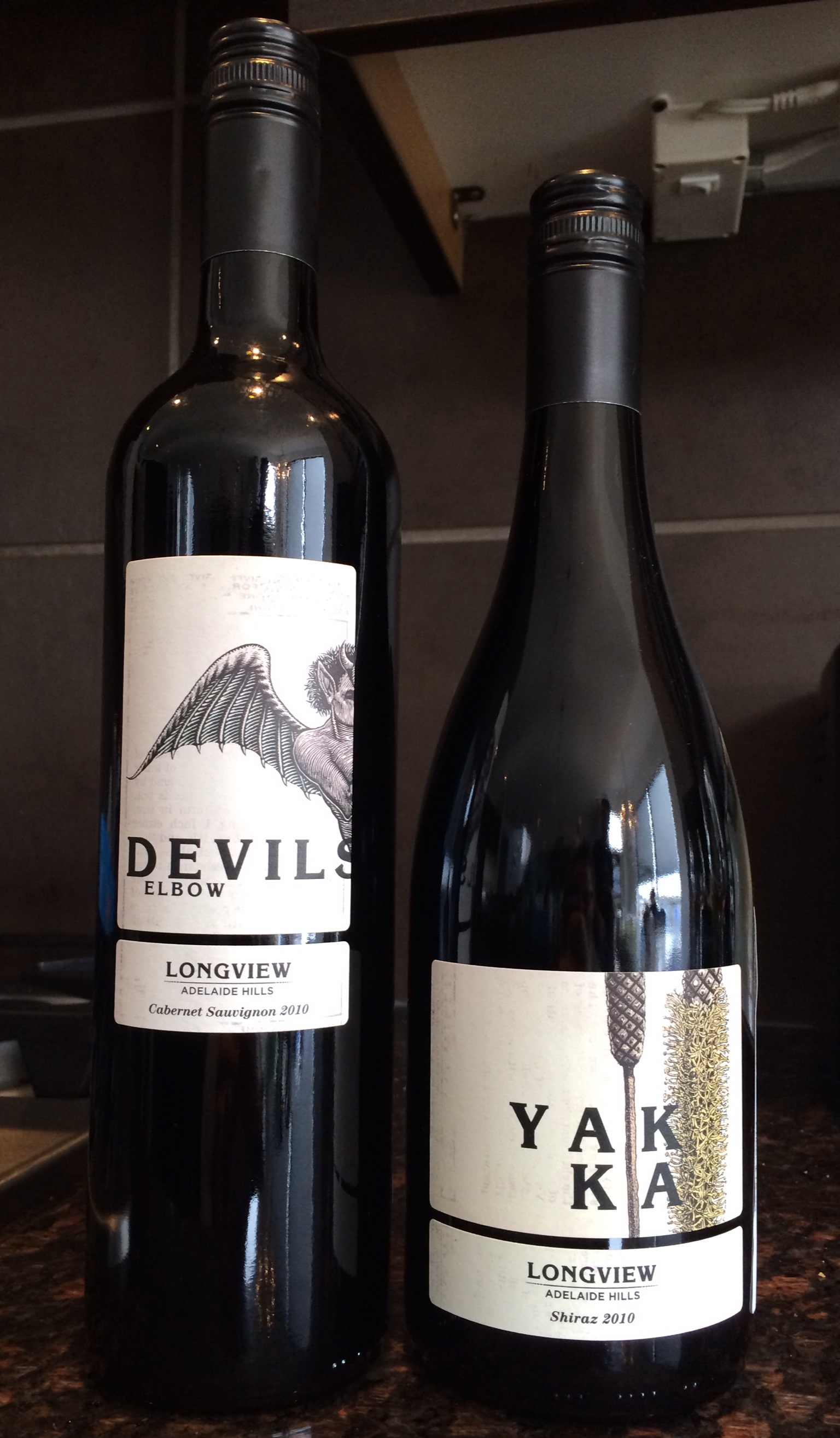
This is the kind of tasting opportunity that wine geeks drool over:  two bottles from the same producer (Longview), same region (Adelaide Hills in Australia), same vintage (2010) and same single vineyard (the aptly named Longview Vineyard), made using the same winemaking techniques (fermentation on skins, 18-20 months aging in French oak), differing only by their grape variety, Cab vs. Shiraz.  The Devils Elbow Cabernet Sauvignon was named after a treacherous hairpin turn in the windy road leading up the hills into Longview Vineyard; the Yakka Shiraz was named after a spiny prehistoric-looking plant that grows in it.  Both red offerings epitomize the New Australia now being unveiled to the wine world:  many recent efforts from Down Under try to sell themselves as a counterpoint to the stereotypical blowsy Aussie fruit bombs of years past, but these wines from Longview take that philosophy absolutely to the hilt, offering up balanced, restrained, nuanced flavours and a take on each grape that is dripping with Old World influence.  The similarities between the two reds are plentiful, but when poured side by side, the differences slowly emerge. Read the rest of this entry »


Wine Review: 2011 Alice May Crosswinds Syrah

23 02 2014
Calgary-born, Cali-made.  YYC pride rise up!

Calgary-born, Cali-made. YYC pride rise up!

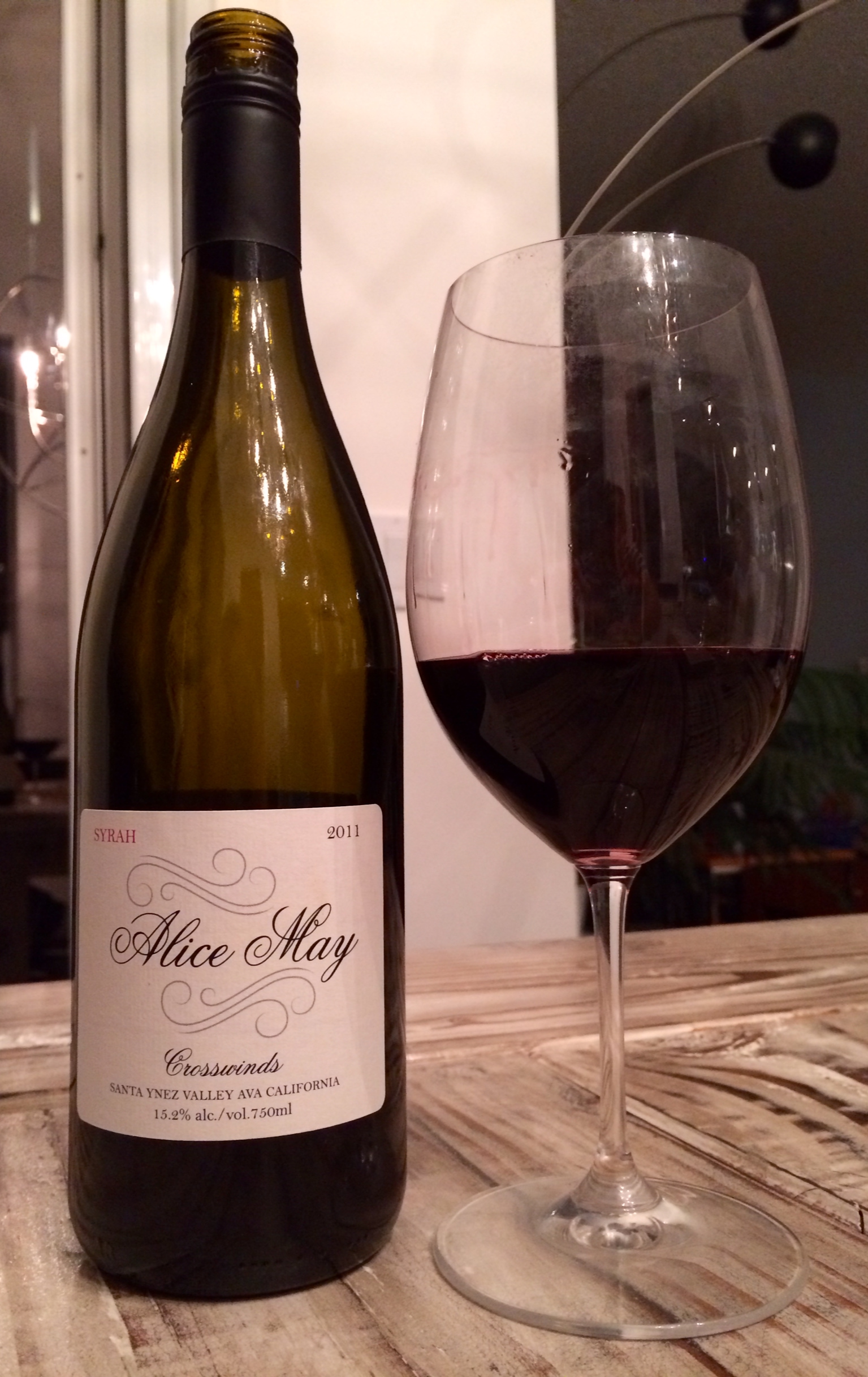
I was at the always-amazing Alloy Restaurant with my wife a few weeks ago, celebrating a rare night away from young children and talking to sommelier Alex Good about Riesling (because I basically talk to everybody about Riesling).  Suddenly he said:  “Hang on.  I have something for you to try.”  He returned with a glass of deeply coloured, powerfully aromatic, eminently interesting red.  “What is it?”  “It’s a Syrah/Viognier co-ferment from Santa Ynez Valley in California.  Cote-Rotie style.”  “Who’s the producer?”  “Well, me.”  It turns out that Good (who has since left Alloy to become a partner and sommelier at the equally excellent downtownfood), in his limited time away from the restaurant biz, had partnered with Cali winery Barrel 27 and its winemaker McPrice “Mac” Myers to create a new label geared toward artisanal, small-run, Rhone-influenced wine.  The 2011 Crosswinds Syrah is the inaugural effort of this collaboration, and although the grapes are all from California, the label name is a clear nod to the venture’s northern soul:  the Alice May is the name of the ship that became the title character’s funeral pyre in the classic Canadian poem The Cremation of Sam McGee.  Only 100 cases of the Crosswinds were made, almost all of which came to Alberta and most of which are now gone.  Syrah is my second vinous love after Riesling, and homegrown efforts like this are such rare finds in the Calgary wine world; both the wine and the story were so intriguing that I set out to find a bottle as soon as our meal was over.  I’ve gone back to find more multiple times since then.

Read the rest of this entry »


Calgary Wine Life: Wines of Portugal Tasting @ Market

7 11 2013

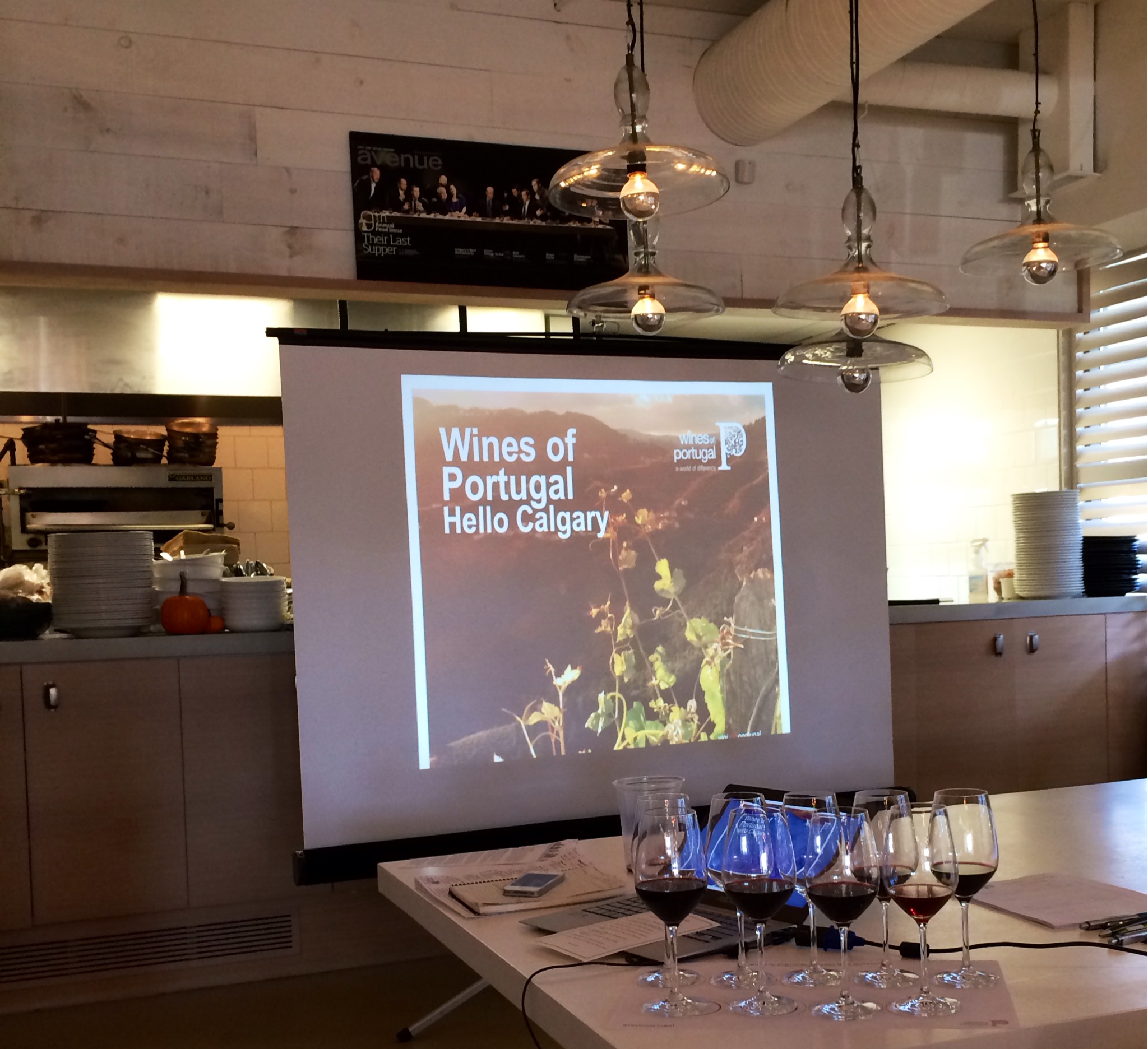
It appears to be Underappreciated Wine Region Month here at Pop & Pour.  Last week I was exposed to the new wave of bottlings coming out of the southern Italian island of Sicily; this week it was Portugal, another unheralded European wine area, that was aiming to bring its remarkable wines to the attention of international export markets.  I got the opportunity to sit in on a guided tasting put on by the Wines of Portugal and led by energetic and well-versed sommelier extraordinaire DJ Kearney, who brought us up to speed on everything from the number of indigenous grape varieties found in Portugal (250+) to the proper pronunciation of key Portuguese wine terms (hint:  if it ends in an E, don’t pronounce the E, no matter how much you want to).  The tasting was held at Market Restaurant on 17th Avenue, which I had never been to before but which proceeded to serve us an absolutely stellar three-course lunch that will be reason enough to bring me back very soon.

image-9

It was sort of fitting that I got to experience Portugal’s wine story after sitting in on Sicily’s, because the two regions have much in common.  Both are home to large numbers of local grape varietals that are barely found anywhere else, and both have made the conscious choice to embrace these lesser-known grapes and focus their quality production around them.  As a result of a lack of name recognition and a dearth of critical attention on these under-the-radar wines, both can offer tremendous value for money for those consumers brave enough to take the plunge (I think Portugal might win the worldwide gold medal for these kinds of bargains).  And both tend to focus more on wines that are blends of multiple different grapes as opposed to single varietal offerings, with Portuguese wine in particular almost always a group vinous effort as opposed to a solo act.  Kearney channeled her inner Wino Karl Marx when talking blending, urging us through these wines to shed the shackles of varietal typicity and embrace the communal symphony of these intrepid groups of local grapes (featuring reds Touriga Nacional, Touriga Franca, Tinta Roriz [aka Tempranillo] and Baga, and whites Alvarinho [aka Albarino], Arinto, Encruzado and many more) all working together to make something greater than themselves.

Read the rest of this entry »


Wine Review: 2007 Bodegas Montecillo Rioja Reserva

2 10 2013

[This bottle was provided as a sample for review purposes.]

I heart traditional Rioja.

I heart traditional Rioja.

The closest I’ve ever come to having a wine from my birth vintage (1980, by all accounts an absolutely terrible vintage everywhere, which explains why I can’t find any) was a bottle of 1981 Bodegas Montecillo Gran Reserva from Spain’s famed Rioja region, a bottle that I randomly stumbled upon with a friend at Co-op Crowfoot.  His birth year was 1982, so we decided that we’d split the difference and share the wine.  Montecillo is primarily a value-based producer whose wines steer clear from the ultra-expensive, but despite its non-insane price tag the 1981 was still gracefully present 32 years later, a shade past its peak consumption window but still a tremendously enjoyable drinking experience.  This longevity is partly due to Rioja’s traditional winemaking style and lengthy legally mandated aging periods:  for all wines designated as Gran Reservas, minimum 2 years aging in oak barrels and 5 years total aging is required before bottle release, and for Reservas, minimum 1 year oak aging and 3 years total aging is required.  This maturation process leaves the young wines exposed to air and leads to some flavour integration with the barrels themselves, resulting in finished wines that forego primary fruit flavours in favour of oak- and oxygen-induced secondary characteristics and complexity and that often have extraordinary staying power in the bottle.  While almost all wines are not meant to age, and while that maxim usually applies even more broadly to inexpensive wines, some traditional Rioja can be found on the shelves for bargain prices and can last for ages. Read the rest of this entry »


Wine Review: 2012 Stag’s Hollow Grenache

20 09 2013

[This bottle was provided as a sample for review purposes.]

You may be looking at history -- Canada's first 100% Grenache?

You may be looking at history — Canada’s first 100% Grenache?

I will spare you the details of why I haven’t posted in awhile; suffice to say that it involves multiple children under the age of 3, potty training, vomit, and the inexorable loss of sanity.  As a result of the above, these first 50 words have taken 25 minutes to write.  But I will not be deterred, because today is something bigger than you or I or the trials of parenting.  Today is International Grenache Day.  And today I get to write about a wine that I have followed from a distance for a long time, even though it is brand new to market.

I have recently come to realize and embrace that, when it comes to reds, I’m a Rhone guy.  I have adored Syrah for quite some time, but in the last few months I have become increasingly enamored with the southern French region’s other red offerings as well.  I tried with piqued curiosity my first varietal Carignan, the ’70s shag carpet of wine.  I devoured Mourvedres from Bandol to Washington State and back.  And I opened my heart to the joy and beauty of Grenache.  There may be other grapes that I enjoy more at their peak expressions, but I don’t know if there’s another grape out there that disappoints as seldom as Grenache does.  No matter how much it costs or where it’s from, it always hits the mark and is reliably bright and juicy and enjoyable.

But what it’s not, at least until now, is from Canada.  Grenache is generally a hot-climate grape, one that needs a lot of sun and a lot of warmth to ripen.  It’s best known in the Mediterranean climates of southern France and the arid deserts of Spain, occasionally popping up in the equally balmy South Australia or the equally parched eastern Washington.  In Canada, where every grape imaginable seems to be planted with hope somewhere, I had never heard of Grenache being grown, and certainly had never seen it being bottled on its own, until I happened to stumble on a Twitter mention of this project by Stag’s Hollow winemaker Dwight Sick.  I have been thoroughly intrigued by the idea of Okanagan Grenache ever since, and after some relentless cyber-stalking, I was lucky enough to snag a bottle of this inaugural experiment and see for myself how this warm weather red adapted to my home and native land. Read the rest of this entry »


Wine Review: 2011 Moraine Winery Cliffhanger White & Red

26 06 2013

[These bottles were provided as samples for review purposes.]

Before I get started, let me first express both my condolences to anyone whose home or business has been impacted by the recent flooding in Calgary and my gratitude to the legions of municipal workers, police/fire/rescue crews and citizen volunteers who have worked tirelessly to repair and restore affected areas.  I think we’re all a little desensitized to disaster coverage that we see on the news, but when the areas underwater are streets in your own city where you’ve walked, shops that you’ve frequented, or the arena of the local team, the veil of distance gets ripped away and the footage quite literally hits home.  Hang in there, Calgary.

Welcome back, blogging.  It's been awhile.

Welcome back, blogging. It’s been awhile.

So you haven’t heard a lot from me in recent times, but I have marginally decent excuses for my prolonged blogging absence.  In the past couple months I have changed jobs, moving back into law firm life at a boutique shop recently founded by some former (and now current) colleagues, and I have also welcomed a new child into the world.  My second son Max was born on Fathers Day, and events both leading up to his birth and since his arrival have taken up most of my attention.  I therefore feel somewhat justified in playing the Major Life Events card in an attempt to excuse the rather ridiculous gap between PnP postings.  If my last 10 days has been any indication, I would expect more of the same down the road, but I will try to keep the blog moving forward, if only to ward off the comment spambots that have descended like hungry vultures in the past few weeks.  I’m not dead yet, Internet.

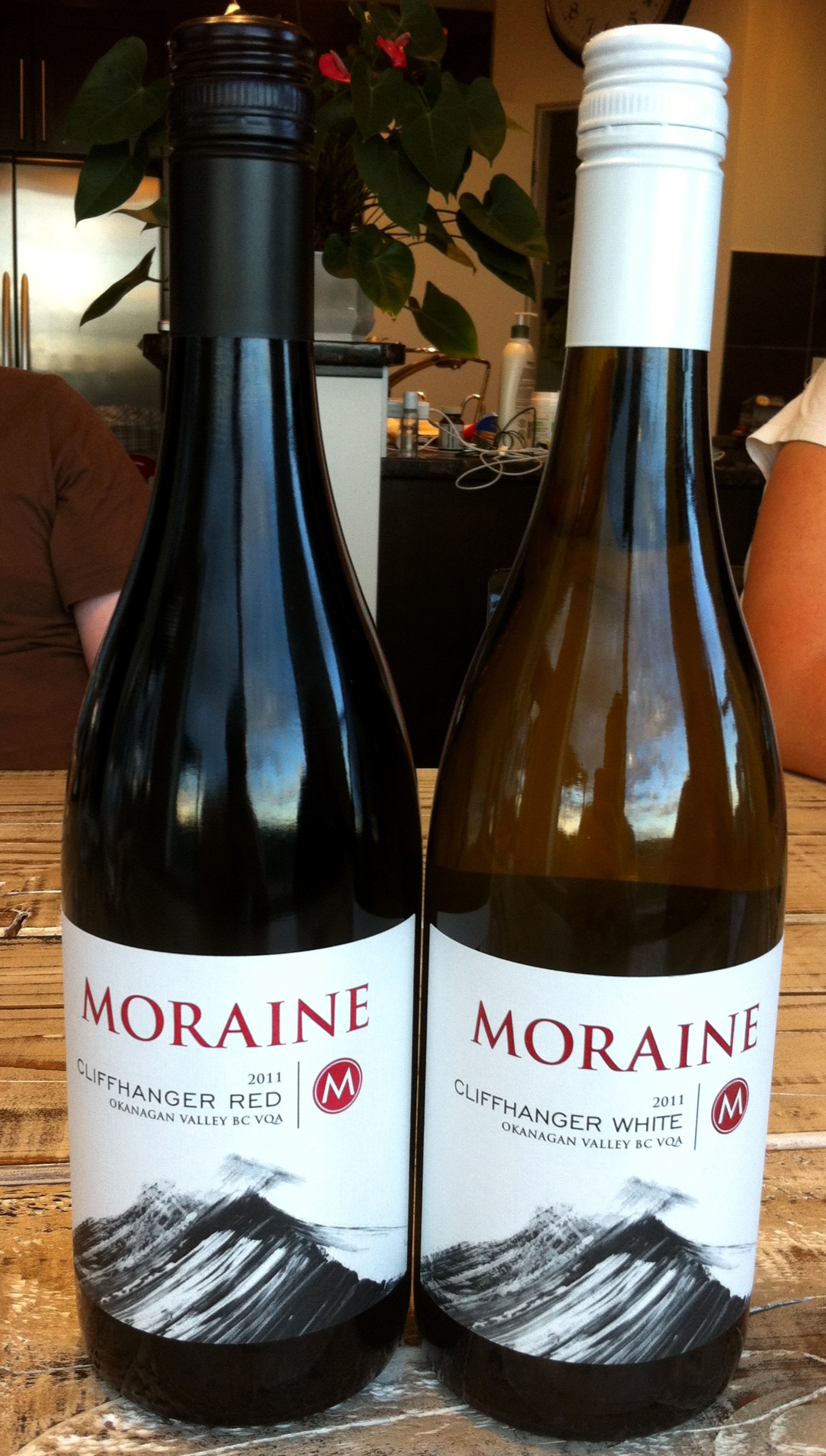
Anyway, on to the stars of today’s post, which are two wines from a relatively new Okanagan producer that I was lucky enough to try recently.  Moraine Winery is a recent addition to the renowned Naramata Bench subregion of the Okanagan, located just northeast of Penticton along the eastern shores of Lake Okanagan.  Naramata has gotten enough critical attention recently that many wineries with any trace of property there are trumpeting the affiliation with the area, even if the bulk of their vineyards lie elsewhere in BC.  Not so with Moraine:  each of its two vineyards, named Anastasia and Sophia after the owners’ two daughters, lie within the Naramata Bench itself, and all of the grapes for its wines come from these sites.  Moraine’s proprietors Oleg and Svetlana Aristarkhov relocated from Alberta to pursue their winegrowing dreams, so I like them already.

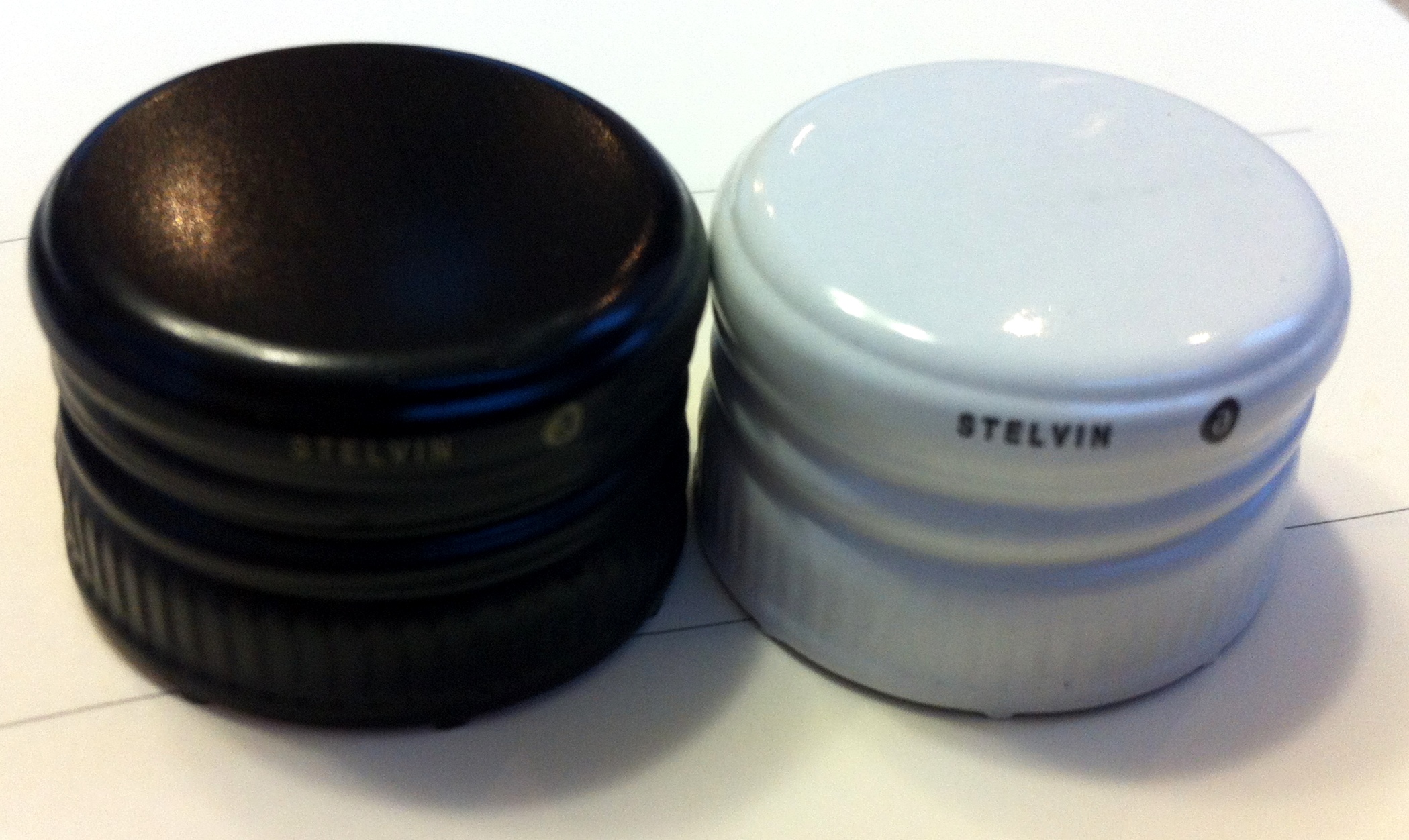
Stelvin Rating:  1/10 (Give me something to work with here...giant Ms next vintage?)

Stelvin Rating: 1/10 (Give me something to work with here…giant Ms next vintage?)

The Cliffhanger series of wines are Moraine’s entry level offerings, each likely checking in at under $20 retail in Alberta ($15 at the cellar door).  This is the price point at which Canadian wines tend to make me nervous, as it can often be challenging for an Okanagan or Niagara producer to put together a compelling, estate-grown, quality bottle for less than $20 given the land, labour and equipment costs and climatic challenges common to all Canadian wine regions.  Thankfully, both the 2011 Cliffhanger White and the 2011 Cliffhanger Red are strong and enjoyable introductory efforts from a producer that I’ll be watching going forward. Read the rest of this entry »


Wine Review: 2008 Cachet No. 01 by Stag’s Hollow

27 02 2013
There is no debate:  this is a baller-looking bottle of wine.

There is no debate: this is a baller-looking bottle of wine.

Apologies in advance to my local Alberta readers:  this review will be almost useless to you.  I have never seen this bottle in our fair province, or on a retail store anywhere else for that matter.  I got it for Christmas a couple years ago from a cousin-in-law out in Vancouver (thanks Brad!), was immediately impressed by the rap-video blinginess of its container (the bottle must weigh 2 pounds empty) and then discovered through research that it was created as part of a unique and forward-thinking experimental line of wines by stalwart Okanagan producer Stag’s Hollow.  The Cachet wines are limited edition blends of top quality grapes which are outside of the standard SH catalog; they are made once, as a small run in a single vintage, and then never replicated again.  So while this is the 2008 vintage of Cachet No. 01, there is no 2009 or 2010 bottling — the 1500 bottles (125 cases) of this wine from that single year are all there is.  I have no idea how this is commercially workable, but I find it fascinating.  These high-end one-off blends put the power in the hands of the winemaker to express a different vision with these specialty wines every year…or at least that was the plan.  As it turns out, only two Cachets have ever been made:  this one, and the sequel Cachet No. 02 (made from Grenache, Syrah, Viognier and Marsanne) that was released around the same time.  The world is still waiting on Cachet No. 03, and I’m sort of wondering whether the concept has died before it ever really got off the ground. Read the rest of this entry »


Wine Review: 2007 Luciano Sandrone Nebbiolo d’Alba Valmaggiore

24 01 2013
Some of my favourite labels of all time.  Classic.

Some of my favourite labels of all time. Classic.

If there’s anything better than a good bottle of wine, it’s a good bottle of wine that you got on sale.  While this particular bottle usually retails for around $50, I was lucky enough to grab it on special for a shade under $30, which made me ultra-excited to open it and greatly reduced my chances of being disappointed with what was inside.  Not that there was much of a chance of that, given who made it.

Luciano Sandrone is a Barolo legend.  If you were going to make an All-Star team of producers from the Piedmont region in northwest Italy, Sandrone would definitely be in the starting lineup. Ever since his first vintage in 1978, he has wowed the wine world with a slate of bottlings that are crafted in a more open, approachable manner than those made by the staunch traditionalists in the area but yet that remain elegant, complex and capable of aging and improving for a long time.  Most famous for his Barolos (Barolo is a subregion of Piedmont whose wines are made from the Nebbiolo grape), Sandrone also makes a Barbera (which is fantastic), a Dolcetto, a red blend and this Nebbiolo d’Alba.  Here’s a good rule of thumb for reading Italian wine labels:  if you see a label stating “_______ di _______” or “_______ d’_______”, odds are that the first word in the sequence will be the name of the grape and the last word will be the area where it’s from.  “Nebbiolo d’Alba” means “Nebbiolo from Alba”, which is the name of a Nebbiolo-growing region in Piedmont immediately adjacent to the great Barolo and the equally great Barbaresco appellations.  Since the soil and climate conditions in Nebbiolo d’Alba are similar to those in Barolo/Barbaresco, and since the same varietal is used to make the wine, Nebbiolo d’Alba can be a source of wines that give you a good sense of what Barolos and Barbarescos are all about but at a fraction of the price. Read the rest of this entry »


Wine Review: 2009 Venus La Universal Dido

16 01 2013

[This bottle was provided as a sample for review purposes.]

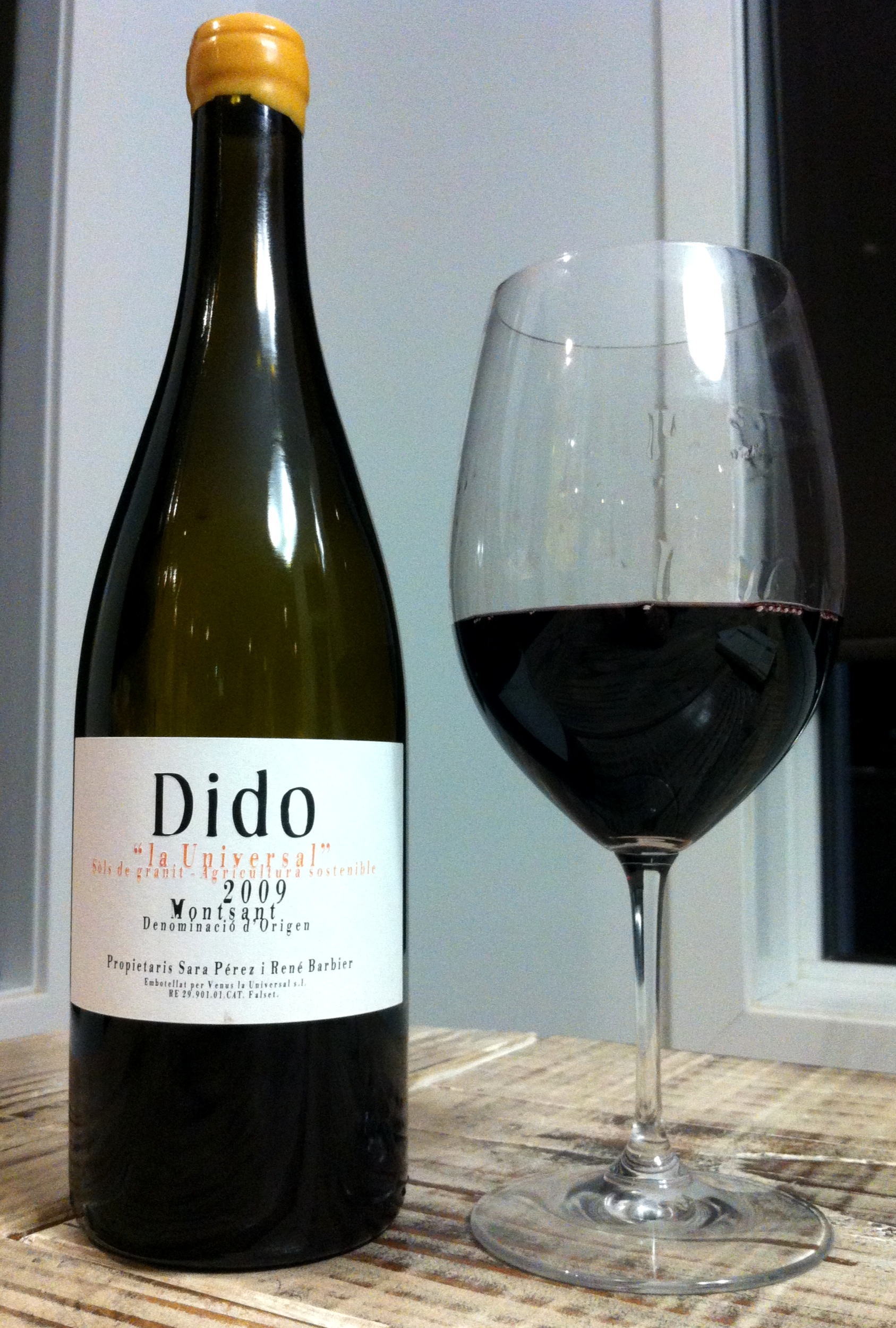
This must be tasted to be believed.  Just give yourself a couple days.

This must be tasted to be believed. Just give yourself a couple days.

Back!!

Almost a calendar month from my last real post, things have finally returned to some semblance of normalcy in my household and all family cold and flu issues are mostly a thing of the past, leaving me free to kick back with a (highly intriguing) glass of wine and blog to my heart’s content. Luckily for me, PnP’s revival from the ashes of neglect comes in the form of a review of a bottle that I could write about for days, a wine that you can buy here for less than $30 and which has been constantly opening and evolving since I opened it over a day ago. I’ve tasted it over many hours and still can’t entirely figure out how to put it into words, but here goes.

Venus La Universal is one of many vinous projects currently being undertaken by Sara Perez, who is considered by many to be the most important female winemaker in Spain. Her roots in wine are familial: when she was young her parents moved the family from Barcelona to the nearby (and now-renowned) area of Priorat, located due west of the city in northeast Spain. Her mother and father became the founders of Priorat’s School of Oenology and early contributors to the wine boom that now envelops the region. Perez’s wines are all driven by a sense of place and a deep connection to the vineyards from which they are derived. I don’t usually include quotes in my review, but this one got to me: in a 2005 interview with Luis Cepeda, Perez maintained that “[t]here has to be absolute complicity between land and winery.” The land that ultimately resulted in this wine is a 4 hectare piece of farmland found in the southern end of the oddly donut-shaped region of Montsant, which forms a complete ring encircling the bullseye of Priorat (and thus can offer wine drinkers Priorat-level taste experiences for value prices). It’s a harsh landscape featuring nutrient-poor granitic soils, high altitudes, hot days and cold nights, terraced vineyards that must be harvested by hand, and vines that have to struggle to survive. Unlike most agricultural crops, however, with grapevines this constant battle to thrive leads to deeper, stronger roots and higher-quality, more flavourful fruit, making areas such as this prized for their ability to coax the most character out of their grapes.

Read the rest of this entry »


Wine Review: 2011 Stift Goettweig Gruner Veltliner Messwein

14 12 2012

[This bottle was provided as a sample for review purposes.]

Just a classic-looking bottle of wine.  And don't overlook the awesome ceiling fresco on the neck capsule!

Just a classic-looking bottle of wine. And don’t overlook the awesome ceiling fresco on the neck capsule!

Wine lovers owe monks more than you might expect.  For centuries in Europe, it was these members of religious orders who cultivated and maintained vast tracts of vineyard land owned by the church and who advanced the world’s knowledge of viticulture and winemaking.  Legendary wine regions like Burgundy in France were first classified and sub-divided into distinct terroirs by the monks, who analyzed soils and slopes and charted the subtle similarities and differences discovered and their effect on the grapes that were grown in each location.  But that’s all ancient history, right?  Not so fast.  On the banks of the Danube River in Austria there is a Benedictine monastery that is almost a millennium old which has been making wine for 300 years and which still owns and is involved in managing wine production today.  This piece of living history is Stift Goettweig, founded in 1083 and home to a contemplative order of Roman Catholic monks bound to vows of solitude and meditation who have been producing wine on the property since 1730.  In 2006, the monastery leased its 26 hectares of vineyards to a small group of investors (a group that includes some of those running the monastery itself) who are dedicated to making high-quality white wines from grapes grown in the hallowed soil, particularly from Austria’s signature grape, Gruner Veltliner. Read the rest of this entry »


Wine Review: 2009 Il Palagio Casino delle Vie

14 11 2012

[This bottle was provided as a sample for review purposes.]

This is a pic of a real acrobat doing a real balance pose, albeit probably not on a bottle of wine.

Many celebrities have wine ventures.  For the most part, they are side hobbies at best and branding exercises at worst, usually making it hard to see what the famous name on the label has added to the wine inside.  Not so with Sting and the lineup of wines coming out of his old-made-new estate in Tuscany.  When he and his wife Trudie Styler first came across the historic Tuscan Il Palagio property in the late 1990s, it was dilapidated and poorly tended, in a vast state of disrepair.  After they purchased the estate and the 350 acres of land forming part of it, they spent an entire decade restoring the buildings and revitalizing the land, bringing on viticultural experts to convert the property to biodynamic growing methods (a pesticide- and herbicide-free holistic philosophy that focuses on ensuring the vine thrives in harmony with its surrounding environment and ties patterns of vine development to lunar phases, among other things) and giving vineyards that had been producing wine grapes since the 16th century a new lease on life.  Instead of rushing the fruits of the estate to market to capitalize on a well-known name and get cash flowing, Sting and Trudie waited until they and their team believed the land was sufficiently rehabilitated and the products of a high enough quality; 13 years after they first came across the property, they are releasing only their second vintage of wines.  In addition to a trio of vinous bottlings, Il Palagio is also the source of many other biodynamically-grown agricultural products, including fresh-made honey and cold-pressed extra virgin olive oil (I’ve been lucky enough to try the oil, and though I’m far from an EVOO expert, my layman’s opinion is that it was unbelievable).  The amount of time, effort and money that has gone into building Il Palagio back up is clear proof that this is a serious pursuit for Sting, one intended to create a lasting legacy.  I will refrain from making a “Message In A Bottle” joke here, but this is no mere vanity project. Read the rest of this entry »


Wine Review: 2011 Wine Men of Gotham Shiraz Grenache

7 11 2012

[This bottle was provided as a sample for review purposes.]

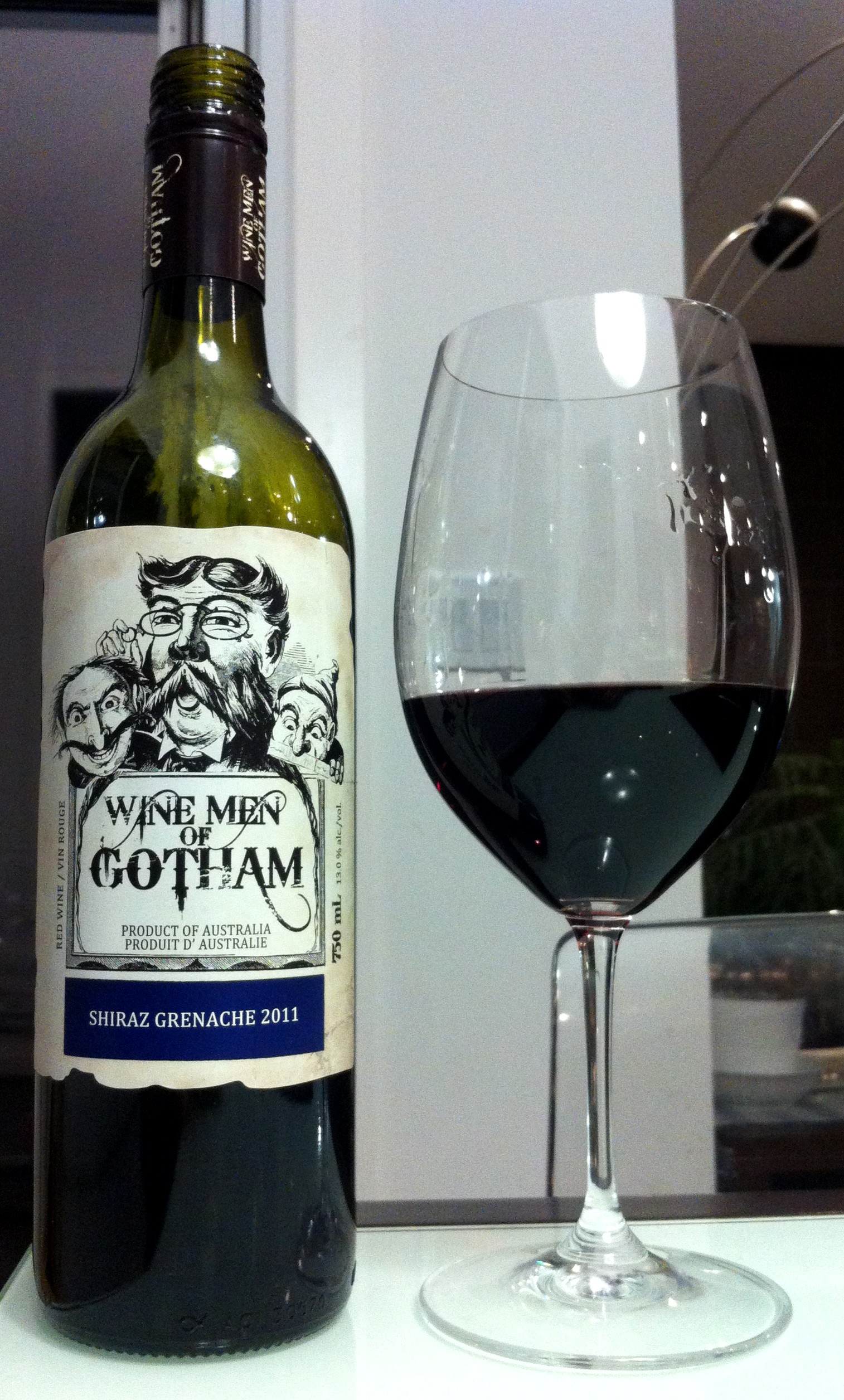
Cartoon Aussie label looks can be deceiving.

Don’t worry — this won’t be the wine you think it is.  After living through over a decade of mass-produced, hugely ripe, straight-ahead, destined-for-export cheap wines coming out of Australia bearing tongue-in-cheek labels laden with any number of hand-drawn creatures, we can all be forgiven for looking at any sub-$15 Aussie red with a cartoon label with a touch of skepticism.  While I think the country as a whole often gets unfairly typecast by virtue of the overwhelming response that Yellow Tail and its brethren received when they burst onto the international market, it’s probably fair to say that most inexpensive Shiraz still tends to follow this formula…after all, why mess with success, especially the economic tidal wave of success that these wines continue to enjoy?  But this bottle does exactly that, delivering a wine that is light years from what your taste buds are expecting of a Shiraz Grenache from Down Under and trampling on some prejudices while it’s at it.

The first hint that Wine Men of Gotham’s Shiraz blend might be different from most is its alcohol level:  at 13%, it’s a good 1.5% to 2% lower than the standard modern Shiraz from Australia.  This is particularly unusual/impressive because (1) the regions where the wine’s grapes originate (Barossa Valley, McLaren Vale and Riverland, although the label bears the catch-all “South Eastern Australia” name due to this multi-zone viticultural collaboration — SE Australia is an area that spans most of the grape-growing land in the country outside of the West Coast) generally tend to have warmer-than-average climates, which encourages faster sugar ripening and thus higher-alcohol wines, and (2) Grenache grapes are known for producing wines with heightened alcohol levels, especially in hotter climates.  It’s near impossible to produce a big, goopy, jammy Shiraz Grenache at 13% alcohol, which suggests that the Wine Men had something else up their sleeves for this bottle. Read the rest of this entry »


Calgary Wine Life: St. Urbans-Hof Riesling Tasting @ Co-op Crowfoot

25 09 2012

[Cross-posted at www.calgaryisawesome.com]

Consider this less of a blog post and more of a public service announcement.  If you’re going to remember a single message out of everything I’ve ever written about wine, make it this little piece of advice:  DO NOT BE AFRAID OF GERMAN RIESLING.  I wish I could tell you that this was self-evident information, but there remains this persistent and lingering seed of doubt planted deep in the brains of casual wine drinkers in North America irrationally warning them that German wine in general, and German Riesling in particular, is something to be wary of.  Even (or rather, especially) people who haven’t tried it tend to avoid it, looking askance at its tall tapered bottles and Gothic multisyllabic labels, spouting the well-worn syllogism:  “I don’t like sweet wines.  German Riesling is sweet.  Therefore, I don’t like German Riesling.”  Most people who say this probably don’t realize that:

1.  NOT all German Riesling is sweet — in fact, there has been a concerted movement towards drier (“Trocken”) styles of wine in Germany over the past decade or so; and

2.  Even sweeter German Riesling isn’t sweet like other wines are sweet.  To me, the best expressions of Riesling are those where there is a little residual sugar left in the wine after fermentation, because that hint of sweetness is a necessary counterpart to the firestorm of acidity usually present in good German wines.  The delicate razor’s-edge dance between sweet and tart is the very essence of what German Riesling is all about, and to dismiss a key component of that ballet as something akin to what you find in a $6 bottle of insipid white Zinfandel is to do both yourself and these amazing wines a disservice.  Most people who say they don’t like “sweet wines” actually don’t like UNBALANCED sweet wines, wines with a bunch of leftover sugar and nothing else to level it out.  German Riesling is the antithesis of these kinds of bottles, and the best illustration that not all “sweet” wines are created equal.

If you get past the stereotypes and try a bottle of German Riesling for yourself, I predict you will quickly fall in love; to me they are the most individual, remarkable and memorable wines in the world.  And the best part about joining the German Riesling Revolution is that the wines usually offer remarkable levels of quality for a bargain price.  Many top producers make entry-level bottles that are widely available for under $20 CDN, some of the most impressive of which come from the well-known Mosel Valley winery of St. Urbans-Hof, instantly recognizable for its striking black and copper label design (see the bottle pics below).  Last Thursday, a lucky few of us attended at the Crowfoot location of Co-op Wine & Spirits to hear Urbans-Hof owner and winemaker Nik Weis talk about his property and share a half-dozen of his recent wines.

Read the rest of this entry »