Global Champagne Day Taittinger Technical Tasting @ Alloy Restaurant

21 10 2018

By Raymond Lamontagne

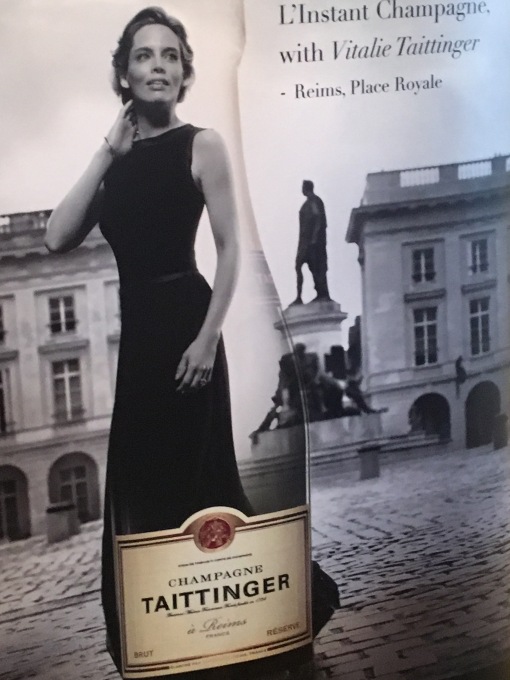
Happy (belated) Global Champagne Day! There is probably no better way than a champagne tasting to shake off what has become a considerable amount of wine writing rust. Tasting bubbles, bantering with a few friends, listening to a knowledgeable and engaging speaker — good for the soul. As usual I arrive at the restaurant too early, a neurosis that rarely extends to other important engagements in my life but one that seems omnipresent where wine events are concerned. I simply do not want to miss anything. Right away there is a glass of Cuvee Brut Reserve NV (non-vintage) in my hand, Taittinger’s entry level offering, and at this point I do not mind waiting. IMG_2148Taittinger’s Mikael Falkman comes highly recommended, although on this occasion he seems more inclined to let these majestic wines speak for themselves. He does come to life near the end of the tasting with an exuberant blend of knowledge and humour.  Mikael makes sure to provide a concise history of this famed house, but I particularly appreciate his expositions of the Taittinger family’s winemaking philosophy. I will provide these gems and nuggets along with my tasting notes for each wine. Read the rest of this entry »


Calgary Wine Life: Nautilus Technical Tasting with Winemaker Clive Jones

25 07 2018

By Raymond Lamontagne

The more New Zealand wine I drink, the higher it climbs in my esteem.  Renowned for its superb array of cool climate vineyards and their purity of fruit expression, New Zealand provides a fine showcase for my favourite black grape, Pinot Noir; I have also met few who cannot appreciate the unique and ultra-distinctive style that is New Zealand Sauvignon Blanc. We were all exceptionally pleased to welcome to Calgary Nautilus Estate’s winemaker Clive Jones, who travelled all the way from the globally renowned Marlborough region to put an array of his wines through their paces before us. Limits on word count and reader attention span mean that I must immediately plunge into telling six different stories about six different Marlborough wines…OK, five stories. You’ll see below.

img_1778.jpg

2017 Nautilus Sauvignon Blanc (~$23)

Clive’s knack for explaining technical winemaking details in highly entertaining fashion becomes immediately apparent as the tasting begins. He feels fortunate that a vintage as challenging as 2017 in Marlborough, one marred by not one but two cyclones, could yield a wine of this caliber: “It did get 92 points…if we care about points.” I don’t, but much of the world at large does.

IMG_1776

Nautilus winemaker Clive Jones

Only about half of 2017’s grapes were picked before the weather turned foul, but miracles were wrought and enough of the remainder were able to be used in the final blend. This crisis averted speaks to the classic advantage for those making a varietal wine from a blend of different sites year in and year out, a characteristic that Marlborough (with its myriad soil types and small-scale regional differences in elevation and climate) shares to some extent with Champagne. With an array of lots from different parcels to choose from, careful adjustments can be made by the savvy winemaker to land on a house style every time. The intent in Nautilus’ case is to dial down the aromatics (but not too far down) and dial up the palate weight, yielding something with a pleasing texture that maintains the drinker’s interest. Interestingly enough, part of Clive’s strategy involves adding around 1% of barrel-fermented wine to the Sauvignon Blanc blend, the remainder hailing from trusty temperature-controlled stainless steel tanks. This calculated attempt to tame what is usually a fiercely aromatic, high-acid variety while still exalting the grape’s fundamental identity executes its mission with precision. 

Read the rest of this entry »


Wine Review: 2014 Schlossgut Ebringen Spätburgunder Trocken

4 07 2018

By Peter Vetsch

[This bottle was provided as a sample for review purposes.]

Ever since I first got into wine about a decade ago, I have come across the eternal, nigh-unsolvable question many times:  where can you look for consistent, top-quality, good-value Burgundy?  Well, I have finally solved the riddle — turns out it’s been in Germany all along.

IMG_8390

Mesmerizing.  Germany, wow.

It might not be in France, and it might have just broken my heart in the World Cup, but Germany has been quietly elevating its Pinot Noir bona fides.  This fickle and finicky red grape is known here as Spätburgunder (literally, “late Pinot”, or “late Burgundy”, due to its relatively late-ripening tendencies) and is in the process of taking the next step in Germany’s warmer climes, aided imperceptibly by climate change and to a larger degree by greater clonal awareness and vineyard attention.  But it is not every country that can suddenly become a Pinot success story; Germany’s natural advantages (including patches of Burgundian-style limestone soil) are finally being properly cultivated, and almost as importantly, shared with the world.

IMG_8396

I don’t think I had ever seen a wine from Germany’s Baden region on an Alberta retail shelf until 2018, and after a taste of what Schlossgut Ebringen can do with possibly the hardest grape of all to do well (and don’t even get me started on their utterly mind-bending Chasselas “S”, which belongs in another dimension), it makes me wonder what has taken us so long to get on board.  A quick primer for the uninitiated:  Baden is in the extreme southwest corner of Germany, just a stone’s throw and a border crossing away from Alsace, due west from Munich until you almost hit France.  It is closer to Zurich, Switzerland than any major German city.  Baden is built like Chile, in a long narrow north-south stripe, within which lies 9 surprisingly different subregions.  Pinot Noir/Spätburgunder is the most commonly planted grape (at around 35% of all plantings), though on the whole white grapes outnumber reds 60/40.  In the south of Baden, just south of the famous Baden-Baden spas, lies the top subregion of Markgräflerland, known largely for Chasselas (locally known as “Gutadel” just to add more proper nouns to your life) but also a burgeoning Pinot power.  Baden’s other top attraction, the Black Forest (Schwarzwald), lies to the east, and in its foothills lies the village of Ebringen and the hero of tonight’s story. Read the rest of this entry »


Bricks Wine Advent Calendar 2017: Day 20

20 12 2017

When the days hit double digits starting in 2s, I know our calendar work is almost done.  I’m not going to lie:  I’m ready not to be writing tasting notes and blogging on a daily basis, at least for a little bit.  But then I unwrap a bit of an Advent mystery and find myself sucked in all over again, pulled once more into the insatiable curiosity that goes with loving wine.  This time it came from revealing a bottle bolding displaying “Sancerre”, likely THE Old World heartland of Sauvignon Blanc and a renowned white region in France’s eastern Loire Valley…but then noticing things that seemed off.  Did it seem kind of dark inside?  Is that a maroon neck foil?  Wait – does that say Sancerre ROUGE?  (Granted, I have already had a white wine in this calendar say that it was a red wine by mistake, but this bottle actually IS one.)

IMG_7300

It turns out that red wine makes up close to 20% of Sancerre’s yearly production, all of which is required by appellation rules to be 100% Pinot Noir.  And there is perhaps no estate in Sancerre that takes its reds more seriously than Domaine Vacheron, which plants 11 hectares of Pinot alongside 34 hectares of Sauvignon Blanc and doesn’t treat it like an afterthought in the cellar.  The Domaine is now in its fourth generation of family ownership and has revamped all of its vineyard practices in the hands of the two young cousins who now direct its operations, Jean-Laurent and Jean-Dominique Vacheron.  They converted the estate to biodynamics in the early 2000s and now only fertilize the chalk and silex soils with composts made on the property, harvest by hand, ferment using only native yeasts and bottle according to the lunar cycle.  Their Pinot Noirs are partly matured in stainless steel tanks to preserve their fruit and partly in large neutral barrels for oxidative effect without oak flavours.

IMG_7301

Cork Rating:  2.5/10 (Not only is it boring as sin, it doesn’t do that great a job at its primary function of holding in liquid.)

This is my first ever bottle of Vacheron, the 2014 Sancerre Rouge, from a property that is almost at the literal centre of France.  I was a little leery from the outset as the cork came out of the bottle completely sodden and squeaky, but the wine inside seemed to bear no ill effects.  It was a fully transparent ruby in the glass and emitted a distinctive and attention-grabbing set of aromas:  beyond the more expected Pinot smells of cranberry, underripe raspberry and violets, there is a pronounced vegetal greenness (dill/pickles; Ray says nettles), a tangy citric bite (tangerine, gooseberry) and a base industrial rockiness (flint, car tire skid marks) that differs markedly from your run-of-the-mill Old World Pinot earthiness.  The palate adds salted watermelon, pomegranate, lava dust and crushed roses on a light, deft body structured mainly by prominent papery tannins.  This is a compelling mirror of its rocky soil and a suggestion that Pinot has the potential to ascend from its eternal Sancerre understudy status.

88- points


Wine Review: Stag’s Hollow Fall Reds

18 10 2017

[These bottles were provided as samples for review purposes.]

IMG_6962

If this is where we are in the Okanagan, we’re in good hands.

What’s this?  Two reviews in the span of three days??  Is this inspiration or panic?  Turns out it’s a little of both.  For reasons that will shortly become clear, the next couple of months are going to be content-intense here at Pop & Pour HQ (aka my kitchen table), which has me geared up and focused on my current inventory of samples to make sure everything gets its full and proper due.  But I’ve also had a lingering eye on these particular wines ever since they landed on my doorstep, as they represent the latest missive in a wonderful conversation I’ve been having over the past months and years with one of the most intrepid, curiosity-filled, quality-focused wineries in the Okanagan Valley, Stag’s Hollow.  Over the summer I looked in on the white and pink side of their portfolio, but now that my trees no longer have leaves, the time has come to fully commit to autumn, and tonight’s trio of reds has me in the mood to cast off thoughts of T-shirts and shorts and embrace my favourite season.  This lineup features an Okanagan stalwart, only rarely done justice; an utter Okanagan rarity, borne of winemaker Dwight Sick’s unabashed intention to push viticultural limits in the region; and a burgeoning Okanagan star that will hopefully soon get the attention and acreage it deserves.  Pinot Noir, Grenache (!), Syrah. Read the rest of this entry »


Wine Review: Buena Vista Social Club

16 08 2017

[These bottles were provided as samples for review purposes.]

If there was a Most Interesting Man In The World designation for the history of wine, Agoston Haraszthy would be a strong contender for the crown.  I had previously come across his name in a book about the pioneering contributors of the California wine industry and had assumed that he was one of many 19th-century immigrants from Europe to the United States who brought Old World wine knowledge and tradition with him to his new home and helped it propagate.  And he was.  But his tale was anything but rote.

FullSizeRender-700

Haraszthy was born in Hungary to a noble family in 1812, later becoming known by the honorifics “Count” and “Colonel” even though he was technically neither.  He carved his own path throughout his life, stringing together a series of firsts that would be near-impossible to top in this day and age.  He was the first Hungarian to move and settle in the United States; the founder of the oldest village in Wisconsin (and the planter of some of the first grapevines there); the first town marshal and elected sheriff of San Diego; and the founder of the first commercial winery in California (more on that in a bit).  From the time he first arrived in the United States in 1840 to the time he left in 1868, he was at various times a mill owner, an author, a steamboat operator, a butcher, a member of the California State Assembly, and a gold refiner and assayer at the US Mint.

Read the rest of this entry »


Calgary Wine Life: Weingut Thörle Tasting @ Vine Arts

2 06 2017
IMG_6203

Christoph Thörle

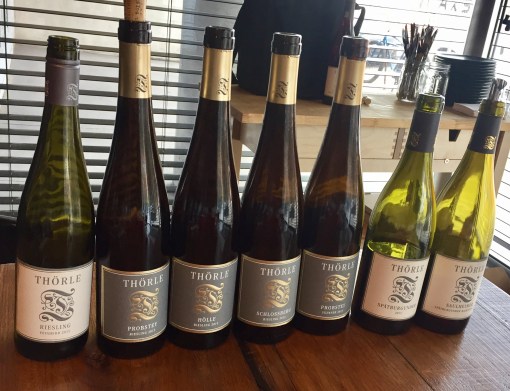
It’s been a bit of a banner wine week, seven days tailored to the precise preferences of my palate.  My personal favourite types of red and white wine are Washington Syrah and German Riesling respectively, and late May has seen visionary producers specializing in each of these areas visit our fair city.  My Washington wine prayers were answered last week when Greg Harrington of Gramercy Cellars put on a remarkable Master Class in Calgary; this week it was Germany’s turn, thanks to an eye-opening portfolio tasting put on by the dynamic Christoph Thörle of the eponymous Weingut Thörle, from the global home of Riesling’s Rheinhessen region.  Through four different earth-shattering Rieslings and seven total wines, Thörle took us through what must be some of the world’s best expressions of my first vinous love.

If you say the word “Rheinhessen” to a wine person, the tenor of their reaction might be a generational one.  The region, located in west-central Germany, due south of Rheingau and southwest of Frankfurt, is the largest in the country in terms of planted acres and is tailor-made for grape-growing:  it’s dry, sunny and relatively warm, with limestone-based soils overlaid by a variety of alluvial deposits, as long ago it was largely part of an underwater seabed.  Rheinhessen once had a reputation to match its physical advantages, and was long considered one of the pinnacle areas of German viniculture.  But a mid-20th-century flirtation with new lab-crossing grape varieties and mass-market, quantity-focused bottlings turned into a 1970s and 80s Liebfraumilch obsession that saw lesser varietals dominate much of the vineyard area and Blue Nun and Black Tower nearly obliterate the world’s prior impressions of German wine.  If you stopped paying attention to Rheinhessen then (as many did), you will have missed out on what’s going there now:  a quiet quality renaissance, and a return to the right grapes properly planted and tended on the right sites, perhaps not better personified than by Christoph Thörle and his brother Johannes.
FullSizeRender-626

They took over the operation of the Thörle family winery in 2006, when Christoph was just 22 and Johannes 24.  Together they have overseen an expansion of the estate’s vineyard holdings and a corresponding increase in annual production, paired with a return to simple, hands-off viticulture and winemaking practices:  no pesticides or herbicides in the vineyards, multiple-pass harvests, all natural yeasts and no additives in the cellar, minimal sulphur at bottling.  Weingut Thörle now has 80 acres of vine holdings, remarkably spread over 100+ different vineyard parcels but largely centered around the town of Saulheim in north-central Rheinhessen.  The area features a wide array of different slopes, soils and sun exposures, allowing for the production of multiple different varietals, and Saulheim itself is surrounded by Thörle’s three crown-jewel vineyards:  Probstey, Schlossberg and Hölle.

Thörle has been generating increasing acclaim for both its white (Riesling, Silvaner, Chardonnay and more) and red (Pinot Noir, known Germanically as Spätburgunder) wines and made its glorious entrance into the Alberta market last year.  Now some new offerings are on their way to the province, and we were fortunate enough to have Christoph talk us through most of them, including a few bottles that might change your perspective on, well, everything. Read the rest of this entry »


Introducing: Roserock Drouhin Oregon

5 01 2017

[These bottles were provided as samples for review purposes.]

fullsizerender-526

New vineyard, new venture, new heights.

Maison Joseph Drouhin has been a Burgundy mainstay for over a century, but third-generation proprietor Robert Drouhin discovered a kindred spirit location in Oregon close to 40 years ago when he arranged a Judgment of Paris-esque blind tasting competition between a group of classic red Burgundies and some upstart USA Pinot Noirs back in 1979.  At a time when almost nobody even knew that Oregon was producing quality wine and all American hopes were seemingly based on the performance of the California contingent, it was “Papa Pinot” David Lett’s Eyrie Vineyards Oregon Pinot Noir that lapped the New World field in the tasting, placing 2nd overall behind only Drouhin’s own 1959 Chambolle-Musigny, an exalted Burgundy from a top vineyard.  Within less than a decade from this revelatory event, Drouhin had bought land in Oregon’s Dundee Hills (a subregion within the large Willamette Valley located almost equidistant from Portland and the Pacific Ocean) to plant to Pinot and had assigned his own children to carry the family legacy across the ocean, naming his daughter Veronique as winemaker and his son Philippe as viticulturist, positions both still hold at Domaine Drouhin Oregon today.

Fast forward a quarter century.  Drouhin Oregon has established itself as one of the premium producers of the Willamette Valley had has become firmly entrenched in the Oregon community.  On the lookout for additional top vineyard lands outside of Dundee Hills, it never quite comes across what it is seeking…until the Roserock vineyard comes up for sale.  Roserock is located due south of Dundee, right in the centre of Willamette in the well-regarded Eola-Amity Hills subregion, about a half hour south of Portland and just west of the state capital, Salem.  It is replete with features that would make any winery’s ears perk up:  complex, well-draining volcanic soils; high (for Oregon) temperature-controlling elevation, perched between 550-750 feet above sea level; sited in the middle of a wind corridor channelling cool Pacific air right through the vines, maintaining acidity and prolonging ripening.

fullsizerender-527

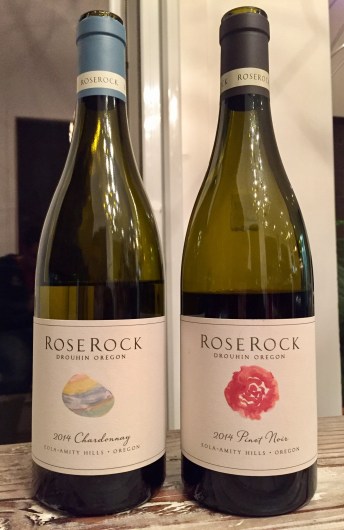
Roserock was planted to 111 acres of Pinot Noir and 11 acres of Chardonnay, Oregon’s (and Burgundy’s) signature grapes and had previously supplied fruit not only to Drouhin but to a laundry list of Willamette’s bright lights, including Soter, Argyle and King.  Drouhin pounced on it, acquiring the entire vineyard in December 2013 in its most significant transaction since starting up business on this continent.  This was not just a blip on the radar of a global wine power:  it single-handedly almost doubled Drouhin Oregon’s vineyard land holdings in the state, and it led to the creation of a new standalone Drouhin brand dedicated to the preservation and celebration of Roserock’s unique identity.  2014 was the inaugural vintage of this new label, and the first Roserock Drouhin Oregon Chardonnay and Pinot Noir make it eminently clear why this vineyard deserves to stand on its own. Read the rest of this entry »


Sacred Hill Marlborough Trio

29 11 2016

[These bottles were provided as samples for review purposes.]

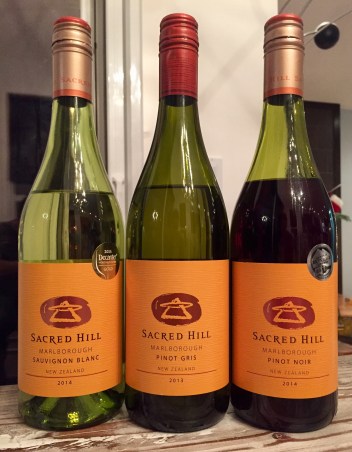
fullsizerender-488If you follow this blog (thank you!) and enjoy wine reviews (I do too!) but aren’t as into other forms of alcoholic beverages, I would suggest that you cherish this write-up.  Mull over it.  Take your time reading it.  Stop halfway through and come back tomorrow to finish it.  It will have to last you a long time.  This is officially Pop & Pour’s last wine review until after Christmas, as on Thursday I dive headlong into Year 3 of Whisky Advent, with 25 straight days of write-ups about the little bottles sequentially coming out of Kensington Wine Market’s tremendously awesome Whisky Advent Calendar. Pray for me.  Incidentally, Advent in 2017 may look a little bit different for PnP, as my years-long quest to get somebody to make a proper Wine Advent Calendar just might be coming to fruition:

Make it happen, Bricks Wine Company.  I’ll be ready, and I’ll make sure everybody who reads this site is ready too.

Anyway, since this is my last wine write-up for a calendar month I figured I’d make it a multi-bottle one, from an area that is a bit at risk of becoming a victim of its own success:  Marlborough, New Zealand.  Since catapulting onto the scene 30-odd years ago with a distinctive lean, blisteringly aromatic and herbaceous style of Sauvignon Blanc initially popularized by now-mega-label Cloudy Bay, this region on the northern edge of the South Island has become synonymous with this piercing, vegetal, unabashedly flavourful take on the grape.  Producers have rushed to respond to global demand for Marlborough’s established house style for NZSB, to the point where it is now one of the most readily available bottles around, no matter where you are.  This is good in the sense that you know that a solid, consistent bottle of white that will not disappoint is always around the corner.  It’s bad in the sense that a lot of New Zealand Sauvignon Blanc has become almost mechanical, put together as if by rote to satisfy an expected flavour trope.  The old challenge for NZSB was to become relevant; the new challenge is to regain its individuality and joie de vivre.  Easier said than done at a competitive price point, but certain producers are proving up to the task, like Sacred Hill, to whom I was introduced by the three bottles below.

fullsizerender-485

Sacred Hill was founded 30 years ago, in 1986, at the start of New Zealand’s wine explosion; however, unlike many similarly timed winery ventures, it was not started at the epicentre of the Sauvignon Blanc earthquake, hailing from Hawkes Bay on the eastern side of NZ’s North Island as opposed to Marlborough.  Hawkes Bay is a warmer region known mainly for red wines, and the two brothers behind the Sacred Hill label grew up there and came by their wine aspirations naturally:  their father was one of the first farmers in the region to take the plunge and start planting grapes as opposed to more common (at the time) agricultural crops.  The business has since expanded and Sacred Hill now has vineyards in both Hawkes Bay and Marlborough, which the brothers (correctly) call the “engine room” of New Zealand’s wine industry.  They have access to half a dozen different vineyards in Marlborough, one of which, the eerily named Hell’s Gate, is their own.  Their Orange Label line of wines, including the three below, are multi-vineyard blends offering up a true sense of the region without any sticker shock. Read the rest of this entry »


Burrowing Owl Fall Release Set

12 11 2016

[These bottles were provided as samples for review purposes.]

Burrowing Owl Fall Release Week is quickly becoming one of the highlights of the Pop & Pour blogging calendar.  The winery is highly engaged with consumers and media alike and  is ahead of the game in terms of finding new ways to get its wines into the collective consciousness, and its renown is expanding well beyond its home province of BC as a result.  When the season’s current releases arrive in Calgary around harvest time, I’m ready to do my small part to spread the word.  Bring on the new vintages!

fullsizerender-462

A glorious Pop & Pour fall tradition.

Burrowing Owl is an Okanagan Valley stalwart, and it’s become such a ubiquitous part of the region that it’s easy to forget the winery is less than 20 years old.  The story started in 1993, when founder Jim Wyse replanted a series of vineyards between Oliver and Osoyoos in the extreme southern Okanagan.  There were no immediate plans to build a winery, but Wyse’s vision expanded once he saw the quality of the new grapes.  Burrowing Owl’s first vintage was 1997, and construction on the gravity-flow winery and massive underground cellar on the property was completed in 1998.

fullsizerender-468

 Initially focused on Cabernet Sauvignon, Merlot, Chardonnay and Pinot Gris planted on a single 130-acre site, Burrowing Owl is now up to 14 different planted varietals on 170 acres of estate vineyards in three different sites. It is no accident that the winery is named after the rare underground-nesting owl that was declared extinct in British Columbia in 1980 but is now back on the upswing due to the dedicated conservation efforts of a small group of individuals:  Wyse is one of those individuals, having contributed significant amounts of both time and money to the burrowing owl’s preservation.

fullsizerender-472

Stelvin Rating: 8/10 (Love the colour, love the side pattern and smoothness; not a huge fan of the top embossing.)

 This year I was fortunate enough to have the opportunity to try a sextet of different bottles from the Burrowing Owl 2013 and 2014 vintages, including return engagements with a couple of wines I had in last year’s releases, the Cabernet Sauvignon and the particularly eye-opening Syrah.  Let’s see how the fall 2016 lineup compared, starting with my introduction to one of Burrowing Owl’s founding whites:  Chardonnay.

Read the rest of this entry »


Value Burgundy Battle: The NEW Cellar Direct

20 10 2016

[These bottles were provided as samples for review purposes.]

fullsizerender-434

Cellar Direct Does Burgundy.

Conscientious readers may remember this post from over a year ago where I introduced Cellar Direct, an Alberta-based online national wine club featuring subscription-based access to a specially-curated selection of non-interventionist natural wines.  Thirteen and a half months later, Cellar Direct is still doing its thing, but under a revamped and significantly more flexible business model.  Now, instead of paying a fixed amount per month for semi-recurring shipments of pre-selected wines, you simply keep an eye out for regular wine offers (generally to be unveiled weekly on Saturdays) and then place an online order for as few or as many bottles as you want, which are shipped to you shortly afterward in temperature-controlled trucks to keep your wines in cellar-like comfort during transport.  This simpler, less demanding offer-based approach is a boon to buyers in the tighter economic times in which we currently find ourselves in this province, and Cellar Direct’s streamlined e-commerce interface allows them to keep prices reasonable even while offering highly researched, quality-focused wines from traditional producers that truly pop and that you won’t see at your neighbourhood wine store.  If any of that piques your interest, you can sign up for the club’s offer newsletters and find out more info at cellardirect.ca.

Cellar Direct’s first online offering under its new and improved structure was the excellent  Senorio de P. Pecina Rioja Crianza that I have already gleefully tried.  The next offer is due out this Saturday and tackles what is often considered (including by me) to be the biggest oxymoron in the world of wine:  value Burgundy.  Wines from Burgundy can make the toughest weep and turn the deepest skeptics into lifelong followers of the vine; unfortunately, they can also empty your wallet with shocking efficiency and leave you feeling underwhelmed and disappointed.  It can be exceedingly difficult, especially at lower price points (which for Burgundy can mean anything under $50ish), to know what you’re going to get in any given bottle, and finding anything $30 or less that properly showcases the region can be a massive challenge, especially when you’re not sure where to look.  Cellar Direct’s upcoming offer this week, as well as a further offer coming in mid-November, try to be your map and compass to this frustrating yet enchanting region of legend.  Let’s see how they do, starting with a bottle due to hit your inbox in a few days… Read the rest of this entry »


Wine Review: Cloudline Pinot Duo

2 03 2016

[These bottles were provided as samples for review purposes.]

FullSizeRender-245

OK, yes, I totally had a glass of the PG before taking this picture.

The flourishing Pinot Noir vine of Oregon’s wine history is largely rooted in a man named David Lett, the founder of Eyrie Vineyards, the first person to plant Pinot Gris in the United States and the trailblazer who cemented Oregon’s place as a safe haven for Burgundian varietals.  Known as Papa Pinot, Lett entered his 1975 Eyrie Vineyards Reserve Pinot Noir in a prestigious 1979 blind tasting competition in Paris called the Wine Olympics, which featured hundreds of entries from around the world.  Absolutely nobody outside of Oregon in 1979 thought of it as a wine region, let alone a globally competitive one, but that started to change when the Eyrie Pinot placed in the top ten, beating many top Burgundies along the way.

One person who noticed the result was Robert Drouhin, third-generation head of Burgundy’s renowned Maison Joseph Drouhin.  The following year, unbeknownst to Lett, Drouhin set up his own Burgundy/Oregon rematch, pitting Eyrie Vineyards blind against a field of some of his top wines.  The Eyrie Pinot came in second in the group, just a hair behind Drouhin’s legendary 1959 Chambolle-Musigny.  As if that wasn’t feather enough in Oregon’s cap, Drouhin then proceeded to buy the cap too.  He visited Oregon, noted that its cooler, more temperate climate was a more welcoming environment for Burgundy’s Pinot Noir and Chardonnay than neighbouring California, had his daughter Veronique come work harvest with the Letts and others in 1986, then purchased land himself in the Willamette Valley’s Dundee Hills to grow the Pinot that had impressed him so much. Read the rest of this entry »


The Great Coravin Test, Part 5: Six Months Later

26 01 2016

To catch you up on the epic journey that is concluding with this post:

  • I got to borrow a Coravin back in July (Part 1)
  • I accessed three awesome bottles with it and wrote tasting notes (Part 2)
  • I checked back on them two weeks later to see how they were doing (Part 3)
  • I dove into some cellar treasures and gave some final Coravin thoughts (Part 4)
  • I promised to come back to my three test bottles one last time…in half a year.

FullSizeRender-217

Take 5. One last time.

How time flies.  Suddenly it’s six months from the week of my original Coravin tasting write-up and I owe this story an epilogue.  After seeing this trio of my bottles front and centre in my cellar on a daily basis and accessing them multiple times through the Coravin needle, I actually felt sort of bad cutting off the foils and pulling the corks out of them like they were any old weeknight wines.  But science does not wilt for sentiment, and I had a job to do.

Read the rest of this entry »


The Great Coravin Test, Part 3: Two Weeks In

2 08 2015

OK, so to recap:

  • I got lent a Coravin and figured out how to use it (Part 1).
  • On July 17th, I accessed three different bottles – a white and two reds – via Coravin and wrote up control tasting notes (Part 2).
  • Exactly two weeks later, on July 31st, I Coravinned the bottles again to see how they were doing.  Now the real fun begins (Part 3, right now).

FullSizeRender-91Some brief methodological notes:  after tasting the bottles on July 17th, I put them back in my cellar as if they were brand new – on their sides, no special treatment.  They stayed there till the 31st, when I gave them a brief chill before accessing them again.  I took detailed tasting notes without looking at my initial set of notes and then compared the two sets after the fact to see if the descriptions were similar and if any notable changes to the wines had taken place.  After the second round of tasting, the bottles are all about half full, and they have been put back in my cellar until I pull them out again for the grand finale of this Coravin experiment six months from now.  So how did the wines do?  Is the Coravin all it’s cracked up to be?  Let’s get to it, again:

Read the rest of this entry »


The Great Coravin Test, Part 2: Initial Tasting Report

23 07 2015

The journey continues.

The journey continues.

If you missed Part 1 of this soon-to-be-epic tale, wherein I got a Coravin to borrow and figured out how to use it, you can click here to get caught up.  This post will set the control for my test of the Coravin’s wine-preserving prowess, documenting my initial tasting impressions of three different bottles that I was provided along with the device so that I could give it a spin:  one white, one lighter red and one fuller red.  I actually tasted these last Friday, July 17th, so that’s the point from which the preservation clock starts ticking.  I will taste them all again in a couple of weeks and report back, and then again in a few months to see just how far the magic of the Coravin can stretch.  Word of warning if you ever try this yourself:  when you have a tool that lets you taste as many wines and access as many bottles as you want in a night without pulling a cork, you end up drinking a LOT of wine.  Duly noted.  On to the wines — be sure to check back in two weeks to see how they’re doing!

Read the rest of this entry »