Bricks Wine Advent Calendar 2017: Day 5

5 12 2017

By Dan Steeves

As a loyal reader and follower of Pop & Pour for the past few years, it is a great honour to have the privilege to contribute to the blog today! I am often reminded of how great the wine community is in YYC; how generous people are, and how so many people enjoy talking, experiencing, and sharing wine with each other. Today marks my first attempt at wine blogging, and I’m hoping the community goes easy on me!

img_4687

The streak of great wines continues on Day 5 of the Bricks Wine Advent Calendar with a delicious Sauvignon Blanc from Spy Valley Wines, based in the Marlborough region of New Zealand. Sauvignon Blanc is the heart of the New Zealand wine industry and the Marlborough region (located at the North end of the South Island) is where the majority of it hails from.  A combination of close proximity to the ocean, protective mountain ranges, high diurnal temperature variation (temperature change between day and night), and plenty of sunlight, all provide the Marlborough vineyards a long ripening time and help preserve the flavours and acidity in the grapes. When it comes to New World SB, there is no doubt that New Zealand is at the top of the podium.

Spy Valley Wines is a relative newcomer in the wine world, choosing to cultivate land in the Waihopai and Wairau valleys of Marlborough back in 1993. The winery gets its name due to its close proximity to an actual spy base (an international satellite communications monitoring facility) and they take their clandestine efforts seriously. It may not be noticeable at first (which is the whole point) but see if you can locate and decipher the secret codes found on the bottle and closure. You won’t need an enigma machine but you might want to use this website for help.

img_4691

Sleek and simple design with integrated Morse code on the label and screw cap! 🙂

Upon opening this wine and taking the first sniff, it is no secret what the wine is and where it is from. The wine has a clean nose with intense aromas of lime, grapefruit, melon, lychee, grass, and the telltale bell pepper. New Zealand Sauvignon Blanc is known for having bright and fresh citrus and tropical aromas as well as a green herbaceous side and this wine displays both, just as it should. On the palate, the wine has crisp acidity that gives a little zing on the tip of your tongue and shows flavours of lemon, lime, grapefruit pith, and green bell pepper. The wine displays a slight creamy texture, perhaps due to the 8% of the wine that is barrel fermented, but it is still light on its toes like a stealthy agent on duty.

88 points

Thanks to Bricks for introducing me to a beautiful wine. Another successful day of the Bricks Wine Advent Calendar completed!

2-Isobutyl-3-methoxypyrazine.svg

3-isobutyl-2-methoxypyrazine – aka Pyrazines – the compound responsible for the bell pepper aroma in wines can be found in many Bordeaux wines (Sauvignon Blanc, Cabernet Sauvignon, Cabernet Franc, Merlot, etc.) and is detectable in very low concentrations



Bricks Wine Advent Calendar 2017: Day 3

3 12 2017

By Raymond Lamontagne

I should begin by emphasizing just what an honour it is to join Peter and Dan on this Bricks Wine Co. Advent journey. I remain a relative newcomer to the Calgary wine community yet have had the pleasure to meet so many knowledgeable, friendly, and dynamic people over the past year or so. It has been immensely moving and powerful to be welcomed into this community with open arms …  I wish to thank everyone from the bottom of my heart, and beg your continued tolerance as I haunt your shops, standing around the tasting bar, making random comments about terpenes or field blends and almost certainly distracting you from more important business.

IMG_0483

The evidence …

I am ecstatic that my inaugural foray into the world of wine blogging is a Gruner Veltliner. Gruner is likely my favorite white grape. I say likely because Riesling sometimes bumps it from that lofty perch, as a function of day, my mood, producer or region in question, etc. This is a great microcosm for the reality in Austria, where Riesling continues to carry more status and prestige while Gruner toils away, sometimes in the doldrums of plonk for “wine pubs” but also at the pinnacle of age-worthy sips capable of winning prestigious tastings against world-class Chardonnays. I like well-crafted Gruner so much that one of my cats was nearly christened “Veltliner”. My partner swiftly vetoed this notion (but was ultimately OK with “Spatburgunder”). Why the obsession? Simply put, Gruner can get weird. A good tasting wheel will depict all manner of curious aroma attributes rarely experienced elsewhere, including green beans, lentils, root cellar, compost bin, lovage (a savory “old country” herb that vaguely recalls soy sauce or Maggi seasoning), old socks, the less polarizing apples and limes, and above all, white pepper. Peppery aromas in wine are due to a compound called rotundone, also found in a few other varieties (most famously Syrah). Although rotundone levels are notoriously susceptible to various wine-making decisions, Gruner can deliver a zesty, earthy vortex that garners an occasional comparison to Sauvignon Blanc but which in my view is wholly unique.

726bad72-5b6f-40a6-bfc5-d581cd18d287

Rotundone … One of the aforementioned terpenes and a much better molecule than TCA.

So what of this 2016 single vineyard Huber Obere Steigen? Markus Huber has expanded a 250 year-old family operation into a big success story with international reach, seemingly without compromising his focus on precise, elegant wines that express their origins. Huber gives Gruner its just due, with the latter comprising 75% of varieties handled at the winery. The Traisental DAC is a small wine region south of the Danube river, below the famed Wachau, and here terrior reigns supreme. Full of chalk and conglomerate rocks, the soils yield full-bodied wines with firm mineral structure. Gruner from this region is known to be particularly fruity as well, yet not at the sacrifice of that all-important peppery spice. The Obere Steigen site enjoys its own unique microclimate due to its terraced nature. This emphasis on terrior or place is relatively new in Austria. Historically, more emphasis was placed on variety alone. Controversy around this difference in emphasis remains, but Markus Huber appears more than happy to let his DAC flag fly.

IMG_0489This is a pleasing yellow hue with a slight green tint. Nose hints at the crystalline mineral power within. I’m getting yellow apple, fresh parsley, snap peas, mango, and a potent undercurrent of musty white peppercorn. The herbs are more vibrantly green than umami in character. On the palate this is precise and linear, with acids brisk but not punishing … Although hang on, there’s some tangy lemon juice bite after a few sips. A compost bin funk, like old apple cores and lawn clippings, starts to creep in around a fundamentally solid core of green pears and apples, white peach, and lemon-lime zest resting on a chalk and wet slate base. This gentleman is dressed in a dapper suit but there’s something off, perhaps some mud on his dress shoes. Fruit? Check. Minerals? Check. Rotundone? Check. I’ve had Gruners that bounce around a lot more than this one, flopping around like a fish in a boat and always changing their look. This one is less dynamic and more cohesive and laser sharp, with just a slight halo of corruption … Not a bad thing in this case.

IMG_0488

90 points


Bricks Wine Advent Calendar 2017: Day 1

1 12 2017

I am a realist when it comes to the reach and impact of this blog.  Calgary has a remarkable, informed, ambitious, impressive local wine scene, and my only goal in starting up this site years ago was to be a tiny voice in that massive chorus and find an outlet for my passion, whether anything came of it or not.  For the most part, I am simply an observer, experiencer and occasional reporter on the goings-on of Calgary wine life.  However, in this case, it’s at least possible that I was the catalyst for a great idea that Bricks Wine Company has now expertly executed.  About 12 and a half months ago, after seeing another set of annual Advent releases go by absent a particular format that I thought would be perfect for the occasion, I vented into the black void of Twitter…and was shocked to see somebody almost immediately respond and take up the task:

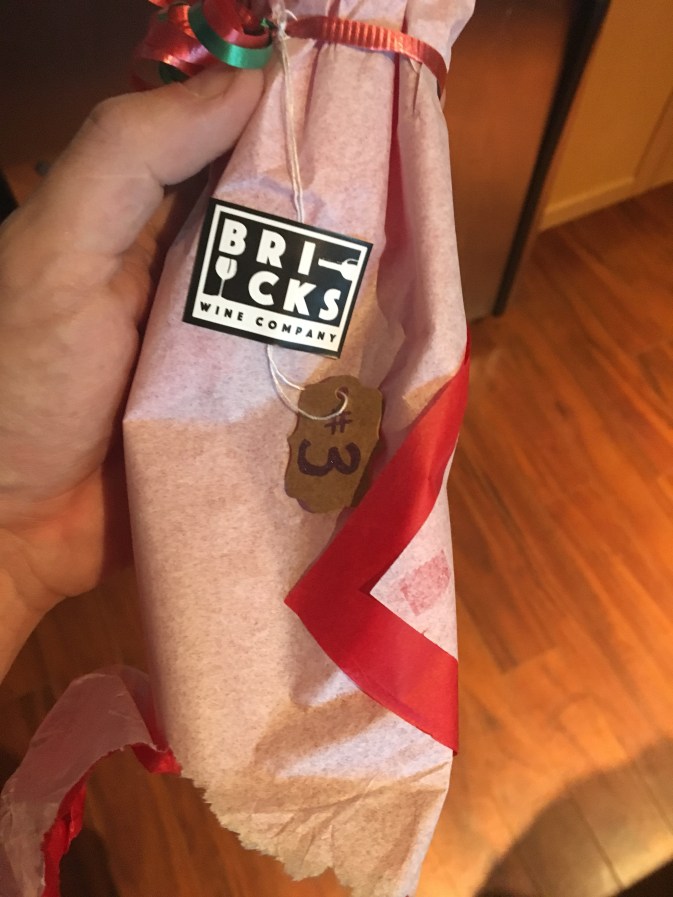
It’s one thing to send a two-word response on social media, and quite another to spend the time and effort to specially source two dozen half bottles of wine to assemble an Advent calendar for the NEXT year, so I didn’t allow my hopes to leap too high at the time, but now here we are, on December 1st, 2017, and I’m looking at a wooden crate filled with 24 beautifully wrapped and meticulously selected 375 mL splits, my Advent dream realized and in the flesh.  I am filled with awe and gratitude, and I haven’t even opened anything yet.  Way to go, Bricks — you really did it.

IMG_7027

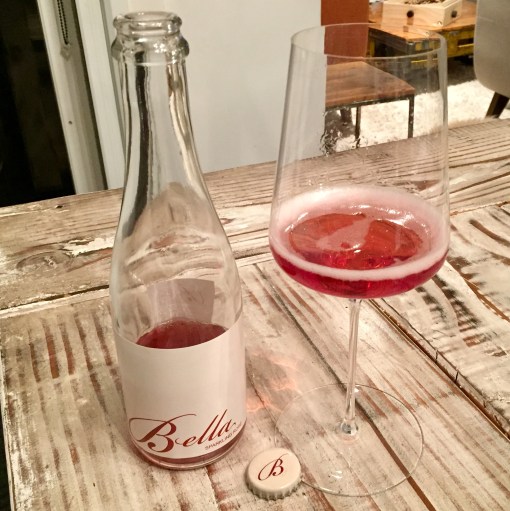
And if I was excited BEFORE peeling back the wrapping on Day #1, my anticipation only intensified after seeing what was on tap for Calgary’s inaugural Half-Bottle Wine Advent Calendar:  wine geek paradise.  Bella Wines is a producer about whom I have heard a ton over the past year, without yet having had the chance to try their wines for myself.  Bella is British Columbia’s only winery that is exclusively devoted to the production of sparkling wine — all bubbles, all the time.  And their approach is brutally uncompromising:  all natural farming, traditional method Champagne-style fermentation (where the secondary fermentation creating the fizz takes place in each individual bottle in which the wine is ultimately sold), all single-vineyard single-varietal expressions, wild yeast fermentation, no additives, no dosage; nowhere to hide, no messing around.  Bella makes multiple different bottlings of both pink and white bubbles, with their pigmented production focused entirely on the Gamay grape, which they believe has unheralded potential in the sparkling world.

IMG_7153

Crown Cap Rating:  8/10 (Stylized and retro, great font, CROWN CAP – I’m all in.)

So if you’re keeping track at home, Day 1 of Wine Advent features an Okanagan traditional-method single-vintage sparkling Gamay natural wine:  the 2016 Bella Sparkling Rosé Brut Natural “Westbank”.  Hot damn.  Bella releases annual sparkling Gamays from vineyards both west and east of Lake Okanagan, and the Westbank hails from the Beaumont Estate Vineyard in West Kelowna, on the slopes of Mount Boucherie. It is a beautifully confident deep watermelon colour in the glass (yay, non-deathly pale rosé!) and makes an emphatically lean, tart and frothy impression, launching aromatic bullets of cranberry, sour cherry and pomegranate fruit laced with grape skins and handfuls of gravel.  The flavours are pure and unforgiving, the lack of any added sugar after secondary fermentation clearly evident, the wine sharp as a razor’s edge on the finish thanks to Ginsu acidity and circular saw bubbles.  This Gamay practically vibrates with energy and electricity from the moment it hits the tongue, and that coiled tension doesn’t ever release:  not when the bubbles burst, not when you hold it in your mouth, not when you swallow.  It’s like watching a thriller movie that never ends.  If this is Day 1, we are in for a SERIOUSLY impressive Advent.  I did not know Okanagan bubbles could be like this.

90+ points

IMG_7151


Wine Review: Black Market Wine Co. – Contraband Portfolio Tasting

15 11 2017

[These bottles were provided as samples for review purposes.]

What do you do if you’re a busy Calgary-based professional with a hectic day job, multiple kids, a swath of family responsibilities, yet an ever-increasing burning passion for wine?  If you’re me, you start a small local blog and struggle to publish one post a week.  (Last post:  13 days ago.  Sorry guys.)  If you’re Rob Hammersley and Michelle Shewchuk, on the other hand, you pick up the hustle, go about 20 light-years further and start your own garagiste winery in the Okanagan on the side, while still juggling full-time careers, volunteer activities and parenthood.

IMG_7037

Branding majesty.

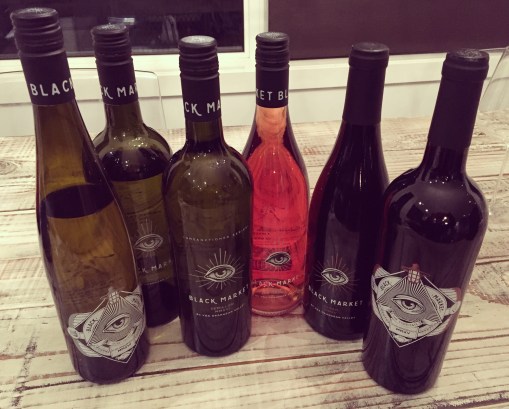
This cunning Calgary cabal has managed to work around their weekday gigs (Rob is in corporate finance; Michelle is a flight attendant) and their location in another province, forge relationships with local growers, learn the ropes of the winemaking business and come up with maybe the single best suite of branding for a winery anywhere in Canada, creating a bit of a cult following along the way.  Add in an early embrace of online sales and the Black Market Wine Company is quickly accelerating from illicit side dream to successful reality.

IMG_7052

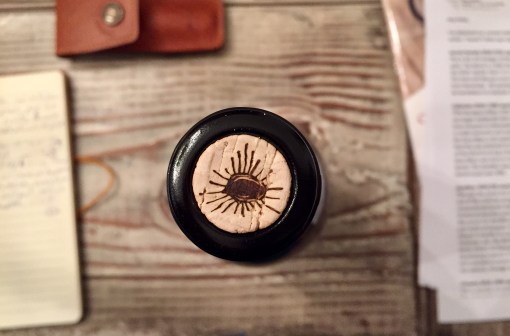
I first came across Black Market a couple of years ago and was instantly drawn in by the Illuminati-meets-Ponzi-scheme labelling, looking like the back of the US dollar in some horrific alternate Dan Brown universe.  The striking images on the front labels draw people into the intentional web of secrecy and intrigue expressed in snippy verse on the back of each bottle, piquing curiosity and pulling people further into the glass for answers.  By then, you’re in the winery’s hands, waiting to be led where they want to take you.  It certainly does not hurt that the juice within does not disappoint (and that its creators are from my hometown), and I have followed their progress ever since that initial encounter.  This is the first time I have had an opportunity to taste through the entire Black Market portfolio, but not the last time I will be cracking these wines and letting the mystery wash over me. Read the rest of this entry »


Wine Review: Dirty Laundry, The Whites

2 11 2017

[These bottles were provided as samples for review purposes.]

IMG_7014

One of these things is not like the other…

Now that snow has blanketed the land and any remaining warm thoughts in Calgary’s mind have been augured away by blistering Arctic winds, I can fully admit that I tasted these Dirty Laundry wines in the wrong order.  I cracked the rosé and red portions of my sample pack back when fall was still a thing (last week) and saved the sunny patio portion of the tasting until it seemed like a cruel joke; serves me right for breaking with orthodoxy and not going lightest to heaviest like the textbooks all say.  But we persevere. I’ve always found Dirty Laundry’s white lineup to be a bit more impressive and consistent than its reds, and they have a particular affinity for Gewürztraminer, the grape that everyone seems scared to focus on too heavily but which truly rewards any such special attention.  However, tonight I got to dive into two bottles that I hadn’t tried before today, starting off with my favourite grape of them all. Read the rest of this entry »


Wine Review: Dirty Laundry, Pink & Red

26 10 2017

[These bottles were provided as samples for review purposes.]

IMG_6987

Okanagan label mastery.

Dirty Laundry is a winery best experienced in person, as it features a combination of location, history and brand awareness that is next to impossible to top.  It is perched up above the ideally named Summerland, BC, elevated over the Okanagan’s main highway, with vineyard views for miles and a patio strategically located to be drenched in scenery.  This spot was once, back in the era of the Canadian Pacific Railway’s initial construction, the home of a renowned and well-attended laundry service run by an AWOL railroad construction worker who had found a more lucrative calling; his fortune, and the popularity of his laundry business, was due in no small measure to the brothel being run discreetly on the upper floor while the clothes were cleaned below.  A couple of centuries later, the business currently occupying the land knows a good story when it sees one and has turned the tale of the dirty laundry into a branding behemoth that seeps into everything from wine names to labels to tasting room decor to the guest homes for rent on the property, the Bordello House and the Parlour House.  They commit to the identity, keep their humour on high alert and leave their prudishness at the door, and people keep coming back.

The wines themselves may be in a state of flux, caught between wanting to appeal to the widest possible audience and the crowds in for a good time and a novelty bottle-stopper and aiming for a higher level of quality, a product that captures attention in a different way.  I am rooting for them to succeed, as personality and creativity and branding effort are more than welcome in my own world of wine.  The below releases, recent rose and red offerings from Dirty Laundry and the first of a two-part review series, were an excellent chance for me to check in on the winery for the first time in a while and see where they were on their cheeky, quirky voyage. Read the rest of this entry »


Wine Review: Stag’s Hollow Fall Reds

18 10 2017

[These bottles were provided as samples for review purposes.]

IMG_6962

If this is where we are in the Okanagan, we’re in good hands.

What’s this?  Two reviews in the span of three days??  Is this inspiration or panic?  Turns out it’s a little of both.  For reasons that will shortly become clear, the next couple of months are going to be content-intense here at Pop & Pour HQ (aka my kitchen table), which has me geared up and focused on my current inventory of samples to make sure everything gets its full and proper due.  But I’ve also had a lingering eye on these particular wines ever since they landed on my doorstep, as they represent the latest missive in a wonderful conversation I’ve been having over the past months and years with one of the most intrepid, curiosity-filled, quality-focused wineries in the Okanagan Valley, Stag’s Hollow.  Over the summer I looked in on the white and pink side of their portfolio, but now that my trees no longer have leaves, the time has come to fully commit to autumn, and tonight’s trio of reds has me in the mood to cast off thoughts of T-shirts and shorts and embrace my favourite season.  This lineup features an Okanagan stalwart, only rarely done justice; an utter Okanagan rarity, borne of winemaker Dwight Sick’s unabashed intention to push viticultural limits in the region; and a burgeoning Okanagan star that will hopefully soon get the attention and acreage it deserves.  Pinot Noir, Grenache (!), Syrah. Read the rest of this entry »


Wine Review: Calliope White Trio

3 10 2017

[These bottles were provided as samples for review purposes.]

IMG_6891

Pop and pour power.

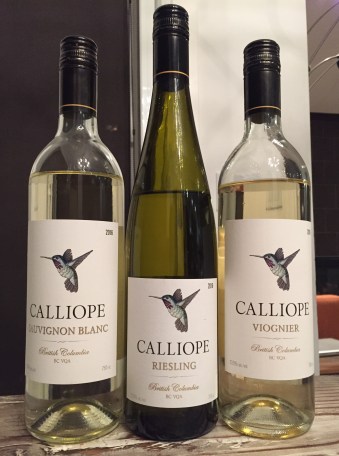
There are a few ways to measure how far British Columbia has come as a wine industry in the past 10-15 years, during which time for my money the jump in quality, understanding and identity has been close to exponential.  Here’s one way:  15 years ago, I don’t think you could have convinced me that a BC winery’s SECOND label could produce a suite of balanced, expressive and generally delightful wines worth seeking out.  In 2017, Burrowing Owl (or, more accurately, Wyse Family Wines, founders of Burrowing Owl) have managed that exact feat with the 2016 releases of their Calliope label, a lineup of wines that according to the accompanying campaign literature is meant for easy and early enjoyment; a true pop and pour.  Sourcing grapes from both the Okanagan and Similkameen Valleys, the Wyse family focuses mostly on whites for Calliope, creating (at times) multi-regional blends under the general “British Columbia” appellation, yet still under the BC VQA banner.  These are marketed as easy-drinking patio wines, meant for drinking rather than dissecting…but since we’re all here, let’s dissect them anyway.

IMG_6897

Stelvin Rating:  8/10 (See what you can do if you apply yourself to screwcaps?  Dead sexy.)

I was provided three different single-varietal examples of Calliope’s white regime:  Sauvignon Blanc, Riesling and Viognier.  When I’m drinking single-grape wines on the lower end of the price spectrum (these bottles probably straddle the $20 mark Alberta retail), the first thing I look for, even before balance of component elements or general deliciousness, is typicity.  In non-wino speak:  if the wine is a Sauvignon Blanc, does it smell like a Sauvignon Blanc?  Does it taste like a Sauvignon Blanc?  Does it help people understand what Sauvignon Blanc is all about, and does it then go the next step and show people what Sauvignon Blanc from its particular home region is all about?  Varietal wines that do this exhibit strong typicity, and as such become extraordinarily helpful barometers for both learning about wine and understanding your own preferences.  If these 2016 Calliopes have any major strength, it is dialled-in typicity:  they are clear and precise examples of what’s in the bottle and what comes out of the ground. Read the rest of this entry »


Wine Reviews: Red ShowDownUnder

13 06 2017

[These bottles were provided as samples for review purposes.]

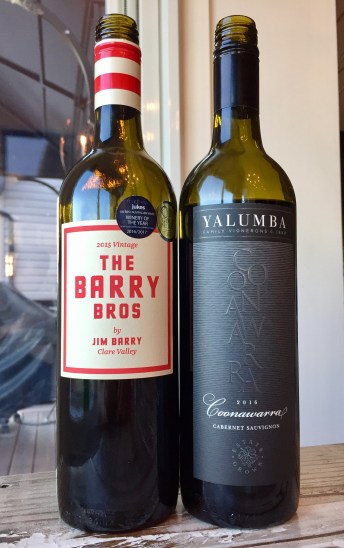
FullSizeRender-646I first got seriously into wine about 10 years ago, when the Australia Phenomenon was in its heyday and Argentinian Malbec was just a glint in some clever investor’s eye in Mendoza.  Yellow Tail Shiraz was my gateway drug, a fact that is assuredly true of more than one of you currently reading this as well.  Looking back now on the Australian wine scene then, there are still tons of similarities.  Critter wines, like it or not, are still a thing. On the quality pinnacle, the high-end wines from Down Under rocking people’s worlds in 2017 aren’t that different from those doing so in 2007.  But I’ve noticed a couple clear differences in the imports from Australia that have evolved over the last decade:  first, a welcome explosion of site-driven elegance from the cooler areas of the country, be it Pinot from Yarra or Mornington or bubbles from Tasmania or the laser purity of some of the post-modern wines coming out of the Adelaide Hills.  Second, a new focus on bottles like the ones below, step-up bottlings, a shade above entry-level in price and a world above the critters in authenticity and quality.  The $20-$30 tier of wines has never had stronger representation on our shelves from Australia than it does currently, as more and more producers zone in on these bottles as the best way to build a lasting relationship of trust with consumers as opposed to an $11 fling.

So what better way to celebrate how far Australia has come as a mature wine producer, and how far I’ve come in my 10 years of Yellow Tail-catalyzed oenophilia, than by lining up two step-up bottles, each from highly respected multi-generational family wineries and legendary regions, and tasting them side-by-side?  It’s not about picking a winner — the mere fact that the exercise is possible is a win in and of itself — but I’m sure that won’t stop Jim Barry and Yalumba from exerting full effort in this battle of reds under screwcap.  Let the showdown from Down Under begin. Read the rest of this entry »


Entering The Hatch, Spring 2017

23 05 2017

[These bottles were provided as samples for review purposes.]

IMG_6146Ever since I first saw The Hatch’s avian-Thomas-Crown-Affair primary logo shortly after it opened a couple years ago, I have been sort of transfixed from a distance, finding both the winery and its artistic ethos strangely compelling despite knowing basically nothing about them.  Based out of a rustic-modern “shack from the future” in the heights of West Kelowna and sourcing grapes from across the Okanagan and Similkameen Valleys, The Hatch initially comes across (quite intentionally) more like an artists’ collective than a commercial winery, listing Salman Rushdie on its personnel page and expounding in esoteric wine-code about “Ross O” and B. Yanco” (I’ll give you a second to sort that one out).  They confidently found their visual style from the outset thanks to the remarkable imagery provided by local western Canadian artist Paul Morstad (who is also found on The Hatch’s personnel page, playing a banjo); once people have been drawn in by the graphics, it’s up to winemaker Jason Parkes to keep their attention.  The whole artistic cacophony and the simultaneously grand yet whimsical presentation lends The Hatch a jolt of personality that the generally strait-laced BC wine scene can happily use…but does the buzz extend to what’s in the bottle?  Happily, I got to find out.

FullSizeRender-601The Hatch releases its wines in stylistic series, of which I had the opportunity to experience two:  the mid-tier Hobo Series wines, featuring a panoply of hand-drawn labels of hobos (seriously) that risk making you cry thanks to their sheer beauty (also seriously), and the ambitious Black Swift Vineyards series wines, which collectively form an expansive single-vineyard project focused on the various facets of BC’s glorious dirt.  The wine, like the winery, was never boring. Read the rest of this entry »


International Sauvignon Blanc Day: 2016 Adobe Reserva Sauvignon Blanc

5 05 2017

[This bottle was provided as a sample for review purposes.]

FullSizeRender-589

International SB Day 2017!

I swear that not every future entry on this blog will begin with “Happy [Varietal-Specific Holiday] Day!”, but…Happy International Sauvignon Blanc Day!  Yes, there is an entire calendar of world wine days now, each concocted by various marketing geniuses, and as it turns out, a couple weeks after World Malbec Day and a scant four days before World Moscato Day comes a designated day to celebrate the safest grape to pick out of a strange new liquor store and the varietal that first introduced the vinous world to New Zealand, the consistent and omnipresent Sauvignon Blanc.  Unlike today’s grape of honour, I am not omnipresent, and as this piece posts I am actually going to be hanging out in Walla Walla drinking world-class Syrah; International SB Day falls on my birthday this year, and I am spending this spin-around-the-sun in my personal wine Mecca.  So the blog and I will celebrate simultaneously this year, albeit in different places and for different occasions. Read the rest of this entry »


KWM Whisky Advent Calendar 2016: Day 24

24 12 2016

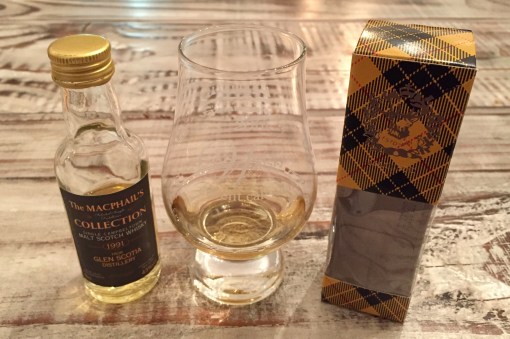
Merry Christmas Eve, everybody!  Hopefully by now the stockings have been hung and the parents can start turning their attention to more important things, like booze.  Back in my first year of KWM Whisky Advent, the December 24th bottle was the end of the line and thus the one everyone waited for the whole month.  This year we get an extra bonus whisky tomorrow, but it’s a special Scotch Malt Whisky Society bottling and is double-miniature-sized, leaving tonight the final standard-format calendar bottle. And it delivers, at least in packaging (every scotch should be sold in a bright tartan box) and age designation (distilled 25 years ago in 1991!).  It is yet another Gordon & MacPhail offering, but from a heretofore unseen line:  The MacPhail’s Collection, a small range from a select line of distilleries (7 in all at the moment).  One of them is Glen Scotia, an ancient distillery located at the tip of the Campbeltown peninsula in southwest Scotland.  Campbeltown isn’t a huge scotch area, known mainly for Springbank and its sister distilleries, so it’s no massive surprise that this is the first whisky from the region we’ve seen in Advent 2016.  One of Glen Scotia’s claims to fame, other than being sold a trillion times and failing in the early 20th century like basically every other whisky producer, is that it’s haunted by the ghost of a prior owner, who drowned himself in Campbeltown Loch after losing everything he had in a bad business deal (hopefully not the purchase of the distillery itself, but you can’t rule that out).

fullsizerender-517

The full title of this bottle is The MacPhail’s Collection 1991 Single Campbeltown Malt Scotch Whisky from Glen Scotia Distillery, but unlike every other whisky so far in 2016 Whisky Advent, there is no other information about it anywhere.  It is only for sale at KWM in mini-bottle format (for $24, suggesting that it would be a $300+ full-sized bottle) and not otherwise available; it is not mentioned on the Gordon & MacPhail site; and it is not available for sale at any online shops I could find, even in the UK, except in miniature form.  Weird.  It’s not as dark as you might think for a 25 year old whisky (although it may not be a 25 Year whisky for age designation purposes if it was bottled a while ago, as age labelling is based on time from distillation to bottling) but carries a pure, malty nose of golden raisin, plum, fresh pear, sourdough bread and trail mix, with a hint of fitting Christmas fruitcake.  However, it then takes a left turn and goes surprisingly sharp, rubbery and industrial, filling the mouth with not-altogether-enjoyable tastes of tennis balls, permanent marker, elastic bands and shoe treads; these factory-floor notes and the whisky’s spiky alcohol combine to nearly overwhelm spicy underlying notes of rock salt, caraway and fennel.  Interesting?  Yes.  Pleasant?  Not entirely.  See you at the 2016 calendar finale, and at Christmas!!


KWM Whisky Advent Calendar 2016: Day 23

23 12 2016

GlenDronach!  Peated!  I’m always fascinated by peated expressions of traditionally non-peated whiskies (which encompass almost all whiskies distilled anywhere other than the Islay region of Scotland), particularly when the whisky in question is one with which I am otherwise very familiar.  My old calendar friend GlenDronach, as recently covered in Day 18, is an Advent stalwart, having shown up (quite successfully) four previous times in the last three years; those prior releases unveiled the bulk of GlenDronach’s core range, but all of them are entirely unpeated, making tonight’s further core entry a category of its own for the distillery.  GlenDronach decided to release a Peated expression fairly recently as a nod to how the distillery used to make whisky back in the 19th century, although since its founding in 1826 it’s been a sort of rocky road until recently.  Stop me if you’ve seen this kind of Scottish distillery timeline before:  sold 1830, sold 1920 (to the son of the founder of Glenfidditch), sold 1962, mothballed 1996-2002 (not that long ago!!), taken over 2005 (by Chivas), taken over 2008 (by BenRiach, who makes some pretty awesome whisky in its own right and has presided over a highly impressive GlenDronach resurgence in the past 8 years), taken over (along with BenRiach) earlier this year (although so far the same folks have been left in charge).  No job security in whisky-making.

fullsizerender-516

The peating in GlenDronach’s first ever (modern-day) peated offering is done…pleasantly?  Is that a thing?  The peat effect is definitely noticeable, but far from in-your-face, adding aromatic traces of lantern oil, sweet compost, old leather and moss to GlenDronach’s stone fruit and florals, which are otherwise not lost or mellowed in maturation in this younger non-age-designated malt.  The palate is similar, part oily and part sweet, either adding perfumed refinement to the peat’s underlying funk or adding some necessary grime to an otherwise potentially too-pristine Highland whisky, depending on how you look at it.  The result is a little bit of everything:  pistachio pudding, suede jackets, distress flares, car exhaust, marmalade, apple crisp…I could keep going.  What a value at $83.  Can’t wait to see what Christmas Eve has in store!


KWM Whisky Advent Calendar 2016: Day 22

22 12 2016

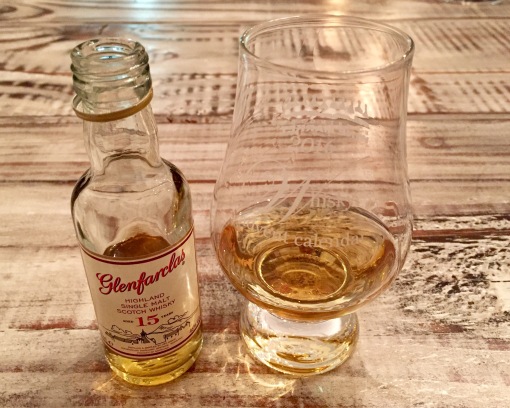
I have started to think of Glenfarclas as the official mascot scotch (mascotch?) of the KWM Whisky Advent Calendar, after 2014’s special Christmas Eve 40 Year and 2015’s Christmas Eve redux 25 Year, not to mention two other entries in calendars past.  I was sort of wondering if we’d see a third straight December 24th whisky from the distillery, but I also suspected we were starting to run out of super-old Glenfarclas releases to slot in that esteemed end-of-calendar spot.  Well, it got Day 22 this year, with the notably younger $95 15 Year Single Malt – still a respectable position if not an exalted one.  Glenfarclas is one of the few pre-20th century distilleries not to be shut down or sold to a gigantic beverage empire in modern times, owned by the Grant family since 1865 when patriarch John Grant bought it for just shy of £512.  That sounds astoundingly cheap even in 1865 money, and it is:  it equates to around £59,000 today, or around $98,000 CAD.  Nice buy, John.  We are now six generations of Grants (all of whom have been named either John or George) into the family’s stewardship of Glenfarclas, which is known for producing one of the classic examples of Speyside whisky out of the region’s largest stills.

fullsizerender-515

To obtain the legal designation of “scotch whisky”, a spirit has to (1) be aged in oak casks (2) which are no larger than 700L (3) for at least three years (4) in Scotland.  Glenfarclas uses both plain new oak casks (which we haven’t heard much of in this year’s calendar) and ex-Sherry casks (with which we have been bombarded by this year’s calendar, and by the whisky industry in general), and it is definitely known for its emphatic use of the latter.  The 15 Year is a glimmering dark amber colour reflective of its barrel time and has a few different aromatic identities:  confectionary (butterscotch chips, and nougat, like the inside of a Three Musketeers bar), nutty (almonds, oatmeal), herbaceous (corn husks, grass).  Bold and fiery as soon as it touches the tongue, this is not messing around, slinging toast and spice, banana Runts, mandarin orange, Americano, char and vegetal flavours with authority and powering into a lacquered finish.  It is punchy and powerfully concentrated, coming across like a cask strength whisky despite its 46% abv.  Mammoth scotch.


KWM Whisky Advent Calendar 2016: Day 21

21 12 2016

Into the 20s, guys.  Five days left – and we start the final countdown to Christmas with a mystery.  I pulled out an old-school-looking bottle of Stronachie 18 Year Small Batch Release and thought:  “Cool, another lesser-known distillery find.”  Then I saw the A.D. Rattray logo, last seen in Day 14 with the independent bottler’s Cask Islay release, and thought:  “Cool, this must be like their Distillery Label series”, similar to fellow independent bottler Gordon & MacPhail’s collaborative set of releases with smaller producers tasted in Day 8 and Day 16.  Then I saw the tiny notation in the top right corner: “Distilled at Benrinnes Distillery”.  Um, what?  That’s one label headliner too many.

fullsizerender-514

Here’s the story.  Stronachie IS a lesser-known distillery…but it’s lesser-known because it was mothballed in 1928 and destroyed in 1930.  It was first built in the 1890s in a (questionably chosen, in hindsight) remote, nearly inaccessible mountain location that required the construction of a 5-mile private railway just to get the spirit to a transportation route.  The initial distributor of Stronachie was actually a relative of A.D Rattray, and in the early 2000s, consumed by curiosity about the distillery, Rattray’s present owner bought at auction a bottle of Stronachie that was distilled a century prior, in 1904, one of only 4 bottles left in the world.  After tasting it (props to them for actually opening it), Rattray then embarked on a project to try to re-create the historic distillery’s flavour profile using spirit from a similarly situated high-altitude producer.  It’s one part honourable and one part creepy, like going from trying to commune with your dead aunt via seance to building your own effigy of her for your living room, but it is certainly bold and unique, two things I don’t get to say enough about the whisky world.

Benrinnes is another distillery that often does its work anonymously, not often receiving the single malt attention, which makes me feel sort of bad that it’s getting this particular star treatment as a sort of tribute cover band for another producer that’s been closed for 88 years and a pile of rubble for 86.  Its faux-Stronachie 18 Year was aged in a combination of ex-Bourbon and ex-Sherry casks (which is becoming the main maturation theme of Whisky Advent 2016) and smelled as pleasantly old-fashioned as it was probably supposed to, mixing saltwater taffy, unsweetened licorice, smoke and bitter orange.  Smouldering and long-acting on the palate, its flavours are almost on delayed release, starting spicy and peppery but then blooming into vast florals, citrus fruits, hickory, creme brulee and candied ginger.  In spite of that it never gets away from itself, staying straight-laced and minding its manners, like the quiet distillery up on the mountain that’s now nothing but a ghost, kept alive through loving tribute.