12 Days of Vinebox: Day 9

2 01 2019

By Peter Vetsch

Sicily update:  the streak is over!  Ask and ye shall receive.  After a rather bizarre run of three straight bottles in this dozen from Italy’s most prolific wine island, our request to the cosmos for variety has been granted with fervour, as we are off to the German-est (and thus potentially the best) part of France, Alsace…where, incidentally, my Vetsch family ancestors apparently hailed from five or six or seven generations ago.  Maybe that’s why I love Riesling so much.  Alsace is something of a mystery to me from a vinous perspective, because despite producing solidly priced and consistently high-quality wines, and despite being one of the few Old World locales to actually consider the casual-drinking consumer enough to place grape varietal names on their labels, the region is almost always a hard sell in our market.  Perhaps adopting the white wine focus, gothic scripts and tall fluted bottles from its German forefathers was not the best marketing decision after all.  But when the wine is in a test tube as opposed to a flute…now we’re talking.
IMG_9529

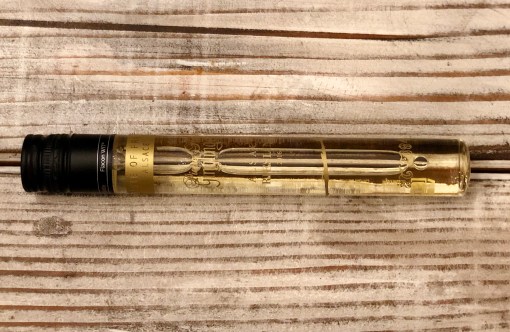
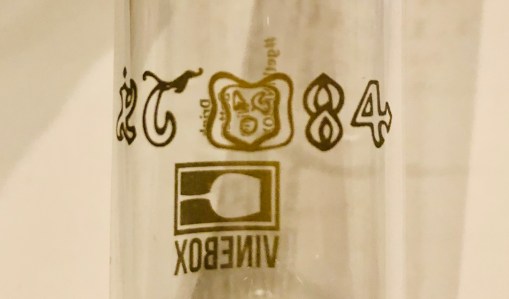
The non-Sicilian wine in question is the 2016 Pierre Henri Ginglinger Riesling, yet another Vinebox offering about which Internet information is strangely nigh-unavailable.  Maybe they are so eager to give you a surprise in the box that they have shut down all worldly sources of data about the bottlings they select.  Maybe their chosen producers have to sign the mother of all NDAs.  Either way, I speak of family estates and generational turnover with admiration quite a bit, but THIS…this is that on an absurd scale.  The Ginglinger family first planted vines in 1610, and generation number TWELVE is currently at the controls of the estate.  Come on.  Their winery building looks like something out of Hansel and Gretel, nestled in the centre of the medieval town of Eguisheim, which is closer to Freiburg in Germany than the Alsatian hub of Strasbourg and is the birthplace of wine in Alsace; the winery’s appearance may have something to do with the fact that it was built in 1684, trivia so good that it makes an appearance on not only Ginglinger’s bottles, but even its Vinebox vial:
IMG_9532

Read the rest of this entry »


Bricks Wine Advent Calendar 2018: Day 21

21 12 2018

By Peter Vetsch

I will admit it, Advent team:  I am nearing the end of my blogging rope.  The culmination of the calendar, Christmas shopping, pre-holiday work deadlines and child sport activities has me completely drained, so as half-bottle Advent peaks to its climax, I am beginning to wear down.  Nevertheless, we aren’t about to stop with the end so near.  We fight with words and persevere.

IMG_9490

So out of the wrapping paper tonight comes…ANOTHER Pinot?  That oddly makes three in five days, after Monday’s Day 17 Ken Wright Oregon masterpiece and Wednesday’s Day 19 Cristom Oregon encore.  This one is…not from Oregon, I guess?  That’s not entirely fair.  If I had pulled this from the calendar on Day 4, or in the midst of the weird run of 2013s, I suspect I would have been pretty psyched about it.  The 2016 Shaw + Smith Pinot Noir from Adelaide Hills is a $50+ bottle retail, from an exciting new-wave producer known for quality.

The winery was founded in 1989 by Michael Hill Smith and his cousin Martin Shaw, both of whom were impeccably credentialed for the venture:  Smith was initially part of the family ownership of Yalumba before being bought out in 1986, and is also a Cordon Bleu-trained chef and Australia’s first-ever Master of Wine, while Shaw was himself a well-known wine consultant who was sought after by many producers needing winemaking assistance.  They grounded their venture in the chilly Adelaide Hills, which is in central-southern Australia near Barossa but 4 degrees cooler on average during the day and a whopping 8 degrees cooler at night, allowing for longer, gentler ripening and the preservation of precious grape acidity.  Grapes have been planted here for two centuries, but it wasn’t until my lifetime that viticulture really came alive on a global scale (not that I can take any credit).  “Higher, colder, wetter” is how Shaw + Smith summarize their Mount Lofty Ranges subregion as compared to nearby Barossa; while only a half hour from coastal Adelaide, it is at 700 metres above sea level…things go up in a hurry. Read the rest of this entry »


Bricks Wine Advent Calendar 2018: Day 20

20 12 2018

By Peter Vetsch

From the very first day I bought this year’s Bricks Half-Bottle Advent Calendar, it was eminently clear that one of these neatly wrapped things was not like the others.  This is that thing:

IMG_9474

Why settle for a half-bottle when you can have a full can?  Although alternative wine packaging has developed quite the stigma over the years (whether cans, or bag-in-box, or tetra-packs, or anything other than tall glass bottles), and although it has often been relegated to the purview of forgettable plonk, a few forward-thinking and quality-minded producers are slowly starting to try to take it back.  As a huge proponent of wines in novel containers, I think wines in cans are utterly brilliant.  Cans offer a number of advantages over bottles:

  1. Aluminum is much, much lighter than glass, which saves on shipping costs (often charged by weight), takes less energy to transport and at least theoretically should reduce the shelf price of the product accordingly.
  2. Cans are fully opaque and do not let any damaging UV light through to the wine (which can cause chemical reactions and form sulphurous compounds within the wine that are notably unpleasant).  Glass, on the other hand, especially CLEAR glass…
  3. A sealed can allows no oxygen penetration into the wine and thus acts as a foolproof preservative.  There’s a reason why all your bomb shelter food is canned.
  4. No corks mean no risk of cork taint and closure-based wine spoilage.  Away, TCA!
  5. Cans are easily portable and allow for casual (and, as needed, discreet) enjoyment wherever you happen to be.

The increase of halfway-decent wines in cans is one of the best vinous developments of the decade, and the inclusion of this one in the calendar is at least partially indicative of the growing popular acceptance of the can as a wine-holding medium.  Not a moment too soon. Read the rest of this entry »


Bricks Wine Advent Calendar 2018: Day 18

18 12 2018

By Peter Vetsch

Well, any wine was going to have its hands full tonight, following on the heels of the toughest act to follow so far in the 2018 calendar, last night’s masterpiece single-vineyard Pinot Noir from Ken Wright.  Like a schedule loss on the second night of a back-to-back home-and-home set in the NHL, Bricks may have strategically selected what I would guess is the least expensive bottle in the whole calendar ($15ish for a full bottle) to take one for the team right after we all revelled in the most expensive bottle in the calendar.  The Advent backup goalie in this case is the 2016 Ram’s Leap Semillon Sauvignon Blanc from New South Wales, Australia, a bottle that continues what is now a Bricks Advent tradition of vinous animals leaping, after the highly tasty Frog’s Leap Zin from 2017.  Stag’s Leap next year?  Most definitely.

IMG_9462

Ram’s Leap is part of the Canonbah Bridge range of wines, a producer with which I was not previously familiar, possibly because the place where their estate vineyard is planted is not even a recognized wine region!  It forms part of the broader appellation of New South Wales, but so does 30% of the Australian wine industry.  The 80-acre vineyard was strategically planted on an old riverbed in the middle of a 30,000-acre sheep farm near Warren, slightly west of the Hunter Valley, a couple hours northwest of Sydney.  Half of the plantings are Shiraz, and the other half are, well, everything else:  Merlot, Grenache, Mourvedre, Semillon, Verdelho, Chardonnay and Tempranillo.  It remains the only commercial vineyard in this highly arid area, with scorching hot days and cool nights that facilitate the practice of organic viticulture (there are no plant-attacking fungi, mildews or moulds in the desert, so less need for herbicides).  Canonbah Bridge takes their organic principles one step further by aiming to avoid any intervention with the vineyard soils whatsoever:  no tilling, all weeding (and much fertilizing) performed via wandering sheep service, cover crops preventing the spread of unwanted plant life, etc. Read the rest of this entry »


Bricks Wine Advent Calendar 2018: Day 4

4 12 2018

By Peter Vetsch

Well, Ray got his blast from Wine Advent past yesterday, continuing his baffling streak of Austrian dominance (which I believe is now at FOUR Austrian calendar wines in a row, somehow).  Mine came today.  Last year, I was a fresh-faced Wine Advent newbie on December 4, 2017 when I pulled a Manoir du Carra Cru Beaujolais from the Bricks calendar.  Tonight, on December 4, 2018, I unwrapped my designated Advent bottle to find…a Manoir du Carra Cru Beaujolais.  I quickly checked my calendar to ensure I had the right year.

IMG_9360

To be clear, it’s a different Manoir du Carra Cru Beaujolais this time around.  This producer is on its fifth generation of family ownership and has accumulated 34 hectares of vineyard land in an astonishing FIFTY different plots scattered throughout Beaujolais. Last year’s wine was from one of the better-known of the 10 Beaujolais Cru subzones, Fleurie; tonight’s option is from the larger but lesser-known (or at least less visible on shelves here) Brouilly, the biggest and southernmost of the Crus which by itself comprises 20% of the Cru vineyard land in the region.  Brouilly is so named for a massive volcanic hill at the heart of the area, Mont Brouilly, which is itself named for Brulius, a lieutenant in the Roman legion who apparently liked naming volcanoes after himself.  This particular wine comes from the Combiaty lieu-dit (or small plot/area bearing a traditional wine) in the village of St. Etienne le Varenne, located in the south of Brouilly and known best for its dry, nutrient-poor pink granite soils.

IMG_9363

I have a strange relationship with Manoir du Carra, in that I have had their wines on at least a dozen different occasions, but NEVER yet in a full-sized bottle — I’ve had a few splits, a number of glass pours, and a strange but incredible 500 mL bottle (which is a remarkably effective size for a bottle of wine and should be produced in greater quantities).  I assume they actually make normal bottles but cannot confirm.  The Terre de Combiaty comes from Gamay vines that average 50 years of age which are hand-harvested (like everything in the Manoir du Carra portfolio), treated with minimal intervention in the cellar and fermented using semi-carbonic maceration, where the intracellular fermentation processes within the individual grape berries from the carbonic maceration process are joined with simultaneous normal alcoholic fermentation from the crushed berries at the bottom of the fermentation tank, resulting in more colour and tannin than pure carbonic maceration and a scaled-back version of the bubble-gummy carbonic flavour set.

IMG_7088

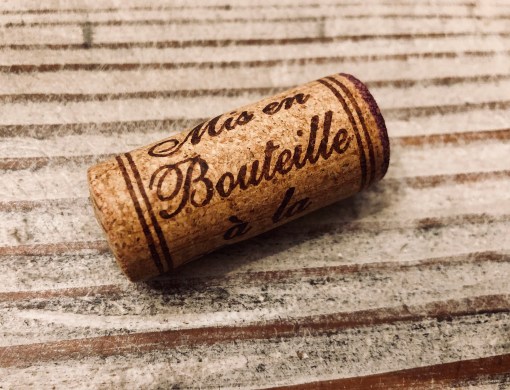
Cork Rating:  1.5/10 (Further deduction from last year’s edition for not changing the nondescript “Mis en Bouteille” nonsense after being blog-warned.)

This sort-of carbonic Brouilly is a sharp purple colour in the glass but thins quite markedly at the rim.  It is initially much darker than expected aromatically, date and slate and dirt emerging first, with black cherry and chalk peeking through underneath.  Over time, a Banana Runts (with banana leaf?) top note emerges, a nod to its carbonic half, as well as the more anticipated raspberry-rooted Gamay sense of joy.  Fresher and plummier on the palate, the wine showcases its clean, squeaky tannins almost immediately, and fairly laissez-faire acidity results in this Gamay seeming more broad and expansive than its standard varietal signature, albeit while retaining a feathery, wispy sort of texture.  The mineral streak noticeable on first smell lasts throughout, iron and rock dust and magnets, but red fruit blooms as you go along to keep anything from seeming severe.  Bricks, I’d say you are 4 for 4.

88 points


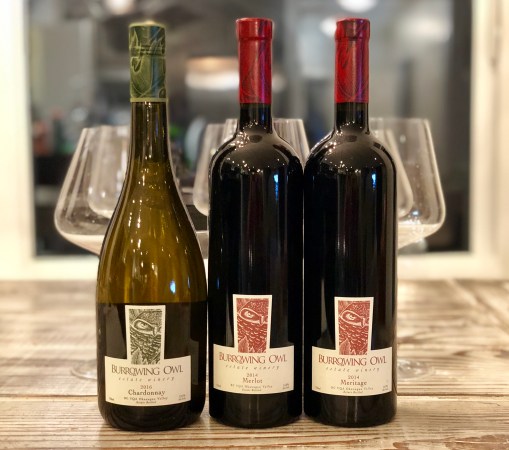
Burrowing Owl Fall Release Trio

8 11 2018

By Peter Vetsch

[These wines were provided as samples for review purposes.]

I have now been receiving and reviewing Burrowing Owl releases since 2015, and in addition to some minor shock about my blogging longevity, this has also given me enough familiarity and enough reps with the wines to truly help me understand the winery’s house style.  The whites tend to be creamy and generous, often buoyed and propelled by oak but not at the expense of the underlying fruit.  The reds are bold and ripe yet not overdone, a strong reflection of the scorching desert-like climate of the estate’s Oliver, BC home.

IMG_9158

Year over year, the releases and the winemaking choices behind them come across as impressively consistent, part of the reason why Burrowing Owl has long been on the short list of top quality wineries in the Okanagan Valley.  Now that the snow on the ground here in Calgary seems permanently settled in until April, it feels like there’s no better time to tuck into this trilogy of warm, rich, classic bottles, which always seem to be best enjoyed with a notable chill in the air, starting with a wine that just might be setting a new PnP record. Read the rest of this entry »


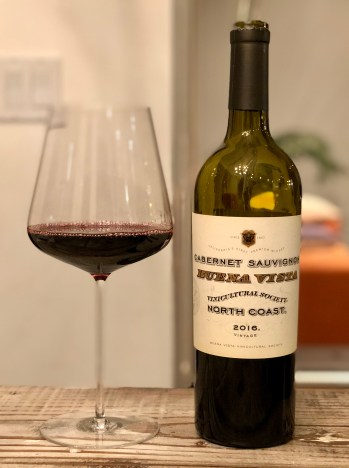
Wine Review: 2016 Buena Vista North Coast Cabernet Sauvignon

17 10 2018

By Peter Vetsch

[This bottle was provided as a sample for review purposes.]

IMG_8980

A rare sighting.

The $25 California Cabernet Sauvignon is an endangered species nowadays; once a stalwart gateway drug for luring novice wine drinkers into a lifetime of vinous enlightenment, it has now been superseded in that endeavour by numerous other New World crowd-pleasers that are managing to offer similarly accessible and overt pleasure at wallet-friendlier prices.  The combination of rising land costs, fire- and drought-inspired production difficulties and the utter shredding of the Canadian dollar as compared to the US greenback on world currency markets has more or less eliminated California as a source of solid value wine in our market.  Buena Vista Winery is trying to change that, but with this series of factors arrayed against it, it’s fighting an uphill battle.

I have previously written about the remarkable, riotous, barely credible but actually true history of Buena Vista, the proud owner of the label “first commercial winery in California”.  It is well worth refreshing your memory about, but the Coles Notes version must at least mention:  (1) Agoston Haraszthy, who may have been the first Hungarian to emigrate to the United States, who founded the winery and who essentially crammed six lifetimes of zaniness and adventure into one shortened 19th century thrill ride; (2) 1857, the year Haraszthy founded Buena Vista, part of a major ambition to establish high-quality vitis vinifera grapes in hospitable California soils; (3) Nicaragua, where Haraszthy fled barely a decade after Buena Vista was first established, with angry and misled company investors potentially at his heels; and (4) alligators, which apparently ate him there.  Never a dull moment at Buena Vista in the 1850s and 60s. Read the rest of this entry »


Cellar Direct: RMW&F Festival Edition!

11 10 2018

By Peter Vetsch

[These bottles were provided as samples for review purposes.]

IMG_8930

Find the booth, for wines like this!

It’s October, and here in Calgary we’ve already been bombarded with two feet of snow in the last week and are craving the spring that’s a winter away, which can only mean one thing:  it’s coming up to Rocky Mountain Wine and Food Festival time.  The massive tasting event, now in its 21st year in the city, is kicking off tomorrow in Calgary (Oct. 12-13) and is heading north to Edmonton the following weekend (Oct. 19-20).  In addition to a massive number of wineries, breweries and restaurants, in attendance for the first time this year will be our blog’s favourite national wine club Cellar Direct, the Old World-focused provider of finely crafted low-intervention traditional-styled wine that ships its offerings across Canada and has been known best on this page for never yet providing a bad bottle over multiple years of tasting experiences.  If you happen to be attending the Festival (which you should, if you can), stop by the Four Corners booth (#309 in YYC, #903 in YEG) to say hi to the founders and brainchildren behind the Cellar Direct venture and sign up for their mailing list, which will give you access to wines like the ones below, which I recently received as a sort of Festival lead-up.  It will likely be the only place you can find these bottles in the country. Read the rest of this entry »


Wine Review: Finca La Linda Malbec Tiers

26 07 2018

By Peter Vetsch

[These bottles were provided as samples for review purposes.]

In some ways, trendy grapes have it tough.  Malbec has a proud and lengthy heritage as one of the six permitted grapes in red Bordeaux (yes, I’m still counting Carmenere, and shall ever continue to do so) and as the dauntingly famous Black Wine of Cahors, and it is almost single-handedly responsible for giving an entire country a vinous identity that has led to the rediscovery and cultivation of astonishingly high-altitude decades-old vineyards and a re-imagination of what grapes are capable of achieving in Argentina.  It is both an Old World stalwart and a New World trailblazer, pulling off both with equal aplomb and giving itself new life in the process.  But with raging-wildfire levels of success comes an inevitable fight against consumer boredom, particularly amongst the more avant-garde and adventurous in the wine world, which creates a sort of quiet undercurrent of peer pressure to steer clear of what is currently painfully a la mode.

IMG_8463

Great labels, but why is one bottle a third taller than the other??

I feel this way quite a bit, pulled away from the customer staple of the day in part because of my own desire to see what else is out there, but in part because of some innate resistance that I see amongst other wine geeks, some refusal to go along with what is everywhere.  So it was with Australian Shiraz; so it is with Argentinian Malbec; so it will be with whatever comes next.  I don’t really have a hard stance on this, but I have recently tried to make sure that my efforts at open-mindedness in wine extend equally to those grapes and styles that are suddenly ubiquitous as to those that remain esoteric.  I have also tried hard to remember that I once relied very heavily on the Shiraz-laden fads of the day as a gateway that set wine’s hooks into me for the first time, and I enjoyed the living hell out of them.  Fifteen years later, I have a WSET Advanced certification and have been publishing reviews on a wine blog for seven years.  Trends can lead somewhere.  So let’s start somewhere. Read the rest of this entry »


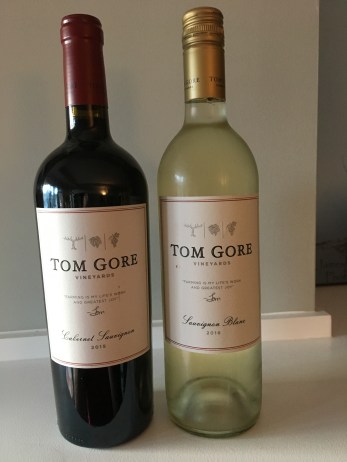
Wine Review: Tom Gore Vineyards, A Tale of Two Sauvignons

14 07 2018

By Raymond Lamontagne

[These bottles were provided as samples for review purposes.]IMG_1713

Cabernet Sauvignon remains the most widely grown quality wine grape in the world, so it is perhaps appropriate that in at least one regard, “Cab” started me off on the path to becoming a serious scholar of wine.  I had previously acquired a taste for certain Canadian Gewurtztraminers, spellbound by how a grape could smell and taste so exotic, although hard-won experience has taught me that many such wines recall one of those chemically augmented gym nuts who can flip a giant tire from a mining truck once or twice, only to catastrophically gas out immediately thereafter: initially powerful but ultimately quite flabby.  Rather wary of this focus, I then snagged a few wine books from a local book sale, thinking that this subject’s unique combination of history, geography, botany, technology, and gustatory delight would give my brain something new and compelling over which to obsess. I noticed right away that in these sundry tomes, blackcurrant or cassis was an aroma descriptor frequently associated with Cab. As someone who adores this particular flavour, I did further research. Not just cassis, but cedar, “cigar box” (I’ve always been intrigued by this one), blackberry, even vanilla and cola and chocolate cake. Wine smells like these things?! I was officially hooked, all this before even seriously tasting a Cab.

Once the actual drinking started in earnest, I rapidly encountered one of Cab’s parents: Sauvignon Blanc. My dad ordered a New Zealand example one nice evening in a Calgary steakhouse, as an aperitif, telling my mother:  “It’s one of those really grapefruity ones you like.” Grapefruit, you say? A cursory look at a tasting wheel for Sauvignon Blanc ultimately reveals a whole litany of “green” aromas, with these ultimately outnumbering the also prominent citrus and sometimes tropical fruits. There are classics like grass, gooseberry, and green bell pepper, along with rather more esoteric takes such as matcha, lemon grass, apple blossom, or even “cat pee”. Maybe we should stick with grapefruit or “tomato leaf”. Go crush and sniff a tomato leaf… You’ll probably get at least an inkling of pipi du chat, if nothing else in the form of a vague association with “funky” or “rank”. Some claim that this character, driven by organic compounds called thiols, is in fact a fault due to vineyard overproduction. Maybe so, although I experience cheap Sauvignon Blanc as something more akin to dilute lemonade in which a few broken fluorescent bulb filaments have been macerated, largely devoid of character across the board. A quick spray of thiols would often do this stuff a favour.

Sauvignon-Blanc-grape-variety-wine-aroma-profile-flavors-fruit-spices-Social-Vignerons

From http://socialvignerons.com/2015/12/10/infographics-guide-to-sauvignon-blanc-wine-grape-variety/.  This thing is comprehensive and rather fascinating…and there it is, cat pee, complete with schematic depiction.

So in addition to capturing aromas that I find pleasant (maybe at this point forget I mentioned cat pee), Cabernet Sauvignon and Sauvignon Blanc are both associated with formative memories in my quest to experience as much of the wine world as possible. Fitting then that I drew this assignment to review these two varietal bottlings, which interestingly enough hail from the first California wine label named after a grape grower.

Read the rest of this entry »


Wine Review: Officially Summer Trio

9 07 2018

By Peter Vetsch

[These bottles were provided as samples for review purposes.]

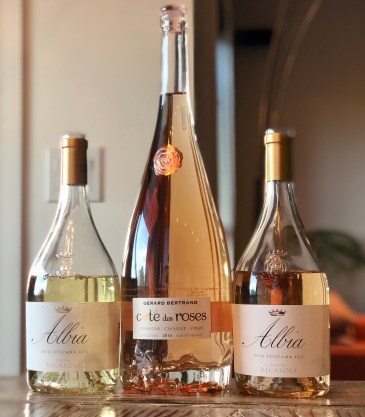
IMG_8409Sometimes you have to force seasonal drinking posts, and other times the season and the drinks just fall right into your lap.  Stampede is here in Calgary, the thermometer has just recently clocked over 30C, and we’re well-ensconced into July, which turns my sample pile ponderings to thoughts of whatever I can chill for refreshment most effectively.  After landing on an ideal trio of bottles that achieved that lofty goal, I noticed something odd that bound them together:  they have all at one time or another previously graced the pages of Pop & Pour.  Even though the blog is now 7½ years old and counting, that basically never happens.  Sometimes summer is just meant to be.  Game on.
2016 Ricasoli Albia Bianco Toscano (~$20)

I believe this is the second ever time that an identical bottle will get two separate reviews on PnP:  when Ray had the pleasure of meeting Tuscan winemaker Francesco Ricasoli at a tasting luncheon back in February, this 2016 Albia Bianco was the first bottle they cracked.  If you want a detailed backstory on Francesco, the Ricasoli estate and the family’s critical contributions to Chianti Classico as we now know it, click the link above for the whole enthralling narrative.  While I don’t have a five-course meal to pair with tonight’s wines, I do have both this Albia Bianco and its sibling the Albia Rose on the menu, both scions of Barone Ricasoli’s “fresh and fragrant” early-drinking Albia label.  Both come in gorgeous, hefty, gourd-like bottles that you first admire for making this $20 wine look like it costs double that amount, but then curse effusively once you realize the heavy-punted broad base is about a millimetre away from not fitting at all in any standard wine racking.  Suffice to say the labels suffered some mild to medium collateral damage as I reamed the bottles into place with every ounce of strength I had. Read the rest of this entry »


Calgary Wine Life: The Fladgate Partnership 2016 Vintage Port Release Tasting @ La Chaumiere

9 05 2018

By Dan Steeves & Raymond Lamontagne

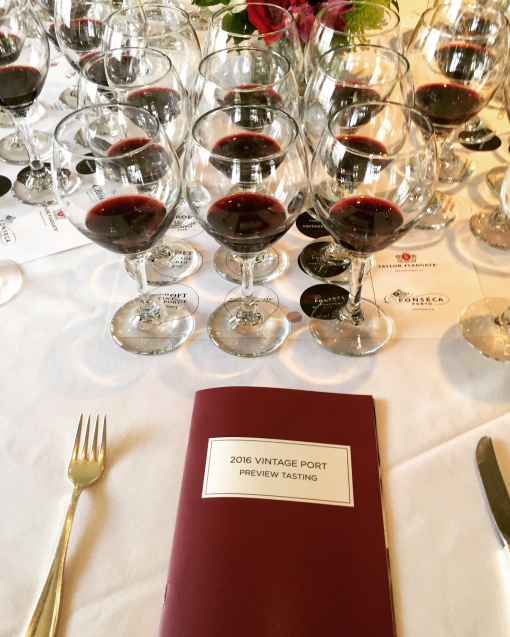
Vintage Port, undoubtedly one of the crown jewels of the wine world, is celebrated as one of the Earth’s most complex and robust wines, one that has a superior ability to age and mature in bottle, often only fully revealing itself after several decades. Having never tasted a vintage Port with less than 10 years of age on it, we were very interested in the opportunity to preview the brand new 2016 Vintage Ports from The Fladgate Partnership (literally, they were just bottled a couple weeks ago for sampling purposes, well before what will be their commercial release).

The Fladgate Partnership includes three iconic Port houses: Croft, Taylor Fladgate, and Fonseca. Each house enjoys centuries of history producing Port, and between them they hold the most revered vineyards in the Douro, giving the Partnership the ability to make some of the best and most sought after Ports on the market. Croft, founded in 1588 and thus the oldest Port house in the world, possesses the Quinta da Roêda estate, which has been termed the “jewel of the Douro Valley”. Taylor Fladgate has three main estates: Quinta de Vargellas (well known as a pinnacle wine estate), and two Pinhão Valley estates (Quinta de Terra Feita and Quinta do Junco). Fonseca, the relative newcomer in the Fladgate trifecta at the fresh age of 203 (founded in 1815), also has three significant estates: Quinta do Panascal in the Távora Valley, and Quinta  de Cruzeiro and Quinta de Santa António, both located in the Pinhão Valley. It is these special estate vineyards, with their prime soil, ideal climate conditions, and significant plantings of decades-old vines, which contribute most to the style and personality of each House’s classic vintage Port. As we shall see, there are compelling genuine differences in house style.

Vintage Port is made only in the very best of years when the fruit is exceptional and the wines are determined to be monumental in character, showing early evidence of the ability to age that all great Ports should have. It is a house by house decision, made in the second spring following the harvest once the wines have undergone initial aging and blending. If the producer believes the wine has the characteristics of a great Vintage Port (and the regulating body agrees), they make a formal vintage declaration and begin preparations for bottling. For Fladgate, this declaration occurs on April 23rd and it historically happens roughly three times each decade. The last vintage declared for Fladgate was 2011, which followed 2009, 2007, 2003, and 2000. Taylor Fladgate has declared 32 Vintages from 1900-2016, whilst Croft has declared only 24 vintages in the same period.

Jorge Ramos, the export manager for The Fladgate Partnership, led us through a tasting of three vintages (2003, 2007, and the new 2016) from each of the Fladgate Partnership houses. The opportunity to taste various Vintage Ports from all three producers, side by side, really brought into stark relief the differences in their identities. From the luscious fruit flavours of Croft to the soft yet strong complexity of Taylor Fladgate and the muscular power of Fonseca, these were all stunningly delicious with their own personalities. We’ve summarized our tasting notes below by vintage year, in the manner they were tasted. First up, the 2003 vintage, which had a near perfect start to the growing season and periods of intense summer heat in August which allowed for perfect ripening of the fruit. Read the rest of this entry »


Calgary Wine Life: Famille Perrin Tasting with Thomas Perrin @ Avec Bistro

15 02 2018

By Dan Steeves

Excited is an understatement of how I felt yesterday as I was on my way to an amazing vinous and culinary experience at Avec Bistro featuring the wines of Famille Perrin and proprietor Thomas Perrin. I have always been fond of the wines of the southern Rhone, especially after travelling through the area a few years ago an experiencing the culture, the landscape…and, of course, the wine! Being guided through a tasting by any winery owner is always a privilege. Hearing directly from them about the history of their area, small details of their wines and their actual impressions of each bottle creates a personal connection that makes it such a memorable experience. Combine this with impeccably paired cuisine and it is elevated to a new level of sublime indulgence.

img_5565

Famille Perrin is a family-owned and -operated producer (Thomas, the 5th generation, along with his siblings and cousins, all work for the family business) in the southern Rhône Valley which is most notably known for their flagship label from Châteauneuf-du-Pape, Chateau de Beaucastel, although they have an extensive collection of wines from many other areas in the southern Rhone. They have been established for just shy of 110 years and are the leading organic grape grower in the area after Thomas’s grandfather, Jacques Perrin, pioneered organic farming practices in the 1950s which was followed by biodynamic practices in the 1970s. All wines produced by Famille Perrin are blends consisting of at least two grape varieties which are grown, vinified and matured separately and then blended to create a harmonious wine.  With there being 13 different grape varieties allowed in Châteauneuf-du-Pape (all of which are used in the Chateau de Beaucastel CdP, one of the only estates to do so) and still other varieties used in other wines elsewhere in the region, you can imagine how long and busy the harvest season is for Perrin. The harvest starts in August with the early ripening Cinsault and ends two months later with Mourvedre and Counoise. Vinification is then done separately using stainless steel, concrete, or wooden tanks with very limited oak ageing done, at least in the sense that no new oak is used to avoid imparting oak characteristics in the wines.

The tasting consisted of six wines from the Famille Perrin collection – a rosé aperitif, followed by a white and four reds, each accompanied with their own food pairing. Below are details for each wine (and food pairing). Read the rest of this entry »


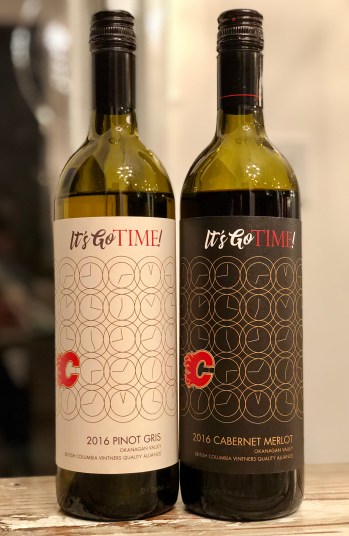
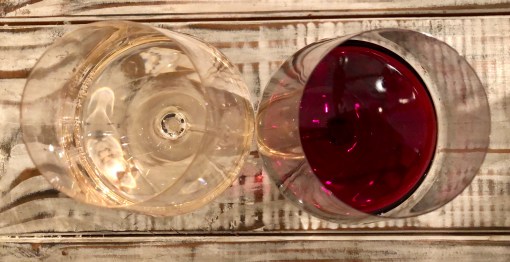
Wine Review: It’s Go TIME!

17 01 2018

[These bottles were provided as samples for review purposes.]

IMG_7405

NHL-licensed wine.  Bring on the themes!

No, that title isn’t me exhorting myself into giving 110% on this wine review, playing for the crest on the front of the jersey and leaving it all out on the ice.  It is in fact the actual, somewhat-punny name of a red and white wine duo made as a commercial and charitable collaboration between the Okanagan’s TIME Winery and my local NHL squad the Calgary Flames, with some of the proceeds from bottle sales going to the team’s philanthropic Flames Foundation.  Having recently been to a WHL Hitmen game, I can confirm that the Saddledome boards themselves officially confirm TIME as the team’s official wine supplier (yes, such a designation is a thing), and the bottles are both served at the arena and sold at a wide array of retailers across town.  TIME is a brand owned by Encore Vineyards, a group led by Harry McWatters, a Canadian wine pioneer who founded Sumac Ridge winery the year I was born (1980) and who already has 50 years of local wine business experience under his belt, perhaps more than any other living person in Canada.  After selling Sumac Ridge, McWatters launched TIME in 2013, basing his winery inside an old movie theatre in Penticton and focusing on grapes from the southern Okanagan for his production.

IMG_7411

It is a long-standing tenet of this blog that I am fully on board with a good theme wine, as long as the gimmick doesn’t come at the expense of the underlying substance.  When theme bottles are done well, you win twice, augmenting the already-pleasurable experience of drinking well-made juice with the added enjoyment of the marketing cleverness surrounding it.  When they are not done well, not only are you left drinking crappy wine, you end up feeling a bit like you’ve been had while doing it.  These two bottles stake a sort of middle ground between those extremes, but when combined with their inoffensive price tag ($19.99 SRP) and their charitable underpinnings, they take no steps to dampen my theme wine enthusiasm.  Let’s get into them; it’s go t– …well, you know what time it is. Read the rest of this entry »


Bricks Wine Advent Calendar 2017: Day 7

7 12 2017

In the first sign of undeniable Advent progress, we have finished the first six-pack column of the Bricks Wine Advent Calendar crate and are heading into the second.  Hard to believe that Advent is already 25% over, apart from living 12 posts from 4 different people over the last 6 days and thinking about repeating that pattern 3 more times.  The folks who compiled this calendar obviously have a love of the classics, as the first week of half-bottles, apart from the inaugural Canadian-sparkling-Gamay curveball and the glorious interlude into Austrian Gruner on Day 3, has been like reading the chapter titles of a Top Wines of the World textbook:  Brunello, Beaujolais Cru, Marlborough Sauvignon Blanc, Burgundy.  And if you look for the regional chapter title for pink wine, you will probably end up in Provence.  And if you end up in Provence, there is a greater likelihood you will find this wine than any other.

IMG_7191

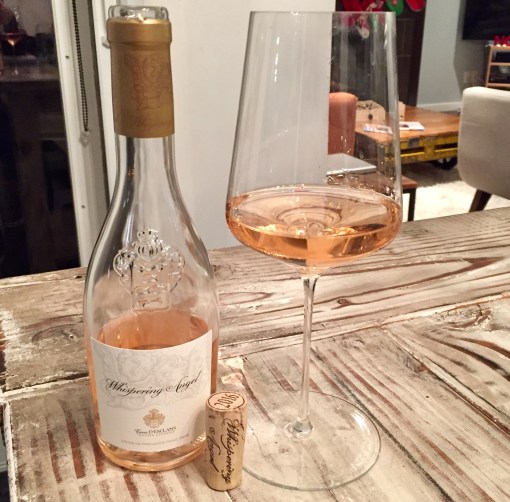
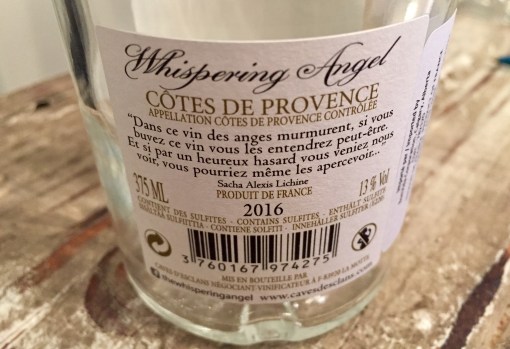
Whispering Angel is a behemoth.  The Chateau d’Esclans estate was struggling when Bordelais Sacha Lichine bought it in 2006, inheriting vineyards in disrepair but featuring 80-90 year-old Grenache vines and a production with no market presence.  Lichine, looking out on the sunny French Riviera from his estate, identified a gap in the market:  heavy, sweeter white-Zinfandel-style rosé could not quench your beachfront thirst on a scorching day.  He conceived of rosé as a serious wine, made clean and light and dry, meant to disappear at resorts and in backyards with the drinkers scarcely noticing, pausing only to reach for the next bottle.  Whispering Angel, released the following vintage, went from 13,000 cases to over 375,000 cases of production within a decade.  If you’re counting at home, that’s 4.6 MILLION BOTTLES of the current 2016 vintage, sourced from a full 500 hectares of grapes from d’Esclans estate fruit as well as a swath of neighbouring vineyards.  To understand just how much of a thing it now is, you can now buy Whispering Angel gummy bears…that is, you could until they all sold out.

IMG_7193

Cork Rating:  5.5/10 (A perfectly cromulent cork.)

Whispering Angel has its formula down cold:  a blend of Grenache, Rolle (a.k.a. Vermentino – a white grape) and Cinsault, crushed and briefly macerated at very cool temperatures to prevent oxidation and preserve fresh flavours, fermented in stainless steel tanks and served icy cold, ideally on a yacht.  It succeeds, and continues to pull in critical acclaim despite becoming its own commercial empire, because the formula works:  it is both tremendously refreshing and carefully unobtrusive, thirst-quenching yet generally unmemorable.  It is a super pale farmed-salmon colour in the glass and delivers up citric aromas of lemon pulp, pink grapefruit and unripe peach, dusted with ginger and an herbal greenness like basil or chives and overlaid with a chalky minerality.  Its lithe, svelte body brings a splash of bracing freshness, like new snow, and ghostly notes of strawberry, tangerine, copper and lemon-lime, finishing tart thanks to straight lines of potent acidity.  It executes its mission to perfection and has spawned a thousand imitators, but for me the rosé category has lost a bit of its sense of interest as a result.

89- points

IMG_7195