Wine Review: 2008 Cachet No. 01 by Stag’s Hollow

27 02 2013
There is no debate:  this is a baller-looking bottle of wine.

There is no debate: this is a baller-looking bottle of wine.

Apologies in advance to my local Alberta readers:  this review will be almost useless to you.  I have never seen this bottle in our fair province, or on a retail store anywhere else for that matter.  I got it for Christmas a couple years ago from a cousin-in-law out in Vancouver (thanks Brad!), was immediately impressed by the rap-video blinginess of its container (the bottle must weigh 2 pounds empty) and then discovered through research that it was created as part of a unique and forward-thinking experimental line of wines by stalwart Okanagan producer Stag’s Hollow.  The Cachet wines are limited edition blends of top quality grapes which are outside of the standard SH catalog; they are made once, as a small run in a single vintage, and then never replicated again.  So while this is the 2008 vintage of Cachet No. 01, there is no 2009 or 2010 bottling — the 1500 bottles (125 cases) of this wine from that single year are all there is.  I have no idea how this is commercially workable, but I find it fascinating.  These high-end one-off blends put the power in the hands of the winemaker to express a different vision with these specialty wines every year…or at least that was the plan.  As it turns out, only two Cachets have ever been made:  this one, and the sequel Cachet No. 02 (made from Grenache, Syrah, Viognier and Marsanne) that was released around the same time.  The world is still waiting on Cachet No. 03, and I’m sort of wondering whether the concept has died before it ever really got off the ground. Read the rest of this entry »


Calgary Wine Life: Taste With Piero Lanza of Poggerino

17 02 2013

[Cross-posted at www.calgaryisawesome.com]

There’s nothing quite like listening to winemakers talk about their own wines.  You can learn a lot about a wine by reading labels, going to websites, talking to shopkeepers and (of course) reading blogs and online reviews, but nothing gets you inside the soul of a wine faster than hearing the person who created it talk about what led up to its birth.  On Valentine’s Day, a few of us were treated to this rarefied experience at Vine Arts on 1st Street and 13th Avenue SW, where Wine Boy Imports presented an interactive tasting with Piero Lanza, co-owner and winemaker at Fattoria Poggerino in Tuscany, Italy.  Lanza led us through his entire lineup of classically inspired wines and made most of us mentally pencil in a trip to central Italy at some point in the future.

Photo1-157

Poggerino is first and foremost a family venture:  it was purchased by Piero’s grandfather in 1940, and he and his sister are the third generation of Lanzas to work on the property.  The estate is comprised of 43 hectares of land, although only 12 hectares are planted to vines (11 to Sangiovese, 1 to Merlot), with the rest largely covered in forest.  Lanza described the relatively narrow spread of the vineyards as “human-sized”, stating that he preferred to keep the operation on a scale that allowed him to personally work on all the crops and “speak to my vines”.  His passion for maintaining, preserving and expressing the essence of the land is powerfully sincere and has led Poggerino to be both organic and biodynamic in its vineyard practices.  “This land is mine on a piece of paper, but it’s really for everybody”, Lanza explains; many of his decisions with respect to the handling of his crops paint him as a steward for future generations.  He is focused on ensuring that the soils where his vines grow are constantly teeming with life and that the grapes themselves are merely one part of a thriving ecosystem instead of a single disruptive force that creates imbalance with its surroundings.  Given Lanza’s dedication to the land, it is not surprising that his winemaking style is devoted to reflecting the unique footprint of the soil through its grapes.  He keeps any intervention in the cellar to a minimum and aims to produce wines of elegance and intensity without excess concentration, keeping them fresh and food-friendly.  In his words, “I work hard to produce simple wines.”  We were lucky enough to try 5 of them, each somewhat different from the others, but all reflecting a common origin. Read the rest of this entry »


Calgary Wine Life: Meet Alberta Winestein

30 01 2013

[Cross-posted at www.calgaryisawesome.com]

AlbertaWinestein_logoJPGHow much of your 2012 Christmas shopping did you do online?  In my case, the answer comes perilously close to “all of it”.  No malls to brave, no parking to find, no bags to carry, just page after page of every imaginable type of gift easily accessible from the comfort of my house — it’s hard to see the downside.  The Internet has increasingly become my retail destination of choice, and over the past few years I have purchased any number of things online:  books, movies, furniture, shares, even (sort of) a dog.  But wine?  Forget about it, at least in Alberta.  While e-commerce has started to become an important part of the wine industry in the US, there has been almost a total vacuum in the local market, with no retailers offering a comprehensive online ordering platform and no other service providers stepping up to fill the void…until now.  With its formal launch earlier this month, Alberta Winestein (http://www.albertawinestein.com) is making online wine ordering a reality in our province and is seeking to bring high quality boutique products to every corner of Alberta.

The idea is a simple but powerful one:  find some way to connect the scores of wine buyers across the province to the wares of some of Calgary’s most respected and prestigious shops, to the benefit of all parties.  After a couple years of intense planning, Alberta Winestein founder and CEO Guillaume Bedard is now ready to implement his strategy to realize this goal.  “As a consumer, it was difficult and time-consuming to know what unique products were offered in Alberta from all the best boutique retailers,” Bedard explains.  “We dreamed of a way to ease our search while using state of the art e-commerce services.  We then realized that boutique retailers are themselves under increasing pressure from large surface retailers and are now facing greater competition than ever while trying to address a growing market demand.  That is when Alberta Winestein went from concept to reality:  a central e-commerce platform for amazing boutique retailers in order to ease the purchasing process for consumers.” Read the rest of this entry »


Wine Review: 2007 Luciano Sandrone Nebbiolo d’Alba Valmaggiore

24 01 2013
Some of my favourite labels of all time.  Classic.

Some of my favourite labels of all time. Classic.

If there’s anything better than a good bottle of wine, it’s a good bottle of wine that you got on sale.  While this particular bottle usually retails for around $50, I was lucky enough to grab it on special for a shade under $30, which made me ultra-excited to open it and greatly reduced my chances of being disappointed with what was inside.  Not that there was much of a chance of that, given who made it.

Luciano Sandrone is a Barolo legend.  If you were going to make an All-Star team of producers from the Piedmont region in northwest Italy, Sandrone would definitely be in the starting lineup. Ever since his first vintage in 1978, he has wowed the wine world with a slate of bottlings that are crafted in a more open, approachable manner than those made by the staunch traditionalists in the area but yet that remain elegant, complex and capable of aging and improving for a long time.  Most famous for his Barolos (Barolo is a subregion of Piedmont whose wines are made from the Nebbiolo grape), Sandrone also makes a Barbera (which is fantastic), a Dolcetto, a red blend and this Nebbiolo d’Alba.  Here’s a good rule of thumb for reading Italian wine labels:  if you see a label stating “_______ di _______” or “_______ d’_______”, odds are that the first word in the sequence will be the name of the grape and the last word will be the area where it’s from.  “Nebbiolo d’Alba” means “Nebbiolo from Alba”, which is the name of a Nebbiolo-growing region in Piedmont immediately adjacent to the great Barolo and the equally great Barbaresco appellations.  Since the soil and climate conditions in Nebbiolo d’Alba are similar to those in Barolo/Barbaresco, and since the same varietal is used to make the wine, Nebbiolo d’Alba can be a source of wines that give you a good sense of what Barolos and Barbarescos are all about but at a fraction of the price. Read the rest of this entry »


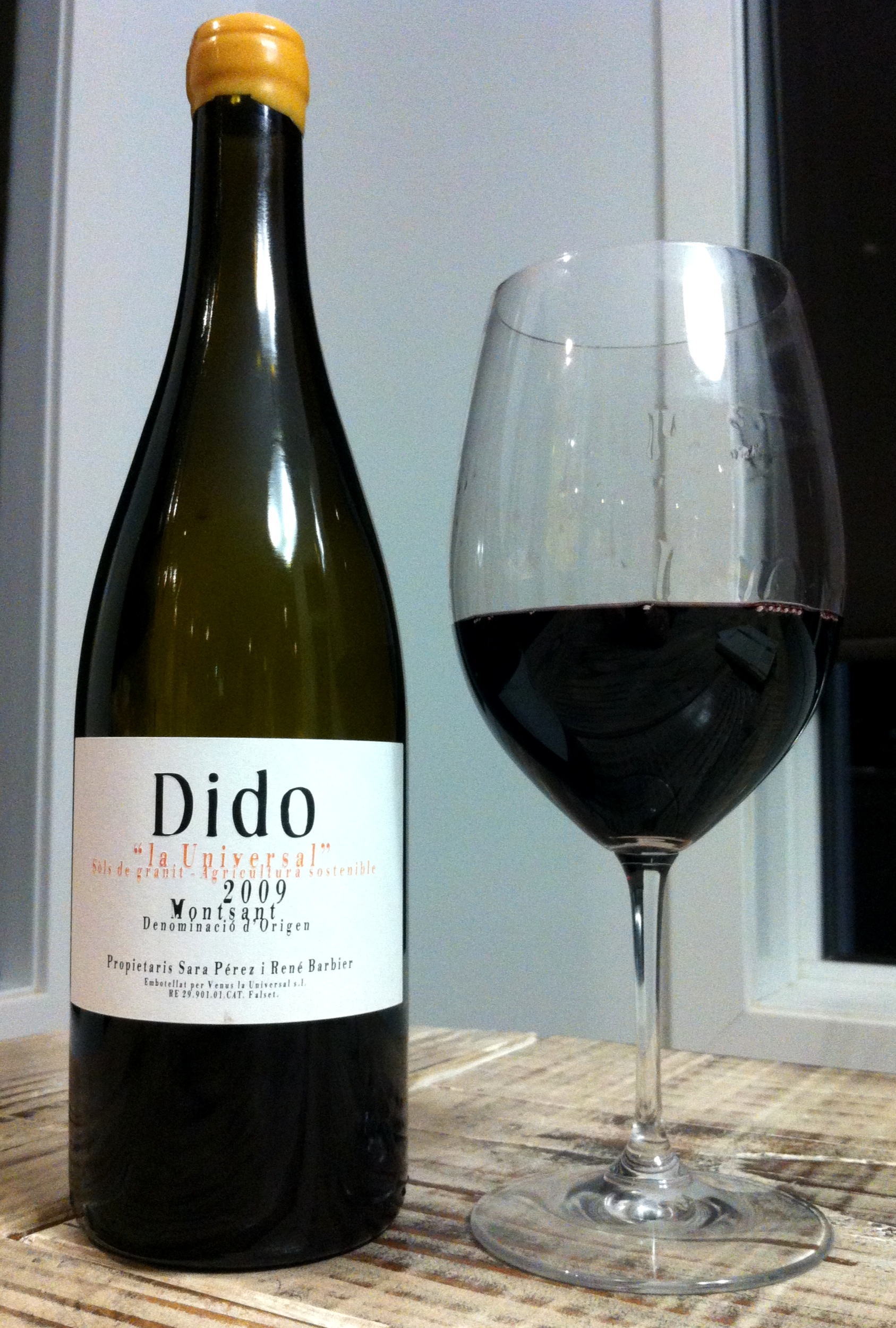
Wine Review: 2009 Venus La Universal Dido

16 01 2013

[This bottle was provided as a sample for review purposes.]

This must be tasted to be believed.  Just give yourself a couple days.

This must be tasted to be believed. Just give yourself a couple days.

Back!!

Almost a calendar month from my last real post, things have finally returned to some semblance of normalcy in my household and all family cold and flu issues are mostly a thing of the past, leaving me free to kick back with a (highly intriguing) glass of wine and blog to my heart’s content. Luckily for me, PnP’s revival from the ashes of neglect comes in the form of a review of a bottle that I could write about for days, a wine that you can buy here for less than $30 and which has been constantly opening and evolving since I opened it over a day ago. I’ve tasted it over many hours and still can’t entirely figure out how to put it into words, but here goes.

Venus La Universal is one of many vinous projects currently being undertaken by Sara Perez, who is considered by many to be the most important female winemaker in Spain. Her roots in wine are familial: when she was young her parents moved the family from Barcelona to the nearby (and now-renowned) area of Priorat, located due west of the city in northeast Spain. Her mother and father became the founders of Priorat’s School of Oenology and early contributors to the wine boom that now envelops the region. Perez’s wines are all driven by a sense of place and a deep connection to the vineyards from which they are derived. I don’t usually include quotes in my review, but this one got to me: in a 2005 interview with Luis Cepeda, Perez maintained that “[t]here has to be absolute complicity between land and winery.” The land that ultimately resulted in this wine is a 4 hectare piece of farmland found in the southern end of the oddly donut-shaped region of Montsant, which forms a complete ring encircling the bullseye of Priorat (and thus can offer wine drinkers Priorat-level taste experiences for value prices). It’s a harsh landscape featuring nutrient-poor granitic soils, high altitudes, hot days and cold nights, terraced vineyards that must be harvested by hand, and vines that have to struggle to survive. Unlike most agricultural crops, however, with grapevines this constant battle to thrive leads to deeper, stronger roots and higher-quality, more flavourful fruit, making areas such as this prized for their ability to coax the most character out of their grapes.

Read the rest of this entry »


Posting Delays (a.k.a. Infirmary Report)

5 01 2013

This was not in the plans.  I had intended to take a week or so off from blogging at the start of the holiday season and then get right back into posting after Christmas; I was mulling over year-end reviews, 2013 wine resolutions and other chronologically appropriate pieces, and I have a sample wine waiting in the wings that I was really excited about delving into.  Then the black cloud of sickness settled over my household, afflicting every member of my family (even the dog) one by one.  I’m the only person who has managed to avoid coming down with the cold and flu that all of Calgary seems to have at the moment, but my attentions have been steered away from the computer for a couple of weeks now.  I’m also going out of town next week for work (anyone have any recommendations for a cool place to have a great glass of wine in Pasadena?), which means it will likely be a calendar month between Pop & Pour articles.  Sorry about that.  Rest assured that I am still alive and kicking and have not given up blogging forever, and check back mid-month for actual new content.  Happy New Year everyone!


Calgary Wine Life: Value Wine Uncorked! (by Shelley Boettcher)

17 12 2012

[Cross-posted at www.calgaryisawesome.com.  This book was provided as a sample for review purposes.]

Uncorked2013COVERYou almost certainly don’t need me to remind you that it’s December 17th.  By some true Christmas miracle, I managed to finish both my shopping AND my wrapping this past weekend, easily setting a new XMas Efficiency Standard for myself.  But if you happen to be using the eight days between now and the 25th to scramble madly around looking for last-minute gifts, fear not, because I can help you with two simple words:  buy wine.  Shopping = finished.  Everybody likes receiving a gift they can drink, and even if they aren’t sure about the wine you pick out on the first sip, by the fifth glass I guarantee they’ll be all over it.  Alternatively, if you don’t quite feel up to the pressure of picking out that perfect bottle for the people you love, you can do the next best thing and buy them a book that tells them what that perfect bottle might be.  Shelley Boettcher’s slightly pre-emptive 2013 edition of Uncorked! is one such book that is focused on finding that rarest of beasts:  good cheap wine.  All of its recommendations clock in at $25 or less retail.  It is also the only such wine guide that I have seen which is geared entirely to the Alberta market instead of to American or European audiences, each of whom have a remarkably different selection of vino to choose from than we do here.  If you live in the province, you should be able to find at least some of these wines at a shop near you; if you live in Calgary or Edmonton, you should have access to almost all of them. Read the rest of this entry »


Wine Review: 2011 Stift Goettweig Gruner Veltliner Messwein

14 12 2012

[This bottle was provided as a sample for review purposes.]

Just a classic-looking bottle of wine.  And don't overlook the awesome ceiling fresco on the neck capsule!

Just a classic-looking bottle of wine. And don’t overlook the awesome ceiling fresco on the neck capsule!

Wine lovers owe monks more than you might expect.  For centuries in Europe, it was these members of religious orders who cultivated and maintained vast tracts of vineyard land owned by the church and who advanced the world’s knowledge of viticulture and winemaking.  Legendary wine regions like Burgundy in France were first classified and sub-divided into distinct terroirs by the monks, who analyzed soils and slopes and charted the subtle similarities and differences discovered and their effect on the grapes that were grown in each location.  But that’s all ancient history, right?  Not so fast.  On the banks of the Danube River in Austria there is a Benedictine monastery that is almost a millennium old which has been making wine for 300 years and which still owns and is involved in managing wine production today.  This piece of living history is Stift Goettweig, founded in 1083 and home to a contemplative order of Roman Catholic monks bound to vows of solitude and meditation who have been producing wine on the property since 1730.  In 2006, the monastery leased its 26 hectares of vineyards to a small group of investors (a group that includes some of those running the monastery itself) who are dedicated to making high-quality white wines from grapes grown in the hallowed soil, particularly from Austria’s signature grape, Gruner Veltliner. Read the rest of this entry »


Calgary Wine Life: 6 Wines To Try Before You Die @ Vine Arts

3 12 2012

[Cross-posted at http://www.calgaryisawesome.com]

There are wine tastings and there are WINE TASTINGS.  And then, about 500 feet above those, there was the tasting I went to this past weekend.  It is not blog-boosting hyperbole to say that most of us who walked into Vine Arts on Friday night were stepping into a once-in-a-lifetime opportunity to try wines that we would literally never see again.  The rarity of the event was not lost on the buying public:  the Friday tasting sold out so quickly that Vine Arts scrambled to add an encore showing on Saturday, which sold out just as fast.

Photo1-131

What was so incredible about it, you ask?  It was the near-unheardof chance to taste six of the world’s most famous, celebrated, acclaimed and expensive wines in a single sitting.  Over a span of two hours, I crossed a number of vinous firsts off of my bucket list:  Try a 100-point rated wine.  Try the top dessert wine in the world.  Try a well-aged First Growth Bordeaux.  Try one of the all-time best wines from my favourite region.  And so on.  I have never seen ANY of the bottles in Friday night’s lineup available at another tasting in town, so having all of them together in one room for one occasion was a huge coup for owner Jesse Willis and the Vine Arts team:  it would be like a music lover arranging for the Beatles, the Rolling Stones, Pink Floyd and Bruce Springsteen to play at a single concert, with the Beach Boys and Queen as opening acts.  For wine geeks like me, this was almost a religious experience.  If you’re not a wine geek, hopefully the excited rambling above has gotten across that this was kind of a big deal. Read the rest of this entry »


Wine Review: 2008 Canepa Finisimo Gran Reserva Cabernet Sauvignon

21 11 2012

[This bottle was provided as a sample for review purposes.]

Call me strange, but I would like to see more wines with orange labels. Snazzy.

I don’t think a bottle from Chile has graced this site since late February, so I’m overdue to show South America some love.  This particular bottle’s major claim to fame is that one of its prior vintages was named the 5th best wine in the 1979 Wine Olympics held in France.  Winding up in 5th usually isn’t that memorable (I tried to do a Google search for “famous fifth place finishes” to see if I could come up with an exception to that rule, but the pickings were slim), but in this case it was a national breakthrough of sorts:  the top four wines in the Finisimo’s category were French, making this Cab the top New World wine of the bunch and helping cement Chile’s status as a serious producer of Cabernet Sauvignon.  Back in the late ’70s the words “quality Chilean wine” were almost certainly thought of as an oxymoron; fast forward 30-odd years and the country is now a veritable wine power with a strong reputation for producing solid, flavourful bottles at bargain prices.  Canepa’s website suggests that Finisimo’s near-podium Olympic finish positioned it as Chile’s first premium wine, but these days it is more of a mid-range bottling (Canepa’s Magnificvm is its current top Cab, allowing Finisimo to settle in at an everyday-enjoyment price range). Read the rest of this entry »


Wine Review: 2009 Il Palagio Casino delle Vie

14 11 2012

[This bottle was provided as a sample for review purposes.]

This is a pic of a real acrobat doing a real balance pose, albeit probably not on a bottle of wine.

Many celebrities have wine ventures.  For the most part, they are side hobbies at best and branding exercises at worst, usually making it hard to see what the famous name on the label has added to the wine inside.  Not so with Sting and the lineup of wines coming out of his old-made-new estate in Tuscany.  When he and his wife Trudie Styler first came across the historic Tuscan Il Palagio property in the late 1990s, it was dilapidated and poorly tended, in a vast state of disrepair.  After they purchased the estate and the 350 acres of land forming part of it, they spent an entire decade restoring the buildings and revitalizing the land, bringing on viticultural experts to convert the property to biodynamic growing methods (a pesticide- and herbicide-free holistic philosophy that focuses on ensuring the vine thrives in harmony with its surrounding environment and ties patterns of vine development to lunar phases, among other things) and giving vineyards that had been producing wine grapes since the 16th century a new lease on life.  Instead of rushing the fruits of the estate to market to capitalize on a well-known name and get cash flowing, Sting and Trudie waited until they and their team believed the land was sufficiently rehabilitated and the products of a high enough quality; 13 years after they first came across the property, they are releasing only their second vintage of wines.  In addition to a trio of vinous bottlings, Il Palagio is also the source of many other biodynamically-grown agricultural products, including fresh-made honey and cold-pressed extra virgin olive oil (I’ve been lucky enough to try the oil, and though I’m far from an EVOO expert, my layman’s opinion is that it was unbelievable).  The amount of time, effort and money that has gone into building Il Palagio back up is clear proof that this is a serious pursuit for Sting, one intended to create a lasting legacy.  I will refrain from making a “Message In A Bottle” joke here, but this is no mere vanity project. Read the rest of this entry »


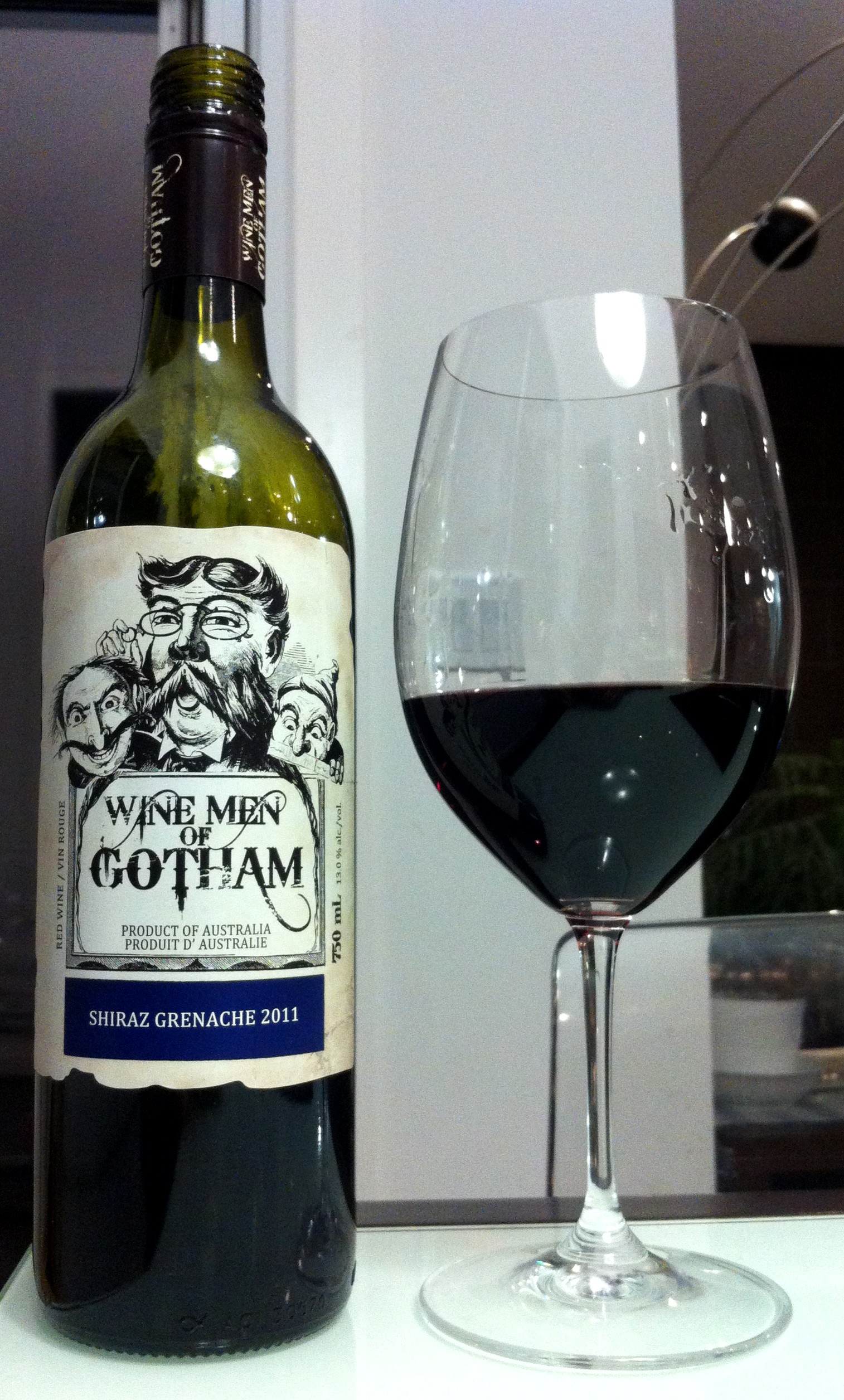
Wine Review: 2011 Wine Men of Gotham Shiraz Grenache

7 11 2012

[This bottle was provided as a sample for review purposes.]

Cartoon Aussie label looks can be deceiving.

Don’t worry — this won’t be the wine you think it is.  After living through over a decade of mass-produced, hugely ripe, straight-ahead, destined-for-export cheap wines coming out of Australia bearing tongue-in-cheek labels laden with any number of hand-drawn creatures, we can all be forgiven for looking at any sub-$15 Aussie red with a cartoon label with a touch of skepticism.  While I think the country as a whole often gets unfairly typecast by virtue of the overwhelming response that Yellow Tail and its brethren received when they burst onto the international market, it’s probably fair to say that most inexpensive Shiraz still tends to follow this formula…after all, why mess with success, especially the economic tidal wave of success that these wines continue to enjoy?  But this bottle does exactly that, delivering a wine that is light years from what your taste buds are expecting of a Shiraz Grenache from Down Under and trampling on some prejudices while it’s at it.

The first hint that Wine Men of Gotham’s Shiraz blend might be different from most is its alcohol level:  at 13%, it’s a good 1.5% to 2% lower than the standard modern Shiraz from Australia.  This is particularly unusual/impressive because (1) the regions where the wine’s grapes originate (Barossa Valley, McLaren Vale and Riverland, although the label bears the catch-all “South Eastern Australia” name due to this multi-zone viticultural collaboration — SE Australia is an area that spans most of the grape-growing land in the country outside of the West Coast) generally tend to have warmer-than-average climates, which encourages faster sugar ripening and thus higher-alcohol wines, and (2) Grenache grapes are known for producing wines with heightened alcohol levels, especially in hotter climates.  It’s near impossible to produce a big, goopy, jammy Shiraz Grenache at 13% alcohol, which suggests that the Wine Men had something else up their sleeves for this bottle. Read the rest of this entry »


The Prospect Winery White Showdown

5 11 2012

[The bottles below were provided as samples for review purposes.]

The competitors.

Over the past few weeks I have become quite a fan of BC’s Ganton & Larsen Prospect Winery.  I have long retained a lingering suspicion about any bottle of inexpensive Canadian wine, fearing that elements both natural (shortened and uneven growing seasons/smaller ripening windows) and economic (high land costs in winegrowing areas/little access to cheap labour) would inevitably combine to make it impossible for a homegrown bottle to compete for my $15 Tuesday Night Bottle attention with those bastions of cheap and cheerful wine:  Australia, Argentina, California, Chile, Spain.  While I am increasingly convinced that we’re in the midst of a quality revolution in Canadian wine, I saw little hope that it would trickle down to the entry-level bottles in any winery’s lineup.  Then I got sent a six-pack sampler from the folks behind the Prospect Winery, an Okanagan producer with ownership ties to the more famous Mission Hill and a focus on the budget-conscious end of the retail shelf.  First a remarkably complex Shiraz and then a substantial Merlot captured my attention as each were downed with surprise and admiration and made the subject of solo reviews.  Left in the sampler box were four whites from Prospect’s 2011 vintage:  Pinot Grigio, Sauvignon Blanc, Riesling and Chardonnay.  Quicker than you could say “easy excuse for a tasting”, I knew what had to be done.  I rounded up my tasting panel from this summer’s Mission Hill Pinot Olympics and we went to work on a head-to-head-to-head-to-head showdown of Prospect Winery’s whites. Read the rest of this entry »


Calgary Wine Life: Meet Dave Amadio @ Richmond Hill Wines

2 11 2012

[Cross-posted at www.calgaryisawesome.com]

The best word to use to describe Richmond Hill Wines as you pull into the parking lot is “unassuming”.  Located just north of Richmond Road in a quiet strip mall just off of 51st Street SW, it has the almost dreary, sleepy look of your average neighbourhood liquor store.  This Clark Kent exterior hides an absolute gem of a wine shop on the inside, one whose longevity is almost unparalleled (it opened in 1991) and whose staff are some of the most knowledgeable and qualified in the city, not to mention the longest-tenured.  In an industry where high turnover and staff attrition are entirely expected, Richmond Hill has a number of long-time employees who have been with the shop for years, helping to maintain loyal customer relationships and giving the store a sense of consistency and permanence that is tremendously rare in the world of retail wine.  One such employee is RHW manager Dave Amadio, who was the first guy I met when I first walked into Richmond a couple of years ago and who continues to remember me to this day even though I only manage to frequent his doorstop once every few months.  I use the term “manager” loosely because, as Dave puts it, “we don’t really do titles at Richmond Hill”; the actual job description that he provided was “manager/purchaser/pusher/overly opinionated wine guy”, which more or less sums it up. Read the rest of this entry »


Wine Review: 2006 Bodegas LAN Rioja Crianza

22 10 2012

[This bottle was provided as a sample for review purposes.]

Exhibit A for why Spanish wine should be a part of your life.

When the good vino-importing folks at Christopher Stewart Wine & Spirits asked if there were any bottles in their portfolio that I might be interested in writing up, it took me about 0.02 seconds to zero in on this one.  Accolades and rankings don’t tell the whole story of a bottle of wine, and even the most highly regarded publications need to be taken with a grain of salt (with the exception of this blog, of course), but when a bottle that retails for $15ish CDN and is widely available makes Wine Spectator’s list of the Top 100 wines of the year, it’s worth noting.  The ’06 LAN Crianza was #44 in the WS Top 100 list of 2010 — I remember buying that issue back then and being very curious about the wine.  Two years and 185-odd PnP posts later, I got to crack the bottle and find out all about it.

The constant capitalization of Bodegas LAN is not a typo.  The winery name is actually an acronym for the 3 different provinces within Spain’s famed Rioja region where its grapes are grown:  Logrono (now called La Rioja), Alava and Navarra.  While many reds made in Rioja are blends, this one is entirely crafted from the region’s (and the country’s) star grape, Tempranillo.  Spain has long been known for mandating minimum aging requirements for its various quality designations of wine, and many producers continue to keep their wares from market for even longer than legally necessary, holding them back until they are deemed ready to drink.  In the case of this bottle, the term “Crianza” is a designation that in Rioja requires wines to be aged for a minimum of 24 months before release, at least 12 of which have to be in oak barrels.  The LAN Crianza spent exactly that long in a blend of French and American oak barrels.  Normally when people make such a statement, they mean that, after fermentation, part of the LAN wine went into French oak barrels and another part of it went into American oak barrels, with the two separately aged portions blended together after barrel aging.  Not so here:  in LAN’s case, EACH BARREL used to age its Crianza was made from a blend of French and American oak.  I would love to know the cooperage techniques necessary to make that happen, but I have never heard of anybody doing that before, and it is without question my favourite obscure fact about this bottle. Read the rest of this entry »