Rioja Quality Ladder: Bodegas Montecillo

11 11 2015

[These bottles were provided as samples for review purposes.]

Crianza vs. Reserva.  And one of the hardest sets of labels to photograph well.

Crianza vs. Reserva. And one of the hardest sets of labels to photograph well.

If I had to pick one European red wine region that was my Old Faithful, that always delivered quality and intrigue, regularly delighted and rarely disappointed, it would be Rioja.  Something about the wines coming out of Spain’s original star region just speak to me, offering up traditional character and depth and a unique voice at often-amazing prices.  Rioja is perched at altitude in north-central Spain, closer to Bordeaux (a 4 hour drive north) than Barcelona (5.5 hours east), and has long been the king of the Spanish wine world:  it was the first D.O. (Denominacion de Origen, or classified geographical quality region) in the country to be granted super-elite D.O. Calificada status in 1991, the highest quality category in Spanish wine law.  Only one other region, Priorat, has been awarded the designation since.  There are always challengers for Rioja’s crown in a country with soils, grapes, styles and traditions as rich and varied as Spain, but at its best, there is nothing quite like it. Read the rest of this entry »


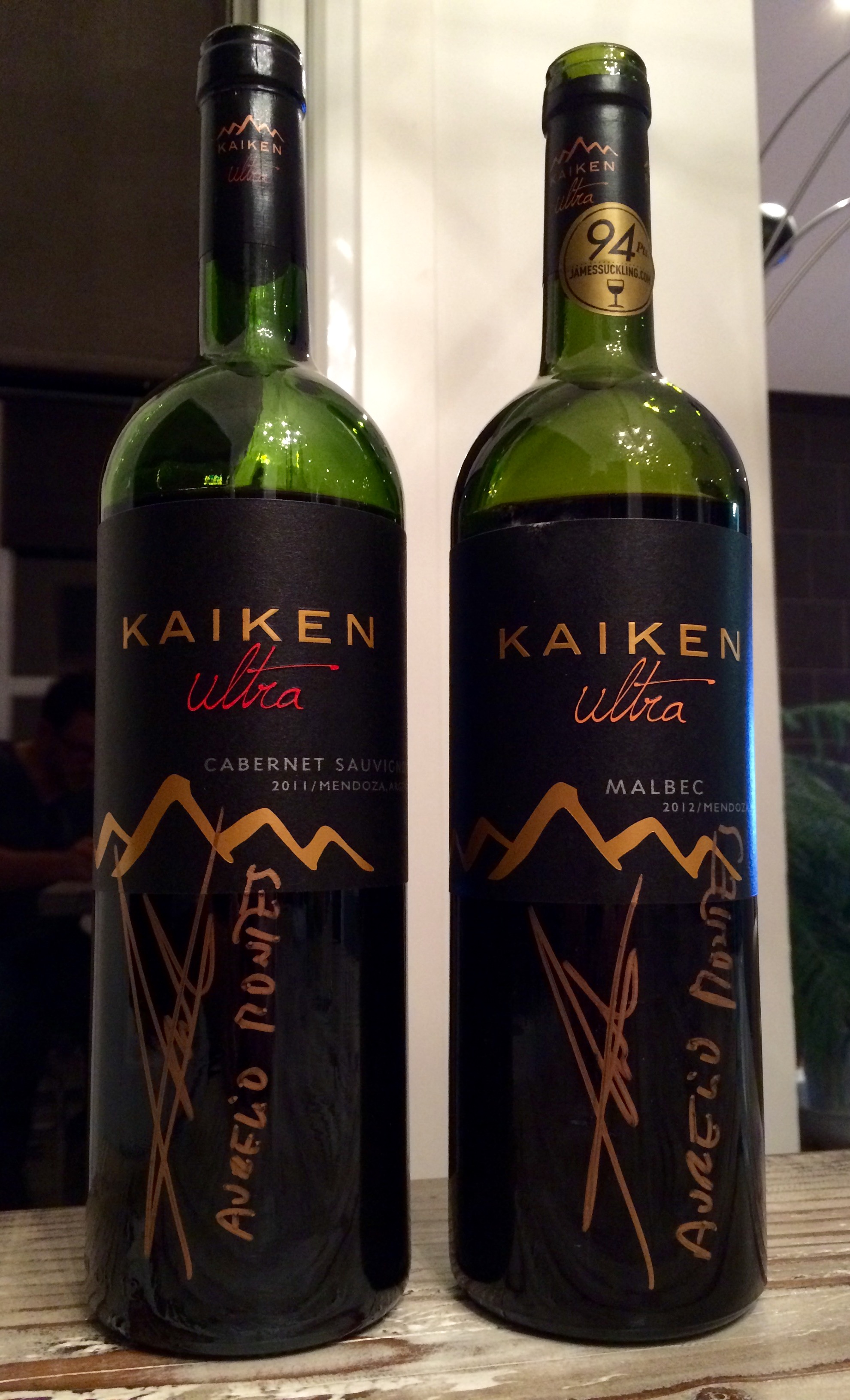
Border Crossing: Kaiken Ultra Wines

28 10 2015

[These bottles were provided as samples for review purposes.]

From Chile to Argentina with love.

From Chile to Argentina with love.

It’s not uncommon to see producers from other countries head to Argentina to create a second label or side project.  There’s lots to like about the South American nation as a startup hub, from truly unique altitude-induced terroir to surprising access to old-vine plantings to ultra-low input costs. What is unusual is for the immigrating winery to come from right next door:  Argentina’s skinny western neighbour Chile offers many of the same producer advantages and is often similarly sought after by wineries off the continent for new ventures, but you rarely see a producer from one of these countries set foot in the other to make wine.  That’s what makes these bottles interesting.

The Montes family is one of Chile’s pioneering wine clans, and its Vina Montes may be the country’s best known winery, churning out everything from weeknight wine champions to top-end stunners like Montes Folly, an unprecedented Syrah from Apalta that’s one of my favourite wines of all time.  Patriarch Aurelio Montes Sr. visited Argentina in 2001 and was immediately intrigued by the Andes-hugging Mendoza region; he wasted no time in deciding to expand operations there, starting up the Kaiken label in 2002.  The word “Kaiken” is an anglicized version of “Caiquen”, a type of wild goose that regularly travels over the Andes Mountains from Chile to Argentina, just like Montes himself.  Once the winery was up and running, he made the call to keep the winemaking in the family, recently naming his son Aurelio Montes Jr. as winemaker.  Kaiken owns three vineyards in Mendoza, two in and around the Lujan de Cuyo region near the town of Mendoza itself and one in the Uco Valley further south; one of the vineyards is fully biodynamic, a set of principles Kaiken is working to embrace. Read the rest of this entry »


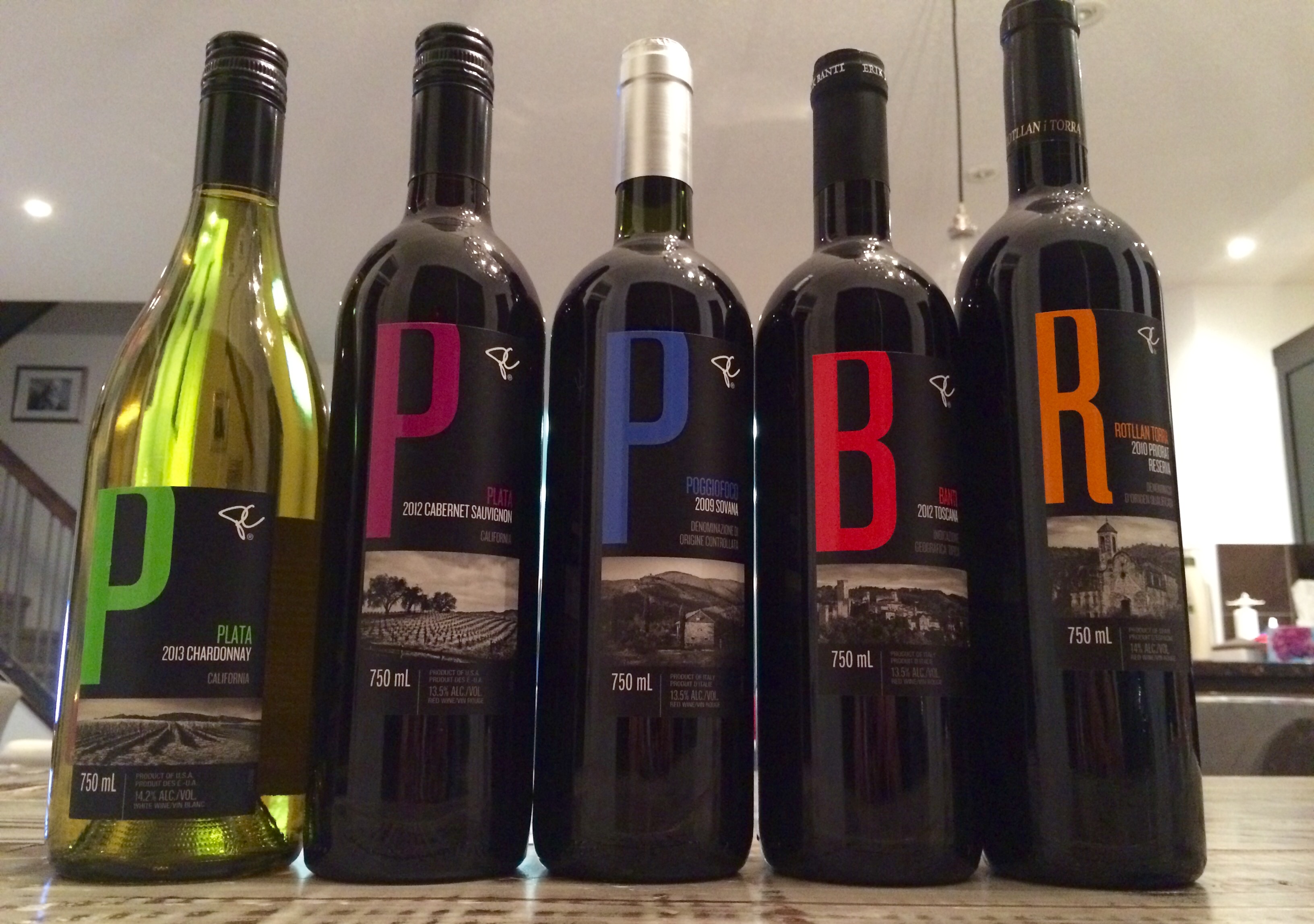
PC Wine Fall Collection Faceoff

22 10 2015

[These wines were provided as samples for review purposes.]

Grocery store wines are making strides.  Supermarket labels are no longer (or at least not all) resigned to Two Buck Chuck ignominy, and a select few are starting to pair their expected wallet-friendly price tags with actual quality inside the bottle, making them legitimate value plays in a competitive buying environment.  The Kirkland label from Costco comes immediately to mind, a negociant-style operation that sources wines from prestigious regions across the globe (even Champagne!  And it’s not bad!) and makes them accessible at a fraction of the cost of other bottles from the area.  Now Loblaws is making its own foray into the value wine world with a curated lineup of stylishly branded PC Wines, currently only available at an Alberta Superstore liquor store near you.  Take that, rest of Canada.

A step up from the No Name wine labels.

A step up from the No Name wine labels.


The PC Wines approach differs from similar supermarket offerings in a couple of ways.  First, the wine collections will be seasonally rotated, so the five bottles in the fall collection will be replaced with a whole new set of wines in a few months.  Second, the pricing is uniform:  all of the bottles cost exactly $20, but that price drops to $15 in each case if you buy 3 or more.  The fall collection was hand-selected by Aaron Bick, founder of local vino e-commerce site wineonline.ca, and features offerings from four different producers in California, Italy and Spain.  Although each bottle bears a PC Wines label, it still recognizes its original producer on the front, which is a nice touch.  There’s even some back-vintage stuff in the mix!

Read the rest of this entry »


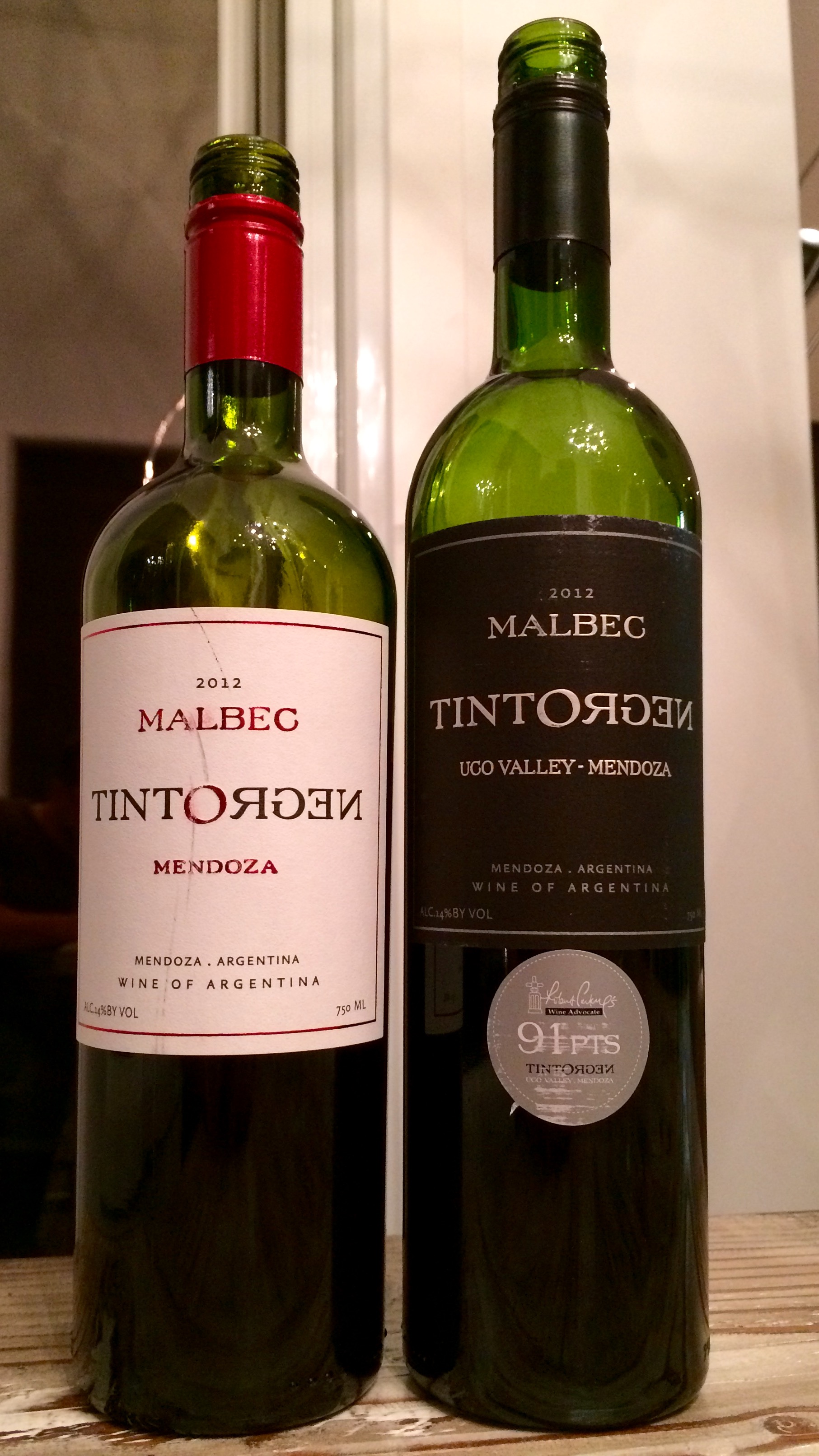
Side By Side: 2012 Tinto Negro Malbec x2

7 10 2015

[These bottles were provided as samples for review purposes.]

Malbec vs. Malbec.  Mendoza Civil War.

Malbec vs. Malbec. Mendoza Civil War.

Forgive me if you’ve heard me say this before, but:  comparative tastings are the best.  You can learn a lot about wine by taking your time over a single bottle, properly assessing what’s inside and picking out colour and smell and flavour notes common to a country, region or grape.  You can learn way more about wine by doing this to two similar bottles at the same time, with almost the same characteristics, but for a single isolated variable:  same wine, different vintage; same producer, different grape; same grape, different country.  You pick up a whole bunch of what makes them the same, but you can also focus on the impact that primary thing that makes them different and see firsthand the tremendous effect that every single input going into a wine has on the finished product.  You learn from both the commonalities and the distinctions.  Plus you end up with two open bottles of wine, which generally always leads to a good night.

In this case, the similarities are massive and the differences apparently slight, but the impact remains noteworthy.  These two bottles are from the same producer (Tinto Negro, founded by the ex-vineyard manager and wine education director of renowned Argentinian winery Bodega Catena Zapata), the same country (Argentina), the same grape (Malbec), the same vintage (2012) and even the same region (Mendoza, Malbec’s New World spiritual home nestled in the foothills of the Andes).  However, the first bottle, the 2012 Tinto Negro Mendoza Malbec, is an entry-level regional bottling, and the second bottle, the 2012 Tinto Negro Uco Valley Malbec, is from the next quality tier up, a sub-regional bottling from the Uco Valley sub-zone in southwestern Mendoza.  Apart from their divergent price points, you might have a hard time differentiating them in the store, but does this little sourcing difference make a difference?  When you taste them side by side, oh yes. Read the rest of this entry »


Wine Review: 2011 Barone Ricasoli Brolio Chianti Classico Riserva

30 09 2015

[This bottle was provided as a sample for review purposes.]

Modern Traditional Chianti.

Modern Traditional Chianti.

Barone Ricasoli holds itself out as the oldest winery in Italy.  Its history certainly marches in lockstep with that of its region, Chianti:  the winery’s eponymous founder was the man who first suggested the modern “recipe” for the standard Chianti blend — largely Sangiovese, blended with indigenous varieties Canaiolo, Trebbiano and Colorino — in a letter in 1872.  That mix has expanded and adapted since then, but Ricasoli has remained a constant in the area, producing Chianti at all price and quality points, from the entry level to the sublime.

This particular bottle is from the sub-zone of Chianti Classico, the traditional Chianti heartland at the centre of the region encompassing the original lands upon which that name was bestowed.  Chianti has now expanded significantly beyond that area, some might say for largely economic reasons and to the detriment of its reputation, as the lands surrounding Classico often do not quite live up to its hallmarks of quality.  The symbol of Chianti Classico, emblazoned proudly on this bottle in multiple places, is the black rooster, the gallo nero.  Why?  Legend has it that, back when the provinces of Florence (in the north) and Siena (in the south) were fighting over the territory of Chianti (right in the middle), they settled on a contest to determine their mutual border:  they would each pick their best knight, who would ride from his city towards his opponent as fast as his horse could take him once the rooster crowed, and wherever they met would mark the new edge of each province’s lands.  The Florentines had a black rooster, and before the date of the contest they kept it locked up in a box with no food, so that when it was finally released on the day of the race, it crowed much, much earlier than dawn, giving Florence’s knight a massive head start.  The Florentine met the Sienese knight just outside of Siena’s walls and thus scooped all of Chianti for Florence, giving the black rooster mythical status in the process.  This is the best part about wine:  everything has a story.  You just have to find it. Read the rest of this entry »


Wine Review: 2011 Bila-Haut L’Esquerda

23 09 2015

[This bottle was provided as a sample for review purposes.]

Bila-Haut: The label that can't miss.

Bila-Haut: The label that can’t miss.

What??  There’s another Bila-Haut?  Readers of this blog will know that I have long been a fan of the best-known wine from Rhone legend Michel Chapoutier’s Roussillon side project, the excellently named Occultum Lapidem, and I have also recently had the chance to enjoy their near-equally awesome rose.  But I had neither seen nor heard of this mustard-coloured addition to the Bila-Haut lineup, L’Esquerda, before being provided this bottle to try.  I won’t be forgetting it anytime soon.

Like the Occultum Lapidem, the Bila-Haut L’Esquerda is from a particular high-quality subregion of the Cotes du Roussillon Villages area in the extreme south of France, almost stepping into Spain.  While the Occultum Lapidem hails from the mouthful Cotes du Roussillon Villages Latour de France subregion, the L’Esquerda comes from a single vineyard nestled in its westerly neighbour, the nearly-as-wordy Cotes du Roussillon Village Lesquerde subregion, located slightly further inland from the Mediterranean Sea, immediately south of red dessert wine rock star zone Maury, and due west of another Roussillon sub-zone that’s gotten digital ink on this site lately, Tautavel.  The word “L’esquerda” is Catalan for “the fault in the rock” and is likely a nod to the nutrient-poor granitic soils of the area.  Mainly Syrah, but blended with Grenache and Carignan, L’Esquerda has basically the same varietal makeup as Occultum and is made in a very similar fashion:  from old-vine grapes (40+ years), with extended maceration periods post-fermentation (3-4 weeks) and with limited oak aging (10% or less of the blend sees a barrel).  No wonder there’s a family resemblance.

Read the rest of this entry »


Wine Review: 2014 Yalumba Old Bush Vine Grenache

18 09 2015

[This bottle was provided as a sample for review purposes.]

Raise a glass to Grenache!

Raise a glass to Grenache!

This is a bottle of eager-to-ripen Grenache from the scorching Barossa Valley in Australia.  This is a delicate, pretty, dainty, almost ethereal wine.  These sentences are both somehow true.  Happy International Grenache Day, everyone!

Yes, the third Friday of every September is set aside to celebrate the wonders of a grape that is prominent on the world wine scene, yet still strangely underrated, often anonymously doing the heavy lifting in a Rhone-style blend and only occasionally stepping out into the spotlight on its own.  This is my second time toasting the grape in September:  I revelled in the glory of the Okanagan’s first ever Grenache back in 2013.  I appear to have missed this global vinous holiday last year, but am now fully prepared to make up for lost time.

Yalumba is Australia’s oldest family-owned winery, founded 166 years ago in 1849 and still in the family today.  You may know them for their string of top notch value wines (the Y Series Viognier is particularly awesome for what it costs), but they have offerings all across the price spectrum, and their standing and longevity has given them access to the types of fruit sources necessary to put quality in the bottle.  With respect to Grenache in particular, Yalumba owns some of the oldest Grenache vineyards in the Barossa Valley; the fruit sourced for this bottle was planted between 1898 and 1973.  Vines that pre-date your great-grandparents used for a $22 wine!  Yalumba is also the only winery in the Southern Hemisphere to have their own cooperage, so they select and import oak and then toast it to their liking and make their own barrels.  Cool. Read the rest of this entry »


Wine Review: 2014 Plan B Riesling “OD”

14 09 2015

[This bottle was provided as a sample for review purposes.]

Riesling, it's been too long.

Riesling, it’s been too long.

Wow, HOW long has it been since I’ve reviewed a Riesling on here?  Seven months??  What is wrong with me?  I have let my favourite grape down.  Time to make amends, and I have definitely found the right bottle for the job, from probably the most underrated country in the world for good Riesling:  Australia.  This New World nation, home of terrifying spiders and monster Shiraz, is probably not the first place you think of for elegant, aromatic, cool-climate whites, but there are pockets of land in this otherwise mostly barren desert, moderated by altitude or coastal proximity or both, in which Germany’s most prized vinous export thrives.

This particular Riesling hails from the relatively obscure Frankland River region, known to me as one of the only producing areas in western Australia not called Margaret River that’s getting any play internationally.  While Margaret River sits right on Australia’s western coast, just south of Perth, Frankland River is a little farther east and inland and is a sub-zone of Australia’s largest singular wine region, the questionably named Great Southern region.  (As you can see here, it is much more west than south in the national scheme of things, and most of the country’s wine regions are actually located further south than it is.  It had better actually be Great there.)  The gents at Plan B Wines seem to be on a mission to make the wine biz loose and fun again while still producing great quality product from top sites, a task that I would suggest is perfectly suited to Australians.  Their website at planbwines.com is well worth a visit and contains some incredible illustration work done by the winemaker himself; just watch that you don’t Canadianize the URL or slip up on Google and go to planb.ca, northern Internet home of the morning after pill.  You have been warned. Read the rest of this entry »


Torres New/Old World Value Duet

8 09 2015

[These bottles were provided as samples for review purposes.]

New/Old World.  Pink/red.  Value/value.

New/Old World. Pink/red. Value/value.

Over the past couple years, Torres has become my Old Reliable, the brand that never lets me down regardless which sub-$20 value offering I’m trying, regardless where in the world it’s from, and regardless of my level of expectation or uncertainty going in.  It has now been named the World’s Most Admired Wine Brand for two years running by Drinks International (to get a sense of that accomplishment, others in the top 15 this year include Vega Sicilia, Chateau d’Yquem, Ridge, the First Growth Chateaux Margaux, Latour and Haut-Brion, and Tignanello), and it succeeds without a multi-hundred-dollar wine on its resume and with wineries on three separate continents, focused on marrying high quality with affordable pricing wherever it goes.  That combination is not easy to achieve, but Torres makes it look routine.  I had a chance to toast the end of summer amidst the weekend snow in Calgary with two QPR (quality-to-price-ratio) gems from the Torres portfolio, one from the New World and one from the Old, each crafted with the same evident care and attention. Read the rest of this entry »


Wine Review: Menti & Marabino, Natural Italy

20 08 2015

[These bottles were provided as samples for review purposes.]

If you are a massively wine-obsessed civilian, you have probably had at least a passing thought about it.  I can think of a half dozen wine friends off the top of my head with whom I’ve had the conversation.  You know something about wine, you have a particular love for a particular region, you’ve found a lesser-known producer or two there whose wines aren’t currently brought in to your jurisdiction…what if I just imported them myself?  I could be a wine agent on the side…who WOULDN’T want to buy these wines?

Small importer, statement wines.

Small importer, statement wines.

Of course, it takes much more than a passion for wine and an idle dream to make a go of it in the wine import world, an extremely competitive sphere full of others who have been at it a long time and know what they’re doing.  This is why I am behind a keyboard right now instead of combing Washington State and Oregon for hidden gems.  But I have the utmost respect for the people who do take the plunge, who put their money where their mouth is and find a way to step a little bit further into the world of wine.  Maxim Atanassov is one of those people, populating the white collar world by day and crusading for all-natural biodynamic Italian wines on evenings and weekends through his agency Vino Al Vino.  He has assembled a tight-knit group of producers from the southern and eastern edges of Italy who share a steadfast mission to let the land do the talking and a hands-off approach to winemaking.  I got the chance to try two bottles from the white side of his wine portfolio, and they proved to be some of the most interesting wines I’ve ever been asked to review. Read the rest of this entry »


Wine Review: 2012 Alice May Crosswinds Syrah

13 08 2015

[This bottle was provided as a sample for review purposes.]

The sequel. Even more awesome.

I love when I have the chance on this site to track a wine’s development over successive vintages.  I love it even more when the wine in question has a strong local connection, something you don’t get to say very often when you’re based in Calgary.  Last year I had the chance to write up the inaugural release from Alice May Wines, a new label conceived by Calgary sommelier-turned-wine-agent Alex Good in collaboration with noted California winemaker McPrice Myers of Barrel 27 Winery.  Alice May’s stated focus was on Rhone-based varietals, and its 2011 Crosswinds Syrah was a silky, elegant Cote-Rotie style co-ferment of Syrah and Viognier that I repeatedly sought out and drank over the course of 2014.  Having exhausted my supply, I was happy to turn to the 2012 edition of the Crosswinds, and even happier that it carried the Alice May torch with aplomb. Read the rest of this entry »


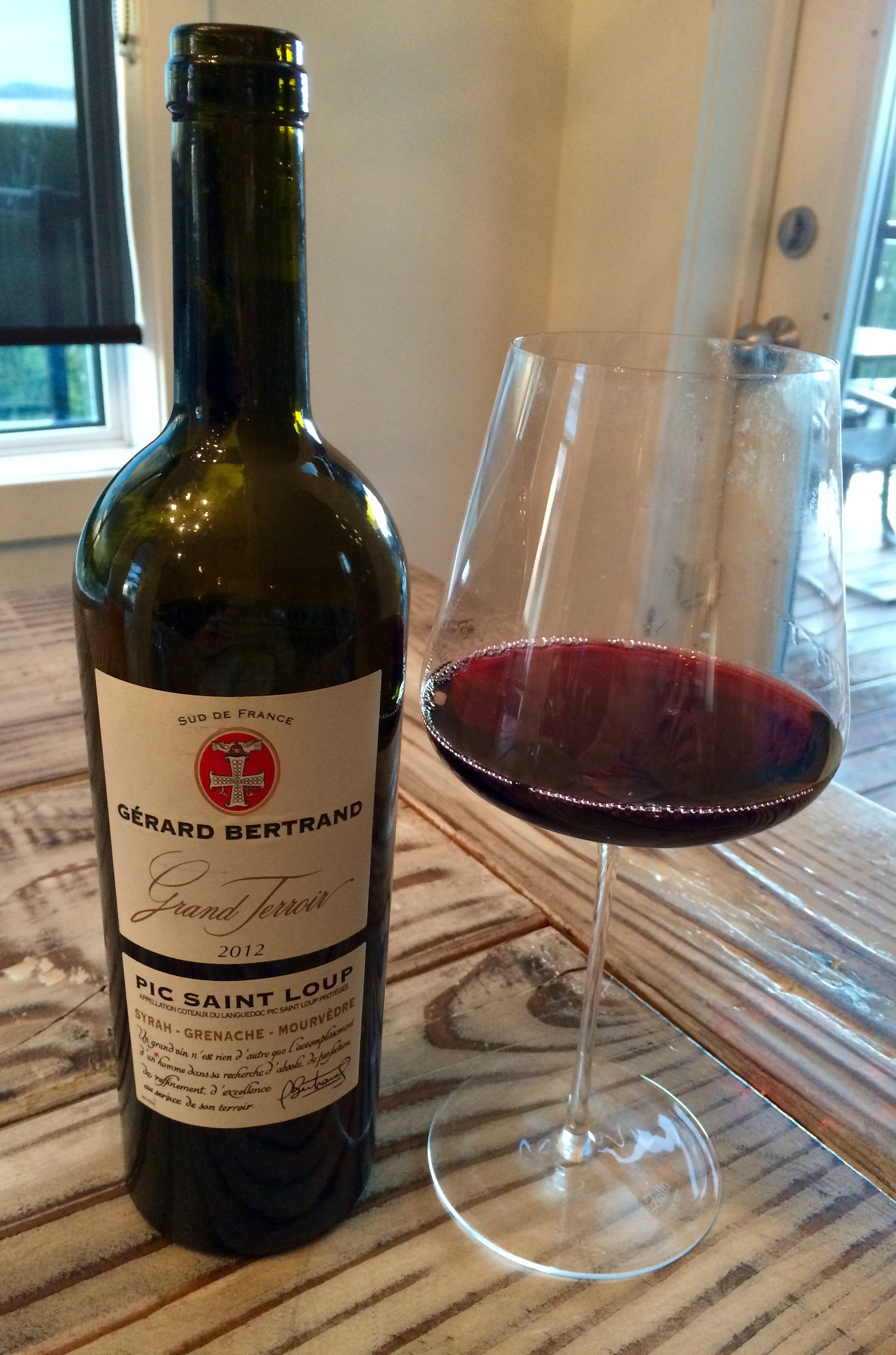
Replacement Wine Review: 2012 Gerard Bertrand Grand Terroir Pic Saint Loup

6 08 2015

[This bottle was provided, for a second time, as a sample for review purposes.]

If at first you don't succeed...

If at first you don’t succeed…

If you were reading this blog one week and two posts ago (and I’ll forgive you, if quietly resent you, if you haven’t), you will remember this bottle.  One of three contenders in a Languedoc-Roussillon Terroir Showdown, and arguably the favourite by virtue of coming from the most recognizable and lauded subregion that area has to offer (the excellently named Pic Saint Loup), this 2012 Gerard Bertrand offering instead had to be disqualified from the competition because the bottle I got was corked, affected by a musty, devious molecule called TCA that lent it a faint newspaper-left-out-in-a-Calgary-hailstorm smell and sapped it of its life and flavour.  But tonight will be different.  Tonight Pic Saint Loup gets its revenge, and its shot at glory.

Read the rest of this entry »


Gerard Bertrand: Terroir Showdown

30 07 2015

[These bottles were provided as samples for review purposes.]

This is the kind of tasting opportunity that wine geeks drool over:  three bottles, one producer, one general wine region, similar grapes, identical pricing ($25ish), same winemaking processes, but three different and distinct subregions, each with their own soils, microclimate and story to tell.

FullSizeRender-89

The producer is Gerard Bertrand, visionary winemaker from the south of France who was literally born to do what he’s doing:  a local of the area, he started making wine with his father at the age of 10.  The region is the Languedoc-Roussillon, a sun-drenched area stretching along the Mediterranean coast on the southern edge of central France.  It is the world’s single biggest wine-producing area with around 700,000 acres under vine, although this is not necessarily a good thing; it has been known as the “wine lake” of France for churning out vast quantities of crude jug wine for cheap consumption, more than people could possibly buy, creating massive stockpiles of reputation-draining plonk and setting the region back in the eyes of the wine world.  However, the Languedoc-Roussillon is in the midst of a quality renaissance thanks to a few passionate producers, Bertrand included, who see the potential for greatness in the land.  The result, if you know what (or, more accurately, who) to look for, is a series of unparalleled wine values that can knock your socks off for the price.
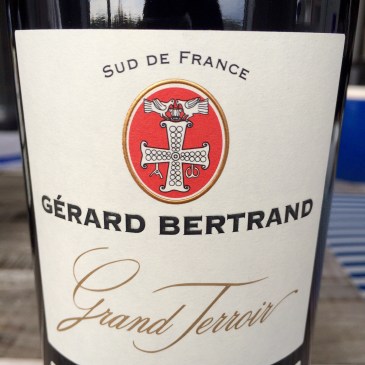
FullSizeRender-82You don’t see many wines with Languedoc-Roussillon subregions on the label in this market:  either they’re from the popular catch-all Vins de Pays d’Oc (now known as Pays d’Oc IGP) umbrella region or from a similar overarching area like Cotes du Roussillon.  I have been heavily into wine for a number of years and had never heard of two of the three sub-zones highlighted in this trio of bottles: Tautavel and Montpeyroux.  The third, Pic Saint Loup, is probably the best-known quality subregion in the Languedoc, but it remains woefully underrepresented here.  Bertrand’s Grand Terroir series of wines is intended to change that and to shine the spotlight on these specific and distinctive parts of Languedoc-Roussillon, to prove that the area is more than just a bulk conglomerate.  After tasting the three Grand Terroir bottles side by side by side, I have to say that he’s on to something.  The terroir showdown begins now! Read the rest of this entry »


Calgary Wine Life: Vasse Felix Winemaker’s Dinner @ The Lake House

16 07 2015

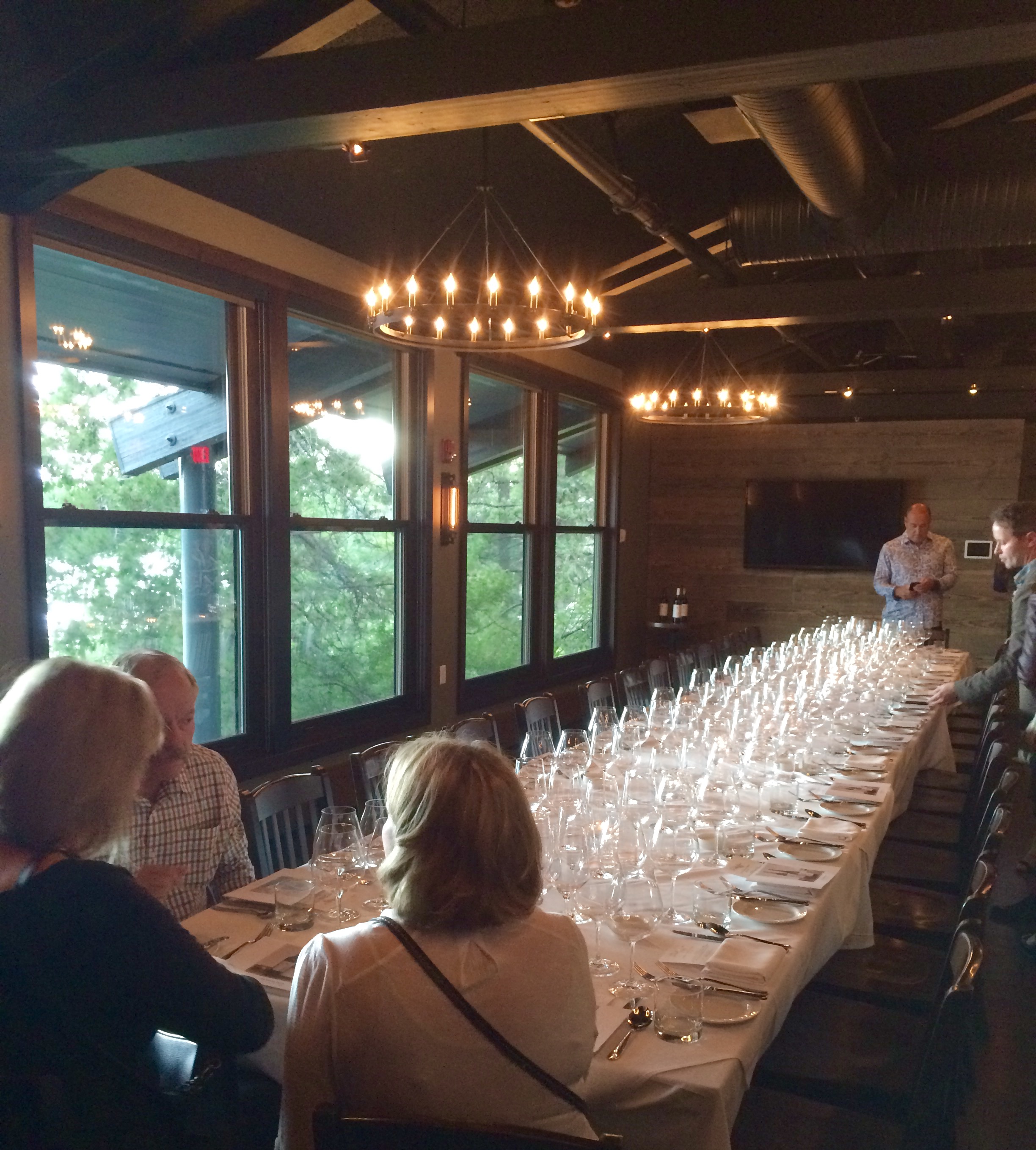
Let’s play word association.  I say:  “Australian wine”.  You immediately think — ?  You are probably lying if you don’t say “Shiraz”, and with that comes immediate images of big, lush, ripe, fruity, alcoholic reds, bursting with flavour and spice if lacking slightly in nuance.  The wine scene in Aus is certainly becoming more varied and complex as the years go on, but consumer memory changes slowly and initial impressions run deep.  That’s why one of the first instructions that Virginia Willcock, esteemed winemaker at southwestern Australia’s Vasse Felix winery, gave us about her wines was:  “Don’t call them Australian wines.  They’re not.”  At least not in the preconceived way we all think about them.

LakeHouseRoom

Vasse Felix is located in the Margaret River region, a 3 hour drive south of Perth, which is a city surrounded by, well, nothing.  Willcock calls it “the most isolated wine region in the world”, but what it lacks in proximity it makes up for in a much cooler, more temperate, maritime climate than the rest of the country, a growing season that is often compared to that in Bordeaux, and resulting wines that exhibit finesse, elegance and character, wholly unlike the fruit monsters on which Australia made its international name.  Vasse Felix is the first wine estate founded in Margaret River, established in 1967, and it produced the area’s first Cabernet Sauvignon in 1972.  It continues to specialize in Cabernet, and also in Chardonnay, both classic Margaret River varietals, and it does not produce any other types of wines.  As Willcock says, they elected to be the master of a couple trades instead of a jack of all of them (a lesson that many other New World wineries could be well served in learning). Read the rest of this entry »


Wine Review: 2014 Bila-Haut Rose

13 07 2015

[This bottle was provided as a sample for review purposes.]

Winning producer, winning value.  And look at that colour!

Winning producer, winning value. And look at that colour!

I just got back on the weekend from a sunny California vacation, and as I was coming from hot, humid San Diego into hot, dry Calgary (this was pre-torrential thunderstorms) after the end of a long travel day with two young children, I had my first ever legit rose craving.  Don’t get me wrong:  I like rose just fine, but until this moment I had always been on the “perfectly happy to drink it” side of the fence as opposed to the “insatiable desire for it” side.  But something about that day made me long for a bottle that was crisp and cool yet fruity and substantial, a summer wine niche that rose fits to the tee.  Almost immediately after dropping off the suitcases I went to my neighbourhood liquor store, browsed their abysmal pre-chilled rose selection, and escaped with the one non-White Zinfandel bottle I could find:  a Michel Chapoutier rose called Beaurevoir (pictured below) from pink wine’s spiritual homeland of Tavel in south-eastern France.  After downing it probably more quickly than I should have, I realized that I had another Chapoutier rose in my cellar and promised that I would take my time with this one.  Consider this a kick-off for what looks to be a busy Pop & Pour summer! Read the rest of this entry »