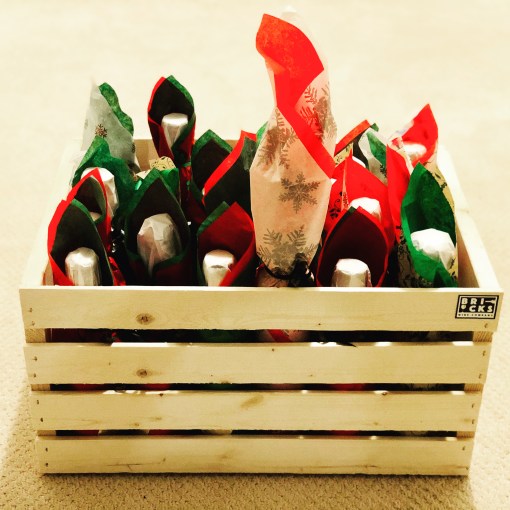
Bricks Wine Advent Calendar 2019: Day 8

8 12 2019

By Raymond Lamontagne

We begin week 2 of this Advent blogging saga with a bang, at least if you love Port. I will admit to being rather intimidated by this fortified wine style when I first started learning about wine. I had a vague recollection of trying Port for dessert years ago, long before any explicit attempts to develop an educated palate, and thought it tasted like NyQuil. I’m guessing this was a relatively inexpensive ruby example, one blended to match a particular house style and designed for early drinking. Since those dark times, and with the benefit of a few technical tastings under my belt (a few of those are detailed on this very blog), I’ve become an aficionado of good quality vintage Ports and tawnies. They remain a rare treat, but one much appreciated. I unwrap this bottle, see the phrase “10 Year Old Tawny Port”, and my mind is immediately jubilant with associations of toffee, nuts, and other sundry warm and festive sugarplum tastiness.

IMG_1348

All Ports are made by fermenting grapes (usually red) for a relatively brief period, typically to the point of around 5-6% ABV, at which point a neutral grape spirit known as aguardente is used to arrest the fermentation, boosting the alcohol content but also leaving residual sugar in the wine. At this juncture the “what type of Port am I making” decision tree becomes more complicated, and here our focus must be on tawny Port. These wines are aged in old wooden barrels called pipes, during which time exposure to oxygen and evaporation occur. This oxidation mellows the wine into a golden brown hue over time, and also imparts nutty flavours that distinguish tawnies from ruby and vintage ports. Although vintage tawny Ports do exist (they are called colheitas and are sublime), entry level tawnies are blends of different vintages, with most of the component wines being aged at least 3 years and then combined to yield a desired house style. Above this quality tier are bottles like the present one that carry an indication of age. Note that the age indication is in fact a “target age” based on desired characteristics in the wine: these aged tawnies still represent a blend of several vintages, and the Port house is looking to provide a wine that tastes characteristically like it has been aging for 10 years in barrel, for instance. Sure, some of the wine in the blend is legitimately quite old, but not necessarily all. It might help to think about the designated age as an “average” age, although technically even that is not correct. The basic notion is that a 10 year old tawny should be fruitier and less complex than a 40 year old tawny.
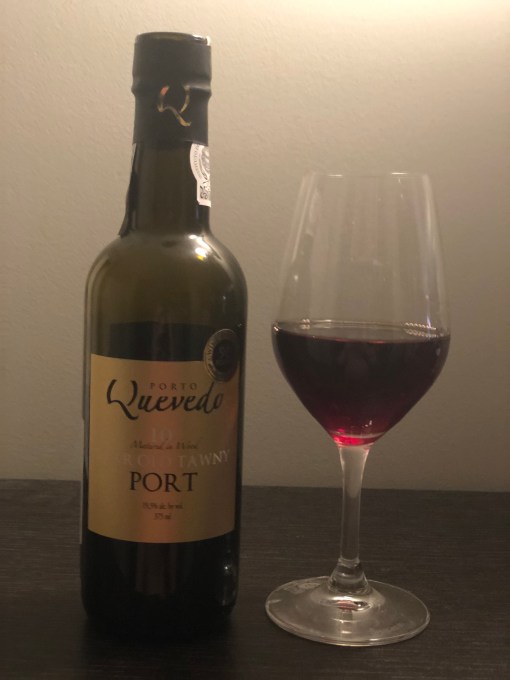
IMG_1349

You might now understand why I found this topic daunting when first learning about it. Despair not, for if these technical details threatened to put you to sleep, a half bottle of 19.5% ABV fortified wine should be just the thing to perk you up. Perhaps more compelling is the story of Porto Quevedo, a relatively small family winery based in the Douro. Historically families such as the Quevedos grew grapes and made wine that was sold  to merchants based in Vila Nova de Gaia, with such wines likely used as blending components by the larger houses. However, in 1986 legislation changed to allow growers and individual wineries to export their wines directly to the retailer. Oscar, a lawyer and notary by trade, first bought vineyards in 1977. After several years of helping his father João to make Port, in 1990 he built his own winery and was finally able to nurture his true passion, with son Oscar Jr. handling the business side of things and soccer-hating daughter Claudia (I hear ya) formerly handling the winemaking (she still helps with blending). The winery has a wonderful website and even a blog that is imbued with a real down-to-earth, non-pretentious human touch, right down to inviting critical commentary on the wines. Challenge accepted.

IMG_1350

Stopper Rating: 1/10 (oh, COME ON!!!)

The Porto Quevedo 10 Year Old Tawny Port is comprised of Touriga Franca (25%), Tinta Roriz (aka Tempranillo; 25%), Touriga Nacional (5%), Tinto Cão (5%), Tinta Barroca (20%), and other grapes (20%; over 100 grapes are sanctioned for Port production, including many rarities). Interestingly, the fermentation is described as “slow”, perhaps relative to other Ports. This is notably brickish in colour for a 10 year old tawny. The nose initially flashes some bright and fruity character, recalling maraschino cherries, raspberry jam, dried apricot, burnt orange peel, and pumpkin pie filling, with some nuttiness (pecans, chestnuts, sesame snap) and caramel that meld into a nice facsimile of Turtles candy. The palate largely echoes this array of aromas but is not purely sweet, with a gritty underlay of graphite, red rubber utility ball, and the ashy white ghosts of charcoal briquettes. With further air over the course of about an hour (hey, it’s a Sunday night, I’m sipping over here!), the palate softens to a more silky fine texture, and further oxidized characters emerge: sultanas/raisin or molasses pie, figs, ginger snaps, and a general deepening of the smooth toffee vibe. I like how this stitches together over time, with the wine showing better if you are patient.

88+ points


Bricks Wine Advent Calendar 2019: Day 5

5 12 2019

By Peter Vetsch

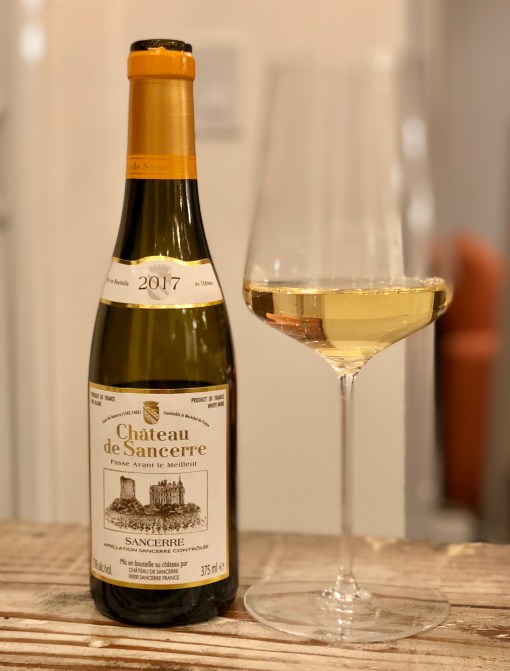
I think it’s safe to say that we’ve migrated into our “classics” phase of the 2019 Half-Bottle Wine Advent calendar.  After Canadian bubbles, German red crossings and New York cans, yesterday’s Chianti Classico signalled a bit of a vibe shift, and tonight’s offering got the message loud and clear and has continued the trend.  You don’t get more throwback textbook Old World than Sancerre, a region that has stood the test of time but also run the fairweather gamut of popular opinion over the past few decades.  If this was the 1982 Half-Bottle Advent Calendar, it might be entirely composed of Sancerre; fifteen years before or after might have seen Sancerre wholly excommunicated.  Now it’s making a cautious return, seeking to reclaim (or maybe just re-assert) its status as the spiritual home of Sauvignon Blanc.

IMG_1055

Sancerre is one of the most easterly sub-regions of the long, thin, west-to-east Loire Valley, which ultimately connects to the Atlantic Ocean but extends all the way to the dead centre of France on its other end.  Monks first planted vines in Sancerre in the 11th or 12th centuries, and subsequent swaths of royalty ensured that its sought-after wines were always available in their courts.  While currently most known as a (if not THE) key French site for Sauvignon Blanc, which now makes up 80% of all plantings in the region, it was previously home to considerably more Pinot Noir and Gamay, the latter of which was ravaged by a phylloxera outbreak in the 19th century and was replanted with Sauvignon.  Pinot retains 20% of the acreage in Sancerre, but this is now firmly a white wine region, and tonight’s bottle has its name all over it.

IMG_1059

I don’t know whether to call this the 2017 Chateau de Sancerre or the 2017 Chateau de Sancerre Sancerre.  It seems completely ridiculous to use the name twice, but I’ve never come across a producer whose name was the name of its region before.  (Chateau de Bordeaux and Domaine de Bourgogne, you missed your chance.)  The Chateau appears quite aware of its unique nomenclature, boasting in almost all of the available online literature, not to mention the back label of this bottle, that it is the “only wine which can be marketed under this exclusive name”.  Well…no kidding?  Isn’t that the case for EVERY SINGLE WINERY on Earth?  You don’t get a lot of non-Beringer wines marketed under the “exclusive name” of Beringer, thanks to the rather handy world of intellectual property law.  But whatever.  The Chateau de Sancerre is actually a Chateau, a castle (re)built in 1879 in the heart of the vineyards of the region, which was purchased in 1919 by Louis Alexandre Marnier-Lapostolle and is still owned by the Marnier-Lapostolle company a century later.  Its name is more familiar than you might think, as Louis Alexandre was also the inventor of Grand Marnier (speaking of exclusive names).

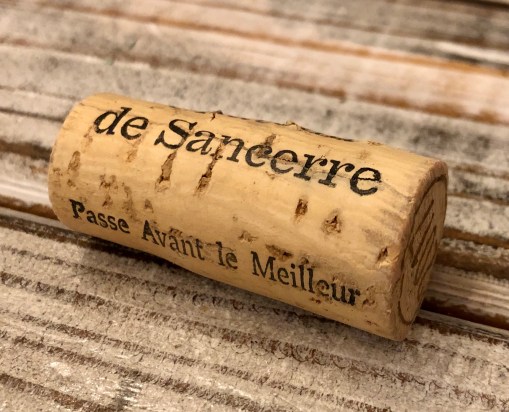
IMG_1060

Cork Rating:  6.5/10 (Pretty boring cork, but I love the swag associated with the tagline “Pass before the best.”  Badass.)

This particular bottling is 100% Sauvignon Blanc, as one might expect, and emerges a deeper lemon colour than I had anticipated given its utter lack of oak contact.  Meyer lemon, salted lime (inching towards margarita), Fuzzy Peaches, Tums, rock dust and straw/dried grass sing a stately yet playful aromatic song…until you sip and the hammer comes down.  The Sancerre Sancerre is bright and instantly alive on the palate but extraordinarily tart, like Sprite if you removed all of the sugar.  Tonic water, (very) green apple, citrus peel, flint and a torrent of biting, punishing acid lead into a chalky, icy, mineral finish that oddly dries out the mouth as it scrubs it clean.  An emphatic and almost angry wine, vociferously expressing its turf in defiance.  Sorry for the IP jokes?

88- points


Bricks Wine Advent Calendar 2019: Day 3

3 12 2019

By Peter Vetsch

Three days into this year’s half-bottle extravaganza and we haven’t seen a standard-shaped Bordeaux or Burgundy bottle yet.  First off was the reinforced bubbles bottle, followed by the Germanic flute (which trickily held a red), and tonight it became immediately clear that the streak was going to continue.  Can we roll with the punches?  Yes we can.

IMG_1047

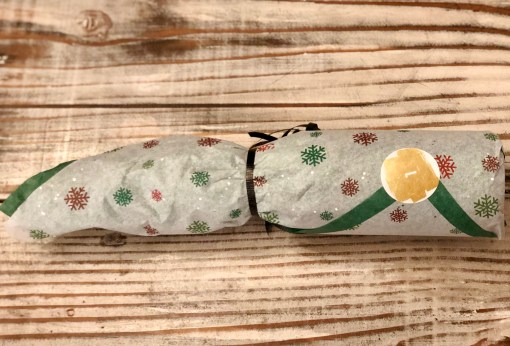
This is also the third straight day that I’ve peeled off the tissue paper to find a familiar friendly face:  Day 1’s Tawse has been my go-to Ontario stalwart for years, Day 2’s K.H. Schneider makes the best goddamn Dornfelder in the world, and Day 3’s can is brought to you by the wonderful, hospitable, salt-of-the-earth people at Fox Run Vineyards, from New York State’s gorgeous Finger Lakes area, a winery and a region that I was lucky enough to visit back in 2016.  That was the same year that this wine — sort of — was named the feature white of the Calgary Stampede.  Meet the Fox Run Vineyards On The Run Unoaked Chardonnay, can edition.

IMG_1050

Fox Run is a New York State institution.  This pastoral property on the western shores of Seneca Lake was originally a dairy farm before grapes were first planted there in 1984.  Fast forward 35 years and the winery now owns 50 acres of east-sloping vineyards and focuses on crafting a wide variety of estate wines under the watchful guidance of longtime winemaker Peter Bell.  While they rightly take pride in their excellent Riesling lineup, their Chardonnays are in my mind an equal part of their house identity, both the spritely unoaked Doyle Family Chardonnay and the marvellous barrel-fermented Kaiser Vineyard Chardonnay.  I believe that this can is made up of the former, although the can itself gives away no hints of its specific identity.  The can also strangely does not indicate a vintage, perhaps to avoid the annoyance of having to re-print can labels for each successive harvest; however, I am told that it is most likely not a NV wine and is instead probably the 2018 edition of the Doyle.  This is excellent news, because it means that it is likely also 8% Traminette, a lovably bizarre, slightly soapy, melony hybrid whose vinifera parent is Gewürztraminer (hence the name), which is normally added to the Doyle Chardonnay as a minority blending partner to rev up its personality.  (Fox Run also makes a varietal Traminette, which you absolutely must buy if you ever get the chance.  Traminette is amazing.)

IMG_1051

Cork Rating:  I don’t know what the hell I’m supposed to do with this.  2/10.  Nice tab.

First impressions:  spritz!  The release from the can causes multitudes of tiny bubbles to cling to the sides of my glass for a good ten minutes while a reductive matchsticks and smoke aroma blows off.  What remains is a chiselled aromatic profile of fresh lemon, smoked lime, honeydew, wet grass, pina colada and something oddly like boxed cake powder or Premium Plus soup crackers, the latter two of which I will credit to the Traminette.  The olfactory intrigue does not arise due to any lees stirring or barrel contact, of which there was none — Fox Run built the Doyle in as linear a fashion as possible, save only for the incorporation of this Chardonnay’s mischievous blending brother.  The regimented cool-climate style takes over on the crisp, lean, precise palate, whose relatively neutral flavours of Asian pear, underripe white peach, river rocks and chalk dust are energized by a tight line of acidity that is not undercut by any excess in body or weight.  I almost think this would have been better off being drunk straight out of the can as opposed to splayed out in a Burgundy glass — it is a straight-shot linear wine well-suited to patios and campsites, its low alcohol and pH priming it to provide immediate refreshment, but its mission not extending to unfolding in layers over time.  That said, its consistency and focus are a continual joy with each successive vintage, and, it turns out, with any given container.

87+ points


Bricks Wine Advent Calendar 2019: Day 1

1 12 2019

By Peter Vetsch

And we’re off.  This marks the SIXTH straight year that this site has run a daily play-by-play blog of a boozy Advent calendar (sometimes more than one at once, which inevitably leads to massive regret on my part).  For the last couple years, this has included following along with the wonderfully diverse Bricks Wine Company Half-Bottle Advent Calendar, a concept long considered and now gloriously fulfilled, finding new range with each passing year.  This marks the third annual edition of the Bricks calendar, and if the shapes and tops of the various gift-wrapped 375 mL entrants into this year’s Advent derby are any indication, we may be in for our most intriguing field yet.

DFF6609D-E2CF-4B8F-8CB2-40E947C6DC21

Case in point:  Day 1.  That is NOT a standard screwcap or neck foil that I feel under the wrapping paper.  The prior Bricks calendars have always ended off with bubbles on Day 24, but the wire cage and jumbo pressure-withstanding cork protruding from the gift wrap of this inaugural 2019 offering suggests that this year’s calendar may well be starting off with them too.  And so it is, as the tissue paper falls away to reveal…a hell of a good start.

IMG_1038

The 2016 Tawse Spark Brut hails from my personal favourite winery in Ontario, one that has won the prestigious award for Canada’s Winery of the Year four times (including an impressive three-peat from 2010 through 2012) despite only being 18 years old.  Tawse is a family-owned organic and biodynamic estate that is heavily focused on Burgundian grapes Chardonnay and Pinot Noir (to such an extent that founder and owner Moray Tawse also has a project in Burgundy itself, a collaboration with the renowned Pascal Marchand called, unoriginally, Marchand-Tawse), although it first came to my notice for remarkable Riesling and Cabernet Franc.  Tawse’s focus in the vineyard is to make each swath of vines a complete self-sustaining ecosystem, one that is constantly in balance without the need for any chemicals or external artificial additives to do the balancing.  Animals play a major role in this effort, including chickens (who eat vineyard bugs), sheep (who eat away the lower vine leaves, exposing the grapes to more sunlight) and horses (who are used in lieu of tractors so as to avoid excessive soil compaction).

IMG_1041

The Spark Brut is a traditional-method Champagne-style sparkling wine, made by inducing a secondary fermentation of a previously made still wine within a sealed bottle, which traps escaping CO2 within the resulting wine that is created and allows it extensive contact with the dead yeast cells that remain after the bubble-inducing effort is successful, creating a myriad of textures and flavours not otherwise found in the world of wine.  This offering is made from a surprising 44% Pinot Gris in addition to Champagne stalwarts Pinot Noir (31%) and Chardonnay (25%).  Pinot Gris does not often get the Champagne treatment anywhere outside of Alsace, but Tawse sees fit to elevate it alongside its more renowned Pinot cousin; each of the varietals here are yield-thinned and hand-harvested, then left on lees for 12 months after secondary fermentation before a slight touch of sweetness is added back ahead of bottling.  Each grape used in this wine hails from a different Tawse vineyard, including the Chardonnay, harvested from the mighty Quarry Road (anyone who has had the Tawse Quarry Road Vineyard Chardonnay will understand my singling it out).

IMG_1042

Cork Rating:  1/10 (Shiner cork AND shiner wire cage?  I thought this was Advent!!)

Day 1 emerges an extremely pale lemon colour amidst a steady stream of tiny bubbles, their size and energy a clear indicator of the traditional method at work.  The aromas are pleasantly vibrant for a Champagne-style wine, perhaps a sign of what Pinot Gris can add to a bubble party:  banana leaf, lime curd and honeydew, swirling across southern biscuits and struck match.  Instantly drying on the tongue, the Spark’s lees-induced flavours stand firm and take precedence over the fruit, reasserting the dominance of its winemaking method and erasing any perceptible trace of residual sugar; elastic bands and sourdough bread stretch over tangy melon, tangerine and Granny Smith apple, lending heft and gravitas to an otherwise-playful wine.  This is not ragingly complex, but it’s crispy and approachable and delicious, the kind of thing you would use to kick off a party that sees you crush 24 bottles in 24 days.  Here’s to another wine Advent.

88+ points


Yalumba: Introducing Samuel’s Collection, Part I

19 11 2019

By Peter Vetsch

[These bottles were provided as samples for review purposes.]

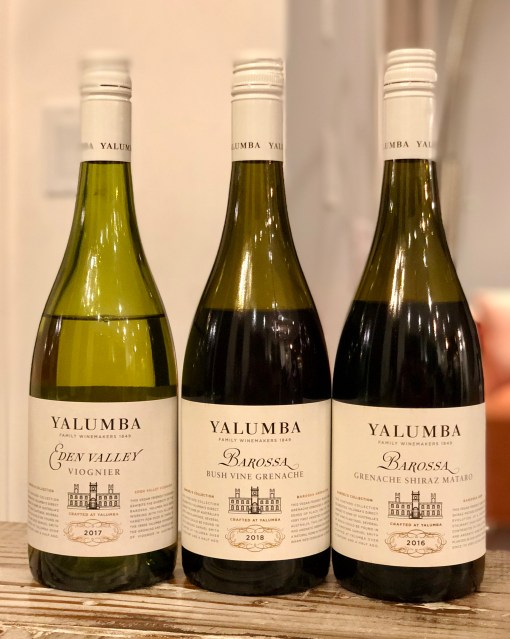
Yalumba is tidying things up a bit.  The Barossa stalwart, now on its 5th generation of family ownership dating back to 1849, traces itself back almost the entire length of the history of its region (whose first Shiraz vines were planted in 1847).  But 170 years of growth and development later, Yalumba’s impressive lineup of wines was starting to lack some internal organizational cohesion, with some forming part of a demarcated grouping or collection (the wildly successful Y Series being a key example of why this can be a boon to consumers) and others standing on their own, without clear delineation as to their place in the company hierarchy.  This would not be much of an issue for a smaller-scale producer, but when you make 52 different bottlings, it’s nice to know where things fit.  Enter Samuel’s Collection.

IMG_0973

This new mid-tier range is both a corporate reorg and a celebration, a way for a number of excellent but disparate Yalumba offerings to find a home as a tasteful homage to the winery’s founder Samuel Smith.  The Collection, featuring all-new clean, modern label art, features seven wines:  four reds from the Barossa Valley and three whites from the neighbouring Eden Valley.  The reds (Bush Vine Grenache, GSM, Shiraz, Shiraz Cab) all share measured ripeness, fermentation using ambient yeasts and a more lithe, transparent take on what can be a region known for muscle-flexing; the whites (Viognier, Roussanne, Chardonnay) are all similarly streamlined takes on sultry grapes, rooted in Eden’s cooler weather and acid spine.  I have had prior vintages of both of tonight’s reds, known back then as the Old Bush Vine Grenache and The Strapper GSM, and their packaging and branding was so divergent that it looked like they came from different wineries.  No longer.  The threads that unite now take centre stage…even the price, as every wine in the new Samuel’s Collection should hit the shelf at a $25ish mark.  As will be seen below, it is a group worth seeking out. Read the rest of this entry »


Volcanic Hills II: Eruptive Reds

13 10 2019

By Peter Vetsch

[These bottles were provided as samples for review purposes.]

The Volcanic Hills story is a charmingly Canadian one.  Founder Sarwan Gidda’s father Mehtab moved to the Okanagan Valley from East Punjab, India in 1958 with his wife and children, becoming the first Indo-Canadian family to settle in West Kelowna.  After a few years, Mehtab and family were some of the most prolific apple farmers in the valley, but from the late 1970s onward, slowly but surely, their agricultural vision began to drift to grapes.  Ray’s excellent introduction to Volcanic Hills Estate Winery outlined how Sarwan took the next step from grape farming to wine production in the 2000s, and how his children are now helping to carry on this burgeoning family legacy.

IMG_0829

Volcanic Hills is largely a grower-producer, making the bulk of its portfolio from its own 68 acres of estate vineyards in the West Kelowna area, carrying on the Gidda family’s initial farming mission.  Not only are all of VH’s Chardonnay, Pinot Gris, Gewürztraminer, Gamay, Pinot Noir, Riesling, Zweigelt (yes, Zweigelt) and Marechal Foch (oh yes, Foch) wines made from 100% estate fruit, but all such grapes are own-rooted, planted on their own original rootstocks as opposed to being grafted onto disease- and pest-resistant rootstocks from non-vinifera species, as is the case with the bulk of wine grapes worldwide.  However, while the other two posts in this producer series will focus largely on what Volcanic Hills can do with its own fruit, the four reds below are exceptions to the VH rule and are instead sourced from warmer climes with longer growing seasons which can reliably ripen them.  The Giddas have contracts with other growers in Oliver and Osoyoos from which they obtain their Bordeaux reds and their Syrah, all of which are on offer at the winery for well under $30.  The price points of the entire Volcanic Hills library are such that John Schreiner was moved to name a recent article about them “Wines You Can Afford”.  But price is only one part of the equation; do they deliver for what they cost? Read the rest of this entry »


PnP Panel Tasting: Weird Canada – BC Carmenere Supremacy (Plus Special Guests)

21 09 2019

By Peter Vetsch & Raymond Lamontagne

It all started with Carmenere.  It snowballed from there.

IMG_0786

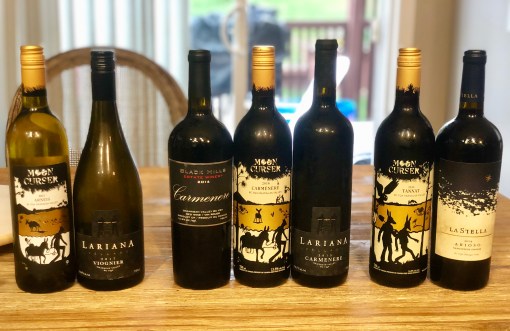
Sometime last year we became aware that there was at least one winery growing and making Carmenere in the Okanagan.  (I am now aware that this has been the case since at least 2005, but allow me my joy of discovery nonetheless.)  Then we were told of another.  And then another.  Then we decided, emphatically though without particular reason, that we MUST gather and taste all of these Canadian Carmeneres, even though we had no real plan for achieving this goal — it will not surprise you to learn that these idiosyncratic bottles are small-production, not in the Alberta market and often produced for winery club members only.  Then one such winery club member, who I had never previously met, happened to be IN the Okanagan while chatting with us about this now-fanatical obsession and picked up a couple of the Carms for us, along with some of the other weird vinous glory you will see below.  Then another local benefactor, who I had also never met, traded us the final piece of our Carmenere puzzle from her cellar.  Thanks to the kindness of electronic friends, we now had ourselves a proper comparative tasting, an honest-to-goodness BC Carmenere showdown.  The first ever?  I can hardly believe it myself.

IMG_0791

The Carm contenders:  Black Hills Estate Winery, which normally plays it fairly strait-laced but which allowed itself a foray into the wacky with this Club-only offering; Moon Curser Vineyards, whose entire portfolio is dedicated to oddities like this which fall outside of the Canadian mainstream (stay tuned for a future Panel Tasting when we dive into their Touriga Nacional and Dolcetto, among others); and Lariana Cellars, which has made Carmenere its signature red and a focal point of its streamlined offerings.  In addition to the main event wines, we couldn’t help but test-drive some other intriguing bottles from these producers, as well as a…Canadian Brunello?  Frankly, if you start a tasting premise at “Canadian Carmenere”, why stop there?  Tyler, Ray and I were born for this.  Bring it on. Read the rest of this entry »


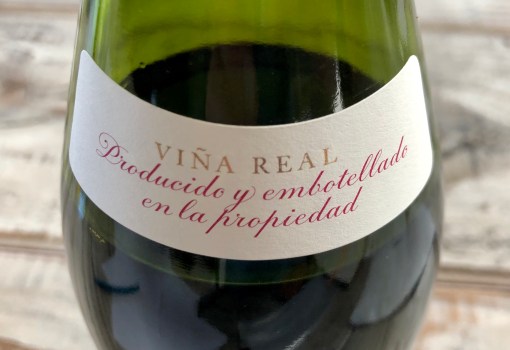
Spain, Old and New, Part III: The Wines of Vina Real

9 09 2019

By Peter Vetsch

[These bottles were provided as samples for review purposes.]

Nearly a year on from the start of this review set, through three different seasons of write-ups, I am closing in on the full story of the Cune wine lineup.  We started with the mothership itself, the Compania Vinicola del Norte de Espana (C.V.N.E.), the Riojan stalwart whose expressions cross four separate brands.  We then ascended to Imperial, the Cune adjunct focused on Reserva- and Gran Reserva-level wines from the top vineyards of Rioja Alta, the core of what most people know of Rioja as a wine region.  Tonight we move from the centre of the heartlands to Rioja’s outskirts, and from the centre of attention to a group of producers tired of being overlooked.  Cune’s Vina Real label is rooted in grapes sourced from the ever-ignored yet consistently impressive Rioja Alavesa.

IMG_0728

This least-known Riojan subregion lies in the north-central portion of Rioja, bordered by the Ebro River to the south and the Sierra de Cantabria mountain range to the north, which protects the vineyards from the cool coastal winds above.  It is both the smallest and the most elevated of Rioja’s three sub-zones, its hilly and terraced vineyards influenced by the nearby mountains, its 40 x 8 km surface area a relative pittance compared to its much more expansive siblings Rioja Alta and Rioja Baja.  Being the smallest and most neglected in the family also tends to make you the scrappiest:  Rioja Alavesa has recently, and ever more vocally, been seeking to carve out its own identity within Spain’s most prominent wine appellation.  There has been some talk of leaving Rioja altogether, which has not been all that well-received by the region’s governing body.  Rioja Alavesa is craving respect and recognition, and that is part of what Vina Real seeks to deliver.

IMG_0730

The winery is named for its vineyards’ proximity to the Camino Real, the “Royal Road”, a renowned traditional highway; its relation to the Camino de Santiago walking trail which crosses all of northern Spain is not immediately clear to me, though that pilgrimage road goes right through Logrono, the closest city to the winery.  Much of my discussion of the Cune-brand wines has alighted on that intersection between traditional and modern approaches that they seem to exemplify, but in none of Cune’s labels is this more clear than Vina Real.  The winery is part of Rioja Alavesa’s historical fabric, being among the first in the area to employ barrel aging for wines (which is now a hallmark of the whole Rioja region) and to make Crianza wines for earlier release.  But its present incarnation is unabashedly modern:  the magnificent new puck-shaped winery building, constructed out of cedar and inaugurated by the king of Spain himself in 2004, was designed as one of the first gravity-flow operations in the country and has bored out the surrounding hilltop to create state-of-the-art underground cellars.  Even this cutting-edge operation does not lose sight of its past, however:  the winery’s circular shape (as seen on Vina Real’s labels) is an homage to a traditional large Riojan fermenting vat, a physical representation of the old-meets-new dichotomy that defines this set of producers.  Do the wines follow suit? Read the rest of this entry »


Wine Review: Road 13’s Rhone-ish Reds

29 08 2019

By Raymond Lamontagne

[These bottles were provided as samples for review purposes.]

Welcome back to Road 13, with my red follow-up of Peter’s prior glowing praise for the white offerings from this Okanagan stalwart. I admit that some inevitable pangs of envy rose up when I heard about just how delicious Rousanne can be in the hands of this  particular producer. Nevertheless, I was pleased to have my opportunity with the reds, one another classic Rhone riff in the form of a GSM blend, the other a more unique joining of a classic stalwart from the same region (the “S” in the “GSM”) with Malbec, a Bordeaux grape that unexpectedly found its fortunes in the New World.

IMG_E0904

Road 13’s labels, and indeed its very name, conjure up some pleasant associations for this country boy who has for some time now been irrevocably relocated to the big city. The name came about when the operation then known as Golden Mile Cellars was sold to Pam and Mick Luckhurst in 2003, with the new proprietors wishing to emphasize the more specific location of their winery and the three vineyard sites providing them fruit. A shift to terroir-driven wines occurred, buoyed by an earnest desire to celebrate the region’s rich agricultural history. A natural born gardener, Mick hated just sitting around and loves collecting farm equipment. Pam brought bookkeeping expertise and a natural aptitude as a wine taster. Both sought to learn viticulture, a process they readily admit continued throughout their stewardship of the winery, yet the result of this humbling journey has still been numerous winemaking awards. The last Road 13 red I had, a 2011 Syrah-Mourvedre opened in 2018,  positively dazzled. Hopefully these provide more of the same. Read the rest of this entry »


By The Glass: Domaine de Pellehaut’s Harmonie de Gascogne

18 08 2019

By Peter Vetsch

[These wines were provided as samples for review purposes.]

Back!!  I have returned from overseas, feeling as refreshed as one can after multiple weeks of intercontinental travel with two kids under 9, and ready once more to dive into the glass and find words to go with it.  This return post takes me somewhere I have not often gone in the world of wine, somewhere that does not usually immediately cross my mind as a source of bottle options:  that broader informal wine zone in southwest France aptly yet uninspiringly called “Southwest France”.  (Admittedly, if all regions were so named, learning about wine would be SO much easier.)  Within the Southwest, an area nestled roughly in between Bordeaux and Languedoc-Roussillon, lies IGP Cotes de Gascogne, a quality wine area best known by a wide margin for a spirit.  As it turns out, the borders of the region precisely mirror those of Armagnac, although its production rules are far more open-ended on the non-distilled side of the spectrum.

IMG_0639

If you don’t recognize the term “IGP”, you’re not alone:  it didn’t exist when I first started studying wine with any seriousness back in 2011.  Previously wines within this classification were known as “Vin de Pays”, or “country wine”, a step up from the lowly standards-free French table wine called “Vin de France”, displaying some regional quality and character but without quite the level of history or distinction befitting a full AOC (now AOP) classification.  “IGP” stands for “Indication Géographique Protégée” (Protected Geographical Indication), which, while much harder to remember than “Vin de Pays”, probably communicates its purpose a little bit better.  The AOP-lite rules surrounding the IGP designation allow for a little more freedom when it comes to grape selection and production methods, freedom that tonight’s producer uses to its full advantage, although the Rolodex of permitted IGP grapes for the Cotes de Gascogne (19 in all, 11 red and 8 white) already seems broad enough to permit significant latitude in what comes out of this area.  It is mostly a white hotbed, with well over 80% of vineyard area planted to white grapes, which is no surprise given that these are the focus of Armagnac as well.  Two of Armagnac’s four prominent standard-bearers, Ugni Blanc (aka Trebbiano) and Colombard, are protagonists below.

IMG_0646

Domaine de Pellehaut is one of those remarkable under-the-radar family-run European estates that has been passed down from generation to generation since the 1700s, is firmly rooted in carefully tended old-vine sites, produces remarkably honest and vivid wines, yet would have remained in complete obscurity from international audiences without amplification from a more recognized voice.  That voice in this case is Maison Sichel, owners of Bordeaux’s Chateau d’Angludet and part owners of Chateau Palmer, which in addition to its own wares markets the wines of other worthy partner estates, including this one, without ripping their owners’ names from the front label.  Brothers Mathieu and Martin Béraut tend the 300+ year-old Pellehaut sites and make the wine, which has gained critical attention yet suffers primarily from the fact that it doesn’t hail from one of the dozen or so major European wine regions that casual drinkers recognize.  These kinds of outsiders, it turns out, are where the bulk of the bargains can be found.  Domaine de Pellehaut’s “Harmonie de Gascogne” collection is a prime example. Read the rest of this entry »


Wine Review: The Reds of Castoro de Oro

14 08 2019

By Raymond Lamontagne

[These wines were provided as samples for review purposes.]

Welcome back for part 2 of my coverage of a cross-section of the current lineup of the Golden Mile’s Castoro de Oro, following on the heels of last week’s assessment of a trio of their whites. Those wines were fun, clean examples of how a savvy winemaker can produce something that is capable of appealing to a rather broad swath of the wine-drinking public. One can simply enjoy such wines in a purely casual fashion, equal parts pleasant taste and social lubricant, or one can, likely on a different occasion, plumb and probe for something deeper. Will the reds (and a rosé) paint a similar picture?

IMG_E0896

Before I attempt to answer that question, a few words about the winery name (see my last post for more about the vineyard conditions). The name “Castoro de Oro” is a tribute to how Canada was founded and gives a nod to our majestic country’s national animal. Yes, the pictures on the label and your phrasebook Spanish do not deceive you: “Castoro de Oro” really does mean “golden beaver”, with a nod towards Canada’s roots in the fur trade.  Back in our colonial days, beaver pelts were deemed “soft gold” because they were in tremendous demand on the market. Additionally, it was none other than beavers who created the small lake that helps provide a key moderating influence on the climate at Castoro de Oro’s vineyards. The top hat seen on the winery mascot above embodies the fashion that was vaunted at the time of the soft gold rush. Truly, what fantastic branding. Ultimately, though, what matters to me is in the bottle. Read the rest of this entry »


Wine Review: Road 13’s Rare Whites

12 07 2019

By Peter Vetsch

[These bottles were provided as samples for review purposes.]

This may be the last post from me for a while, as I imminently prepare to head off of the continent for a little bit on a proper Viking vacation.  (If anybody knows a great wine shop in Copenhagen or Billund, let me know immediately.)  But fear not, Ray will still be here to keep the blog alive for the rest of July, and I have one last gasp of Canadiana in me before I bolt the country.  Tonight’s trio of whites from the Golden Mile Bench’s Road 13 Vineyards makes me realize that I should have been following this winery more closely before now, but I will try to make up for lost time.

IMG_0344

Clean and classic labels, eye-opening wines – but not sure about 2018’s italics.

Road 13 has had an interesting last 12 months, as it was named the Winery of the Year at Wine Align’s National Wine Awards of Canada in 2018 and was then promptly sold before the year was out.  Long-time proprietors Pam and Mick Luckhurst, who acquired the winery (then-called Golden Mile Cellars) and were responsible for first renaming it and then building it into a well-respected national brand, decided to move into retirement (the winery itself having been their first, not-that-relaxing-as-it-turns-out attempt to retire) and accepted an offer from Mission Hill’s / Mark Anthony Brands’ Anthony von Mandl to purchase the company.  The winemaking team remains intact, however, as does the winery’s vision and present focus on the potential of Rhone varieties in British Columbia, an endeavour that I back fully, having had enough marvellous Okanagan Syrah recently to make me wonder what else from the south of France would flourish here.  As it turns out, the white Rhone side of the equation is just as compelling as the red.  But we start with a scion of a Road 13 classic. Read the rest of this entry »


Wine Review: July Patio Samplers

6 07 2019

By Peter Vetsch

[These bottles were provided as samples for review purposes.]

As I sit here writing this on a rainy summer evening (pre-publication, but I bet it’s raining when this goes live too), Calgary has just struggled through a sodden June, and the tide doesn’t seem to be turning.  It is grey, dreary and continually drizzling.  We’ve had hailstorms, windstorms, thunderstorms — all separately and all in the last three weeks.  My kids have declared their nascent skepticism for outdoor sports — who would willingly place themselves outside for an hour at a time in an environment such as this?  Our northern world is free of snow for at most six months a year, and a third of that winterless period for 2019 has been underwater. You get the picture.  It’s bleak.

IMG_0298

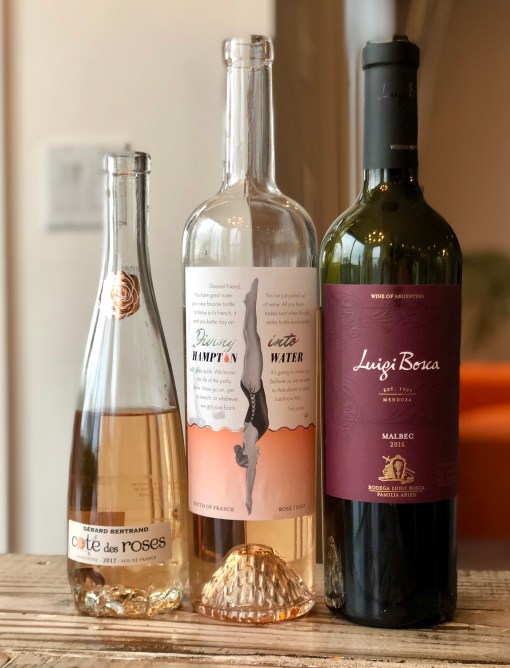
So rather than wait for the appropriate meteorological scene to christen this long-planned summery-wine review set, I have decided to pre-emptively invoke summer by publishing it anyway, in the hopes that this trio of deck-and-BBQ-friendly refreshment will nudge our weather towards more appropriate activities.  I will try anything at this point.  Tonight’s bottles will set a blog record that may never be broken, bear a striking resemblance to each other until they don’t, and confirm that even trendy wines can be old-school sometimes.  They may also be the first time since the Tournament of Pink that we start off with back-to-back rosés, but hopefully we can make that a bit more of a recurring pattern.  Game on. Read the rest of this entry »


Wine Review: The Reds of Sunrock Vineyards

4 07 2019

By Raymond Lamontagne

[These wines were provided as samples for review purposes.]

You cannot make truly good wine without ripe grapes. Simple, no? Insufficient sugar in the fruit is not going to leave much for yeast to consume, and such starved fungi are not going to produce something with sufficient body (and alcohol) to merit any sort of “greatness” mantle. Moreover, grapes need heat if they are to attain physiological ripeness. This refers to the changes in tannins and other chemical components that occur largely in grape skins, stems and seeds during the ripening cycle beyond the mere increase in sugar.  These changes are what produce the key varietal aroma signatures we know and love, preventing a wine from tasting green, weedy, and brittle.

Although sugar ripeness and physiological ripeness are clearly correlated, it would seem that grape hang times might be a stronger predictor of physiological readiness than just heat alone, although in my view (and botanically speaking) you aren’t going to get any degree of maturation, period, without heat. The key question for wine quality is: how much heat is too much? Overly ripe grapes mean clumsy, muddled wines that are boozy, lacking in precision or definition, and often almost devoid of any sense of place or regional character. Such wines are going to be tremendously fruity and powerful, but may not offer much in the way of nuance or balance. As I read up on Sunrock Vineyards, which could very well be the hottest single vineyard site in British Columbia, I wonder how they approach these ripeness issues.

Sunrock is owned by Arterra Wines Canada, formerly the Canadian subsidiary of the massive Constellation Brands, but recently acquired in 2016 by the Ontario Teacher’s Pension Plan (for some reason that tickles my funny bone…I’m sure we drove many a substitute teacher to drink). Arterra farms around 1300 acres of Okanagan vineyard, with the expected corresponding range of quality tiers. Jackson-Triggs might be the best known of Arterra’s brands, and the single-vineyard Sunrock labels formerly carried this name as the top tier of that portfolio. Sunrock is now a standalone winery, a fine example of a large corporate entity with the good sense to recognize and preserve the unique character of a single site. And what a site it is. Read the rest of this entry »


PnP Panel Tasting: Culmina Spring Releases, Part 2 – Funky Whites Edition

12 06 2019

By Peter Vetsch

[These bottles were provided as samples for review purposes.]

The last set of Culmina releases featured on PnP was so fun to taste that I felt compelled to bring in the band to share the joy of this next group, a trio of weird, wild, semi-experimental whites that are seeking to test boundaries both within and outside of the winery.  Fellow PnPers Ray Lamontagne and Tyler Derksen gathered with me to taste through a lineup that included my own personal Culmina obsession, the incredible Unicus Gruner Veltliner, as well as two even more envelope-pushing whites from Culmina’s recently unveiled small-production Number Series.  Things got fun fast.

IMG_0183

The Number Series was introduced in late 2016 as a way for Culmina’s talented winemaking team to spread its wings a bit.  Part Reserve-level offering and part experimental test drive, each Number Series wine is a limited-production rarity that may only see a single run, never to be repeated again in subsequent vintages.  It represents the best of Culmina’s developmental efforts from that year, either showcasing a standard-rotation Culmina grape in a whole new way (like the inaugural Number Series Wine No. 001, a rich, ripe Riesling styled like an Alsatian Grand Cru) or braving the unknown with a varietal that isn’t part of Culmina’s normal lineup.  The two most recent Number Series bottles below both fall into the latter camp, and show off some intriguing winemaking approaches to boot.

As with all our Panel Tastings, while we discussed the wines as we were tasting them, we came up with our own impressions and our own scores for each bottle and did not share them until everyone’s assessment was complete.  We started, as every meal and tasting and day on this Earth should, with Unicus. Read the rest of this entry »