Entering The Hatch, Spring 2017

23 05 2017

[These bottles were provided as samples for review purposes.]

IMG_6146Ever since I first saw The Hatch’s avian-Thomas-Crown-Affair primary logo shortly after it opened a couple years ago, I have been sort of transfixed from a distance, finding both the winery and its artistic ethos strangely compelling despite knowing basically nothing about them.  Based out of a rustic-modern “shack from the future” in the heights of West Kelowna and sourcing grapes from across the Okanagan and Similkameen Valleys, The Hatch initially comes across (quite intentionally) more like an artists’ collective than a commercial winery, listing Salman Rushdie on its personnel page and expounding in esoteric wine-code about “Ross O” and B. Yanco” (I’ll give you a second to sort that one out).  They confidently found their visual style from the outset thanks to the remarkable imagery provided by local western Canadian artist Paul Morstad (who is also found on The Hatch’s personnel page, playing a banjo); once people have been drawn in by the graphics, it’s up to winemaker Jason Parkes to keep their attention.  The whole artistic cacophony and the simultaneously grand yet whimsical presentation lends The Hatch a jolt of personality that the generally strait-laced BC wine scene can happily use…but does the buzz extend to what’s in the bottle?  Happily, I got to find out.

FullSizeRender-601The Hatch releases its wines in stylistic series, of which I had the opportunity to experience two:  the mid-tier Hobo Series wines, featuring a panoply of hand-drawn labels of hobos (seriously) that risk making you cry thanks to their sheer beauty (also seriously), and the ambitious Black Swift Vineyards series wines, which collectively form an expansive single-vineyard project focused on the various facets of BC’s glorious dirt.  The wine, like the winery, was never boring. Read the rest of this entry »


Burrowing Owl Spring Releases

16 05 2017

[These bottles were provided as samples for review purposes.]

Some people chart the seasons using a calendar; others look to the melting snow and the first robins to mark the start of spring.  For me and this blog, the new season only arrives when the box of new releases from Burrowing Owl is delivered and tasted.  I can now happily announce:  spring is here.

FullSizeRender-592

OK, yes, I had a glass of the Chardonnay before the tasting started.  I regret nothing.

Burrowing Owl is one of the few Canadian wineries that has been consistently able to juggle both quantity and quality, producing 35,000 cases annually from 16 different varietals grown across 170 acres and three different estate vineyard sites encircling the scorching southern Okanagan hubs of Oliver and Osoyoos.  It is likely best known for its Bordeaux varietals, but also makes room in its vineyard sites for less expected offerings like Tempranillo and Viognier, not to mention a killer Syrah that is proof of concept of the region’s suitability for the grape.  Burrowing Owl’s two largest vineyards are scant minutes away from the US border, on western-facing slopes angling down towards the temperature-modulating Lake Osoyoos, which both restrains the Okanagan desert heat during the day and extends it at night.  The third is due west of Oliver, in the neighbouring Similkameen Valley, using its proximity to Keremeos Mountain to help grow Bordeaux whites Semillon and Sauvignon Blanc, where 2017’s spring releases conveniently start. Read the rest of this entry »


International Sauvignon Blanc Day: 2016 Adobe Reserva Sauvignon Blanc

5 05 2017

[This bottle was provided as a sample for review purposes.]

FullSizeRender-589

International SB Day 2017!

I swear that not every future entry on this blog will begin with “Happy [Varietal-Specific Holiday] Day!”, but…Happy International Sauvignon Blanc Day!  Yes, there is an entire calendar of world wine days now, each concocted by various marketing geniuses, and as it turns out, a couple weeks after World Malbec Day and a scant four days before World Moscato Day comes a designated day to celebrate the safest grape to pick out of a strange new liquor store and the varietal that first introduced the vinous world to New Zealand, the consistent and omnipresent Sauvignon Blanc.  Unlike today’s grape of honour, I am not omnipresent, and as this piece posts I am actually going to be hanging out in Walla Walla drinking world-class Syrah; International SB Day falls on my birthday this year, and I am spending this spin-around-the-sun in my personal wine Mecca.  So the blog and I will celebrate simultaneously this year, albeit in different places and for different occasions. Read the rest of this entry »


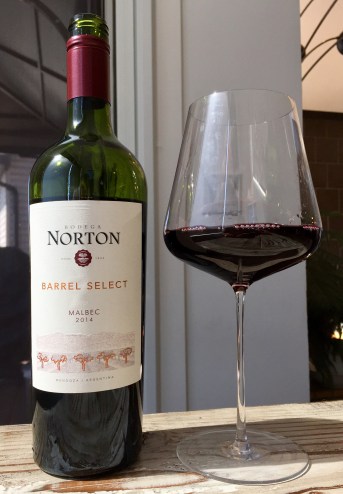
World Malbec Day Review: 2014 Bodega Norton Barrel Select Malbec

17 04 2017

[This bottle was provided as a sample for review purposes.]

FullSizeRender-587

Happy World Malbec Day!

Happy belated Easter to all – I hope your long weekend was filled with family and food and chocolate and wine in some order.  If you headed back to work on Easter Monday and were feeling the post-holiday blues, fear not, because there is another event on today that’s worth celebrating:  April 17th has been designated World Malbec Day, a designation I would bet many people choose to live out far more often.  In a blink sometime in the last decade, Malbec went from being an overlooked Bordeaux blending grape and an esoteric dark and chewy hidden treasure from Cahors to Australian Shiraz’s heir as the friendly, fruity, powerful gateway drug into the wonderful world of wine.  Whereas I stumbled onto Yellow Tail sometime in the early 2000s and worked my way up from there, nascent wine lovers today are heading to the previously non-existent Argentina section of their local liquor store and starting their odyssey with the grape, one that will hopefully last a lifetime. Read the rest of this entry »


Calgary Wine Life: Taylor Fladgate 1967 Single Harvest Port Release

11 04 2017

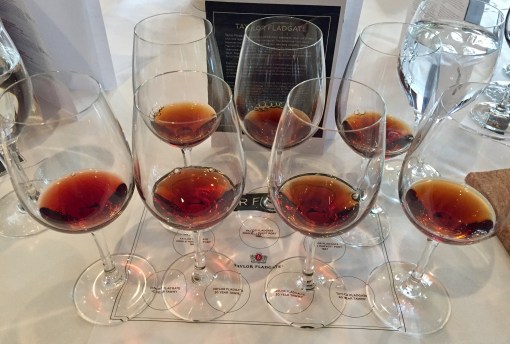
I almost always try to write up a tasting as soon as possible after I’ve experienced it, while memories are still fresh and the wines that were presented are still alive on my senses.  This is unfortunately not one of those times.  I must have triggered some kind of ancient Douro warlock’s curse upon cheerfully exiting La Chaumiere restaurant two weeks ago today, after tasting 100 combined years of Taylor Fladgate tawny Port and a trio of aged single-harvest releases that were collectively over a century and a half old, because within an hour of the tasting I was feeling queasy and unwell.  It only got grimmer and sicker after that, and I’ve only just emerged from that bleary world of nausea and cough drops and decongestants and come back to some semblance of myself.  But even if it was the Port gods who struck me down, it was totally worth it.

FullSizeRender-576

Taylor Fladgate, thanks to savvy rationing and recent acquisitions of significant quantities of extensively aged Port stocks from another historic house, has one of the largest inventories of old cask-aged Port in the world.  In 2014, it decided to make use of this bounty by launching a remarkable program:  releasing a 50 year-old Single Harvest Port on an annual basis commemorating the half-century that came before.  The 1964 Single Harvest Port was the first of the line, but has since been followed by the 1965 in 2015, the 1966 in 2016, and, this year, the impending “new” release of the 1967 Taylor Fladgate Very Old Single Harvest Port.  Each of these bottles retails for around $250 and is the best possible 50th birthday or anniversary present that could exist on this world.  As a special nod to Canada, the 1967 bottling is also a Canadian Centennial edition (at least in this country), with a maple-leaf-adorned box liner marking our country’s 100th birthday on the year of its 150th.

FullSizeRender-578A quick tangent to explain this Port’s name and aging designation.  All Port starts just like other red wines do, with crushed grapes fermented on their skins.  With Port, however, the fermentation is halted halfway through, before much of the sugar has been converted to alcohol, by spiking the juice with high-proof (75+% abv) grape brandy, which kills the yeast, retains a large part of the grapes’ natural sweetness and boosts the alcohol level of the finished product to around 20%.  The Port is then put in large oak barrels for maturation, and what happens next is what determines its final identity.  In top vintages, some of this wine only spends a couple years in wood before being put in bottle for further non-oxidative aging.  This is Vintage Port, arguably Portugal’s crown jewel.  In lesser years, or with other lots, the wine stays a few extra years in barrel before hitting the bottle 4-6 years past vintage; this is Late-Bottled Vintage Port, generally a less ageable, earlier-drinking style, and one that was actually invented by Taylor Fladgate in the 1960s, a rare innovation in a very traditional winemaking landscape. Read the rest of this entry »


Calgary Wine Life: Moet & Chandon Winemaker Tasting @ Ruth’s Chris

24 03 2017

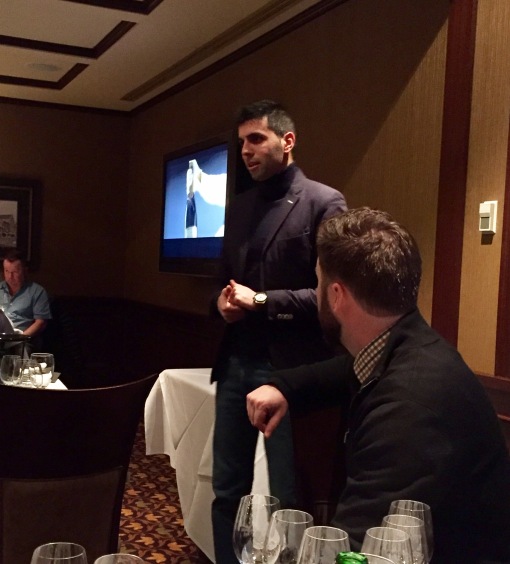
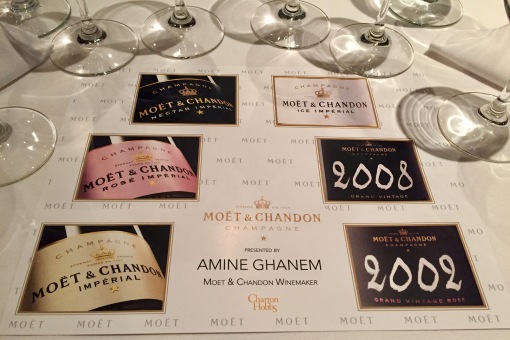
As it turns out, there is no inopportune time for Champagne.  Although the bubbly beverage has built its brand on being the drink of choice for special occasions and other times of celebration, it turns out that it’s equally nice to kick back with a glass of fine bubbles on an otherwise-normal Thursday afternoon.  It’s even better to kick back with six of them, which is what I was fortunate enough to do when Moet & Chandon winemaker Amine Ghanem came to town to lead an attentive and appreciative group through a good portion of the Champagne powerhouse’s portfolio.

FullSizeRender-565

Amine Ghanem, Moet & Chandon.

Ghanem is one of 10 winemakers employed by Moet & Chandon in addition to their cellarmaster, or chef de cave, who directs and decides on the ultimate blend for each of the house’s Champagnes.  Moet has been doing its thing for centuries (since 1743, to be exact – Ghanem informed us that the very first bottle of Moet & Chandon Champagne arrived in Canada in 1839, before we were even a country!), and as such has honed its house style to a fine point, with very clear goals as to the characteristics it seeks to draw out in its Champagnes and specific strategies in place to reach them.  The three pillars of the Moet & Chandon style are, in Ghanem’s words:  (1) “bright fruitiness”, which is attained in part by careful non-oxidative winemaking techniques, even to the point where the house has developed a technique for “jetting” oxygen out of the neck of the bottle after disgorgment to avoid degradation during the maturation process; (2) “seductive palate”, with a welcoming, easy-to-drink texture aided by full malolactic fermentation; and (3) “elegant maturity”, achieved largely through extended lees contact pre-disgorgment, for much longer periods than required by law.  These foundational principles must be working, as we were told that there is currently a bottle of Moet being popped somewhere around the world every second.

FullSizeRender-566

In case the ten full-time winemakers on staff wasn’t a tip-off, Moet & Chandon is a massive undertaking.  It is the biggest house in Champagne and the owner of its largest vineyard holdings, amounting to almost 10% of the entire area under vine in the region.  Since 1962, it has even had its own brand of proprietary yeast, which helps accentuate the characteristics that reflect the house style.  Moet’s primary brand is Imperial, so named in recognition of founder Claude Moet’s 18th century friendship with a certain French emperor, none other than Napoleon Bonaparte.  Napoleon visited the winery many times and was a steadfast consumer of Moet Champagnes, and in 1869 the Imperial brand was christened in recognition of the 100th anniversary of his birth.  The Imperial NV blend starts out as 800 different base wines, which are gradually combined into 3 proposed blends (each featuring solid proportions of all three of Champagne’s grape varieties: Pinot Noir, Pinot Meunier and Chardonnay) before one is selected.  The blending is as much of the artistry as the winemaking itself, and the efforts show in the bottle, which led off our tour-of-Moet tasting. Read the rest of this entry »


2015 Testalonga El Bandito Cortez

19 03 2017
FullSizeRender-562

What a label. What a wine.

OK, so it’s been a long time.  I wasn’t intending to drop off the map for over a month after my last post, but a work tornado and a series of weekend Timbits tournaments then morphed into bronchitis that knocked me out of commission for a couple of weeks.  Thankfully, the antibiotics have run their course, my lungs and tastebuds are back to almost-normal and Pop & Pour is again ready to roll.

And what better way to get back in the swing of things than with something fantastically different?  And what better qualifier for that category than a $48 South African natural wine Chenin Blanc with a catchy pop-art label?  Seriously, this is one of the best labels I have ever seen on a bottle of wine.  As soon as I saw it, I knew I was buying the bottle, which is about as big a compliment as you can possibly pay to a branding tool.  The label for this Cortez bottling by Testalonga changes every year, but they absolutely killed this one, which tugs on my (and presumably every other father’s) heartstrings.  I love it.

Read the rest of this entry »


Calgary Wine Life: Pierre Sparr Tasting @ Cassis Bistro

3 02 2017

Can there be any major French wine region more overlooked and underrated than Alsace?  It has all the frozen-in-time charm of Burgundy, with picturesque centuries-old villages dotting rolling hillsides of vineyards, and all the stately history of Bordeaux, but without the matching dose of self-importance.  Add in a dash of international conflict (the region has passed back and forth between France and Germany many times in the course of modern history) and a pinch of consumer friendliness (unlike almost anywhere else in France, Alsatian wines are all varietally labelled so everyone can easily see the grape that’s in the bottle) and you’d think you’d have a sensation.  But perhaps due to its location, tucked away in the northeastern corner of France, or to its primary focus on white grapes and prevailing Germanic influence, Alsace doesn’t get the hero’s welcome internationally that its fellow French stalwarts do, often left unexplored and misunderstood by New World consumers.  Thankfully, Bernard Sparr and others are out to set things right.

fullsizerender-554

Maison Pierre Sparr, 9th generation.

Bernard is part of the NINTH generation of the Sparr family that it carrying forward the legacy of Maison Pierre Sparr, the Alsatian house named after his grandfather but rooted in a winemaking family going back to 1680 (there’s that history I was talking about).  Pierre persevered through the ravaging of his domaine and vineyards in World War II, expanding the business and passing on a thriving enterprise to his two sons.  Bernard is the son of one of those scions, Rene Sparr, learning the rigours of blind tasting and the rhythms of the family winery from an early age.  Now he is helping expand the profile of the domaine overseas, settled in Quebec and taking on the role of North American ambassador for Pierre Sparr.  He is almost continually on the road, but despite the weariness of travel and an unfortunate cold that sapped his sense of smell, he was a warm and gracious host on Wednesday night, leading a cozy group through a lineup of French wines whose unifying trait was show-stopping value.

fullsizerender-549

In addition to directing international sales for the family domaine, Sparr also arranges for a small portfolio of like-minded tiny-production French producers to find their way into North America.  A few of these joined him for his visit to Calgary, so to accompany an absolutely marvellous five-course meal at Cassis Bistro, we were treated to a mixture of Pierre Sparr classics and intriguing finds from other regions, starting with a rosé with a distinct connection to a PnP favourite… Read the rest of this entry »


The Tournament of Pink (1st Ed.)

28 01 2017

[These bottles were provided as samples for review purposes.]

Rosé:  it’s not just for summer anymore.  Well, it was never just for summer, but the shelves of your local wine shop wouldn’t have given you that impression a few short years ago.  I had a tremendously difficult time a couple years back trying to source some pink wines in November/December for use in office client Christmas gifting packages, because for many retailers, the presence of rosé within store walls was decidedly seasonal.  This remains the case to some extent (because it is virtually impossible to beat a chilled rosé as an out-on-your-deck-on-a-summer-evening wine), but I had an agent tell me recently that their pink sales outlook for this winter might just outpace their summer, and I’ve seen more rosé on Calgary shelves with snow on the ground this year than ever before.  This is an enlightened change for the better:  there may be no type of wine more versatile and more universally appealable to all types of cuisines and personalities than a good rosé.

fullsizerender-539

There can be only one.

So when I noticed that I had a quartet of bottles of rosé sitting by themselves in an unassuming pink group in my cellar, the time of year did not remotely deter me in coming to the obvious conclusion:  let’s open them all and drink them all at once, and let’s do so in a Kickboxer-style fight-to-the-death tournament.  Thus the Tournament of Pink was born.

The actual Tournament took place a week or so ago and was simulcast on Twitter and Facebook, but work commitments have kept me from immortalizing the results on PnP until now.  If you weren’t following along at the time, we played our game by splitting our four rosés into two qualifying heats where they battled for the right to face off for the Tournament of Pink crown in the final.  Game on. Read the rest of this entry »


Sub-$16 Red Throwdown: Old vs. New World

11 01 2017

[These bottles were provided as samples for review purposes.]

fullsizerender-532

Have you EVER seen a red wine bottle shaped like the one on the left?

The $15 bottle of wine is a vanishing category nowadays, and what you can actually get for that price may often make you wish you couldn’t.  A combination of the struggling Canadian dollar, increased liquor taxes and the inexorable power of inflation is slowly pushing up that minimum purchase threshold where you can expect to find decent quality…if you look hard enough amongst the oceans of double entendre-named or critter-adorned labels at that price point.  However, there are still a select few value crusaders scattered here and there in this cost category, from under-appreciated regions where production costs remain low and climatic abundance makes ripening easy.  I happened to have two such examples lying around, one from the Old World and one from the New, so what better way to make use of them than to have them battle to the death for my weeknight enjoyment?  Since the estimated retail price on each creeps barely over $15.00, we’ll play it safe and call to order the first ever Pop & Pour Sub-$16 Wine Challenge.

In this corner, from the Old World, comes a representative from arguably the most overlooked source of good, solid, inexpensive table wine:  Portugal. Read the rest of this entry »


Introducing: Roserock Drouhin Oregon

5 01 2017

[These bottles were provided as samples for review purposes.]

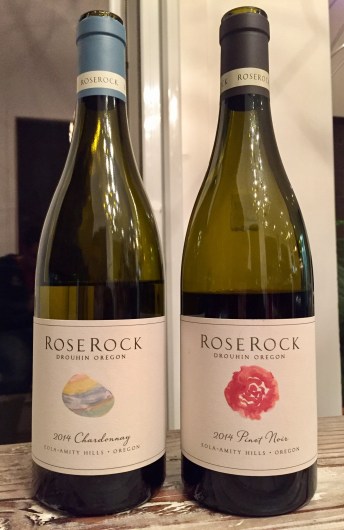
fullsizerender-526

New vineyard, new venture, new heights.

Maison Joseph Drouhin has been a Burgundy mainstay for over a century, but third-generation proprietor Robert Drouhin discovered a kindred spirit location in Oregon close to 40 years ago when he arranged a Judgment of Paris-esque blind tasting competition between a group of classic red Burgundies and some upstart USA Pinot Noirs back in 1979.  At a time when almost nobody even knew that Oregon was producing quality wine and all American hopes were seemingly based on the performance of the California contingent, it was “Papa Pinot” David Lett’s Eyrie Vineyards Oregon Pinot Noir that lapped the New World field in the tasting, placing 2nd overall behind only Drouhin’s own 1959 Chambolle-Musigny, an exalted Burgundy from a top vineyard.  Within less than a decade from this revelatory event, Drouhin had bought land in Oregon’s Dundee Hills (a subregion within the large Willamette Valley located almost equidistant from Portland and the Pacific Ocean) to plant to Pinot and had assigned his own children to carry the family legacy across the ocean, naming his daughter Veronique as winemaker and his son Philippe as viticulturist, positions both still hold at Domaine Drouhin Oregon today.

Fast forward a quarter century.  Drouhin Oregon has established itself as one of the premium producers of the Willamette Valley had has become firmly entrenched in the Oregon community.  On the lookout for additional top vineyard lands outside of Dundee Hills, it never quite comes across what it is seeking…until the Roserock vineyard comes up for sale.  Roserock is located due south of Dundee, right in the centre of Willamette in the well-regarded Eola-Amity Hills subregion, about a half hour south of Portland and just west of the state capital, Salem.  It is replete with features that would make any winery’s ears perk up:  complex, well-draining volcanic soils; high (for Oregon) temperature-controlling elevation, perched between 550-750 feet above sea level; sited in the middle of a wind corridor channelling cool Pacific air right through the vines, maintaining acidity and prolonging ripening.

fullsizerender-527

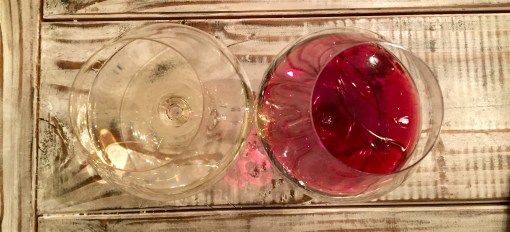
Roserock was planted to 111 acres of Pinot Noir and 11 acres of Chardonnay, Oregon’s (and Burgundy’s) signature grapes and had previously supplied fruit not only to Drouhin but to a laundry list of Willamette’s bright lights, including Soter, Argyle and King.  Drouhin pounced on it, acquiring the entire vineyard in December 2013 in its most significant transaction since starting up business on this continent.  This was not just a blip on the radar of a global wine power:  it single-handedly almost doubled Drouhin Oregon’s vineyard land holdings in the state, and it led to the creation of a new standalone Drouhin brand dedicated to the preservation and celebration of Roserock’s unique identity.  2014 was the inaugural vintage of this new label, and the first Roserock Drouhin Oregon Chardonnay and Pinot Noir make it eminently clear why this vineyard deserves to stand on its own. Read the rest of this entry »


Happy NYE 2016: Piper-Heidsieck Brut NV

30 12 2016

[This bottle was provided as a sample for review purposes.]

Quick – what’s the most festive thing you can think of to drink right now, right in the middle of this holiday season?  Champagne?  Close.  Champagne wrapped up like a present, complete with bright red bow, in its own custom bottle cozy?  Bingo.  I have long been a proponent of seasonally packaged wines (as long as they’re done right – when done wrong, they’re not pretty), and the holiday edition of the Piper-Heidsieck Brut NV Champagne nails the Christmas/New Year’s vibe about as well as anything I’ve ever seen in a bottle.  Seriously, just look at this thing, first wrapped up:

fullsizerender-521

Wait for it…

Then unwrapped:

fullsizerender-523

Oh yeah.  So sweet.

YES.  That is so, so clever.  And it’s reusable!  How can you go to a New Year’s party tomorrow and NOT bring this?  And it’s on sale online at the moment at Willow Park in Calgary, and maybe elsewhere, at a price that’s shockingly friendly for true Champagne from a historic house.  Oh, and most importantly, the juice lives up to the packaging.

Read the rest of this entry »


Sacred Hill Marlborough Trio

29 11 2016

[These bottles were provided as samples for review purposes.]

fullsizerender-488If you follow this blog (thank you!) and enjoy wine reviews (I do too!) but aren’t as into other forms of alcoholic beverages, I would suggest that you cherish this write-up.  Mull over it.  Take your time reading it.  Stop halfway through and come back tomorrow to finish it.  It will have to last you a long time.  This is officially Pop & Pour’s last wine review until after Christmas, as on Thursday I dive headlong into Year 3 of Whisky Advent, with 25 straight days of write-ups about the little bottles sequentially coming out of Kensington Wine Market’s tremendously awesome Whisky Advent Calendar. Pray for me.  Incidentally, Advent in 2017 may look a little bit different for PnP, as my years-long quest to get somebody to make a proper Wine Advent Calendar just might be coming to fruition:

Make it happen, Bricks Wine Company.  I’ll be ready, and I’ll make sure everybody who reads this site is ready too.

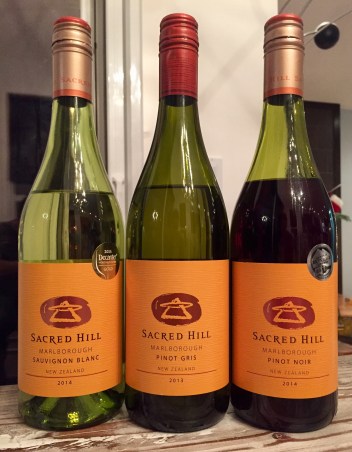
Anyway, since this is my last wine write-up for a calendar month I figured I’d make it a multi-bottle one, from an area that is a bit at risk of becoming a victim of its own success:  Marlborough, New Zealand.  Since catapulting onto the scene 30-odd years ago with a distinctive lean, blisteringly aromatic and herbaceous style of Sauvignon Blanc initially popularized by now-mega-label Cloudy Bay, this region on the northern edge of the South Island has become synonymous with this piercing, vegetal, unabashedly flavourful take on the grape.  Producers have rushed to respond to global demand for Marlborough’s established house style for NZSB, to the point where it is now one of the most readily available bottles around, no matter where you are.  This is good in the sense that you know that a solid, consistent bottle of white that will not disappoint is always around the corner.  It’s bad in the sense that a lot of New Zealand Sauvignon Blanc has become almost mechanical, put together as if by rote to satisfy an expected flavour trope.  The old challenge for NZSB was to become relevant; the new challenge is to regain its individuality and joie de vivre.  Easier said than done at a competitive price point, but certain producers are proving up to the task, like Sacred Hill, to whom I was introduced by the three bottles below.

fullsizerender-485

Sacred Hill was founded 30 years ago, in 1986, at the start of New Zealand’s wine explosion; however, unlike many similarly timed winery ventures, it was not started at the epicentre of the Sauvignon Blanc earthquake, hailing from Hawkes Bay on the eastern side of NZ’s North Island as opposed to Marlborough.  Hawkes Bay is a warmer region known mainly for red wines, and the two brothers behind the Sacred Hill label grew up there and came by their wine aspirations naturally:  their father was one of the first farmers in the region to take the plunge and start planting grapes as opposed to more common (at the time) agricultural crops.  The business has since expanded and Sacred Hill now has vineyards in both Hawkes Bay and Marlborough, which the brothers (correctly) call the “engine room” of New Zealand’s wine industry.  They have access to half a dozen different vineyards in Marlborough, one of which, the eerily named Hell’s Gate, is their own.  Their Orange Label line of wines, including the three below, are multi-vineyard blends offering up a true sense of the region without any sticker shock. Read the rest of this entry »


Joseph Drouhin Hospices de Belleville Beaujolais Duet

23 11 2016

[These bottles were provided as samples for review purposes.]

fullsizerender-479

Great region, great wines, great story.

A few posts ago I was discussing the intractable dilemma of trying to locate value Burgundy, that nearly mythical beast of the wine world, and I’ve since realized that I neglected to mention the obvious solution to the problem:  just look for Cru Beaujolais.  The Beaujolais region is technically part of Burgundy, located just south of Macon and north of Lyon, and while it can produce its share of forgettable wines, the main difference between Beaujolais and the other zones of Burgundy is that its top wines are shockingly wallet-accessible.  In fact, Cru Beaujolais, wines from one of the ten top quality Cru subregions in the area, might be some of the greatest wine bargains on Earth, pinnacle expressions of a classic grape at absurdly reasonable prices.  Case in point:  the two bottles to be discussed below, which each clock in at $27-$30 retail and which combine old-vine vineyards in top locales, one of Burgundy’s best producers and a hell of a good back story, all for the price of a basic forgettable Bourgogne Rouge.

Unlike the rest of red Burgundy (which is crafted from Pinot Noir), red Beaujolais is made from Gamay, the thin-skinned and light-bodied red grape well known to Canadian wineries whose spiritual heartland lies in this region’s ten Crus.  True story:  Gamay used to be grown all across Burgundy until 1395, when the (likely self-titled) Duke Philip the Bold ordered the “very bad and disloyal plant” uprooted in favour of the more aristocratic and noble-approved Pinot Noir.  His decree was not all that impressively enforced way down in the south of Burgundy, so pockets of Gamay remained in Beaujolais, quietly, until the danger of extermination had passed and the region was officially recognized as a Protected Denomination of Origin.  While it’s true that Gamay may never quite reach the lofty heights of nuance and complexity that Pinot can, it can offer a pretty reasonable facsimile at an absolute fraction of the price. Read the rest of this entry »


Burrowing Owl Fall Release Set

12 11 2016

[These bottles were provided as samples for review purposes.]

Burrowing Owl Fall Release Week is quickly becoming one of the highlights of the Pop & Pour blogging calendar.  The winery is highly engaged with consumers and media alike and  is ahead of the game in terms of finding new ways to get its wines into the collective consciousness, and its renown is expanding well beyond its home province of BC as a result.  When the season’s current releases arrive in Calgary around harvest time, I’m ready to do my small part to spread the word.  Bring on the new vintages!

fullsizerender-462

A glorious Pop & Pour fall tradition.

Burrowing Owl is an Okanagan Valley stalwart, and it’s become such a ubiquitous part of the region that it’s easy to forget the winery is less than 20 years old.  The story started in 1993, when founder Jim Wyse replanted a series of vineyards between Oliver and Osoyoos in the extreme southern Okanagan.  There were no immediate plans to build a winery, but Wyse’s vision expanded once he saw the quality of the new grapes.  Burrowing Owl’s first vintage was 1997, and construction on the gravity-flow winery and massive underground cellar on the property was completed in 1998.

fullsizerender-468

 Initially focused on Cabernet Sauvignon, Merlot, Chardonnay and Pinot Gris planted on a single 130-acre site, Burrowing Owl is now up to 14 different planted varietals on 170 acres of estate vineyards in three different sites. It is no accident that the winery is named after the rare underground-nesting owl that was declared extinct in British Columbia in 1980 but is now back on the upswing due to the dedicated conservation efforts of a small group of individuals:  Wyse is one of those individuals, having contributed significant amounts of both time and money to the burrowing owl’s preservation.

fullsizerender-472

Stelvin Rating: 8/10 (Love the colour, love the side pattern and smoothness; not a huge fan of the top embossing.)

 This year I was fortunate enough to have the opportunity to try a sextet of different bottles from the Burrowing Owl 2013 and 2014 vintages, including return engagements with a couple of wines I had in last year’s releases, the Cabernet Sauvignon and the particularly eye-opening Syrah.  Let’s see how the fall 2016 lineup compared, starting with my introduction to one of Burrowing Owl’s founding whites:  Chardonnay.

Read the rest of this entry »