[This bottle was provided as a sample for review purposes.]

Cabernet royalty.
It’s Calgary municipal election night, so my plan was to put off this review until tomorrow. Then I sat here for 10 minutes biting my fingernails and hitting “refresh” on the election results page on my phone every 60 seconds and realized that (1) the next four years of my civic life weren’t about to reveal themselves anytime soon and (2) I could use some guaranteed good news tonight regardless of political outcome. And nothing screams “guaranteed good news” like the flagship wine of Miguel Torres, the most consistent larger-production winery I know.
If you have a photographic memory of this blog, you may remember that I have told the story of Mas La Plana once before; if you don’t, you can take solace in the fact that I almost didn’t remember this fact myself. Nothing about this wine is quite as expected. It is 100% Cabernet Sauvignon from Penedes, the heartland of Cava in eastern Spain near Barcelona, an area not remotely known for big red wines but blessed with numerous altitudes and microclimates that allow for pockets of warmth and create opportunity for special sites like the one that birthed this bottle. It hails from a 29-hectare single vineyard planted before I was born, from Cab vines introduced to Spanish soil between 1964 and 1979 based on cuttings from numerous prior homes, including 1st Growth Bordeaux chateaux. It looks strangely at home in a Burgundy bottle, unlike any other Cabernet Sauvignon I have seen on a shelf.

Penedes was the first region in Spain to start using modern winemaking techniques like stainless steel temperature-controlled fermentation, and Torres uses them to great effect here to create a bottle that seamlessly communicates Spain’s history and potential to a global wine world, that imbues the Earth’s most ubiquitously successful commercial grape with the essence of the Torres family’s heartland. Mas La Plana tells a story that was heard almost immediately, as the wine’s inaugural 1970 vintage beat out Chateau Latour and numerous other luminaries in the Cabernet category of French magazine Gault-Millau‘s 1979 Wine Olympics (which weirdly was the exact same competition that put Oregon Pinot Noir on the world map thanks to Eyrie Vineyards’ stellar showing against the best of Burgundy). Yet it still retains its humble family roots: its neck foil reads “Vinetum Paganicus”, a term sometimes used to designate top wines but which to the best of my meagre Latin translation ability appears to simply mean “vineyard of a village”. Read the rest of this entry »

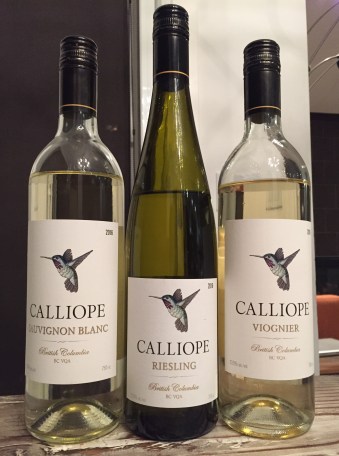



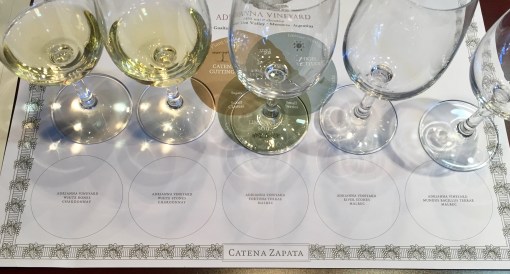


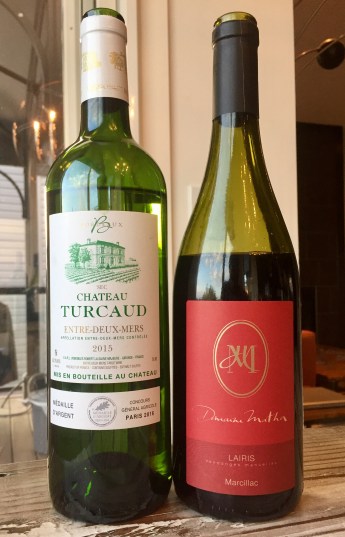


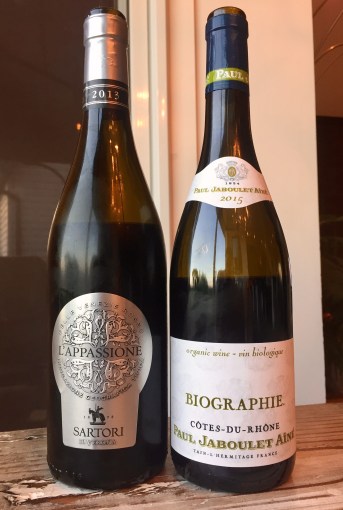 This will be the last PnP post for a while – in a couple days I’ll be escaping the country on summer vacation and will not be thinking much at all about word counts or flavour descriptors while I’m gone. Expect palm tree and sea turtle Instagram pictures and not much else until the end of the month. I therefore felt compelled to send off July on the blog with a double-feature, a head-to-head review of two Old World value level wines with near-identical just-a-shade-over-$20 price tags and almost nothing else in common. It’s Italy vs. France, a contest of different grapes, winemaking styles, vintages and approaches, with the main unifying links being longstanding traditional estates and a quest to over-deliver on quality for a supermarket price tag. Enjoy the summer!
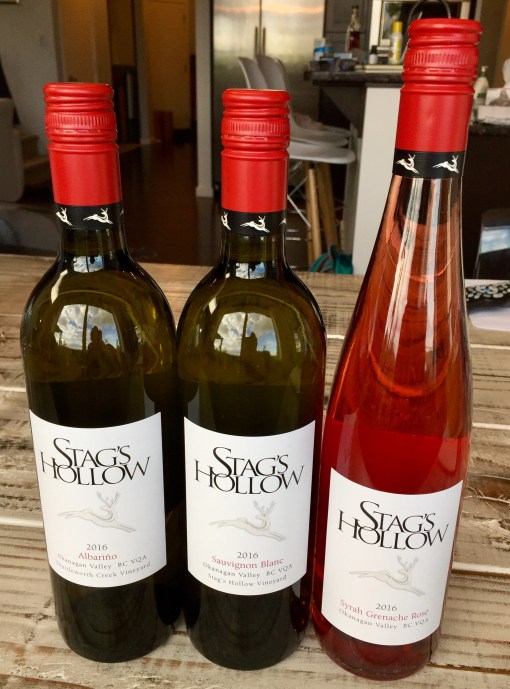


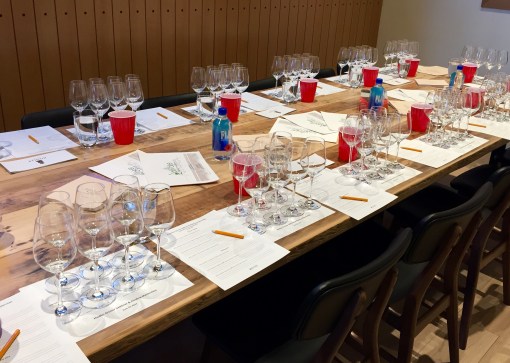

 I grew up in the days of monopolized government liquor sales and distribution in Alberta, and I distinctly remember going into the squat brick AGLC store with my parents when they were on the hunt for a new bottle of wine or spirits. While government-controlled retail alcohol is still the norm in much of Canada, Alberta thankfully broke free of its state shackles before I hit adulthood, and now, not really that much later, it is a completely different world, with an ever-increasing number of remarkable producers from across the globe available in our market and very few barriers to introducing even more. Slower to develop have been wine-buying alternatives to the standard visit to a retail shop: online ordering, home delivery, personalized sourcing. I can get almost every work of literature ever created from Amazon Prime within two business days, but our gloriously liberal wine commerce architecture has not yet fully embraced the electronic age and the consumer convenience that can come with it. That’s why I always root for those ventures who come along and try.
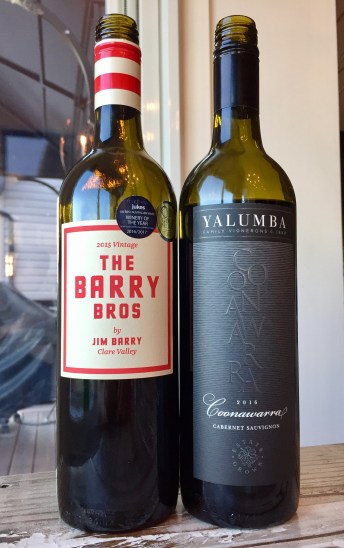 I first got seriously into wine about 10 years ago, when the Australia Phenomenon was in its heyday and Argentinian Malbec was just a glint in some clever investor’s eye in Mendoza. Yellow Tail Shiraz was my gateway drug, a fact that is assuredly true of more than one of you currently reading this as well. Looking back now on the Australian wine scene then, there are still tons of similarities. Critter wines, like it or not, are still a thing. On the quality pinnacle, the high-end wines from Down Under rocking people’s worlds in 2017 aren’t that different from those doing so in 2007. But I’ve noticed a couple clear differences in the imports from Australia that have evolved over the last decade: first, a welcome explosion of site-driven elegance from the cooler areas of the country, be it Pinot from Yarra or Mornington or bubbles from Tasmania or the laser purity of some of the post-modern wines coming out of the Adelaide Hills. Second, a new focus on bottles like the ones below, step-up bottlings, a shade above entry-level in price and a world above the critters in authenticity and quality. The $20-$30 tier of wines has never had stronger representation on our shelves from Australia than it does currently, as more and more producers zone in on these bottles as the best way to build a lasting relationship of trust with consumers as opposed to an $11 fling.




 Washington State has both the sun to grow big red grapes and the soil and climate to make them interesting. The main wine areas are all in the southeastern part of the state, separated from lush, drizzly Seattle by the Cascade Mountain range, whose rain shadow blocks most of the coastal precipitation and creates a warm, dry canvas for grapevines to thrive. The Walla Walla Valley, straddling the Washington/Oregon border, is bounded on the east side by another mountain range, the Blue Mountains, gaining both altitude and cool nightly winds off the slopes as a result. Over millennia, the historically recurring Missoula floods have laid fine sandy soil, massive rocks and other alluvial deposits over an already-impressive volcanic basalt soil base. Put all that together and you end up with an area that sees heat and sunlight during the day but features significant diurnal temperature drops at night, ideal for prolonging ripening and retaining acid in grapes; fine soils with intriguing mineral content that drain well and in which (thanks also to the cold winters) the vine scourge phylloxera cannot survive, allowing all vines to be planted on their own rootstocks; and a remarkable array of slopes, aspects, exposures and microclimates in a relatively concentrated area, letting farmers and producers match specific varietals with specific sites to maximize their potential. In short, it screams winemaking opportunity.



 pop & pour