Bricks Wine Advent Calendar 2018: Day 4

4 12 2018

By Peter Vetsch

Well, Ray got his blast from Wine Advent past yesterday, continuing his baffling streak of Austrian dominance (which I believe is now at FOUR Austrian calendar wines in a row, somehow).  Mine came today.  Last year, I was a fresh-faced Wine Advent newbie on December 4, 2017 when I pulled a Manoir du Carra Cru Beaujolais from the Bricks calendar.  Tonight, on December 4, 2018, I unwrapped my designated Advent bottle to find…a Manoir du Carra Cru Beaujolais.  I quickly checked my calendar to ensure I had the right year.
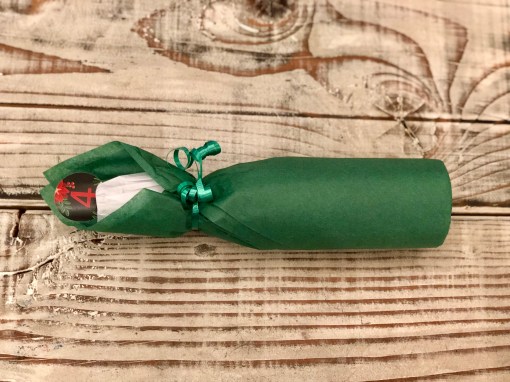
IMG_9360

To be clear, it’s a different Manoir du Carra Cru Beaujolais this time around.  This producer is on its fifth generation of family ownership and has accumulated 34 hectares of vineyard land in an astonishing FIFTY different plots scattered throughout Beaujolais. Last year’s wine was from one of the better-known of the 10 Beaujolais Cru subzones, Fleurie; tonight’s option is from the larger but lesser-known (or at least less visible on shelves here) Brouilly, the biggest and southernmost of the Crus which by itself comprises 20% of the Cru vineyard land in the region.  Brouilly is so named for a massive volcanic hill at the heart of the area, Mont Brouilly, which is itself named for Brulius, a lieutenant in the Roman legion who apparently liked naming volcanoes after himself.  This particular wine comes from the Combiaty lieu-dit (or small plot/area bearing a traditional wine) in the village of St. Etienne le Varenne, located in the south of Brouilly and known best for its dry, nutrient-poor pink granite soils.

IMG_9363

I have a strange relationship with Manoir du Carra, in that I have had their wines on at least a dozen different occasions, but NEVER yet in a full-sized bottle — I’ve had a few splits, a number of glass pours, and a strange but incredible 500 mL bottle (which is a remarkably effective size for a bottle of wine and should be produced in greater quantities).  I assume they actually make normal bottles but cannot confirm.  The Terre de Combiaty comes from Gamay vines that average 50 years of age which are hand-harvested (like everything in the Manoir du Carra portfolio), treated with minimal intervention in the cellar and fermented using semi-carbonic maceration, where the intracellular fermentation processes within the individual grape berries from the carbonic maceration process are joined with simultaneous normal alcoholic fermentation from the crushed berries at the bottom of the fermentation tank, resulting in more colour and tannin than pure carbonic maceration and a scaled-back version of the bubble-gummy carbonic flavour set.
IMG_7088

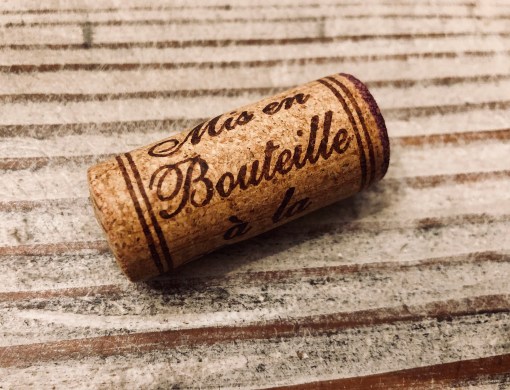
Cork Rating:  1.5/10 (Further deduction from last year’s edition for not changing the nondescript “Mis en Bouteille” nonsense after being blog-warned.)

This sort-of carbonic Brouilly is a sharp purple colour in the glass but thins quite markedly at the rim.  It is initially much darker than expected aromatically, date and slate and dirt emerging first, with black cherry and chalk peeking through underneath.  Over time, a Banana Runts (with banana leaf?) top note emerges, a nod to its carbonic half, as well as the more anticipated raspberry-rooted Gamay sense of joy.  Fresher and plummier on the palate, the wine showcases its clean, squeaky tannins almost immediately, and fairly laissez-faire acidity results in this Gamay seeming more broad and expansive than its standard varietal signature, albeit while retaining a feathery, wispy sort of texture.  The mineral streak noticeable on first smell lasts throughout, iron and rock dust and magnets, but red fruit blooms as you go along to keep anything from seeming severe.  Bricks, I’d say you are 4 for 4.

88 points


The Ultimate Wine & Chip Pairing Showdown

26 11 2018

By Peter Vetsch

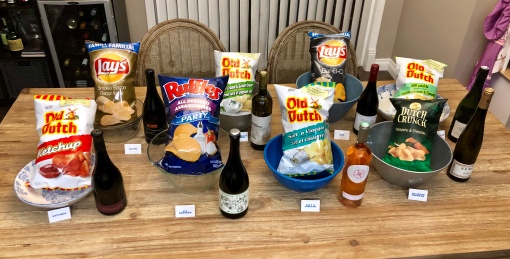
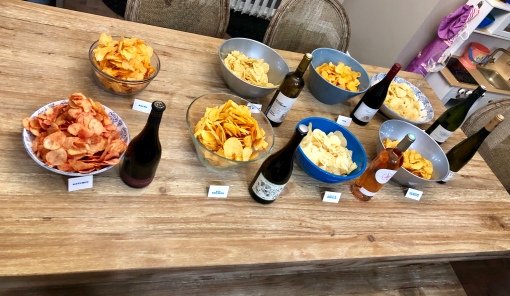
The event was almost a year in the making:  a one-versus-all challenge for pairing supremacy, putting the food-matching skills of eight local wine enthusiasts to the test against a backdrop of one of the more ubiquitous (and delicious) foodstuffs to grace a pantry.  Through extensive research and experimentation, and more than a little trial and error, we sought to answer the question: what wines pair best with the most common flavours of potato chips?  And who could best elevate a chip flavour with a pairing match that ticked all the right boxes?

IMG_6899 2

Here’s how our game was played.  After some market research, we first agreed on the top chip flavours that would participate in the competition:  BBQ, Salt & Vinegar, All Dressed, Sour Cream & Onion, Dill Pickle, Ketchup, Jalapeño Cheddar, and Bacon.  (A couple notes on these flavours:  1. “Plain” is not a flavour.  It has to HAVE a flavour to BE a flavour.  2. Americans, I don’t want to hear any complaining about All Dressed – it is a pantheon chip and no chip-based contest is complete without it.)  We were then each randomly assigned a chip flavour as our pairing muse and were tasked with finding the perfect pairing for that chip.  When we gathered together, we tasted through each flavour one at a time (again in randomly drawn order) and graded each potato chip/wine duo out of 10 on the strength of the pairing only:  the individual merit of each wine and each chip were disregarded, and the only question was how well they meshed together.  The top average score out of 10 took home the prize (which was nothing, other than eternal bragging rights and a pervasive sense of wellbeing).

IMG_3242

I should add before diving into the results that potato chip and wine pairing is WAY harder than you might think (and that the bulk of the articles that you can Google on this point almost surely did not go as far as to actually taste their recommended pairings with their chips), as once you put glass to lips with a bowl of chips you realize it does not quite unfold as expected.  With very limited exceptions, potato chips are crammed full of bold, potent, concentrated flavours meant to pack a punch, which can lead to them overwhelming many a potential pairing match that might otherwise be complimentary from a flavour perspective.  Chips also contain an array of particularly exaggerated spicy, sour, sweet and/or salty notes that can pose pairing challenges on their own, let alone in combination (or, in the case of All Dressed, which features ALL of these flavours at once, in accumulation).  A successful chip pairing wine is either one that has the firepower to match the lab-tested amplitude of Old Dutch’s natural and artificial flavours, or one that can do enough to comfortably neutralize them and provide some palate relief without getting lost itself.  Neither are easy targets to hit.

Below I will set out (in the order that the tasting took place) each brave contestant in this inaugural PnP Wine & Chip Pairing Showdown (complete with Twitter handle), their assigned bag of fried potato destiny and their vinous gladiator.  Then I will include a brief explanation of basis for the pairing and the thought process behind it in each competitor’s own words, before assessing how it all worked out in practice.  Finally, I will reveal the outcome of the pairing in question, both on my personal ballot and in the overall official group tally.  You will see that my scores tend to be lower than the group’s across the board, which is more a personal reaffirmation of the difficulty of the mission on my end, a confirmation that a perfect processed potato pairing can be elusive.  Without further ado — let’s eat some chips. Read the rest of this entry »


Wine Review: 2016 Buena Vista North Coast Cabernet Sauvignon

17 10 2018

By Peter Vetsch

[This bottle was provided as a sample for review purposes.]

IMG_8980

A rare sighting.

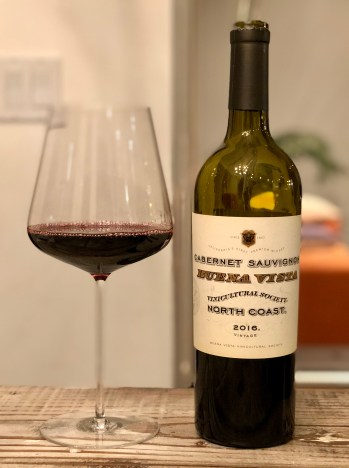
The $25 California Cabernet Sauvignon is an endangered species nowadays; once a stalwart gateway drug for luring novice wine drinkers into a lifetime of vinous enlightenment, it has now been superseded in that endeavour by numerous other New World crowd-pleasers that are managing to offer similarly accessible and overt pleasure at wallet-friendlier prices.  The combination of rising land costs, fire- and drought-inspired production difficulties and the utter shredding of the Canadian dollar as compared to the US greenback on world currency markets has more or less eliminated California as a source of solid value wine in our market.  Buena Vista Winery is trying to change that, but with this series of factors arrayed against it, it’s fighting an uphill battle.

I have previously written about the remarkable, riotous, barely credible but actually true history of Buena Vista, the proud owner of the label “first commercial winery in California”.  It is well worth refreshing your memory about, but the Coles Notes version must at least mention:  (1) Agoston Haraszthy, who may have been the first Hungarian to emigrate to the United States, who founded the winery and who essentially crammed six lifetimes of zaniness and adventure into one shortened 19th century thrill ride; (2) 1857, the year Haraszthy founded Buena Vista, part of a major ambition to establish high-quality vitis vinifera grapes in hospitable California soils; (3) Nicaragua, where Haraszthy fled barely a decade after Buena Vista was first established, with angry and misled company investors potentially at his heels; and (4) alligators, which apparently ate him there.  Never a dull moment at Buena Vista in the 1850s and 60s. Read the rest of this entry »


Wine Review: White Australia

19 07 2018

By Peter Vetsch

[These bottles were provided as samples for review purposes.]

Sometimes your moneymaker becomes your millstone.  Australia, which had been making wine for a couple centuries without raising much of a global fuss about it, burst onto international liquor store shelf traffic jam within the past two or three decades thanks to a flamboyant, fruity, brash, ripe style of Shiraz, buttressed by a New World-friendly Cabernet Sauvignon that was easy on the pocketbook.  A mammoth export industry emerged, but typecasting of Australian wine as a whole inevitably followed, leaving those longstanding producers with histories older than the Dominion of Canada stuck in their own misleading shadow.

IMG_8444

Now the Shiraz spotlight has pulled back a bit, giving everyone a bit of room to breathe and again find comfort in the space of their own natural identities; for longstanding affiliates Pewsey Vale and Yalumba, this has meant a continued push to enhance the white side of Australia’s wine spectrum, and perhaps the sowing of a few carefully nurtured seeds which might ultimately settle the debate of what should be known as Australia’s signature white grape.  Two deserving contestants, from two benchmark wineries, lie below. Read the rest of this entry »


Wine Review: Officially Summer Trio

9 07 2018

By Peter Vetsch

[These bottles were provided as samples for review purposes.]

IMG_8409Sometimes you have to force seasonal drinking posts, and other times the season and the drinks just fall right into your lap.  Stampede is here in Calgary, the thermometer has just recently clocked over 30C, and we’re well-ensconced into July, which turns my sample pile ponderings to thoughts of whatever I can chill for refreshment most effectively.  After landing on an ideal trio of bottles that achieved that lofty goal, I noticed something odd that bound them together:  they have all at one time or another previously graced the pages of Pop & Pour.  Even though the blog is now 7½ years old and counting, that basically never happens.  Sometimes summer is just meant to be.  Game on.

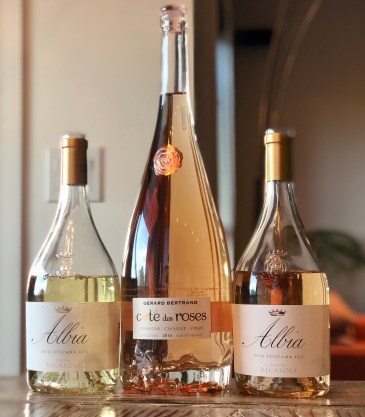
2016 Ricasoli Albia Bianco Toscano (~$20)

I believe this is the second ever time that an identical bottle will get two separate reviews on PnP:  when Ray had the pleasure of meeting Tuscan winemaker Francesco Ricasoli at a tasting luncheon back in February, this 2016 Albia Bianco was the first bottle they cracked.  If you want a detailed backstory on Francesco, the Ricasoli estate and the family’s critical contributions to Chianti Classico as we now know it, click the link above for the whole enthralling narrative.  While I don’t have a five-course meal to pair with tonight’s wines, I do have both this Albia Bianco and its sibling the Albia Rose on the menu, both scions of Barone Ricasoli’s “fresh and fragrant” early-drinking Albia label.  Both come in gorgeous, hefty, gourd-like bottles that you first admire for making this $20 wine look like it costs double that amount, but then curse effusively once you realize the heavy-punted broad base is about a millimetre away from not fitting at all in any standard wine racking.  Suffice to say the labels suffered some mild to medium collateral damage as I reamed the bottles into place with every ounce of strength I had. Read the rest of this entry »


Spirits of Calgary: Buffalo Trace Tasting @ One18 Empire

1 06 2018

By Tyler Derksen

IMG_5037

Drew Mayville of Buffalo Trace.

It’s not every Wednesday that I get to leave work in the middle of the day to try nine whiskeys (if you’re being pedantic, actually eight whiskeys and one whisky, as the spelling of the spirit varies with its location of production), but this past Wednesday was one of those days.  I had the absolute pleasure to attend a tasting of Sazerac offerings chaired by Buffalo Trace’s Master Blender, Drew Mayville.  Buffalo Trace is part of the larger Sazerac company, whose myriad of other brands we also got to enjoy.  While the whiskey was the star of the show, it was Drew’s presentation and engagement with the subject matter and with all of us that really made the tasting special.  Drew is a Canadian who began his career in spirits at the Seagram’s plant in Waterloo, Ont. in 1980, eventually becoming the company’s fourth ever Master Blender.  After Seagram ceased to be, Drew then took his talents to Buffalo Trace, which at the time he joined was a relative unknown in the whiskey world, a fact that is hard to believe now that it has earned over 500 awards nationally and internationally over the last decade.

Drew’s passion for whiskey was readily apparent.  As Buffalo Trace’s current Master Blender, it is his job to take the aged spirits created by the Master Distiller and weave them into both established product lines and new and exciting projects.  Drew’s favourite whiskey is “the one he hasn’t made yet”.  In answer to the follow-up question “how do you make a better whiskey?”, Drew immediately said, “I don’t know”, reflecting his continuous stretch for further improvement.  Perhaps my biggest takeaway was Drew’s love of experimentation, embraced by both Buffalo Trace and Sazerac, which has created at least 50 different bottling “experiments” since 2006.  He freely acknowledges that not all of the experiments are successful and lead to new product lines, but this adventurous spirit is part of the fabric of Sazerac.  This is all the more impressive when one considers the extended aging process in the creation of whiskey.  Sazerac has even built a warehouse, Warehouse X, solely for the purpose of manipulating the many variables that go into the creation of whiskey (including light, temperature, air flow, wood grain, and others) to better understand the impact of those variables on the finished product and to use that knowledge to create that elusive “better whiskey”.

IMG_5039

Drew’s other point of emphasis was the recipe for the whiskey, which he came back to with each successive whiskey we tried.  Buffalo Trace’s bourbons are made of a combination of 6 main ingredients (Drew would never tell us exactly how much of each).  First, any bourbon must legally be made from at least 51% corn, which gives the spirit its sweet and fruity characteristics.  Next is rye, which adds spice, pepper and herbaceous notes.  Third is barley malt, which doesn’t add flavour so much as enzymes vital to the fermentation process.  As an alternative to rye, wheat can also be used, but this is far less common and wheat bourbons make up less than 5% of the overall spirit created.  Add limestone-filtered water and yeast and you’re almost finished.  The one ingredient that is not often talked about with bourbon, but that has a profound impact on its character, is time.  As was made clear when we started sampling, Buffalo Trace ages its whiskey longer than many of its competitors.  Speaking of sampling, now would be a good time to shine a spotlight on the fantastic whiskeys we tried. Read the rest of this entry »


PnP Panel Tasting: The Hatch – Library Release

28 05 2018

[These bottles were provided as samples for review purposes.]

IMG_8224

(Re)Entering The Hatch.  In stereo.

It had been far too long since we last held a panel tasting, and we were missing it – there’s something about tasting outside of the echo chamber of your own brain that is gloriously refreshing and invigorating.  Plus multiple wines and multiple friends is generally a guaranteed recipe for a proper time.  One of us (Ray) wondered about reaching out to his friends at the Okanagan’s weirdest and most interesting winery, The Hatch, for inspiration.  We naturally assumed that we would get some intriguing and tasty wines from this divergent, artistic, even edgy winery (the latter word is drastically overused but still rather works in this case).  The common approach would have been to send a set of current releases, bottles that the reading public could come scoop if they were so inclined.  Well, The Hatch is not common.  PnP’s second ever Panel Tasting turned into a library release celebration, focused on a trio of bottles with a few years on them, from the mysterious and mildly depraved depths of the winery’s cellars.  It not only allowed us to get a sneak peek at what the future might hold for some more recent bottles that we were holding, but it also gave us a chance to answer a question that nags at a number of people in our home and native land just getting into wine:  can Canadian wine age?  Does it improve?

IMG_8240

The answers, in order, are “yes” and “it depends”; in the upper echelons of our national wine industry are scores of producers who are creating layered, complex, long-term wines that easily stand the test of time.  The eye-opening part of this tasting wasn’t so much that ageworthy BC wine was possible, but that it was starting to be accessible even at lower price points, another sign of the province’s rapid progression into a globally competitive wine power.  After this, there will be far more local bottles that spend more cellar time before seeing the light of day.  It made sense for us to each choose a bottle to write up, but rest assured there was much group analysis of everything we were tasting, making the below report a true joint effort. Read the rest of this entry »


Wine Review: Famille Sichel Bordeaux Tiers

15 04 2018

By Peter Vetsch

[These bottles were provided as samples for review purposes.]

IMG_7943

What a Bordeaux progression looks like.

Bordeaux is one of those regions that any aspiring wine geek finds out about roughly 15 seconds after beginning their vinous adventure.  It leads off many textbooks, is (rightly) touted as the spiritual homeland of red grape overlord Cabernet Sauvignon and its consigliere Merlot and is held up as a must-try area both so that new oenophiles can get a sense of the classics and because top-flight Bordeaux can be so memorable that its first-chapter place in all future textbooks is likely assured.  Of course, all of that comes at a price, one that seems to be increasing by the year, as wines from the top chateaux become more luxury commodity and less agricultural product and as international demand in new markets shoots through the roof.  So what are the non-obscenely wealthy wine-curious to do?  Here’s one way to start:  find a reputable producer and taste your way up their lineup, through the quality tiers and nesting-doll classifications layered throughout the Bordeaux appellation.  Even if you don’t make it all the way up to the grand vin flagship of the chateau, you will end up with a really good sense of what makes this rarefied region tick and also start to understand why those tiers exist in the first place.

IMG_7947

I was fortunate enough to test this tasting theory with the wines of Famille Sichel, a producer with whom I didn’t initially think I was familiar until discovering that they are the owners of one of Bordeaux’s hidden gem producers, Margaux’s Chateau d’Angludet.  While the winery is centuries old and the Sichel family’s history in Bordeaux is almost equally entrenched (they have been established in the region as a negociant since 1883 and are on their sixth generation of family ownership), their two paths didn’t cross until the 1960s, when d’Angludet was in a state of extreme disrepair and was bought and revived by Peter Sichel thanks to an extensive replanting and restoration program.  Current proprietor Benjamin Sichel continues both the negociant business (under the Maison Sichel banner) and the Chateau’s estate bottlings with a heavier focus in the vineyard and a defter touch in the cellar.  I have previously enjoyed Chateau d’Angludet on numerous occasions and now got to experience the trail of bottles that leads up to it. Read the rest of this entry »


Wine Review: Stag’s Hollow Renaissance Reds

5 04 2018

By Peter Vetsch

[These bottles were provided as samples for review purposes.]

IMG_7892

The big guns.

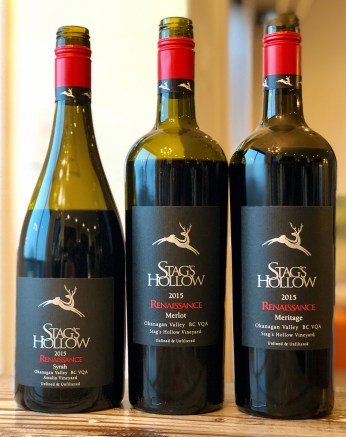
As I have mentioned in reviews past, my first thought of Okanagan Falls’ Stag’s Hollow Winery is always as a forward-thinking, try-everything trailblazer, the continual vanguard of varietal suitability and experimentation in British Columbia, constantly checking in on whether the next potential star grape of the province (be it Albarino, Grenache, Dolcetto, or any number of others in its viticultural Rolodex) might be one that few had previously considered.  So it’s a fun change of pace tonight to sit down and see how they handle the classics, those big red varietal stars so often seen across the Old World and New World alike, the first grapes you expect to see on any wine store shelf.  This review set is a particular treat, because all three of the bottles below hail from Stag’s Hollow Renaissance line, the winery’s premium flagship tier of offerings, produced only in vintages when the wines can live up to the bottle’s special black label.  I have heard rumblings that the 2015 Renaissance set breaks new ground in terms of quality and longevity; I had not previously had the opportunity to test this theory for myself, but it would not surprise me out of a winery that always seems to be improving. Read the rest of this entry »


Cellar Direct: Underdog Whites

27 03 2018

By Peter Vetsch

[These bottles were provided as samples for review purposes.]

IMG_7833Close-following Pop & Pour adherents (if such things exist) will have been waiting for this moment for a couple of months.  In my last write-up about the tremendous Euro-tacular wine offerings of Cellar Direct, I teased that the two Italian reds going head-to-head in that review were not the only bottles (or colours) from that country that Cellar Direct had sent my way, but I opted to hold back the indigenous Italian white wine from that set so that it could shine in an all-white duet in a later post.  Well, here we are, and tonight’s 100% Arneis lead-off hitter is joined in the batting order by a rather mysterious and off-grid white Burgundy (to the extent that anything Burgundy can be considered off-grid), each bottle a tantalizing find that proves both that even famous regions have hidden values and that you often need some expert assistance to find that value needle in the prestige haystack.  If Cellar Direct is anything, they are that Old World value sherpa, leading you to consistent quality at credible price points over and over again.  Their streak of never sending me a bad bottle lives on. Read the rest of this entry »


Calgary Wine Life: Veuve Clicquot Release Tasting @ Yellow Door Bistro

23 03 2018

By Peter Vetsch and Raymond Lamontagne

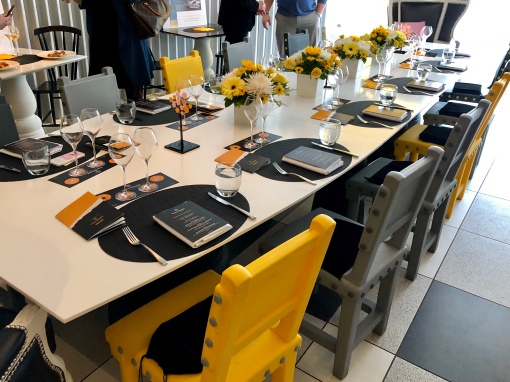
Sometimes the best times to celebrate are the times when there is nothing obvious to celebrate.  It’s a dreary weekday in late March in still-snowy Calgary, but Champagne lifts all spirits and makes all occasions special, and this was no exception.  The eponymous yellow door of the Yellow Door Bistro at Hotel Arts perfectly foreshadowed the array of yellow labels awaiting us inside, including the brand new release from Champagne’s powerhouse (and power-house) Veuve Clicquot.  Winemaker Bertrand Varoquier expertly guided us through a series of Veuve releases, not least of which was the winery’s latest concoction, the Extra Brut Extra Old NV, soon to be available on retail shelves across Calgary.

IMG_7792

Veuve Clicquot is one of the oldest houses in Champagne, founded in 1772 by banker Philippe Clicquot-Muiron, who was then proceeded at the winery by his son Francois.  When Francois suddenly died young in 1805, his widow Barbe-Nicole Clicquot-Ponsardin stepped forward to take over the reins and run the business, a daring decision for a 27 year-old woman in early 19th century France.  The young widow (or veuve, in French) persevered, and her strong vision and fierce entrepreneurial spirit took the winery to new heights, leading to some significant innovations in tradition-laden Champagne.  Madame Clicquot was the first to create a rosé Champagne made from 100% wine (previous renditions of pink Champagne were created by mixing white wine with elderberry juice).  She is also credited with creating the riddling process that allows the dead yeast cells from Champagne’s in-bottle secondary fermentation to slip down into the neck of the bottle so that they can be frozen and disgorged, to keep the finished wine from being cloudy; before this, Champagne was served hazy and decanted to let the leesy sludge settle before pouring.  Clicquot-Ponsardin contributed so much to the region over her lifetime that she was nicknamed “La Grande Dame” of Champagne, a name that since 1872 has also been used for the house’s prestige cuvée.  Her impact on the winery was so significant that the entire brand was renamed in her honour.

IMG_7794

Bertrand Varoquier is a native son of Champagne, born in the heart of the region in the town of Reims; as he puts it, “my blood is bubbly”.  For the past six years of his extensive 18-year wine career, he has been at Veuve Clicquot, where he is currently responsible for all red wine vinification.  Due to the house’s production size, and in order to ensure that its winemaking happens as close as possible to the vineyards where the grapes are harvested, the red grapes that go into Veuve’s cuvées (primarily Pinot Noir, which is at the core of Veuve Clicquot’s identity) are processed and vinified in their own standalone facility in Buzy.  Each discrete parcel of each red vineyard is vinified separately, and after alcoholic fermentation is complete and scores of still wines are created (some with very limited colour due to restricted skin contact, some fully red for use in rosé Champagne creation, all produced solely for future blending), the lots are sent to Veuve HQ in Reims for malolactic fermentation and blending.

IMG_7809

Bertrand Varoquier, winemaker at Veuve Clicquot

Unlike almost any other top wine region in the world, which tends to glorify single-vineyard and single-vintage expressions of time and place, Champagne’s focus is on achieving and maintaining each house’s unique signature style with precision and consistency, year in and year out.  The mammoth challenge of this task is almost unquantifiable, but this will give you a sense of it.  In addition to his winemaking duties, Bertrand is on the Veuve Clicquot tasting committee along with Cellar Master Dominique Demarville and others.  Every year, from the start of November until the start of March, the committee tastes 24 different sample lots of still wines PER DAY out of the roughly 1,200 (!!!) already-vinified non-bubbly base wines aging in full stainless steel tanks in Veuve’s cellars in order to determine which wines will be used to populate each of the house’s different Champagne releases.  These base wines are from the present year’s harvest plus nearly twenty prior vintages, and all are ultimately rolled into a multi-vintage, multi-source patchwork tapestry that the Cellar Master weaves into the emblem of Veuve Clicquot, so that the buying public gets the taste experience they expect out of every single Veuve Champagne, regardless of the year in which they buy it. Read the rest of this entry »


Wine Review: Red Blends of the Eternal Ice Age

20 03 2018

By Peter Vetsch

[These bottles were provided as samples for review purposes.]

Happy first day of spring.  Spare me.  Yeah, I’ve seen all of the (obviously non-local) articles and Instagram pics and Twitter updates about new rosé and bubble releases and patio beers and T-shirt weather.  Meanwhile I have snowbanks bordering each side of my driveway that are taller than each of my children and still see the minus sign side the thermometer heading to work every morning.  It’s supposed to snow again on Thursday morning and there is no god and we are in some kind of forsaken meteorological time loop that will have no end.  So forget you, frizzy pink refreshing splashes and dainty Prosecco; I’m gearing up for blustery Armageddon, armed with a pair of full reds that scoff at the entire concept of spring.  I need to find joy somewhere, after all.

IMG_7747

Forget you, “spring”.

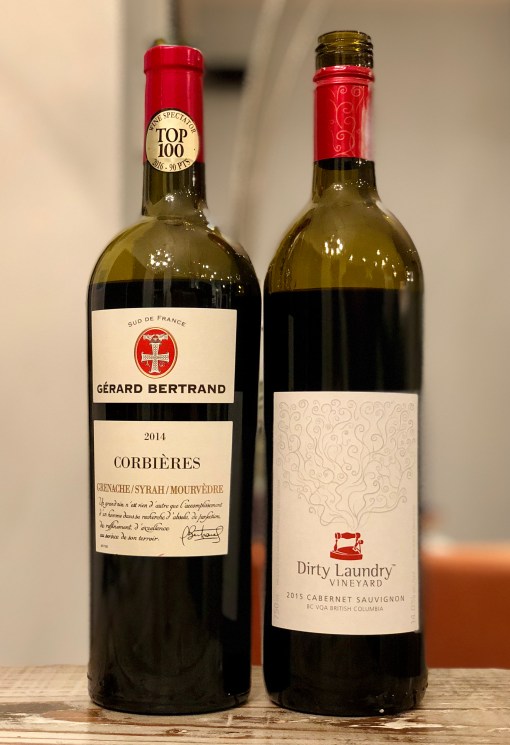
2014 Gerard Bertrand Corbieres (~$20)

I know from past experience that Gerard Bertrand is a value wine savant, and that his legend in the south of France is ever-growing.  I also knew that this particular bottle of Corbieres, part of his “Terroirs” regional collection of bottlings, hit the wine awards mother lode in 2016 by landing the #55 spot in the much-anticipated Wine Spectator Top 100 list — not bad for a $20 bottle from a little-known region.  What I didn’t know about Bertrand was that he was a prodigious professional rugby player before he followed in his family’s footsteps and turned to winemaking, even juggling a pro career with vigneron duties in the aftermath of his father’s death as he took over the reins of his ancestors’ business.  He has now hung up the cleats for good but brings some of his sport’s scrappiness to all of the wines that bear his name.   Read the rest of this entry »


Calgary Wine Life: A Special Evening with Cinzia Merli of Le Macchiole @ Centini

15 03 2018

By Raymond Lamontagne

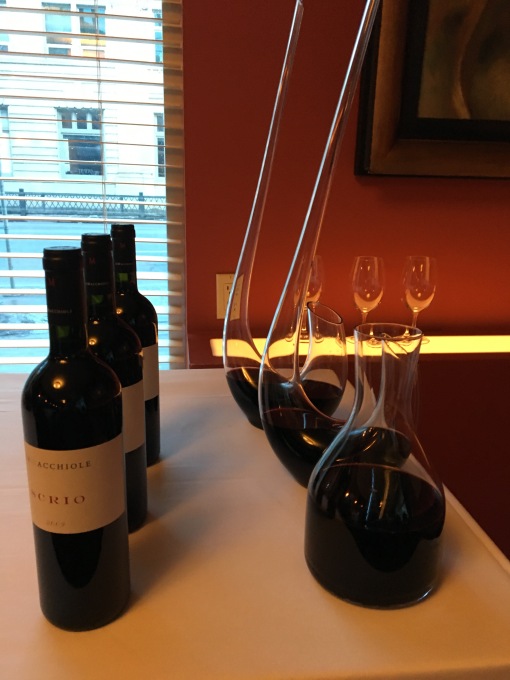
It was while reading my very first book on wine, the 6th edition of Ed McCarthy and Mary Ewing-Mulligan’s “Wine for Dummies”, that I first encountered the term “Super Tuscan”.  I instantly became enamored with the concept.  Some Tuscan producers became wary of traditional wine-making laws that they perceived as stifling innovation. Part of the motivation here was that these producers wanted to experiment with “international varieties”, particularly those famous for yielding Bordeaux blends in France.  Such grapes could be grown.  The kicker was that wines made from them could initially be labelled only as “vino da tavola” (or table wine), as they clearly violated Italian DOC production guidelines which emphasized native varietals.  However, it became apparent that parts of Tuscany were in fact better suited to growing international varieties than native son Sangiovese.  It was absurd to equate quality wines from such areas with the multitude of serviceable but undistinguished table wines found across the country, and thus the marketing concept of the Super Tuscan was born – described on the Italian Wine Central website as “a maverick wine of great breeding but living outside the Establishment”.

IMG_1109

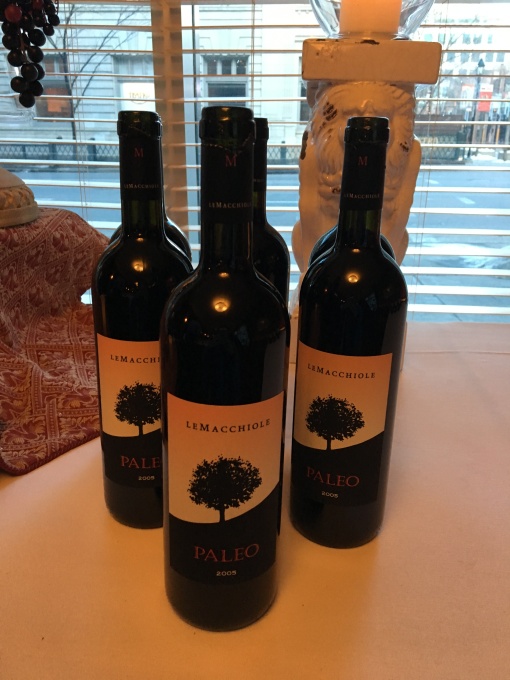
Cinzia Merli does not resemble any stereotype of a maverick.  My initial impression was one of a quiet, conservative, perhaps strict woman, full of resolve and perhaps possessing a keen wit underneath her stolid outward presentation.  She first apologized for her English, which by my reckoning is quite good.  She then provided a fantastic overview of the Bolgheri region and her own wine estate, Le Macchiole, during which her passion and unrelenting dedication to her craft became apparent.  I was already in awe coming into this event:  these wines are legendary.  Cinzia’s presentation only served to stoke the flames.  This evening shall live on in my memory as one of the most fun tastings that I have ever experienced with total strangers (strangers no more!).  I should add that Centini provided exceptional dinner service and perfect ambience.  Read on for my takes on five burly reds (including two vintages of the iconic Paleo), plus a sprinkling of relevant history.

IMG_1110 Read the rest of this entry »


Wine Review: Winter Warmers, Part 1

23 02 2018

By Dan Steeves

[These bottles were provided as samples for review purposes.]

The end of February is slowly approaching and we are less than a month away from the first day of spring. That means warmer weather is in our sights and we soon won’t have to deal with any more snow, right? That might be wishful thinking, but we can certainly hope it is the case! Until that warmer weather shows up and takes permanent residency in the prairies, we will need to keep staying warm and spending our evenings huddled around the fireplace with a nice glass of full-bodied red wine. Although I personally drink all types of wines all throughout the year (nobody should deprive themselves of rosé for months on end), there is no doubt that I enjoy more red wines over the cooler winter months, not only for the warming effects of a 15% ABV Cabernet Sauvignon, but also because we tend to eat more hearty full-flavoured comfort foods during this time and less light and refreshing fare.

To get you through the next month until you start seeing green on the ground, we have reviewed a few robust red wines that will be great at keeping you warm and satisfied until the spring flowers start blooming. We kick off this two-part series with reviews of great value reds from two regions known for their big red wines:  Bordeaux, France and the Colchagua Valley, Chile.

Read the rest of this entry »


Co-op Wines: The Social Collection, Bin 105

17 02 2018

By Raymond Lamontagne

[This bottle was provided as a sample for review purposes.]

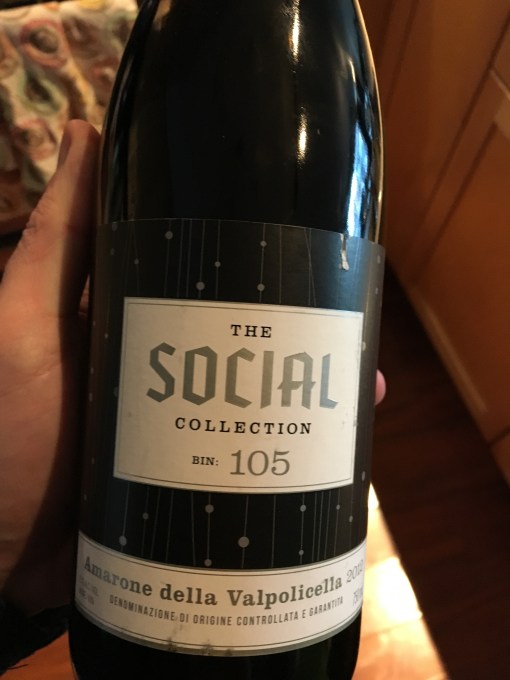
Here is the final installment of our Co-op Social Collection feature, and we are ending with a potentially big wine, one that I would not expect to see in a curated series such as this: the 2015 Bin 105 Amarone della Valpolicella. There is something seemingly incongruous about an Amarone inclusion in a line of negociant wines intended for affordable easy drinking, although with the Social Collection there appears to be a well-intentioned and laudable desire to preserve some degree of regional character and varietal typicity. I’m intrigued. I support the notion of an Amarone “for the people”, or at least an introduction to the style at a lower price point (lower, not low!) for those who are unfamiliar with what can be a daunting, polarizing, but ultimately rather compelling wine. It is worth noting that this bottle won an Alberta Beverage Award for Judges’ Selection in Veneto Blends, as adjudicated by the stellar Culinaire Magazine.

IMG_0844
The Valpolicella region is close to Verona and produces a sequence of red wines that ascend in degree of concentration and power. At the top of the density hierarchy, Amarone is a blend of red grapes, of which Corvina Veronese is typically the most dominant, with DOGC regulations mandating that this thick-skinned grape constitute 45% to 95% of the blend. Partner Corvinone, a grape with larger berries and clusters than Corvina, was long thought to be a clone of the latter but instead turns out to be an entirely distinct variety. This vine can occasionally serve as the foundation of an Amarone, but is more commonly used to provide additional tannic structure to Corvina’s base of cherry-like red fruit. Corvinone can substitute up to 50% of a similar percentage of Corvina. Rondinella, which generally can comprise 5% to 30% of the blend, provides a key seasoning in the form of herbal notes that add a savoury character. Only Corvina and its progeny Rondinella are mandatory in Amarone, but the law permits other native “non-aromatic” red grapes to be included as up to 25% of the blend, with none of these individually exceeding 10%. Some of these grapes are fascinating but fall beyond the scope of the present review. Read the rest of this entry »