Wine Review: Road 13’s Rare Whites

12 07 2019

By Peter Vetsch

[These bottles were provided as samples for review purposes.]

This may be the last post from me for a while, as I imminently prepare to head off of the continent for a little bit on a proper Viking vacation.  (If anybody knows a great wine shop in Copenhagen or Billund, let me know immediately.)  But fear not, Ray will still be here to keep the blog alive for the rest of July, and I have one last gasp of Canadiana in me before I bolt the country.  Tonight’s trio of whites from the Golden Mile Bench’s Road 13 Vineyards makes me realize that I should have been following this winery more closely before now, but I will try to make up for lost time.

IMG_0344

Clean and classic labels, eye-opening wines – but not sure about 2018’s italics.

Road 13 has had an interesting last 12 months, as it was named the Winery of the Year at Wine Align’s National Wine Awards of Canada in 2018 and was then promptly sold before the year was out.  Long-time proprietors Pam and Mick Luckhurst, who acquired the winery (then-called Golden Mile Cellars) and were responsible for first renaming it and then building it into a well-respected national brand, decided to move into retirement (the winery itself having been their first, not-that-relaxing-as-it-turns-out attempt to retire) and accepted an offer from Mission Hill’s / Mark Anthony Brands’ Anthony von Mandl to purchase the company.  The winemaking team remains intact, however, as does the winery’s vision and present focus on the potential of Rhone varieties in British Columbia, an endeavour that I back fully, having had enough marvellous Okanagan Syrah recently to make me wonder what else from the south of France would flourish here.  As it turns out, the white Rhone side of the equation is just as compelling as the red.  But we start with a scion of a Road 13 classic. Read the rest of this entry »


Wine Review: July Patio Samplers

6 07 2019

By Peter Vetsch

[These bottles were provided as samples for review purposes.]

As I sit here writing this on a rainy summer evening (pre-publication, but I bet it’s raining when this goes live too), Calgary has just struggled through a sodden June, and the tide doesn’t seem to be turning.  It is grey, dreary and continually drizzling.  We’ve had hailstorms, windstorms, thunderstorms — all separately and all in the last three weeks.  My kids have declared their nascent skepticism for outdoor sports — who would willingly place themselves outside for an hour at a time in an environment such as this?  Our northern world is free of snow for at most six months a year, and a third of that winterless period for 2019 has been underwater. You get the picture.  It’s bleak.

IMG_0298

So rather than wait for the appropriate meteorological scene to christen this long-planned summery-wine review set, I have decided to pre-emptively invoke summer by publishing it anyway, in the hopes that this trio of deck-and-BBQ-friendly refreshment will nudge our weather towards more appropriate activities.  I will try anything at this point.  Tonight’s bottles will set a blog record that may never be broken, bear a striking resemblance to each other until they don’t, and confirm that even trendy wines can be old-school sometimes.  They may also be the first time since the Tournament of Pink that we start off with back-to-back rosés, but hopefully we can make that a bit more of a recurring pattern.  Game on. Read the rest of this entry »


Wine Review: Moraine Winery Spring/Summer Set

28 06 2019

[These wines were provided as samples for review purposes.]

Wine is indelible.  It can leave impressions and fasten itself onto moments or events with surprising, graceful ease.  Show me a bottle or producer that I’ve had before and I will often be immediately taken to the scene where I had it last, even if it was otherwise unmemorable.  In the case of Naramata’s Moraine Winery, the scene already had memories to spare, and every bottle since has carried them back to me.

IMG_0254

My first encounter with the wines of then-up-and-coming Moraine was almost exactly six years ago today.  I remember because Calgary was underwater, as the great flood of 2013 wreaked havoc on the heart of my hometown.  I also remember because I had become a dad for the second time ten days prior, on Father’s Day; the power and energy of the tempests that made the waters rise seem to have imbued themselves in my son Max ever since.  The white, black and red labels of Moraine marked my first return to the blog after Max’s birth.  He just finished kindergarten two days ago.  The wheels of time continue to spin, but our wines mark our occasions.

IMG_0260

Moraine was founded by current owners Oleg and Svetlana Aristarkhov, ex-Albertans who headed west to follow their passion into the world of wine.  Their two estate vineyards, the older and larger Anastasia and the younger Pinot Noir-devoted Sophia, are named after their two daughters; the winery name reflects the glacially deposited rocks that form a key part of the terroir at their Naramata site.  When I first came across Moraine it was in its early stages of life, just finding its way as a new winery.  In this current encounter it is in a different phase of life, and in the midst of a significant transformation:  a new winemaking facility and cellar is being built, a new larger tasting room and hospitality centre has just opened, and as of last year the wines are being crafted by a new winemaker, albeit one who is a familiar face on the BC wine scene.  Dwight Sick, who spent the last decade as the winemaker at Stag’s Hollow, came to Moraine just before the 2018 harvest, the final critical piece to this next stage of the winery’s growth and development.  Yet Moraine’s focus still remains anchored in Anastasia and Sophia, and the ever-maturing vines they hold.  I got the opportunity to taste some of Sick’s first Moraine releases, as well as an early single-vineyard Pinot Noir from Sophia, to get a sense of how far Moraine Winery has come. Read the rest of this entry »


Wine Review: Culmina Spring Releases, Part 1

30 05 2019

[These wines were provided as samples for review purposes.]

IMG_0135You have to admire a guy like Don Triggs.  After co-founding the eponymous Jackson-Triggs, taking the brand to meteoric heights and carrying the cause of Canadian wine along with it, Don parted from the brand in 2006 when it was subsumed into the massive Constellation empire, his finances and legacy secure, a career in wine that started shortly after his graduation in the late 1960s drawing to a close, retirement beckoning.  But instead of choosing that comfortable path, he threw himself back into the breach once more, this time thinking smaller in scale and fixated on quality.  This next quest started, literally, from the ground up.  With the aid of legendary vineyard consultant Alain Sutre, Triggs spent a year scouring the Okanagan Valley for just the right site, one that could reliably and properly ripen red Bordeaux varietals, including Canada’s white whale, Cabernet Sauvignon.  Finding a promising spot with southeast-facing exposure on what is now the Golden Mile Bench, the Okanagan’s first legally recognized sub-Geographical Indication (GI), they carried out a slew of temperature and soils tests and discovered that the microclimate of the site (at least in terms of degree-days, a measurement that tracks relative aggregate temperature over the course of a growing season) was very similar to that of Bordeaux.  Arise Bench, the inaugural estate vineyard of Culmina Family Estate Winery, was acquired, and Don Triggs’ newest project came to life.

Having located a potentially ideal site for big, chewy reds, Triggs and Sutre only had to look up to find complementary cooler spots for elegant whites.  Two separate and increasingly higher-altitude benches a short hike up the adjacent hillside completed the Culmina vineyard collection:  Margaret’s Bench, at almost 600 metres of elevation a truly unique Okanagan location, welcomes Riesling, Chardonnay and Canada’s top plantings of Gruner Veltliner, while mid-level Stan’s Bench splits time between these whites and Malbec and Petit Verdot to round out Culmina’s Bordeaux blends.  This three-tiered vineyard elevation stairway is the foundation of everything Culmina does, every square inch mapped and studied to maximize the location of each vine planted.

IMG_0144
As Culmina established its identity in the Okanagan, its lineup of releases began expanding: its base Winery Series line, culminating (no pun intended) with Hypothesis, the Bordeaux blend that was the mission statement for the venture, has now been joined by two other sets of releases.  The light-hearted R&D line (which stands for either “research and development” or Don and his twin brother Ron, who are featured in childhood form on the labels) allows Culmina to let its hair down a bit and focus on budget-friendlier wines that are a joy to drink; the limited-release Number Series is a set of small-lot one-offs that push the boundaries of possibility on Culmina’s trio of sites.  I had the opportunity to taste some of the winery’s latest releases, which have just started to hit shelves now, and track the continued upward trajectory of one of Canada’s most exciting wine projects. Read the rest of this entry »


The Patient Vintner: Bodega y Cavas de Weinert

24 05 2019

By Peter Vetsch

[These bottles were provided as samples for review purposes.]

If I was to tell you that I was drinking the current release of a mid-tier offering from a well-regarded producer and from a name region, made from 70-110 year-old vines, and that the vintage date on the bottle was 2006, what would you guess the region was?  Rioja – maybe a Reserva offering from a traditional-minded producer?  Champagne, if you are extremely liberal with your definition of “mid-tier”?  Somewhere in Italy?  Portugal?  You would probably be most of the way through the global wine region Rolodex before you landed on Mendoza, Argentina, and once you did, you would probably immediately discard the possibility, knowing this to be the heart of bold, fruity, approachable Malbecs that are released and enjoyed in their youth.  Bodega y Cavas de Weinert, and its current-inventory $25 old-vine 2006 Malbec, will cause you to re-evaluate all of your presumptions; they are an anachronism in all the best ways.

IMG_0079

This classical estate actually has a rather recent history:  the winery dates back to 1890, but its current identity was tied to its acquisition by Brazilian Bernardo Weinert in 1975. Swiss winemaker Hubert Webber has been at the helm since 1996, when he was ensconced at the ripe old age of 27; his mission has been to craft wines from Malbec, Cabernet Sauvignon and Merlot wines that avoid early showmanship and start to reveal themselves after a decade or more, as it is only then that the Bodega will release them to market.  Lengthy barrel aging (up to 5-6 years in large oak foudres in Weinert’s cool granite cellars), then further time in bottle pre-release, is the estate’s hallmark — Weinert follows the old-school Spanish model of only allowing his wines into the public sphere when they are deemed ready to drink, whether or not this follows the standard chronological vintage release playbook.  In other words, don’t necessarily assume that the 2007 will follow the 2006 as the next wine on the shelf.

IMG_0085

The relatively modest prices of the finished wines might be reflective of advantageous land and labour costs in Argentina, but they are not the result of any lack of care in the vineyard:  Weinert’s vineyards, located in Mendoza’s top subregion of Lujan de Cuyo, feature largely ungrafted own-rooted vines that are a minimum of 25 years old and are exclusively hand-harvested.  Fermentation takes place in cement tanks, and Weinert’s cellar boasts both the largest barrel in Argentina (44,000 L) and the oldest barrel in the world, each of which are a reminder that the goal of the Weinert wines’ extended time in barrel is not wood flavour transference (which increases the newer and smaller the barrel is), but gentle, lightly oxidative maturation.  I had the opportunity to taste a trio of Weinert offerings, all 12-13 years old (as is par for the course in this particular corner of Mendoza), to explore this wholly unique take on Argentinian viniculture.  Malbec first, as always. Read the rest of this entry »


Calgary Wine Life: Blaufrankisch Masterclass with Georg Prieler of Weingut Prieler

1 05 2019

By Raymond Lamontagne and Peter Vetsch

Austria is renowned for the fruit purity and fine minerality of its wines, and Blaufrankisch is the premier black grape of the region. Grown across Central Europe and going by various monikers (the wonderful “Kekfrankos” in Hungary, and the more prosaic “Lemberger” in Germany), Blaufrankisch is an early-budding, late-ripening variety sometimes dubbed the “Pinot Noir of the East”; its elegance and dexterity earns it that nickname, but its hallmark savoury mineral wildness forges an identity all its own.  Some grapes such as Cabernet Sauvignon or Campania’s Aglianico are said to swamp or overshadow terroir with their sheer varietal character, while others are more protean and can serve as a lens through which the story of their soils and site and climate are reflected.  Blaufrankisch falls firmly into the latter camp, although through its various land-driven expressions one can commonly find dark berry aromas and flavours, vibrant acidity, a pronounced spiciness and that “other” wild rocky character that can set this grape apart.  We were extremely excited to do a specialized tasting of this varietal with Georg Prieler, owner and winemaker of Burgenland’s Weingut Prieler, a dynamic, charismatic, insightful winemaker who carries his family’s history with aplomb…and who might just make the best Pinot Blanc in the world.

IMG_9979

Georg Prieler, Weingut Prieler

Yes, Pinot Blanc. We both first came to know this producer by being absolutely floored by how stunning and utterly fascinating Weingut Prieler’s Pinot Blancs can be.  This particular grape rarely wins this sort of accolade and is often considered a paler, strait-laced shadow of Chardonnay, never fully given the opportunity to take a star turn in any region…except, as it turns out, in Burgenland, where Prieler exalts it among whites and where Georg calls it “the Riesling of the Burgundy varieties”.  That got our Riesling-loving attention, and Prieler’s single-vineyard Pinot Blanc which capped off our tasting held it,  transfixed.

IMG_0576

All that said, Pinot Blanc remains both the winery’s and the region’s “second most important” variety, according to Georg, as nothing in Burgenland knocks Blaufrankisch off its throne. Georg himself hails from (and still lives in) the village of Schützen am Gebirge, population ~1500, known for steely Pinot Blanc but also the sublime Goldberg vineyard, where Blaufrankisch might reach its pinnacle.  He closely oversees operations in both vineyard and winery, inheritor of a legacy that runs from his grandfather to father to sister and now, as of 2011, to Georg himself.  The family’s time in the vineyards predates their work in the cellar — the Prielers have been planting and tending grapes in Burgenland for 150 years, which perhaps is what leads Georg to immediately describe himself as “just a farmer who takes planes and drinks wine”.  After his inaugural visit to Calgary, and with the voice of his wines preceding him, it’s clear that this particular travelling farmer has a global reach. Read the rest of this entry »


Ripasso and Appassimento in Niagara: A Virtual Tasting with Barclay Robinson, Winemaker at The Foreign Affair

15 04 2019

By Raymond Lamontagne

As a wine lover, I often feel I am walking a tightrope of sorts between appreciation of bare-bones, terroir-driven wines of place on the one hand, and esoteric, funky winemaking techniques on the other. My allegiance gravitates implicitly to the former camp, populated by relatively pure expressions of soil and grape variety that eschew the muddying effects of various vinification tricks of the trade. Then again, I can be a sucker for the weird, particularly if there is true intent behind the decision to use a particular cellar technique: the careful realization of a particular vinous vision can be every bit as compelling as what results from a more hands-off approach. It turns out that in some cases, particular techniques are the tradition. And traditions, like other aspects of culture, are meant to be shared, applied to new contexts, and ultimately celebrated.

IMG_0437

Enter Barclay Robinson, winemaker at Ontario producer The Foreign Affair, who recently shared the story and results behind some of these techniques and traditions in a personal virtual tasting.  This was a lot of fun, Barclay being exactly the sort of guy I like tasting with: erudite yet down to earth, funny yet quick to impart knowledge. The winery, situated in the Vineland area of the Niagara Peninsula, is completely unique in the Canadian context. Founders Len and Marisa Crispino lived as expats in Italy, where they fell in love with the Amarone wines of Valpolicella. These burly concoctions are made using the the appassimento process, in which the grapes are dried after harvest for to up to 6 months, typically resting on bamboo racks or straw mats, or alternatively strung up from the ceiling where air can circulate and work its dehydrating magic. These raisined grapes provide a very concentrated must (the juice to which yeast is added after crushing to make wine), which makes fermenting the resulting wine to total dryness quite a challenge. I have grown to appreciate Amarone over the last year or so, although its combination of high alcohol, intense flavour concentration, and a unique nut-like bitterness can be polarizing. The Crispinos decided to bring this winemaking approach to Ontario, albeit using the Bordeaux varietals known to do well in the Niagara Peninsula (alas, Niagara Corvina is not a thing at this juncture). Read the rest of this entry »


Yalumba: Coonawarra Cabernet Classes

28 02 2019

[These wines were provided as samples for review purposes.]

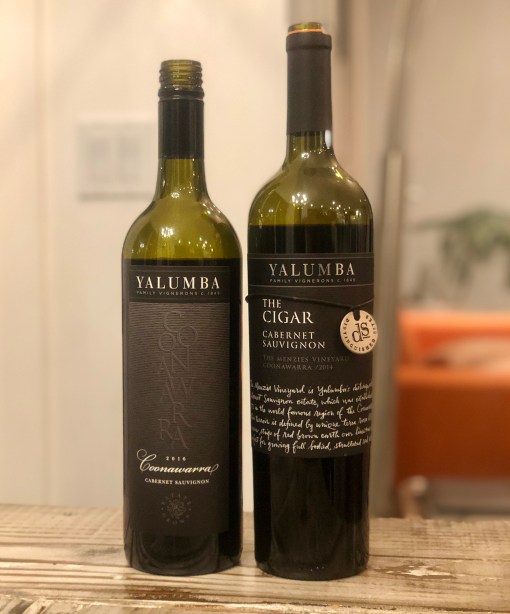
Tonight’s bottle duet replicates one of the most common questions that plagues burgeoning wine consumers:  when it is worth it to jump a tier?  If you’ve tasted and enjoyed the entry-level offering from a given producer, should you invest the extra few bucks to try their next level up?  Will you get more in return, enough more to justify the additional expense?  Value judgments and personal preference are always at least somewhat subjective, but objectively, when you move from a winery’s starter bottle to the next level up, and when you pay more for that privilege, it’s often because you’re getting one or more of:  (1) better, more consistent, more carefully sorted grapes, (2) better vineyard sources, or older vines from within the same vineyard, (3) more estate fruit grown by the producer itself, (4) better (or at least more expensive) winemaking and maturation practices, including more time aging in oak barrels (my legal career confirms that, in some ways at least, time is in fact money), and/or (5) better lots, blends or barrels from the results of the winemaking process.  You can see the similarities in style, region and approach common to the producer between the entry-level or next-level bottles, but in theory at least, due in part to the factors above, you should see some elevation in quality and product as you climb the hierarchy.

IMG_9778

That isn’t to say that pricier is always better; diminishing returns are real in the world of wine, particularly when you enter the realm of luxury wines that cannot hope to deliver the value per dollar of their earthbound affiliates.  But in my experience, the price jump from the cheapest offering of a given brand to its next level up almost always pays off in quality; the patience and precision and commitment required to make truly good wine can be strained when you’re also trying to keep below a $20 price tag, and even the slightest bit of economic leeway can make a massive difference.  Neither of tonight’s offerings fall fully into the entry-level category, but they represent the first and second rungs of Yalumba’s Coonawarra Cab quality tiers, so they will serve nicely to illustrate the considerations that go into whether to make the jump. Read the rest of this entry »


12 Days of Vinebox: Day 11

4 01 2019

By Peter Vetsch

It’s the penultimate day of the Vinebox 12 Days of Christmas calendar, and while Christmas feels like a long time ago, there’s never a bad time to use the word “penultimate” when you have an occasion in need of its natural meaning.  Thanks to the outcome of the one-by-one Vinebox vial draft that I had with Ray, I ended up with the last two days of this miniature vinous adventure, and I certainly sat up and took notice when I pulled a 100 mL test tube of Chateauneuf-du-freaking-Pape out of the box and knew that it had to be mine.  When Vinebox says that they quality-control like crazy and look to represent the best in their sets, it’s not just marketing talk; the level of the wines across this dozen tastes has been consistently legit.

IMG_9573

Where I might give Vinebox a bit of constructive feedback is in the relatively slim amount of information that comes along with each vial.  The Vinebox reveal website for this calendar (which I might as well give you now that it’s the penultimate day of our countdown — see how useful and awesome that word is??) tells me only that tonight’s wine is the “Graveirette Chateauneuf de Pape”; the label of the tube adds that this is the 2014 rendition of this wine.  As the current vintage of this Chateauneuf is the 2015, and as it is not a widely known producer or wine in this market, it is next to impossible to track down any information about this specific bottle, which can be exceedingly frustrating when you’re the Type A kind of person who wants to know these things but can’t find them.  If future reveal sites could at least include the vintage, blend, vineyard details and winemaking and aging regime for the wines, it would be of tremendous assistance in bringing crucial context to the sensory impressions that this wine has in spades.

IMG_9575

Here’s what I can tell you:  Domaine de la Graveirette was founded in 2005 by Julien Mus, a native of the small southern Rhone village of Bédarrides, located in between Orange and Avignon in the Chateauneuf-du-Pape appellation, immediately east of the famed new castle of the Pope itself.  Mus was a relative rarity in that he left home to pursue a formal wine education in Beaune, Burgundy, and was perhaps even more rare in that, after said certified advancement of his profession, he came back to his very same tiny hometown to work, first growing grapes which he sold to the local cooperative, but then in 2005 founding his own estate that would allow him to forge his own winemaking path.  This estate, Graveirette, has been organically farmed since 2012 and Demeter-certified biodynamic since 2015.  Under the Graveirette name, Mus makes everything from prestige-cuvee CNDP to experimental micro-vat offerings (100% Marselan, anyone? I’m in) that are intentionally downgraded to the Vin de France designation to allow for creativity and flexibility in how the finished product comes about, freed from restrictive appellation legalities. Read the rest of this entry »


12 Days of Vinebox: Day 2

26 12 2018

By Peter Vetsch

Happy Boxing Day!  Hopefully you are full of holiday cheer and post-holiday deals, have all of the presents you want to return neatly stacked in a corner and are ready to get down to business on the world’s coolest post-Advent calendar, one vial at a time.  Let me be the first to tell you that blogging 100mL of wine is a highly stressful experience — you get 2/3 of a glass to fully formulate an impression and write detailed tasting notes, so every drop matters.  It definitely aids the focus, as near-panic often does.  Hopefully you can be a bit more frivolous with your vial.

IMG_9356

I picked this test tube in my Vinebox blogging selection draft with Ray because I was highly curious to check out a Provençal red, a relative rarity in these parts.  Provence is globally known for being the pink wine hub of the world, and for good reason:  80-90% of the bottles that come out of the Cotes de Provence are roses.  They are a well-oiled pink buzzsaw of a production region, dialled into the patio trade in massive quantities…but they are also, more quietly, home to high-quality reds and whites, and in fact, the top producers in the area often make all three.  One such producer is the historic Chateau de Bregançon, centered around an 18th century castle built on a slope overlooking the Mediterranean Sea.  The estate has been owned by the same family for over 200 years, which is now in its 7th generation of stewardship of the grounds, including 52 hectares of vineyards in prime growing areas, on exposed hillsides featuring tons of sun and surprisingly little rain given their oceanfront locales.  If you HAVE to make wine anywhere, why not make it the Mediterranean riviera?

IMG_9357

Quick tangent that may be of interest to only me:  Chateau de Bregançon is one of 18 estates to have been awarded the “Cru Classé” designation in Provence, which it turns out is the only French wine region besides Bordeaux to have a classification/ranking system tied to producers as opposed to vineyards.  The “Cru Classé” was conceptualized in 1947 by some of the longstanding wineries in the area, who commissioned a series of experts to research the winemaking chops and history of the local producers and create a listing of the best of the best.  They did so in 1955, and of the original 14 Bregançon made the cut and was therefore immortalized as elite (because once you’re named Cru Classé, you can’t be un-named).  Sadly, the designation doesn’t appear on the Vinebox vial, but I know it’s there in spirit.

IMG_3838

I had difficulty locating any information at all about this 2015 Bregançon Cotes de Provence, but based on the reds currently listed on their website, it’s a good bet that this one contains healthy proportions of both Syrah and Mourvedre, two of Provence’s principal red varieties (the others being Cinsault, Grenache and the lesser-known Tibouren).  What I can advise with more certainty is that the wine is surprisingly deep and rich in colour, especially after you’re used to yet another pale pink Provençal rose, a hefty ruby-purple that is just shy of opaque.  You can smell it as soon as you crack the bottle, flint and whetstone, blueberry and currant, hot rocks and sauna, flesh blood and ink (the latter set making Syrah seem ever more likely).  Sharply structured, the wine’s most prominent features on the palate are firm scrubby tannins and whiplash acidity, but these are softened and broadened by pure red fruit and violets arranged over this Cru Classé’s iron spine.  A thoroughly impressive Vinebox debut for me – can’t wait to see what the future holds.

90 points


Bricks Wine Advent Calendar 2018: Day 18

18 12 2018

By Peter Vetsch

Well, any wine was going to have its hands full tonight, following on the heels of the toughest act to follow so far in the 2018 calendar, last night’s masterpiece single-vineyard Pinot Noir from Ken Wright.  Like a schedule loss on the second night of a back-to-back home-and-home set in the NHL, Bricks may have strategically selected what I would guess is the least expensive bottle in the whole calendar ($15ish for a full bottle) to take one for the team right after we all revelled in the most expensive bottle in the calendar.  The Advent backup goalie in this case is the 2016 Ram’s Leap Semillon Sauvignon Blanc from New South Wales, Australia, a bottle that continues what is now a Bricks Advent tradition of vinous animals leaping, after the highly tasty Frog’s Leap Zin from 2017.  Stag’s Leap next year?  Most definitely.

IMG_9462

Ram’s Leap is part of the Canonbah Bridge range of wines, a producer with which I was not previously familiar, possibly because the place where their estate vineyard is planted is not even a recognized wine region!  It forms part of the broader appellation of New South Wales, but so does 30% of the Australian wine industry.  The 80-acre vineyard was strategically planted on an old riverbed in the middle of a 30,000-acre sheep farm near Warren, slightly west of the Hunter Valley, a couple hours northwest of Sydney.  Half of the plantings are Shiraz, and the other half are, well, everything else:  Merlot, Grenache, Mourvedre, Semillon, Verdelho, Chardonnay and Tempranillo.  It remains the only commercial vineyard in this highly arid area, with scorching hot days and cool nights that facilitate the practice of organic viticulture (there are no plant-attacking fungi, mildews or moulds in the desert, so less need for herbicides).  Canonbah Bridge takes their organic principles one step further by aiming to avoid any intervention with the vineyard soils whatsoever:  no tilling, all weeding (and much fertilizing) performed via wandering sheep service, cover crops preventing the spread of unwanted plant life, etc. Read the rest of this entry »


Bricks Wine Advent Calendar 2018: Day 17

17 12 2018

By Peter Vetsch

I can often tell how much I like a wine by how many notes I take.  Even when it doesn’t hit me at first how much I am taken by a bottle, I’ll suddenly look down and a whole notebook page is filled up of musings and guesswork and random sensory impressions, the various threads through which I eventually try to sort out the essence of the wine and how it speaks to me.  On blog days where the bottle doesn’t have much to say, or doesn’t quite spur the imagination, the pen moves very slowly.  Tonight I have three pages of notes in about 30 minutes, and I had to stop myself from writing more so that I could post this early enough for people to actually read it.  This was the first bottle in Advent history that had me autonomically exclaim “WOW.”, reflex-like, as soon as I opened the bottle.  I had never had a Ken Wright Pinot Noir before, but I was very well aware the level of quality it represented.  For my first bottle to be his 2015 Shea Vineyard, from the now-famous plot that he almost single-handedly put on the map, can’t be more perfect.  Welcome to the last week of the calendar, which almost surely can’t get better than this.

IMG_9452

Ken Wright was first exposed to wine as a waiter and student in Kentucky, and the regular staff tastings at his part-time job soon led to a complete change of vocation and an enrolment in the prestigious UC Davis viticulture program in California.  He spent close to a decade in the state honing his craft, but a single visit to Oregon in 1976 convinced him that his destiny lay there, where he felt North America’s pinnacle expressions of Pinot Noir could be made.  He loaded up his family and all his earthly belongings and founded his first Oregon winery in 1986 (Panther Creek Cellars, which still exists today, though Wright has since sold it), then his eponymous winery in 1994, which focuses entirely on single-vineyard expressions, mostly of Pinot Noir, from 13 different vineyard sites.  Shea Vineyard, the home of tonight’s bottle, is in the Yamhill-Carlton AVA in the northern part of the Willamette Valley, a sub-AVA that Ken helped define and create (along with five others) back in 2004.  Ken also established his winery’s tasting room in the heart of the small town of Carlton, echoing his belief in the power of site for his grapes by connecting his business directly to their land of origin.  His was the first winery to take root in Carlton, and it has now been joined by a large tasting room in the town’s old train station. Read the rest of this entry »


Bricks Wine Advent Calendar 2018: Day 13

13 12 2018

By Peter Vetsch

Rioja!  I stand to be corrected, but I believe this is the first bottle of Rioja in which we have ever partaken in an Advent calendar…thus my Groundhog Day Advent 2018 curse comes to an end and I get to dive into something sui generis to close out my blogging week.  In.  After last night’s more eclectic offering, tonight seems as safe and comforting as a St. Bernard with a collar barrel of brandy, and it barely misses continuing the 2013 vintage trend we’ve seen a lot of over the past week, although the 2014 vintage designation on this bottle suggests it’s a year beyond the likely current vintage of this wine.  “This wine”, in this case, is the 2014 Bodegas Franco-Espanolas Bordon Rioja Crianza, which is a mouthful to say, let alone type.  But as with so many things wine-related, the name tells a story.

IMG_9421

If you were reaching for your Spanish phrasebook or your Google Translate bookmark, I will save you the trouble:  yes, the producer’s name actually DOES mean “The French-Spanish Winery”.  The winery was founded back in 1890, when a great deal many Frenchmen in the viticulture and viniculture industries were fleeing a country where their livelihoods were literally being eaten away by the phylloxera louse, a scourge that absolutely decimated the vineyards of entire regions in France before the antidote of grafting native vitis vinifera vines onto American bug-resistant vine rootstocks was discovered.  One such Frenchman was Bordelais (and remarkably French-sounding) Frederick Saurat Anglade, who was one of many winemakers from Bordeaux to find refuge in Rioja and then like it so much that he decided to stay.  Along with Spanish partners, he founded his multinational bodegas, perched in prime territory on the banks of the Ebro River, which has since grown into one of Rioja’s biggest.

IMG_9423

This might be the first old-school wine from Rioja that I’ve seen use varietal labelling, but there’s the word “Tempranillo” plain as day on the front label.  This dose of consumer informational assistance is not quite as helpful as it seems, because the 2014 Bordon Crianza is actually only 80% Tempranillo and 20% Garnacha.  Close enough?  The wine spends 15 months in the traditional Riojan staple, American oak barrels (which the winery website is kind enough to advise come from the oak haven of Ohio), followed by additional time (minimum one year) in bottle before release in satisfaction of its legal “Crianza” designation aging requirements.

IMG_8353

Cork Rating:  5.5/10 (Amazing coverage and graphics, but major deduction for being, by FAR, the shortest cork of December to date – see corkscrew evidence above.)

The result of this regimented aging process is a gorgeous rich ruby hue and a slate of classic Spanish aromas, from tobacco and new leather jackets to wet beach, smoked meat/chorizo and cedar with quietly fresh purple fruit overlaid with the dried red berry rendition most commonly associated with 100+ year-old Riojan wineries.  Bright and juicy, the Crianza hums with vibrant acid, its luxuriant round fruitiness a nod to modern influence but its wood-aided papery tannin and its cigar smoke, dust and char flavours a throwback to the good old days.  The two eras of this legendary region dance together marvellously here, and to this day I still haven’t met a Rioja I didn’t like.

90 points


Bricks Wine Advent Calendar 2018: Day 9

9 12 2018

By Peter Vetsch

Before getting into tonight’s wine, allow me a brief moment of self-reflection.  I realized partway through the current Advent blogging blitz that one of these recent half-bottle calendar posts marked the 500th piece of posted content in Pop & Pour’s history.  I have been writing this blog since March 2011, and never in my wildest dreams did I think it would reach half a thousand articles.  So much has changed in my life, my work and my family since then, but PnP has remained a constant, and it has been immensely gratifying to see it grow and expand with new writers, each with their own new approaches and perspectives.  It has been even more gratifying to have people engage with the site and remind me that I’m not just writing into a vacuum, screaming into the void.  See you all in a few years at post #1000, I hope.

IMG_9410

Back to tonight.  After Ray enjoyed consecutive new takes from Moldova (of all places) and cool-climate Cali, I jump back into the fray and seem to continue the Advent 2017 nostalgia tour, with yet another bottle that takes me right back to last year around this time.  Day 8 of 2017 was the 2012 Chante Cigale Chateauneuf-du-Pape, a bottle that I felt was already markedly past its prime, a surprising disappointment from a top-end region.  Tonight brings another five year-old half-bottle from CNDP, this time the 2013 Domaine de Cristia Chateauneuf-du-Pape, from which I hope for better things.

IMG_9411

This family estate started 70 years ago with 2 hectares’ worth of Grenache plantings owned by founder Etienne Grangean.  Etienne’s son expanded the property and added Syrah and Mourvedre to the varietal mix a few decades later (although Grenache remains 85% of the total acreage), and a decade ago Etienne’s two grandchildren came on board.  Now the Domaine has 58 hectares under vine, 20 of which are in Chateauneuf-du-Pape proper, in the eastern sandier part of the appellation. The parcels there face northeast, away from the afternoon sun, promising slower ripening and longer hang-time.  Domaine de Cristia was certified organic in 2008 and use no chemical fertilizers, pesticides or herbicides in its vineyards; it also focuses on indigenous yeast fermentation in the cellar, at lower temperatures in an effort to preserve freshness.  “Of prime importance are finesse and elegance”, says their website.  Sounds good to me, but the proof, as always, is in the bottle. Read the rest of this entry »


Bricks Wine Advent Calendar 2018: Day 5

5 12 2018

By Peter Vetsch

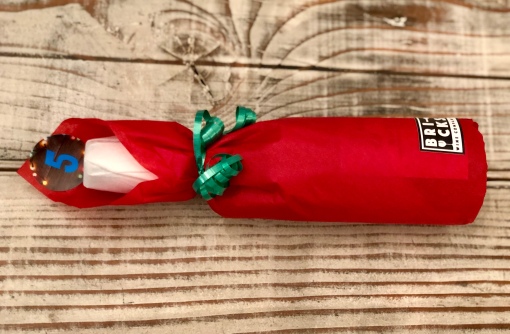
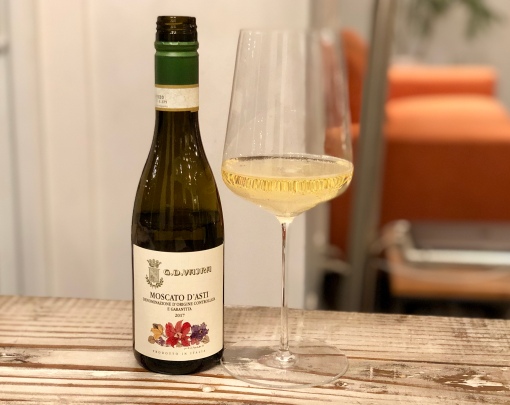
Once more into the breach, my friends, and on Day 5 of Advent 2018, once more into the bag of Advent 2017 synonyms:  a Moscato d’Asti from a strong producer, much like last year’s Day 10.  That wine (I maintain to this day) struggled with some bottle condition issues, and I am happy to say that this one is clean as a whistle and full of youthful spirit. It is the 2017 G.D Vajra Moscato d’Asti, and spawns stories of history, of production method, of flavour.  Which to tell first?
IMG_9367

Let’s start from the start, I suppose…which it turns out is much more recent than I expected.  Despite its highly traditional-seeming name and labelling, G.D Vajra is barely 45 years old, a complete baby by the standards of Barolo, founded in 1972 (albeit from family vineyards from a couple decades earlier) with its first commercial vintage not released until 1978.  It is named after founder Aldo Vajra’s father and was started because, in Fresh Prince of Bel-Air style, Aldo participated in a student protest revolt in the city where he lived at age 15 and was thereafter immediately sent out to the Barolo countryside to live with his grandfather on a farm for the summer, away from the sway of proletariat rebellion.  That summer in Barolo (as it likely would for all of us) triggered a deep and abiding passion for wine, which ultimately resulted in the bottle here before us.  One little fight and his mom got scared…
IMG_9369

My favourite thing about Moscato d’Asti, apart from its dangerous low-alcohol crushability, is the trivia behind how it’s made.  It is one of the few types of sparkling (or frizzante, in this case – lightly sparkling) wines that do not go through two fermentations:  one to vinify a dry base wine, the other to re-ferment that wine with additional yeast and sugar to create the bubbles.  Instead, it combines both processes into one through a highly ingenious process called the Asti method.  Fermentation begins as per usual, but in a pressurized steel tank that is sealed off from air partway through the process, with the result that the carbon dioxide that is a fermentation byproduct cannot escape the tank and is trapped in the wine.  Then, when the half-bubbly wine is still quite sweet and considerable amounts of yeast and sugar remain that would normally continue to make sweet magic and craft a higher-alcohol dry wine, the tank and the wine inside are chilled to near-freezing to halt fermentation (yeast don’t like cold much).  The yeast is then filtered out of the tank while it is still under pressure (so that fermentation with the remaining sugar does not continue when the wine warms back up) and the wine is bottled under pressure — only lightly bubbly, at 5-6% alcohol and with a bunch of residual sugar.  Brilliant.
IMG_8726

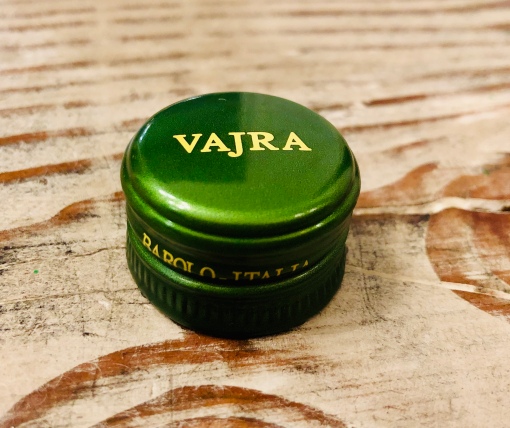
Stelvin Rating:  8/10 (That green is just beautiful, especially in person, and the powdery sheen works.)

This particular Moscato hails from a single vineyard in the perfectly named commune of Mango, located on a steep slope at elevation in the Moscato d’Asti region.  It is a gleeful tropical fruit salad on the nose:  mango (of course), kiwi, canned oranges and pears, banana leaf, star fruit, and onward down the orchard Rolodex, spiked with gobs of potpourri and spring flowers and chemically Alka Seltzer and city pool chlorine.  Lush and quite notably sweet, even for Moscato standards, it is lent a sense of airiness due to its sloshy frizzy bubbles, which are not quite as penetrating or scouring as you might anticipate, a product of the not-quite-sparkling frizzante fermentation process (which is also why this can be bottled in a normal bottle and closure as opposed to a thicker Champagne-style bottle — it’s under a lot less pressure).  All I can taste is pineapple Life Savers, cream soda and every single flavour of Gummy Worm on overdrive.  The finish is slightly cloying, thanks to acid that doesn’t quite stretch all the way to the end of the line and can’t quite balance out the Moscato’s immense sweetness.

As a beverage, this is freaking delicious.  It took no time at all for the entire half-bottle to disappear.  As a wine, I wouldn’t rank it among the top Moscatos I’ve had because the rest of the wine can’t quite keep up with the sugar levels, leading to things getting a little bit flouncy.  But it’s hard to be too unhappy after a couple glasses of Moscato.

87 points