Burrowing Owl Fall Release Trio

8 11 2018

By Peter Vetsch

[These wines were provided as samples for review purposes.]

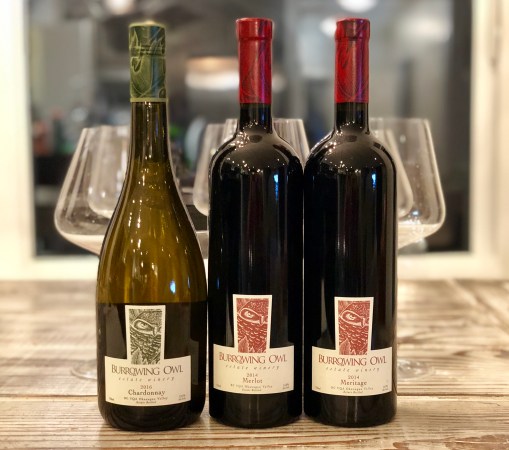
I have now been receiving and reviewing Burrowing Owl releases since 2015, and in addition to some minor shock about my blogging longevity, this has also given me enough familiarity and enough reps with the wines to truly help me understand the winery’s house style.  The whites tend to be creamy and generous, often buoyed and propelled by oak but not at the expense of the underlying fruit.  The reds are bold and ripe yet not overdone, a strong reflection of the scorching desert-like climate of the estate’s Oliver, BC home.

IMG_9158

Year over year, the releases and the winemaking choices behind them come across as impressively consistent, part of the reason why Burrowing Owl has long been on the short list of top quality wineries in the Okanagan Valley.  Now that the snow on the ground here in Calgary seems permanently settled in until April, it feels like there’s no better time to tuck into this trilogy of warm, rich, classic bottles, which always seem to be best enjoyed with a notable chill in the air, starting with a wine that just might be setting a new PnP record. Read the rest of this entry »


Wine Review: Stag’s Hollow Renaissance Reds

5 04 2018

By Peter Vetsch

[These bottles were provided as samples for review purposes.]

IMG_7892

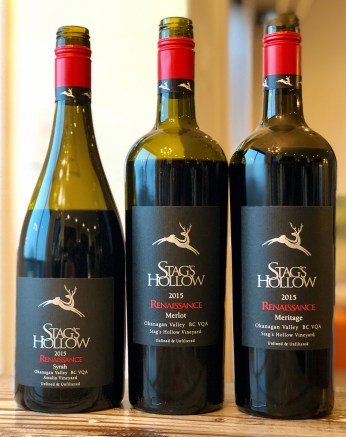
The big guns.

As I have mentioned in reviews past, my first thought of Okanagan Falls’ Stag’s Hollow Winery is always as a forward-thinking, try-everything trailblazer, the continual vanguard of varietal suitability and experimentation in British Columbia, constantly checking in on whether the next potential star grape of the province (be it Albarino, Grenache, Dolcetto, or any number of others in its viticultural Rolodex) might be one that few had previously considered.  So it’s a fun change of pace tonight to sit down and see how they handle the classics, those big red varietal stars so often seen across the Old World and New World alike, the first grapes you expect to see on any wine store shelf.  This review set is a particular treat, because all three of the bottles below hail from Stag’s Hollow Renaissance line, the winery’s premium flagship tier of offerings, produced only in vintages when the wines can live up to the bottle’s special black label.  I have heard rumblings that the 2015 Renaissance set breaks new ground in terms of quality and longevity; I had not previously had the opportunity to test this theory for myself, but it would not surprise me out of a winery that always seems to be improving. Read the rest of this entry »


Wine Review: Red Blends of the Eternal Ice Age

20 03 2018

By Peter Vetsch

[These bottles were provided as samples for review purposes.]

Happy first day of spring.  Spare me.  Yeah, I’ve seen all of the (obviously non-local) articles and Instagram pics and Twitter updates about new rosé and bubble releases and patio beers and T-shirt weather.  Meanwhile I have snowbanks bordering each side of my driveway that are taller than each of my children and still see the minus sign side the thermometer heading to work every morning.  It’s supposed to snow again on Thursday morning and there is no god and we are in some kind of forsaken meteorological time loop that will have no end.  So forget you, frizzy pink refreshing splashes and dainty Prosecco; I’m gearing up for blustery Armageddon, armed with a pair of full reds that scoff at the entire concept of spring.  I need to find joy somewhere, after all.

IMG_7747

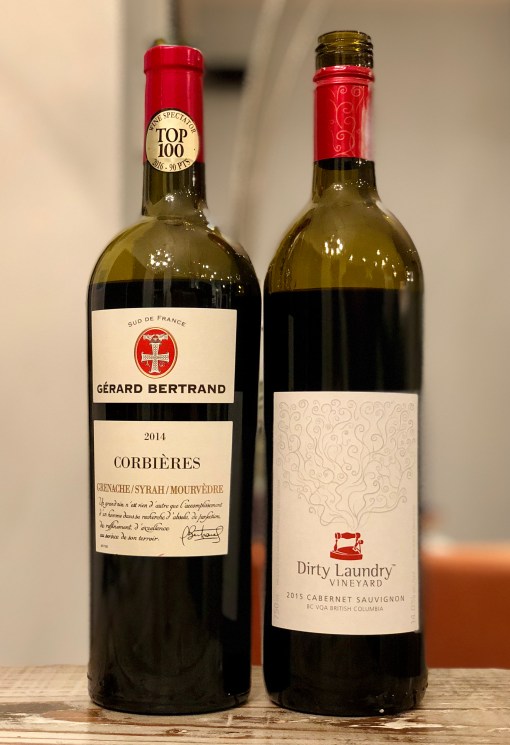
Forget you, “spring”.

2014 Gerard Bertrand Corbieres (~$20)

I know from past experience that Gerard Bertrand is a value wine savant, and that his legend in the south of France is ever-growing.  I also knew that this particular bottle of Corbieres, part of his “Terroirs” regional collection of bottlings, hit the wine awards mother lode in 2016 by landing the #55 spot in the much-anticipated Wine Spectator Top 100 list — not bad for a $20 bottle from a little-known region.  What I didn’t know about Bertrand was that he was a prodigious professional rugby player before he followed in his family’s footsteps and turned to winemaking, even juggling a pro career with vigneron duties in the aftermath of his father’s death as he took over the reins of his ancestors’ business.  He has now hung up the cleats for good but brings some of his sport’s scrappiness to all of the wines that bear his name.   Read the rest of this entry »


Co-op Wines: The Social Collection, Bin 107

14 02 2018

By Dan Steeves

[This bottle was provided as a sample for review purposes.]

img_5495
As a follow up to Peter’s review of the first Co-op Social Collection bottle, the Bin 101 Cabernet Sauvignon, we now move onto the second bottle of our trio, Bin 107 Pinot Blanc, which hits a little closer to home.  This bottle’s front label clearly shows it is a product of Canada, and upon examining the back label, you notice further clues as to the wine’s origin. Underneath the grape variety is written “Golden Mile – Oliver, BC Canada”, and further down it shows that the wine was exclusively produced and bottled by Castoro de Oro Estate Winery in Oliver BC.

The region south of the town of Oliver and north of the town of Osoyoos is commonly referred to as the Golden Mile due to the amount of wineries off the highway between the two towns. However, stating “Golden Mile” on a label does not have an official meaning — this term shouldn’t be confused with the very-similar label designation “Golden Mile Bench”, which an area up off the valley floor that shows unique climate and soil types and which is now recognized as an official sub-Geographical Indication within the Okanagan Valley GI. That said, all wines made in this part of the Okanagan are well known for their high quality due to the ideal climate:  hot daytime temperatures, cool nights, and limited rainfall (it is for all intents and purposes a desert).

Read the rest of this entry »


PnP Panel Tasting: Quench! Wines BC Portfolio

1 02 2018

[These bottles were provided as samples for review purposes.]

First, some exciting news:  I’m happy to announce that Pop & Pour Wine Advent 2017 authors Raymond Lamontagne and Dan Steeves are officially going to be sticking around as regular contributors on the blog, bringing their expertise and exuberance to a screen near you and formally making PnP a joint venture from this point forward.  I’m hoping that this will allow the site to be less tied to my schedule and to have a greater presence around events and bottles that interest you (or that interest us, at least – hopefully they will interest you too).  And what better way to go from a solo gig to a group gig than having a panel tasting?

IMG_7474

A highly worthy BC lineup for our first PnP Panel Tasting.

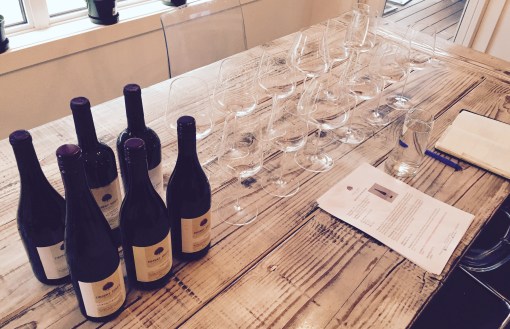
Here’s how we play our game.  Dan, Ray and I got together to jointly taste a (remarkable) set of wines; we discussed while we tried each wine, but we evaluated and scored each bottle separately and independently, without sharing our final assessment until all scores were locked in.  We divvied up the writing duties, but rather than average out the scores or try to come to a numerical consensus, we preserved each person’s score for each bottle to give you a sense as to the level of divergence in the room through the course of the tasting.  Hopefully this will be the first of many such panel reviews, but if you have any thoughts as to the format or results, leave a comment or send me a message and let me know!

The focus of this inaugural Pop & Pour panel tasting was a sextet of offerings from Quench! Wines, a Vancouver Island-based agency exclusively focused on the burgeoning British Columbia production scene.  We got to taste a pair of wines each from three critically acclaimed Okanagan producers:  Terravista, Bella and Fairview Cellars.  You could not have put together three more divergent groups of wines if you tried, a testament to the diversity that is possible in the Okanagan Valley, particularly since each distinct grouping aptly highlighted a different element of the potential of the region.  I got to lead things off. Read the rest of this entry »


Wine Review: Black Market Wine Co. – Contraband Portfolio Tasting

15 11 2017

[These bottles were provided as samples for review purposes.]

What do you do if you’re a busy Calgary-based professional with a hectic day job, multiple kids, a swath of family responsibilities, yet an ever-increasing burning passion for wine?  If you’re me, you start a small local blog and struggle to publish one post a week.  (Last post:  13 days ago.  Sorry guys.)  If you’re Rob Hammersley and Michelle Shewchuk, on the other hand, you pick up the hustle, go about 20 light-years further and start your own garagiste winery in the Okanagan on the side, while still juggling full-time careers, volunteer activities and parenthood.

IMG_7037

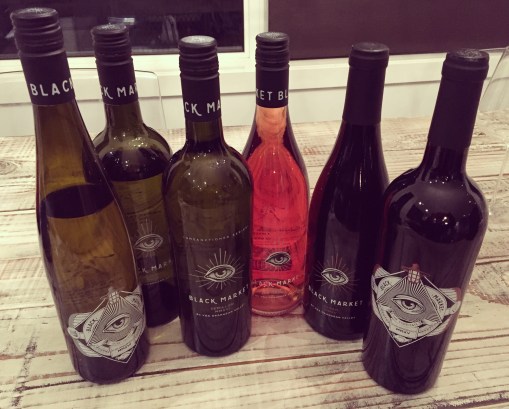
Branding majesty.

This cunning Calgary cabal has managed to work around their weekday gigs (Rob is in corporate finance; Michelle is a flight attendant) and their location in another province, forge relationships with local growers, learn the ropes of the winemaking business and come up with maybe the single best suite of branding for a winery anywhere in Canada, creating a bit of a cult following along the way.  Add in an early embrace of online sales and the Black Market Wine Company is quickly accelerating from illicit side dream to successful reality.

IMG_7052

I first came across Black Market a couple of years ago and was instantly drawn in by the Illuminati-meets-Ponzi-scheme labelling, looking like the back of the US dollar in some horrific alternate Dan Brown universe.  The striking images on the front labels draw people into the intentional web of secrecy and intrigue expressed in snippy verse on the back of each bottle, piquing curiosity and pulling people further into the glass for answers.  By then, you’re in the winery’s hands, waiting to be led where they want to take you.  It certainly does not hurt that the juice within does not disappoint (and that its creators are from my hometown), and I have followed their progress ever since that initial encounter.  This is the first time I have had an opportunity to taste through the entire Black Market portfolio, but not the last time I will be cracking these wines and letting the mystery wash over me. Read the rest of this entry »


Wine Review: Dirty Laundry, The Whites

2 11 2017

[These bottles were provided as samples for review purposes.]

IMG_7014

One of these things is not like the other…

Now that snow has blanketed the land and any remaining warm thoughts in Calgary’s mind have been augured away by blistering Arctic winds, I can fully admit that I tasted these Dirty Laundry wines in the wrong order.  I cracked the rosé and red portions of my sample pack back when fall was still a thing (last week) and saved the sunny patio portion of the tasting until it seemed like a cruel joke; serves me right for breaking with orthodoxy and not going lightest to heaviest like the textbooks all say.  But we persevere. I’ve always found Dirty Laundry’s white lineup to be a bit more impressive and consistent than its reds, and they have a particular affinity for Gewürztraminer, the grape that everyone seems scared to focus on too heavily but which truly rewards any such special attention.  However, tonight I got to dive into two bottles that I hadn’t tried before today, starting off with my favourite grape of them all. Read the rest of this entry »


Wine Review: Dirty Laundry, Pink & Red

26 10 2017

[These bottles were provided as samples for review purposes.]

IMG_6987

Okanagan label mastery.

Dirty Laundry is a winery best experienced in person, as it features a combination of location, history and brand awareness that is next to impossible to top.  It is perched up above the ideally named Summerland, BC, elevated over the Okanagan’s main highway, with vineyard views for miles and a patio strategically located to be drenched in scenery.  This spot was once, back in the era of the Canadian Pacific Railway’s initial construction, the home of a renowned and well-attended laundry service run by an AWOL railroad construction worker who had found a more lucrative calling; his fortune, and the popularity of his laundry business, was due in no small measure to the brothel being run discreetly on the upper floor while the clothes were cleaned below.  A couple of centuries later, the business currently occupying the land knows a good story when it sees one and has turned the tale of the dirty laundry into a branding behemoth that seeps into everything from wine names to labels to tasting room decor to the guest homes for rent on the property, the Bordello House and the Parlour House.  They commit to the identity, keep their humour on high alert and leave their prudishness at the door, and people keep coming back.

The wines themselves may be in a state of flux, caught between wanting to appeal to the widest possible audience and the crowds in for a good time and a novelty bottle-stopper and aiming for a higher level of quality, a product that captures attention in a different way.  I am rooting for them to succeed, as personality and creativity and branding effort are more than welcome in my own world of wine.  The below releases, recent rose and red offerings from Dirty Laundry and the first of a two-part review series, were an excellent chance for me to check in on the winery for the first time in a while and see where they were on their cheeky, quirky voyage. Read the rest of this entry »


Wine Review: Stag’s Hollow Fall Reds

18 10 2017

[These bottles were provided as samples for review purposes.]

IMG_6962

If this is where we are in the Okanagan, we’re in good hands.

What’s this?  Two reviews in the span of three days??  Is this inspiration or panic?  Turns out it’s a little of both.  For reasons that will shortly become clear, the next couple of months are going to be content-intense here at Pop & Pour HQ (aka my kitchen table), which has me geared up and focused on my current inventory of samples to make sure everything gets its full and proper due.  But I’ve also had a lingering eye on these particular wines ever since they landed on my doorstep, as they represent the latest missive in a wonderful conversation I’ve been having over the past months and years with one of the most intrepid, curiosity-filled, quality-focused wineries in the Okanagan Valley, Stag’s Hollow.  Over the summer I looked in on the white and pink side of their portfolio, but now that my trees no longer have leaves, the time has come to fully commit to autumn, and tonight’s trio of reds has me in the mood to cast off thoughts of T-shirts and shorts and embrace my favourite season.  This lineup features an Okanagan stalwart, only rarely done justice; an utter Okanagan rarity, borne of winemaker Dwight Sick’s unabashed intention to push viticultural limits in the region; and a burgeoning Okanagan star that will hopefully soon get the attention and acreage it deserves.  Pinot Noir, Grenache (!), Syrah. Read the rest of this entry »


Wine Review: Calliope White Trio

3 10 2017

[These bottles were provided as samples for review purposes.]

IMG_6891

Pop and pour power.

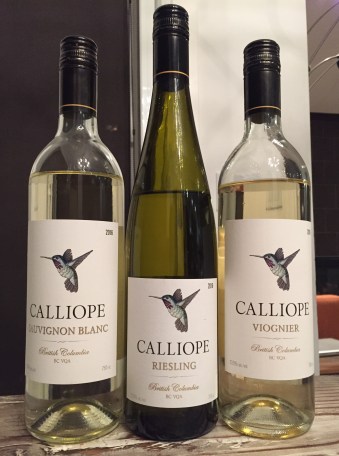
There are a few ways to measure how far British Columbia has come as a wine industry in the past 10-15 years, during which time for my money the jump in quality, understanding and identity has been close to exponential.  Here’s one way:  15 years ago, I don’t think you could have convinced me that a BC winery’s SECOND label could produce a suite of balanced, expressive and generally delightful wines worth seeking out.  In 2017, Burrowing Owl (or, more accurately, Wyse Family Wines, founders of Burrowing Owl) have managed that exact feat with the 2016 releases of their Calliope label, a lineup of wines that according to the accompanying campaign literature is meant for easy and early enjoyment; a true pop and pour.  Sourcing grapes from both the Okanagan and Similkameen Valleys, the Wyse family focuses mostly on whites for Calliope, creating (at times) multi-regional blends under the general “British Columbia” appellation, yet still under the BC VQA banner.  These are marketed as easy-drinking patio wines, meant for drinking rather than dissecting…but since we’re all here, let’s dissect them anyway.

IMG_6897

Stelvin Rating:  8/10 (See what you can do if you apply yourself to screwcaps?  Dead sexy.)

I was provided three different single-varietal examples of Calliope’s white regime:  Sauvignon Blanc, Riesling and Viognier.  When I’m drinking single-grape wines on the lower end of the price spectrum (these bottles probably straddle the $20 mark Alberta retail), the first thing I look for, even before balance of component elements or general deliciousness, is typicity.  In non-wino speak:  if the wine is a Sauvignon Blanc, does it smell like a Sauvignon Blanc?  Does it taste like a Sauvignon Blanc?  Does it help people understand what Sauvignon Blanc is all about, and does it then go the next step and show people what Sauvignon Blanc from its particular home region is all about?  Varietal wines that do this exhibit strong typicity, and as such become extraordinarily helpful barometers for both learning about wine and understanding your own preferences.  If these 2016 Calliopes have any major strength, it is dialled-in typicity:  they are clear and precise examples of what’s in the bottle and what comes out of the ground. Read the rest of this entry »


Happy Canada Day: Stag’s Hollow Summer Set

1 07 2017

[These bottles were provided as samples for review purposes.]

Happy Canada Day all!  Our majestic and humble home turns 150 today, which makes me both celebratory and reflective, emotions which both inevitably lead to wine.  (OK, many things inevitably lead to wine, but these do too.)  As a nation, even at its sesquicentennial, Canada is still young and developing, growing increasingly confident in its global identity but not yet possessed of that inner calm of countries who have already seen and lived through it all.  As a wine nation, we are younger still:  while grapevines have been planted in Canada since the 19th century, our movement towards becoming a commercial producer of quality wines probably only dates back 40 to 50 years; the oldest producing vinifera vines in British Columbia are likely of a similar age.  In many ways, we are still finding ourselves and only starting to chart our path.
FullSizeRender-668

British Columbia wasn’t blessed in centuries past with Burgundy’s army of soil-testing, site-delineating monks, who segregated cohesive parcels of land and determined which grapes did best in which spots.  As such, and without a suite of indigenous varietals to choose from, BC is playing global catch-up, still trying to sort out what might succeed in its soils and what is destined to fail.  In this New World landscape, it would be useful for the province to have a sort of advance wine scout, someone who is unafraid to push the envelope in terms of planting options and help set the boundaries for the area’s future course.

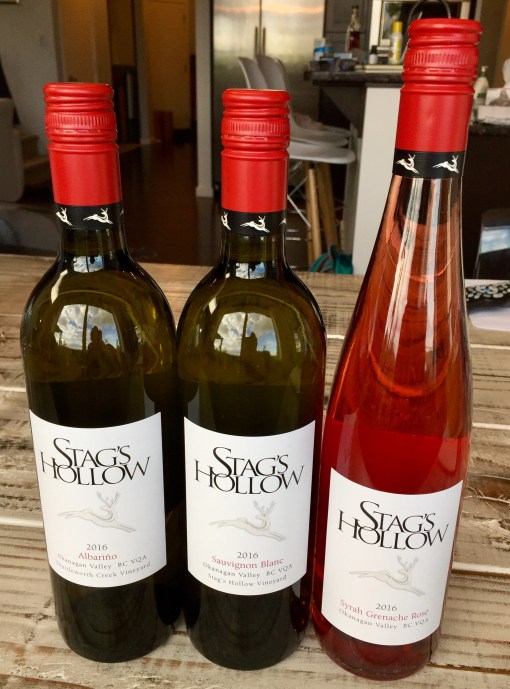
I nominate Stag’s Hollow Winery in the Okanagan Falls, which, led by winemaker Dwight Sick, has done nothing but innovate since I first found out about them.  Make reserve-level small-production Tempranillo?  Check.  Create the Okanagan Valley’s first-ever bottling of Grenache?  Check.  Solera-style fortified wines?  Orange wines?  If you can envision it, Sick and Stag’s Hollow have probably made it, and have expanded the range of possibilities for Canadian wine in the process.  A recent further jump:  Albarino, the crispy, crunchy white grape that is the pride of Galicia in northwest Spain, features heavily in Portugal’s Vinho Verde and has been gaining an increasing worldwide audience.  I had never yet seen a Canadian version of this hot and trendy grape – but if I had had to place a bet on who would be among the first to come up with one, it turns out that I wouldn’t have been wrong.  I got to check out this trail-blazing New World version of Albarino along with a couple other patio-friendly new releases from the winery just in time for summer. Read the rest of this entry »


Entering The Hatch, Spring 2017

23 05 2017

[These bottles were provided as samples for review purposes.]

IMG_6146Ever since I first saw The Hatch’s avian-Thomas-Crown-Affair primary logo shortly after it opened a couple years ago, I have been sort of transfixed from a distance, finding both the winery and its artistic ethos strangely compelling despite knowing basically nothing about them.  Based out of a rustic-modern “shack from the future” in the heights of West Kelowna and sourcing grapes from across the Okanagan and Similkameen Valleys, The Hatch initially comes across (quite intentionally) more like an artists’ collective than a commercial winery, listing Salman Rushdie on its personnel page and expounding in esoteric wine-code about “Ross O” and B. Yanco” (I’ll give you a second to sort that one out).  They confidently found their visual style from the outset thanks to the remarkable imagery provided by local western Canadian artist Paul Morstad (who is also found on The Hatch’s personnel page, playing a banjo); once people have been drawn in by the graphics, it’s up to winemaker Jason Parkes to keep their attention.  The whole artistic cacophony and the simultaneously grand yet whimsical presentation lends The Hatch a jolt of personality that the generally strait-laced BC wine scene can happily use…but does the buzz extend to what’s in the bottle?  Happily, I got to find out.

FullSizeRender-601The Hatch releases its wines in stylistic series, of which I had the opportunity to experience two:  the mid-tier Hobo Series wines, featuring a panoply of hand-drawn labels of hobos (seriously) that risk making you cry thanks to their sheer beauty (also seriously), and the ambitious Black Swift Vineyards series wines, which collectively form an expansive single-vineyard project focused on the various facets of BC’s glorious dirt.  The wine, like the winery, was never boring. Read the rest of this entry »


Burrowing Owl Spring Releases

16 05 2017

[These bottles were provided as samples for review purposes.]

Some people chart the seasons using a calendar; others look to the melting snow and the first robins to mark the start of spring.  For me and this blog, the new season only arrives when the box of new releases from Burrowing Owl is delivered and tasted.  I can now happily announce:  spring is here.

FullSizeRender-592

OK, yes, I had a glass of the Chardonnay before the tasting started.  I regret nothing.

Burrowing Owl is one of the few Canadian wineries that has been consistently able to juggle both quantity and quality, producing 35,000 cases annually from 16 different varietals grown across 170 acres and three different estate vineyard sites encircling the scorching southern Okanagan hubs of Oliver and Osoyoos.  It is likely best known for its Bordeaux varietals, but also makes room in its vineyard sites for less expected offerings like Tempranillo and Viognier, not to mention a killer Syrah that is proof of concept of the region’s suitability for the grape.  Burrowing Owl’s two largest vineyards are scant minutes away from the US border, on western-facing slopes angling down towards the temperature-modulating Lake Osoyoos, which both restrains the Okanagan desert heat during the day and extends it at night.  The third is due west of Oliver, in the neighbouring Similkameen Valley, using its proximity to Keremeos Mountain to help grow Bordeaux whites Semillon and Sauvignon Blanc, where 2017’s spring releases conveniently start. Read the rest of this entry »


Desert Hills Estate Six Pack

25 04 2016

[These bottles were provided as samples for review purposes.]

One of the things I love seeing most in Canadian wine nowadays is a renewed sense of focus on locating, separating and promoting quality subregions within an overall wine area, those special geological or climatic zones that yield wines with a distinct character and personality.  Anyone reading this in Europe right now may be incredulous at any such modern quest for discrete sub-terroir, as this process took place in many Old World growing regions up to a millennium ago.  We have a bit of catching up to do, and now we’re doing it.

FullSizeRender-298

This is critical for regions like British Columbia’s Okanagan Valley, which currently sees almost all wines coming out of it released under that general appellation name.  If you’ve ever stood in the breeze by the lake in Kelowna in August, and then stood in raging parched inferno of the Osoyoos desert two hours later, you’ll understand why “Okanagan Valley” doesn’t exactly capture any of the nuance of those two highly individual experiences.  Last year saw big news on the BC subregion front, as the Golden Mile Bench, a stretch of slope just west of the highway running from Oliver south to Osoyoos, became the province’s first ever recognized sub-geographical indication, meaning you’ll start seeing that name on bottles released this year in place of (or in addition to) the broader Okanagan designation.

FullSizeRender-296

If you walk east from the Golden Mile Bench and cross the highway, on the other side of the road you’ll find another slope, angled west, with extremely hot days and surprisingly cool nights, where vines grow on highly sandy soils that run hundreds of feet deep and require irrigation to retain hydration.  This is the Black Sage Bench, another obvious BC candidate for subregional distinction and home to some of Canada’s top wineries.  On the southern end of the Bench, nestled between Okanagan luminaries Black Hills and Burrowing Owl, is Desert Hills Estate Winery, a family-run producer founded by the three Toor brothers and focused largely on wines made from their aptly named estate vineyard, the Three Boys Vineyard, purchased in 1989.  The first released production from the vineyard was in 1996, and now, 20 years later, Desert Hills is solidly entrenched in the Okanagan wine world and making a renewed push into the Alberta market. Read the rest of this entry »


Wine Review: 2010 Prospect Winery Major Allan Merlot

3 10 2012

[This bottle was provided as a sample for review purposes.]

Prospect Winery, colour me impressed…again.

After being quite pleasantly shocked by the first bottle of red wine that the Prospect Winery sent my way (the 2009 Red Willow Shiraz, written up here), I opened the second and final red they had provided last night thinking that it was fighting against a strong precedent.  I wasn’t heading into this bottle with the lowered expectations with which I had traditionally approached inexpensive Canadian wine; instead, after Prospect’s dynamic Shiraz, I was looking for big things, at least as far as sub-$20 BC Merlot goes.  And while I’m still trying to figure out whether I was satisfied or disappointed with the outcome, I continue to be refreshed and enthused by the fact that I’m starting to approach my own country’s wines with something resembling optimism…because of that alone, Prospect Winery has already succeeded in its mission to showcase the various varietals of the Okanagan in an affordable way.

Since I covered the winery’s corporate ancestral lineage in detail in my previous PW post, I won’t rehash it here other than to say that the Prospect lineup is part of the Mission Hill family once removed, with its own winemaker and plans to create a stand-alone winery.  Of the various brands falling under the umbrella of MH affiliate Artisan Wine Co., it may be the one with the brightest prospects (pun only half intended), putting out dependable, varietally-correct wines at very reasonable prices.  Each of Prospect’s bottlings is named for a different ecological or historical feature of the Okanagan Valley; the Major Allan Merlot is an homage to Allan Brooks, a prolific wildlife artist whose wildlife paintings are known across North America (and on this bottle’s label, which showcases one of them).  I was particularly interested to try this wine, because, as far as I could tell, unlike many of Prospect’s other offerings, the Major Allan is not currently available in Alberta.  In other words, unless my research is wrong, my home province may just have to take my word for this. Read the rest of this entry »