By Tyler Derksen
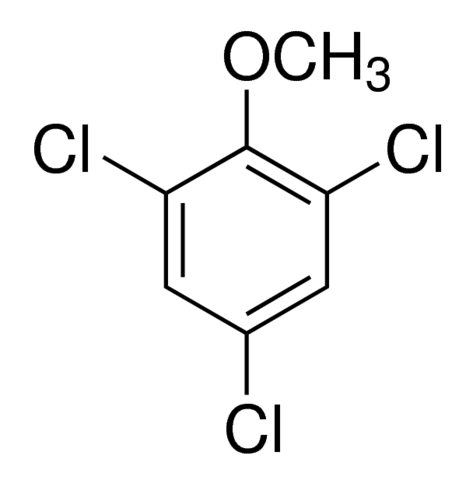
Although this is my first year joining the Advent Calendar blogging team, I read the blog faithfully during its coverage of the inaugural Bricks Wine Advent Calendar in 2017 and then followed along with my own calendar last year. Almost 70 Advent Calendar bottles have been unwrapped in that time and even though we’ve seen some truly standout bottles, I still find myself caught by surprise today when I pull back the wrapping and see…Brunello di Montalcino, and a critically acclaimed one at that! A Brunello di Montalcino hasn’t been seen in the Advent Wine Calendar since Day 2 of the first year! [Editor’s note: let’s not talk about how that one ended up. Fingers crossed that we avoid a TCA repeat.]

Brunello is undisputed Sangiovese royalty, exemplifying the very best that the varietal has to offer. The Brunello di Montalcino D.O.C. (Brunello from Montalcino) was established in 1966 and was given D.O.C.G. status in 1980 when this elevated designation was first created. With this status comes strict rules governing production. For example, there are limits to grape yields in the vineyard and the wine produced must be aged for a minimum of two years in wood barrel and four months in bottle and cannot be sold until five years after harvest. It is thanks to this time-intensive aging method that we get to enjoy a wine that has already seen some aging (and avoids, at least somewhat, the eternal struggle of keeping a bottle in the cellar to age when all I really want to do is try it).
Tenuta Il Poggione, the producer of today’s bottle, has a very long history (spanning five generations) producing Brunello di Montalcino. Il Poggione was founded in the late 19th century and was one of the first three wineries to produce and market Brunello di Montalcino in the early 1900s; later they were one of the founding members of the Brunello di Montalcino Consortium, which was founded in 1967, and it remains a member to this day.

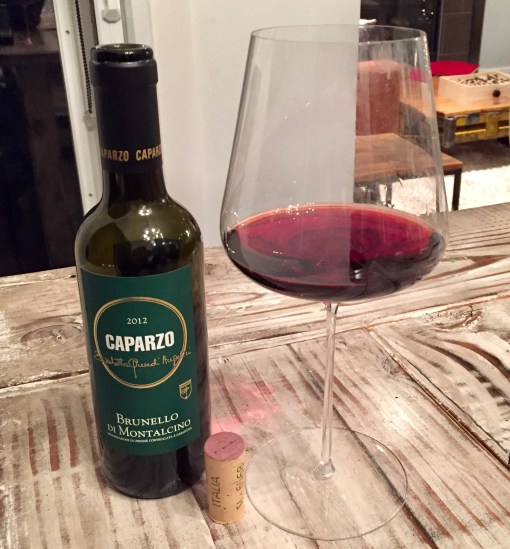
The vineyards from which Il Poggione sources its grapes are located in Sant’Angelo in Colle, approximately 10 km south of the town of Montalcino. I am always thankful to wineries that make available details of their winemaking process. The grapes for the 2012 Il Poggione Brunello di Montalcino were harvested, by hand, from vines that are more than 20 years old and then vinified over 15 to 20 days in stainless steel tanks using the “submerged cap” method. Red wines acquire much of their colour and complexity from contact with the grape skins and stems. During the fermentation process, a cap of these skins forms and naturally rises to the surface of the fermenting liquid. By using a process that keeps this cap submerged during the fermentation process, the resulting wine is able to keep in better contact with the skins and benefit more fully from the characteristics that they impart. After fermentation, the wine was then aged in large French oak casks stored five meters underground followed by bottle aging (unfortunately, the winery does not specify these periods on its website for the 2012 vintage, though I have seen other sources state that the barrel aging was three years).

The age on the bottle is already apparent, as the edges show pronounced brick colouring. As I put the glass to my nose and lips, I lament the fact that I’m not sitting in front of a plate of Italian food. The nose is beautiful: cherry, red currant, pepper, tobacco, grilled steak, dried flower petals, nutmeg, Worcestershire sauce and wet dirt coming together in what may be one of my top 3 favourite noses of the calendar. The palate is highly structured, perhaps a bit too structured on first opening, with flavours of sour cherry, raspberry, cedar, fresh leather, blood, black olive and balsamic vinegar. The acidity is what one would expect from Brunello di Montalcino, but the flavours seem tightly wound. I suspect that this will change over time and that the wine will improve with a few more years of age.

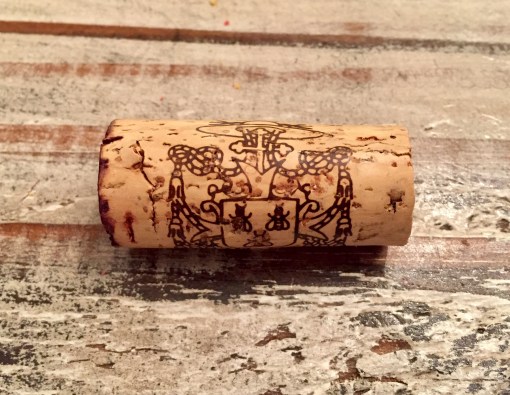
Cork Rating: 7.5 out of 10. Great use of space with the logo and borders. Very short though (yes, I know this was a half-bottle).
This is my final post for this year’s calendar and I have thoroughly enjoyed sharing my thoughts on each bottle and look forward to Peter’s and Ray’s writing on the final bottles to come. Wine is always better when shared, and it has been a pleasure sharing with you. Whatever your plans over the next days and weeks, I hope they are filled with happiness, family, friends and, of course, good wine!
89- points









 I grew up in the days of monopolized government liquor sales and distribution in Alberta, and I distinctly remember going into the squat brick AGLC store with my parents when they were on the hunt for a new bottle of wine or spirits. While government-controlled retail alcohol is still the norm in much of Canada, Alberta thankfully broke free of its state shackles before I hit adulthood, and now, not really that much later, it is a completely different world, with an ever-increasing number of remarkable producers from across the globe available in our market and very few barriers to introducing even more. Slower to develop have been wine-buying alternatives to the standard visit to a retail shop: online ordering, home delivery, personalized sourcing. I can get almost every work of literature ever created from Amazon Prime within two business days, but our gloriously liberal wine commerce architecture has not yet fully embraced the electronic age and the consumer convenience that can come with it. That’s why I always root for those ventures who come along and try.

 Jaboulet’s Alberta portfolio is supplemented by a quartet of upper-echelon bottles from a group of distinctive quality regions scattered across the Rhone, each of which has its own character and legend to live up to, and each of which, I’m happy to report, Jaboulet and winemaker Caroline Frey reflect to a tee in these beautiful offerings. See my prior post for more details about this historic winery and its renaissance in our market; for now, we have a lot of wine to drink.




 cabernetdialectic (Raymond Lamontagne)
 Dan Steeves
 Peter Vetsch
 tylerderksen
 pop & pour