By Raymond Lamontagne
[These wines were provided as samples for review purposes.]
Welcome back for part 2 of my coverage of a cross-section of the current lineup of the Golden Mile’s Castoro de Oro, following on the heels of last week’s assessment of a trio of their whites. Those wines were fun, clean examples of how a savvy winemaker can produce something that is capable of appealing to a rather broad swath of the wine-drinking public. One can simply enjoy such wines in a purely casual fashion, equal parts pleasant taste and social lubricant, or one can, likely on a different occasion, plumb and probe for something deeper. Will the reds (and a rosé) paint a similar picture?

Before I attempt to answer that question, a few words about the winery name (see my last post for more about the vineyard conditions). The name “Castoro de Oro” is a tribute to how Canada was founded and gives a nod to our majestic country’s national animal. Yes, the pictures on the label and your phrasebook Spanish do not deceive you: “Castoro de Oro” really does mean “golden beaver”, with a nod towards Canada’s roots in the fur trade. Back in our colonial days, beaver pelts were deemed “soft gold” because they were in tremendous demand on the market. Additionally, it was none other than beavers who created the small lake that helps provide a key moderating influence on the climate at Castoro de Oro’s vineyards. The top hat seen on the winery mascot above embodies the fashion that was vaunted at the time of the soft gold rush. Truly, what fantastic branding. Ultimately, though, what matters to me is in the bottle. Read the rest of this entry »

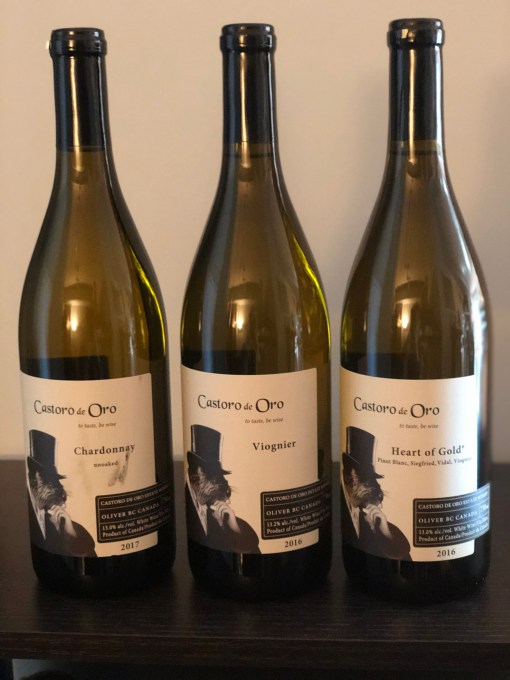 The Castoro de Oro estate vineyard was planted in 1980. Located in the esteemed Golden Mile, this site seems engineered by Mother Nature to deliver full ripeness in the grapes, yet not at the expense of acidity. Here we have vines facing southeast to provide ample sunshine, with the grapes also growing on a slope right next to a lake, factors that together work to mitigate any effects of frost. This is all well and good, but too much heat can cause flabby wines that lack precision. Fortunately, a mountain provides evening shade that permits the grapes to cool off during the summer, preserving tartness and resulting in a key balance between acid and ripe fruit flavours. This is particularly important for white wines, for which acidity is the only source of freshness and structure (well… for the most part. Tannins from wine skins and barrels sometimes play a small role).


 You see, four of the suspects hailed from the cellars of the Hatch, subject of a





 cabernetdialectic (Raymond Lamontagne)
 Dan Steeves
 Peter Vetsch
 tylerderksen
 pop & pour