KWM Whisky Advent Calendar 2017: Day 4

4 12 2017

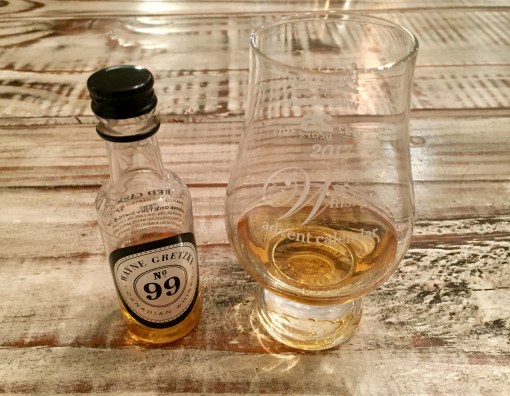
Man, this 2017 calendar just continues its emphatic strides towards difference and individuality and I just keep loving its uniqueness.  We get two new Whisky Advent firsts today (at least in my four years of following along):  (1) first ever CANADIAN whisky, and (2) first ever plastic bottle embedded in the calendar.  I almost dropped it pulling it out of slot #4 it was so light.  This is the very first ever spirit offering from Niagara’s Wayne Gretzky Estate Winery, the Red Cask Premium Crafted Whisky, which is distilled from locally grown grains and then, in a nod to its roots, matured in the winery’s own red wine barrels.  Very cool.  It has to be one of the least expensive whiskies ever to grace the KWM Whisky Advent Calendar as well, tipping the scales at a svelte $44 for a full bottle.

IMG_7141

This inaugural Advent offering from our home and native land is great to look at, a pleasantly burnished amber colour impressively obtained given what I wouldn’t expect to have been an extraordinarily long maturation period.  It smells equal parts spicy and toasty, cinnamon and charcoal, layered with elastic bands, Old Fashioned-style citrus and melon fruit.  The double-take portion of the whisky comes in the form of its ultra-satiny, almost gelatinous texture, like a Jello shot or an alcoholic Jujube.  It billows out on the tongue like a roasting marshmallow and then sits there, inflated and cooked on the edges, hanging out.  I wrote “is this rye-based?” when pepper and sandpaper started biting my tastebuds, and I was at least partially right:  it’s part aged rye, part malted rye and part corn-based whisky, each distilled separately.  The corn comes through in the Bourbon-esque caramel, burnt orange and Creamsicle flavours, lending easy approachability to the whole affair.  On the whole, while the mouthfeel seems slightly exaggerated, this stands up quite well as a solid weeknight sipper.  O Canada.


Bricks Wine Advent Calendar 2017: Day 3

3 12 2017

By Raymond Lamontagne

I should begin by emphasizing just what an honour it is to join Peter and Dan on this Bricks Wine Co. Advent journey. I remain a relative newcomer to the Calgary wine community yet have had the pleasure to meet so many knowledgeable, friendly, and dynamic people over the past year or so. It has been immensely moving and powerful to be welcomed into this community with open arms …  I wish to thank everyone from the bottom of my heart, and beg your continued tolerance as I haunt your shops, standing around the tasting bar, making random comments about terpenes or field blends and almost certainly distracting you from more important business.
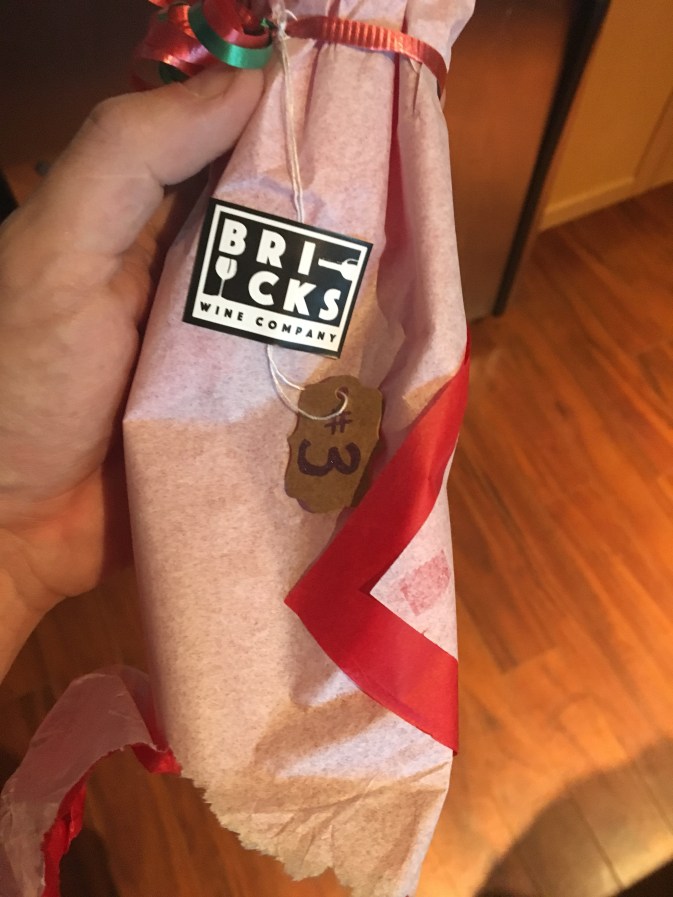
IMG_0483

The evidence …

I am ecstatic that my inaugural foray into the world of wine blogging is a Gruner Veltliner. Gruner is likely my favorite white grape. I say likely because Riesling sometimes bumps it from that lofty perch, as a function of day, my mood, producer or region in question, etc. This is a great microcosm for the reality in Austria, where Riesling continues to carry more status and prestige while Gruner toils away, sometimes in the doldrums of plonk for “wine pubs” but also at the pinnacle of age-worthy sips capable of winning prestigious tastings against world-class Chardonnays. I like well-crafted Gruner so much that one of my cats was nearly christened “Veltliner”. My partner swiftly vetoed this notion (but was ultimately OK with “Spatburgunder”). Why the obsession? Simply put, Gruner can get weird. A good tasting wheel will depict all manner of curious aroma attributes rarely experienced elsewhere, including green beans, lentils, root cellar, compost bin, lovage (a savory “old country” herb that vaguely recalls soy sauce or Maggi seasoning), old socks, the less polarizing apples and limes, and above all, white pepper. Peppery aromas in wine are due to a compound called rotundone, also found in a few other varieties (most famously Syrah). Although rotundone levels are notoriously susceptible to various wine-making decisions, Gruner can deliver a zesty, earthy vortex that garners an occasional comparison to Sauvignon Blanc but which in my view is wholly unique.

726bad72-5b6f-40a6-bfc5-d581cd18d287

Rotundone … One of the aforementioned terpenes and a much better molecule than TCA.

So what of this 2016 single vineyard Huber Obere Steigen? Markus Huber has expanded a 250 year-old family operation into a big success story with international reach, seemingly without compromising his focus on precise, elegant wines that express their origins. Huber gives Gruner its just due, with the latter comprising 75% of varieties handled at the winery. The Traisental DAC is a small wine region south of the Danube river, below the famed Wachau, and here terrior reigns supreme. Full of chalk and conglomerate rocks, the soils yield full-bodied wines with firm mineral structure. Gruner from this region is known to be particularly fruity as well, yet not at the sacrifice of that all-important peppery spice. The Obere Steigen site enjoys its own unique microclimate due to its terraced nature. This emphasis on terrior or place is relatively new in Austria. Historically, more emphasis was placed on variety alone. Controversy around this difference in emphasis remains, but Markus Huber appears more than happy to let his DAC flag fly.

IMG_0489This is a pleasing yellow hue with a slight green tint. Nose hints at the crystalline mineral power within. I’m getting yellow apple, fresh parsley, snap peas, mango, and a potent undercurrent of musty white peppercorn. The herbs are more vibrantly green than umami in character. On the palate this is precise and linear, with acids brisk but not punishing … Although hang on, there’s some tangy lemon juice bite after a few sips. A compost bin funk, like old apple cores and lawn clippings, starts to creep in around a fundamentally solid core of green pears and apples, white peach, and lemon-lime zest resting on a chalk and wet slate base. This gentleman is dressed in a dapper suit but there’s something off, perhaps some mud on his dress shoes. Fruit? Check. Minerals? Check. Rotundone? Check. I’ve had Gruners that bounce around a lot more than this one, flopping around like a fish in a boat and always changing their look. This one is less dynamic and more cohesive and laser sharp, with just a slight halo of corruption … Not a bad thing in this case.

IMG_0488

90 points


KWM Whisky Advent Calendar 2017: Day 3

3 12 2017

English whisky!!!  One of the very few improvement suggestions that I’ve had for Whisky Advent Calendars of years past was a slightly heavier global focus, now that world powers like Japan and Taiwan and India are starting to flex their muscles in the whisky arena with impressive results.  I did not previously include England in this category of nations knocking on Scotland’s door, nor did I even know that English whisky was a thing, but The English Whisky Company is here to make it one.  Just established in the latter part of 2006, featuring the new and sparkly St. George’s Distillery in Norfolk, England (which has as many bells and whistles and bistros and gift shops as any Napa winery), the English Whisky Co. produced England’s first single malt whisky in over a century a few years later and remains one of only a handful of active distilleries in the whole country.  Part of the impetus behind the founding of the venture was that Norfolk is a world premier region for barley (who knew those existed) whose crops were often shipped over to Scotland for use in scotch production; since whisky is basically malted barley, yeast and water and Norfolk had all of these things, they ultimately just decided to keep their barley and distill it at home.

IMG_7140

The most troublesome part of English whisky’s entry onto the global scene is that it wrecks the heretofore super-handy how-to-spell-“whisk(e)y” heuristic that I’ve repeated many times on this site:  if the country making the spirit has an E in it (e.g. Ireland), spell its product “whiskey” with an E, but if it doesn’t have an E in it (e.g. Scotland, Japan), spell it “whisky” without the E.  Well, thanks England:  this English Single Malt Whisky puts a big kibosh on that mnemonic.  The funniest thing about this is that they spell the name of this particular peated bottling “Smokey”, with an E, likely just to rub it in.

The Smokey is infiltrated with 45 ppm of peat phenols, which is tangible but not insane on the scale of peated whiskies.  It is pale and watery-looking and has all of the grimy industrial aromas that often attend when burned peat moss embeds itself into liquid:  old rags, mechanic’s shop, turpentine, baseball gloves, floating over wild grasses and canned pear.  The surprisingly viscous texture, round and warm, envelops you in smoothness, making the whisky come across much larger than its 43% abv.  It tastes sweet, to the point where I’m seriously mulling over the use of Splenda as a tasting note, attacking in confection with vanilla bean and icing sugar and cinnamon before the billows of smoke and diesel and moss roll in.  Welcome (back) to the single malt whiskey world, England — it’s good to have you.


Bricks Wine Advent Calendar 2017: Day 2

2 12 2017

This Wine Advent is not only historic for PnP as the realization of a longstanding calendar-format dream, but it will also mark the very first time in 400+ reviews that somebody other than me will take up the virtual pen for Pop & Pour.  I am honoured to be joined in this Advent blogging journey by two fellow Calgary students of wine who pair impressive technical knowledge with precise palates and a knack for communicating what they see and taste and feel:  Raymond Lamontagne (follow him on Twitter and Instagram here) and Dan Steeves (follow him on Twitter and Instagram too).  Their authorship journey officially starts tomorrow, as Ray will take the helm of the blog for Day 3 of Bricks’ wonderful (based on early returns) Advent Calendar.  But it turns out they came in handier than I expected earlier than I expected, and their palates and tasting notes were called on sooner…

IMG_7156

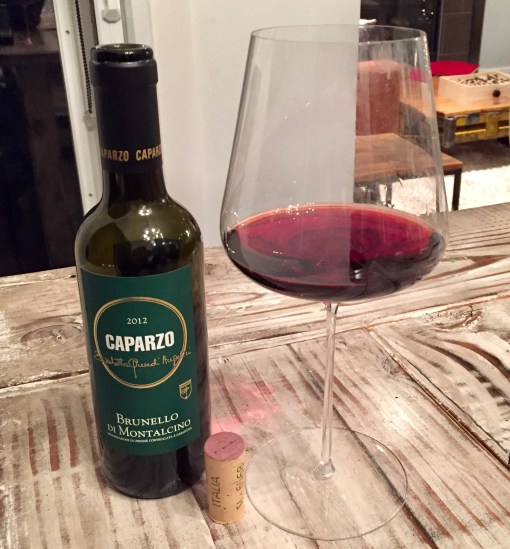
Not like I needed any more evidence that Bricks was taking this whole half-bottle Advent thing seriously after last night, but I got it the second I peeled back the wrapping paper on Day 2 and “Brunello di Montalcino” stared me back in the face.  Yowza.  More specifically, tonight’s bottle was the 2012 Caparzo Brunello di Montalcino, a traditional-style bottling from an old-school producer recently given new life.  Many know Brunello as Italian wine royalty, and likely the apex of what the Sangiovese grape can do (more specifically, Brunello was once thought to be its own grape varietal but later shown to be a particular clone of Sangiovese called Sangiovese Grosso), but its life as a classified wine region is surprisingly short — it only received formal DOC status in 1968.  Caparzo was founded at almost exactly that time, when there were only a baker’s dozen official Brunello producers in the world.  It was later sold in 1998 to Elisabetti Gnudi Angelini, who had married at age 20 into a pharmaceutical empire, was widowed young, and then took a left turn with her life into the world of Tuscan oenology, where she has become a standout.

IMG_7157

Cork Rating:  1/10 (Real Talk – This is one of the worst corks I have ever seen.  “Italia”??  Really? You’re a Brunello, for god’s sake!)

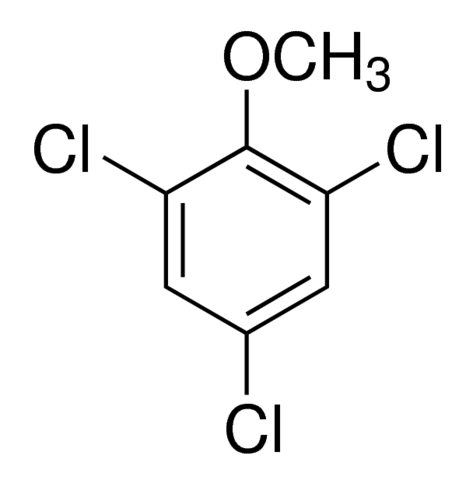
I LOVE Brunello.  I was not expecting to see a half-bottle of it, well, anywhere, let alone in Day TWO of this calendar, but I dove in with great anticipation, especially since 2012 was a highly esteemed vintage.  The wine was a gorgeous silky ruby in the glass and smelled like…mildew?  Old dirty showers?  Wet newspapers?  Oh come on.  I have been on a solid streak of luck when it comes to avoiding wine faults recently, but this bottle was horridly, outrageously corked, infected with the fungal-induced TCA compound from the cork (incidentally, they always say that smelling the cork is a plebeian’s approach to checking for taint, but this cork smelled like a dead giveaway, so maybe check your premises).  Ordinarily, throughout the entire prior history of my blogging career, my review would have been sunk — the wine was ruined.  But ordinarily I did not have TWO other people drinking the exact same wine with pens at the ready!  Raymond and Dan, called in on an emergency basis, sent me the following notes and (agreed) score for this bottle.  You guys are lifesavers.

mfcd00000588-large

Damn you 2,4,6-Trichloroanisole (TCA).  Worst molecule ever.

“Nose of dried red and blue flowers (iris, rose, potpourri), anise, white pepper, a whiff of roasted almond.  Palate is loaded with tart cherry pie, cranberry, tomato, and unripe raspberry smeared on a leather-bound book.  Some orange peel also emerges, along with oily tobacco, walnut, tar, coffee bean, and a handful of iron filings and road dust.”  [Ray]  “I get most of those descriptors as well.  I would say in general it’s not a big Brunello and seems meant for more early drinking but does have solid structure.  Definitely tart cherry and cranberry on the palate and then the leather, thyme, black tea and stone/rock dust flavours take over.  Originally I thought the finish was a bit short but as the wine opens more it lengthens — still not overly long but enough to make you contemplate why Brunello is so good.” [Dan]  I’m sad I missed the experience (mine tasted like mouldy laundry) but remarkably relieved that any readers of this post do not have to.  Fingers crossed for better luck tomorrow!

89 points


KWM Whisky Advent Calendar 2017: Day 2

2 12 2017

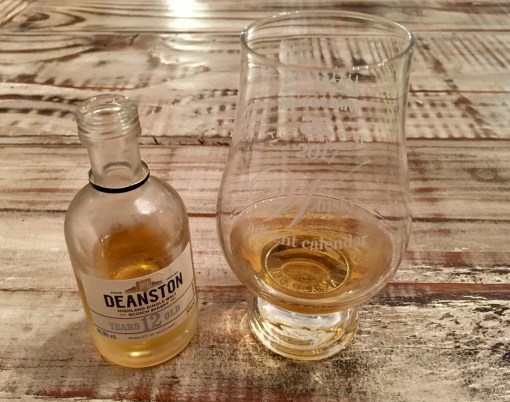
I am loving the confusion-inducing no-frame-of-reference newcomers in the 2017 KWM Calendar.  I am almost certain that this is the second offering in a row that has not even seen a sister bottling or other distant relative in any prior calendar:  the Deanston 12 Year Highland Single Malt rang exactly zero bells for me, although I did note that you could not ask for much more of a presentation contrast as compared to yesterday.  Some graphic designer actually worked on this bottle, and Deanston’s website is so slick that you instantly figure this must be another one-off distillery recently subsumed by a massive beverage giant.  And you would be right.

IMG_7110

As a distillery, Deanston is only a half-century old (and 8 of those years were spent not operating, so they may not count), but the distillery gets its history from its structure, a legendary shuttered cotton mill built in 1785.  After the mill closed in 1965, the distillery used its skeleton to start up business, releasing its very first single malt nine years later in 1974…and then ceasing production eight years after that.  The mill probably had a better track record.  In 1990, Deanston’s sold to a distilling conglomerate that is now part of the Distell Group, a South African-based giant which owns many many many alcoholic things (including the ubiquitous Obikwa and Two Oceans wine brands, among dozens more).  Not quite an old mill story anymore.

Deanston’s 12 Year offering is a beautiful deep amber colour after marinating in ex-bourbon casks.  The normal bourbon-induced sweet vanilla aromatic bounty doesn’t fully show up on the nose though, replaced by salt licks and a grainy mealiness, lightened by honey and flowers and sharpened by oolong tea.  Just like yesterday’s Cadenhead’s 12 Year, this one is gritty and biting on the tongue, almost even tannic, filled with cedar shavings and dust circling around frozen peach, burnt angel food cake, topsoil and butterscotch.  It has a similar blue-collar feel to the Cadenhead’s (or, more accurately, the Dailuaine-Glenlivet bottled by Cadenhead’s), but it’s nowhere near as evocative.  Not a disappointment for its $70 retail price tag, but not an overreacher either.


Bricks Wine Advent Calendar 2017: Day 1

1 12 2017

I am a realist when it comes to the reach and impact of this blog.  Calgary has a remarkable, informed, ambitious, impressive local wine scene, and my only goal in starting up this site years ago was to be a tiny voice in that massive chorus and find an outlet for my passion, whether anything came of it or not.  For the most part, I am simply an observer, experiencer and occasional reporter on the goings-on of Calgary wine life.  However, in this case, it’s at least possible that I was the catalyst for a great idea that Bricks Wine Company has now expertly executed.  About 12 and a half months ago, after seeing another set of annual Advent releases go by absent a particular format that I thought would be perfect for the occasion, I vented into the black void of Twitter…and was shocked to see somebody almost immediately respond and take up the task:

It’s one thing to send a two-word response on social media, and quite another to spend the time and effort to specially source two dozen half bottles of wine to assemble an Advent calendar for the NEXT year, so I didn’t allow my hopes to leap too high at the time, but now here we are, on December 1st, 2017, and I’m looking at a wooden crate filled with 24 beautifully wrapped and meticulously selected 375 mL splits, my Advent dream realized and in the flesh.  I am filled with awe and gratitude, and I haven’t even opened anything yet.  Way to go, Bricks — you really did it.

IMG_7027

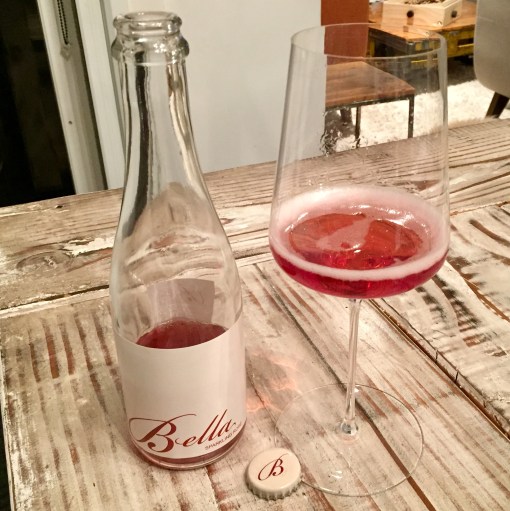
And if I was excited BEFORE peeling back the wrapping on Day #1, my anticipation only intensified after seeing what was on tap for Calgary’s inaugural Half-Bottle Wine Advent Calendar:  wine geek paradise.  Bella Wines is a producer about whom I have heard a ton over the past year, without yet having had the chance to try their wines for myself.  Bella is British Columbia’s only winery that is exclusively devoted to the production of sparkling wine — all bubbles, all the time.  And their approach is brutally uncompromising:  all natural farming, traditional method Champagne-style fermentation (where the secondary fermentation creating the fizz takes place in each individual bottle in which the wine is ultimately sold), all single-vineyard single-varietal expressions, wild yeast fermentation, no additives, no dosage; nowhere to hide, no messing around.  Bella makes multiple different bottlings of both pink and white bubbles, with their pigmented production focused entirely on the Gamay grape, which they believe has unheralded potential in the sparkling world.

IMG_7153

Crown Cap Rating:  8/10 (Stylized and retro, great font, CROWN CAP – I’m all in.)

So if you’re keeping track at home, Day 1 of Wine Advent features an Okanagan traditional-method single-vintage sparkling Gamay natural wine:  the 2016 Bella Sparkling Rosé Brut Natural “Westbank”.  Hot damn.  Bella releases annual sparkling Gamays from vineyards both west and east of Lake Okanagan, and the Westbank hails from the Beaumont Estate Vineyard in West Kelowna, on the slopes of Mount Boucherie. It is a beautifully confident deep watermelon colour in the glass (yay, non-deathly pale rosé!) and makes an emphatically lean, tart and frothy impression, launching aromatic bullets of cranberry, sour cherry and pomegranate fruit laced with grape skins and handfuls of gravel.  The flavours are pure and unforgiving, the lack of any added sugar after secondary fermentation clearly evident, the wine sharp as a razor’s edge on the finish thanks to Ginsu acidity and circular saw bubbles.  This Gamay practically vibrates with energy and electricity from the moment it hits the tongue, and that coiled tension doesn’t ever release:  not when the bubbles burst, not when you hold it in your mouth, not when you swallow.  It’s like watching a thriller movie that never ends.  If this is Day 1, we are in for a SERIOUSLY impressive Advent.  I did not know Okanagan bubbles could be like this.

90+ points

IMG_7151


KWM Whisky Advent Calendar 2017: Day 1

1 12 2017

Aaaaaand we’re back.  I am almost flabbergasted to say that this is the FOURTH straight year I will be live-blogging through Whisky Advent, all thanks to the near-superhuman efforts of Andrew Ferguson and the Kensington Wine Market, whose Whisky Advent Calendar has quickly gone from quirky daily education and liver damage to can’t-miss holiday imbibing and has sucked me further into the world of whisky than I could have expected.  By the end of Advent there will be over 100 whisky reviews on Pop & Pour, which is not something I had envisioned when the site first started up, but an experience I will never forget (especially on Advent Day 17 when I’m ready to die).  One big change this year is that I’m sadistic enough to have also acquired a Wine Advent Calendar this year (which you’ll hear much more about in a couple of hours) and will thus be calling on expert whisky assistance to help me traverse the Advent trail:  frequent PnP tasting collaborator and awesome spirit aficionado Tyler Derksen will be contributing his first whisky reviews on the site over the course of these 25 days.  Give him a Twitter follow so as not to miss his posts!

IMG_7101

Take 4.  Bring it.

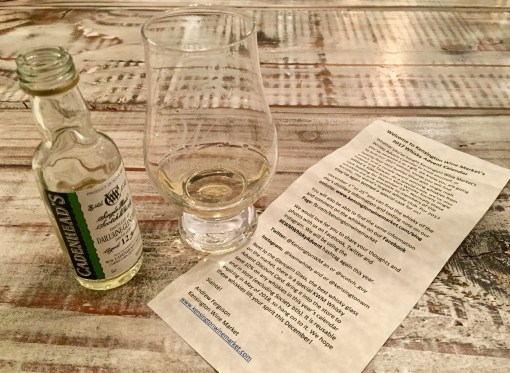
After opening 74-odd little cardboard doors and drinking 74-odd KWM calendar whiskies, you wouldn’t think there would be much room left for surprise, let alone confusion, but tonight there was plenty of both.  The first thing I saw on the whisky label was “Campbeltown”, a once-happening but now nearly abandoned distilling region (something I know due to Past Calendar Knowledge) currently home to only 3 distilleries.  The thing is, the names on this label were none of those three.  It turns out, as far as I can tell, that this is a release from an independent bottler called WM Cadenhead’s, who acquires pre-made whisky from distilleries and releases it under its own branding, a common Scottish practice.  The bottler is based in Campbeltown; the distillery from which the whisky came, not so much.  It is the extraordinarily unknown Dailuaine-Glenlivet Distillery in Speyside, founded back in 1853 and now, like so many others, part of the Diageo empire.  Despite its significant annual production, it doesn’t even have its own website and only the tiniest fraction of its creations get released under the D-G label — most of it ends up as part of the Johnnie Walker blend.  I’m not sure how Cadenhead’s got this, but it may be as much a peek behind the Dailuaine curtain as we ever get.

IMG_7102

First impressions:  this is 55.9% alcohol.  Welcome to Advent.  It is an almost eerily pale straw colour, and even with water added it still emits crusty cheese-rind and dried shoe polish aromas layered over hard toffee candy and smacks of salt sea air.  As you might expect of something of this concentration, it is both explosively fiery and pleasantly gut-warming, starting almost gritty but leaving glowing embers of contentment after you swallow.  It reminds me of an old abandoned log cabin on the beach, powered by kerosene, with bear pelt rugs and traces of fish skins lingering, matchsticks and Neo Citran.  It’s rustic, rough around the edges, but full of soul, and the more I had the more I enjoyed.  But again, 55.9%.  Onward!


Wine Review: Black Market Wine Co. – Contraband Portfolio Tasting

15 11 2017

[These bottles were provided as samples for review purposes.]

What do you do if you’re a busy Calgary-based professional with a hectic day job, multiple kids, a swath of family responsibilities, yet an ever-increasing burning passion for wine?  If you’re me, you start a small local blog and struggle to publish one post a week.  (Last post:  13 days ago.  Sorry guys.)  If you’re Rob Hammersley and Michelle Shewchuk, on the other hand, you pick up the hustle, go about 20 light-years further and start your own garagiste winery in the Okanagan on the side, while still juggling full-time careers, volunteer activities and parenthood.

IMG_7037

Branding majesty.

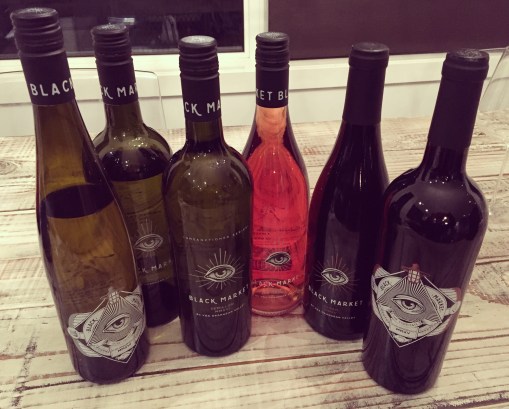
This cunning Calgary cabal has managed to work around their weekday gigs (Rob is in corporate finance; Michelle is a flight attendant) and their location in another province, forge relationships with local growers, learn the ropes of the winemaking business and come up with maybe the single best suite of branding for a winery anywhere in Canada, creating a bit of a cult following along the way.  Add in an early embrace of online sales and the Black Market Wine Company is quickly accelerating from illicit side dream to successful reality.

IMG_7052

I first came across Black Market a couple of years ago and was instantly drawn in by the Illuminati-meets-Ponzi-scheme labelling, looking like the back of the US dollar in some horrific alternate Dan Brown universe.  The striking images on the front labels draw people into the intentional web of secrecy and intrigue expressed in snippy verse on the back of each bottle, piquing curiosity and pulling people further into the glass for answers.  By then, you’re in the winery’s hands, waiting to be led where they want to take you.  It certainly does not hurt that the juice within does not disappoint (and that its creators are from my hometown), and I have followed their progress ever since that initial encounter.  This is the first time I have had an opportunity to taste through the entire Black Market portfolio, but not the last time I will be cracking these wines and letting the mystery wash over me. Read the rest of this entry »


Wine Review: Dirty Laundry, The Whites

2 11 2017

[These bottles were provided as samples for review purposes.]

IMG_7014

One of these things is not like the other…

Now that snow has blanketed the land and any remaining warm thoughts in Calgary’s mind have been augured away by blistering Arctic winds, I can fully admit that I tasted these Dirty Laundry wines in the wrong order.  I cracked the rosé and red portions of my sample pack back when fall was still a thing (last week) and saved the sunny patio portion of the tasting until it seemed like a cruel joke; serves me right for breaking with orthodoxy and not going lightest to heaviest like the textbooks all say.  But we persevere. I’ve always found Dirty Laundry’s white lineup to be a bit more impressive and consistent than its reds, and they have a particular affinity for Gewürztraminer, the grape that everyone seems scared to focus on too heavily but which truly rewards any such special attention.  However, tonight I got to dive into two bottles that I hadn’t tried before today, starting off with my favourite grape of them all. Read the rest of this entry »


Wine Review: Dirty Laundry, Pink & Red

26 10 2017

[These bottles were provided as samples for review purposes.]

IMG_6987

Okanagan label mastery.

Dirty Laundry is a winery best experienced in person, as it features a combination of location, history and brand awareness that is next to impossible to top.  It is perched up above the ideally named Summerland, BC, elevated over the Okanagan’s main highway, with vineyard views for miles and a patio strategically located to be drenched in scenery.  This spot was once, back in the era of the Canadian Pacific Railway’s initial construction, the home of a renowned and well-attended laundry service run by an AWOL railroad construction worker who had found a more lucrative calling; his fortune, and the popularity of his laundry business, was due in no small measure to the brothel being run discreetly on the upper floor while the clothes were cleaned below.  A couple of centuries later, the business currently occupying the land knows a good story when it sees one and has turned the tale of the dirty laundry into a branding behemoth that seeps into everything from wine names to labels to tasting room decor to the guest homes for rent on the property, the Bordello House and the Parlour House.  They commit to the identity, keep their humour on high alert and leave their prudishness at the door, and people keep coming back.

The wines themselves may be in a state of flux, caught between wanting to appeal to the widest possible audience and the crowds in for a good time and a novelty bottle-stopper and aiming for a higher level of quality, a product that captures attention in a different way.  I am rooting for them to succeed, as personality and creativity and branding effort are more than welcome in my own world of wine.  The below releases, recent rose and red offerings from Dirty Laundry and the first of a two-part review series, were an excellent chance for me to check in on the winery for the first time in a while and see where they were on their cheeky, quirky voyage. Read the rest of this entry »


Wine Review: Stag’s Hollow Fall Reds

18 10 2017

[These bottles were provided as samples for review purposes.]

IMG_6962

If this is where we are in the Okanagan, we’re in good hands.

What’s this?  Two reviews in the span of three days??  Is this inspiration or panic?  Turns out it’s a little of both.  For reasons that will shortly become clear, the next couple of months are going to be content-intense here at Pop & Pour HQ (aka my kitchen table), which has me geared up and focused on my current inventory of samples to make sure everything gets its full and proper due.  But I’ve also had a lingering eye on these particular wines ever since they landed on my doorstep, as they represent the latest missive in a wonderful conversation I’ve been having over the past months and years with one of the most intrepid, curiosity-filled, quality-focused wineries in the Okanagan Valley, Stag’s Hollow.  Over the summer I looked in on the white and pink side of their portfolio, but now that my trees no longer have leaves, the time has come to fully commit to autumn, and tonight’s trio of reds has me in the mood to cast off thoughts of T-shirts and shorts and embrace my favourite season.  This lineup features an Okanagan stalwart, only rarely done justice; an utter Okanagan rarity, borne of winemaker Dwight Sick’s unabashed intention to push viticultural limits in the region; and a burgeoning Okanagan star that will hopefully soon get the attention and acreage it deserves.  Pinot Noir, Grenache (!), Syrah. Read the rest of this entry »


Wine Review: 2012 Torres Mas La Plana

16 10 2017

[This bottle was provided as a sample for review purposes.]

IMG_6952

Cabernet royalty.

It’s Calgary municipal election night, so my plan was to put off this review until tomorrow.  Then I sat here for 10 minutes biting my fingernails and hitting “refresh” on the election results page on my phone every 60 seconds and realized that (1) the next four years of my civic life weren’t about to reveal themselves anytime soon and (2) I could use some guaranteed good news tonight regardless of political outcome.  And nothing screams “guaranteed good news” like the flagship wine of Miguel Torres, the most consistent larger-production winery I know.

If you have a photographic memory of this blog, you may remember that I have told the story of Mas La Plana once before; if you don’t, you can take solace in the fact that I almost didn’t remember this fact myself.  Nothing about this wine is quite as expected.  It is 100% Cabernet Sauvignon from Penedes, the heartland of Cava in eastern Spain near Barcelona, an area not remotely known for big red wines but blessed with numerous altitudes and microclimates that allow for pockets of warmth and create opportunity for special sites like the one that birthed this bottle.  It hails from a 29-hectare single vineyard planted before I was born, from Cab vines introduced to Spanish soil between 1964 and 1979 based on cuttings from numerous prior homes, including 1st Growth Bordeaux chateaux.  It looks strangely at home in a Burgundy bottle, unlike any other Cabernet Sauvignon I have seen on a shelf.

IMG_6955

Penedes was the first region in Spain to start using modern winemaking techniques like stainless steel temperature-controlled fermentation, and Torres uses them to great effect here to create a bottle that seamlessly communicates Spain’s history and potential to a global wine world, that imbues the Earth’s most ubiquitously successful commercial grape with the essence of the Torres family’s heartland.  Mas La Plana tells a story that was heard almost immediately, as the wine’s inaugural 1970 vintage beat out Chateau Latour and numerous other luminaries in the Cabernet category of French magazine Gault-Millau‘s 1979 Wine Olympics (which weirdly was the exact same competition that put Oregon Pinot Noir on the world map thanks to Eyrie Vineyards’ stellar showing against the best of Burgundy).  Yet it still retains its humble family roots:  its neck foil reads “Vinetum Paganicus”, a term sometimes used to designate top wines but which to the best of my meagre Latin translation ability appears to simply mean “vineyard of a village”. Read the rest of this entry »


Wine Review: Modern Italian Traditionalists

11 10 2017

[These bottles were provided as samples for review purposes.]

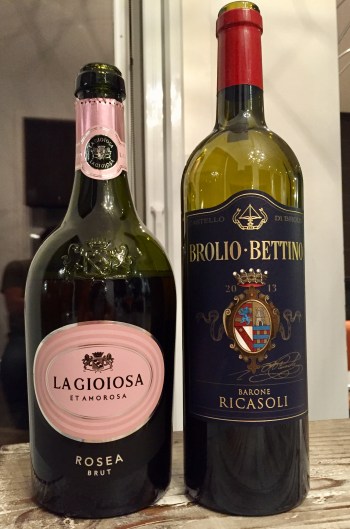
IMG_6926

Reunited with Italy.

I don’t know why, but before yesterday I hadn’t had a bottle of Italian wine for a long, long time.  I’m not a hater or a New World purist; I have a bunch of Italy in my cellar and rank certain Italian bottles and regions among my favourites in the world.  I’ve just been through a phase where nothing has drawn me to that corner of my wine racks in a number of months…there has always been something more enticing to my senses that has kept the country in the press box.  Well, no more:  in order to restore equilibrium to my wine world and reacquaint myself with one of the two traditional cornerstone nations of viniculture, I cracked a pair of Italian bottles last night and reminded myself of why Italy is viewed so loftily by grape lovers everywhere.

On the surface, the two bottles seemed to have very little in common:  one was playful pink bubbles, while the other was a legacy Chianti crafted to centuries-old founder’s standards.  But both in their own way were asserting their place in the often-calcified lore of Italian wine history.  The pink bubbles hailed from the province of Treviso in northeastern Italy, just north of Venice, the world home of Prosecco; but it couldn’t be called Prosecco by virtue of its hue and its choice to forego the region’s Glera grape (which was previously also called “Prosecco” in an attempt to be as confusing as possible), which took the wine out of the threshold criteria of the Prosecco classification. Even though it was produced by a generations-old Prosecco house, it wasn’t Prosecco, and it was OK with that, ambling on its merry mission to bring joy to those who opened it.  The Chianti was a modern take on a wine made to the recipe of a 19th century legendary figure, the one who first set down what it legally meant for a wine to be a Chianti.  While the first bottle gleefully acknowledged its place on the parallel track from history, the second not only embraced its history but walked in its footsteps.  In their own way, I admire each for their paths taken. Read the rest of this entry »


Wine Review: Calliope White Trio

3 10 2017

[These bottles were provided as samples for review purposes.]

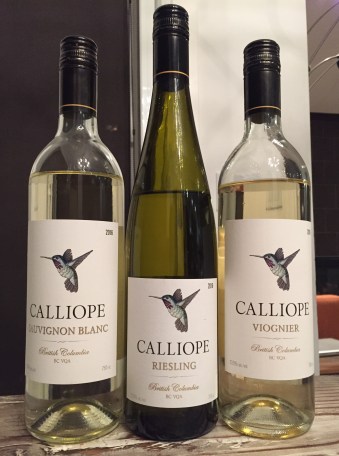
IMG_6891

Pop and pour power.

There are a few ways to measure how far British Columbia has come as a wine industry in the past 10-15 years, during which time for my money the jump in quality, understanding and identity has been close to exponential.  Here’s one way:  15 years ago, I don’t think you could have convinced me that a BC winery’s SECOND label could produce a suite of balanced, expressive and generally delightful wines worth seeking out.  In 2017, Burrowing Owl (or, more accurately, Wyse Family Wines, founders of Burrowing Owl) have managed that exact feat with the 2016 releases of their Calliope label, a lineup of wines that according to the accompanying campaign literature is meant for easy and early enjoyment; a true pop and pour.  Sourcing grapes from both the Okanagan and Similkameen Valleys, the Wyse family focuses mostly on whites for Calliope, creating (at times) multi-regional blends under the general “British Columbia” appellation, yet still under the BC VQA banner.  These are marketed as easy-drinking patio wines, meant for drinking rather than dissecting…but since we’re all here, let’s dissect them anyway.

IMG_6897

Stelvin Rating:  8/10 (See what you can do if you apply yourself to screwcaps?  Dead sexy.)

I was provided three different single-varietal examples of Calliope’s white regime:  Sauvignon Blanc, Riesling and Viognier.  When I’m drinking single-grape wines on the lower end of the price spectrum (these bottles probably straddle the $20 mark Alberta retail), the first thing I look for, even before balance of component elements or general deliciousness, is typicity.  In non-wino speak:  if the wine is a Sauvignon Blanc, does it smell like a Sauvignon Blanc?  Does it taste like a Sauvignon Blanc?  Does it help people understand what Sauvignon Blanc is all about, and does it then go the next step and show people what Sauvignon Blanc from its particular home region is all about?  Varietal wines that do this exhibit strong typicity, and as such become extraordinarily helpful barometers for both learning about wine and understanding your own preferences.  If these 2016 Calliopes have any major strength, it is dialled-in typicity:  they are clear and precise examples of what’s in the bottle and what comes out of the ground. Read the rest of this entry »


Wine Review: $21 Old World Supremacy

11 07 2017

[These bottles were provided as samples for review purposes.]

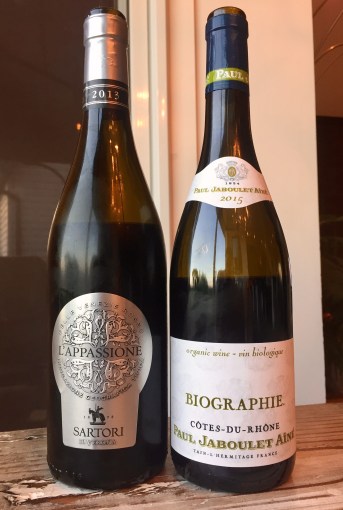
FullSizeRender-676This will be the last PnP post for a while – in a couple days I’ll be escaping the country on summer vacation and will not be thinking much at all about word counts or flavour descriptors while I’m gone.  Expect palm tree and sea turtle Instagram pictures and not much else until the end of the month.  I therefore felt compelled to send off July on the blog with a double-feature, a head-to-head review of two Old World value level wines with near-identical just-a-shade-over-$20 price tags and almost nothing else in common.  It’s Italy vs. France, a contest of different grapes, winemaking styles, vintages and approaches, with the main unifying links being longstanding traditional estates and a quest to over-deliver on quality for a supermarket price tag.  Enjoy the summer! Read the rest of this entry »