Calgary Wine Life: Famille Perrin Tasting with Thomas Perrin @ Avec Bistro

15 02 2018

By Dan Steeves

Excited is an understatement of how I felt yesterday as I was on my way to an amazing vinous and culinary experience at Avec Bistro featuring the wines of Famille Perrin and proprietor Thomas Perrin. I have always been fond of the wines of the southern Rhone, especially after travelling through the area a few years ago an experiencing the culture, the landscape…and, of course, the wine! Being guided through a tasting by any winery owner is always a privilege. Hearing directly from them about the history of their area, small details of their wines and their actual impressions of each bottle creates a personal connection that makes it such a memorable experience. Combine this with impeccably paired cuisine and it is elevated to a new level of sublime indulgence.

img_5565

Famille Perrin is a family-owned and -operated producer (Thomas, the 5th generation, along with his siblings and cousins, all work for the family business) in the southern Rhône Valley which is most notably known for their flagship label from Châteauneuf-du-Pape, Chateau de Beaucastel, although they have an extensive collection of wines from many other areas in the southern Rhone. They have been established for just shy of 110 years and are the leading organic grape grower in the area after Thomas’s grandfather, Jacques Perrin, pioneered organic farming practices in the 1950s which was followed by biodynamic practices in the 1970s. All wines produced by Famille Perrin are blends consisting of at least two grape varieties which are grown, vinified and matured separately and then blended to create a harmonious wine.  With there being 13 different grape varieties allowed in Châteauneuf-du-Pape (all of which are used in the Chateau de Beaucastel CdP, one of the only estates to do so) and still other varieties used in other wines elsewhere in the region, you can imagine how long and busy the harvest season is for Perrin. The harvest starts in August with the early ripening Cinsault and ends two months later with Mourvedre and Counoise. Vinification is then done separately using stainless steel, concrete, or wooden tanks with very limited oak ageing done, at least in the sense that no new oak is used to avoid imparting oak characteristics in the wines.

The tasting consisted of six wines from the Famille Perrin collection – a rosé aperitif, followed by a white and four reds, each accompanied with their own food pairing. Below are details for each wine (and food pairing). Read the rest of this entry »


Calgary Wine Life: Barone Ricasoli Luncheon @ Alloy Fine Dining

10 02 2018

By Raymond Lamontagne

I spent a lot of time at my grandparents’ growing up. Amongst the many fond memories (including my grandmother’s never-ending tolerance of my boundless energy and predilection for getting into various forms of trouble), I can recall that there were always a few fiascos kicking around the house, those round-bottomed bottles covered with a close-fitting straw basket that shall be forever associated with one of the world’s great wines: Chianti. Although the wine contained in most of these vessels was far from remarkable, over time a serious quality revolution occurred, one that led to the creation of the Chianti Classico DOCG designation. This important development was associated with a renewed commitment to meticulous winemaking as well as the elimination of winemaking techniques that were eventually appreciated to hinder quality (e.g., blending white grapes into a must that was largely red). At the same time, there was a dedication to preserving a unique identity; Chianti was and is a Sangiovese-dominant blend, not a varietal wine (at least usually…it turns out that Chianti Classico can be 100% Sangiovese!). As a newly christened regular contributor to Pop & Pour, I could not have been more keen to draw this tasting assignment, hosted by none other than Francesco Ricasoli. You see, Francesco’s ancestor Bettino actually invented the style.

IMG_0808When Francesco, a professional photographer, finally entered the world of winemaking, Bettino Ricasoli’s beloved Castello di Brolio estate had spent some time being passed from one multinational to the next. Enter a “contractual loophole” that gave Francesco a chance to purchase his family’s legacy from Hardy’s, based in Australia. Although he was initially unsure about whether this was a good idea, some helpful advice and prodding from a friend at Castello di Fonterutoli sealed the deal. Alas, there was much work to do. Francesco wanted to restore his wines to glory. He commissioned a three-year study to clarify the agronomic potential of his property and conducted trial plantings of fifty different Sangiovese clones, eventually determining which would perform best in his vineyard soils. The latter are largely calcareous clay with additional stony components and occur at a wide range of altitudes. Francesco was careful to explain his philosophy of “precision viticulture”. Under this approach, every vineyard parcel is a distinct entity yielding a unique vinous product. Parcels are each farmed according to their individual characters. The wines are all vinified separately to preserve their distinct attributes and are then thoughtfully blended. It became clear that Francesco does not like leaving winemaking to chance. “Why make mistakes that can be avoided?”, he asked, in response to a question about whether he uses selected yeasts for fermentation. However, he is passionate about preserving grape character. This is a highly intelligent man who thinks deeply about his wines, one who has the utmost respect for nature’s raw materials but who is not shy about steering vinification exactly where he wants it to go, according to his vision. Read the rest of this entry »


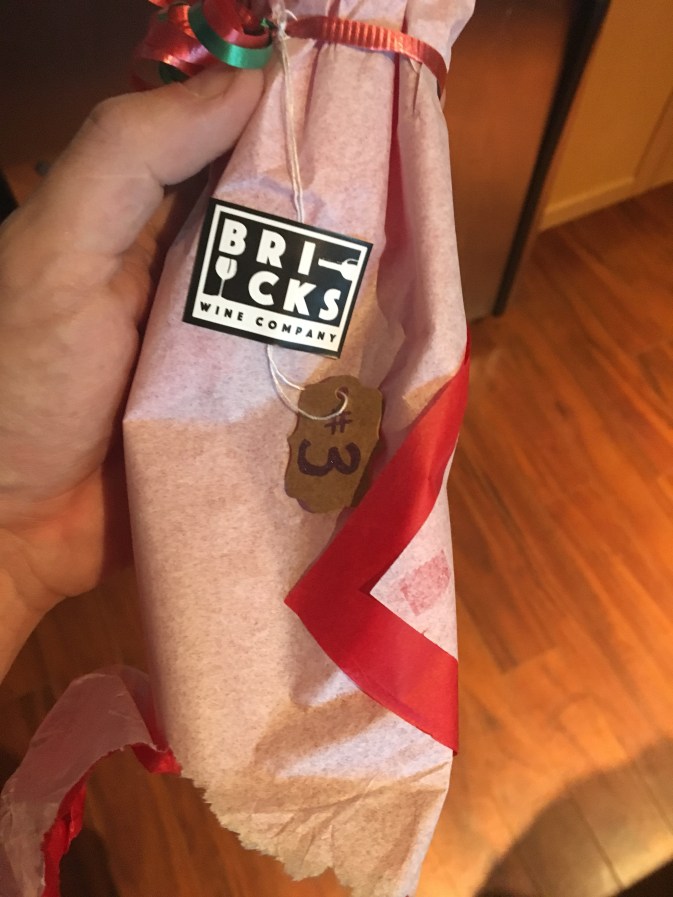
Bricks Wine Advent Calendar 2017: Day 3

3 12 2017

By Raymond Lamontagne

I should begin by emphasizing just what an honour it is to join Peter and Dan on this Bricks Wine Co. Advent journey. I remain a relative newcomer to the Calgary wine community yet have had the pleasure to meet so many knowledgeable, friendly, and dynamic people over the past year or so. It has been immensely moving and powerful to be welcomed into this community with open arms …  I wish to thank everyone from the bottom of my heart, and beg your continued tolerance as I haunt your shops, standing around the tasting bar, making random comments about terpenes or field blends and almost certainly distracting you from more important business.

IMG_0483

The evidence …

I am ecstatic that my inaugural foray into the world of wine blogging is a Gruner Veltliner. Gruner is likely my favorite white grape. I say likely because Riesling sometimes bumps it from that lofty perch, as a function of day, my mood, producer or region in question, etc. This is a great microcosm for the reality in Austria, where Riesling continues to carry more status and prestige while Gruner toils away, sometimes in the doldrums of plonk for “wine pubs” but also at the pinnacle of age-worthy sips capable of winning prestigious tastings against world-class Chardonnays. I like well-crafted Gruner so much that one of my cats was nearly christened “Veltliner”. My partner swiftly vetoed this notion (but was ultimately OK with “Spatburgunder”). Why the obsession? Simply put, Gruner can get weird. A good tasting wheel will depict all manner of curious aroma attributes rarely experienced elsewhere, including green beans, lentils, root cellar, compost bin, lovage (a savory “old country” herb that vaguely recalls soy sauce or Maggi seasoning), old socks, the less polarizing apples and limes, and above all, white pepper. Peppery aromas in wine are due to a compound called rotundone, also found in a few other varieties (most famously Syrah). Although rotundone levels are notoriously susceptible to various wine-making decisions, Gruner can deliver a zesty, earthy vortex that garners an occasional comparison to Sauvignon Blanc but which in my view is wholly unique.

726bad72-5b6f-40a6-bfc5-d581cd18d287

Rotundone … One of the aforementioned terpenes and a much better molecule than TCA.

So what of this 2016 single vineyard Huber Obere Steigen? Markus Huber has expanded a 250 year-old family operation into a big success story with international reach, seemingly without compromising his focus on precise, elegant wines that express their origins. Huber gives Gruner its just due, with the latter comprising 75% of varieties handled at the winery. The Traisental DAC is a small wine region south of the Danube river, below the famed Wachau, and here terrior reigns supreme. Full of chalk and conglomerate rocks, the soils yield full-bodied wines with firm mineral structure. Gruner from this region is known to be particularly fruity as well, yet not at the sacrifice of that all-important peppery spice. The Obere Steigen site enjoys its own unique microclimate due to its terraced nature. This emphasis on terrior or place is relatively new in Austria. Historically, more emphasis was placed on variety alone. Controversy around this difference in emphasis remains, but Markus Huber appears more than happy to let his DAC flag fly.

IMG_0489This is a pleasing yellow hue with a slight green tint. Nose hints at the crystalline mineral power within. I’m getting yellow apple, fresh parsley, snap peas, mango, and a potent undercurrent of musty white peppercorn. The herbs are more vibrantly green than umami in character. On the palate this is precise and linear, with acids brisk but not punishing … Although hang on, there’s some tangy lemon juice bite after a few sips. A compost bin funk, like old apple cores and lawn clippings, starts to creep in around a fundamentally solid core of green pears and apples, white peach, and lemon-lime zest resting on a chalk and wet slate base. This gentleman is dressed in a dapper suit but there’s something off, perhaps some mud on his dress shoes. Fruit? Check. Minerals? Check. Rotundone? Check. I’ve had Gruners that bounce around a lot more than this one, flopping around like a fish in a boat and always changing their look. This one is less dynamic and more cohesive and laser sharp, with just a slight halo of corruption … Not a bad thing in this case.

IMG_0488

90 points


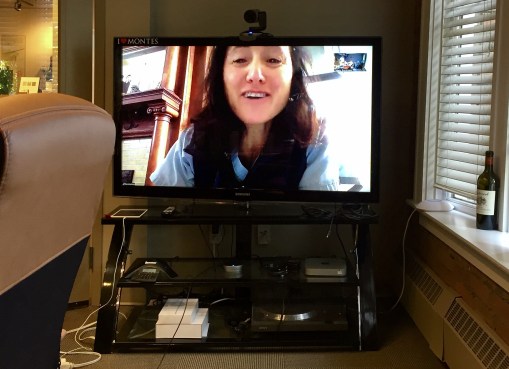
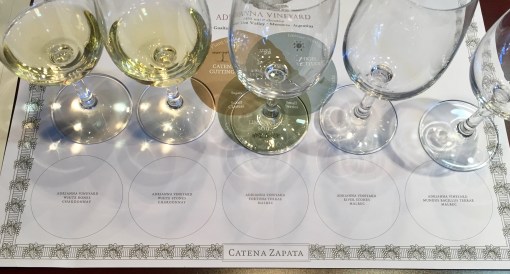
Calgary Wine Life: Catena Virtual Tasting with Laura Catena

26 08 2017

Laura Catena is my wine hero.  Her list of credentials reads as if it must have been accomplished by at least two people over the course of long, full lives:  fourth-generation winery owner, global Argentinian wine ambassador, Harvard magna cum laude, Stanford medical school grad, San Francisco emergency room and pediatric emergency doctor, multilingual published author, viticultural researcher and innovator.  And these parallel tracks of success are not a story of a mid-life career switch; she has been excelling in one of the most challenging careers in medicine and continuing her family’s proud wine legacy simultaneously, on two different continents, since she was in her early 20s.  As I have a hard time juggling more normal professional work demands and writing a weekly wine blog in the same city, I hold Dr. Catena in some degree of awe, as an example of what purpose and passion truly can accomplish in a single lifespan.

FullSizeRender-711

Argentina has long been highly ranked on global lists of national wine consumption, made up as it is of a high percentage of European immigrants and their descendants, who brought with them an imbued wine culture and the know-how to introduce vines and winemaking practices to their new home.  One such voyager was Nicola Catena, Laura’s great-grandfather, who came to Argentina from Italy in 1902, at age 18, and planted his first vineyard, which became the origin of Bodega Catena Zapata.  However, it was Laura’s father Nicolas, two generations later, who brought the winery to the world’s attention and ended up bringing the whole country along with him.

FullSizeRender-710

Nicolas travelled to California in the 1980s, shortly after the Judgment of Paris tasting in 1976, where Napa Valley Cabernet and Chardonnay were first thrust into the global spotlight after besting top Bordeaux and Burgundies in a surprising blind tasting that went viral.  He met up with Robert Mondavi, perhaps the man most insatiably driven to keep California’s star burning ever more brightly, and was inspired by the quality and ambition in this burgeoning rogue wine nation.  Convinced that Argentina could follow the same path to prominence and be the equal of California (not to mention France) in quality, Nicolas Catena returned home, sold the domestic-consumption table wine portion of the family winery, and zeroed in his focus on quality wines for export, aiming to “put Argentina on the map as a grand cru” for world wine.  He spent years studying climate patterns and geology and gradually came to realize that the most popular vineyard areas in Argentina at the time were mostly too warm for quality wine production.  He had two choices for cooler planting zones:  south, away from the Equator, or up, into the Andes.  He went up, and Argentina’s wine fates rose with him. Read the rest of this entry »


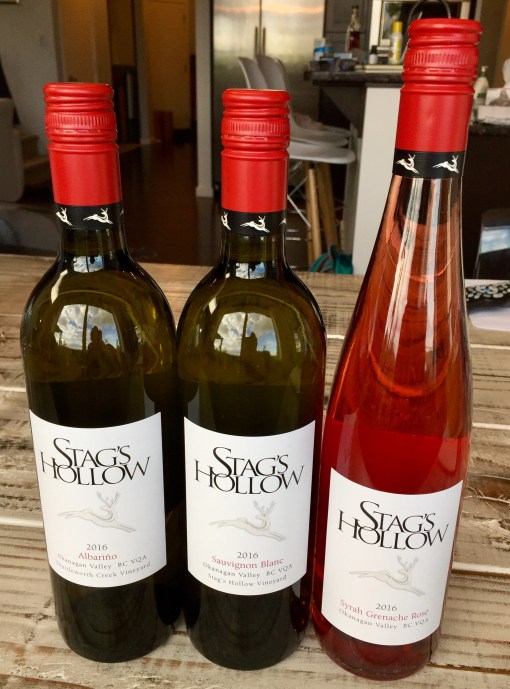
Happy Canada Day: Stag’s Hollow Summer Set

1 07 2017

[These bottles were provided as samples for review purposes.]

Happy Canada Day all!  Our majestic and humble home turns 150 today, which makes me both celebratory and reflective, emotions which both inevitably lead to wine.  (OK, many things inevitably lead to wine, but these do too.)  As a nation, even at its sesquicentennial, Canada is still young and developing, growing increasingly confident in its global identity but not yet possessed of that inner calm of countries who have already seen and lived through it all.  As a wine nation, we are younger still:  while grapevines have been planted in Canada since the 19th century, our movement towards becoming a commercial producer of quality wines probably only dates back 40 to 50 years; the oldest producing vinifera vines in British Columbia are likely of a similar age.  In many ways, we are still finding ourselves and only starting to chart our path.

FullSizeRender-668

British Columbia wasn’t blessed in centuries past with Burgundy’s army of soil-testing, site-delineating monks, who segregated cohesive parcels of land and determined which grapes did best in which spots.  As such, and without a suite of indigenous varietals to choose from, BC is playing global catch-up, still trying to sort out what might succeed in its soils and what is destined to fail.  In this New World landscape, it would be useful for the province to have a sort of advance wine scout, someone who is unafraid to push the envelope in terms of planting options and help set the boundaries for the area’s future course.

I nominate Stag’s Hollow Winery in the Okanagan Falls, which, led by winemaker Dwight Sick, has done nothing but innovate since I first found out about them.  Make reserve-level small-production Tempranillo?  Check.  Create the Okanagan Valley’s first-ever bottling of Grenache?  Check.  Solera-style fortified wines?  Orange wines?  If you can envision it, Sick and Stag’s Hollow have probably made it, and have expanded the range of possibilities for Canadian wine in the process.  A recent further jump:  Albarino, the crispy, crunchy white grape that is the pride of Galicia in northwest Spain, features heavily in Portugal’s Vinho Verde and has been gaining an increasing worldwide audience.  I had never yet seen a Canadian version of this hot and trendy grape – but if I had had to place a bet on who would be among the first to come up with one, it turns out that I wouldn’t have been wrong.  I got to check out this trail-blazing New World version of Albarino along with a couple other patio-friendly new releases from the winery just in time for summer. Read the rest of this entry »


Calgary Wine Life: Weingut Hiedler Tasting @ Bricks Wine Co.

26 06 2017

FullSizeRender-664

Ludwig Hiedler Jr.

When Ludwig Hiedler Jr. speaks, generations of knowledge echo in his words.  His career has spanned many years of education and experience, multiple shifts in approach, and innumerable hours spent questioning how to create and reveal the truest form of a wine.  He at first chafed against the layers of tradition quietly imposed on him like sediment by his ancestors, and pushed back against them by experimenting in all facets of his self-described “artisanal, emotional” winemaking style, only to eventually discover his own truth where it always was, embedded within his family’s values and legacy.  He is 24 years old.

Ludwig Jr., his father Ludwig Sr. and his brother Dietmar now collectively guide the course of Weingut Hiedler, which has been producing wine in northern Austria’s Kamptal region since 1856, longer than Canada has existed as a country.  Ludwig Jr. represents the fifth generation of Hiedlers to take on winemaking duties at the estate, steering the winery into the future with a nod back into the past, through sustainable chemical-free practices in the vineyard, next to no use of oak for maturation, and wines made as a pure reflection of site and vintage, with no stylistic or flavour preconceptions guiding the journey to the finished product and limited intervention during fermentation.  Hiedler uses native yeasts to ferment all of his wines, but in an interesting way:  he allows the ambient yeasts around the winery to do some of the work during fermentation, but has also harnessed certain selections of these native strains with which he also inoculates the fermenting must, propelling the ferment forward without introducing any element external to the winery.

FullSizeRender-660

Weingut Hiedler is a small piece of a 1,000+ year tradition of winemaking in Austria, and is part of a group of quality-focused producers working on taking the generational knowledge built up and passed down about vineyard sites, soils, aspects and qualities and creating a (long-overdue) formal comprehensive set of vineyard classifications for the country.  The Österreichische Traditionsweinguter (or the ÖTW for short, which translates to “Traditional Austrian Winemakers” and is roughly equivalent to Germany’s VDP) has identified a number of top “Erste Lage” (first growth) vineyards which they hope to see formalized at law in the future, bringing Burgundian rigour to Austrian soils.  Hiedler’s philosophy strives for longevity, tranquility, wisdom, harmony and elegance in its wines, a vision symbolized by the owl that graces its labels and has quickly become the most recognizable visual reference to the estate.

This was Ludwig Hiedler Jr.’s first ever trip to Canada, and his last stop in a hectic North American travel schedule before he returned to winemaking duties in Austria.  Before embarking on a transoceanic flight home, he graciously led us through a remarkable Gruner Veltliner and Riesling Masterclass at one of Calgary’s most impressive boutiques, Inglewood’s Bricks Wine Company.  Through four Gruners and three Rieslings, we got a clear sense of what Ludwig and Weingut Hiedler were all about, yet I still left thinking that there are many more undiscovered layers to both the man and the winery, to be unveiled in the coming decades of Hiedler releases. Read the rest of this entry »


Calgary Wine Life: Checkmate Chardonnay Global Challenge @ Sub Rosa

6 06 2017
FullSizeRender-640

Anthony Gismondi.

Checkmate Artisanal Winery has no shortage of vision or ambition.  It is both a newcomer to the Okanagan wine scene and the oldest of old hands, founded by Mission Hill proprietor Anthony von Mandl after his purchase of a pre-existing winery (Antelope Ridge, just west of Oliver) and some of its vineyards back in 2012.  Thanks in part to von Mandl’s existing land holdings, Checkmate began its life with elite sources of fruit from five top-tier vineyard parcels, the youngest of which is just shy of 20 years old and the oldest of which are some of the most senior in the country.  The vineyards scatter across the southern Okanagan:  there are two near the winery on the Okanagan’s first-ever formal sub-appellation, the Golden Mile Bench, two across the highway to the east on the neighbouring Black Sage Bench, and one literally 30 feet from the Canada/US border southeast of Osoyoos.  The fruit they produce is reflective of Checkmate’s quality vision and laser focus:  the winery makes SIX different Chardonnays and FOUR separate Merlots, and nothing else.  Their price is reflective of von Mandl’s burning ambition to elevate Canadian wine:  the Chardonnays range from $80 to $125 a bottle and the Merlots all clock in at $85.  It is probably safe to say that this country hasn’t yet seen a winery like this.

At the controls of this super-premium venture is winemaker and general manager Phil McGahan, who began his working life as a lawyer (I knew I liked him when I met him for some reason) and then switched gears and did winemaking stints in Australia’s Hunter Valley and for Sonoma cult Pinot and Chardonnay producer Williams Selyem before being lured north by Checkmate’s potential and master plan.  If your first reaction to the idea of a winemaker leaving California for Canada is surprise (or disbelief), McGahan went to great lengths to point to the Okanagan’s location vis-a-vis southern California as a selling feature:  with world temperatures rising in past decades, he saw Canada as being well-placed as a grape-growing region going forward, perhaps even better than existing warmer-climate regions that may soon find themselves outside of the ideal range for viticulture.  The Okanagan’s combination of (very) long summer days, extensive sunlight and substantial diurnal temperature shifts are proving increasingly attractive to grapes now tended with more careful farming practices, all of which makes up for the area’s shorter growing season.

FullSizeRender-635

The Checkmate wines are created with a quality focus from start to finish, consistent with the raison d’être of the winery.  The Chardonnay grapes are handpicked starting at 3:00 a.m., when it’s cooler, and the fruit is then stored in a cool room at 4 degrees Celsius for 24 hours before being hand-sorted and gently whole-bunch pressed.  Long and slow ferments ensue, mostly with wild yeasts to tease out additional flavours, after which the wines spend 16 months in barrel for better oak integration, with lees stirring towards the end before the Chardonnay is bottled unfined and unfiltered.  All six Chardonnays are made in the same fashion, leaving any distinctions or divergences in their flavour profile to be explained by the story of their site.

So how do you convince the buying public that not just one but SIX Okanagan Chardonnays are worth $80 or more a bottle, and that what is coming out of British Columbia currently can suit up with the best in the world?  You line them up with the world, don’t tell anyone which is which, and let the public see for itself.  That’s what happened this week in the James Bond villain subterranean lair that is Sub Rosa, the quasi-secret underground speakeasy beneath The Guild restaurant on Stephen Avenue, where Canadian wine luminary Anthony Gismondi and winemaker Phil McGahan led a curious crowd through a Judgment-of-Paris style blind tasting of ten Chardonnays, all at similar price points, six of which were Checkmate’s new 2014 releases and four of which were various international heavy hitters.  We had 30 panicky minutes to taste through the full set of wines and rank our favourites, after which each wine’s identity was revealed.  What did this experiment say about the present and future of cult, super-premium, site-specific Canadian Chardonnay?  Read on. Read the rest of this entry »


Calgary Wine Life: Thomas Perrin Beaucastel Component Tasting

23 02 2016

FullSizeRender-242I’m having myself a bit of a tasting month here.  A week after sitting down to some incredible 50, 51 and 52 year old Taylor Fladgate Ports, I was treated to one of the most memorable experiences of my wine life:  a chance to taste through the individual varietal component wines of the unparalleled Chateau de Beaucastel with proprietor Thomas Perrin, the first time such a tasting had ever been held in Alberta.  Beaucastel is the legendary estate of Chateauneuf-du-Pape, the top region in France’s Southern Rhone Valley and the first area declared to be an Appellation d’Origine Controllee (AOC – now Appellation d’Origine Protegee, or AOP) in 1936, known for producing rich, dense and complex reds and whites of remarkable quality and longevity.  The Perrin family has owned Beaucastel for over 100 years, having purchased it shortly after most of the vineyards were ravaged by the phylloxera louse and just before the scourge of World War I. Two wars, 100 hectares and five generations later, Thomas Perrin and his family members carry on the legacy of the Chateau and the Perrin name.

Beaucastel’s winemaking philosophy was created and entrenched largely by Thomas’ grandfather Jacques Perrin, whose name graces the estate’s top wine, Hommage a Jacques Perrin, released only in top years.  The elder Perrin converted the entire estate to organic viticulture back in 1962, when almost nobody would even have known what that meant and the prevailing wisdom pushed hard the opposite way, toward the increased use of vineyard chemicals and pesticides.  Chateauneuf-du-Pape permits the use of an astounding 13 different grape varietals, 14 if you count the white version of Grenache (reds – Grenache, Syrah, Mourvedre, Cinsault, Counoise, Terret Noir, Muscardin, Vaccarese; whites – Grenache Blanc, Roussanne, Clairette, Picpoul, Bourboulenc, Picardin), which is way more than your standard high-end rigid French appellation; Beaucastel makes a special point of using them all, white and red, in every vintage of its CNDP release.  They plant, harvest, vinify and mature each varietal separately, as each has a different growth curve and ripeness window, but in all cases they aim to tell the harmonious story of grape, soil, climate and region, of terroir, in their wines.

FullSizeRender-236

Read the rest of this entry »


Calgary Wine Life: Greywacke Tasting with Kevin Judd

7 10 2014

Kevin Judd is a New Zealand visionary, a trailblazer who has left a permanent imprint on the nation’s young wine culture.  As the founding winemaker of Cloudy Bay, now the near-ubiquitous signpost for the sharp, tangy, herbal style of Sauvignon Blanc that is instantly recognizable in the glass, Judd pioneered a flavour profile for New Zealand’s signature grape that put the country on the world wine map.  He helmed the ship at Cloudy Bay for 25 years, taking it from an unknown producer in an anonymous wine nation to a whirlwind New World phenomenon, the crown jewel of a Sauvignon Blanc revolution that saw millions of bottles fly off the shelves.

IMG_2063

After Cloudy Bay was sold to luxury brand behemoth LVMH (whose wine portfolio includes such luminaries as Krug, Dom Perignon, Chateau d’Yquem and Cheval Blanc, upper-crusters all), Judd finally realized a lifelong dream of starting his own label and making wines in a manner that best suited his palate:  riper batches of fruit, slightly softer acid, yet retaining all of the structure and complexity that a cooler climate can provide.  He called the new venture Greywacke, a name he had quietly reserved 15 years earlier while waiting for his opportunity:  the word (pronounced “grey-wacky”) refers to the grey sandstone rocks that are commonly strewn across New Zealand’s vineyards.

Read the rest of this entry »


Calgary Wine Life: Torres Mas La Plana 40th Anniversary Tasting

16 07 2014

photo 4For the CEO of a global wine empire, Miguel Torres Maczassek is a pretty chill guy.  Soft-spoken yet jovial, the 5th-generation head of one of the wine world’s largest family businesses initially comes across as unassuming, but his passion for his multitude of intercontinental wine projects and his pride in the Torres family legacy shines through whenever he speaks.  Torres (the estate) has vineyards and properties across all of the major wine regions of Spain and many other countries, and Torres (the man) recently spent 3 years living in Chile running the family’s operations there, making connections with local growers and taking steps to preserve and revive some of the country’s oldest known varietals.  He was in Calgary recently to help celebrate the 40th anniversary of Torres’ flagship red, Mas La Plana, which I have had and enjoyed many times before and which is one of those rare premium wines that can still be found locally at a fairly reasonable ($50ish) price point.  We had the opportunity to track the evolution of this wine through four different decades, from the 1980s to the 2010s, and to witness firsthand the steps taken to fully realize the family’s vision for its top bottling. Read the rest of this entry »


Calgary Wine Life: Sicilian Master Class @ Theatre Junction Grand

31 10 2013

Quick:  name a Sicilian wine producer.  Did you say Planeta?  Me too.  Name another one.  To my embarrassment, I couldn’t.  My list of known Sicilian producers ends at one.  This fairly sizeable void in my wine knowledge is particularly galling because, believe it or not, Sicily is the biggest wine-producing region in Italy:  it actually produces more wine per year than Australia, more than Chile and Bordeaux combined.  So why does it continue to have such a low profile?  Because, up until recently, the wine produced was not generally of high quality and was often sold off in bulk to other parts of the country instead of bottled on its own.  Even now, less than 20% of Sicily’s annual production is bottled for individual sale, and only 5% or so comes from a legally designated DOC region.  But there is currently a quality revolution underway in Sicily, one that has been brewing since the 1980s and that has seen many longstanding producers forego high yields and the sale of their crops by the ton in favour of more meticulous growing and winemaking practices and the creation of better wines under their own labels.  This week I got the chance to witness this transformation midstream.

image-7

Read the rest of this entry »


Calgary Wine Life: Cork & Canvas CPO Tasting @ Willow Park

6 03 2013

[Cross-posted at www.calgaryisawesome.com]

My two year-old son is going to his first symphony on Sunday.  Before the matinee performance of Peter and The Wolf, the Calgary Philharmonic Orchestra is putting on an Instrument Petting Zoo so that kids like mine who haven’t experienced live music can see and feel for themselves the difference between an oboe and a piccolo, a trombone and a timpani.  Our city’s remarkable orchestra is constantly innovating like this, striving to make symphonic music more accessible to a broader audience, whether it’s putting on these Symphony Sundays for smaller children or lending their arsenal of talents to performances of music from video games, The Lord of the Rings, or rock and roll bands like Queen.  This fun and unpretentious vibe extends to the CPO’s fundraising efforts as well:  if you want to, you can adopt your own member of the orchestra for a year, or book a concert for your child’s elementary school.  Or, like me, you can drink.

Photo1-162

Read the rest of this entry »


Calgary Wine Life: Taste With Piero Lanza of Poggerino

17 02 2013

[Cross-posted at www.calgaryisawesome.com]

There’s nothing quite like listening to winemakers talk about their own wines.  You can learn a lot about a wine by reading labels, going to websites, talking to shopkeepers and (of course) reading blogs and online reviews, but nothing gets you inside the soul of a wine faster than hearing the person who created it talk about what led up to its birth.  On Valentine’s Day, a few of us were treated to this rarefied experience at Vine Arts on 1st Street and 13th Avenue SW, where Wine Boy Imports presented an interactive tasting with Piero Lanza, co-owner and winemaker at Fattoria Poggerino in Tuscany, Italy.  Lanza led us through his entire lineup of classically inspired wines and made most of us mentally pencil in a trip to central Italy at some point in the future.

Photo1-157

Poggerino is first and foremost a family venture:  it was purchased by Piero’s grandfather in 1940, and he and his sister are the third generation of Lanzas to work on the property.  The estate is comprised of 43 hectares of land, although only 12 hectares are planted to vines (11 to Sangiovese, 1 to Merlot), with the rest largely covered in forest.  Lanza described the relatively narrow spread of the vineyards as “human-sized”, stating that he preferred to keep the operation on a scale that allowed him to personally work on all the crops and “speak to my vines”.  His passion for maintaining, preserving and expressing the essence of the land is powerfully sincere and has led Poggerino to be both organic and biodynamic in its vineyard practices.  “This land is mine on a piece of paper, but it’s really for everybody”, Lanza explains; many of his decisions with respect to the handling of his crops paint him as a steward for future generations.  He is focused on ensuring that the soils where his vines grow are constantly teeming with life and that the grapes themselves are merely one part of a thriving ecosystem instead of a single disruptive force that creates imbalance with its surroundings.  Given Lanza’s dedication to the land, it is not surprising that his winemaking style is devoted to reflecting the unique footprint of the soil through its grapes.  He keeps any intervention in the cellar to a minimum and aims to produce wines of elegance and intensity without excess concentration, keeping them fresh and food-friendly.  In his words, “I work hard to produce simple wines.”  We were lucky enough to try 5 of them, each somewhat different from the others, but all reflecting a common origin. Read the rest of this entry »


Calgary Wine Life: 6 Wines To Try Before You Die @ Vine Arts

3 12 2012

[Cross-posted at http://www.calgaryisawesome.com]

There are wine tastings and there are WINE TASTINGS.  And then, about 500 feet above those, there was the tasting I went to this past weekend.  It is not blog-boosting hyperbole to say that most of us who walked into Vine Arts on Friday night were stepping into a once-in-a-lifetime opportunity to try wines that we would literally never see again.  The rarity of the event was not lost on the buying public:  the Friday tasting sold out so quickly that Vine Arts scrambled to add an encore showing on Saturday, which sold out just as fast.

Photo1-131

What was so incredible about it, you ask?  It was the near-unheardof chance to taste six of the world’s most famous, celebrated, acclaimed and expensive wines in a single sitting.  Over a span of two hours, I crossed a number of vinous firsts off of my bucket list:  Try a 100-point rated wine.  Try the top dessert wine in the world.  Try a well-aged First Growth Bordeaux.  Try one of the all-time best wines from my favourite region.  And so on.  I have never seen ANY of the bottles in Friday night’s lineup available at another tasting in town, so having all of them together in one room for one occasion was a huge coup for owner Jesse Willis and the Vine Arts team:  it would be like a music lover arranging for the Beatles, the Rolling Stones, Pink Floyd and Bruce Springsteen to play at a single concert, with the Beach Boys and Queen as opening acts.  For wine geeks like me, this was almost a religious experience.  If you’re not a wine geek, hopefully the excited rambling above has gotten across that this was kind of a big deal. Read the rest of this entry »


Calgary Wine Life: St. Urbans-Hof Riesling Tasting @ Co-op Crowfoot

25 09 2012

[Cross-posted at www.calgaryisawesome.com]

Consider this less of a blog post and more of a public service announcement.  If you’re going to remember a single message out of everything I’ve ever written about wine, make it this little piece of advice:  DO NOT BE AFRAID OF GERMAN RIESLING.  I wish I could tell you that this was self-evident information, but there remains this persistent and lingering seed of doubt planted deep in the brains of casual wine drinkers in North America irrationally warning them that German wine in general, and German Riesling in particular, is something to be wary of.  Even (or rather, especially) people who haven’t tried it tend to avoid it, looking askance at its tall tapered bottles and Gothic multisyllabic labels, spouting the well-worn syllogism:  “I don’t like sweet wines.  German Riesling is sweet.  Therefore, I don’t like German Riesling.”  Most people who say this probably don’t realize that:

1.  NOT all German Riesling is sweet — in fact, there has been a concerted movement towards drier (“Trocken”) styles of wine in Germany over the past decade or so; and

2.  Even sweeter German Riesling isn’t sweet like other wines are sweet.  To me, the best expressions of Riesling are those where there is a little residual sugar left in the wine after fermentation, because that hint of sweetness is a necessary counterpart to the firestorm of acidity usually present in good German wines.  The delicate razor’s-edge dance between sweet and tart is the very essence of what German Riesling is all about, and to dismiss a key component of that ballet as something akin to what you find in a $6 bottle of insipid white Zinfandel is to do both yourself and these amazing wines a disservice.  Most people who say they don’t like “sweet wines” actually don’t like UNBALANCED sweet wines, wines with a bunch of leftover sugar and nothing else to level it out.  German Riesling is the antithesis of these kinds of bottles, and the best illustration that not all “sweet” wines are created equal.

If you get past the stereotypes and try a bottle of German Riesling for yourself, I predict you will quickly fall in love; to me they are the most individual, remarkable and memorable wines in the world.  And the best part about joining the German Riesling Revolution is that the wines usually offer remarkable levels of quality for a bargain price.  Many top producers make entry-level bottles that are widely available for under $20 CDN, some of the most impressive of which come from the well-known Mosel Valley winery of St. Urbans-Hof, instantly recognizable for its striking black and copper label design (see the bottle pics below).  Last Thursday, a lucky few of us attended at the Crowfoot location of Co-op Wine & Spirits to hear Urbans-Hof owner and winemaker Nik Weis talk about his property and share a half-dozen of his recent wines.

Read the rest of this entry »