NZSB Playoff Challenge

4 05 2016

[These bottles were provided as samples for review purposes.]
FullSizeRender-306

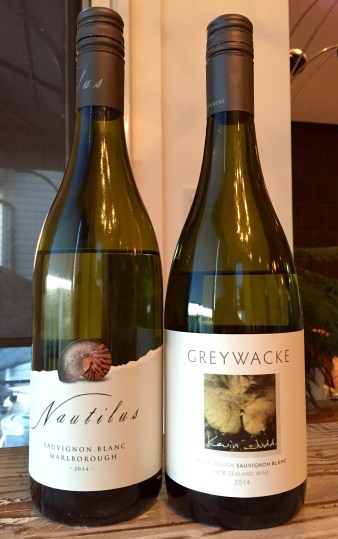
Two enter, one leaves. Well, actually zero leave; there were no leftovers.

I need very little reason to open and taste two bottles side by side, especially when their comparison can tell me even more about them and where they’re from.  Somebody decided that Friday, May 6th would be known as Sauv Blanc Day (or #SauvBlanc Day, to be more accurate, even though it makes no sense to put a space in a hashtag), although this is a fact not without controversy, as others seem to have settled on April 24th for International Sauvignon Blanc celebration.  We can all agree that some time within this two-week window would be a great opportunity to open some Sauv Blanc, and with the playoffs upon us in two of the four major professional sports leagues, my dining table was also primed for a showdown of some sort.  Enter the titans.

These two bottles are excellent references for each other, as both are from the same vintage (2014, a shorter growing season with a wet harvest), the same country (New Zealand), the same region (Marlborough, the kickstarter of the NZ wine industry and of global New Era Sauv Blanc) and the same grape (the aforementioned SB).  Flavour and textural differences thus largely stem from slight climatic and geographic alterations at the vineyard level and minor distinctions in winemaking choices by the producers, as well as whatever cosmic forces make good wines end up just so.  Going in, I have to admit I was leaning toward the 2014 Greywacke Sauvignon Blanc as the likely favourite; this winery, run by former Cloudy Bay winemaker Kevin Judd (who literally put New Zealand on the world wine map with a now-ubiquitous tropical/herbaceous style of Sauv Blanc), now turns out deeply personal, characterful expressions of the grape year after year.  They are no stranger to love from this blog.  But strange things can happen in the playoffs.  Onward. Read the rest of this entry »


Desert Hills Estate Six Pack

25 04 2016

[These bottles were provided as samples for review purposes.]

One of the things I love seeing most in Canadian wine nowadays is a renewed sense of focus on locating, separating and promoting quality subregions within an overall wine area, those special geological or climatic zones that yield wines with a distinct character and personality.  Anyone reading this in Europe right now may be incredulous at any such modern quest for discrete sub-terroir, as this process took place in many Old World growing regions up to a millennium ago.  We have a bit of catching up to do, and now we’re doing it.

FullSizeRender-298

This is critical for regions like British Columbia’s Okanagan Valley, which currently sees almost all wines coming out of it released under that general appellation name.  If you’ve ever stood in the breeze by the lake in Kelowna in August, and then stood in raging parched inferno of the Osoyoos desert two hours later, you’ll understand why “Okanagan Valley” doesn’t exactly capture any of the nuance of those two highly individual experiences.  Last year saw big news on the BC subregion front, as the Golden Mile Bench, a stretch of slope just west of the highway running from Oliver south to Osoyoos, became the province’s first ever recognized sub-geographical indication, meaning you’ll start seeing that name on bottles released this year in place of (or in addition to) the broader Okanagan designation.

FullSizeRender-296

If you walk east from the Golden Mile Bench and cross the highway, on the other side of the road you’ll find another slope, angled west, with extremely hot days and surprisingly cool nights, where vines grow on highly sandy soils that run hundreds of feet deep and require irrigation to retain hydration.  This is the Black Sage Bench, another obvious BC candidate for subregional distinction and home to some of Canada’s top wineries.  On the southern end of the Bench, nestled between Okanagan luminaries Black Hills and Burrowing Owl, is Desert Hills Estate Winery, a family-run producer founded by the three Toor brothers and focused largely on wines made from their aptly named estate vineyard, the Three Boys Vineyard, purchased in 1989.  The first released production from the vineyard was in 1996, and now, 20 years later, Desert Hills is solidly entrenched in the Okanagan wine world and making a renewed push into the Alberta market. Read the rest of this entry »


Wine Review: 2012 Jim Barry The McRae Wood Shiraz

5 04 2016

[This bottle was provided as a sample for review purposes.]

FullSizeRender-272

Serious, serious Shiraz.

I decided to have a good start to the week.  I usually hew to the age-old rule of opening nice stuff on weekends but sticking to the cheaper end of the cellar on Monday, but yesterday I said to hell with it:  forget convention, I’m opening something fun.  This led me to the upper echelon of my sample rack, and to one of the better Australian Shirazes I’ve ever had, Jim Barry’s The McRae Wood.  Excellent Monday decision.

Jim Barry’s wines are no stranger to this blog – I’ve reviewed his highly impressive entry-level Cab and Shiraz and his mind-blowing, Grange-challenging top-end Shiraz The Armagh.  This bottle is closer to the latter than the former, a reserve-level Shiraz clocking in at around $60 and often known as The Armagh’s little brother.  Jim Barry is based out of the Clare Valley in South Australia, an elevated and cooler-climate region due north of Adelaide and just northwest of Big Shiraz Mecca, the Barossa Valley.  Clare is best known as Riesling country and is about as stylistically different from the Barossa as you can get by travelling 100 km or so, producing leaner, less ripe and more elegant wines and rethinking what it means to be an Aussie Shiraz as a result.  The McRae Wood Shiraz is sourced from a special single vineyard in the Clare Valley, a 70-acre plot of land that Jim Barry purchased from his neighbour Duncan McRae Wood in 1964 to plant his very first Shiraz vineyard.  This eponymous bottling honouring the initial owner of the land was first released in 1992, making this the 20th anniversary vintage of The McRae Wood. Read the rest of this entry »


Wine Review: Pewsey Vale’s Regal Rieslings

16 03 2016

[These bottles were provided as samples for review purposes.]

FullSizeRender-262

I believe, Eden Valley. I believe.

I’ve talked before about how valuable comparative tastings can be.  Want to understand what Malbec tastes like, or what makes California Cabernet different from the same grape grown in Bordeaux, or what oak aging does to Chardonnay?  Don’t buy one bottle and drink it in isolation; buy two or three, which belong to your target group or establish your desired contrast, and have them together.  In this case my research question was:  how does Australian Riesling age, and what happens to it when it does?  My sample set was about as perfect as you can get:  two Rieslings from a star region (Eden Valley), from the same producer (Riesling expert Pewsey Vale), even from the same VINEYARD, separated only by six years of bottle age and the winery’s Museum Reserve library release program.  The results were phenomenal.

The Pewsey Vale Vineyard in the cool and elevated (and thus strangely named) Eden Valley, located northeast of Adelaide and right beside and above the Shiraz mecca (and actual valley) Barossa Valley, is a specialized Riesling-only shrine, exactly what you would see in the textbook description of a great Riesling site:  cooler climate (brought on in this case by its 500m altitude), poor rocky soils, hilly landscape.  The vineyard is 169 years old and has the distinction of being the very first spot planted to grapes in the area; when it was first planted in 1847, those inaugural vines included a few plantings of Riesling.  After the vineyard fell into disuse and disrepair, subsequent owners recognized its potential and single-planted the whole vineyard to Riesling in the 1960s, using cuttings from those first 19th century Riesling vines to do so.  Today all of Pewsey Vale Vineyard’s plantings have been propagated from those original 1847 vines. Read the rest of this entry »


Wine Review: Cloudline Pinot Duo

2 03 2016

[These bottles were provided as samples for review purposes.]

FullSizeRender-245

OK, yes, I totally had a glass of the PG before taking this picture.

The flourishing Pinot Noir vine of Oregon’s wine history is largely rooted in a man named David Lett, the founder of Eyrie Vineyards, the first person to plant Pinot Gris in the United States and the trailblazer who cemented Oregon’s place as a safe haven for Burgundian varietals.  Known as Papa Pinot, Lett entered his 1975 Eyrie Vineyards Reserve Pinot Noir in a prestigious 1979 blind tasting competition in Paris called the Wine Olympics, which featured hundreds of entries from around the world.  Absolutely nobody outside of Oregon in 1979 thought of it as a wine region, let alone a globally competitive one, but that started to change when the Eyrie Pinot placed in the top ten, beating many top Burgundies along the way.

One person who noticed the result was Robert Drouhin, third-generation head of Burgundy’s renowned Maison Joseph Drouhin.  The following year, unbeknownst to Lett, Drouhin set up his own Burgundy/Oregon rematch, pitting Eyrie Vineyards blind against a field of some of his top wines.  The Eyrie Pinot came in second in the group, just a hair behind Drouhin’s legendary 1959 Chambolle-Musigny.  As if that wasn’t feather enough in Oregon’s cap, Drouhin then proceeded to buy the cap too.  He visited Oregon, noted that its cooler, more temperate climate was a more welcoming environment for Burgundy’s Pinot Noir and Chardonnay than neighbouring California, had his daughter Veronique come work harvest with the Letts and others in 1986, then purchased land himself in the Willamette Valley’s Dundee Hills to grow the Pinot that had impressed him so much. Read the rest of this entry »


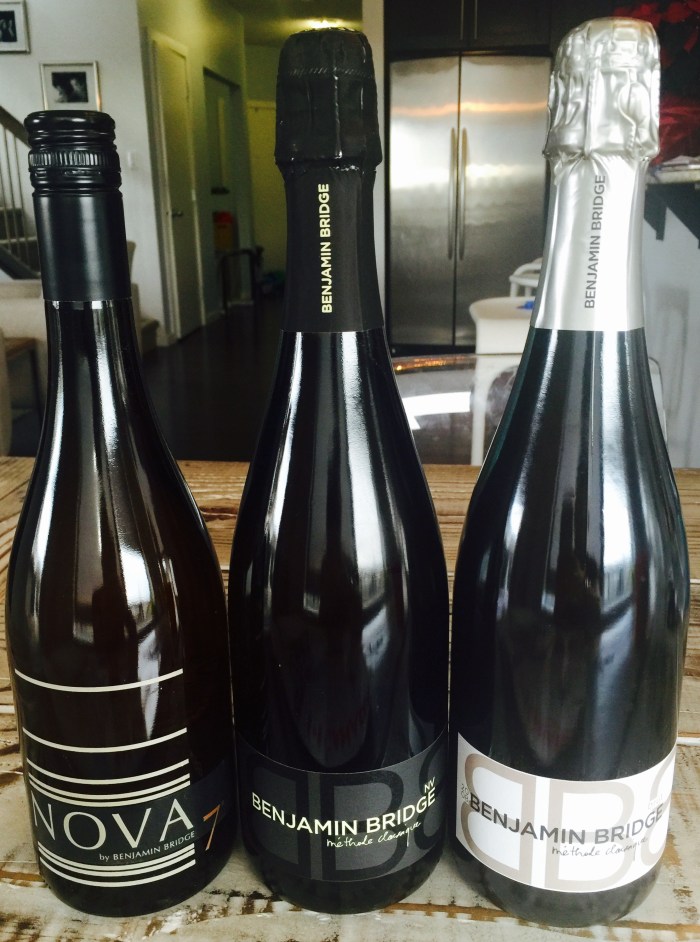
Beautiful Bubbles: Benjamin Bridge Trio

3 02 2016

[These wines were provided as samples for review purposes.]

If you have a passing familiarity with the Canadian wine scene, you’re probably pretty comfortable about what’s where.  You know that the two big players are the Okanagan and Niagara.  You know where to look for dynamite Riesling, Gewurz, Gamay and Cab Franc.  You may know about the potential rise of Syrah out west, about new possibilities in the Similkameen and a focus on subregional quality in Prince Edward County and the Golden Mile Bench.

But did you know that the best sparkling wine in Canada may well be made in…Nova Scotia?

IMG_3824

A Nova Scotia awakening.

Despite only being in existence for just over a decade, Benjamin Bridge definitely deserves a place at Canada’s bubbly head table, and to my mind they are already the cream of the crop.  Located in the Gaspereau Valley northwest of Halifax, in north-central Nova Scotia (bordering the Bay of Fundy as opposed to the Atlantic), Benjamin Bridge is without question the most acclaimed and well-known winery east of Niagara, producing a wide range of bottlings but focusing heavily on traditional method sparkling wines.  The Gaspereau, with its (unsurprising) cool climate and maritime breezes, delivers a colder, shorter growing season promoting leaner ripening and lower yields, one remarkably similar to bubbly’s Mecca, Champagne in France.  The marginal conditions and harsh winters mandate partial reliance on hardier and earlier-ripening hybrid grapes, which are not usually known for their complexity and delicacy in the bottle, but somehow the winery makes them sing, embracing rather than hiding them and adding a unique sense of intrigue to the wines as a result. Read the rest of this entry »


Wine Review: 2012 Marabino Noto

20 01 2016

[This bottle was provided as a sample for review purposes.]

FullSizeRender-216

I admit: I had to do a little research for this one. But well worth it!

Sicily is hot right now (figuratively at least; literally, it’s about +8 Celsius right now, and it’s 4:00 a.m. tomorrow morning).  After a lengthy history of exporting purely bulk wines for blending and bottling wines only for domestic consumption, this large island off the toe of Italy’s boot is suddenly undergoing a rapid and massive quality transformation, showcasing its indigenous varietals to the world and beginning to show up on wine lists and in boutiques all over town.  There are wines from vines grown on the side of an active volcano (Etna) and wines so close to the ocean they can smell the salt.  More and more Sicilian wine is being targeted for import, filling a gap in our drinking experience we never knew was there.

This is the second bottle of Marabino that I’ve had the opportunity to try; the first was their fantastic Eureka Chardonnay, exactly five months ago today.  Marabino is a relative newcomer to the island, established in 2002 as a fully biodynamic winery focused on growing Moscato, Nero d’Avola and Chardonnay, the first two native to the region.  Marabino is based in the Noto DOC, a UNESCO world heritage site featuring surprising white soils in the very southeast corner of Sicily.  While the number of classified Denomination of Origin zones in Sicily is continually growing, Noto has held this designation since 1974 and has an entrenched place in Sicilian wine history. Read the rest of this entry »


Wine Review: Jim Barry Value Red Showdown

13 01 2016

[These bottles were provided as samples for review purposes.]

I'm not making up the vertical/horizontal label dichotomy, right?  Totally something thematic there.

I’m not making up the vertical/horizontal label dichotomy, right? Totally something thematic there.

Australian wine is in sort of a weird place right now.  I first got into wine during the Great Shiraz Rush just over a decade ago, when critter wines ran rampant and the overtly ripe, sweet, boozy style and approachable branding of big-name Aussie Shiraz rolled over the global wine scene like a tsunami, spawning copycats galore and creating ripples that are only now just starting to settle.  The behemoth brands at the front of this wave are mostly still around today, and their bold, fruity, slightly concocted style certainly retains its share of popularity with casual drinkers, but the world has moved on to other phenomena and the scene in Australia seems caught in aftermath phase, not wanting to totally abandon what brought it to global prominence but understanding that its long-term prosperity is likely tied to being something more than liquor store filler.  The country is taking steps to avoid being a one-hit wonder, surprisingly churning out some of the best Riesling you’ve never tried, finding cooler pockets for Pinot Noir and (especially in Tasmania) sparkling wine, using its plentitude of remarkably old vines to its advantage, and dialling its Shiraz back a notch or two while still keeping it lush and appealing to New World palates.  It is also finding stronger and more quality-focused expressions of its value wines which are less industrial commodities and more genuine expressions of grape and place.  This is where Jim Barry comes in.

This family-owned producer is now run by second-generation executive winemaker Peter Barry, the son of eponymous founder Jim, who was the first qualified winemaker in South Australia’s Clare Valley, where the winery is based.  Its tailored lineup of wines runs the gamut from dynamite supermarket bargains (see below) to one of Australia’s very best and priciest bottles, The Armagh Shiraz (as experienced by me in one of my favourite tastings ever).  I was first converted to the Jim Barry cause a few years ago when I bought the Cover Drive Cabernet Sauvignon on a whim because of its circus-tent striping on the neck foil and the cricket player on the main label and was wowed by what I found inside.  I could be wrong, but by its participation in the JB value red duel below, I believe Cover Drive becomes the very first wine in PnP history to be reviewed in three separate vintages, following its write-ups here and here.  Can it hold off a spirited challenge from its neck-striped brother, the Lodge Hill Shiraz?  Let’s find out. Read the rest of this entry »


Wine Review: 2013 Culmina Dilemma

7 01 2016

[This bottle was provided as a sample for review purposes.]

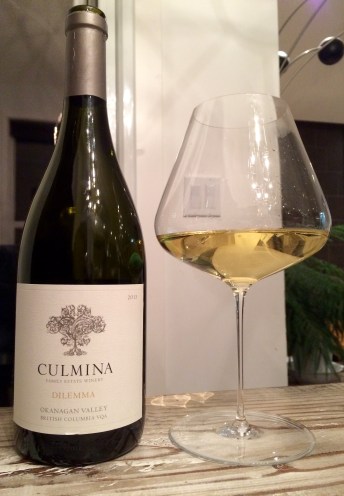
Great story, great wine.  And check out the sick Zalto Burgundy glasses I got for Christmas!

Great story, great wine. And check out the sick Zalto Burgundy glasses I got for Christmas!

Back in the saddle, and back to wine, for 2016!  I hope everyone had a happy and restful holiday season; I had a relaxing blog-free week and a half following my arduous 25-day whisky Advent marathon but am raring to start the new year of PnP off right, so I opted for a bottle that I highly suspected would be good.  Suspicions:  confirmed.

Culmina is one of Canada’s top wineries in my books and one of the most compelling stories on the Okanagan wine scene.  A spare-no-expense passion project spearheaded by iconic proprietor Don Triggs (the Triggs from Jackson-Triggs) and his family, Culmina has only been around for a few years, but through careful site study and selection and meticulous planting, it has been churning out wines of intrigue and quality from its inception.  I have previously waxed on about the winery and a number of its bottlings here and here , but this is my first time writing about what could very well end up being the crown jewel of its portfolio, the Dilemma Chardonnay.  I hope it’s not my last.

Read the rest of this entry »


Wine Review: 2008 Ratzenberger Bacharacher Riesling Sekt Brut

13 12 2015

[This bottle was provided as a sample for review purposes.]

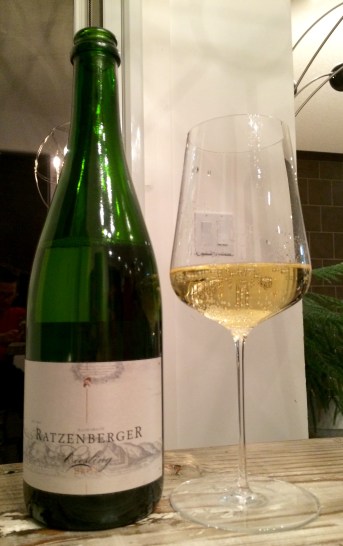
Redefining the world of German bubbly.

Redefining the world of German bubbly.

What’s this?  A wine review?  Isn’t this a whisky blog now?  OK, I probably deserved that.  But Advent only comes around once per year, and since no one yet has taken up the torch of my idea to find 24 good half-bottles and make a Wine Advent Calendar, this is what you get instead.  For those wine lovers out there just dying for the calendar to turn to January, this one’s to tide you over.

This bottle is another selection from Cellar Direct (cellardirect.ca), the online Canadian Natural Wine Club that allows people from all over the country to have high-quality, artisanal, naturally made wines shipped to their door via an array of tailored subscription packages ranging from $40 to $80 per month depending on your location and the package selected.  Since I last wrote about the service back in September, it has revamped its website, introduced an offer of two free bonus bottles for every 24-bottle annual subscription, and added an online shop (which will be operational in January) where Cellar Direct members can order more of their favourite bottles over and above their subscription.  It has also gotten rave reviews in BC, where price increases and regulatory chaos have otherwise made reasonably priced access to many good wines a pipe dream.

The one thing I can so far say for sure about Cellar Direct is that its selections are not fooling around; each of the three bottles I’ve now had the chance to try from their library have been of exceptional quality and proud ambassadors of where they’re from.  These are wines from somewhere as opposed to wines that could be from anywhere, and this gets all the more impressive given that this latest wine is a bottle of Sekt.  Nobody usually makes quality and terroir proclamations about Sekt (German sparkling wine), and for good reason:  most Sekt doesn’t deserve it.  In fact, it’s hard to say anything specific about Sekt as a category because it might be the least regulated category of Old World wine I’ve come across.  German wine law doesn’t mandate that Sekt be made of any particular types of grapes; it doesn’t even require those grapes to be from Germany; and it doesn’t require the wine to attain its bubbles any particular way.  Sekt is required to be at least 10% abv, but after that, all bets are off. Read the rest of this entry »


Rioja Quality Ladder: Bodegas Montecillo

11 11 2015

[These bottles were provided as samples for review purposes.]

Crianza vs. Reserva.  And one of the hardest sets of labels to photograph well.

Crianza vs. Reserva. And one of the hardest sets of labels to photograph well.

If I had to pick one European red wine region that was my Old Faithful, that always delivered quality and intrigue, regularly delighted and rarely disappointed, it would be Rioja.  Something about the wines coming out of Spain’s original star region just speak to me, offering up traditional character and depth and a unique voice at often-amazing prices.  Rioja is perched at altitude in north-central Spain, closer to Bordeaux (a 4 hour drive north) than Barcelona (5.5 hours east), and has long been the king of the Spanish wine world:  it was the first D.O. (Denominacion de Origen, or classified geographical quality region) in the country to be granted super-elite D.O. Calificada status in 1991, the highest quality category in Spanish wine law.  Only one other region, Priorat, has been awarded the designation since.  There are always challengers for Rioja’s crown in a country with soils, grapes, styles and traditions as rich and varied as Spain, but at its best, there is nothing quite like it. Read the rest of this entry »


Border Crossing: Kaiken Ultra Wines

28 10 2015

[These bottles were provided as samples for review purposes.]

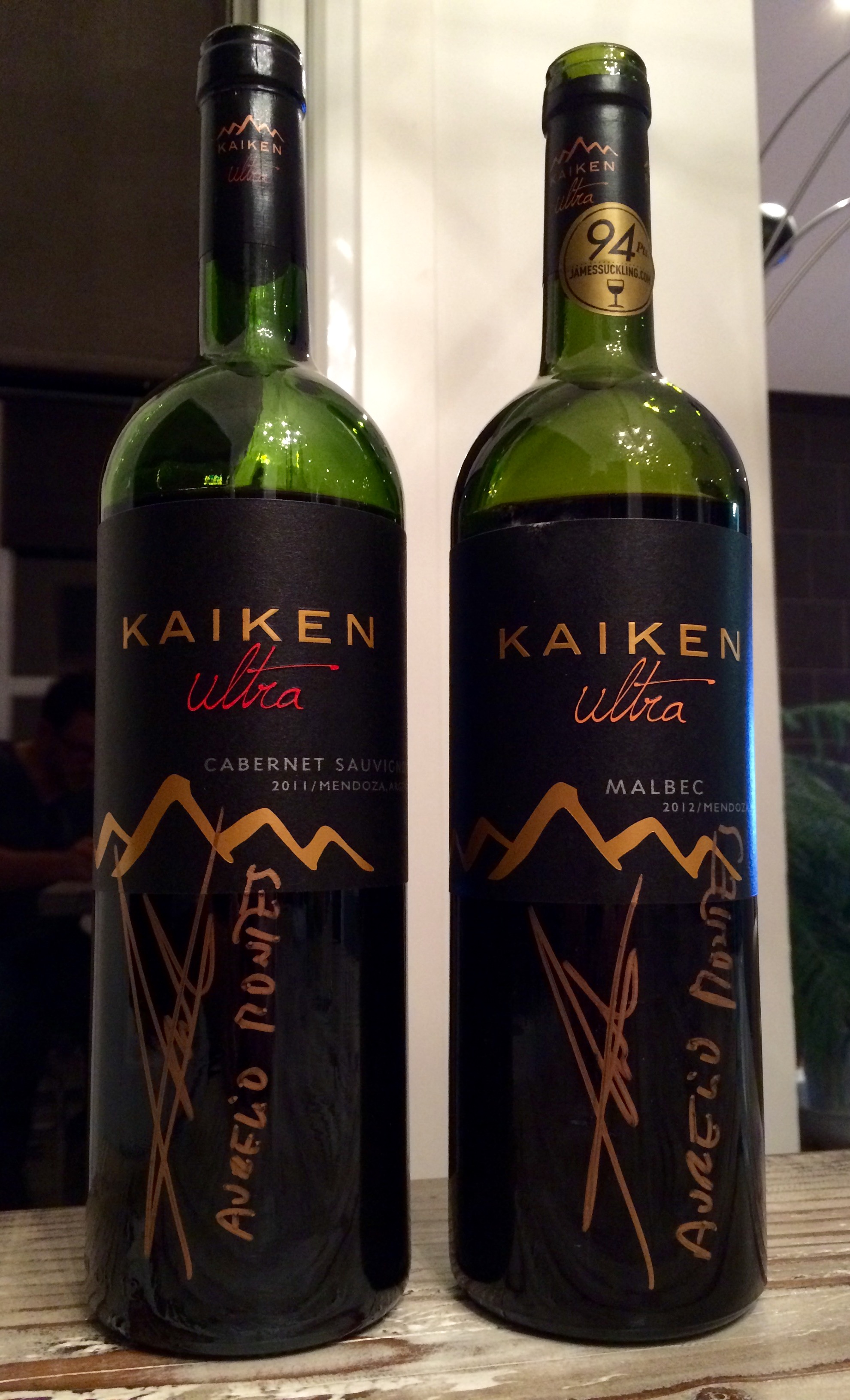
From Chile to Argentina with love.

From Chile to Argentina with love.

It’s not uncommon to see producers from other countries head to Argentina to create a second label or side project.  There’s lots to like about the South American nation as a startup hub, from truly unique altitude-induced terroir to surprising access to old-vine plantings to ultra-low input costs. What is unusual is for the immigrating winery to come from right next door:  Argentina’s skinny western neighbour Chile offers many of the same producer advantages and is often similarly sought after by wineries off the continent for new ventures, but you rarely see a producer from one of these countries set foot in the other to make wine.  That’s what makes these bottles interesting.

The Montes family is one of Chile’s pioneering wine clans, and its Vina Montes may be the country’s best known winery, churning out everything from weeknight wine champions to top-end stunners like Montes Folly, an unprecedented Syrah from Apalta that’s one of my favourite wines of all time.  Patriarch Aurelio Montes Sr. visited Argentina in 2001 and was immediately intrigued by the Andes-hugging Mendoza region; he wasted no time in deciding to expand operations there, starting up the Kaiken label in 2002.  The word “Kaiken” is an anglicized version of “Caiquen”, a type of wild goose that regularly travels over the Andes Mountains from Chile to Argentina, just like Montes himself.  Once the winery was up and running, he made the call to keep the winemaking in the family, recently naming his son Aurelio Montes Jr. as winemaker.  Kaiken owns three vineyards in Mendoza, two in and around the Lujan de Cuyo region near the town of Mendoza itself and one in the Uco Valley further south; one of the vineyards is fully biodynamic, a set of principles Kaiken is working to embrace. Read the rest of this entry »


Side By Side: 2012 Tinto Negro Malbec x2

7 10 2015

[These bottles were provided as samples for review purposes.]

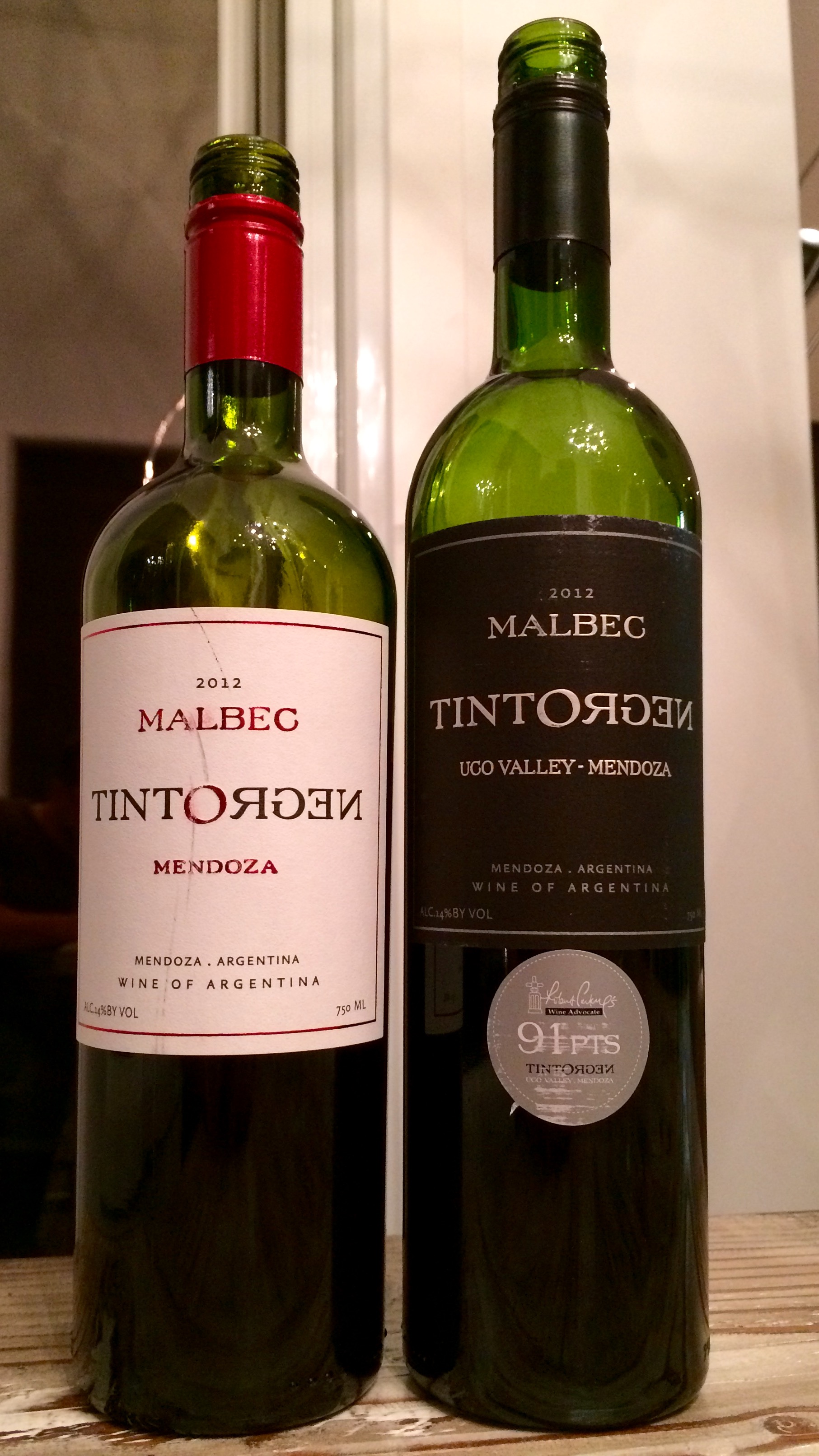
Malbec vs. Malbec.  Mendoza Civil War.

Malbec vs. Malbec. Mendoza Civil War.

Forgive me if you’ve heard me say this before, but:  comparative tastings are the best.  You can learn a lot about wine by taking your time over a single bottle, properly assessing what’s inside and picking out colour and smell and flavour notes common to a country, region or grape.  You can learn way more about wine by doing this to two similar bottles at the same time, with almost the same characteristics, but for a single isolated variable:  same wine, different vintage; same producer, different grape; same grape, different country.  You pick up a whole bunch of what makes them the same, but you can also focus on the impact that primary thing that makes them different and see firsthand the tremendous effect that every single input going into a wine has on the finished product.  You learn from both the commonalities and the distinctions.  Plus you end up with two open bottles of wine, which generally always leads to a good night.

In this case, the similarities are massive and the differences apparently slight, but the impact remains noteworthy.  These two bottles are from the same producer (Tinto Negro, founded by the ex-vineyard manager and wine education director of renowned Argentinian winery Bodega Catena Zapata), the same country (Argentina), the same grape (Malbec), the same vintage (2012) and even the same region (Mendoza, Malbec’s New World spiritual home nestled in the foothills of the Andes).  However, the first bottle, the 2012 Tinto Negro Mendoza Malbec, is an entry-level regional bottling, and the second bottle, the 2012 Tinto Negro Uco Valley Malbec, is from the next quality tier up, a sub-regional bottling from the Uco Valley sub-zone in southwestern Mendoza.  Apart from their divergent price points, you might have a hard time differentiating them in the store, but does this little sourcing difference make a difference?  When you taste them side by side, oh yes. Read the rest of this entry »


Wine Review: 2011 Barone Ricasoli Brolio Chianti Classico Riserva

30 09 2015

[This bottle was provided as a sample for review purposes.]

Modern Traditional Chianti.

Modern Traditional Chianti.

Barone Ricasoli holds itself out as the oldest winery in Italy.  Its history certainly marches in lockstep with that of its region, Chianti:  the winery’s eponymous founder was the man who first suggested the modern “recipe” for the standard Chianti blend — largely Sangiovese, blended with indigenous varieties Canaiolo, Trebbiano and Colorino — in a letter in 1872.  That mix has expanded and adapted since then, but Ricasoli has remained a constant in the area, producing Chianti at all price and quality points, from the entry level to the sublime.

This particular bottle is from the sub-zone of Chianti Classico, the traditional Chianti heartland at the centre of the region encompassing the original lands upon which that name was bestowed.  Chianti has now expanded significantly beyond that area, some might say for largely economic reasons and to the detriment of its reputation, as the lands surrounding Classico often do not quite live up to its hallmarks of quality.  The symbol of Chianti Classico, emblazoned proudly on this bottle in multiple places, is the black rooster, the gallo nero.  Why?  Legend has it that, back when the provinces of Florence (in the north) and Siena (in the south) were fighting over the territory of Chianti (right in the middle), they settled on a contest to determine their mutual border:  they would each pick their best knight, who would ride from his city towards his opponent as fast as his horse could take him once the rooster crowed, and wherever they met would mark the new edge of each province’s lands.  The Florentines had a black rooster, and before the date of the contest they kept it locked up in a box with no food, so that when it was finally released on the day of the race, it crowed much, much earlier than dawn, giving Florence’s knight a massive head start.  The Florentine met the Sienese knight just outside of Siena’s walls and thus scooped all of Chianti for Florence, giving the black rooster mythical status in the process.  This is the best part about wine:  everything has a story.  You just have to find it. Read the rest of this entry »


Wine Review: 2011 Bila-Haut L’Esquerda

23 09 2015

[This bottle was provided as a sample for review purposes.]

Bila-Haut: The label that can't miss.

Bila-Haut: The label that can’t miss.

What??  There’s another Bila-Haut?  Readers of this blog will know that I have long been a fan of the best-known wine from Rhone legend Michel Chapoutier’s Roussillon side project, the excellently named Occultum Lapidem, and I have also recently had the chance to enjoy their near-equally awesome rose.  But I had neither seen nor heard of this mustard-coloured addition to the Bila-Haut lineup, L’Esquerda, before being provided this bottle to try.  I won’t be forgetting it anytime soon.

Like the Occultum Lapidem, the Bila-Haut L’Esquerda is from a particular high-quality subregion of the Cotes du Roussillon Villages area in the extreme south of France, almost stepping into Spain.  While the Occultum Lapidem hails from the mouthful Cotes du Roussillon Villages Latour de France subregion, the L’Esquerda comes from a single vineyard nestled in its westerly neighbour, the nearly-as-wordy Cotes du Roussillon Village Lesquerde subregion, located slightly further inland from the Mediterranean Sea, immediately south of red dessert wine rock star zone Maury, and due west of another Roussillon sub-zone that’s gotten digital ink on this site lately, Tautavel.  The word “L’esquerda” is Catalan for “the fault in the rock” and is likely a nod to the nutrient-poor granitic soils of the area.  Mainly Syrah, but blended with Grenache and Carignan, L’Esquerda has basically the same varietal makeup as Occultum and is made in a very similar fashion:  from old-vine grapes (40+ years), with extended maceration periods post-fermentation (3-4 weeks) and with limited oak aging (10% or less of the blend sees a barrel).  No wonder there’s a family resemblance.

Read the rest of this entry »