Champagne Day: Taittinger Portfolio Tasting

21 10 2016

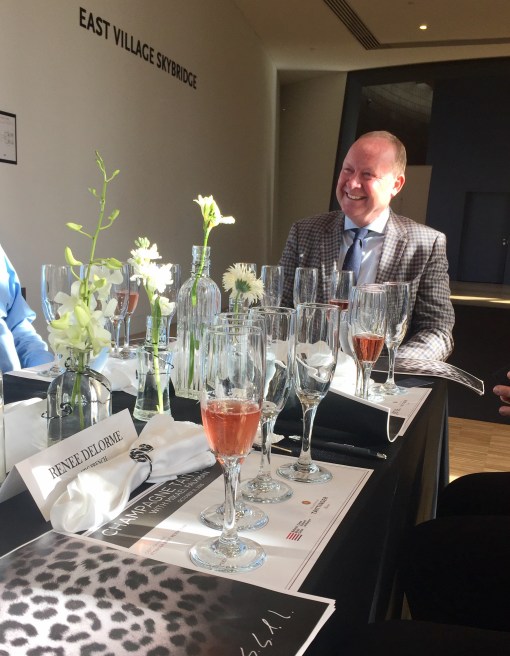
Happy International Champagne Day, all!  If you follow wine media long enough you realize there’s a designated day for basically every country, region and varietal imaginable, but if someone wants to concoct an additional reason for me to drink Champagne, I will take them up on it.  To celebrate this illustrious occasion, I was fortunate enough to take part in a comprehensive tasting of a selection of Taittinger’s impressive lineup of Champagnes, which was particularly special for two reasons:  Taittinger’s International Business Developer Mikael Falkman had flown in from Sweden to lead us through it, and it was the inaugural Alberta release of the astonishingly rare and collectible 2008 Taittinger Collection Series, a bottle unlike any other I have seen to date.  Adding to the auspiciousness of the event was that it was held in the Skybridge of the spectacular new National Music Centre in Calgary, an event space suspended over a road and constructed as a piece of living art, complete with a ceiling fixture made from old instruments that emitted a continual buzzy tune aligned with the vibrations of the building.  Suffice to say it was not your usual Friday.
fullsizerender-445

Mikael Falkman, Taittinger; impeccable brand ambassador.

Taittinger has been around for nearly a century but is particularly catching fire in my neck of the woods right now as the fastest growing Champagne brand in western Canada.  Founder Pierre-Charles Taittinger was a soldier who was wounded in battle in World War I and who recuperated in a town in Champagne, in a memorable old castle that was being used as a command post.  He grew to love the area so much that he vowed he’d return someday and buy the castle, and he did, taking over the chateau and its vineyards in 1932 from Champagne house Forest-Fourneaux and rechristening it in his family name.  Taittinger stayed in the family until 2005, when it was sold (over the objections of one family member, Pierre-Emmanuel Taittinger) to Starwood Capital Group, which owns the Starwood chain of hotels.  The purchasers’ interest was largely in other portions of the Taittinger empire, which included hotels and a parfumerie, and the Champagne business was shortly on the market again.  Pierre-Emmanuel Taittinger managed to get a financing group together and bring the house back to the family that gave it its name, a move that may have saved both the family’s legacy and the quality and reputation of the brand.

fullsizerender-440

Mikael Falkman has been with Taittinger for many years and has lived through its various recent changes of ownership, and he radiated a sense of ease and confidence about where the house is now and where it is going.  Falkman led us through a lineup of five wines, starting with the clean, linear Taittinger Brut Reserve NV and progressing into a quartet of the house’s finest offerings, each reviewed in detail below.  He spoke at length about Taittinger’s house style, which has remained consistent since the house got its current name, focused on freshness, elegance and minerality, eschewing heavy oak and focusing primarily on the Chardonnay grape.  “Notice that there are no spittoons on the table,” he intoned to start, his meaning evident:  this was exquisite, expensive, premium Champagne, and we would be drinking all of it.  Didn’t have to tell me twice. Read the rest of this entry »


Value Burgundy Battle: The NEW Cellar Direct

20 10 2016

[These bottles were provided as samples for review purposes.]

fullsizerender-434

Cellar Direct Does Burgundy.

Conscientious readers may remember this post from over a year ago where I introduced Cellar Direct, an Alberta-based online national wine club featuring subscription-based access to a specially-curated selection of non-interventionist natural wines.  Thirteen and a half months later, Cellar Direct is still doing its thing, but under a revamped and significantly more flexible business model.  Now, instead of paying a fixed amount per month for semi-recurring shipments of pre-selected wines, you simply keep an eye out for regular wine offers (generally to be unveiled weekly on Saturdays) and then place an online order for as few or as many bottles as you want, which are shipped to you shortly afterward in temperature-controlled trucks to keep your wines in cellar-like comfort during transport.  This simpler, less demanding offer-based approach is a boon to buyers in the tighter economic times in which we currently find ourselves in this province, and Cellar Direct’s streamlined e-commerce interface allows them to keep prices reasonable even while offering highly researched, quality-focused wines from traditional producers that truly pop and that you won’t see at your neighbourhood wine store.  If any of that piques your interest, you can sign up for the club’s offer newsletters and find out more info at cellardirect.ca.

Cellar Direct’s first online offering under its new and improved structure was the excellent  Senorio de P. Pecina Rioja Crianza that I have already gleefully tried.  The next offer is due out this Saturday and tackles what is often considered (including by me) to be the biggest oxymoron in the world of wine:  value Burgundy.  Wines from Burgundy can make the toughest weep and turn the deepest skeptics into lifelong followers of the vine; unfortunately, they can also empty your wallet with shocking efficiency and leave you feeling underwhelmed and disappointed.  It can be exceedingly difficult, especially at lower price points (which for Burgundy can mean anything under $50ish), to know what you’re going to get in any given bottle, and finding anything $30 or less that properly showcases the region can be a massive challenge, especially when you’re not sure where to look.  Cellar Direct’s upcoming offer this week, as well as a further offer coming in mid-November, try to be your map and compass to this frustrating yet enchanting region of legend.  Let’s see how they do, starting with a bottle due to hit your inbox in a few days… Read the rest of this entry »


2013 Emiliana Novas Gran Reserva Carmenere/Cabernet Sauvignon

13 10 2016

[This bottle was provided as a sample for review purposes.]

fullsizerender-430

Chile: home of Carmenere and inexpensive quality.

If you were starting up a wine venture today and were looking to maintain high quality but stretch your viticultural buck as far as possible, you would almost certainly go to Chile.  While braver souls are now starting to venture to the more extreme climatic and geographical parts of the country in search of cutting-edge lands and the flavour potency and complexity that can come with them, those who stick to Chile’s warm central valley find themselves in something close to a grape-grower’s paradise:  warm, mild, consistent growing seasons, refreshing cooling breezes at night off the surrounding mountains and a relative lack of vineyard pests.  Since the Southern Hemispheric nation is fairly segregated from the rest of the world’s vineyard (with its closest main viticultural neighbour, Argentina, walled off by the Andes), it has managed to keep itself free from the devastating vineyard louse phylloxera, which has ravaged vines almost everywhere else and has required the bulk of the world’s wineries to graft their vines onto resistant North American rootstocks to allow their crops to survive.

What does all that mean from a commercial perspective?  It means that you can have a vineyard with a lot of beneficial, normally highly costly or dangerous features — organic viticulture, no pesticides or herbicides, own-rooted vines — without the associated price tag or risk of crop loss.  That allows you to make bottles like this one, a single-vineyard wine from 25 year-old vines planted on their own rootstocks, farmed organically and then hand-harvested, and then sell it to export markets at a shade over $15 a bottle.  That combination of price and input quality is basically impossible in the majority of the wine world. Read the rest of this entry »


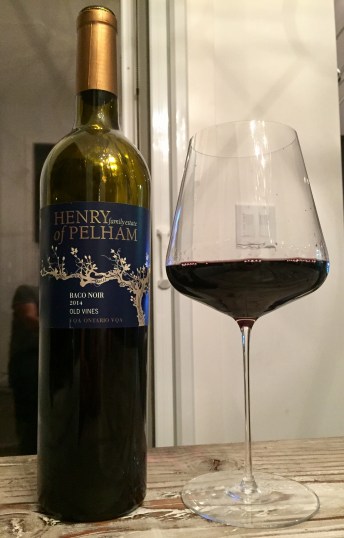
2014 Henry of Pelham Old Vines Baco Noir

5 10 2016

[This bottle was provided as a sample for review purposes.]

fullsizerender-429

Welcome Baco.

I admit to approaching this bottle with a slight sense of foreboding.  One benefit of learning about wine is that it helps you pinpoint rare or obscure high-quality grapes or regions that are under-appreciated, and thus underpriced, by the market.  However, one drawback is that it can stratify your thinking about what quality looks like and give rise to unwitting prejudice about varietals or areas that aren’t always known for it.  Baco Noir, like all hybrid grapes, falls within the latter category.  But this bottle is proof that wine prejudice can be overcome.

Almost all of the quality wine grapes in the world, including all of the varieties you can list within 5 seconds of reading this sentence (Cabernet Sauvignon, Chardonnay, Merlot, Pinot Noir, etc.), belong to a grape species called Vitis vinifera, widely (and accurately) known to be the best of the many families of grapes in the world for wine production.  A hybrid grape is a cross between different species of grapes; in wine-speak that usually means a cross between a vinifera grape and a non-vinifera grape.  These crossings almost always arise out of intentional experiments by people looking to combine the flavour, quality and structure of vinifera with non-aesthetic desirable characteristics of the other species, usually ability to withstand weather or disease, ease of ripening or size of yield.  Spoiler:  they usually don’t accomplish all of these goals. Read the rest of this entry »


2015 Alvear Alange Tempranillo

28 09 2016

[This bottle was provided as a sample for review purposes.]

fullsizerender-423

ALANGE SMASH!!

Some bottles immediately grab your attention for reasons you can’t quite put your finger on.  Other bottles grab your attention by screaming strange Spanish words in 128-point font.  Alvear’s Alange (sorry – ALANGE) is an example of the latter.  Its minimalist / maximalist label and Beetlejuice-like neck pinstriping are designed for the visually primed North American market, as is the consumer-friendly bottle indication of the grape inside (100% Tempranillo), a rarity on Old World wines.  It is a daring display from one of the older family-run wineries in the world, but it serves its purpose well, making you pause for that split second and linger over the bottle; after that, its price tag (a shade over $15) and the quality of the juice inside does the rest.

Alvear is truly a dynastic estate, now on its 8th generation of family winemaking.  The Alvear bodega was first constructed nearly three hundred years ago, in 1729.  Since then, it has not only stayed in the family but is now handled in all aspects by Alvears — there are currently over 50 members of the extended family involved in some capacity.  Alvear is known primarily for sherry, made in the region of Jerez in Spain’s arid southwest corner, but it is also gaining traction as a table wine producer, growing estate grapes due north of Jerez in the Ribera del Guadiana sub-zone of Extremadura.  To say this is an under-the-radar global area for red wine would be a marked understatement, but it’s places like this where values are often found.  Ribera del Guadiana is known primarily for scorching hot summers, freezing cold winters, reddish clay soils and an obscene array of planted grapes: while Tempranillo takes up the most acreage, the area is home to a crazy mix of red and white indigenous and international varietals, from Sauvignon Blanc and Pinot Noir (!) to Pedro Ximenez and Graciano. Read the rest of this entry »


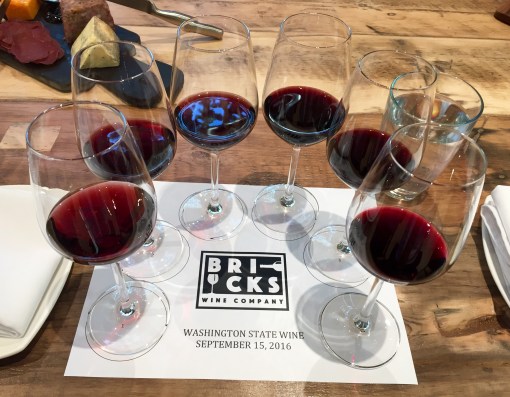
Calgary Wine Life: Washington Wine Tasting @ Bricks Wine Company

16 09 2016

If you have been sucked into the vast and wonderful world of wine at some point in your life, I guarantee there will be distinct moments that you can remember with shocking clarity, a series of epiphanies around particular bottles that made you go:  “I didn’t think wine could be like that.”  You form loyalties around those bottles, the producers that created them and the regions that birthed them.  You seek them out, and those like them, and you try to find out everything about them.  They shape what you look for in wine going forward, but they also increase your awe and appreciation of wine in general, and by doing so they give you an incredible gift, a passageway into a realm that bridges art and science, sensuality and precision.

fullsizerender-409

I’ve had maybe half a dozen such bottles in my life.  One of them was the 2009 Walla Walla Syrah from Gramercy Cellars, which opened my eyes to the remarkable potential of Washington State wine and made me a lifelong proponent of the area, the winery and even the grape.  I’ve discovered since that it wasn’t a fluke:  Washington is filled with a shocking amount of top quality wine, and an array of producers pushing the envelope of what a young New World region should be able to accomplish this soon.  Even the large producers and the entry-level wines of the state come to play, somehow bypassing the plonk basement that consumers of most other areas have to wade through.  Despite all this, the gospel of Washington has been slow to spread, partly due to familiarity (“there’s world class wine WHERE?”) and partly due to price (no $14 slam dunks to be seen, at least in this market).

fullsizerender-413

All of this is why I was so thrilled to attend a Washington State wine tasting at Bricks Wine Company last night.  Bricks is the newest entry into Calgary’s impressive boutique wine scene, nestled in a historic old brick (natch) building at the start of trendy, funky Inglewood, but despite being in the process of establishing a foothold in the market, it hasn’t held back on inspired and daring wine selections, including one of the best arrays of Washington wines in town.  Regions like Washington need wine-savvy guides to take people by the hand and point them to the great wines nestled where they never thought to look; Bricks is the type of shop equipped to do just that.  And that showed in spades in the lineup of wines we tasted through, an array of luminaries that erased any questions about Washington State’s ability to stand with the elites of the wine world. Read the rest of this entry »


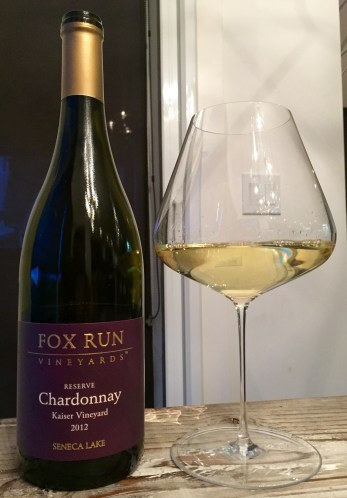
2012 Fox Run Vineyards Reserve Chardonnay

8 09 2016

[This bottle was provided as a sample for review purposes.]

fullsizerender-406

The ultimate value Chardonnay? Quite possibly.

Casting my eyes on this maroon label sends me back down memory lane, to what seems like forever ago but was really only about three and a half months.  In May I was lucky enough to pay a visit to the beautiful and unspoiled Finger Lakes region in central New York State – you may remember this because I basically wrote a Lonely Planet book about the area on this site when I got back.  Our very last winery on that winery-intensive voyage was one I already knew well thanks to its expanding presence in the wine scene in Calgary some 3,600 km away:  Fox Run Vineyards, which has acted both as a gateway drug and as a proud brand ambassador for the Finger Lakes in Alberta.  They have taken to this role so well that one of their whites was an official bottle of choice at the Calgary Stampede this year; can’t get much more YYC than that.  

Fox Run is made up of 50 acres of estate vineyards due south of Geneva, New York, on the western shores of Seneca Lake, the largest and deepest of the long, thin Finger Lakes.  The site was previously a long-time dairy farm, but grapes were first planted there in 1984, with a winemaking facility following in 1990.  Present owner Scott Osborn took over in 1993 and has been a fixture since, and the crazy thing is that he isn’t even the biggest example of the winery’s clear commitment to continuity:  vineyard manager John Kaiser was responsible for first developing the vineyards back in 1984 and is still there today – I met both men when I was there.  Winemaker Peter Bell is 21 years into his Fox Run career, and Sales Manager Dan Mitchell, who is more or less a permanent resident of Canada at this point after forging a successful new northern market for the FLX over the past few years, has been there for 12.  They are a family at this point, and it shows.     Read the rest of this entry »


Luigi Bosca: 2013 Malbec Value Tiers

1 09 2016

[These bottles were provided as samples for review purposes.]

FullSizeRender-398

Now THAT’S a label rebrand. Thing of beauty.

Once you dive deep into the world of wine and start devoting more time and money than most people deem sane into bottles and glasses and books and storage systems, it can be a challenge sometimes to maintain a sense of discovery about larger-production brands, the workhorse wines you see on the liquor store shelves.  In part that can be valid:  some of them aren’t very good, a fact thrown into stark relief after you’ve learned about production differences and downed a quality bottle or three.  But others have found a way to keep that quality and that sense of vinous wonder despite stepping up in scale and availability, and the best of these manage to do this at an easily accessible price.  It may be as hard to create a well-made, interesting, varietally accurate bottle of 100,000-case $20 wine as it is to create a small-production luxury showpiece bottle at $100.  I’ve been able to try a few different Luigi Bosca wines over the past couple years, and they are making the former happen on a consistent basis.

I say this a lot and apologize for repeating myself, but if you want to learn about a grape or a producer or a region, buy a representative bottle and pay careful attention as you drink it.  If you REALLY want to learn a lot MORE about that grape, producer or region, buy TWO different representative bottles, drink them side by side, and note the similarities and differences.  Comparative tasting is probably the biggest educational gift you can give yourself…plus you also get to open two bottles at once, which can never be bad.  Tonight’s comparative tasting should be particularly illustrative because so much about the two Luigi Bosca Malbecs sitting in front of me are alike:  same producer, same grape, same vintage (2013), same general region (Mendoza, Malbec capital of the New World in Argentina).  What’s different?  Price points ($18 vs. $35), site specificity (general regional wine vs. single-vineyard wine from quality subregion) and grape-growing/winemaking techniques.  What shines through – the similarities or the differences? Read the rest of this entry »


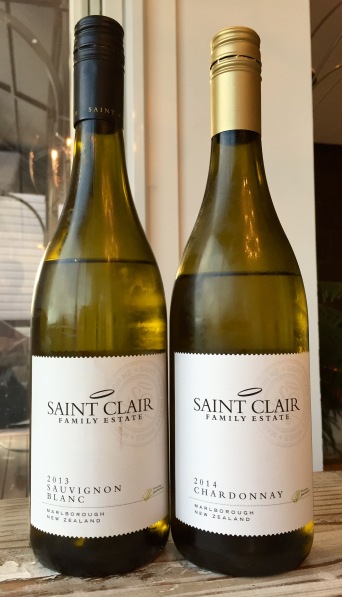
Saint Clair Family Estate – Marlborough Battle

11 08 2016

[These bottles were provided as samples for review purposes.]

FullSizeRender-392When you’re in a brand new wine shop or liquor store looking at a string of unfamiliar sub-$20 labels and hoping not to take a step too far wrong, the word “Marlborough” should be a huge source of relief to you.  It is the name of New Zealand’s most famous wine region, and more than maybe any other star region on Earth whose bottles you can still grab without a price cringe, it offers a very high quality floor, a strong baseline that offers confidence that even the lower-end offerings on the shelf will be somewhat well-put-together.  Marlborough, located on the northern tip of New Zealand’s South Island, is most renowned as the birthplace of Sauvignon Blanc’s most distinctive New World expression, that zingy, grassy, refreshingly searing style that almost anybody under 30 now associates with the grape.  Producers there have locked down on that mythical combination of quality, quantity and value that make Marlborough the safest, if at times one of the more redundant, “I’ve-never-had-this-bottle-before” picks out there.

A relatively new region on the global scale, Marlborough has been on the world’s radar since the mid-1980s, but the owners of Saint Clair Family Estate have been at the wine game longer than that.  Neal and Judy Ibbotson have been grape-growers on their estate since 1978, but previously sold off their crops to other wineries and didn’t decide to start making wine themselves until 1994.  They opted for the name “Saint Clair” for their winery because their vineyard property was initially settled by a James Sinclair back in the day; the added words “Family Estate” are not just lip service, as all three of their children are currently involved in various aspects of the business, with one of them even designing the wines’ labels.

This is an intriguing tasting, pitting Marlborough’s bread and butter Sauvignon Blanc against another white grape that’s starting to gain acclaim in the area, Chardonnay.  Enough acclaim to unseat the viticultural ruler of the region?  Let’s find out. Read the rest of this entry »


Domaines Paul Jaboulet Ainé: The Next Level

5 08 2016

[These bottles were provided as samples for review purposes.]

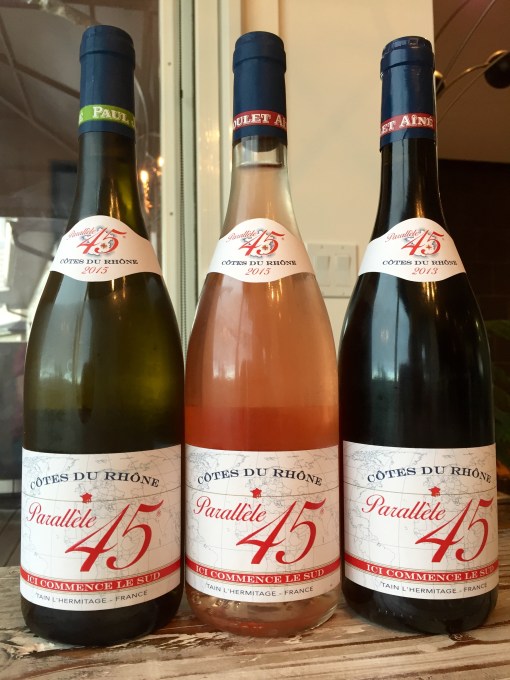
I recently tasted and discussed the entry-level Parallele 45 lineup from the Rhone Valley’s Domaines Paul Jaboulet Aine, which showcased the red, white and pink sides of the Southern Rhone in an impressive value-priced package.  Today we kick it up a notch.

FullSizeRenderJaboulet’s Alberta portfolio is supplemented by a quartet of upper-echelon bottles from a group of distinctive quality regions scattered across the Rhone, each of which has its own character and legend to live up to, and each of which, I’m happy to report, Jaboulet and winemaker Caroline Frey reflect to a tee in these beautiful offerings.  See my prior post for more details about this historic winery and its renaissance in our market; for now, we have a lot of wine to drink.

Read the rest of this entry »


Wine Review: 2015 Gramercy Cellars Olsen Vineyard Rosé

19 07 2016
FullSizeRender-386.jpg

Think pink.  And WA State.

This is the first time in a long time that I’ve sat down to write about a wine just because I wanted to.  I love (and am continually amazed by) the opportunity this blog has afforded me to try new bottles and attend incredible tasting events, but every once in a while it’s nice to step back and recalibrate and share the experience of a wine for the sheer joy of doing so.  And since there are few things that give me more joy in this world than opening a bottle of Gramercy Cellars (my favourite producer and a winery that currently occupies about 15% of my cellar), and since I’ve been waiting for this bottle of rosé to land for months now, this is definitely the wine for the task.

The story of Gramercy Cellars is the story of America’s youngest Master Sommelier, who went from serving, then sourcing, wines for some of the pinnacle dining establishments in various major US centres to making his own in rural Walla Walla, Washington, drawn to the desert in the Pacific Northwest by the potential he saw in the area’s Syrahs.  After graduating from Cornell University, Greg Harrington attained the Master Sommelier designation at age 26 (he was until recently the Chair of the Court of Master Sommeliers, Americas and is now on the Board as a Chair Emeritus) while working in New Orleans for famed chef Emeril Lagasse.  Stints for Wolfgang Puck in Las Vegas and the B.R. Guest Restaurant group in New York followed, but a chance tasting of Walla Walla Syrah in NYC led to a trip out to Washington State, which very quickly led to Greg and his wife Pam quitting their jobs, uprooting their lives and fast forwarding a far-off retirement dream of making their own wine to the here and now.  For me at least, Gramercy is one of a small group of Washington producers that is unwrapping the state’s wine potential in real time, turning out nuanced, textured and ageworthy wines that turn New World stereotypes on their heads. Read the rest of this entry »


Domaines Paul Jaboulet Ainé: Parallele 45 Trio

6 07 2016

[These bottles were provided as samples for review purposes.]

There are not many producer names as synonymous with their home region as Jaboulet and France’s Rhone Valley.  From their pinnacle bottling La Chapelle from the world-renowned hill of Hermitage (which I have had once and vividly remember to this day) down through the rest of their lineup, the wines of Domaines Paul Jaboulet Ainé are known and revered the world over, although until recently they were decidedly under-represented in our market.  That has now thankfully changed, and Alberta once again has full access to some of the best wines the Rhone has to offer.

FullSizeRender-379

The Jaboulet winery was first started by Antoine Jaboulet in 1834, who then passed it to his two sons, Paul and Henri, to carry on his legacy.  Paul, the older son, gave the winery his name (the “Ainé” in “Domaines Paul Jaboulet Ainé” literally translates to “eldest”), and it stayed in the family for almost 175 years before finally being sold in 2006 to the Freys, a family of French winemakers with properties in Champagne and Bordeaux.  Caroline Frey (fittingly the eldest daughter of the family), who is now 37 and so was in her late 20s at the time of the acquisition, assumed the mantle of winemaker and has instituted sustainable vineyard practices and carried forward Jaboulet’s reputation for classic quality.

Parallele 45 is Jaboulet’s entry-level lineup of Cotes du Rhone wines, so named because the 45th parallel of northern latitude runs right through the Rhone Valley, bisects some of the Domaine’s vineyards and is only a couple kilometres from its cellars.  The bottles all bear an inscription found on a monument in the nearby village of Pont de l’Isere (which, and I am not making this up, is at 45.0040 degrees N latitude):  “Ici Commence Le Sud” – The South Starts Here.  Post de l’Isere looks to be on the southern edge of the Northern Rhone as opposed to the northern edge of the South, but the mantra still fits, and Jaboulet’s wines straddle both sides of the Valley.  I got to taste through the full Parallele 45 lineup – white, pink and red, all of which share the same $18ish wallet-friendly price tag – and see how well they carried forward the tradition of this great name. Read the rest of this entry »


Return of The Mules: Torres Summer Values

12 06 2016

[These bottles were provided as samples for review purposes.]

It’s been so long since I sat down and wrote a straightforward normal wine review that I’m having trouble remembering how to start one.  Thankfully, I’m aided by an old PnP standby:  if they’re not there already, the Torres family of wines has to be close to the record for largest number of individual write-ups on this site, aided in part by their broad-based dual-continent operation and vast lineup but mostly by their consistent ability to deliver quality and identity for less than you’d expect.  I made the mistake last year of prejudging their “Las Mulas” line of entry-level Chilean wines by its lighthearted name and beast of burden on the label, only to be reminded by the emphatically delicious Las Mulas Rose that Torres takes all its wines seriously.  This year, with the Sauvignon Blanc and Cabernet Sauvignon from the Las Mulas brand, I will not make the same error twice.

FullSizeRender-375

The wines for Las Mulas come from Chile’s warm, flat and fertile Central Valley, where the benign climate and the absence of most common vine diseases make it the country’s most productive and most popular grape-growing region.  This can be both a good thing and a bad thing:  obviously getting your crop to ripen without heroic efforts is a benefit, but wine grapes specifically tend to derive much of their flavour concentration and character from having to struggle a bit to grow, and when they’re deprived of that opportunity to strive the results in the glass can be flat and uninteresting.  To combat the Central Valley’s generosity, Torres planted the Las Mulas grapes on nutrient-poor soils and entirely avoided the use of herbicides or pesticides (the vineyard sites are certified organic).  The vineyards are wholly hand-harvested, with nary a machine in sight, making this New World wine done in old school ways…yet somehow still hovering around the $15 CAD mark on the shelf.  Each of the offerings below cleared by (pre-primed) expectations for that price point with ease. Read the rest of this entry »


FLX: Finger Lakes Extravaganza – Part III

24 05 2016

In case you missed the prequels, click here:

Finger Lakes Intro & Conclusions
Part I – Long Island, Hudson River, Dr. Frank
Part II – Keuka Spring, Chateau Lafayette Reneau

We remained on eastern Seneca after the morning views of Chateau Lafayette Reneau, taking a quick jaunt north to one of the best-known new-era Finger Lakes wineries, Red Newt Cellars Winery & Bistro.  I first read about the growth of Red Newt’s legend around the same time it experienced its greatest tragedy, in 2011, when co-founder and executive chef Debra Whiting was killed in a car accident.  Her husband, Red Newt founding winemaker David Whiting, forged on, turning the winery into one of the few in the Finger Lakes with an international reputation.  He remains in charge as Red Newt’s president, but has recently turned the winemaking reins over to a cerebral, unassuming twentysomething who might already be one of the best Riesling winemakers in North America:  Kelby James Russell, a homecoming son now squarely on the global Riesling vanguard.

FullSizeRender-339

David Whiting and Kelby James Russell, Red Newt.

Russell was born and raised in and around the Finger Lakes area but found a good reason to leave:  Harvard.  He graduated with a major in Government (poli sci grads unite!) and a minor in Economics but then sought a job in orchestra management to soothe an ongoing passion for music.  A trip to Italy ignited a love of wine, however, and Russell returned home to work a harvest with Fox Run Vineyards in 2009.  After three years there and an equal number of off-season harvests in the Southern Hemisphere (Marlborough, Tasmania and Barossa), he moved to Red Newt to assume the head winemaker mantle at the venerable age of 25 and almost immediately started pushing the boundaries of New World Riesling. Read the rest of this entry »


FLX: Finger Lakes Extravaganza – Part II

23 05 2016

In case you missed the previous chapters of this tale, check out the Intro & Conclusions from my Finger Lakes trip here and Part I of the tasting journey here.

FullSizeRender-326

August Deimel, Keuka Spring Vineyards

After leaving the western shores of Keuka Lake and the bar-setting wines of Dr. Konstantin Frank, we did a loop around the lake and landed at our only other Keuka stop, the aptly named Keuka Spring Vineyards.  If Dr. Frank was a reverential nod to the Finger Lakes’ past, Keuka Spring was a thrilling glimpse at its future, primarily thanks to its young, supremely talented and boundary-pushing winemaker August Deimel.  We were fortunate enough to have him lead us through a tasting of both current releases in the front of the house and experimental tank samples in the back, throughout which the only sound other than August’s compelling narrative was that of paradigms shifting. Read the rest of this entry »