Wine Review: 2014 Plan B Riesling “OD”

14 09 2015

[This bottle was provided as a sample for review purposes.]

Riesling, it's been too long.

Riesling, it’s been too long.

Wow, HOW long has it been since I’ve reviewed a Riesling on here?  Seven months??  What is wrong with me?  I have let my favourite grape down.  Time to make amends, and I have definitely found the right bottle for the job, from probably the most underrated country in the world for good Riesling:  Australia.  This New World nation, home of terrifying spiders and monster Shiraz, is probably not the first place you think of for elegant, aromatic, cool-climate whites, but there are pockets of land in this otherwise mostly barren desert, moderated by altitude or coastal proximity or both, in which Germany’s most prized vinous export thrives.

This particular Riesling hails from the relatively obscure Frankland River region, known to me as one of the only producing areas in western Australia not called Margaret River that’s getting any play internationally.  While Margaret River sits right on Australia’s western coast, just south of Perth, Frankland River is a little farther east and inland and is a sub-zone of Australia’s largest singular wine region, the questionably named Great Southern region.  (As you can see here, it is much more west than south in the national scheme of things, and most of the country’s wine regions are actually located further south than it is.  It had better actually be Great there.)  The gents at Plan B Wines seem to be on a mission to make the wine biz loose and fun again while still producing great quality product from top sites, a task that I would suggest is perfectly suited to Australians.  Their website at planbwines.com is well worth a visit and contains some incredible illustration work done by the winemaker himself; just watch that you don’t Canadianize the URL or slip up on Google and go to planb.ca, northern Internet home of the morning after pill.  You have been warned. Read the rest of this entry »


Torres New/Old World Value Duet

8 09 2015

[These bottles were provided as samples for review purposes.]

New/Old World.  Pink/red.  Value/value.

New/Old World. Pink/red. Value/value.

Over the past couple years, Torres has become my Old Reliable, the brand that never lets me down regardless which sub-$20 value offering I’m trying, regardless where in the world it’s from, and regardless of my level of expectation or uncertainty going in.  It has now been named the World’s Most Admired Wine Brand for two years running by Drinks International (to get a sense of that accomplishment, others in the top 15 this year include Vega Sicilia, Chateau d’Yquem, Ridge, the First Growth Chateaux Margaux, Latour and Haut-Brion, and Tignanello), and it succeeds without a multi-hundred-dollar wine on its resume and with wineries on three separate continents, focused on marrying high quality with affordable pricing wherever it goes.  That combination is not easy to achieve, but Torres makes it look routine.  I had a chance to toast the end of summer amidst the weekend snow in Calgary with two QPR (quality-to-price-ratio) gems from the Torres portfolio, one from the New World and one from the Old, each crafted with the same evident care and attention. Read the rest of this entry »


PnP Featured in Culinaire Magazine!

4 09 2015

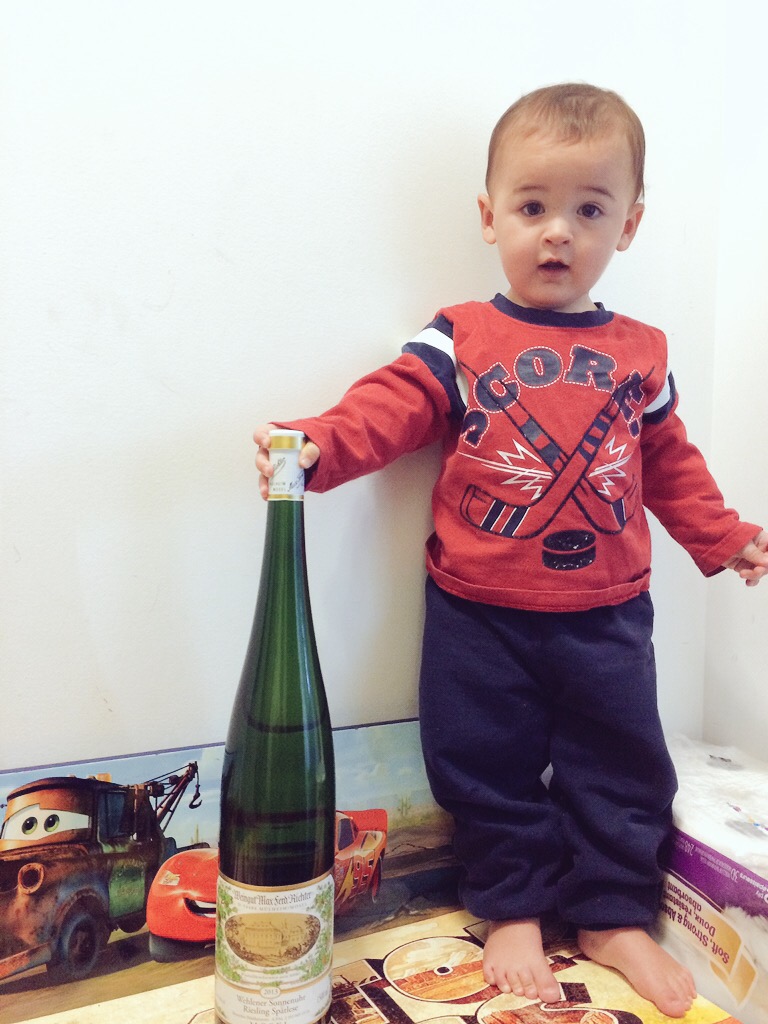
Well, after over four years of blogging and nearly 300 posts, it has happened:  I have been photographed going down a slide in a tot lot with a magnum of Riesling for a real life magazine.  Culinaire Magazine, a fantastic monthly publication focused on all parts of Calgary’s thriving food and beverage scene, has a monthly feature on the inside of its back cover called “Open That Bottle”, where a local personality is profiled and discusses a special bottle in their cellar that they’re saving for a specific occasion.  For the September 2015 issue, I was honoured to get the call and share the story of my favourite kind of wine, from my favourite vineyard, that I’m holding for one of my favourite people in the world:  my son Max.  See the story below:

If for some reason the media link above doesn’t work, the online version of the article can be found on the Culinaire website here.  Also in the September issue (it was a good issue!) was a joint article about drinking boldly and dodging the usual suspect grapes that I wrote with YYC Wine’s Adrian Bryksa, which you can read here:

Stuff like this doesn’t happen without people like you taking the time to find and read what I write on here, so I am eternally grateful to everyone who has supported this site.  Never did I think that this little passion project would turn up in a magazine; I can’t wait to see where it goes next.  Thank you!!

Max at 16 months, with his birth year mag, October 2014.

Max at 16 months, with his birth year magnum, October 2014.


The Great Coravin Test, Part 4: Final Thoughts (For Now)

26 08 2015
No Girls Grenache by the glass?  Don't mind if I do!

No Girls Grenache by the glass? Don’t mind if I do!

The sun has shone a little less brightly this week (and not just due to wildfire smoke blocking out the sky) – I had to return my borrowed Coravin, leaving an empty spot on my counter and a needle-sized hole in my heart.  Apart from testing out the device on the three bottles of wine the agent provided to me (adventures catalogued in Part 1, Part 2 and Part 3 of this post miniseries), I also went to town last week on a few bottles from my cellar, including a couple of the pricy variety in case you were wondering about my level of Coravin confidence.  Most importantly, I re-accessed the 2012 Tabali Pinot Noir from Chile that acted so strangely I last time I Coravinned my bottle samples just to make sure that all was still well, and it was fresh as a daisy and exactly how I remembered it on first opening, confirming that the Coravin’s preservation record remained fully intact.

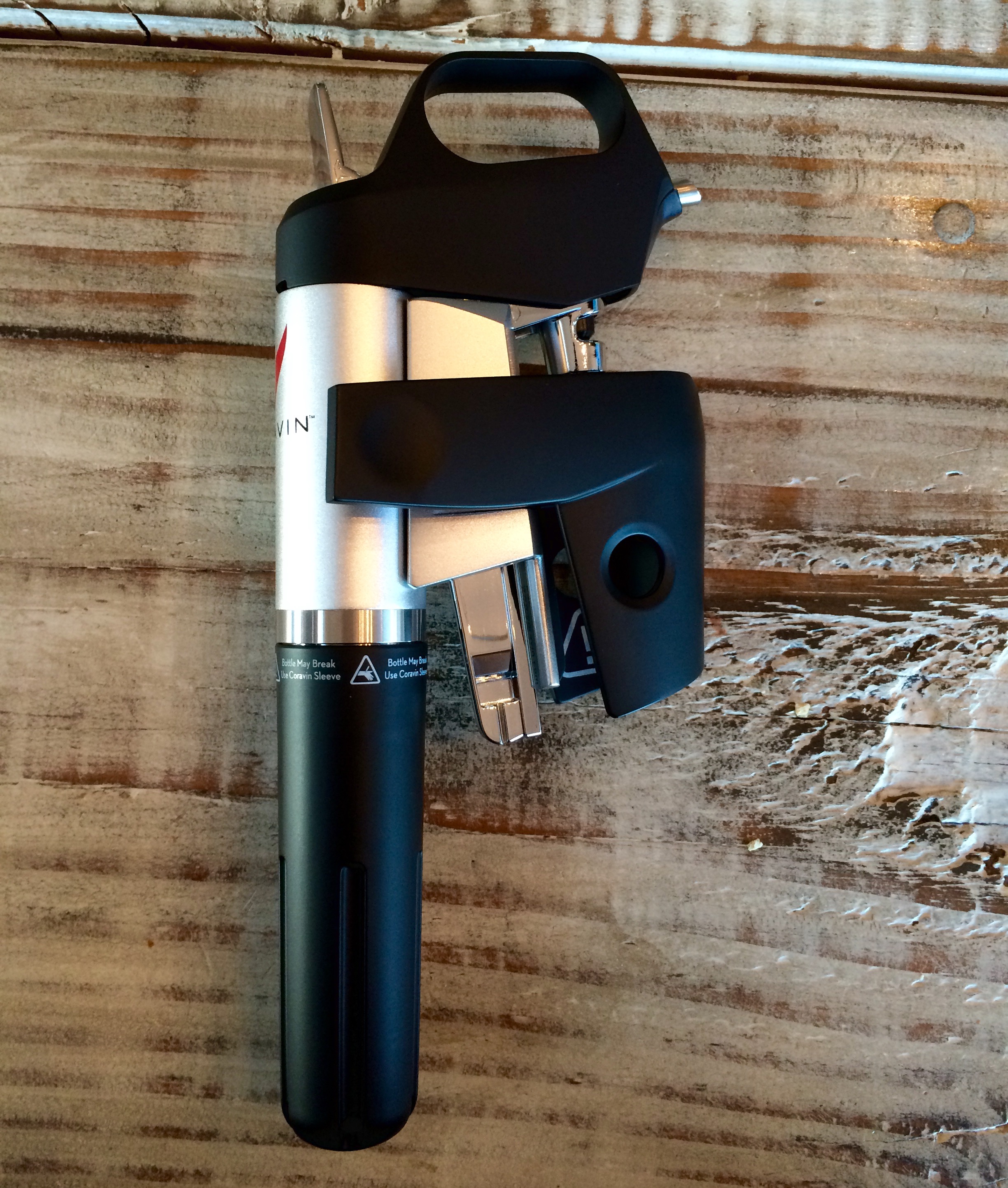
I thought I’d end my Coravin saga with a few closing thoughts on the pros and cons of scooping the device for yourself and on whether the amazing features of this wine access wonder-machine justifies its hefty $400ish price tag, particularly for individual wine lovers.  First, the most obvious pro:  there is nothing like this anywhere.  It is literally in a class of its own in the wine preservation game, to the point where it’s almost not fair to call it a preservation device at all:  you don’t have to worry about preserving the wine when you never expose it to the elements in the first place.  You’re not using it to stave off inevitable oxygen decay for a few days or a couple weeks; you’re using it to stop the oxygen time clock from even starting, so that you can drink a bottle from your cellar a glass at a time over any length of time that you want, even years.  That’s just mind-blowing.  Even after using the thing for a month, it’s hard to wrap my head around just how much of a game-changer it is. Read the rest of this entry »


Wine Review: Menti & Marabino, Natural Italy

20 08 2015

[These bottles were provided as samples for review purposes.]

If you are a massively wine-obsessed civilian, you have probably had at least a passing thought about it.  I can think of a half dozen wine friends off the top of my head with whom I’ve had the conversation.  You know something about wine, you have a particular love for a particular region, you’ve found a lesser-known producer or two there whose wines aren’t currently brought in to your jurisdiction…what if I just imported them myself?  I could be a wine agent on the side…who WOULDN’T want to buy these wines?

Small importer, statement wines.

Small importer, statement wines.

Of course, it takes much more than a passion for wine and an idle dream to make a go of it in the wine import world, an extremely competitive sphere full of others who have been at it a long time and know what they’re doing.  This is why I am behind a keyboard right now instead of combing Washington State and Oregon for hidden gems.  But I have the utmost respect for the people who do take the plunge, who put their money where their mouth is and find a way to step a little bit further into the world of wine.  Maxim Atanassov is one of those people, populating the white collar world by day and crusading for all-natural biodynamic Italian wines on evenings and weekends through his agency Vino Al Vino.  He has assembled a tight-knit group of producers from the southern and eastern edges of Italy who share a steadfast mission to let the land do the talking and a hands-off approach to winemaking.  I got the chance to try two bottles from the white side of his wine portfolio, and they proved to be some of the most interesting wines I’ve ever been asked to review. Read the rest of this entry »


Wine Review: 2012 Alice May Crosswinds Syrah

13 08 2015

[This bottle was provided as a sample for review purposes.]

The sequel. Even more awesome.

I love when I have the chance on this site to track a wine’s development over successive vintages.  I love it even more when the wine in question has a strong local connection, something you don’t get to say very often when you’re based in Calgary.  Last year I had the chance to write up the inaugural release from Alice May Wines, a new label conceived by Calgary sommelier-turned-wine-agent Alex Good in collaboration with noted California winemaker McPrice Myers of Barrel 27 Winery.  Alice May’s stated focus was on Rhone-based varietals, and its 2011 Crosswinds Syrah was a silky, elegant Cote-Rotie style co-ferment of Syrah and Viognier that I repeatedly sought out and drank over the course of 2014.  Having exhausted my supply, I was happy to turn to the 2012 edition of the Crosswinds, and even happier that it carried the Alice May torch with aplomb. Read the rest of this entry »


Replacement Wine Review: 2012 Gerard Bertrand Grand Terroir Pic Saint Loup

6 08 2015

[This bottle was provided, for a second time, as a sample for review purposes.]

If at first you don't succeed...

If at first you don’t succeed…

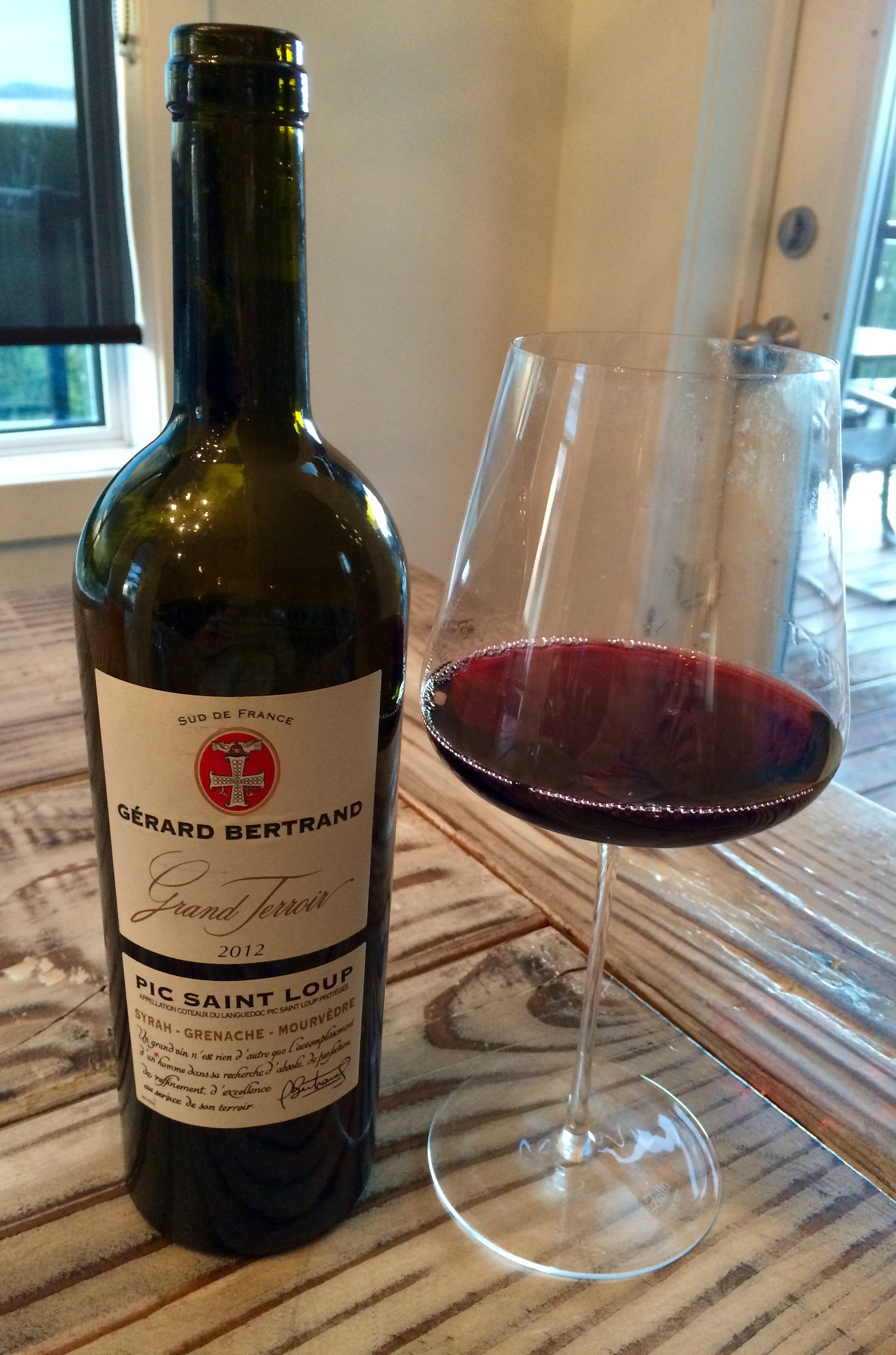
If you were reading this blog one week and two posts ago (and I’ll forgive you, if quietly resent you, if you haven’t), you will remember this bottle.  One of three contenders in a Languedoc-Roussillon Terroir Showdown, and arguably the favourite by virtue of coming from the most recognizable and lauded subregion that area has to offer (the excellently named Pic Saint Loup), this 2012 Gerard Bertrand offering instead had to be disqualified from the competition because the bottle I got was corked, affected by a musty, devious molecule called TCA that lent it a faint newspaper-left-out-in-a-Calgary-hailstorm smell and sapped it of its life and flavour.  But tonight will be different.  Tonight Pic Saint Loup gets its revenge, and its shot at glory.

Read the rest of this entry »


The Great Coravin Test, Part 3: Two Weeks In

2 08 2015

OK, so to recap:

  • I got lent a Coravin and figured out how to use it (Part 1).
  • On July 17th, I accessed three different bottles – a white and two reds – via Coravin and wrote up control tasting notes (Part 2).
  • Exactly two weeks later, on July 31st, I Coravinned the bottles again to see how they were doing.  Now the real fun begins (Part 3, right now).

FullSizeRender-91Some brief methodological notes:  after tasting the bottles on July 17th, I put them back in my cellar as if they were brand new – on their sides, no special treatment.  They stayed there till the 31st, when I gave them a brief chill before accessing them again.  I took detailed tasting notes without looking at my initial set of notes and then compared the two sets after the fact to see if the descriptions were similar and if any notable changes to the wines had taken place.  After the second round of tasting, the bottles are all about half full, and they have been put back in my cellar until I pull them out again for the grand finale of this Coravin experiment six months from now.  So how did the wines do?  Is the Coravin all it’s cracked up to be?  Let’s get to it, again:

Read the rest of this entry »


Gerard Bertrand: Terroir Showdown

30 07 2015

[These bottles were provided as samples for review purposes.]

This is the kind of tasting opportunity that wine geeks drool over:  three bottles, one producer, one general wine region, similar grapes, identical pricing ($25ish), same winemaking processes, but three different and distinct subregions, each with their own soils, microclimate and story to tell.

FullSizeRender-89

The producer is Gerard Bertrand, visionary winemaker from the south of France who was literally born to do what he’s doing:  a local of the area, he started making wine with his father at the age of 10.  The region is the Languedoc-Roussillon, a sun-drenched area stretching along the Mediterranean coast on the southern edge of central France.  It is the world’s single biggest wine-producing area with around 700,000 acres under vine, although this is not necessarily a good thing; it has been known as the “wine lake” of France for churning out vast quantities of crude jug wine for cheap consumption, more than people could possibly buy, creating massive stockpiles of reputation-draining plonk and setting the region back in the eyes of the wine world.  However, the Languedoc-Roussillon is in the midst of a quality renaissance thanks to a few passionate producers, Bertrand included, who see the potential for greatness in the land.  The result, if you know what (or, more accurately, who) to look for, is a series of unparalleled wine values that can knock your socks off for the price.

FullSizeRender-82You don’t see many wines with Languedoc-Roussillon subregions on the label in this market:  either they’re from the popular catch-all Vins de Pays d’Oc (now known as Pays d’Oc IGP) umbrella region or from a similar overarching area like Cotes du Roussillon.  I have been heavily into wine for a number of years and had never heard of two of the three sub-zones highlighted in this trio of bottles: Tautavel and Montpeyroux.  The third, Pic Saint Loup, is probably the best-known quality subregion in the Languedoc, but it remains woefully underrepresented here.  Bertrand’s Grand Terroir series of wines is intended to change that and to shine the spotlight on these specific and distinctive parts of Languedoc-Roussillon, to prove that the area is more than just a bulk conglomerate.  After tasting the three Grand Terroir bottles side by side by side, I have to say that he’s on to something.  The terroir showdown begins now! Read the rest of this entry »


The Great Coravin Test, Part 2: Initial Tasting Report

23 07 2015

The journey continues.

The journey continues.

If you missed Part 1 of this soon-to-be-epic tale, wherein I got a Coravin to borrow and figured out how to use it, you can click here to get caught up.  This post will set the control for my test of the Coravin’s wine-preserving prowess, documenting my initial tasting impressions of three different bottles that I was provided along with the device so that I could give it a spin:  one white, one lighter red and one fuller red.  I actually tasted these last Friday, July 17th, so that’s the point from which the preservation clock starts ticking.  I will taste them all again in a couple of weeks and report back, and then again in a few months to see just how far the magic of the Coravin can stretch.  Word of warning if you ever try this yourself:  when you have a tool that lets you taste as many wines and access as many bottles as you want in a night without pulling a cork, you end up drinking a LOT of wine.  Duly noted.  On to the wines — be sure to check back in two weeks to see how they’re doing!

Read the rest of this entry »


The Great Coravin Test, Part 1

19 07 2015
Ladies and gentlemen:  the future.

Ladies and gentlemen: the future.

It is an age-old problem:  what to do with the rest of a bottle of wine if it isn’t all consumed in an evening?  Unless being used to let tight young wines breathe, oxygen is generally the enemy of wine, and once the atmosphere gets its claws on the liquid in a bottle, the results aren’t pretty:  the wine gets flat and stale, brightness and flavours fade, and any distinguishing characteristics are quickly lost.  You can help slow this aerobic inevitability by putting the wine in the fridge overnight, but I always still noticed a difference in the bottle the next day, a slight but undeniable decline.

There have been a few standard approaches invented for dealing with the leftover wine oxygen problem, each effective to different extents.  You can buy a vacuum pump that fits into the opening of the bottle and (at least theoretically) manually sucks out the offending oxygen, leaving a decay-free zone inside the bottle.  This may sort of work at times for short durations IF the pump actually makes an airtight seal with the bottle, which it often doesn’t.  You can instead opt for a separate narrow storage vessel that has a sort of buoy-like floatation device engineered to exactly match the interior circumference of the container; you pour your wine in, plop the float on top and add a lid for good measure, keeping the surface of the wine from any immediate interaction with oxygen.  This is better and more consistent than the vacuum for short stints (I have one, the Savino, which I use for weeknight wines) but not that trustworthy for more than a day or two.  Then there’s the gold standard:  argon.  You pump a little argon gas into the heel of your bottle (from a purchased canister or a fancier system like my Pek Preservino) and, since it’s inert but heavier than air, it forms a harmless protective layer over top of the wine that prevents oxygen from accessing it.  I have left a wine under argon in the fridge for a week and it’s been good as new.

FullSizeRender-71These preservation systems all tackle the problem of wine degradation from different angles, and yet they all share one key thing in common that puts a ceiling on their effectiveness:  they all start with an open bottle of wine.  No matter what tricks you try to keep oxygen away from your precious liquid, once you pop that cork and pour that first glass, you have exposed your wine to the air and the decay clock starts ticking.

But what if you didn’t HAVE to open the bottle?  Could wine be preserved indefinitely if you could somehow access it while keeping its bottle fortress intact?  Enter the Coravin. Read the rest of this entry »


Wine Review: 2014 Bila-Haut Rose

13 07 2015

[This bottle was provided as a sample for review purposes.]

Winning producer, winning value.  And look at that colour!

Winning producer, winning value. And look at that colour!

I just got back on the weekend from a sunny California vacation, and as I was coming from hot, humid San Diego into hot, dry Calgary (this was pre-torrential thunderstorms) after the end of a long travel day with two young children, I had my first ever legit rose craving.  Don’t get me wrong:  I like rose just fine, but until this moment I had always been on the “perfectly happy to drink it” side of the fence as opposed to the “insatiable desire for it” side.  But something about that day made me long for a bottle that was crisp and cool yet fruity and substantial, a summer wine niche that rose fits to the tee.  Almost immediately after dropping off the suitcases I went to my neighbourhood liquor store, browsed their abysmal pre-chilled rose selection, and escaped with the one non-White Zinfandel bottle I could find:  a Michel Chapoutier rose called Beaurevoir (pictured below) from pink wine’s spiritual homeland of Tavel in south-eastern France.  After downing it probably more quickly than I should have, I realized that I had another Chapoutier rose in my cellar and promised that I would take my time with this one.  Consider this a kick-off for what looks to be a busy Pop & Pour summer! Read the rest of this entry »


Calgary Wine Life: Cakebread Tasting with Dennis Cakebread

15 04 2015

I have long held a soft spot for Cakebread Cellars wines, dating back to when my knowledge and interest in wine were in their infancy.  At the end of my articling year a decade ago, my co-workers and I were out at a nice dinner courteously paid for by our firm the night before we were to find out who would be hired back after articles.  There was suitably fancy wine to go with the upscale meal at our group’s aptly named Last Supper, but the only bottle I remember from that night came after dessert, when a couple wine-loving fellow students ordered a bottle of Cakebread Sauvignon Blanc to the table.  I know (now) that this isn’t Cakebread’s go-to grape or claim to fame, but it stopped me in my tracks.  I had never had a wine like it.  It was instantly memorable and made me understand how people could invest so much time, attention and money in the enjoyment of fine wine, which I have now spent the last ten years doing myself.  When I was in Napa a few years ago I made sure to stop by Cakebread (and have matching wine glasses at home to prove it), all because of that one bottle of Sauvignon Blanc.  So when I got invited a few weeks back to taste through a lineup of Cakebread’s wines with its VP and second-generation owner Dennis Cakebread, my wine life flashed in front of my eyes a little bit.  It was like coming full circle.

FullSizeRender-52

Read the rest of this entry »


Wine Review: 2013 Kung Fu Girl Riesling

24 02 2015
Third time's the charm?

Third time’s the charm?

This is the first review that I’ve written in a long time just because I want to – no tastings on which to report or samples to analyze, no obligations or deadlines, just me and a good bottle from the cellar.  If you know me at all, you would probably think that this would lead to a write-up about Riesling or about Washington State.  So…Washington State Riesling, anyone?

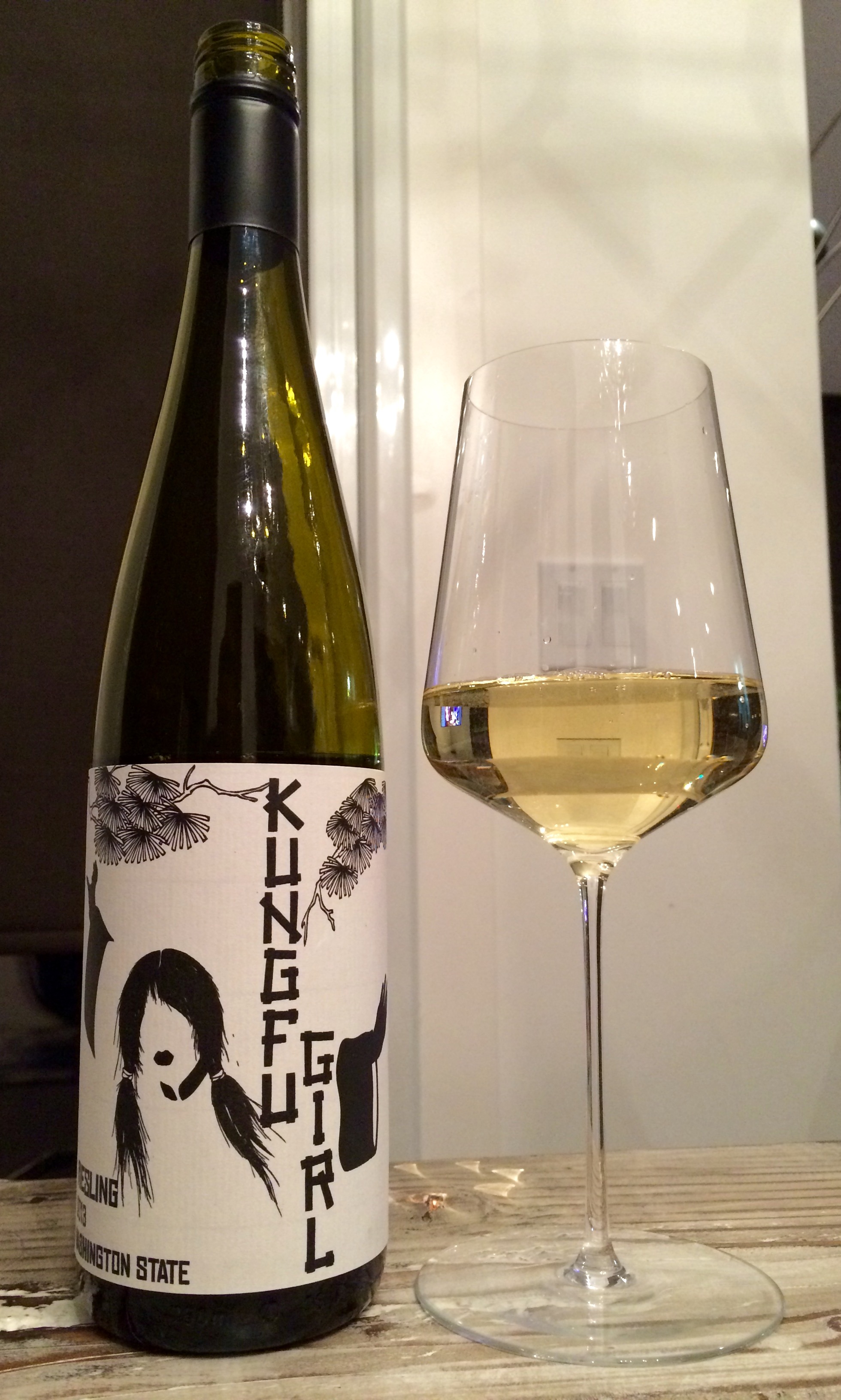
But not just any Washington State Riesling – THE Washington State Riesling.  This bottle is as close to a sure thing as you can find in the world of wine, especially the portion of that world that you can find at Costco or Superstore.  I have been buying (and gulping down) Kung Fu Girl Riesling for years and singing its praises for almost as long; it’s no coincidence that this wine now becomes the very first bottle to be reviewed on Pop & Pour in THREE different vintages, following the 2010 in April 2011 and the 2011 in July 2012.  Like its predecessors, the ’13 Kung Fu Girl is produced by Washington wine visionary (and Sammy Hagar lookalike) Charles Smith from one of Washington State’s northernmost vineyard sites, the Evergreen Vineyard.  This is one of North America’s top sites for Riesling, a large, cool climate and elevated vineyard in a zone that is in the process of becoming its very own brand new AVA, the Ancient Lakes region.  Unlike the desert that forms the bulk of Washington State’s wine scene, Evergreen and the Ancient Lakes are a perfect spot for growing crisp, balanced Riesling. Read the rest of this entry »


Wine Review: 2012 Miguel Torres Santa Digna Brut Estelado Rose

9 02 2015

[This bottle was provided as a sample for review purposes.]

From Chile, with love.

From Chile, with love.

Whatever your opinion is on Valentine’s Day, it has had a highly valuable (and surely unintended) side effect on the wine industry:  for one lone day a year, it has shone the spotlight brightly on pink wine.  Rose wines continue to be misunderstood, undervalued, unfairly derided and almost absurdly underrated, so I will happily sing the praises of any day that brings the world’s attention to them ever so briefly, even if it’s a Hallmark-created one.  And if you’re going to grab a pink wine to celebrate February 14th with your true love (and after all the effort I put into the last two sentences, you’d better), I humbly suggest it should be this one, whose flavours are matched equally by its story…and its price.

Miguel Torres is one of Spain’s largest and best regarded wine empires, still entirely family-run after 5 generations.  Torres brands show up in all of Spain’s top wine regions, but the family is also highly prevalent in Chile, where current CEO Miguel Torres Maczassek lived for three years starting in 2009 to head up operations.  Despite being a European, international company, Torres is passionately devoted to telling a local story with each of its labels, and Torres Maczassek himself has a clear love for Chile that shows through when you talk to him and is reflected in his wines.

Read the rest of this entry »