Sub-$16 Red Throwdown: Old vs. New World

11 01 2017

[These bottles were provided as samples for review purposes.]
fullsizerender-532

Have you EVER seen a red wine bottle shaped like the one on the left?

The $15 bottle of wine is a vanishing category nowadays, and what you can actually get for that price may often make you wish you couldn’t.  A combination of the struggling Canadian dollar, increased liquor taxes and the inexorable power of inflation is slowly pushing up that minimum purchase threshold where you can expect to find decent quality…if you look hard enough amongst the oceans of double entendre-named or critter-adorned labels at that price point.  However, there are still a select few value crusaders scattered here and there in this cost category, from under-appreciated regions where production costs remain low and climatic abundance makes ripening easy.  I happened to have two such examples lying around, one from the Old World and one from the New, so what better way to make use of them than to have them battle to the death for my weeknight enjoyment?  Since the estimated retail price on each creeps barely over $15.00, we’ll play it safe and call to order the first ever Pop & Pour Sub-$16 Wine Challenge.

In this corner, from the Old World, comes a representative from arguably the most overlooked source of good, solid, inexpensive table wine:  Portugal. Read the rest of this entry »


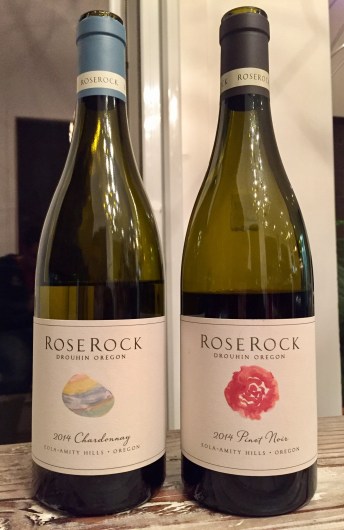
Introducing: Roserock Drouhin Oregon

5 01 2017

[These bottles were provided as samples for review purposes.]

fullsizerender-526

New vineyard, new venture, new heights.

Maison Joseph Drouhin has been a Burgundy mainstay for over a century, but third-generation proprietor Robert Drouhin discovered a kindred spirit location in Oregon close to 40 years ago when he arranged a Judgment of Paris-esque blind tasting competition between a group of classic red Burgundies and some upstart USA Pinot Noirs back in 1979.  At a time when almost nobody even knew that Oregon was producing quality wine and all American hopes were seemingly based on the performance of the California contingent, it was “Papa Pinot” David Lett’s Eyrie Vineyards Oregon Pinot Noir that lapped the New World field in the tasting, placing 2nd overall behind only Drouhin’s own 1959 Chambolle-Musigny, an exalted Burgundy from a top vineyard.  Within less than a decade from this revelatory event, Drouhin had bought land in Oregon’s Dundee Hills (a subregion within the large Willamette Valley located almost equidistant from Portland and the Pacific Ocean) to plant to Pinot and had assigned his own children to carry the family legacy across the ocean, naming his daughter Veronique as winemaker and his son Philippe as viticulturist, positions both still hold at Domaine Drouhin Oregon today.

Fast forward a quarter century.  Drouhin Oregon has established itself as one of the premium producers of the Willamette Valley had has become firmly entrenched in the Oregon community.  On the lookout for additional top vineyard lands outside of Dundee Hills, it never quite comes across what it is seeking…until the Roserock vineyard comes up for sale.  Roserock is located due south of Dundee, right in the centre of Willamette in the well-regarded Eola-Amity Hills subregion, about a half hour south of Portland and just west of the state capital, Salem.  It is replete with features that would make any winery’s ears perk up:  complex, well-draining volcanic soils; high (for Oregon) temperature-controlling elevation, perched between 550-750 feet above sea level; sited in the middle of a wind corridor channelling cool Pacific air right through the vines, maintaining acidity and prolonging ripening.

fullsizerender-527

Roserock was planted to 111 acres of Pinot Noir and 11 acres of Chardonnay, Oregon’s (and Burgundy’s) signature grapes and had previously supplied fruit not only to Drouhin but to a laundry list of Willamette’s bright lights, including Soter, Argyle and King.  Drouhin pounced on it, acquiring the entire vineyard in December 2013 in its most significant transaction since starting up business on this continent.  This was not just a blip on the radar of a global wine power:  it single-handedly almost doubled Drouhin Oregon’s vineyard land holdings in the state, and it led to the creation of a new standalone Drouhin brand dedicated to the preservation and celebration of Roserock’s unique identity.  2014 was the inaugural vintage of this new label, and the first Roserock Drouhin Oregon Chardonnay and Pinot Noir make it eminently clear why this vineyard deserves to stand on its own. Read the rest of this entry »


Happy NYE 2016: Piper-Heidsieck Brut NV

30 12 2016

[This bottle was provided as a sample for review purposes.]

Quick – what’s the most festive thing you can think of to drink right now, right in the middle of this holiday season?  Champagne?  Close.  Champagne wrapped up like a present, complete with bright red bow, in its own custom bottle cozy?  Bingo.  I have long been a proponent of seasonally packaged wines (as long as they’re done right – when done wrong, they’re not pretty), and the holiday edition of the Piper-Heidsieck Brut NV Champagne nails the Christmas/New Year’s vibe about as well as anything I’ve ever seen in a bottle.  Seriously, just look at this thing, first wrapped up:

fullsizerender-521

Wait for it…

Then unwrapped:

fullsizerender-523

Oh yeah.  So sweet.

YES.  That is so, so clever.  And it’s reusable!  How can you go to a New Year’s party tomorrow and NOT bring this?  And it’s on sale online at the moment at Willow Park in Calgary, and maybe elsewhere, at a price that’s shockingly friendly for true Champagne from a historic house.  Oh, and most importantly, the juice lives up to the packaging.

Read the rest of this entry »


Sacred Hill Marlborough Trio

29 11 2016

[These bottles were provided as samples for review purposes.]

fullsizerender-488If you follow this blog (thank you!) and enjoy wine reviews (I do too!) but aren’t as into other forms of alcoholic beverages, I would suggest that you cherish this write-up.  Mull over it.  Take your time reading it.  Stop halfway through and come back tomorrow to finish it.  It will have to last you a long time.  This is officially Pop & Pour’s last wine review until after Christmas, as on Thursday I dive headlong into Year 3 of Whisky Advent, with 25 straight days of write-ups about the little bottles sequentially coming out of Kensington Wine Market’s tremendously awesome Whisky Advent Calendar. Pray for me.  Incidentally, Advent in 2017 may look a little bit different for PnP, as my years-long quest to get somebody to make a proper Wine Advent Calendar just might be coming to fruition:

Make it happen, Bricks Wine Company.  I’ll be ready, and I’ll make sure everybody who reads this site is ready too.

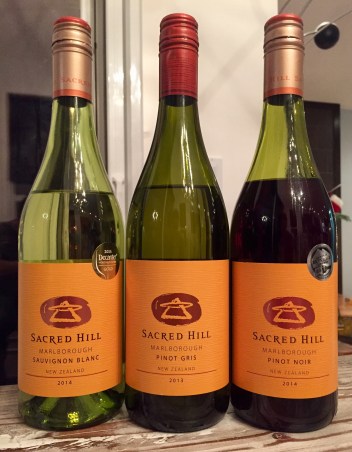
Anyway, since this is my last wine write-up for a calendar month I figured I’d make it a multi-bottle one, from an area that is a bit at risk of becoming a victim of its own success:  Marlborough, New Zealand.  Since catapulting onto the scene 30-odd years ago with a distinctive lean, blisteringly aromatic and herbaceous style of Sauvignon Blanc initially popularized by now-mega-label Cloudy Bay, this region on the northern edge of the South Island has become synonymous with this piercing, vegetal, unabashedly flavourful take on the grape.  Producers have rushed to respond to global demand for Marlborough’s established house style for NZSB, to the point where it is now one of the most readily available bottles around, no matter where you are.  This is good in the sense that you know that a solid, consistent bottle of white that will not disappoint is always around the corner.  It’s bad in the sense that a lot of New Zealand Sauvignon Blanc has become almost mechanical, put together as if by rote to satisfy an expected flavour trope.  The old challenge for NZSB was to become relevant; the new challenge is to regain its individuality and joie de vivre.  Easier said than done at a competitive price point, but certain producers are proving up to the task, like Sacred Hill, to whom I was introduced by the three bottles below.

fullsizerender-485

Sacred Hill was founded 30 years ago, in 1986, at the start of New Zealand’s wine explosion; however, unlike many similarly timed winery ventures, it was not started at the epicentre of the Sauvignon Blanc earthquake, hailing from Hawkes Bay on the eastern side of NZ’s North Island as opposed to Marlborough.  Hawkes Bay is a warmer region known mainly for red wines, and the two brothers behind the Sacred Hill label grew up there and came by their wine aspirations naturally:  their father was one of the first farmers in the region to take the plunge and start planting grapes as opposed to more common (at the time) agricultural crops.  The business has since expanded and Sacred Hill now has vineyards in both Hawkes Bay and Marlborough, which the brothers (correctly) call the “engine room” of New Zealand’s wine industry.  They have access to half a dozen different vineyards in Marlborough, one of which, the eerily named Hell’s Gate, is their own.  Their Orange Label line of wines, including the three below, are multi-vineyard blends offering up a true sense of the region without any sticker shock. Read the rest of this entry »


Joseph Drouhin Hospices de Belleville Beaujolais Duet

23 11 2016

[These bottles were provided as samples for review purposes.]

fullsizerender-479

Great region, great wines, great story.

A few posts ago I was discussing the intractable dilemma of trying to locate value Burgundy, that nearly mythical beast of the wine world, and I’ve since realized that I neglected to mention the obvious solution to the problem:  just look for Cru Beaujolais.  The Beaujolais region is technically part of Burgundy, located just south of Macon and north of Lyon, and while it can produce its share of forgettable wines, the main difference between Beaujolais and the other zones of Burgundy is that its top wines are shockingly wallet-accessible.  In fact, Cru Beaujolais, wines from one of the ten top quality Cru subregions in the area, might be some of the greatest wine bargains on Earth, pinnacle expressions of a classic grape at absurdly reasonable prices.  Case in point:  the two bottles to be discussed below, which each clock in at $27-$30 retail and which combine old-vine vineyards in top locales, one of Burgundy’s best producers and a hell of a good back story, all for the price of a basic forgettable Bourgogne Rouge.

Unlike the rest of red Burgundy (which is crafted from Pinot Noir), red Beaujolais is made from Gamay, the thin-skinned and light-bodied red grape well known to Canadian wineries whose spiritual heartland lies in this region’s ten Crus.  True story:  Gamay used to be grown all across Burgundy until 1395, when the (likely self-titled) Duke Philip the Bold ordered the “very bad and disloyal plant” uprooted in favour of the more aristocratic and noble-approved Pinot Noir.  His decree was not all that impressively enforced way down in the south of Burgundy, so pockets of Gamay remained in Beaujolais, quietly, until the danger of extermination had passed and the region was officially recognized as a Protected Denomination of Origin.  While it’s true that Gamay may never quite reach the lofty heights of nuance and complexity that Pinot can, it can offer a pretty reasonable facsimile at an absolute fraction of the price. Read the rest of this entry »


Burrowing Owl Fall Release Set

12 11 2016

[These bottles were provided as samples for review purposes.]

Burrowing Owl Fall Release Week is quickly becoming one of the highlights of the Pop & Pour blogging calendar.  The winery is highly engaged with consumers and media alike and  is ahead of the game in terms of finding new ways to get its wines into the collective consciousness, and its renown is expanding well beyond its home province of BC as a result.  When the season’s current releases arrive in Calgary around harvest time, I’m ready to do my small part to spread the word.  Bring on the new vintages!

fullsizerender-462

A glorious Pop & Pour fall tradition.

Burrowing Owl is an Okanagan Valley stalwart, and it’s become such a ubiquitous part of the region that it’s easy to forget the winery is less than 20 years old.  The story started in 1993, when founder Jim Wyse replanted a series of vineyards between Oliver and Osoyoos in the extreme southern Okanagan.  There were no immediate plans to build a winery, but Wyse’s vision expanded once he saw the quality of the new grapes.  Burrowing Owl’s first vintage was 1997, and construction on the gravity-flow winery and massive underground cellar on the property was completed in 1998.

fullsizerender-468

 Initially focused on Cabernet Sauvignon, Merlot, Chardonnay and Pinot Gris planted on a single 130-acre site, Burrowing Owl is now up to 14 different planted varietals on 170 acres of estate vineyards in three different sites. It is no accident that the winery is named after the rare underground-nesting owl that was declared extinct in British Columbia in 1980 but is now back on the upswing due to the dedicated conservation efforts of a small group of individuals:  Wyse is one of those individuals, having contributed significant amounts of both time and money to the burrowing owl’s preservation.

fullsizerender-472

Stelvin Rating: 8/10 (Love the colour, love the side pattern and smoothness; not a huge fan of the top embossing.)

 This year I was fortunate enough to have the opportunity to try a sextet of different bottles from the Burrowing Owl 2013 and 2014 vintages, including return engagements with a couple of wines I had in last year’s releases, the Cabernet Sauvignon and the particularly eye-opening Syrah.  Let’s see how the fall 2016 lineup compared, starting with my introduction to one of Burrowing Owl’s founding whites:  Chardonnay.

Read the rest of this entry »


Cellar Direct: German Riesling Powerhouses

3 11 2016

[These bottles were provided as samples for review purposes.]

fullsizerender-458

Serious wine, serious value.

You owe it to yourself to drink more German Riesling.  You may not know it yet, but you do.  I know the idea of turning to something German doesn’t conjure up the same (somewhat oversold) feelings of art or romance that something French or Italian might, but I’m here to tell you that startling clarity, absolute transparency and unfailing precision can be much sexier than you give them credit for.

And I know, I know – you don’t like sweet wine and all German wine is sweet, right?  Except (1) your palate may be more attuned to sweetness than you expect, and (2) no, no it’s not.  In fact, some German Rieslings are as dry as a bone, often helpfully highlighted by the label indicator “trocken”. A “trocken” designation doesn’t necessarily mean that there will be no residual sugar left in the wine, but any that remains will be minimal (9 grams per litre or less) and the wine will taste dry, thanks to a helpful assist from German Riesling’s often raging levels of scouring acidity.  Another hint of dryness in German whites is (relatively) elevated levels of alcohol, since this is an indication that the bulk of the sugars in the grapes have been converted to alcohol during fermentation instead of left in the finished wine.  Generally speaking, if it’s 10.5%-11% abv or higher, it probably won’t taste sweet (and frankly, even if there is some discernible sweetness, you will probably welcome it given how much else will be going on.  Trust me.) Read the rest of this entry »


2013 Nugan Estate Third Generation Chardonnay

28 10 2016

[This bottle was provided as a sample for review purposes.]

fullsizerender-455

Nice to see some work go into a value label design.

If you were on the hunt for the largest subnational designated wine region in the world, the gargantuan South Eastern Australia appellation might be your first and last stop.  While most demarcated wine appellations gain their distinction by having a set of physical characteristics or surroundings in common — climate, soil, terrain, aspect, varietal — this one is intentionally celebrated for its internal differences.  Spanning five separate states within Australia (Queensland, New South Wales, South Australia, Victoria and even Tasmania) and covering the bulk of the prime vine-growing area in the country, South Eastern Australia is an umbrella region created to permit the blending of grapes from a variety of disparate conditions across a vast geographic area into a single appellation-level wine.  While the scorching Barossa Valley may have nothing in common with the cool, maritime Yarra Valley 800 kilometres away, producers under the SE Australia label can pick and choose grape characteristics from each (like rich fruit in Barossa and juicy acidity from Yarra) and meld them together to create a more balanced, interesting blend.  Australia has long been a wine nation that does not frown on cross-regional blending (the country’s top grape, Penfolds Grange, is such a blend), and when used correctly, it can allow for producers to put out well-made and eminently drinkable wines and surprisingly accessible prices. Read the rest of this entry »


Champagne Day: Taittinger Portfolio Tasting

21 10 2016

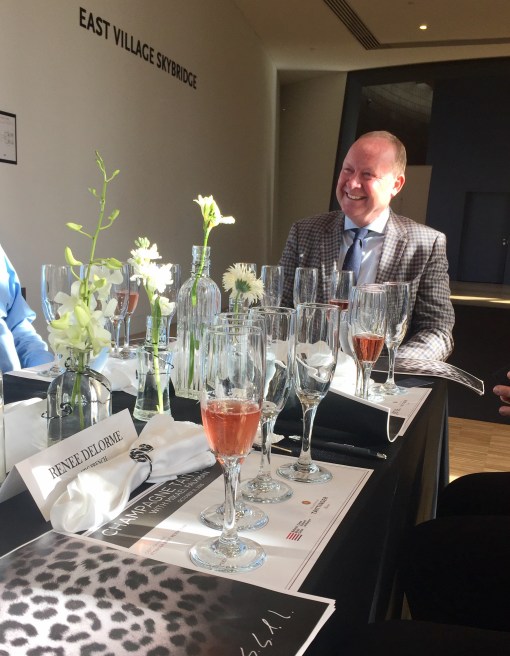
Happy International Champagne Day, all!  If you follow wine media long enough you realize there’s a designated day for basically every country, region and varietal imaginable, but if someone wants to concoct an additional reason for me to drink Champagne, I will take them up on it.  To celebrate this illustrious occasion, I was fortunate enough to take part in a comprehensive tasting of a selection of Taittinger’s impressive lineup of Champagnes, which was particularly special for two reasons:  Taittinger’s International Business Developer Mikael Falkman had flown in from Sweden to lead us through it, and it was the inaugural Alberta release of the astonishingly rare and collectible 2008 Taittinger Collection Series, a bottle unlike any other I have seen to date.  Adding to the auspiciousness of the event was that it was held in the Skybridge of the spectacular new National Music Centre in Calgary, an event space suspended over a road and constructed as a piece of living art, complete with a ceiling fixture made from old instruments that emitted a continual buzzy tune aligned with the vibrations of the building.  Suffice to say it was not your usual Friday.

fullsizerender-445

Mikael Falkman, Taittinger; impeccable brand ambassador.

Taittinger has been around for nearly a century but is particularly catching fire in my neck of the woods right now as the fastest growing Champagne brand in western Canada.  Founder Pierre-Charles Taittinger was a soldier who was wounded in battle in World War I and who recuperated in a town in Champagne, in a memorable old castle that was being used as a command post.  He grew to love the area so much that he vowed he’d return someday and buy the castle, and he did, taking over the chateau and its vineyards in 1932 from Champagne house Forest-Fourneaux and rechristening it in his family name.  Taittinger stayed in the family until 2005, when it was sold (over the objections of one family member, Pierre-Emmanuel Taittinger) to Starwood Capital Group, which owns the Starwood chain of hotels.  The purchasers’ interest was largely in other portions of the Taittinger empire, which included hotels and a parfumerie, and the Champagne business was shortly on the market again.  Pierre-Emmanuel Taittinger managed to get a financing group together and bring the house back to the family that gave it its name, a move that may have saved both the family’s legacy and the quality and reputation of the brand.

fullsizerender-440

Mikael Falkman has been with Taittinger for many years and has lived through its various recent changes of ownership, and he radiated a sense of ease and confidence about where the house is now and where it is going.  Falkman led us through a lineup of five wines, starting with the clean, linear Taittinger Brut Reserve NV and progressing into a quartet of the house’s finest offerings, each reviewed in detail below.  He spoke at length about Taittinger’s house style, which has remained consistent since the house got its current name, focused on freshness, elegance and minerality, eschewing heavy oak and focusing primarily on the Chardonnay grape.  “Notice that there are no spittoons on the table,” he intoned to start, his meaning evident:  this was exquisite, expensive, premium Champagne, and we would be drinking all of it.  Didn’t have to tell me twice. Read the rest of this entry »


Value Burgundy Battle: The NEW Cellar Direct

20 10 2016

[These bottles were provided as samples for review purposes.]

fullsizerender-434

Cellar Direct Does Burgundy.

Conscientious readers may remember this post from over a year ago where I introduced Cellar Direct, an Alberta-based online national wine club featuring subscription-based access to a specially-curated selection of non-interventionist natural wines.  Thirteen and a half months later, Cellar Direct is still doing its thing, but under a revamped and significantly more flexible business model.  Now, instead of paying a fixed amount per month for semi-recurring shipments of pre-selected wines, you simply keep an eye out for regular wine offers (generally to be unveiled weekly on Saturdays) and then place an online order for as few or as many bottles as you want, which are shipped to you shortly afterward in temperature-controlled trucks to keep your wines in cellar-like comfort during transport.  This simpler, less demanding offer-based approach is a boon to buyers in the tighter economic times in which we currently find ourselves in this province, and Cellar Direct’s streamlined e-commerce interface allows them to keep prices reasonable even while offering highly researched, quality-focused wines from traditional producers that truly pop and that you won’t see at your neighbourhood wine store.  If any of that piques your interest, you can sign up for the club’s offer newsletters and find out more info at cellardirect.ca.

Cellar Direct’s first online offering under its new and improved structure was the excellent  Senorio de P. Pecina Rioja Crianza that I have already gleefully tried.  The next offer is due out this Saturday and tackles what is often considered (including by me) to be the biggest oxymoron in the world of wine:  value Burgundy.  Wines from Burgundy can make the toughest weep and turn the deepest skeptics into lifelong followers of the vine; unfortunately, they can also empty your wallet with shocking efficiency and leave you feeling underwhelmed and disappointed.  It can be exceedingly difficult, especially at lower price points (which for Burgundy can mean anything under $50ish), to know what you’re going to get in any given bottle, and finding anything $30 or less that properly showcases the region can be a massive challenge, especially when you’re not sure where to look.  Cellar Direct’s upcoming offer this week, as well as a further offer coming in mid-November, try to be your map and compass to this frustrating yet enchanting region of legend.  Let’s see how they do, starting with a bottle due to hit your inbox in a few days… Read the rest of this entry »


2013 Emiliana Novas Gran Reserva Carmenere/Cabernet Sauvignon

13 10 2016

[This bottle was provided as a sample for review purposes.]

fullsizerender-430

Chile: home of Carmenere and inexpensive quality.

If you were starting up a wine venture today and were looking to maintain high quality but stretch your viticultural buck as far as possible, you would almost certainly go to Chile.  While braver souls are now starting to venture to the more extreme climatic and geographical parts of the country in search of cutting-edge lands and the flavour potency and complexity that can come with them, those who stick to Chile’s warm central valley find themselves in something close to a grape-grower’s paradise:  warm, mild, consistent growing seasons, refreshing cooling breezes at night off the surrounding mountains and a relative lack of vineyard pests.  Since the Southern Hemispheric nation is fairly segregated from the rest of the world’s vineyard (with its closest main viticultural neighbour, Argentina, walled off by the Andes), it has managed to keep itself free from the devastating vineyard louse phylloxera, which has ravaged vines almost everywhere else and has required the bulk of the world’s wineries to graft their vines onto resistant North American rootstocks to allow their crops to survive.

What does all that mean from a commercial perspective?  It means that you can have a vineyard with a lot of beneficial, normally highly costly or dangerous features — organic viticulture, no pesticides or herbicides, own-rooted vines — without the associated price tag or risk of crop loss.  That allows you to make bottles like this one, a single-vineyard wine from 25 year-old vines planted on their own rootstocks, farmed organically and then hand-harvested, and then sell it to export markets at a shade over $15 a bottle.  That combination of price and input quality is basically impossible in the majority of the wine world. Read the rest of this entry »


2014 Henry of Pelham Old Vines Baco Noir

5 10 2016

[This bottle was provided as a sample for review purposes.]

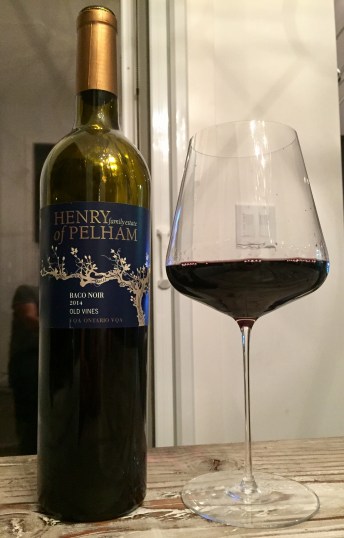
fullsizerender-429

Welcome Baco.

I admit to approaching this bottle with a slight sense of foreboding.  One benefit of learning about wine is that it helps you pinpoint rare or obscure high-quality grapes or regions that are under-appreciated, and thus underpriced, by the market.  However, one drawback is that it can stratify your thinking about what quality looks like and give rise to unwitting prejudice about varietals or areas that aren’t always known for it.  Baco Noir, like all hybrid grapes, falls within the latter category.  But this bottle is proof that wine prejudice can be overcome.

Almost all of the quality wine grapes in the world, including all of the varieties you can list within 5 seconds of reading this sentence (Cabernet Sauvignon, Chardonnay, Merlot, Pinot Noir, etc.), belong to a grape species called Vitis vinifera, widely (and accurately) known to be the best of the many families of grapes in the world for wine production.  A hybrid grape is a cross between different species of grapes; in wine-speak that usually means a cross between a vinifera grape and a non-vinifera grape.  These crossings almost always arise out of intentional experiments by people looking to combine the flavour, quality and structure of vinifera with non-aesthetic desirable characteristics of the other species, usually ability to withstand weather or disease, ease of ripening or size of yield.  Spoiler:  they usually don’t accomplish all of these goals. Read the rest of this entry »


2015 Alvear Alange Tempranillo

28 09 2016

[This bottle was provided as a sample for review purposes.]

fullsizerender-423

ALANGE SMASH!!

Some bottles immediately grab your attention for reasons you can’t quite put your finger on.  Other bottles grab your attention by screaming strange Spanish words in 128-point font.  Alvear’s Alange (sorry – ALANGE) is an example of the latter.  Its minimalist / maximalist label and Beetlejuice-like neck pinstriping are designed for the visually primed North American market, as is the consumer-friendly bottle indication of the grape inside (100% Tempranillo), a rarity on Old World wines.  It is a daring display from one of the older family-run wineries in the world, but it serves its purpose well, making you pause for that split second and linger over the bottle; after that, its price tag (a shade over $15) and the quality of the juice inside does the rest.

Alvear is truly a dynastic estate, now on its 8th generation of family winemaking.  The Alvear bodega was first constructed nearly three hundred years ago, in 1729.  Since then, it has not only stayed in the family but is now handled in all aspects by Alvears — there are currently over 50 members of the extended family involved in some capacity.  Alvear is known primarily for sherry, made in the region of Jerez in Spain’s arid southwest corner, but it is also gaining traction as a table wine producer, growing estate grapes due north of Jerez in the Ribera del Guadiana sub-zone of Extremadura.  To say this is an under-the-radar global area for red wine would be a marked understatement, but it’s places like this where values are often found.  Ribera del Guadiana is known primarily for scorching hot summers, freezing cold winters, reddish clay soils and an obscene array of planted grapes: while Tempranillo takes up the most acreage, the area is home to a crazy mix of red and white indigenous and international varietals, from Sauvignon Blanc and Pinot Noir (!) to Pedro Ximenez and Graciano. Read the rest of this entry »


Calgary Wine Life: Washington Wine Tasting @ Bricks Wine Company

16 09 2016

If you have been sucked into the vast and wonderful world of wine at some point in your life, I guarantee there will be distinct moments that you can remember with shocking clarity, a series of epiphanies around particular bottles that made you go:  “I didn’t think wine could be like that.”  You form loyalties around those bottles, the producers that created them and the regions that birthed them.  You seek them out, and those like them, and you try to find out everything about them.  They shape what you look for in wine going forward, but they also increase your awe and appreciation of wine in general, and by doing so they give you an incredible gift, a passageway into a realm that bridges art and science, sensuality and precision.

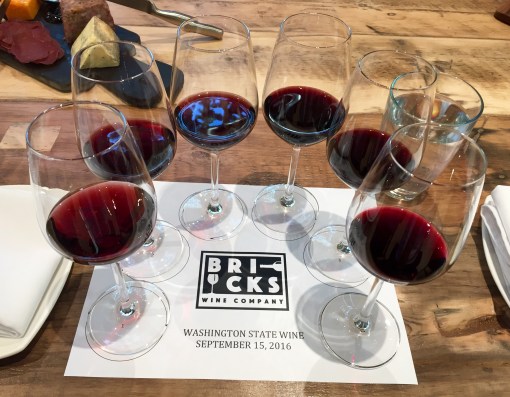
fullsizerender-409

I’ve had maybe half a dozen such bottles in my life.  One of them was the 2009 Walla Walla Syrah from Gramercy Cellars, which opened my eyes to the remarkable potential of Washington State wine and made me a lifelong proponent of the area, the winery and even the grape.  I’ve discovered since that it wasn’t a fluke:  Washington is filled with a shocking amount of top quality wine, and an array of producers pushing the envelope of what a young New World region should be able to accomplish this soon.  Even the large producers and the entry-level wines of the state come to play, somehow bypassing the plonk basement that consumers of most other areas have to wade through.  Despite all this, the gospel of Washington has been slow to spread, partly due to familiarity (“there’s world class wine WHERE?”) and partly due to price (no $14 slam dunks to be seen, at least in this market).

fullsizerender-413

All of this is why I was so thrilled to attend a Washington State wine tasting at Bricks Wine Company last night.  Bricks is the newest entry into Calgary’s impressive boutique wine scene, nestled in a historic old brick (natch) building at the start of trendy, funky Inglewood, but despite being in the process of establishing a foothold in the market, it hasn’t held back on inspired and daring wine selections, including one of the best arrays of Washington wines in town.  Regions like Washington need wine-savvy guides to take people by the hand and point them to the great wines nestled where they never thought to look; Bricks is the type of shop equipped to do just that.  And that showed in spades in the lineup of wines we tasted through, an array of luminaries that erased any questions about Washington State’s ability to stand with the elites of the wine world. Read the rest of this entry »


2012 Fox Run Vineyards Reserve Chardonnay

8 09 2016

[This bottle was provided as a sample for review purposes.]

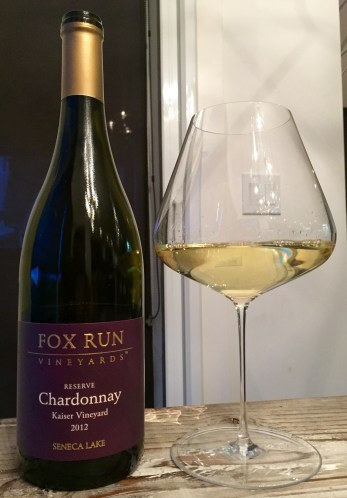
fullsizerender-406

The ultimate value Chardonnay? Quite possibly.

Casting my eyes on this maroon label sends me back down memory lane, to what seems like forever ago but was really only about three and a half months.  In May I was lucky enough to pay a visit to the beautiful and unspoiled Finger Lakes region in central New York State – you may remember this because I basically wrote a Lonely Planet book about the area on this site when I got back.  Our very last winery on that winery-intensive voyage was one I already knew well thanks to its expanding presence in the wine scene in Calgary some 3,600 km away:  Fox Run Vineyards, which has acted both as a gateway drug and as a proud brand ambassador for the Finger Lakes in Alberta.  They have taken to this role so well that one of their whites was an official bottle of choice at the Calgary Stampede this year; can’t get much more YYC than that.  

Fox Run is made up of 50 acres of estate vineyards due south of Geneva, New York, on the western shores of Seneca Lake, the largest and deepest of the long, thin Finger Lakes.  The site was previously a long-time dairy farm, but grapes were first planted there in 1984, with a winemaking facility following in 1990.  Present owner Scott Osborn took over in 1993 and has been a fixture since, and the crazy thing is that he isn’t even the biggest example of the winery’s clear commitment to continuity:  vineyard manager John Kaiser was responsible for first developing the vineyards back in 1984 and is still there today – I met both men when I was there.  Winemaker Peter Bell is 21 years into his Fox Run career, and Sales Manager Dan Mitchell, who is more or less a permanent resident of Canada at this point after forging a successful new northern market for the FLX over the past few years, has been there for 12.  They are a family at this point, and it shows.     Read the rest of this entry »