Luigi Bosca: 2013 Malbec Value Tiers

1 09 2016

[These bottles were provided as samples for review purposes.]

FullSizeRender-398

Now THAT’S a label rebrand. Thing of beauty.

Once you dive deep into the world of wine and start devoting more time and money than most people deem sane into bottles and glasses and books and storage systems, it can be a challenge sometimes to maintain a sense of discovery about larger-production brands, the workhorse wines you see on the liquor store shelves.  In part that can be valid:  some of them aren’t very good, a fact thrown into stark relief after you’ve learned about production differences and downed a quality bottle or three.  But others have found a way to keep that quality and that sense of vinous wonder despite stepping up in scale and availability, and the best of these manage to do this at an easily accessible price.  It may be as hard to create a well-made, interesting, varietally accurate bottle of 100,000-case $20 wine as it is to create a small-production luxury showpiece bottle at $100.  I’ve been able to try a few different Luigi Bosca wines over the past couple years, and they are making the former happen on a consistent basis.

I say this a lot and apologize for repeating myself, but if you want to learn about a grape or a producer or a region, buy a representative bottle and pay careful attention as you drink it.  If you REALLY want to learn a lot MORE about that grape, producer or region, buy TWO different representative bottles, drink them side by side, and note the similarities and differences.  Comparative tasting is probably the biggest educational gift you can give yourself…plus you also get to open two bottles at once, which can never be bad.  Tonight’s comparative tasting should be particularly illustrative because so much about the two Luigi Bosca Malbecs sitting in front of me are alike:  same producer, same grape, same vintage (2013), same general region (Mendoza, Malbec capital of the New World in Argentina).  What’s different?  Price points ($18 vs. $35), site specificity (general regional wine vs. single-vineyard wine from quality subregion) and grape-growing/winemaking techniques.  What shines through – the similarities or the differences? Read the rest of this entry »


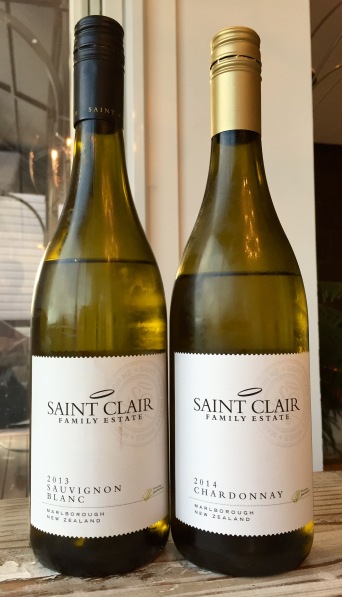
Saint Clair Family Estate – Marlborough Battle

11 08 2016

[These bottles were provided as samples for review purposes.]

FullSizeRender-392When you’re in a brand new wine shop or liquor store looking at a string of unfamiliar sub-$20 labels and hoping not to take a step too far wrong, the word “Marlborough” should be a huge source of relief to you.  It is the name of New Zealand’s most famous wine region, and more than maybe any other star region on Earth whose bottles you can still grab without a price cringe, it offers a very high quality floor, a strong baseline that offers confidence that even the lower-end offerings on the shelf will be somewhat well-put-together.  Marlborough, located on the northern tip of New Zealand’s South Island, is most renowned as the birthplace of Sauvignon Blanc’s most distinctive New World expression, that zingy, grassy, refreshingly searing style that almost anybody under 30 now associates with the grape.  Producers there have locked down on that mythical combination of quality, quantity and value that make Marlborough the safest, if at times one of the more redundant, “I’ve-never-had-this-bottle-before” picks out there.

A relatively new region on the global scale, Marlborough has been on the world’s radar since the mid-1980s, but the owners of Saint Clair Family Estate have been at the wine game longer than that.  Neal and Judy Ibbotson have been grape-growers on their estate since 1978, but previously sold off their crops to other wineries and didn’t decide to start making wine themselves until 1994.  They opted for the name “Saint Clair” for their winery because their vineyard property was initially settled by a James Sinclair back in the day; the added words “Family Estate” are not just lip service, as all three of their children are currently involved in various aspects of the business, with one of them even designing the wines’ labels.

This is an intriguing tasting, pitting Marlborough’s bread and butter Sauvignon Blanc against another white grape that’s starting to gain acclaim in the area, Chardonnay.  Enough acclaim to unseat the viticultural ruler of the region?  Let’s find out. Read the rest of this entry »


Domaines Paul Jaboulet Ainé: The Next Level

5 08 2016

[These bottles were provided as samples for review purposes.]

I recently tasted and discussed the entry-level Parallele 45 lineup from the Rhone Valley’s Domaines Paul Jaboulet Aine, which showcased the red, white and pink sides of the Southern Rhone in an impressive value-priced package.  Today we kick it up a notch.

FullSizeRenderJaboulet’s Alberta portfolio is supplemented by a quartet of upper-echelon bottles from a group of distinctive quality regions scattered across the Rhone, each of which has its own character and legend to live up to, and each of which, I’m happy to report, Jaboulet and winemaker Caroline Frey reflect to a tee in these beautiful offerings.  See my prior post for more details about this historic winery and its renaissance in our market; for now, we have a lot of wine to drink.

Read the rest of this entry »


Wine Review: 2015 Gramercy Cellars Olsen Vineyard Rosé

19 07 2016
FullSizeRender-386.jpg

Think pink.  And WA State.

This is the first time in a long time that I’ve sat down to write about a wine just because I wanted to.  I love (and am continually amazed by) the opportunity this blog has afforded me to try new bottles and attend incredible tasting events, but every once in a while it’s nice to step back and recalibrate and share the experience of a wine for the sheer joy of doing so.  And since there are few things that give me more joy in this world than opening a bottle of Gramercy Cellars (my favourite producer and a winery that currently occupies about 15% of my cellar), and since I’ve been waiting for this bottle of rosé to land for months now, this is definitely the wine for the task.

The story of Gramercy Cellars is the story of America’s youngest Master Sommelier, who went from serving, then sourcing, wines for some of the pinnacle dining establishments in various major US centres to making his own in rural Walla Walla, Washington, drawn to the desert in the Pacific Northwest by the potential he saw in the area’s Syrahs.  After graduating from Cornell University, Greg Harrington attained the Master Sommelier designation at age 26 (he was until recently the Chair of the Court of Master Sommeliers, Americas and is now on the Board as a Chair Emeritus) while working in New Orleans for famed chef Emeril Lagasse.  Stints for Wolfgang Puck in Las Vegas and the B.R. Guest Restaurant group in New York followed, but a chance tasting of Walla Walla Syrah in NYC led to a trip out to Washington State, which very quickly led to Greg and his wife Pam quitting their jobs, uprooting their lives and fast forwarding a far-off retirement dream of making their own wine to the here and now.  For me at least, Gramercy is one of a small group of Washington producers that is unwrapping the state’s wine potential in real time, turning out nuanced, textured and ageworthy wines that turn New World stereotypes on their heads. Read the rest of this entry »


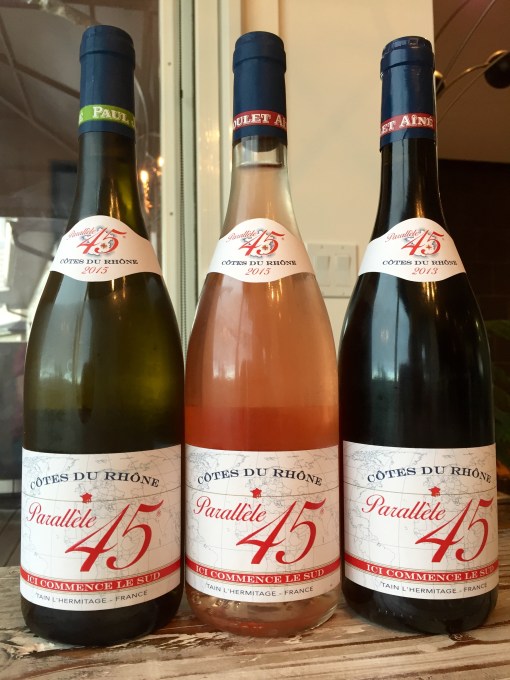
Domaines Paul Jaboulet Ainé: Parallele 45 Trio

6 07 2016

[These bottles were provided as samples for review purposes.]

There are not many producer names as synonymous with their home region as Jaboulet and France’s Rhone Valley.  From their pinnacle bottling La Chapelle from the world-renowned hill of Hermitage (which I have had once and vividly remember to this day) down through the rest of their lineup, the wines of Domaines Paul Jaboulet Ainé are known and revered the world over, although until recently they were decidedly under-represented in our market.  That has now thankfully changed, and Alberta once again has full access to some of the best wines the Rhone has to offer.

FullSizeRender-379

The Jaboulet winery was first started by Antoine Jaboulet in 1834, who then passed it to his two sons, Paul and Henri, to carry on his legacy.  Paul, the older son, gave the winery his name (the “Ainé” in “Domaines Paul Jaboulet Ainé” literally translates to “eldest”), and it stayed in the family for almost 175 years before finally being sold in 2006 to the Freys, a family of French winemakers with properties in Champagne and Bordeaux.  Caroline Frey (fittingly the eldest daughter of the family), who is now 37 and so was in her late 20s at the time of the acquisition, assumed the mantle of winemaker and has instituted sustainable vineyard practices and carried forward Jaboulet’s reputation for classic quality.

Parallele 45 is Jaboulet’s entry-level lineup of Cotes du Rhone wines, so named because the 45th parallel of northern latitude runs right through the Rhone Valley, bisects some of the Domaine’s vineyards and is only a couple kilometres from its cellars.  The bottles all bear an inscription found on a monument in the nearby village of Pont de l’Isere (which, and I am not making this up, is at 45.0040 degrees N latitude):  “Ici Commence Le Sud” – The South Starts Here.  Post de l’Isere looks to be on the southern edge of the Northern Rhone as opposed to the northern edge of the South, but the mantra still fits, and Jaboulet’s wines straddle both sides of the Valley.  I got to taste through the full Parallele 45 lineup – white, pink and red, all of which share the same $18ish wallet-friendly price tag – and see how well they carried forward the tradition of this great name. Read the rest of this entry »


Return of The Mules: Torres Summer Values

12 06 2016

[These bottles were provided as samples for review purposes.]

It’s been so long since I sat down and wrote a straightforward normal wine review that I’m having trouble remembering how to start one.  Thankfully, I’m aided by an old PnP standby:  if they’re not there already, the Torres family of wines has to be close to the record for largest number of individual write-ups on this site, aided in part by their broad-based dual-continent operation and vast lineup but mostly by their consistent ability to deliver quality and identity for less than you’d expect.  I made the mistake last year of prejudging their “Las Mulas” line of entry-level Chilean wines by its lighthearted name and beast of burden on the label, only to be reminded by the emphatically delicious Las Mulas Rose that Torres takes all its wines seriously.  This year, with the Sauvignon Blanc and Cabernet Sauvignon from the Las Mulas brand, I will not make the same error twice.

FullSizeRender-375

The wines for Las Mulas come from Chile’s warm, flat and fertile Central Valley, where the benign climate and the absence of most common vine diseases make it the country’s most productive and most popular grape-growing region.  This can be both a good thing and a bad thing:  obviously getting your crop to ripen without heroic efforts is a benefit, but wine grapes specifically tend to derive much of their flavour concentration and character from having to struggle a bit to grow, and when they’re deprived of that opportunity to strive the results in the glass can be flat and uninteresting.  To combat the Central Valley’s generosity, Torres planted the Las Mulas grapes on nutrient-poor soils and entirely avoided the use of herbicides or pesticides (the vineyard sites are certified organic).  The vineyards are wholly hand-harvested, with nary a machine in sight, making this New World wine done in old school ways…yet somehow still hovering around the $15 CAD mark on the shelf.  Each of the offerings below cleared by (pre-primed) expectations for that price point with ease. Read the rest of this entry »


PnP – Now on FB!

6 06 2016

After a half decade of technological procrastination, Pop & Pour has finally properly joined the Internet age and now has its very own Facebook page – you can access it here for reviews and other content:

https://www.facebook.com/popandpour

It is still in early development but will be expanded further in the coming weeks.  In the meantime, if you are a fan of the blog, I would be thrilled if you would be willing to Like and Share the page in Facebook – it would be very much appreciated.  New reviews coming this week!

img_08461


FLX: Finger Lakes Extravaganza – Part VI

29 05 2016

Well, we made it.  When I started this trip recap I wasn’t thinking it would be a 15,000-word Greek epic, but that’s what happens when an area has so many stories to tell that so many people may not have heard.  To retrace your steps:

Finger Lakes Intro & Conclusions
Part I – Long Island, Hudson River, Dr. Frank
Part II – Keuka Spring, Chateau Lafayette Reneau
Part III – Red Newt, Knapp Winery
Part IV – Hermann J. Wiemer, Lamoreaux Landing
Part V – Boundary Breaks, Anthony Road

FullSizeRender-366

Our last winery visit was probably also our most anticlimactic, but only because it felt for many reasons like Fox Run Vineyards had been with us all along.  In many ways Fox Run was the catalyst for our whole trip, the Finger Lakes producer with the deepest and most established Alberta presence, to the point where its unoaked Doyle Vineyard Chardonnay was recently selected as the official on-venue house white of the 2016 Calgary Stampede.  A key piece of the winery had literally accompanied us on nearly every stop of our grand FLX winery bus tour:  Sales Manager Dan Mitchell had given us the scoop and filled in the blanks about the region and the wineries who hosted us, never once seeking to undermine any one of them in favour of his own employer, delivering honest yet community-minded feedback that gave us a better sense of what the Finger Lakes were all about than any tasting room.  Winemaker Peter Bell was almost a mythical figure, his impact and his protégées spread across the entire region, his reputation eagerly preceding him even though he is certainly not the kind of person who would revel in it. Read the rest of this entry »


FLX: Finger Lakes Extravaganza – Part V

28 05 2016

Roll call for the previous chapters in this saga:

Finger Lakes Intro & Conclusions
Part I – Long Island, Hudson River, Dr. Frank
Part II – Keuka Spring, Chateau Lafayette Reneau
Part III – Red Newt, Knapp Winery
Part IV – Hermann J. Wiemer, Lamoreaux Landing

FullSizeRender-357

Kees Stapel, Boundary Breaks Vineyard

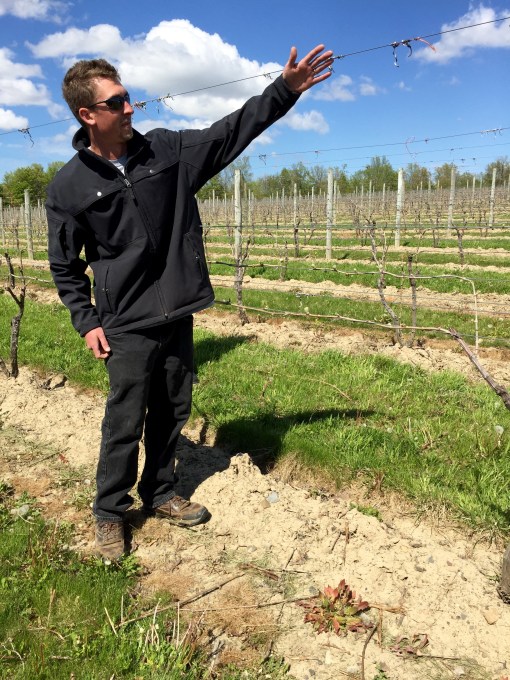
Ten wineries into our multi-day tasting tour of the Finger Lakes, we continued along the eastern shoreline of Seneca Lake for a different kind of meeting with a different kind of winery.  Rather than gather around a tasting room counter with a winemaker, we were told to head out to the vines at Boundary Breaks Vineyard for a grape-growing lesson with the winery’s conscientious viticulturist, Vineyard Manager Kees Stapel.  He is such an integral part of what Boundary Breaks is all about that he is the very first person listed and pictured in the list of personnel on the winery website; owner and president Bruce Murray doesn’t mention himself at all.  This unusual (but laudable) level of marketing focus on the vineyard team is partly because Boundary Breaks is a winery without a winemaker:  it was founded based on its vineyard, planted in 2008 to four different Riesling clones on an ideal sloped, breezy, sunny, west-facing site arcing gently downward to the lake.  It only makes Riesling and focuses its energies on only five different bottlings, which are presently vinified by Red Newt winemaker and FLX Riesling star Kelby James Russell. Read the rest of this entry »


FLX: Finger Lakes Extravaganza – Part IV

27 05 2016

To start from the start of this tale of adventure, click in order:

Finger Lakes Intro & Conclusions
Part I – Long Island, Hudson River, Dr. Frank
Part II – Keuka Spring, Chateau Lafayette Reneau
Part III – Red Newt, Knapp Winery

IMG_4441

The morning of Tasting Day 3 started at the home of another FLX pioneer.  If you had heard of two Finger Lakes wineries before this travelogue (travelblogue?), I would be willing to bet they were Dr. Konstantin Frank (which we visited in Part I) and Hermann J. Wiemer Vineyard, another winery started by a European immigrant to the FLX with a prescient belief in the potential of vinifera grapes in the region.  In this case, Hermann Wiemer came to New York State from Bernkastel, Germany, about as close to Riesling Mecca as you can get in the world, and he was convinced that both he and his national grape could be successful transplants in the region.  He planted his first Riesling vineyard, the eponymous HJW Vineyard, on the western shores of Seneca Lake in 1976 and established his winery right beside it in 1979.  Thirty-seven years later, there we were. Read the rest of this entry »


FLX: Finger Lakes Extravaganza – Part III

24 05 2016

In case you missed the prequels, click here:

Finger Lakes Intro & Conclusions
Part I – Long Island, Hudson River, Dr. Frank
Part II – Keuka Spring, Chateau Lafayette Reneau

We remained on eastern Seneca after the morning views of Chateau Lafayette Reneau, taking a quick jaunt north to one of the best-known new-era Finger Lakes wineries, Red Newt Cellars Winery & Bistro.  I first read about the growth of Red Newt’s legend around the same time it experienced its greatest tragedy, in 2011, when co-founder and executive chef Debra Whiting was killed in a car accident.  Her husband, Red Newt founding winemaker David Whiting, forged on, turning the winery into one of the few in the Finger Lakes with an international reputation.  He remains in charge as Red Newt’s president, but has recently turned the winemaking reins over to a cerebral, unassuming twentysomething who might already be one of the best Riesling winemakers in North America:  Kelby James Russell, a homecoming son now squarely on the global Riesling vanguard.

FullSizeRender-339

David Whiting and Kelby James Russell, Red Newt.

Russell was born and raised in and around the Finger Lakes area but found a good reason to leave:  Harvard.  He graduated with a major in Government (poli sci grads unite!) and a minor in Economics but then sought a job in orchestra management to soothe an ongoing passion for music.  A trip to Italy ignited a love of wine, however, and Russell returned home to work a harvest with Fox Run Vineyards in 2009.  After three years there and an equal number of off-season harvests in the Southern Hemisphere (Marlborough, Tasmania and Barossa), he moved to Red Newt to assume the head winemaker mantle at the venerable age of 25 and almost immediately started pushing the boundaries of New World Riesling. Read the rest of this entry »


FLX: Finger Lakes Extravaganza – Part II

23 05 2016

In case you missed the previous chapters of this tale, check out the Intro & Conclusions from my Finger Lakes trip here and Part I of the tasting journey here.

FullSizeRender-326

August Deimel, Keuka Spring Vineyards

After leaving the western shores of Keuka Lake and the bar-setting wines of Dr. Konstantin Frank, we did a loop around the lake and landed at our only other Keuka stop, the aptly named Keuka Spring Vineyards.  If Dr. Frank was a reverential nod to the Finger Lakes’ past, Keuka Spring was a thrilling glimpse at its future, primarily thanks to its young, supremely talented and boundary-pushing winemaker August Deimel.  We were fortunate enough to have him lead us through a tasting of both current releases in the front of the house and experimental tank samples in the back, throughout which the only sound other than August’s compelling narrative was that of paradigms shifting. Read the rest of this entry »


FLX: Finger Lakes Extravaganza – Part I

22 05 2016

If you’re a fan of stage-setting or want a little more background info about what the Finger Lakes are all about, start here with this intro post.  Otherwise read on for the first breakdown of what went down over our four days of visiting and tasting in FLX, NY.

FullSizeRender-321

We ironically spent our first actual tasting in the Finger Lakes trying New York State wines from anywhere but.  We disembarked at the beautiful New York Wine and Culinary Center in Canandaigua, on the northern shores of the lake of the same name, which featured a built-in tasting classroom, professional learning kitchen, bistro and wine shop. There we tasted and were educated about a variety of wines from two other major New York AVAs, the Hudson River region due north of NYC and the Long Island AVA on the eastern half of Long Island.  Two winery representatives made a long early-morning trek to guide us through their wares. Read the rest of this entry »


FLX: Finger Lakes Extravaganza – Intro & Conclusions

21 05 2016

I am freshly returned from a five-day trek out to the Finger Lakes wine region in central New York State, so named for the 11 long, thin, appendage-like bodies of water stretching north to south between Rochester on the left and Syracuse on the right.  I travelled with two importers, two retailers, three sommeliers, a restauranteur and a widely published local print journalist.  We ventured up and down both shores of three different lakes, visited 13 wineries, tasted over 150 different local wines (of which I hastily scribbled written notes for about 120) and dined or drank with half a dozen different winemakers.  And we all returned with newfound understanding, appreciation and excitement for a region that is set to explode into the world’s quality wine consciousness, if it hasn’t already.

IMG_4358

I didn’t first read about the Finger Lakes until about five years ago; I don’t remember seeing a bottle of FLX wine on a Calgary wine shelf until a couple years after that, and there was certainly no such thing as Finger Lakes selection in Alberta retail until last year.  Chances are that if you haven’t stumbled onto those few rare bottles in the market, the region is still largely a black box to you.  So even though my head is bursting with thoughts, impressions and memories aching to be shared, stories dying to be told, I’m going to pump the brakes a bit and start from the start.  Then, partly because I’m impatient and partly because it will set the stage for the more detail-oriented recaps to come, I’m going to jump ahead to the end and offer up a few conclusions about where the Finger Lakes are right now and where they might be headed. Read the rest of this entry »


NZSB Playoff Challenge

4 05 2016

[These bottles were provided as samples for review purposes.]

FullSizeRender-306

Two enter, one leaves. Well, actually zero leave; there were no leftovers.

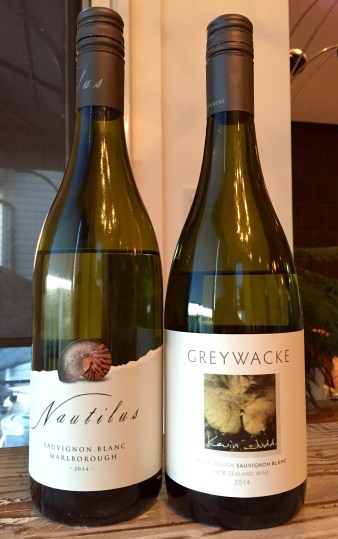
I need very little reason to open and taste two bottles side by side, especially when their comparison can tell me even more about them and where they’re from.  Somebody decided that Friday, May 6th would be known as Sauv Blanc Day (or #SauvBlanc Day, to be more accurate, even though it makes no sense to put a space in a hashtag), although this is a fact not without controversy, as others seem to have settled on April 24th for International Sauvignon Blanc celebration.  We can all agree that some time within this two-week window would be a great opportunity to open some Sauv Blanc, and with the playoffs upon us in two of the four major professional sports leagues, my dining table was also primed for a showdown of some sort.  Enter the titans.

These two bottles are excellent references for each other, as both are from the same vintage (2014, a shorter growing season with a wet harvest), the same country (New Zealand), the same region (Marlborough, the kickstarter of the NZ wine industry and of global New Era Sauv Blanc) and the same grape (the aforementioned SB).  Flavour and textural differences thus largely stem from slight climatic and geographic alterations at the vineyard level and minor distinctions in winemaking choices by the producers, as well as whatever cosmic forces make good wines end up just so.  Going in, I have to admit I was leaning toward the 2014 Greywacke Sauvignon Blanc as the likely favourite; this winery, run by former Cloudy Bay winemaker Kevin Judd (who literally put New Zealand on the world wine map with a now-ubiquitous tropical/herbaceous style of Sauv Blanc), now turns out deeply personal, characterful expressions of the grape year after year.  They are no stranger to love from this blog.  But strange things can happen in the playoffs.  Onward. Read the rest of this entry »