By Raymond Lamontagne
I spent a lot of time at my grandparents’ growing up. Amongst the many fond memories (including my grandmother’s never-ending tolerance of my boundless energy and predilection for getting into various forms of trouble), I can recall that there were always a few fiascos kicking around the house, those round-bottomed bottles covered with a close-fitting straw basket that shall be forever associated with one of the world’s great wines: Chianti. Although the wine contained in most of these vessels was far from remarkable, over time a serious quality revolution occurred, one that led to the creation of the Chianti Classico DOCG designation. This important development was associated with a renewed commitment to meticulous winemaking as well as the elimination of winemaking techniques that were eventually appreciated to hinder quality (e.g., blending white grapes into a must that was largely red). At the same time, there was a dedication to preserving a unique identity; Chianti was and is a Sangiovese-dominant blend, not a varietal wine (at least usually…it turns out that Chianti Classico can be 100% Sangiovese!). As a newly christened regular contributor to Pop & Pour, I could not have been more keen to draw this tasting assignment, hosted by none other than Francesco Ricasoli. You see, Francesco’s ancestor Bettino actually invented the style.
 When Francesco, a professional photographer, finally entered the world of winemaking, Bettino Ricasoli’s beloved Castello di Brolio estate had spent some time being passed from one multinational to the next. Enter a “contractual loophole” that gave Francesco a chance to purchase his family’s legacy from Hardy’s, based in Australia. Although he was initially unsure about whether this was a good idea, some helpful advice and prodding from a friend at Castello di Fonterutoli sealed the deal. Alas, there was much work to do. Francesco wanted to restore his wines to glory. He commissioned a three-year study to clarify the agronomic potential of his property and conducted trial plantings of fifty different Sangiovese clones, eventually determining which would perform best in his vineyard soils. The latter are largely calcareous clay with additional stony components and occur at a wide range of altitudes. Francesco was careful to explain his philosophy of “precision viticulture”. Under this approach, every vineyard parcel is a distinct entity yielding a unique vinous product. Parcels are each farmed according to their individual characters. The wines are all vinified separately to preserve their distinct attributes and are then thoughtfully blended. It became clear that Francesco does not like leaving winemaking to chance. “Why make mistakes that can be avoided?”, he asked, in response to a question about whether he uses selected yeasts for fermentation. However, he is passionate about preserving grape character. This is a highly intelligent man who thinks deeply about his wines, one who has the utmost respect for nature’s raw materials but who is not shy about steering vinification exactly where he wants it to go, according to his vision. Read the rest of this entry »



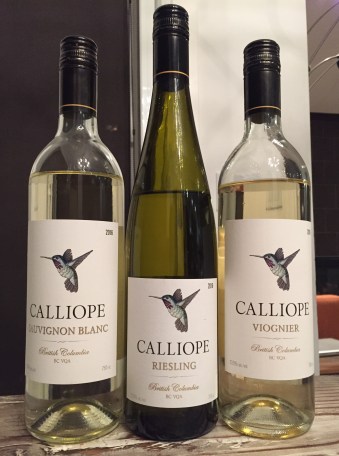


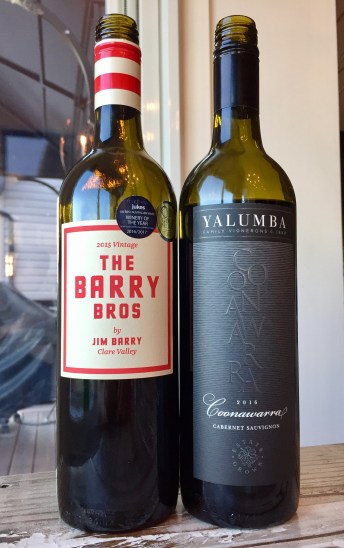 I first got seriously into wine about 10 years ago, when the Australia Phenomenon was in its heyday and Argentinian Malbec was just a glint in some clever investor’s eye in Mendoza. Yellow Tail Shiraz was my gateway drug, a fact that is assuredly true of more than one of you currently reading this as well. Looking back now on the Australian wine scene then, there are still tons of similarities. Critter wines, like it or not, are still a thing. On the quality pinnacle, the high-end wines from Down Under rocking people’s worlds in 2017 aren’t that different from those doing so in 2007. But I’ve noticed a couple clear differences in the imports from Australia that have evolved over the last decade: first, a welcome explosion of site-driven elegance from the cooler areas of the country, be it Pinot from Yarra or Mornington or bubbles from Tasmania or the laser purity of some of the post-modern wines coming out of the Adelaide Hills. Second, a new focus on bottles like the ones below, step-up bottlings, a shade above entry-level in price and a world above the critters in authenticity and quality. The $20-$30 tier of wines has never had stronger representation on our shelves from Australia than it does currently, as more and more producers zone in on these bottles as the best way to build a lasting relationship of trust with consumers as opposed to an $11 fling.
 Ever since I first saw The Hatch’s avian-Thomas-Crown-Affair primary logo shortly after it opened a couple years ago, I have been sort of transfixed from a distance, finding both the winery and its artistic ethos strangely compelling despite knowing basically nothing about them. Based out of a rustic-modern “shack from the future” in the heights of West Kelowna and sourcing grapes from across the Okanagan and Similkameen Valleys, The Hatch initially comes across (quite intentionally) more like an artists’ collective than a commercial winery,
  The Hatch releases its wines in stylistic series, of which I had the opportunity to experience two: the mid-tier Hobo Series wines, featuring a panoply of hand-drawn labels of hobos (seriously) that risk making you cry thanks to their sheer beauty (also seriously), and the ambitious Black Swift Vineyards series wines, which collectively form an expansive single-vineyard project focused on the various facets of BC’s glorious dirt. The wine, like the winery, was never boring.







 cabernetdialectic (Raymond Lamontagne)
 Dan Steeves
 Peter Vetsch
 tylerderksen
 pop & pour