Wine Review: Torres Patio Party

16 06 2015

[These bottles were provided as samples for review purposes.]
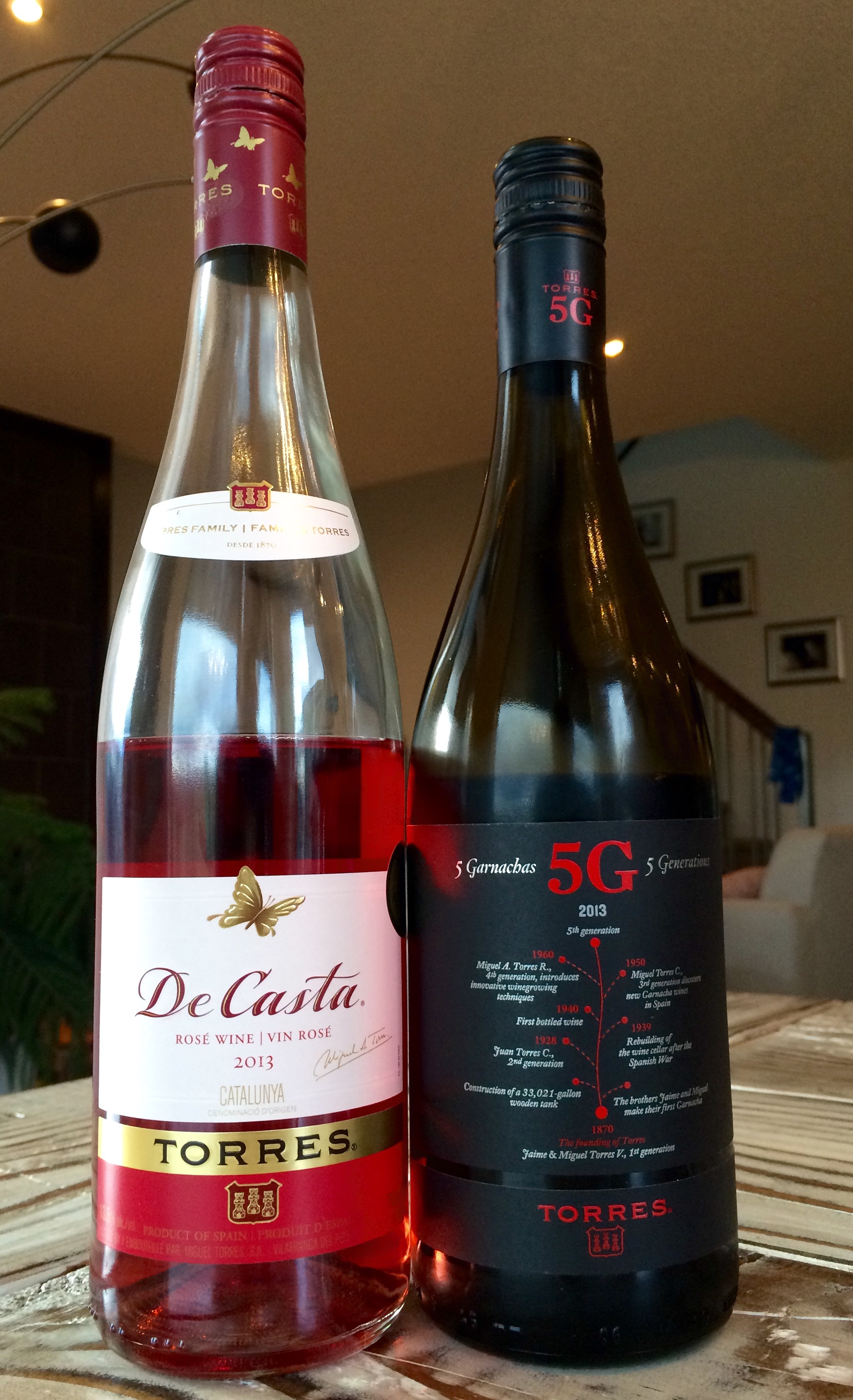
Summer fun - ideally outside, without rain.

Summer fun – ideally outside, without rain.

Call it countercyclical marketing or just really bad weather judgment, but I’ve managed to hold off on writing up a patio-wine-themed review duet until the week when we’re due to get utterly deluged with rain.  In the event that you’re soaking wet while reading this, consider it a faint flicker of hope for the future.  So far the forecast has been, as usual, wrong, which will hopefully allow you to disregard this entire paragraph.

I wanted to write up these two wines together because they share both a similar grape source (Garnacha, better known in the New World as Grenache) and a similar vision:  to be a cheap and cheerful source of quality fun out of a bottle.  Of course, they also share a producer, Miguel Torres, whose fifth generation family estate has become one of the most solid wine bets out there, a name that evokes trust regardless of the region, country, grape or style of the wine behind the label.  These relatively new releases are twin 2013 Torres bottlings of Garnacha-based wines:  the De Casta Rose, which blends Garnacha with Carinena (Carignan), and the 5G, a 100% Garnacha representing five generations of the Torres family tree and the winery’s constant hunt for perfection in that grape.  Both are value-priced (under $15 and under $20 respectively) and both are meant for easy and early enjoyment. Read the rest of this entry »



Lebanese Duet: 2011 Reds from Chateau Ksara

26 05 2015

[These bottles were provided as samples for review purposes.]

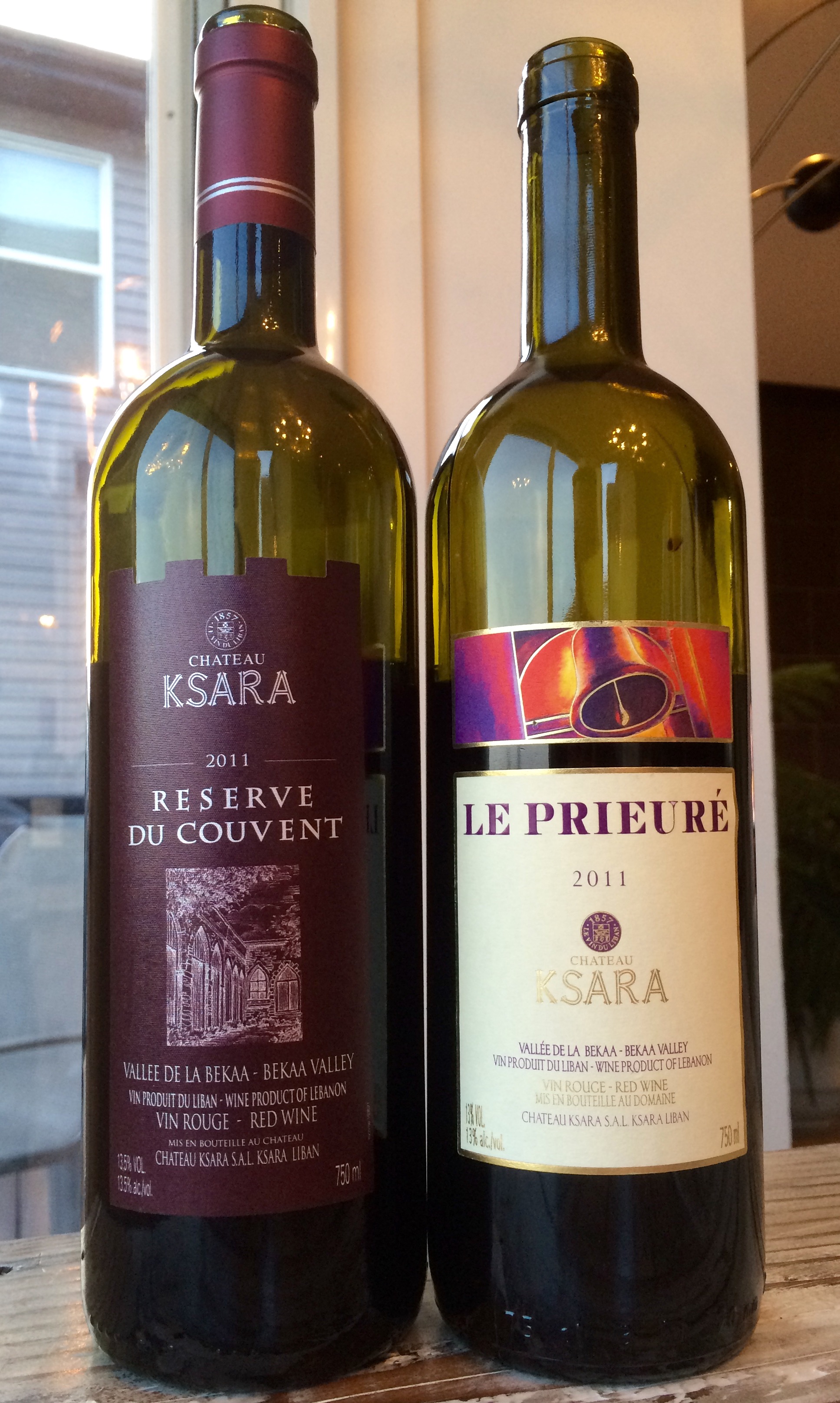
Lebanon?  Lebanon!

Lebanon? Lebanon!

The cool thing about being a wine lover is that it constantly invites you to broaden your horizons and seek out new sensory experiences.  The cool thing about running a wine blog is that sometimes those experiences come to you.  A few weeks ago, out of the blue, I got an email from the oldest winery in Lebanon, Chateau Ksara, a vinous institution that predates Canada by a good ten years (founded in 1857).  Even though their wines are not currently available in Alberta, they wanted me to try them.  Shortly afterward, the courier box arrived from Ontario, containing a duo of 2011 value reds, Ksara’s Reserve du Couvent and Le Prieure bottlings.  Each clocks in at around the $15 range (at the LCBO, at least), and each was a complete revelation to me of the strong state and developing identity of Lebanese wine. Read the rest of this entry »


Wine Review: 2013 Bila-Haut Occultum Lapidem

14 05 2015

[This bottle was provided as a sample for review purposes.]

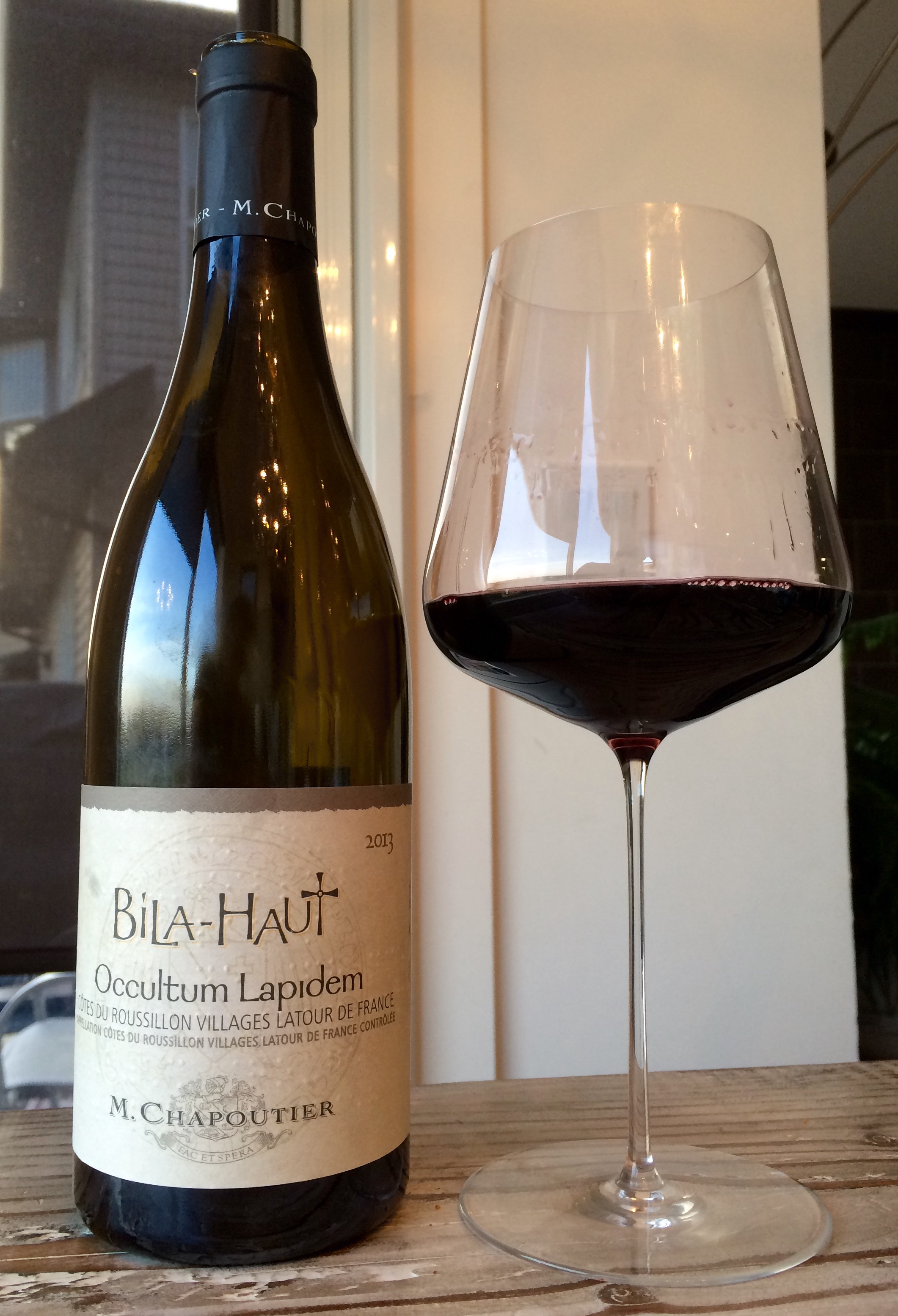
Find this.

Find this.

I have been drinking this particular wine for four vintages now, seeking it out as soon as the new annual offering hit the shelves. It’s one of my favourite widely available wines, and I still have fond memories of the 2010 release, which I purchased repeatedly and brought over to many a dinner.  Well, this 2013 is even better, the best Bila-Haut yet, and has the chance to be something special.

I’m getting ahead of myself.  Bila-Haut is the Roussillon-based domaine of Michel Chapoutier, renowned winemaker of France’s Rhone valley (and one of the only producers to put braille on all of his labels).  Chapoutier is a legend in the Rhone, where his wines range from solid value examples of key regions to the absolute pinnacle that the valley has to offer, but it was only relatively recently, in 1999, that he expanded his empire to the very southern tip of France and acquired this estate in Roussillon.  More specifically, Bila-Haut is in a designated quality subregion of Roussillon that bears the longest appellation name I have ever seen:  Cotes du Roussillon Villages Latour de France.  Add “Bila-Haut Occultum Lapidem” to the front of that and you get a very awkward wine label — and a lot of braille. Read the rest of this entry »


Malbec World Day Challenge: Luigi Bosca Showdown

17 04 2015

[These bottles were provided as samples for review purposes.]

Malbec World Day Challenge contenders.

Malbec World Day Challenge contenders.

Happy Malbec World Day everyone!  If you weren’t previously aware, April 17th was declared an international day of Malbec celebration by the Wines of Argentina back in 2011 in commemoration of the date back in 1853 when the Argentine government submitted a bill to the legislature for the formation of a School of Agriculture and with the objective of boosting and diversifying the country’s wine industry.  The bill quickly became law and led directly to the introduction of the Malbec grape (among other French varietals) to Argentine soils by noted agronomist Michel Aime Pouget.  The rest, as they say, was history.  You might know Argentine Malbec as something of a recent trend, but it’s been a presence in the country for longer than Canada has existed as a nation, and one of the reasons it was well-positioned to take the world by storm in the 2000s was the wealth of remarkable wine infrastructure already present in Argentina, old-vine Malbec vineyards that had been planted a century earlier.  This is actually my second recent brush with a country feting its ex-French national varietal:  I helped Chile celebrate World Carmenere Day back in November.  If any other parts of South America have grape holidays they want broadcast (International Tannat Day, Uruguay?), I’m totally there. Read the rest of this entry »


Calgary Wine Life: Cakebread Tasting with Dennis Cakebread

15 04 2015

I have long held a soft spot for Cakebread Cellars wines, dating back to when my knowledge and interest in wine were in their infancy.  At the end of my articling year a decade ago, my co-workers and I were out at a nice dinner courteously paid for by our firm the night before we were to find out who would be hired back after articles.  There was suitably fancy wine to go with the upscale meal at our group’s aptly named Last Supper, but the only bottle I remember from that night came after dessert, when a couple wine-loving fellow students ordered a bottle of Cakebread Sauvignon Blanc to the table.  I know (now) that this isn’t Cakebread’s go-to grape or claim to fame, but it stopped me in my tracks.  I had never had a wine like it.  It was instantly memorable and made me understand how people could invest so much time, attention and money in the enjoyment of fine wine, which I have now spent the last ten years doing myself.  When I was in Napa a few years ago I made sure to stop by Cakebread (and have matching wine glasses at home to prove it), all because of that one bottle of Sauvignon Blanc.  So when I got invited a few weeks back to taste through a lineup of Cakebread’s wines with its VP and second-generation owner Dennis Cakebread, my wine life flashed in front of my eyes a little bit.  It was like coming full circle.

FullSizeRender-52

Read the rest of this entry »


Wine Review: 2013 Kung Fu Girl Riesling

24 02 2015
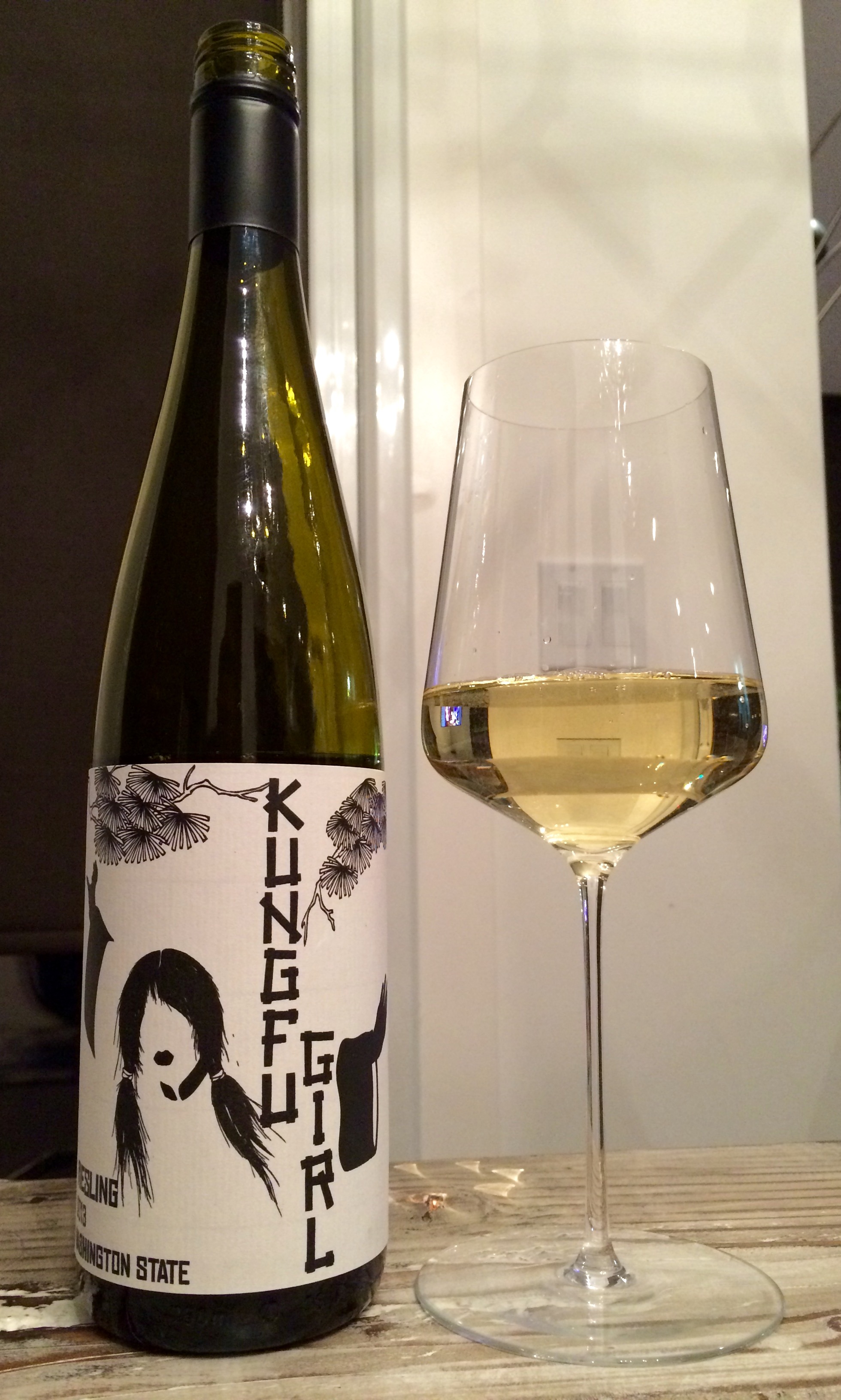
Third time's the charm?

Third time’s the charm?

This is the first review that I’ve written in a long time just because I want to – no tastings on which to report or samples to analyze, no obligations or deadlines, just me and a good bottle from the cellar.  If you know me at all, you would probably think that this would lead to a write-up about Riesling or about Washington State.  So…Washington State Riesling, anyone?

But not just any Washington State Riesling – THE Washington State Riesling.  This bottle is as close to a sure thing as you can find in the world of wine, especially the portion of that world that you can find at Costco or Superstore.  I have been buying (and gulping down) Kung Fu Girl Riesling for years and singing its praises for almost as long; it’s no coincidence that this wine now becomes the very first bottle to be reviewed on Pop & Pour in THREE different vintages, following the 2010 in April 2011 and the 2011 in July 2012.  Like its predecessors, the ’13 Kung Fu Girl is produced by Washington wine visionary (and Sammy Hagar lookalike) Charles Smith from one of Washington State’s northernmost vineyard sites, the Evergreen Vineyard.  This is one of North America’s top sites for Riesling, a large, cool climate and elevated vineyard in a zone that is in the process of becoming its very own brand new AVA, the Ancient Lakes region.  Unlike the desert that forms the bulk of Washington State’s wine scene, Evergreen and the Ancient Lakes are a perfect spot for growing crisp, balanced Riesling. Read the rest of this entry »


Wine Review: 2012 Miguel Torres Santa Digna Brut Estelado Rose

9 02 2015

[This bottle was provided as a sample for review purposes.]

From Chile, with love.

From Chile, with love.

Whatever your opinion is on Valentine’s Day, it has had a highly valuable (and surely unintended) side effect on the wine industry:  for one lone day a year, it has shone the spotlight brightly on pink wine.  Rose wines continue to be misunderstood, undervalued, unfairly derided and almost absurdly underrated, so I will happily sing the praises of any day that brings the world’s attention to them ever so briefly, even if it’s a Hallmark-created one.  And if you’re going to grab a pink wine to celebrate February 14th with your true love (and after all the effort I put into the last two sentences, you’d better), I humbly suggest it should be this one, whose flavours are matched equally by its story…and its price.

Miguel Torres is one of Spain’s largest and best regarded wine empires, still entirely family-run after 5 generations.  Torres brands show up in all of Spain’s top wine regions, but the family is also highly prevalent in Chile, where current CEO Miguel Torres Maczassek lived for three years starting in 2009 to head up operations.  Despite being a European, international company, Torres is passionately devoted to telling a local story with each of its labels, and Torres Maczassek himself has a clear love for Chile that shows through when you talk to him and is reflected in his wines.

Read the rest of this entry »


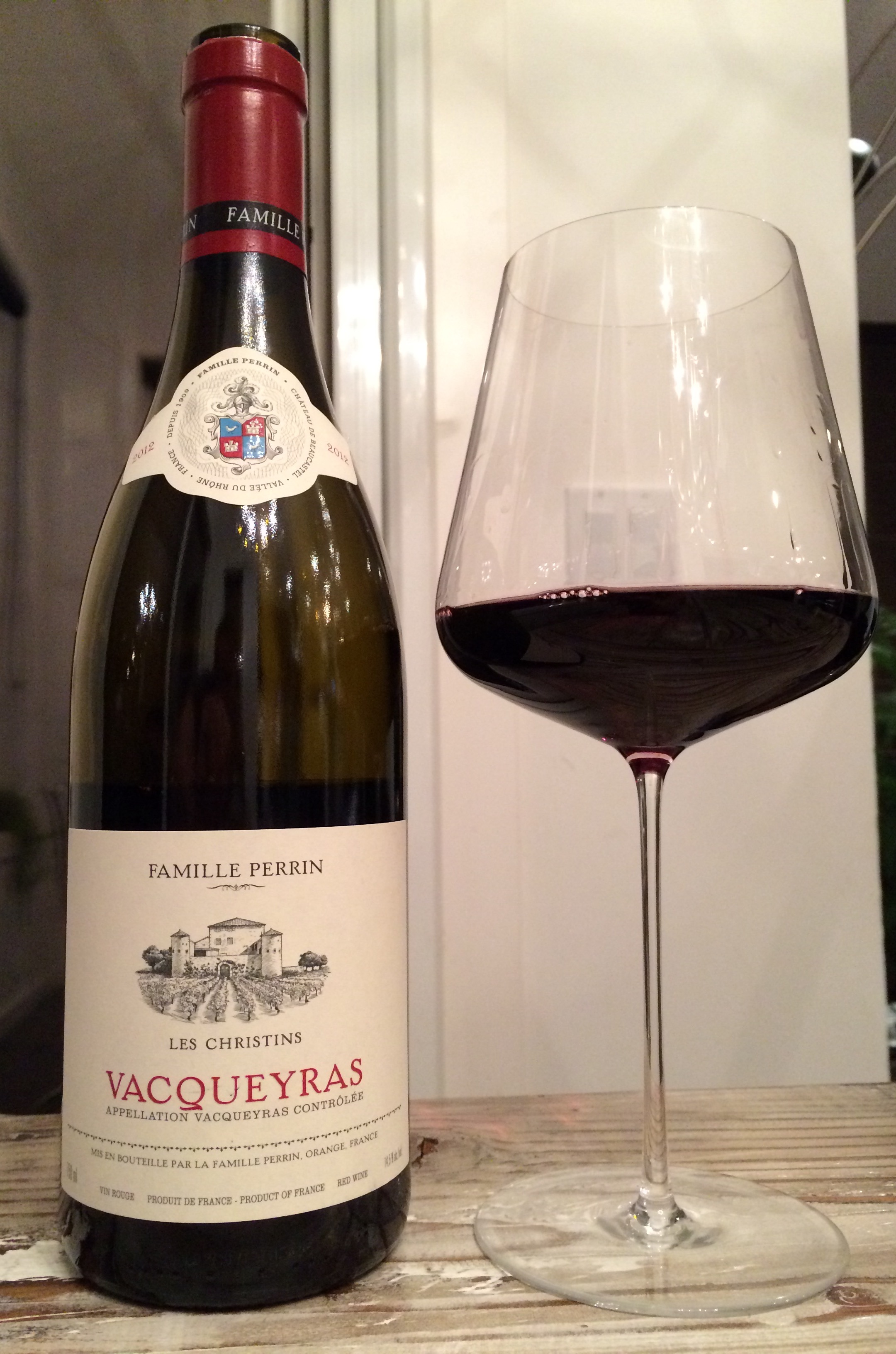
Crowdsourced Wine Review: 2012 Famille Perrin Vacqueyras

27 01 2015

I’m trying something new today – submitting to the will of the people:

Your wish is my command, Twitter followers!  The online community has been nice enough to read and follow this blog for over three years now, and I’ve thought off and on about ways to make Pop & Pour a little more interactive, so consider this a trial balloon for a blog responsiveness initiative.  Thanks to reader @JimSueMaddocks for the excellent review suggestion — I hope this is one of many that roll in going forward!  If you have a wine in mind that you’ve always loved, or on which you’ve always wanted a second opinion, and if it doesn’t cost an arm and a leg, drop me a line or a tweet and you might see it up on here sooner rather than later.

Proof positive:  the people will not lead you astray.

Proof positive: the people will not lead you astray.

I found this wine at Highlander Wine & Spirits in town for $23.95 retail.  The review request I received was for the Perrin Gigondas or Vacqueyras, but I went for the Vacqueyras partly because it was immediately available and partly because everyone always seems to opt for the Gigondas in this situation, making Vacqueyras the perpetual ugly stepsister in the CNDP Alternative category.  I think it’s high time that changed.

Sorry, I’m getting ahead of myself.  In France’s Southern Rhone Valley, it’s pretty much established that Chateauneuf-de-Pape is wine royalty.  It’s the most famous and most critically acclaimed region in the area, and its red blends focused around Grenache, Syrah and Mourvedre (among others) have been copied worldwide, but all of this attention also makes it the most expensive, by a wide margin.  Consumers are slowly coming around to the fact that other Southern Rhone regions, practically adjacent to King Chateauneuf, are almost its equal in quality at vastly superior pricing; this value renaissance has been helped in part by a surge of top-end production in these overshadowed areas.

The two best known Chateauneuf-de-Pape understudy regions are probably Gigondas and Vacqueyras, both located just northeast of the heart of CNDP (Vacqueyras is just 5 kilometres away), both using the same principal grapes, both the source of a number of monstrous values.  I’ve noticed Gigondas start to get a lot of critical attention in recent years, to the point where calling it underrated is starting to ring a bit hollow.  But Vacqueyras has largely stayed in the background, despite being Gigondas’ immediate neighbour and quality equal.  The region has a great story to tell, and wines like this one will help tell it. Read the rest of this entry »


FEL Wines: Pinot Showdown

11 01 2015

[These bottles were provided as samples for review purposes.]

Happy New Year!  I took a bit of a holiday blogging break after 24 straight days of whisky-induced Advent madness in December, but I always had it in my mind to start up 2015 (and return to actually producing wine-related content on this wine blog) with these two bottles of California glory.  Although they come from what might technically be considered a new producer, their roots and history are inextricably linked to a California stalwart…and, as it turns out, to my home province of Alberta too.

Great wines, plus new wine glasses - to be the subject of a separate post.

Great wines, plus new wine glasses – to be the subject of a separate post.

FEL Wines came into being less than a year ago, in March 2014.  It is the brainchild of Cliff Lede, whose eponymous Napa Sauvignon Blanc helped renew my faith in the grape a month ago.  Lede is well known for creating those rarest of beasts, Napa Valley value wines, and he’s also a born-and-raised Albertan who is well known outside of the wine world as one of the owners and senior executives of the Ledcor Group, which was founded by his father (how the construction lawyer in me failed to mention that in the last review is beyond me).  FEL represents Lede’s foray outside of Napa’s welcoming confines and into the cooler climate areas of California, and it also seems to be underlaid by a personal passion:  FEL is so named for Cliff’s mother Francis Elsie Lede, who helped kindle his love of wine as a child. Read the rest of this entry »


Wine Review: 2013 Cliff Lede Sauvignon Blanc

4 12 2014

[This bottle was provided as a sample for review purposes.]

Sauv Blanc:  my reawakening continues.

Sauv Blanc: my reawakening continues.

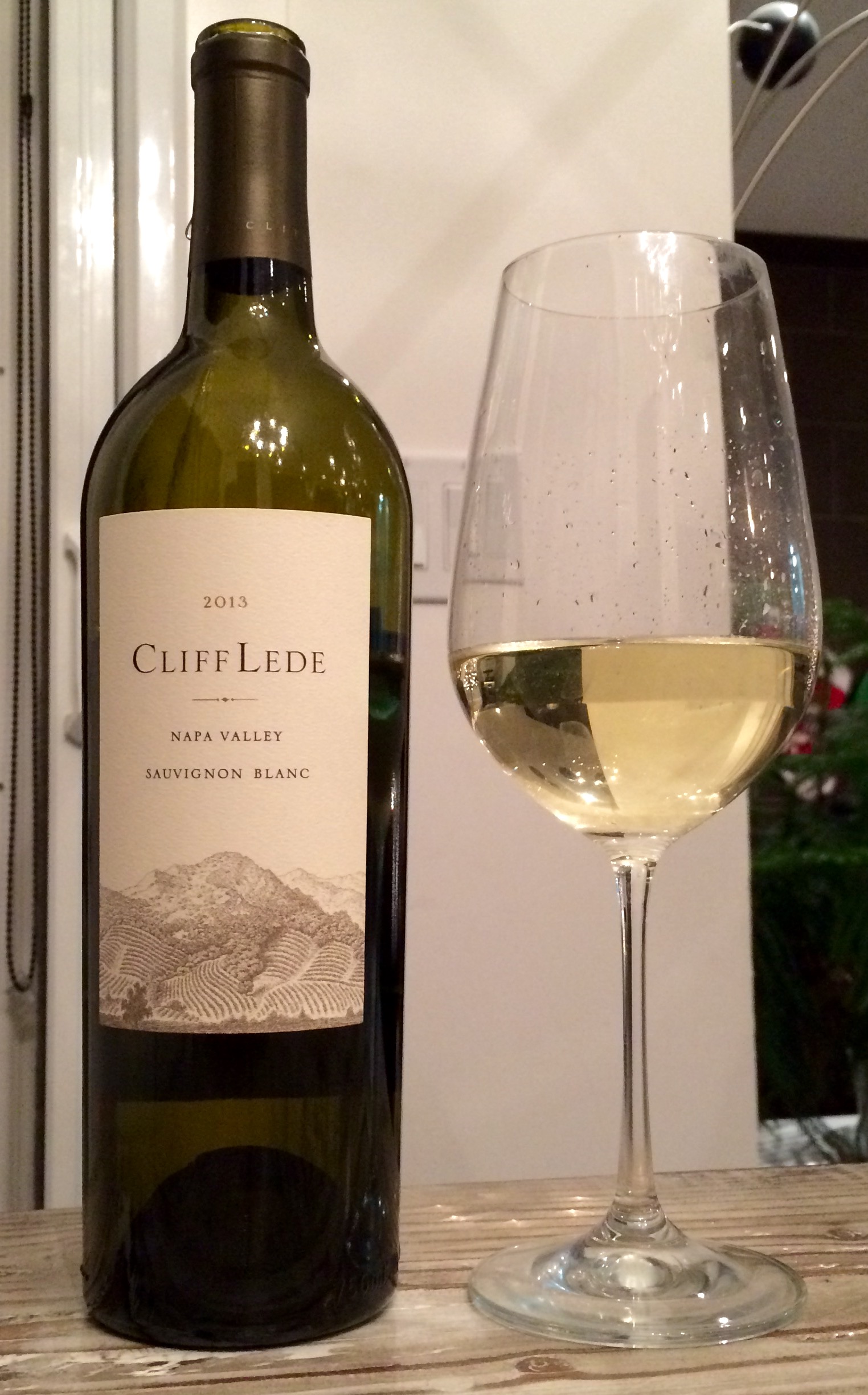
I’ve been experiencing a sort of Sauvignon Blanc renaissance lately.  For the longest time I all but ignored the grape:  I had tried and was clinically impressed but not emotionally roused by many of the SBs and blends of Bordeaux and the Loire; I had lapsed firmly into the camp of “if you’ve tried one New Zealand Sauv Blanc you’ve tried them all”; and I did not hold out much faith that California (too hot) or Canada (too nondescript) could work any magic with the varietal.  But wine, if you let it, has a funny way of pointing out the absurdity in rigidity and making sure your horizons are always boundless.  In the past few months I’ve been blown away by the remarkable and wildly original Greywacke Wild Ferment Sauvignon Blanc from Marlborough and equally amazed by the textural magic of the Alice May Pathfinder Sauvignon Blanc from Cali.  Now add a third one to the list:  the Cliff Lede Sauvignon Blanc, from Napa Valley of all places, not only offers a dynamite sensory experience but also seamlessly exudes a sense of place while doing so. Read the rest of this entry »


Wine Review: 2011 Carmen Gran Reserva Carmenere

19 11 2014

[This bottle was provided as a sample for review purposes.]

If someone made a movie about the story of Carmenere, I would watch it.

If someone made a movie about the story of Carmenere, I would watch it.

The story of Carmenere is one of my favourite stories in all of wine.  It starts, as many wine stories do, in France, where centuries ago Carmenere was one of the six varietals used to make red Bordeaux, along with Cabernets Sauvignon and Franc, Merlot, Petit Verdot and Malbec.  As French explorers set out to claim and colonize new territories outside of Europe, they often brought plantings of their national vines with them, introducing these grapes to foreign soils.  It turns out they were lucky they did, because when the phylloxera louse decimated the vineyards of Europe in the mid-19th century, it wiped out Carmenere in Bordeaux completely — today, there are only five red Bordeaux varietals.  Everyone thought that Carmenere had been tragically lost forever…and then it randomly showed up in Chile over a hundred years later.

On November 24th, 1994, the French ampelographer (actual meaning: one who identifies and classifies grapevines) Jean Michel Boursiquot was paying a visit to the Carmen vineyards in Chile when he noticed that the Merlot growing there wasn’t actually Merlot at all, but Carmenere.  The lost grape of Bordeaux had been growing in the Southern Hemisphere for more than century, but due to its vines’ and grapes’ uncanny resemblance to those of its Bordeaux cousin Merlot, everyone assumed it was the latter, particularly given the general understanding that Carmenere no longer existed.  This led to some extensive (and confusing) cross-planting of vineyards that proved extremely difficult to unwind.  Boursiquot’s epic discovery was a boon to world viticulture, and it gave Chile what it needed most at the end of the 20th century:  a wine identity, forged in what is now proudly recognized as the country’s national grape.  It was also a big help to the resulting wines:  Carmenere ripens weeks later than Merlot, and if picked early (due to mistaken identity) it can exhibit strong, and generally unpleasant, green pepper flavours. Read the rest of this entry »


Wine Review: 2013 Ravenswood Besieged

19 10 2014

[This bottle was provided as a sample for review purposes.]

Boo!

Boo!

Let me first say that I fully support theme wines, provided that they exhibit a little bit of effort and make some shred of sense.  Seasonal and holiday releases are just fine in my books as long as they’re somewhat consistent with a winery’s overall image and aren’t just a lazy cash grab.  A producer slapping a new red Christmas label on old stock just in time for the holiday season?  Not cool.  But a winery already named “Ravenswood” concocting an on-brand, original, spooky limited release bottling for Hallowe’en?  I’m in.

Imminently available in stores near you, the 2013 Ravenswood Besieged is a field blend of 7 different, slightly disparate, and never usually combined red grapes:  Petite Sirah (cool), Carignane (double cool), Zinfandel (the winery’s bread and butter), Syrah (my favourite), Barbera (what?), Alicante Bouschet (double what?) and Mourvedre (whew).  The percentages of each grape in the blend are not listed on the label and not currently available online, but by law the grapes listed earlier on a label have to comprise a larger portion of the blend than those listed later, so you can think of Besieged as being primarily made from the thematically similar (deep, dark, bold, structured) Petite Sirah and Carignane, with a bit of kitchen sink thrown in.  The wine is from grapes sourced all over Sonoma, including top subregions Alexander Valley, Dry Creek Valley, Russian River Valley and a couple other Valleys.  According to the winery, this release is called “Besieged” because pioneering winemaker Joel Paterson conceived of it “under a threatening sky besieged by rain clouds” as ravens cackled overhead, a seasonally appropriate vignette which also happens to be laid out on the bottle’s equally eerie label.  My vote for the name was “Nevermore”, but the ravens may have eaten my ballot. Read the rest of this entry »


Calgary Wine Life: Greywacke Tasting with Kevin Judd

7 10 2014

Kevin Judd is a New Zealand visionary, a trailblazer who has left a permanent imprint on the nation’s young wine culture.  As the founding winemaker of Cloudy Bay, now the near-ubiquitous signpost for the sharp, tangy, herbal style of Sauvignon Blanc that is instantly recognizable in the glass, Judd pioneered a flavour profile for New Zealand’s signature grape that put the country on the world wine map.  He helmed the ship at Cloudy Bay for 25 years, taking it from an unknown producer in an anonymous wine nation to a whirlwind New World phenomenon, the crown jewel of a Sauvignon Blanc revolution that saw millions of bottles fly off the shelves.

IMG_2063

After Cloudy Bay was sold to luxury brand behemoth LVMH (whose wine portfolio includes such luminaries as Krug, Dom Perignon, Chateau d’Yquem and Cheval Blanc, upper-crusters all), Judd finally realized a lifelong dream of starting his own label and making wines in a manner that best suited his palate:  riper batches of fruit, slightly softer acid, yet retaining all of the structure and complexity that a cooler climate can provide.  He called the new venture Greywacke, a name he had quietly reserved 15 years earlier while waiting for his opportunity:  the word (pronounced “grey-wacky”) refers to the grey sandstone rocks that are commonly strewn across New Zealand’s vineyards.

Read the rest of this entry »


Argentine Value Challenge: Punto Final

4 10 2014

[These bottles were provided as samples for review purposes.]

FullSizeRender_1

Look closely: Spanish tasting notes!

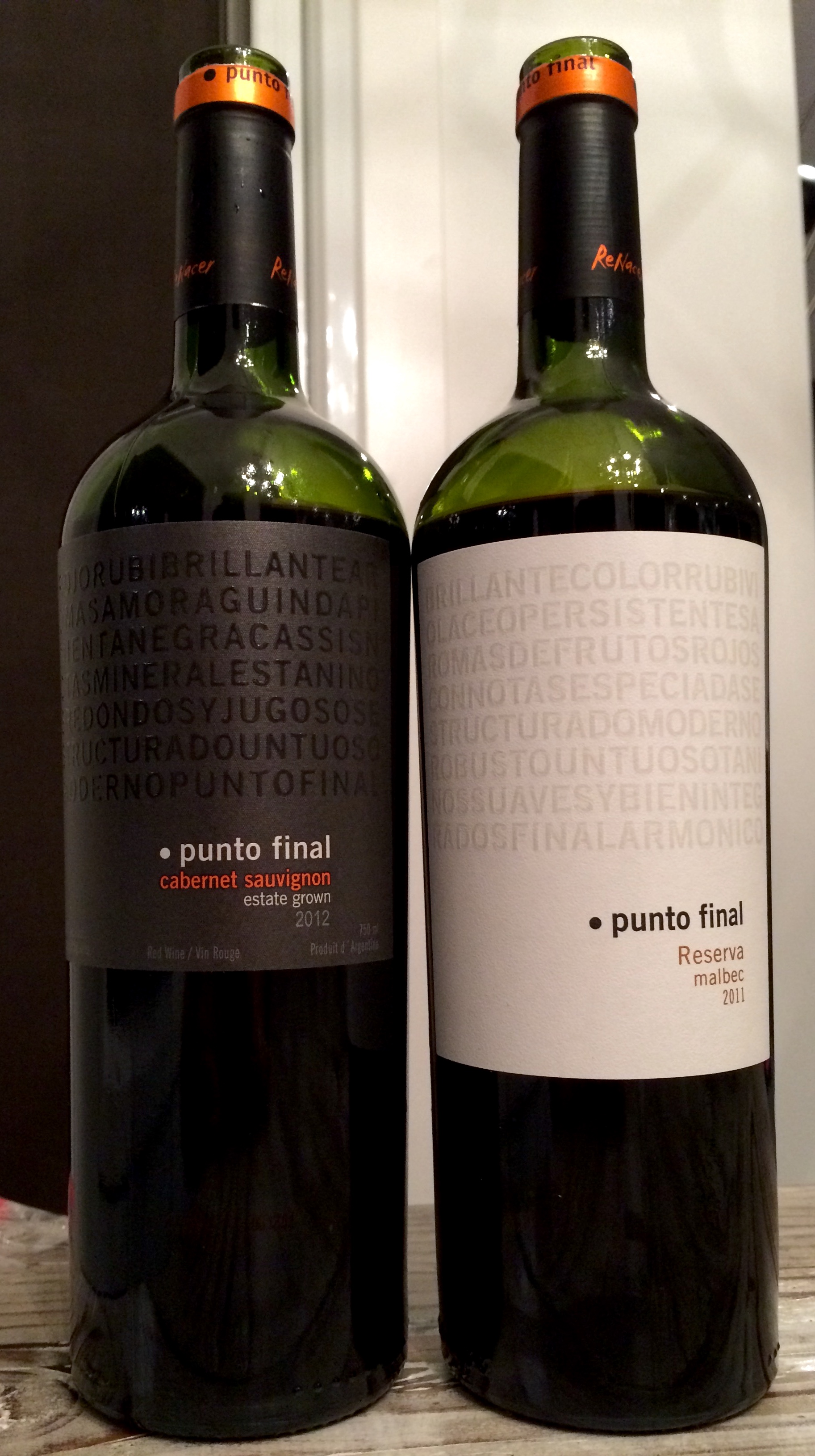
There’s a lingering question out there that will go a long way in determining the ultimate path of the nascent Argentinian wine industry:  what to go along with Malbec?  That particular Bordeaux transplant has become a global phenomenon up in the foothills of the Andes and the undisputed star of Argentina’s vinous revolution, but there are a number of grapes currently vying for the role of its trusty national sidekick.  For a while it seemed like there was a strong marketing push to obtain Malbec-like acceptance of Argentina’s most unique white, Torrontes; I recently read a Decanter tasting panel that argued forcefully that the country’s recent forays into Cabernet Franc were an absolute revelation and that this underappreciated varietal should assume the silver medal position among Argentinian producers, although the less exciting Bonarda currently occupies that slot in terms of vineyard acres planted.  And of course, there’s always Cabernet Sauvignon, the international behemoth, promising instant recognition and easy sales for anywhere warm enough for it to grow.  In my experience, if an Argentine wine is on the shelves here and it isn’t Malbec, it’s usually Cab.  And while the wine geek in me would love to see Franc seize the day, the realist in me knows that Sauvignon will be pretty tough to displace. Read the rest of this entry »


Wine Review: 2012 Alice May Pathfinder Sauvignon Blanc

27 07 2014

[This bottle was provided as a sample for review purposes.]

Cali grapes, Calgary soul.  This one sticks with you.

Cali grapes, Calgary soul. This one sticks with you.

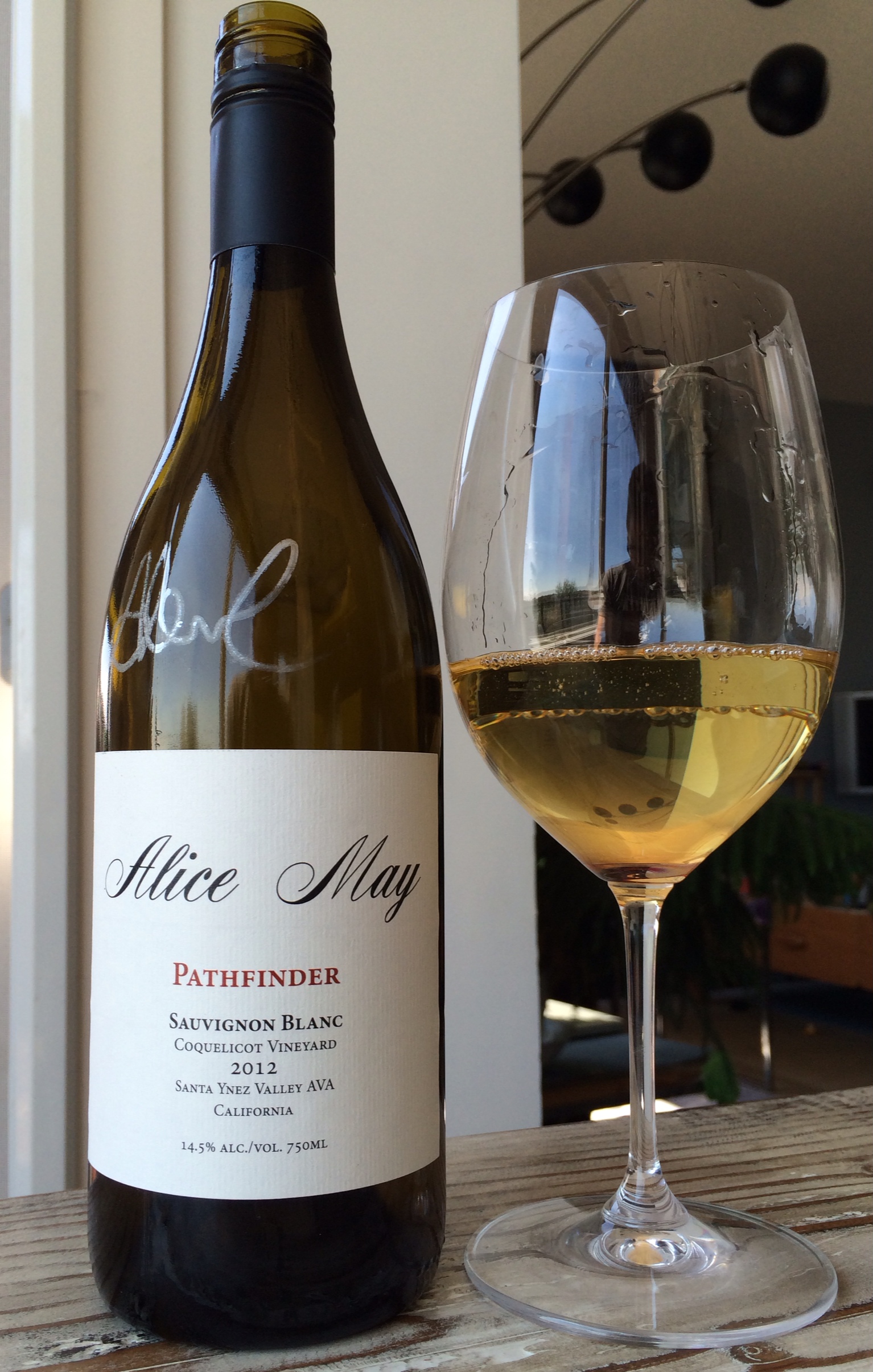
Earlier this year I was first introduced to Alice May wines, made by Calgary sommelier Alex Good in collaboration with California stalwart producer Barrel 27, thanks to its Cote-Rotie inspired Crosswinds Syrah, which made me sit up and take notice of this new source of killer value wine with a local heart.  Alice May was (and still is) a label focused on the production of Rhone varietals in southern California’s Santa Barbara County, but this, their inaugural white release, has a different French homeland:  Sauvignon Blanc is found both in white Bordeaux (blended with Semillon and Muscadelle) and in Sancerre and Pouilly-Fume in the Loire Valley (where it is a single varietal star).  While this may not have been Good’s initially planned direction for his Pathfinder wine (which will be made of the much more Rhone-y Grenache Blanc and Roussanne as of next year), he got the proverbial offer he couldn’t refuse to take some prime Sauvignon from the highly esteemed Coquelicot Vineyard in the Santa Ynez Valley and he ran with it.  Coquelicot is a cooler climate site situated right close to the Pacific Ocean almost due west from Los Angeles, biodynamically farmed by a top vineyard manager and churning out powerful yet balanced fruit full of character.  And it shows. Read the rest of this entry »