National Zinfandel Day: An Interview With Ravenswood Founder Joel Peterson

15 11 2018

By Raymond Lamontagne

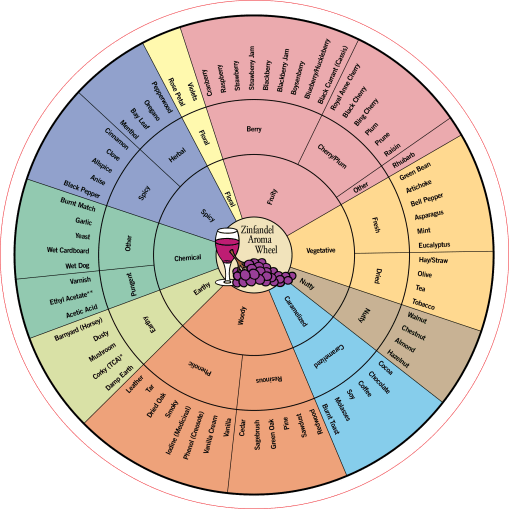
Happy National Zinfandel Day! Although we do not feature many interviews on Pop & Pour, we felt that the chance to publish a Q & A correspondence that I recently had with Joel Peterson of Ravenswood, commonly described as California’s “godfather of Zin”, would be a consummate way to celebrate, especially when paired with tasting notes for one of Ravenswood’s most iconic wines. To me, Zin embodies a key dialectic at play within wine appreciation: that between elegance, austerity and grace on the one hand, and sheer hedonism, richness and bold frivolity on the other. As an avowed disciple of Pinot Noir, you can deduce which pole of the dialectic I might ultimately prefer. However, wine is so immensely enjoyable precisely because there is ample diversity, so many different experiences to chase down and absorb. And I do like having my mind blown by huge flavours as much as the next bon vivant. If I am being honest with myself, a well-crafted Zinfandel may do a better job of resolving this particular dialectical dilemma than almost any other black grape:

Aroma-Wheel

There are some very specific cherry varieties listed here. I approve. (https://zinfandel.org/resources/zinfandel-aroma-wheel/)

The best Zins feature succulent, approachable berry fruit in lockstep with robust secondary flavours of smoke and spice, all festooned on a moderately formidable structure of fresh acidity and fine ripe tannins. They are fun and serious in equal measure: light yet dark, carefree yet intense, simple yet complex. Joel Peterson masterminds just this sort of Zin. Read the rest of this entry »


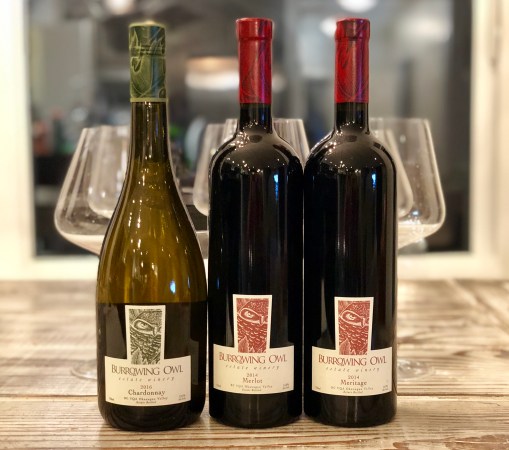
Burrowing Owl Fall Release Trio

8 11 2018

By Peter Vetsch

[These wines were provided as samples for review purposes.]

I have now been receiving and reviewing Burrowing Owl releases since 2015, and in addition to some minor shock about my blogging longevity, this has also given me enough familiarity and enough reps with the wines to truly help me understand the winery’s house style.  The whites tend to be creamy and generous, often buoyed and propelled by oak but not at the expense of the underlying fruit.  The reds are bold and ripe yet not overdone, a strong reflection of the scorching desert-like climate of the estate’s Oliver, BC home.

IMG_9158

Year over year, the releases and the winemaking choices behind them come across as impressively consistent, part of the reason why Burrowing Owl has long been on the short list of top quality wineries in the Okanagan Valley.  Now that the snow on the ground here in Calgary seems permanently settled in until April, it feels like there’s no better time to tuck into this trilogy of warm, rich, classic bottles, which always seem to be best enjoyed with a notable chill in the air, starting with a wine that just might be setting a new PnP record. Read the rest of this entry »


Wine Review: Finca La Linda Malbec Tiers

26 07 2018

By Peter Vetsch

[These bottles were provided as samples for review purposes.]

In some ways, trendy grapes have it tough.  Malbec has a proud and lengthy heritage as one of the six permitted grapes in red Bordeaux (yes, I’m still counting Carmenere, and shall ever continue to do so) and as the dauntingly famous Black Wine of Cahors, and it is almost single-handedly responsible for giving an entire country a vinous identity that has led to the rediscovery and cultivation of astonishingly high-altitude decades-old vineyards and a re-imagination of what grapes are capable of achieving in Argentina.  It is both an Old World stalwart and a New World trailblazer, pulling off both with equal aplomb and giving itself new life in the process.  But with raging-wildfire levels of success comes an inevitable fight against consumer boredom, particularly amongst the more avant-garde and adventurous in the wine world, which creates a sort of quiet undercurrent of peer pressure to steer clear of what is currently painfully a la mode.

IMG_8463

Great labels, but why is one bottle a third taller than the other??

I feel this way quite a bit, pulled away from the customer staple of the day in part because of my own desire to see what else is out there, but in part because of some innate resistance that I see amongst other wine geeks, some refusal to go along with what is everywhere.  So it was with Australian Shiraz; so it is with Argentinian Malbec; so it will be with whatever comes next.  I don’t really have a hard stance on this, but I have recently tried to make sure that my efforts at open-mindedness in wine extend equally to those grapes and styles that are suddenly ubiquitous as to those that remain esoteric.  I have also tried hard to remember that I once relied very heavily on the Shiraz-laden fads of the day as a gateway that set wine’s hooks into me for the first time, and I enjoyed the living hell out of them.  Fifteen years later, I have a WSET Advanced certification and have been publishing reviews on a wine blog for seven years.  Trends can lead somewhere.  So let’s start somewhere. Read the rest of this entry »


Wine Review: White Australia

19 07 2018

By Peter Vetsch

[These bottles were provided as samples for review purposes.]

Sometimes your moneymaker becomes your millstone.  Australia, which had been making wine for a couple centuries without raising much of a global fuss about it, burst onto international liquor store shelf traffic jam within the past two or three decades thanks to a flamboyant, fruity, brash, ripe style of Shiraz, buttressed by a New World-friendly Cabernet Sauvignon that was easy on the pocketbook.  A mammoth export industry emerged, but typecasting of Australian wine as a whole inevitably followed, leaving those longstanding producers with histories older than the Dominion of Canada stuck in their own misleading shadow.

IMG_8444

Now the Shiraz spotlight has pulled back a bit, giving everyone a bit of room to breathe and again find comfort in the space of their own natural identities; for longstanding affiliates Pewsey Vale and Yalumba, this has meant a continued push to enhance the white side of Australia’s wine spectrum, and perhaps the sowing of a few carefully nurtured seeds which might ultimately settle the debate of what should be known as Australia’s signature white grape.  Two deserving contestants, from two benchmark wineries, lie below. Read the rest of this entry »


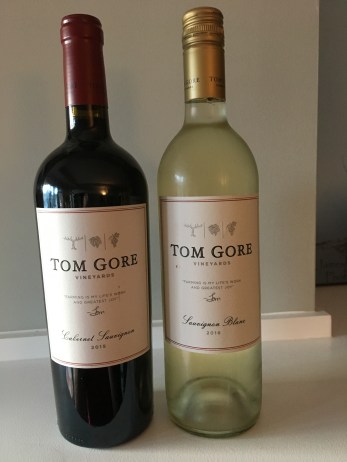
Wine Review: Tom Gore Vineyards, A Tale of Two Sauvignons

14 07 2018

By Raymond Lamontagne

[These bottles were provided as samples for review purposes.]IMG_1713
Cabernet Sauvignon remains the most widely grown quality wine grape in the world, so it is perhaps appropriate that in at least one regard, “Cab” started me off on the path to becoming a serious scholar of wine.  I had previously acquired a taste for certain Canadian Gewurtztraminers, spellbound by how a grape could smell and taste so exotic, although hard-won experience has taught me that many such wines recall one of those chemically augmented gym nuts who can flip a giant tire from a mining truck once or twice, only to catastrophically gas out immediately thereafter: initially powerful but ultimately quite flabby.  Rather wary of this focus, I then snagged a few wine books from a local book sale, thinking that this subject’s unique combination of history, geography, botany, technology, and gustatory delight would give my brain something new and compelling over which to obsess. I noticed right away that in these sundry tomes, blackcurrant or cassis was an aroma descriptor frequently associated with Cab. As someone who adores this particular flavour, I did further research. Not just cassis, but cedar, “cigar box” (I’ve always been intrigued by this one), blackberry, even vanilla and cola and chocolate cake. Wine smells like these things?! I was officially hooked, all this before even seriously tasting a Cab.

Once the actual drinking started in earnest, I rapidly encountered one of Cab’s parents: Sauvignon Blanc. My dad ordered a New Zealand example one nice evening in a Calgary steakhouse, as an aperitif, telling my mother:  “It’s one of those really grapefruity ones you like.” Grapefruit, you say? A cursory look at a tasting wheel for Sauvignon Blanc ultimately reveals a whole litany of “green” aromas, with these ultimately outnumbering the also prominent citrus and sometimes tropical fruits. There are classics like grass, gooseberry, and green bell pepper, along with rather more esoteric takes such as matcha, lemon grass, apple blossom, or even “cat pee”. Maybe we should stick with grapefruit or “tomato leaf”. Go crush and sniff a tomato leaf… You’ll probably get at least an inkling of pipi du chat, if nothing else in the form of a vague association with “funky” or “rank”. Some claim that this character, driven by organic compounds called thiols, is in fact a fault due to vineyard overproduction. Maybe so, although I experience cheap Sauvignon Blanc as something more akin to dilute lemonade in which a few broken fluorescent bulb filaments have been macerated, largely devoid of character across the board. A quick spray of thiols would often do this stuff a favour.

Sauvignon-Blanc-grape-variety-wine-aroma-profile-flavors-fruit-spices-Social-Vignerons

From http://socialvignerons.com/2015/12/10/infographics-guide-to-sauvignon-blanc-wine-grape-variety/.  This thing is comprehensive and rather fascinating…and there it is, cat pee, complete with schematic depiction.

So in addition to capturing aromas that I find pleasant (maybe at this point forget I mentioned cat pee), Cabernet Sauvignon and Sauvignon Blanc are both associated with formative memories in my quest to experience as much of the wine world as possible. Fitting then that I drew this assignment to review these two varietal bottlings, which interestingly enough hail from the first California wine label named after a grape grower.

Read the rest of this entry »


Wine Review: Officially Summer Trio

9 07 2018

By Peter Vetsch

[These bottles were provided as samples for review purposes.]

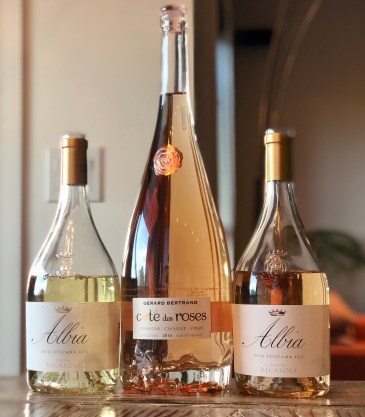
IMG_8409Sometimes you have to force seasonal drinking posts, and other times the season and the drinks just fall right into your lap.  Stampede is here in Calgary, the thermometer has just recently clocked over 30C, and we’re well-ensconced into July, which turns my sample pile ponderings to thoughts of whatever I can chill for refreshment most effectively.  After landing on an ideal trio of bottles that achieved that lofty goal, I noticed something odd that bound them together:  they have all at one time or another previously graced the pages of Pop & Pour.  Even though the blog is now 7½ years old and counting, that basically never happens.  Sometimes summer is just meant to be.  Game on.

2016 Ricasoli Albia Bianco Toscano (~$20)

I believe this is the second ever time that an identical bottle will get two separate reviews on PnP:  when Ray had the pleasure of meeting Tuscan winemaker Francesco Ricasoli at a tasting luncheon back in February, this 2016 Albia Bianco was the first bottle they cracked.  If you want a detailed backstory on Francesco, the Ricasoli estate and the family’s critical contributions to Chianti Classico as we now know it, click the link above for the whole enthralling narrative.  While I don’t have a five-course meal to pair with tonight’s wines, I do have both this Albia Bianco and its sibling the Albia Rose on the menu, both scions of Barone Ricasoli’s “fresh and fragrant” early-drinking Albia label.  Both come in gorgeous, hefty, gourd-like bottles that you first admire for making this $20 wine look like it costs double that amount, but then curse effusively once you realize the heavy-punted broad base is about a millimetre away from not fitting at all in any standard wine racking.  Suffice to say the labels suffered some mild to medium collateral damage as I reamed the bottles into place with every ounce of strength I had. Read the rest of this entry »


Wine Review: 2014 Schlossgut Ebringen Spätburgunder Trocken

4 07 2018

By Peter Vetsch

[This bottle was provided as a sample for review purposes.]

Ever since I first got into wine about a decade ago, I have come across the eternal, nigh-unsolvable question many times:  where can you look for consistent, top-quality, good-value Burgundy?  Well, I have finally solved the riddle — turns out it’s been in Germany all along.

IMG_8390

Mesmerizing.  Germany, wow.

It might not be in France, and it might have just broken my heart in the World Cup, but Germany has been quietly elevating its Pinot Noir bona fides.  This fickle and finicky red grape is known here as Spätburgunder (literally, “late Pinot”, or “late Burgundy”, due to its relatively late-ripening tendencies) and is in the process of taking the next step in Germany’s warmer climes, aided imperceptibly by climate change and to a larger degree by greater clonal awareness and vineyard attention.  But it is not every country that can suddenly become a Pinot success story; Germany’s natural advantages (including patches of Burgundian-style limestone soil) are finally being properly cultivated, and almost as importantly, shared with the world.

IMG_8396

I don’t think I had ever seen a wine from Germany’s Baden region on an Alberta retail shelf until 2018, and after a taste of what Schlossgut Ebringen can do with possibly the hardest grape of all to do well (and don’t even get me started on their utterly mind-bending Chasselas “S”, which belongs in another dimension), it makes me wonder what has taken us so long to get on board.  A quick primer for the uninitiated:  Baden is in the extreme southwest corner of Germany, just a stone’s throw and a border crossing away from Alsace, due west from Munich until you almost hit France.  It is closer to Zurich, Switzerland than any major German city.  Baden is built like Chile, in a long narrow north-south stripe, within which lies 9 surprisingly different subregions.  Pinot Noir/Spätburgunder is the most commonly planted grape (at around 35% of all plantings), though on the whole white grapes outnumber reds 60/40.  In the south of Baden, just south of the famous Baden-Baden spas, lies the top subregion of Markgräflerland, known largely for Chasselas (locally known as “Gutadel” just to add more proper nouns to your life) but also a burgeoning Pinot power.  Baden’s other top attraction, the Black Forest (Schwarzwald), lies to the east, and in its foothills lies the village of Ebringen and the hero of tonight’s story. Read the rest of this entry »


Calgary Wine Life: Domaine Chandon Sparkling Wine Dinner @ Elwood and the Rabbit

13 04 2018

By Dan Steeves

Chandon is a name that instantly makes me think of the luxurious Champagnes from the famous (and largest) Champagne house Moët & Chandon, but its North American offspring Domaine Chandon is not just a clone of its majestic parent company.  It has a vision to be different and create its own legacy by providing a pure expression of what California is all about, while at the same time maintaining the quality that is inherent in its French pedigree.

When Domaine Chandon was established in the Napa Valley in 1973 it was not the first international venture for Moët & Chandon (Chandon Argentina was established first in 1959, and California was succeeded by Brazil in 1973, Australia in 1986, China in 2013, and most recently India in 2014) but it was the first French-owned sparkling wine venture into the US, which now hosts operations from many of the large Champagne houses. Moët & Chandon recognized the potential of the area for sparkling wine production, especially Carneros, which at the time was seen as too cold and infertile to grow grapes (coming from Champagne, they knew it’d be perfect). Moët & Chandon purchased 400 acres of Carneros vineyard land for mere pennies on the dollar in today’s market. It was a humble California beginning for the M & C Winery on March 26, 1973, whose official address was John Wright’s garage, but within a few years the current winery facility was built and opened to the public and the house’s name was officially changed to Domaine Chandon. The 45th anniversary of Domaine Chandon just passed a few weeks ago with the winery holding firm as a longstanding powerhouse in Napa Valley, seeing over 200,000 visitors a year and likely holding the honour of being the largest producer of traditional method sparkling wine in the US.

The line up of Domaine Chandon California wines available in Alberta –  Blanc de Noirs, Brut, and Rosé

Having visited the Moët & Chandon mothership in Épernay (the heart of Champagne) a couple years ago and being fan of all their Champagne wines, I was ecstatic at the opportunity to try the Chandon California wines alongside some delicious food from Bridgeland’s Elwood and the Rabbit. The dinner was hosted by Brian Fairleigh, the Brand and Wine Educator for Domaine Chandon, whose infectious passion for sparking wines is matched closely by a wealth of knowledge about every aspect of Domaine Chandon. Brian made it clear that comparing Moët & Chandon Champagne with Domaine Chandon is like comparing apples to oranges: the two are very different, although they share the same adherence to quality and excellence in the vineyard and cellars. Domaine Chandon aims to showcase the fun, vibrant, sunny California fruit flavours and builds wines that are accessible, enjoyable, and made for everyone to enjoy all year round. Many people only reserve sparkling wines for times of celebration, and although they are perfect for those times, they are equally as enjoyable for a casual sip with friends or an accompaniment to almost any meal. Brian was happy to show us some great pairings. Read the rest of this entry »


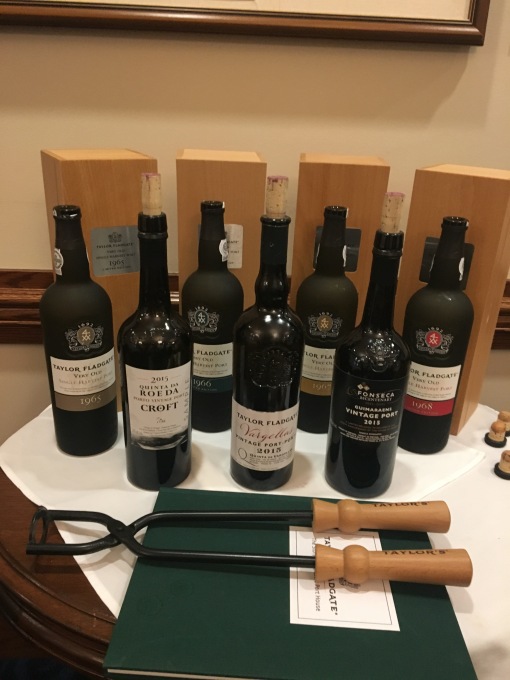
Calgary Wine Life: Taylor Fladgate 1968 Single Harvest Port Release

17 03 2018

By Raymond Lamontagne

Although I am deathly tired of the evil winter weather that simply will not give up the ghost in this city, I am more than happy to brave one more snowstorm (please, just one more?) in order to carry on the Pop and Pour tradition of covering the annual release of a Taylor Fladgate Single Harvest Port.  These bottles capitalize on Taylor Fladgate’s extensive back catalogue of aged Port stocks.  They are tawny Ports, meaning that they are aged in barrels for many years, exposed to oxygen and thereby mellowed into a resplendent golden brown. They are also Colheitas, or tawnies where all of the bottled grapes hail from a single vintage.  Taylor Fladgate eschews the term Colheita on these labels in favour of a more anglicized approach.  Regardless of the naming convention employed, Port connotes a sense of pageantry, giving off a regal vibe that this self-styled progressive enjoys basking in from time to time. I wander through the fine wooden décor of Calgary’s Ranchmen’s Club, past a litany of taxidermied game, following my nose into the tasting room where fragrant pourings have already sat for some time.

IMG_1123

Our host Cynthia Opsal, Brand Manager for The Fladgate Partnership for Pacific Wine & Spirits, leads us off with a video that features an interview with Alistair Robertson, principal shareholder in the Fladgate Partnership.  Robertson explains that terroir is fundamental to good Port.  According to Taylor Fladgate winemaker David Guimaraes, 12 different indigenous grape varieties are planted, with four providing the majority of production.  Some grapes such as the vogue Touriga Nacional provide tannic grip, while others such as Tinta Barroca provide more color and sugar content.  Robertson explains that a day of work on the estate involves eight hours of picking grapes, followed by four hours of foot treading in the case of high quality bottlings.  Production of all Port involves adding grape spirit to stop fermentation just before its midpoint, which at Taylor Fladgate occurs around three days into the fermentation process, when about 5-6% alcohol has been produced.  Enough spirit is added to bring the alcohol up to around 20% (which in turn kills off any remaining yeast).  David Guimaraes has stated that a recent trend toward use of more clean and pure spirits means that vintage Ports are approachable sooner, with more fruity expression.  This latter point seems particularly relevant, as this year we get a welcome break from tradition:  instead of the preliminary offering of blended tawny ports that were tasted in prior Release years, we get to sample three 2015 vintage Ports — Single-Quinta vintages, that is.

Read the rest of this entry »


Calgary Wine Life: A Special Evening with Cinzia Merli of Le Macchiole @ Centini

15 03 2018

By Raymond Lamontagne

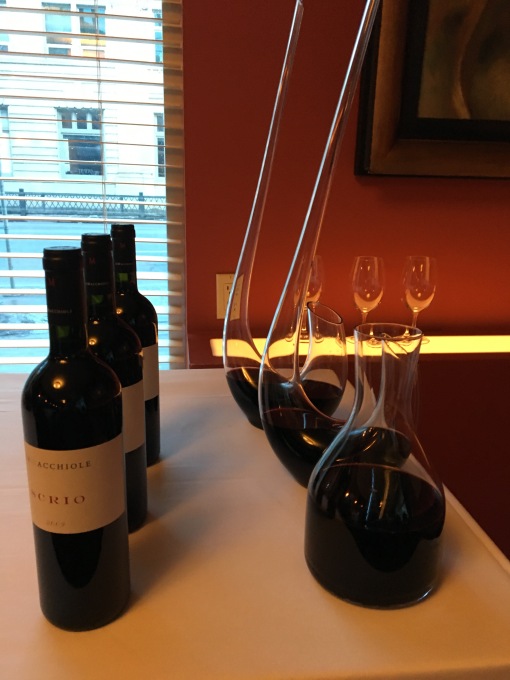
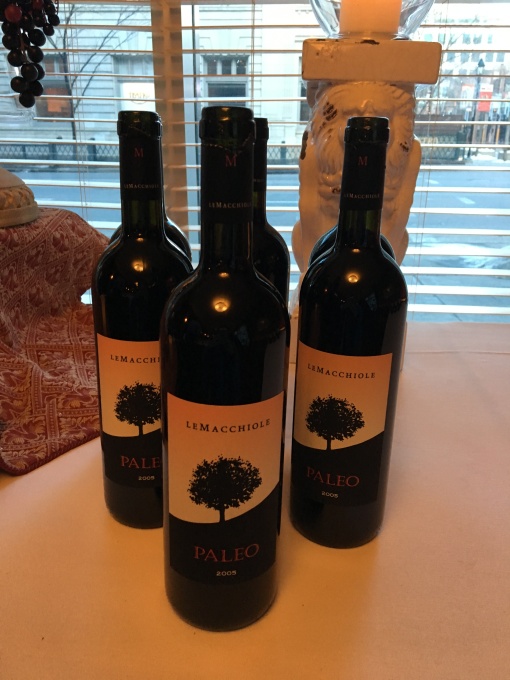
It was while reading my very first book on wine, the 6th edition of Ed McCarthy and Mary Ewing-Mulligan’s “Wine for Dummies”, that I first encountered the term “Super Tuscan”.  I instantly became enamored with the concept.  Some Tuscan producers became wary of traditional wine-making laws that they perceived as stifling innovation. Part of the motivation here was that these producers wanted to experiment with “international varieties”, particularly those famous for yielding Bordeaux blends in France.  Such grapes could be grown.  The kicker was that wines made from them could initially be labelled only as “vino da tavola” (or table wine), as they clearly violated Italian DOC production guidelines which emphasized native varietals.  However, it became apparent that parts of Tuscany were in fact better suited to growing international varieties than native son Sangiovese.  It was absurd to equate quality wines from such areas with the multitude of serviceable but undistinguished table wines found across the country, and thus the marketing concept of the Super Tuscan was born – described on the Italian Wine Central website as “a maverick wine of great breeding but living outside the Establishment”.

IMG_1109

Cinzia Merli does not resemble any stereotype of a maverick.  My initial impression was one of a quiet, conservative, perhaps strict woman, full of resolve and perhaps possessing a keen wit underneath her stolid outward presentation.  She first apologized for her English, which by my reckoning is quite good.  She then provided a fantastic overview of the Bolgheri region and her own wine estate, Le Macchiole, during which her passion and unrelenting dedication to her craft became apparent.  I was already in awe coming into this event:  these wines are legendary.  Cinzia’s presentation only served to stoke the flames.  This evening shall live on in my memory as one of the most fun tastings that I have ever experienced with total strangers (strangers no more!).  I should add that Centini provided exceptional dinner service and perfect ambience.  Read on for my takes on five burly reds (including two vintages of the iconic Paleo), plus a sprinkling of relevant history.

IMG_1110 Read the rest of this entry »


Calgary Wine Life: Barone Ricasoli Luncheon @ Alloy Fine Dining

10 02 2018

By Raymond Lamontagne

I spent a lot of time at my grandparents’ growing up. Amongst the many fond memories (including my grandmother’s never-ending tolerance of my boundless energy and predilection for getting into various forms of trouble), I can recall that there were always a few fiascos kicking around the house, those round-bottomed bottles covered with a close-fitting straw basket that shall be forever associated with one of the world’s great wines: Chianti. Although the wine contained in most of these vessels was far from remarkable, over time a serious quality revolution occurred, one that led to the creation of the Chianti Classico DOCG designation. This important development was associated with a renewed commitment to meticulous winemaking as well as the elimination of winemaking techniques that were eventually appreciated to hinder quality (e.g., blending white grapes into a must that was largely red). At the same time, there was a dedication to preserving a unique identity; Chianti was and is a Sangiovese-dominant blend, not a varietal wine (at least usually…it turns out that Chianti Classico can be 100% Sangiovese!). As a newly christened regular contributor to Pop & Pour, I could not have been more keen to draw this tasting assignment, hosted by none other than Francesco Ricasoli. You see, Francesco’s ancestor Bettino actually invented the style.

IMG_0808When Francesco, a professional photographer, finally entered the world of winemaking, Bettino Ricasoli’s beloved Castello di Brolio estate had spent some time being passed from one multinational to the next. Enter a “contractual loophole” that gave Francesco a chance to purchase his family’s legacy from Hardy’s, based in Australia. Although he was initially unsure about whether this was a good idea, some helpful advice and prodding from a friend at Castello di Fonterutoli sealed the deal. Alas, there was much work to do. Francesco wanted to restore his wines to glory. He commissioned a three-year study to clarify the agronomic potential of his property and conducted trial plantings of fifty different Sangiovese clones, eventually determining which would perform best in his vineyard soils. The latter are largely calcareous clay with additional stony components and occur at a wide range of altitudes. Francesco was careful to explain his philosophy of “precision viticulture”. Under this approach, every vineyard parcel is a distinct entity yielding a unique vinous product. Parcels are each farmed according to their individual characters. The wines are all vinified separately to preserve their distinct attributes and are then thoughtfully blended. It became clear that Francesco does not like leaving winemaking to chance. “Why make mistakes that can be avoided?”, he asked, in response to a question about whether he uses selected yeasts for fermentation. However, he is passionate about preserving grape character. This is a highly intelligent man who thinks deeply about his wines, one who has the utmost respect for nature’s raw materials but who is not shy about steering vinification exactly where he wants it to go, according to his vision. Read the rest of this entry »


Calgary Wine Life: Catena Virtual Tasting with Laura Catena

26 08 2017

Laura Catena is my wine hero.  Her list of credentials reads as if it must have been accomplished by at least two people over the course of long, full lives:  fourth-generation winery owner, global Argentinian wine ambassador, Harvard magna cum laude, Stanford medical school grad, San Francisco emergency room and pediatric emergency doctor, multilingual published author, viticultural researcher and innovator.  And these parallel tracks of success are not a story of a mid-life career switch; she has been excelling in one of the most challenging careers in medicine and continuing her family’s proud wine legacy simultaneously, on two different continents, since she was in her early 20s.  As I have a hard time juggling more normal professional work demands and writing a weekly wine blog in the same city, I hold Dr. Catena in some degree of awe, as an example of what purpose and passion truly can accomplish in a single lifespan.

FullSizeRender-711

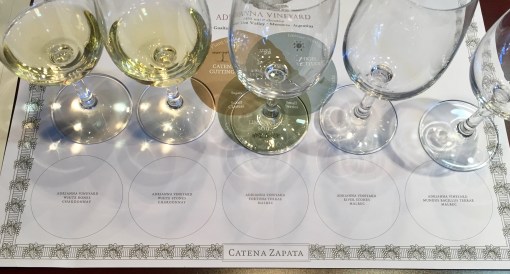
Argentina has long been highly ranked on global lists of national wine consumption, made up as it is of a high percentage of European immigrants and their descendants, who brought with them an imbued wine culture and the know-how to introduce vines and winemaking practices to their new home.  One such voyager was Nicola Catena, Laura’s great-grandfather, who came to Argentina from Italy in 1902, at age 18, and planted his first vineyard, which became the origin of Bodega Catena Zapata.  However, it was Laura’s father Nicolas, two generations later, who brought the winery to the world’s attention and ended up bringing the whole country along with him.

FullSizeRender-710

Nicolas travelled to California in the 1980s, shortly after the Judgment of Paris tasting in 1976, where Napa Valley Cabernet and Chardonnay were first thrust into the global spotlight after besting top Bordeaux and Burgundies in a surprising blind tasting that went viral.  He met up with Robert Mondavi, perhaps the man most insatiably driven to keep California’s star burning ever more brightly, and was inspired by the quality and ambition in this burgeoning rogue wine nation.  Convinced that Argentina could follow the same path to prominence and be the equal of California (not to mention France) in quality, Nicolas Catena returned home, sold the domestic-consumption table wine portion of the family winery, and zeroed in his focus on quality wines for export, aiming to “put Argentina on the map as a grand cru” for world wine.  He spent years studying climate patterns and geology and gradually came to realize that the most popular vineyard areas in Argentina at the time were mostly too warm for quality wine production.  He had two choices for cooler planting zones:  south, away from the Equator, or up, into the Andes.  He went up, and Argentina’s wine fates rose with him. Read the rest of this entry »


Wine Review: Buena Vista Social Club

16 08 2017

[These bottles were provided as samples for review purposes.]

If there was a Most Interesting Man In The World designation for the history of wine, Agoston Haraszthy would be a strong contender for the crown.  I had previously come across his name in a book about the pioneering contributors of the California wine industry and had assumed that he was one of many 19th-century immigrants from Europe to the United States who brought Old World wine knowledge and tradition with him to his new home and helped it propagate.  And he was.  But his tale was anything but rote.

FullSizeRender-700

Haraszthy was born in Hungary to a noble family in 1812, later becoming known by the honorifics “Count” and “Colonel” even though he was technically neither.  He carved his own path throughout his life, stringing together a series of firsts that would be near-impossible to top in this day and age.  He was the first Hungarian to move and settle in the United States; the founder of the oldest village in Wisconsin (and the planter of some of the first grapevines there); the first town marshal and elected sheriff of San Diego; and the founder of the first commercial winery in California (more on that in a bit).  From the time he first arrived in the United States in 1840 to the time he left in 1868, he was at various times a mill owner, an author, a steamboat operator, a butcher, a member of the California State Assembly, and a gold refiner and assayer at the US Mint.

Read the rest of this entry »


Cellar Direct: Summer Vibes, Part 1

2 08 2017

[These bottles were provided as samples for review purposes.]

FullSizeRender-684

Cellar Direct:  always delivers, figuratively and literally.

And we’re back.  If you’ve seen little activity on this blog for the past few weeks, it’s for good reason:  I was not on mainland North America.  Some family fun in the sun in Maui was an excellent and much-needed recharge, but too much time away from the cellar is a dicey proposition, so I’m revving up the tasting notes and Pop & Pour is ready to rumble again.  And we’re not easing back into blogging life either:  we’re kicking it retro-style tonight with a powerhouse sub-13% abv traditional red duet that’s as Old World as Old World gets, both of which were recent feature offerings at what ever-increasingly appears to be Canada’s can’t-miss online wine club, Cellar Direct.

If you read this blog and that name is familiar to you, there’s good reason, as this will be the fifth time I’ve been lucky enough to experience and describe their wares, dating back to the venture’s launch almost two years ago (see here and here and here for more).  I have yet to taste a Cellar Direct bottle that disappoints.  Sourcing directly from the cellars of producers themselves and focused on classically made, low-intervention, farm-to-bottle offerings from European producers steeped in history, CD gets them to consumers in a 21st-century manner, via regular inbox offers and an online storefront where you can go back and grab more of past winners.  They ship using AST Healthcare’s temperature-controlled delivery services when external temperatures permit (3-4 times per year) and safely store your ordered wines until they’re ready to be delivered to your door.  Cellar Direct’s reach is nationwide, and their inventory is stocked with European treasures that often don’t otherwise see our shores.  Past, meet future.

This is the first of a three-part series of posts offering a snapshot of what Cellar Direct has been offering its members (which can include you, as it’s free to sign up) in spring and summer 2017.  Some of the wines are still around in CD’s online shop; others have sadly sold out with haste; but all are representative of what this venture is all about.  The first two bottles I tried tell you all you need to know. Read the rest of this entry »


Calgary Wine Life: Weingut Hiedler Tasting @ Bricks Wine Co.

26 06 2017

FullSizeRender-664

Ludwig Hiedler Jr.

When Ludwig Hiedler Jr. speaks, generations of knowledge echo in his words.  His career has spanned many years of education and experience, multiple shifts in approach, and innumerable hours spent questioning how to create and reveal the truest form of a wine.  He at first chafed against the layers of tradition quietly imposed on him like sediment by his ancestors, and pushed back against them by experimenting in all facets of his self-described “artisanal, emotional” winemaking style, only to eventually discover his own truth where it always was, embedded within his family’s values and legacy.  He is 24 years old.

Ludwig Jr., his father Ludwig Sr. and his brother Dietmar now collectively guide the course of Weingut Hiedler, which has been producing wine in northern Austria’s Kamptal region since 1856, longer than Canada has existed as a country.  Ludwig Jr. represents the fifth generation of Hiedlers to take on winemaking duties at the estate, steering the winery into the future with a nod back into the past, through sustainable chemical-free practices in the vineyard, next to no use of oak for maturation, and wines made as a pure reflection of site and vintage, with no stylistic or flavour preconceptions guiding the journey to the finished product and limited intervention during fermentation.  Hiedler uses native yeasts to ferment all of his wines, but in an interesting way:  he allows the ambient yeasts around the winery to do some of the work during fermentation, but has also harnessed certain selections of these native strains with which he also inoculates the fermenting must, propelling the ferment forward without introducing any element external to the winery.

FullSizeRender-660

Weingut Hiedler is a small piece of a 1,000+ year tradition of winemaking in Austria, and is part of a group of quality-focused producers working on taking the generational knowledge built up and passed down about vineyard sites, soils, aspects and qualities and creating a (long-overdue) formal comprehensive set of vineyard classifications for the country.  The Österreichische Traditionsweinguter (or the ÖTW for short, which translates to “Traditional Austrian Winemakers” and is roughly equivalent to Germany’s VDP) has identified a number of top “Erste Lage” (first growth) vineyards which they hope to see formalized at law in the future, bringing Burgundian rigour to Austrian soils.  Hiedler’s philosophy strives for longevity, tranquility, wisdom, harmony and elegance in its wines, a vision symbolized by the owl that graces its labels and has quickly become the most recognizable visual reference to the estate.

This was Ludwig Hiedler Jr.’s first ever trip to Canada, and his last stop in a hectic North American travel schedule before he returned to winemaking duties in Austria.  Before embarking on a transoceanic flight home, he graciously led us through a remarkable Gruner Veltliner and Riesling Masterclass at one of Calgary’s most impressive boutiques, Inglewood’s Bricks Wine Company.  Through four Gruners and three Rieslings, we got a clear sense of what Ludwig and Weingut Hiedler were all about, yet I still left thinking that there are many more undiscovered layers to both the man and the winery, to be unveiled in the coming decades of Hiedler releases. Read the rest of this entry »