Bricks Wine Advent Calendar 2018: Day 7

7 12 2018

By Raymond Lamontagne

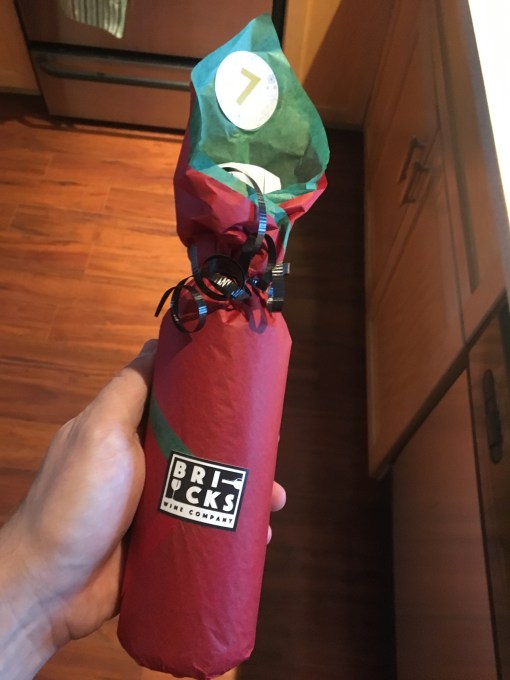
Now THIS I was not expecting. Seeing tonight’s label takes me back to an industry tasting maybe a year ago. I finagled an invite as “media” (delusions of grandeur) and it was a standard event, really: big crowds and tiny pours. Even at such large events, however, I am consistently astonished by how generous and approachable wine folks are. (Sure, there were a few awkward moments. Me: “I think I like this Viognier the best…really nice floral stuff on the nose”. Guy pouring samples: *blank stare*.) I won’t ever forget meeting these two dudes at the Purcari table, representatives from the near-anonymous wine nation of Moldova. One was maybe in his 20s and the other was on the older side of middle-aged. I wish I could recall their names. The younger guy seemed quite business-savvy, and the older gentleman was more focused on vines and harvest dates and the like. My friend (none other than fellow Pop & Pour author and wine guy extraordinaire Dan Steeves) and I must have spent an hour there, tasting through the entire ensemble and hearing the stories behind each of their wines. The older guy reminded me of my maternal grandfather, a no-nonsense, bright member of the proletariat, very willing to share these unprepossessing but fascinating stories. What a marvellous hobby we have, and what a tremendous memory, revisited in full force by tonight’s Negru de Purcari red, from the winery of those very gentlemen.
IMG_2390

A brief primer of this lesser-known wine region is certainly in order. Moldova is one of Europe’s poorest nations but has the third greatest vineyard area of the former Soviet republics (only the Ukraine has more, if we are talking about states with significant wine production). Grapes have grown in Moldova for millennia, and wine production reached an apex in the 15th century. Turkish occupation struck a severe blow to wine production due to the Islamic prohibition of alcohol, but then recovered after the country was annexed by Russia in 1812 (phew!). Vine varieties from France became ascendant until phylloxera smacked them back down. Grafting was adopted in 1906 and the tzars provided incentives to grow higher quality varieties, only to have the Second World War once again devastate the vineyards. Undaunted, the resilient and industrious Moldovans set about planting more international varieties while simultaneously preserving at least some of the native vine diversity, weathered a few Soviet importation bans on Moldovan wine, and basically kept flipping the proverbial bird at retrograde political, religious, and other forces that sought to threaten their vineyards.

Read the rest of this entry »


Calgary Wine Life: A Special Evening with Cinzia Merli of Le Macchiole @ Centini

15 03 2018

By Raymond Lamontagne

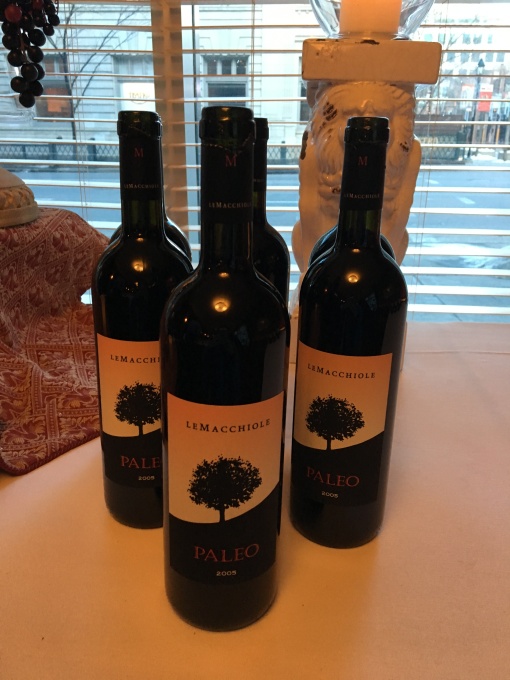
It was while reading my very first book on wine, the 6th edition of Ed McCarthy and Mary Ewing-Mulligan’s “Wine for Dummies”, that I first encountered the term “Super Tuscan”.  I instantly became enamored with the concept.  Some Tuscan producers became wary of traditional wine-making laws that they perceived as stifling innovation. Part of the motivation here was that these producers wanted to experiment with “international varieties”, particularly those famous for yielding Bordeaux blends in France.  Such grapes could be grown.  The kicker was that wines made from them could initially be labelled only as “vino da tavola” (or table wine), as they clearly violated Italian DOC production guidelines which emphasized native varietals.  However, it became apparent that parts of Tuscany were in fact better suited to growing international varieties than native son Sangiovese.  It was absurd to equate quality wines from such areas with the multitude of serviceable but undistinguished table wines found across the country, and thus the marketing concept of the Super Tuscan was born – described on the Italian Wine Central website as “a maverick wine of great breeding but living outside the Establishment”.

IMG_1109

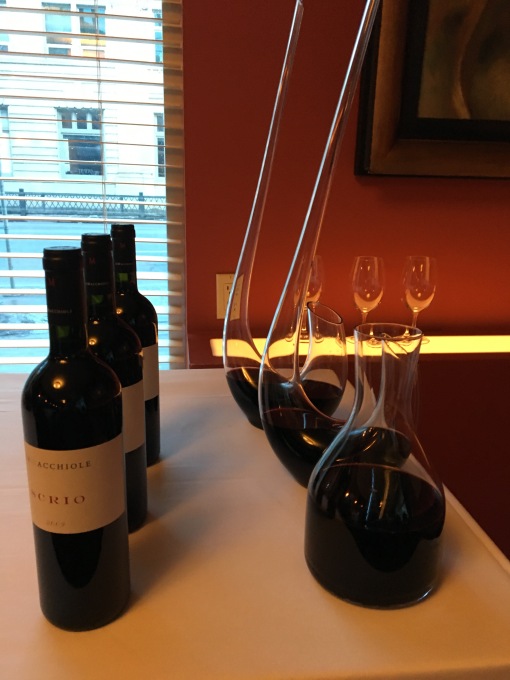
Cinzia Merli does not resemble any stereotype of a maverick.  My initial impression was one of a quiet, conservative, perhaps strict woman, full of resolve and perhaps possessing a keen wit underneath her stolid outward presentation.  She first apologized for her English, which by my reckoning is quite good.  She then provided a fantastic overview of the Bolgheri region and her own wine estate, Le Macchiole, during which her passion and unrelenting dedication to her craft became apparent.  I was already in awe coming into this event:  these wines are legendary.  Cinzia’s presentation only served to stoke the flames.  This evening shall live on in my memory as one of the most fun tastings that I have ever experienced with total strangers (strangers no more!).  I should add that Centini provided exceptional dinner service and perfect ambience.  Read on for my takes on five burly reds (including two vintages of the iconic Paleo), plus a sprinkling of relevant history.

IMG_1110 Read the rest of this entry »


Calgary Wine Life: Tabarrini Montefalco Tasting Seminar @ Model Milk

12 03 2018

By Raymond Lamontagne and Dan Steeves

We have always been impressed by the selection of Austrian and German wines in Salivate Wines’ portfolio, so we were thrilled at the opportunity to sample wines from one of the importer’s Italian producers, Tabarrini.  Hailing from smack dab in the middle of Italy, in Montefalco within the Umbria region (the only wine region in Italy that does not have a coastline or border another country), Tabarrini is a well-respected winery known for its big, brooding single-vineyard reds based on the Sagrantino grape, as well as for an interesting white wine made from the little-known Trebbiano Spoletino. Although maybe not quite as famous as other Umbrians such as Saint Francis of Assisi, Monica Bellucci or black truffles (a full 60% of the world’s supply of the latter originates from the region), there is no doubt that Tabarrini is producing some serious wines that have rightfully been getting global attention.

Tabarrini’s director of sales and marketing, Daniele Sassi, led us through an informative (and entertaining – Daniele is a natural comedian, and the jokes are not always politically correct!) tasting of three of the winery’s offerings:  the Adarmando Bianco (a white Trebbiano Spoletino), the Boccatone Rosso (a Sangiovese and Sagrantino red blend), and the Colle Grimaldesco Sangrantino (one of the estate’s premium single-vineyard dry Sagrantinos).  Read on for our combined thoughts and notes on each bottle. Read the rest of this entry »


Wine Review: Winter Warmers, Part 2

27 02 2018

By Raymond Lamontagne

[These bottles were provided as samples for review purposes.]

Red or white? Before wine became a serious subject of study for me, I gravitated towards whites, and not premium quality ones either, a preference that was likely the product of early learning (e.g., that box of German plonk that was a nigh-permanent fixture on the kitchen counter) coupled with an irrational phobia of such mythological creatures as “tannin-induced hangovers”. As it turns out, there is a general trend in humans towards a greater appreciation for bitter flavors and pucker-inducing sensations that comes with age and experience. Years later, I adore red wine while continuing to appreciate characterful whites. At this point the distinction between red versus white is but a minor factor in my choice of which wine to consume at a given point in time, one that can sometimes influence me at the very early stages of decision-making (“is it a red or a white night?”), but that ultimately carries less weight than varietal, region, style, or what’s for dinner. The Agriculture and Agri-Food Canada webpage indicates that at the national level, Canadians prefer red wine to white, with the exception of British Columbia, where whites are more popular. Heedless of the overall trend, many (myself included) continue to associate winter with hearty reds. Without further ado, let’s launch into part 2 of our robust red reviews, following Dan’s introduction from late last week.

IMG_1038

2011 Montecillo Rioja Reserva ($18)

Spain has more area under vines than any other country and is the third largest producer of wine in the world. Spanish wine on the whole was considered rather rustic and ragged until a major shift towards improved quality occurred in the mid-20th century, before which time it was not unheard of to dilute the wine with lemonade to increase palatability (!). Rioja remains the best-known area for red wine production in Spain, although recently a few upstart regions have made inroads. Tempranillo is Spain’s top indigenous variety, with plantings doubling across the country over the past decade, and is the dominant grape in almost all Rioja reds. I found a great quote from a top Rioja producer in Benjamin Lewin’s book “Wine: Myths and Reality”: “Everywhere in the world, people want to make wine like Burgundy. But it is not in our history, we have  always blended”. Historically, Rioja’s very warm vineyards resulted in full ripening of any given grape varietal, such that blending was necessary to achieve the desired complexity. In a traditional blend, fruitiness came from Tempranillo, while Garnacha (Grenache) provided more color, body, and alcohol, with relative rarity Graciano providing acid to offset the softness of the other two. This classic blend often yielded wines featuring what Lewin calls “savory, almost animal notes of mature red fruits”. Use of American oak for aging has also led some to conclude that Tempranillo is rather neutral flavor-wise, with vanilla and char notes from oak constituting Rioja’s “true” distinctive flavor profile. Regardless, much Rioja is now made in a soft, fruit-forward style. Some producers have decided to split the difference and offer both traditional and modern bottlings. Read the rest of this entry »


Wine Review: Winter Warmers, Part 1

23 02 2018

By Dan Steeves

[These bottles were provided as samples for review purposes.]

The end of February is slowly approaching and we are less than a month away from the first day of spring. That means warmer weather is in our sights and we soon won’t have to deal with any more snow, right? That might be wishful thinking, but we can certainly hope it is the case! Until that warmer weather shows up and takes permanent residency in the prairies, we will need to keep staying warm and spending our evenings huddled around the fireplace with a nice glass of full-bodied red wine. Although I personally drink all types of wines all throughout the year (nobody should deprive themselves of rosé for months on end), there is no doubt that I enjoy more red wines over the cooler winter months, not only for the warming effects of a 15% ABV Cabernet Sauvignon, but also because we tend to eat more hearty full-flavoured comfort foods during this time and less light and refreshing fare.

To get you through the next month until you start seeing green on the ground, we have reviewed a few robust red wines that will be great at keeping you warm and satisfied until the spring flowers start blooming. We kick off this two-part series with reviews of great value reds from two regions known for their big red wines:  Bordeaux, France and the Colchagua Valley, Chile.

Read the rest of this entry »


Wine Review: 2010 Villa Maria Marlborough Private Bin Pinot Noir

13 06 2012

[This bottle was provided as a sample for review purposes.]

Marlborough spreads its wings…who needs SB?

This wine is the red corollary to the Villa Maria Sauvignon Blanc I reviewed last week, but (through no fault of the SB, which I quite enjoyed) I found myself much more excited to open this bottle because it was uncharted territory for me.  I (and you, and any other casual-or-more wine drinker) have had the famous Sauvignon Blanc from New Zealand’s Marlborough region many times before, but I can count the times I’ve had Marlborough wine made from ANY other grape on one hand…actually, one finger.  I was enthralled by The Doctors’ Riesling by Forrest Wines, a producer daring enough to take Marlborough vineyard land guaranteed to sell with SB and plant something else instead, and I’m doubly intrigued to open my very first red from this sacred Sauvignon Blanc area.  The most famous region in New Zealand for Pinot Noir is probably Central Otago, located in the southern half of NZ’s South Island and known for generating Pinots with distinctive, if potentially off-putting, gamey/meaty/Band-aidy aromas; I had no idea if Marlborough would be more of the same or if it would show off its own individual Pinot style.  No better way to find out… Read the rest of this entry »


Wine Review: 2009 Laughing Stock Blind Trust (Red)

19 01 2012

With this seamless a marketing pitch, this wine should always be in demand.

“Assets of the Blind Trust are kept under wrap and seal”, says the neck of Laughing Stock Vineyards’ “just trust us” bottle.  And so they are:  while at first glance you will not find any mention of what grape varieties make up this wine, and while the bottle tells you that the grapes in the blend change every year and never remain consistent, if you make good use of your corkscrew and fully remove the foil covering the top of the bottle, the mystery blend is revealed.  Since this is absolute genius marketing (and most of the fun involved in buying this bottle), I’m not going to spoil the surprise for you, other than to say that (1) the grapes involved are three of the five that go into Bordeaux wines in France (Cabernet Sauvignon, Merlot, Cabernet Franc, Malbec, Petit Verdot) and (2) the ’09 Blind Trust mix is heavily weighted in favour of one of the five.  And it ain’t Petit Verdot.

Read the rest of this entry »


Wine Review: 2004 Andrew Will Sorella

18 07 2011

I may have let PnP’s 50th wine review pass with a $13 bottle that didn’t quite scream “momentous occasion”, but I wasn’t about to let review #51 similarly slip by without bringing out the big guns.  As a belated “happy 50th”/”I can’t believe I’ve written 30,000+ words about wine for free” gift to self, I went to my current favourite red wine region last night for a special bottle:  the 2004 Andrew Will Sorella red blend from Washington State.  I got this wine for my birthday this year from a couple of very discerning and wine-savvy friends (thanks Tyler and Corey!) and am proud that I actually held out for 2 months before my resolve totally melted away…give me a premium Washington red and my willpower just evaporates.  The current release price for this wine is $75 to $80 a bottle, but I’m guessing a back-vintage bottle like this (the current vintage is 2008) probably pushed $100 or more.  Let’s get to it. Read the rest of this entry »


Wine Review: 2007 Mercer Columbia Valley Merlot

19 06 2011

Special delivery from the tasty factory.

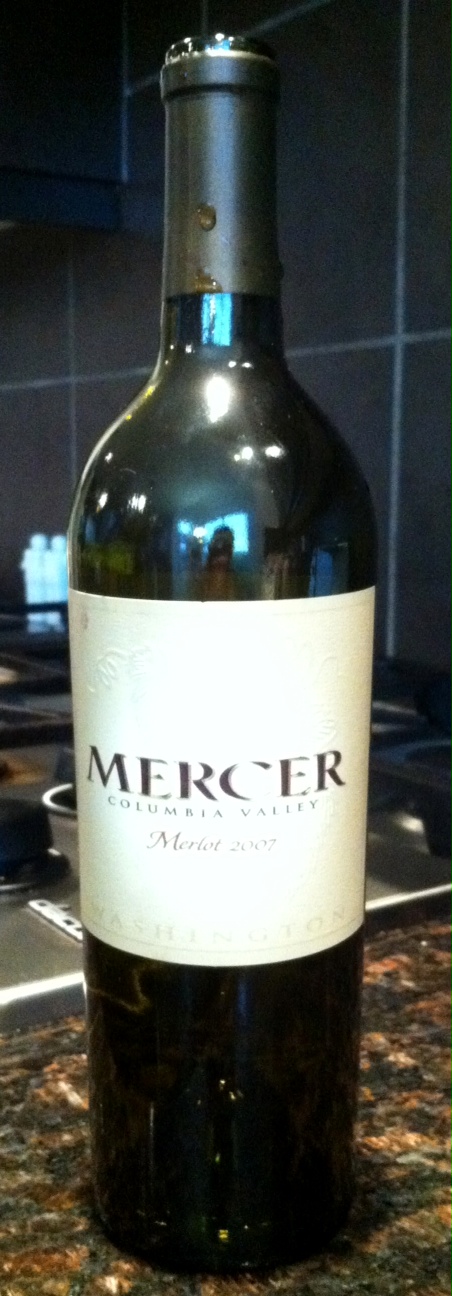
Right after reviewing a wine (the 2007 Amavi Syrah) that was identical to one reviewed previously but for the vintage, tonight I’m tackling a wine that’s identical to a prior review but for the grape.  I reviewed the 2007 Mercer Columbia Valley Cabernet Sauvignon at the end of March, and tonight I stick with the same vintage (2007), the same producer (Mercer) and the same subregion (Columbia Valley in Washington State), but I’m subbing out one full-bodied red (Cab) for another (Merlot).  As I look back on my previous Mercer review, it strikes me how similarly these two wines have been put together; both are built to pop, pour and enjoy in the near term, with big accessible fruit and no hard edges, and both are ripe, friendly and easy to drink.  Both are also a direct shipment from the tasty factory — they’re absolutely delicous, the Merlot even more so than the Cab.  I bought this wine over the weekend from Highlander Wine & Spirits because it was crazily on sale:  half off normal retail price at $20!  It’s one of my rules in life not to turn down Washington State wine when it’s 50% off…I’m principled that way. Read the rest of this entry »


Wine Review: 2007 Amavi Cellars Syrah

17 06 2011

Yes, I drank the whole bottle before remembering to take a picture. Shoot me.

This is a Pop & Pour first:  a review of a wine that has been previously featured on this site, just in a different vintage.  I have very fond memories of the 2005 Amavi Syrah from Walla Walla Valley in Washington State, which bears the eternal distinction of being PnP’s first 90+ point wine (92 points) and which delivered layer after layer of complex, savoury, intriguing goodness when I had it back in March.  Skip forward two harvests and you get to tonight’s wine, Amavi’s 2007 rendition of the same Syrah from the same region, which I’ve been eagerly awaiting to compare to its predecessor ever since I bought the bottle.  The ’07 had big shoes to fill (I still vividly remember the ’05 three months later), but it definitely delivered, albeit in a very different way than I expected. Read the rest of this entry »


Wine Review: 2008 Enzo Boglietti Dolcetto d’Alba (Take 2)

27 05 2011

I’m back!

One and a half vino-free weeks later, I’m over my illness and once again ready to wine it up.  On the eve of my foray into WSET wine camp, my symptoms have subsided enough that popping and pouring is again on the agenda, and tonight’s wine is of particular interest because it was decided by you, the people…well, 14 of you, anyway.  The first ever PnP wine poll was at least a marginal success, and by a landslide, you voted that my first post-sickness wine should be one that I’ve had before, with horrific results:  the 2008 Enzo Boglietti Dolcetto d’Alba.  To be fair, Enzo wasn’t at all to blame for my initial nightmare experience, which was due to a faulty bottle; tonight he gets his rightful chance to salvage his name and reputation. Read the rest of this entry »


Tips & Tricks: Red Wine with Fish?

23 05 2011

The very first “ironclad” wine and food pairing rule that I was ever told is so ubiquitous that I’m sure you’ve all heard it too:  red wine with meat, white wine with fish.  But is this prohibition on mixing red wines and fish fact or fiction?  As with any good urban legend, it’s a bit of both.

There really is no caption that can improve on this picture.

First the fact:  it is a good idea to avoid pairing particularly oily foods with wines that are high in tannin (for a longer explanation on what tannin is, click here) because the two combine to produce unpleasant metallic or tinny flavours on the palate.  Generally speaking, fish is quite oily as compared to other cuts of meat, and red wines are the most likely candidates to be high in tannin, as white wines usually have little to no detectable tannins; as a result, it is certainly true that some red wines and some fish will not be a happy mix.  The iodine present in fish can also have a similar negative reaction with tannin (and, at least according to this article, the traces of iron in certain red wines will clash with fish), so following the basic “no red wine with fish” rule can help you avoid disastrous gastronomic consequences.

However, it is fiction to say that red wine and fish can never be successfully paired together. Read the rest of this entry »


Wine Review: 2007 Cogno Barbera d’Alba Bricco Dei Merli

16 05 2011

So the label's beige, coral pink and orange? It HAS to be good!

I haven’t had a Barbera in awhile, but it’s one of my all-time favourite red grapes, so it’s high time to change that trend.  Barbera is mainly grown in the Piedmont region in northwest Italy, which is much (much much) more famous for the Nebbiolo-based wines from Barolo and Barbaresco, which are some of Italy’s most prestigious and expensive.  While Nebbiolo is the show-dog grape of the region, Barbera is the lovable mutt who sleeps beside your bed at night; Nebbiolo is deep, complex, layered and pedigreed, while Barbera is rustic, juicy, fun and earthy.  Although Nebbiolo is what generates the most cash for winemakers in Piedmont, Barbera is what they drink at night.  Barbera is a great intro grape for those people who want to start learning what European wines are all about but have been used to the overt fruitiness of California and Australia:  it features ripe red fruit flavours that are eminently drinkable but also has the underlying flavours of the land and the ground common in the Old World, all thrown together with a bit of wildness, some colouring outside the lines.  All this, usually, for $15-$25 a bottle. Read the rest of this entry »


Wine Review: 2006 Cakebread Cabernet Sauvignon

6 05 2011

Happy birthday to me!

OK, time to get serious and prepare yourself for the most expensive wine in PnP’s young history!  It was my birthday yesterday, which automatically meant a bottle out of the “good” wine fridge.  That turned out to be the 2006 Cakebread Cab, which I got for Christmas a couple years ago from my wonderful in-laws (did your in-laws ever give you high-end wine for Christmas?  I didn’t think so).  Cakebread is a renowned producer from Napa Valley, the vinicultural heart of California, and I’ve been a big fan of theirs for a long time.  One of my first ever epiphany wine experiences that opened my eyes to the world of fine wine involved a Cakebread, and since then I’ve tried a number of their offerings and have even been to visit the winery and taken part in a tasting there (highly recommended if you’re ever in the area).  Like many Napa producers, Cakebread makes a lot of different wines but hangs its hat on its Cabernet Sauvignon; this Cab was made from grapes sourced from a variety of locations within Napa Valley and retails for close to $100 CDN, so I was very interested to see how it fared. Read the rest of this entry »


Wine Review: 2006 Ridge Lytton Springs

24 04 2011

Zinfandel! When made right, still one of my favourite reds.

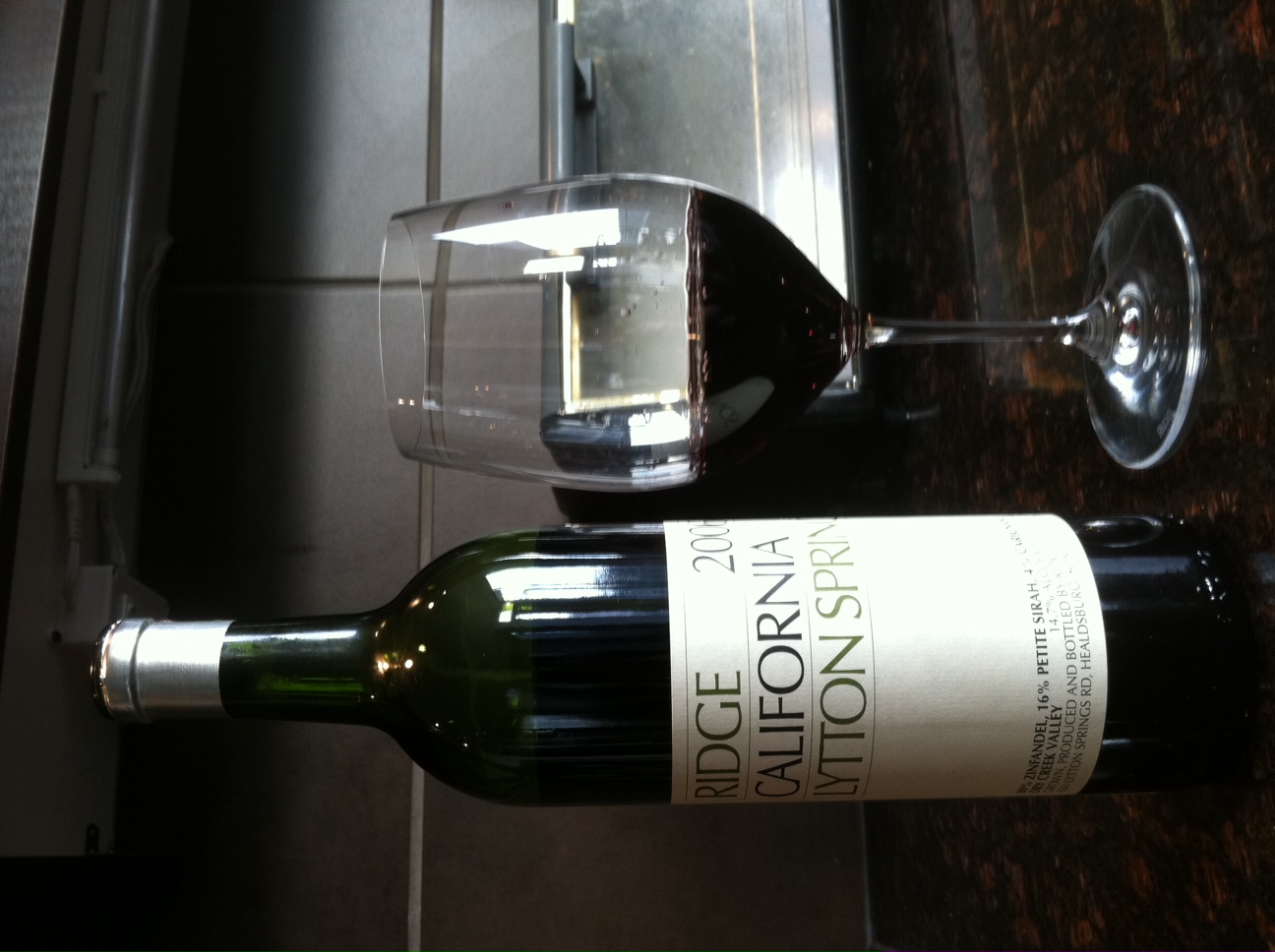
Happy Easter everybody!!  Special occasions call for special wine, and on this Easter weekend I turned to Ridge, a classic California producer who is giving serious attention to a grape that’s often treated too frivolously:  Zinfandel.  If any of you reading this just said “Hang on, I thought Zinfandel was white?”, banish that thought from your head forever.  While an ocean of blush jug wine has been created bearing the name “White Zinfandel”, Zin is actually a red grape.  What makes White Zinfandel white (or, more accurately, slightly pink) is that when it is made, the fermenting juice is only left in contact with the grapes’ skins for a very short time, after which it is quickly separated so that the skins can’t pass on much of their dark colour to the finished wine (thus preventing it from being red).  White Zinfandel is a cheap, uninteresting, bastardized version of a varietal that, when shown the proper care, can create some of the truest versions of American red wine out there.  The US (especially California) is the predominant producer of Zin in the world; Zinfandel really only shows up elsewhere around the globe in southern Italy, where it is known as Primitivo. Read the rest of this entry »