Happy NYE 2016: Piper-Heidsieck Brut NV

30 12 2016

[This bottle was provided as a sample for review purposes.]

Quick – what’s the most festive thing you can think of to drink right now, right in the middle of this holiday season?  Champagne?  Close.  Champagne wrapped up like a present, complete with bright red bow, in its own custom bottle cozy?  Bingo.  I have long been a proponent of seasonally packaged wines (as long as they’re done right – when done wrong, they’re not pretty), and the holiday edition of the Piper-Heidsieck Brut NV Champagne nails the Christmas/New Year’s vibe about as well as anything I’ve ever seen in a bottle.  Seriously, just look at this thing, first wrapped up:

fullsizerender-521

Wait for it…

Then unwrapped:

fullsizerender-523

Oh yeah.  So sweet.

YES.  That is so, so clever.  And it’s reusable!  How can you go to a New Year’s party tomorrow and NOT bring this?  And it’s on sale online at the moment at Willow Park in Calgary, and maybe elsewhere, at a price that’s shockingly friendly for true Champagne from a historic house.  Oh, and most importantly, the juice lives up to the packaging.

Read the rest of this entry »


Joseph Drouhin Hospices de Belleville Beaujolais Duet

23 11 2016

[These bottles were provided as samples for review purposes.]

fullsizerender-479

Great region, great wines, great story.

A few posts ago I was discussing the intractable dilemma of trying to locate value Burgundy, that nearly mythical beast of the wine world, and I’ve since realized that I neglected to mention the obvious solution to the problem:  just look for Cru Beaujolais.  The Beaujolais region is technically part of Burgundy, located just south of Macon and north of Lyon, and while it can produce its share of forgettable wines, the main difference between Beaujolais and the other zones of Burgundy is that its top wines are shockingly wallet-accessible.  In fact, Cru Beaujolais, wines from one of the ten top quality Cru subregions in the area, might be some of the greatest wine bargains on Earth, pinnacle expressions of a classic grape at absurdly reasonable prices.  Case in point:  the two bottles to be discussed below, which each clock in at $27-$30 retail and which combine old-vine vineyards in top locales, one of Burgundy’s best producers and a hell of a good back story, all for the price of a basic forgettable Bourgogne Rouge.

Unlike the rest of red Burgundy (which is crafted from Pinot Noir), red Beaujolais is made from Gamay, the thin-skinned and light-bodied red grape well known to Canadian wineries whose spiritual heartland lies in this region’s ten Crus.  True story:  Gamay used to be grown all across Burgundy until 1395, when the (likely self-titled) Duke Philip the Bold ordered the “very bad and disloyal plant” uprooted in favour of the more aristocratic and noble-approved Pinot Noir.  His decree was not all that impressively enforced way down in the south of Burgundy, so pockets of Gamay remained in Beaujolais, quietly, until the danger of extermination had passed and the region was officially recognized as a Protected Denomination of Origin.  While it’s true that Gamay may never quite reach the lofty heights of nuance and complexity that Pinot can, it can offer a pretty reasonable facsimile at an absolute fraction of the price. Read the rest of this entry »


Domaines Paul Jaboulet Ainé: The Next Level

5 08 2016

[These bottles were provided as samples for review purposes.]

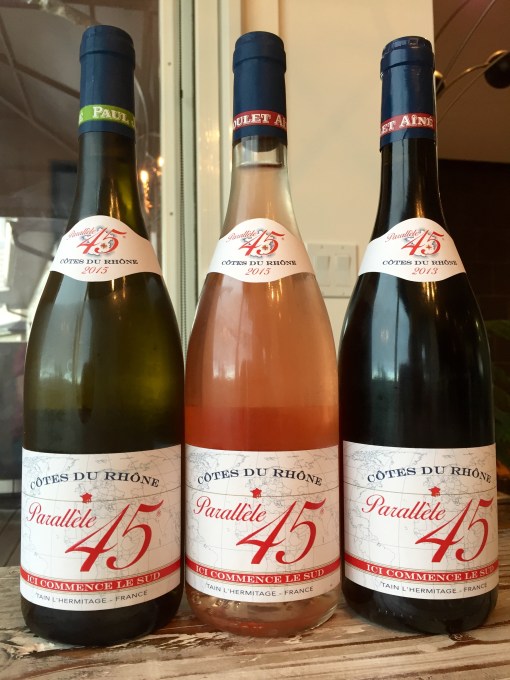
I recently tasted and discussed the entry-level Parallele 45 lineup from the Rhone Valley’s Domaines Paul Jaboulet Aine, which showcased the red, white and pink sides of the Southern Rhone in an impressive value-priced package.  Today we kick it up a notch.

FullSizeRenderJaboulet’s Alberta portfolio is supplemented by a quartet of upper-echelon bottles from a group of distinctive quality regions scattered across the Rhone, each of which has its own character and legend to live up to, and each of which, I’m happy to report, Jaboulet and winemaker Caroline Frey reflect to a tee in these beautiful offerings.  See my prior post for more details about this historic winery and its renaissance in our market; for now, we have a lot of wine to drink.

Read the rest of this entry »


Domaines Paul Jaboulet Ainé: Parallele 45 Trio

6 07 2016

[These bottles were provided as samples for review purposes.]

There are not many producer names as synonymous with their home region as Jaboulet and France’s Rhone Valley.  From their pinnacle bottling La Chapelle from the world-renowned hill of Hermitage (which I have had once and vividly remember to this day) down through the rest of their lineup, the wines of Domaines Paul Jaboulet Ainé are known and revered the world over, although until recently they were decidedly under-represented in our market.  That has now thankfully changed, and Alberta once again has full access to some of the best wines the Rhone has to offer.

FullSizeRender-379

The Jaboulet winery was first started by Antoine Jaboulet in 1834, who then passed it to his two sons, Paul and Henri, to carry on his legacy.  Paul, the older son, gave the winery his name (the “Ainé” in “Domaines Paul Jaboulet Ainé” literally translates to “eldest”), and it stayed in the family for almost 175 years before finally being sold in 2006 to the Freys, a family of French winemakers with properties in Champagne and Bordeaux.  Caroline Frey (fittingly the eldest daughter of the family), who is now 37 and so was in her late 20s at the time of the acquisition, assumed the mantle of winemaker and has instituted sustainable vineyard practices and carried forward Jaboulet’s reputation for classic quality.

Parallele 45 is Jaboulet’s entry-level lineup of Cotes du Rhone wines, so named because the 45th parallel of northern latitude runs right through the Rhone Valley, bisects some of the Domaine’s vineyards and is only a couple kilometres from its cellars.  The bottles all bear an inscription found on a monument in the nearby village of Pont de l’Isere (which, and I am not making this up, is at 45.0040 degrees N latitude):  “Ici Commence Le Sud” – The South Starts Here.  Post de l’Isere looks to be on the southern edge of the Northern Rhone as opposed to the northern edge of the South, but the mantra still fits, and Jaboulet’s wines straddle both sides of the Valley.  I got to taste through the full Parallele 45 lineup – white, pink and red, all of which share the same $18ish wallet-friendly price tag – and see how well they carried forward the tradition of this great name. Read the rest of this entry »


Calgary Wine Life: Thomas Perrin Beaucastel Component Tasting

23 02 2016

FullSizeRender-242I’m having myself a bit of a tasting month here.  A week after sitting down to some incredible 50, 51 and 52 year old Taylor Fladgate Ports, I was treated to one of the most memorable experiences of my wine life:  a chance to taste through the individual varietal component wines of the unparalleled Chateau de Beaucastel with proprietor Thomas Perrin, the first time such a tasting had ever been held in Alberta.  Beaucastel is the legendary estate of Chateauneuf-du-Pape, the top region in France’s Southern Rhone Valley and the first area declared to be an Appellation d’Origine Controllee (AOC – now Appellation d’Origine Protegee, or AOP) in 1936, known for producing rich, dense and complex reds and whites of remarkable quality and longevity.  The Perrin family has owned Beaucastel for over 100 years, having purchased it shortly after most of the vineyards were ravaged by the phylloxera louse and just before the scourge of World War I. Two wars, 100 hectares and five generations later, Thomas Perrin and his family members carry on the legacy of the Chateau and the Perrin name.

Beaucastel’s winemaking philosophy was created and entrenched largely by Thomas’ grandfather Jacques Perrin, whose name graces the estate’s top wine, Hommage a Jacques Perrin, released only in top years.  The elder Perrin converted the entire estate to organic viticulture back in 1962, when almost nobody would even have known what that meant and the prevailing wisdom pushed hard the opposite way, toward the increased use of vineyard chemicals and pesticides.  Chateauneuf-du-Pape permits the use of an astounding 13 different grape varietals, 14 if you count the white version of Grenache (reds – Grenache, Syrah, Mourvedre, Cinsault, Counoise, Terret Noir, Muscardin, Vaccarese; whites – Grenache Blanc, Roussanne, Clairette, Picpoul, Bourboulenc, Picardin), which is way more than your standard high-end rigid French appellation; Beaucastel makes a special point of using them all, white and red, in every vintage of its CNDP release.  They plant, harvest, vinify and mature each varietal separately, as each has a different growth curve and ripeness window, but in all cases they aim to tell the harmonious story of grape, soil, climate and region, of terroir, in their wines.

FullSizeRender-236

Read the rest of this entry »


Wine Review: 2011 Bila-Haut L’Esquerda

23 09 2015

[This bottle was provided as a sample for review purposes.]

Bila-Haut: The label that can't miss.

Bila-Haut: The label that can’t miss.

What??  There’s another Bila-Haut?  Readers of this blog will know that I have long been a fan of the best-known wine from Rhone legend Michel Chapoutier’s Roussillon side project, the excellently named Occultum Lapidem, and I have also recently had the chance to enjoy their near-equally awesome rose.  But I had neither seen nor heard of this mustard-coloured addition to the Bila-Haut lineup, L’Esquerda, before being provided this bottle to try.  I won’t be forgetting it anytime soon.

Like the Occultum Lapidem, the Bila-Haut L’Esquerda is from a particular high-quality subregion of the Cotes du Roussillon Villages area in the extreme south of France, almost stepping into Spain.  While the Occultum Lapidem hails from the mouthful Cotes du Roussillon Villages Latour de France subregion, the L’Esquerda comes from a single vineyard nestled in its westerly neighbour, the nearly-as-wordy Cotes du Roussillon Village Lesquerde subregion, located slightly further inland from the Mediterranean Sea, immediately south of red dessert wine rock star zone Maury, and due west of another Roussillon sub-zone that’s gotten digital ink on this site lately, Tautavel.  The word “L’esquerda” is Catalan for “the fault in the rock” and is likely a nod to the nutrient-poor granitic soils of the area.  Mainly Syrah, but blended with Grenache and Carignan, L’Esquerda has basically the same varietal makeup as Occultum and is made in a very similar fashion:  from old-vine grapes (40+ years), with extended maceration periods post-fermentation (3-4 weeks) and with limited oak aging (10% or less of the blend sees a barrel).  No wonder there’s a family resemblance.

Read the rest of this entry »


Gerard Bertrand: Terroir Showdown

30 07 2015

[These bottles were provided as samples for review purposes.]

This is the kind of tasting opportunity that wine geeks drool over:  three bottles, one producer, one general wine region, similar grapes, identical pricing ($25ish), same winemaking processes, but three different and distinct subregions, each with their own soils, microclimate and story to tell.

FullSizeRender-89

The producer is Gerard Bertrand, visionary winemaker from the south of France who was literally born to do what he’s doing:  a local of the area, he started making wine with his father at the age of 10.  The region is the Languedoc-Roussillon, a sun-drenched area stretching along the Mediterranean coast on the southern edge of central France.  It is the world’s single biggest wine-producing area with around 700,000 acres under vine, although this is not necessarily a good thing; it has been known as the “wine lake” of France for churning out vast quantities of crude jug wine for cheap consumption, more than people could possibly buy, creating massive stockpiles of reputation-draining plonk and setting the region back in the eyes of the wine world.  However, the Languedoc-Roussillon is in the midst of a quality renaissance thanks to a few passionate producers, Bertrand included, who see the potential for greatness in the land.  The result, if you know what (or, more accurately, who) to look for, is a series of unparalleled wine values that can knock your socks off for the price.

FullSizeRender-82You don’t see many wines with Languedoc-Roussillon subregions on the label in this market:  either they’re from the popular catch-all Vins de Pays d’Oc (now known as Pays d’Oc IGP) umbrella region or from a similar overarching area like Cotes du Roussillon.  I have been heavily into wine for a number of years and had never heard of two of the three sub-zones highlighted in this trio of bottles: Tautavel and Montpeyroux.  The third, Pic Saint Loup, is probably the best-known quality subregion in the Languedoc, but it remains woefully underrepresented here.  Bertrand’s Grand Terroir series of wines is intended to change that and to shine the spotlight on these specific and distinctive parts of Languedoc-Roussillon, to prove that the area is more than just a bulk conglomerate.  After tasting the three Grand Terroir bottles side by side by side, I have to say that he’s on to something.  The terroir showdown begins now! Read the rest of this entry »


Wine Review: 2014 Bila-Haut Rose

13 07 2015

[This bottle was provided as a sample for review purposes.]

Winning producer, winning value.  And look at that colour!

Winning producer, winning value. And look at that colour!

I just got back on the weekend from a sunny California vacation, and as I was coming from hot, humid San Diego into hot, dry Calgary (this was pre-torrential thunderstorms) after the end of a long travel day with two young children, I had my first ever legit rose craving.  Don’t get me wrong:  I like rose just fine, but until this moment I had always been on the “perfectly happy to drink it” side of the fence as opposed to the “insatiable desire for it” side.  But something about that day made me long for a bottle that was crisp and cool yet fruity and substantial, a summer wine niche that rose fits to the tee.  Almost immediately after dropping off the suitcases I went to my neighbourhood liquor store, browsed their abysmal pre-chilled rose selection, and escaped with the one non-White Zinfandel bottle I could find:  a Michel Chapoutier rose called Beaurevoir (pictured below) from pink wine’s spiritual homeland of Tavel in south-eastern France.  After downing it probably more quickly than I should have, I realized that I had another Chapoutier rose in my cellar and promised that I would take my time with this one.  Consider this a kick-off for what looks to be a busy Pop & Pour summer! Read the rest of this entry »


Wine Review: 2011 Les Halos de Jupiter Cotes du Rhone

11 02 2014

[This bottle was provided as a sample for review purposes.]

You can take the emptiness of the bottle as a sign of how good this wine is.

You can take the emptiness of the bottle as a sign of how good this wine is.

It had all the hallmarks of a crappy week:  utterly frigid weather, lack of sleep due to a teething baby, tons of stuff to do at the office.  But everything changed yesterday afternoon when I had an unexpected visitor at work:  a courageous rep from The Wine Syndicate who braved the cold to drop off a box of 5 killer-looking wines for me to try.  One of them in particular caught my eye, a French red from the Southern Rhone with a decidedly un-French approach to branding.  It was the first vin de France I had ever seen with a planetary body on the label, and I knew as soon as I saw it that I was opening it that night.  As it turns out, I lucked out, because this is a comfort wine to the nth degree, the ideal way to warm up after plunging through gruesome winter on the way home.

Les Halos de Jupiter is a negociant operation (where grapes are sourced largely or entirely from vineyards not owned by the winery) overseen by French master consultant Philippe Cambie, who provides his expert touch to a number of famous Rhone labels and has taken this on as his own personal side project.  The obvious first question on my (and everyone’s) mind:  what’s with the name?  The label explains that Jupiter (in Roman mythology, the same as Zeus in Greek mythology) is the king of gods and humans, the head of the patriarchal family of deities.  It’s also the biggest planet in our solar system, and Halo is the closest of its rings.  Cambie believes that Grenache is the king of all grapes and the “natural leader of Rhone varietals”; it’s the Jupiter of viticulture, and its Halos are the various subregions of the Rhone Valley that best allow it to express itself.  If this were an SAT questionthe best SAT question ever, its answer would be Halos:Jupiter :: Rhone regions:Grenache.  Cambie’s Halos span the most prestigious areas of the Southern Rhone, from Chateauneuf-de-Pape to Gigondas and Vacqueyras, but they also extend to areas where hidden values can be found.  Cotes du Rhone is a catch-all appellation that basically covers all of the areas of the Rhone that aren’t scooped up by a sexier subregion, but this particular wine is a single vineyard offering grown at elevation just outside of the quality region of Rasteau, yielding top-end old vines Grenache without the CNDP price premium. Read the rest of this entry »


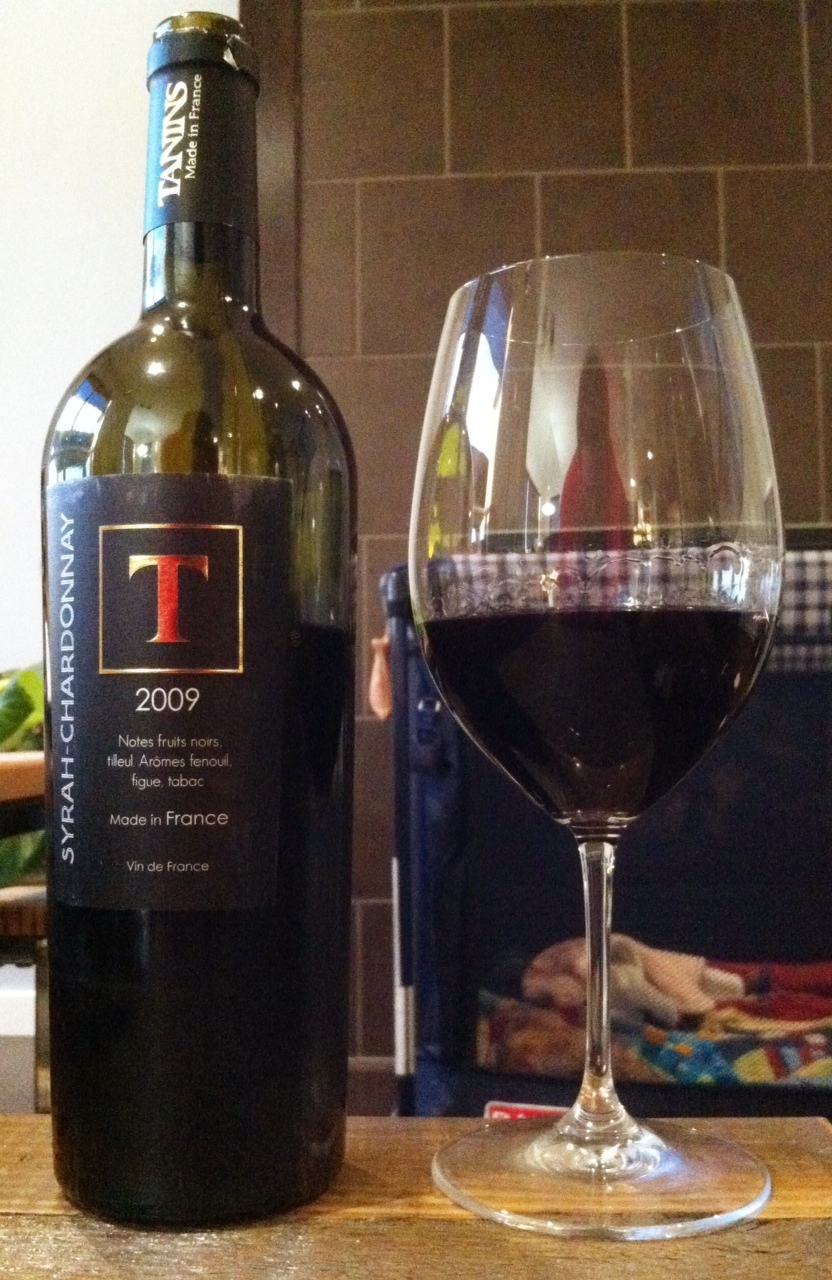
Wine Review: 2009 Tanins Syrah Chardonnay

19 10 2011

Syrah. And Chardonnay. Just because. You know you secretly want to try it.

I’m sorry, what?

That wasn’t a typo.  Tonight’s wine is ACTUALLY a blend of Syrah and Chardonnay.  It may not surprise you to learn that this is the first time I’ve ever had that blatantly crazy combo of grapes together.  It would not surprise me to learn that LSD was involved in the producer’s blending decisions.  But here we are.  Obviously taking their cue from the long-standing Northern Rhone tradition of blending in a touch of white Viognier with red Syrah, French producer Tanins (sic?) has put together another red-white mashup, only casting the world’s most well-known white grape in the usual Viognier role.  It’s a strange choice:  Viognier is added to Rhone reds because it is intensely aromatic and thus adds pizzazz and complexity to the blend’s nose.  Chardonnay is the exact opposite, a generally neutral varietal without any strong aromas to call its own.  I have no idea what motivated its selection, and this bottle has turned out to be nearly impossible to research electronically, so I’ll just have to take the plunge in the dark.  Morbid curiosity, prepare to be satisfied. Read the rest of this entry »


Wine Review: 2008 Maison Roche de Bellene Cote de Nuits-Villages

9 06 2011

I’m pretty sure this is the first Burgundy that’s made its way onto PnP; I don’t drink a lot of it because the cheaper stuff tends to taste that way and almost all of the good stuff tends to be out of my price range.  However, I’m trying to put a little more effort into discovering the wines of that region, because top quality Burgundies are some of the most alluring, complex, memorable wines in the world.  I got a chance to try some high-end white and red Burgundy at my WSET course a couple weekends ago (a Domaine Leflaive Puligny-Montrachet [white] and a Domaine Roy Marc Gevrey-Chambertin [red], if you’re curious) and started to understand what all the fuss is about, so tonight I dug up this wine, which comes from one of the few solid value producers in the area, to continue my Burgundy initiation. Read the rest of this entry »


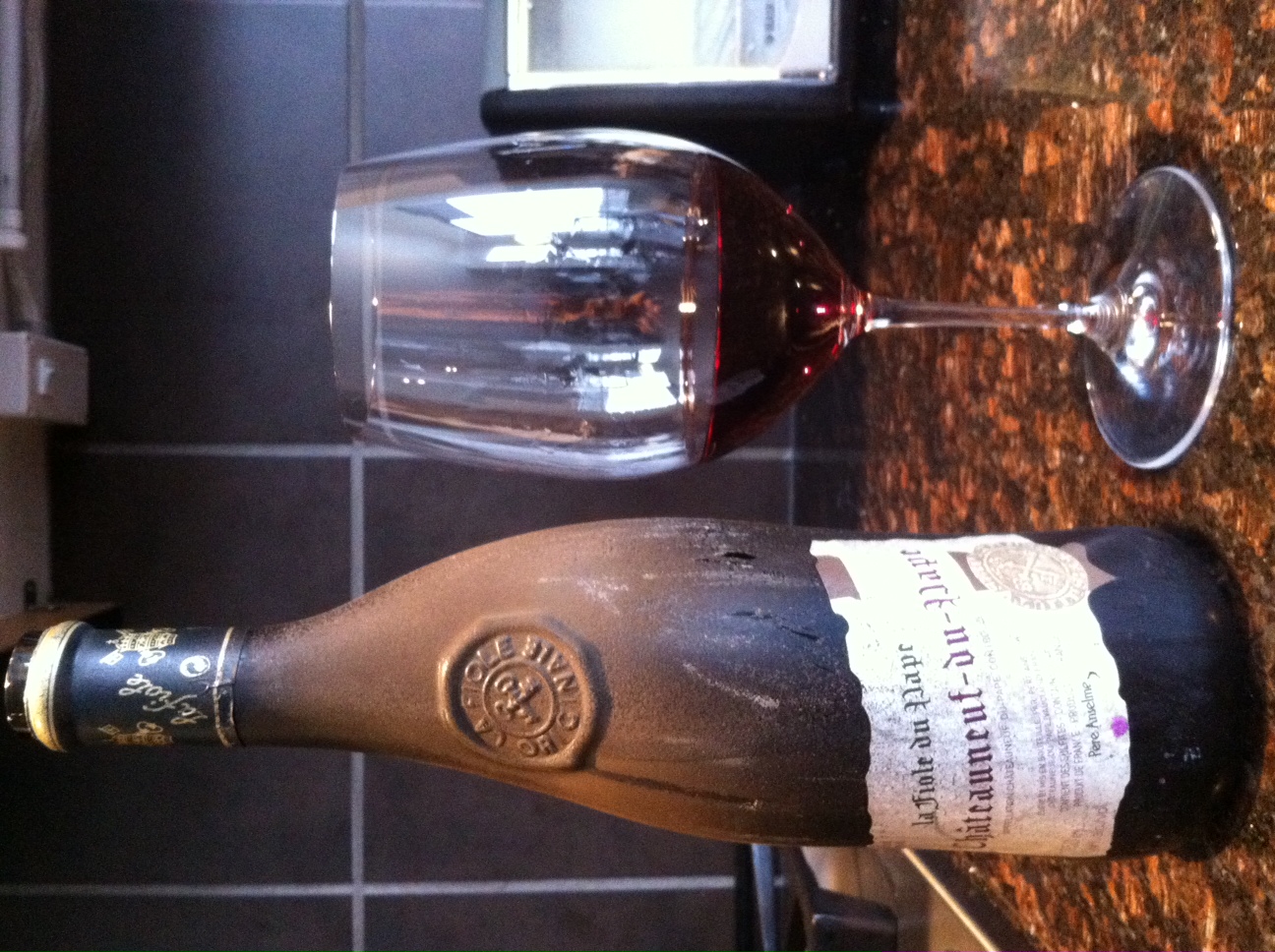
Wine Review: Pere Anselme “La Fiole du Pape” Chateauneuf-de-Pape (NV)

23 03 2011

I basically paid $35 for this lovely glass bottle.

I admit the obvious: I bought this because it looked like a bottle of buried-treasure pirate wine.  I knew I was being taken in by pretty packaging, but I figured that this was from Chateauneuf-de-Pape, one of France’s most heralded wine regions, so it couldn’t be THAT bad…right?  I forgot that top wine regions are like luxury cars:  they don’t sell with gimmicks.  If you walk into a Lexus dealership, the salesman probably isn’t going to bother offering you purchase rebates or free gas for a year; his sales pitch is going to be “It’s a Lexus.”  Chateauneuf-de-Pape, located in the Rhone Valley in the southeast of France, is a Lexus wine region: it doesn’t need anything other than its name on the bottle to draw people in.  So when a Chateauneuf producer starts messing with the bottle itself to draw in sales, it’s probably not a good sign. Read the rest of this entry »