
Christoph Thörle
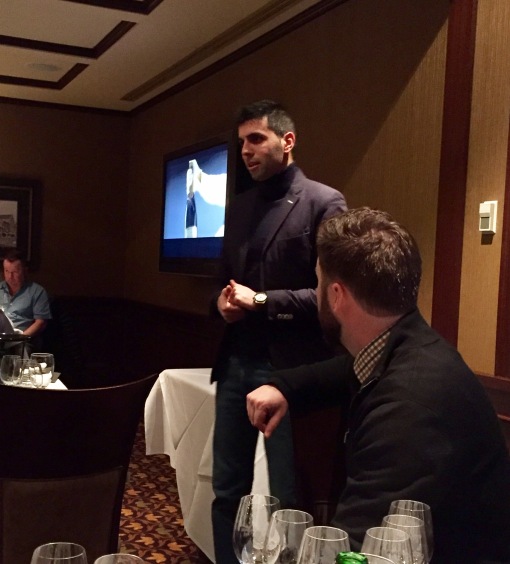
It’s been a bit of a banner wine week, seven days tailored to the precise preferences of my palate. My personal favourite types of red and white wine are Washington Syrah and German Riesling respectively, and late May has seen visionary producers specializing in each of these areas visit our fair city. My Washington wine prayers were answered last week when Greg Harrington of Gramercy Cellars put on a remarkable Master Class in Calgary; this week it was Germany’s turn, thanks to an eye-opening portfolio tasting put on by the dynamic Christoph Thörle of the eponymous Weingut Thörle, from the global home of Riesling’s Rheinhessen region. Through four different earth-shattering Rieslings and seven total wines, Thörle took us through what must be some of the world’s best expressions of my first vinous love.
If you say the word “Rheinhessen” to a wine person, the tenor of their reaction might be a generational one. The region, located in west-central Germany, due south of Rheingau and southwest of Frankfurt, is the largest in the country in terms of planted acres and is tailor-made for grape-growing: it’s dry, sunny and relatively warm, with limestone-based soils overlaid by a variety of alluvial deposits, as long ago it was largely part of an underwater seabed. Rheinhessen once had a reputation to match its physical advantages, and was long considered one of the pinnacle areas of German viniculture. But a mid-20th-century flirtation with new lab-crossing grape varieties and mass-market, quantity-focused bottlings turned into a 1970s and 80s Liebfraumilch obsession that saw lesser varietals dominate much of the vineyard area and Blue Nun and Black Tower nearly obliterate the world’s prior impressions of German wine. If you stopped paying attention to Rheinhessen then (as many did), you will have missed out on what’s going there now: a quiet quality renaissance, and a return to the right grapes properly planted and tended on the right sites, perhaps not better personified than by Christoph Thörle and his brother Johannes.
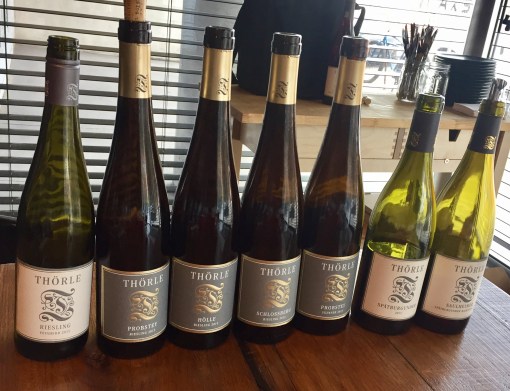
They took over the operation of the Thörle family winery in 2006, when Christoph was just 22 and Johannes 24. Together they have overseen an expansion of the estate’s vineyard holdings and a corresponding increase in annual production, paired with a return to simple, hands-off viticulture and winemaking practices: no pesticides or herbicides in the vineyards, multiple-pass harvests, all natural yeasts and no additives in the cellar, minimal sulphur at bottling. Weingut Thörle now has 80 acres of vine holdings, remarkably spread over 100+ different vineyard parcels but largely centered around the town of Saulheim in north-central Rheinhessen. The area features a wide array of different slopes, soils and sun exposures, allowing for the production of multiple different varietals, and Saulheim itself is surrounded by Thörle’s three crown-jewel vineyards: Probstey, Schlossberg and Hölle.
Thörle has been generating increasing acclaim for both its white (Riesling, Silvaner, Chardonnay and more) and red (Pinot Noir, known Germanically as Spätburgunder) wines and made its glorious entrance into the Alberta market last year. Now some new offerings are on their way to the province, and we were fortunate enough to have Christoph talk us through most of them, including a few bottles that might change your perspective on, well, everything. Read the rest of this entry »


 Washington State has both the sun to grow big red grapes and the soil and climate to make them interesting. The main wine areas are all in the southeastern part of the state, separated from lush, drizzly Seattle by the Cascade Mountain range, whose rain shadow blocks most of the coastal precipitation and creates a warm, dry canvas for grapevines to thrive. The Walla Walla Valley, straddling the Washington/Oregon border, is bounded on the east side by another mountain range, the Blue Mountains, gaining both altitude and cool nightly winds off the slopes as a result. Over millennia, the historically recurring Missoula floods have laid fine sandy soil, massive rocks and other alluvial deposits over an already-impressive volcanic basalt soil base. Put all that together and you end up with an area that sees heat and sunlight during the day but features significant diurnal temperature drops at night, ideal for prolonging ripening and retaining acid in grapes; fine soils with intriguing mineral content that drain well and in which (thanks also to the cold winters) the vine scourge phylloxera cannot survive, allowing all vines to be planted on their own rootstocks; and a remarkable array of slopes, aspects, exposures and microclimates in a relatively concentrated area, letting farmers and producers match specific varietals with specific sites to maximize their potential. In short, it screams winemaking opportunity.


 Ever since I first saw The Hatch’s avian-Thomas-Crown-Affair primary logo shortly after it opened a couple years ago, I have been sort of transfixed from a distance, finding both the winery and its artistic ethos strangely compelling despite knowing basically nothing about them. Based out of a rustic-modern “shack from the future” in the heights of West Kelowna and sourcing grapes from across the Okanagan and Similkameen Valleys, The Hatch initially comes across (quite intentionally) more like an artists’ collective than a commercial winery,
  The Hatch releases its wines in stylistic series, of which I had the opportunity to experience two: the mid-tier Hobo Series wines, featuring a panoply of hand-drawn labels of hobos (seriously) that risk making you cry thanks to their sheer beauty (also seriously), and the ambitious Black Swift Vineyards series wines, which collectively form an expansive single-vineyard project focused on the various facets of BC’s glorious dirt. The wine, like the winery, was never boring.




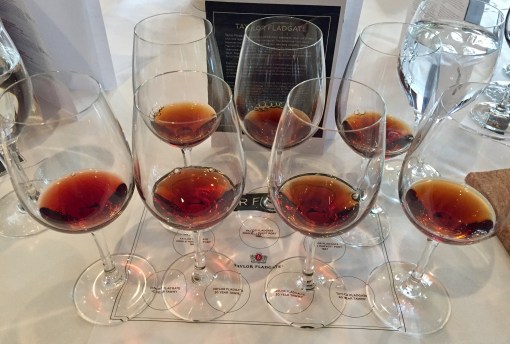 A quick tangent to explain this Port’s name and aging designation. All Port starts just like other red wines do, with crushed grapes fermented on their skins. With Port, however, the fermentation is halted halfway through, before much of the sugar has been converted to alcohol, by spiking the juice with high-proof (75+% abv) grape brandy, which kills the yeast, retains a large part of the grapes’ natural sweetness and boosts the alcohol level of the finished product to around 20%. The Port is then put in large oak barrels for maturation, and what happens next is what determines its final identity. In top vintages, some of this wine only spends a couple years in wood before being put in bottle for further non-oxidative aging. This is Vintage Port, arguably Portugal’s crown jewel. In lesser years, or with other lots, the wine stays a few extra years in barrel before hitting the bottle 4-6 years past vintage; this is Late-Bottled Vintage Port, generally a less ageable, earlier-drinking style, and one that was actually invented by Taylor Fladgate in the 1960s, a rare innovation in a very traditional winemaking landscape.







 cabernetdialectic (Raymond Lamontagne)
 Dan Steeves
 Peter Vetsch
 tylerderksen
 pop & pour