Wine Review: 2014 Plan B Riesling “OD”

14 09 2015

[This bottle was provided as a sample for review purposes.]

Riesling, it's been too long.

Riesling, it’s been too long.

Wow, HOW long has it been since I’ve reviewed a Riesling on here?  Seven months??  What is wrong with me?  I have let my favourite grape down.  Time to make amends, and I have definitely found the right bottle for the job, from probably the most underrated country in the world for good Riesling:  Australia.  This New World nation, home of terrifying spiders and monster Shiraz, is probably not the first place you think of for elegant, aromatic, cool-climate whites, but there are pockets of land in this otherwise mostly barren desert, moderated by altitude or coastal proximity or both, in which Germany’s most prized vinous export thrives.

This particular Riesling hails from the relatively obscure Frankland River region, known to me as one of the only producing areas in western Australia not called Margaret River that’s getting any play internationally.  While Margaret River sits right on Australia’s western coast, just south of Perth, Frankland River is a little farther east and inland and is a sub-zone of Australia’s largest singular wine region, the questionably named Great Southern region.  (As you can see here, it is much more west than south in the national scheme of things, and most of the country’s wine regions are actually located further south than it is.  It had better actually be Great there.)  The gents at Plan B Wines seem to be on a mission to make the wine biz loose and fun again while still producing great quality product from top sites, a task that I would suggest is perfectly suited to Australians.  Their website at planbwines.com is well worth a visit and contains some incredible illustration work done by the winemaker himself; just watch that you don’t Canadianize the URL or slip up on Google and go to planb.ca, northern Internet home of the morning after pill.  You have been warned. Read the rest of this entry »


Torres New/Old World Value Duet

8 09 2015

[These bottles were provided as samples for review purposes.]

New/Old World.  Pink/red.  Value/value.

New/Old World. Pink/red. Value/value.

Over the past couple years, Torres has become my Old Reliable, the brand that never lets me down regardless which sub-$20 value offering I’m trying, regardless where in the world it’s from, and regardless of my level of expectation or uncertainty going in.  It has now been named the World’s Most Admired Wine Brand for two years running by Drinks International (to get a sense of that accomplishment, others in the top 15 this year include Vega Sicilia, Chateau d’Yquem, Ridge, the First Growth Chateaux Margaux, Latour and Haut-Brion, and Tignanello), and it succeeds without a multi-hundred-dollar wine on its resume and with wineries on three separate continents, focused on marrying high quality with affordable pricing wherever it goes.  That combination is not easy to achieve, but Torres makes it look routine.  I had a chance to toast the end of summer amidst the weekend snow in Calgary with two QPR (quality-to-price-ratio) gems from the Torres portfolio, one from the New World and one from the Old, each crafted with the same evident care and attention. Read the rest of this entry »


Wine Review: Menti & Marabino, Natural Italy

20 08 2015

[These bottles were provided as samples for review purposes.]

If you are a massively wine-obsessed civilian, you have probably had at least a passing thought about it.  I can think of a half dozen wine friends off the top of my head with whom I’ve had the conversation.  You know something about wine, you have a particular love for a particular region, you’ve found a lesser-known producer or two there whose wines aren’t currently brought in to your jurisdiction…what if I just imported them myself?  I could be a wine agent on the side…who WOULDN’T want to buy these wines?

Small importer, statement wines.

Small importer, statement wines.

Of course, it takes much more than a passion for wine and an idle dream to make a go of it in the wine import world, an extremely competitive sphere full of others who have been at it a long time and know what they’re doing.  This is why I am behind a keyboard right now instead of combing Washington State and Oregon for hidden gems.  But I have the utmost respect for the people who do take the plunge, who put their money where their mouth is and find a way to step a little bit further into the world of wine.  Maxim Atanassov is one of those people, populating the white collar world by day and crusading for all-natural biodynamic Italian wines on evenings and weekends through his agency Vino Al Vino.  He has assembled a tight-knit group of producers from the southern and eastern edges of Italy who share a steadfast mission to let the land do the talking and a hands-off approach to winemaking.  I got the chance to try two bottles from the white side of his wine portfolio, and they proved to be some of the most interesting wines I’ve ever been asked to review. Read the rest of this entry »


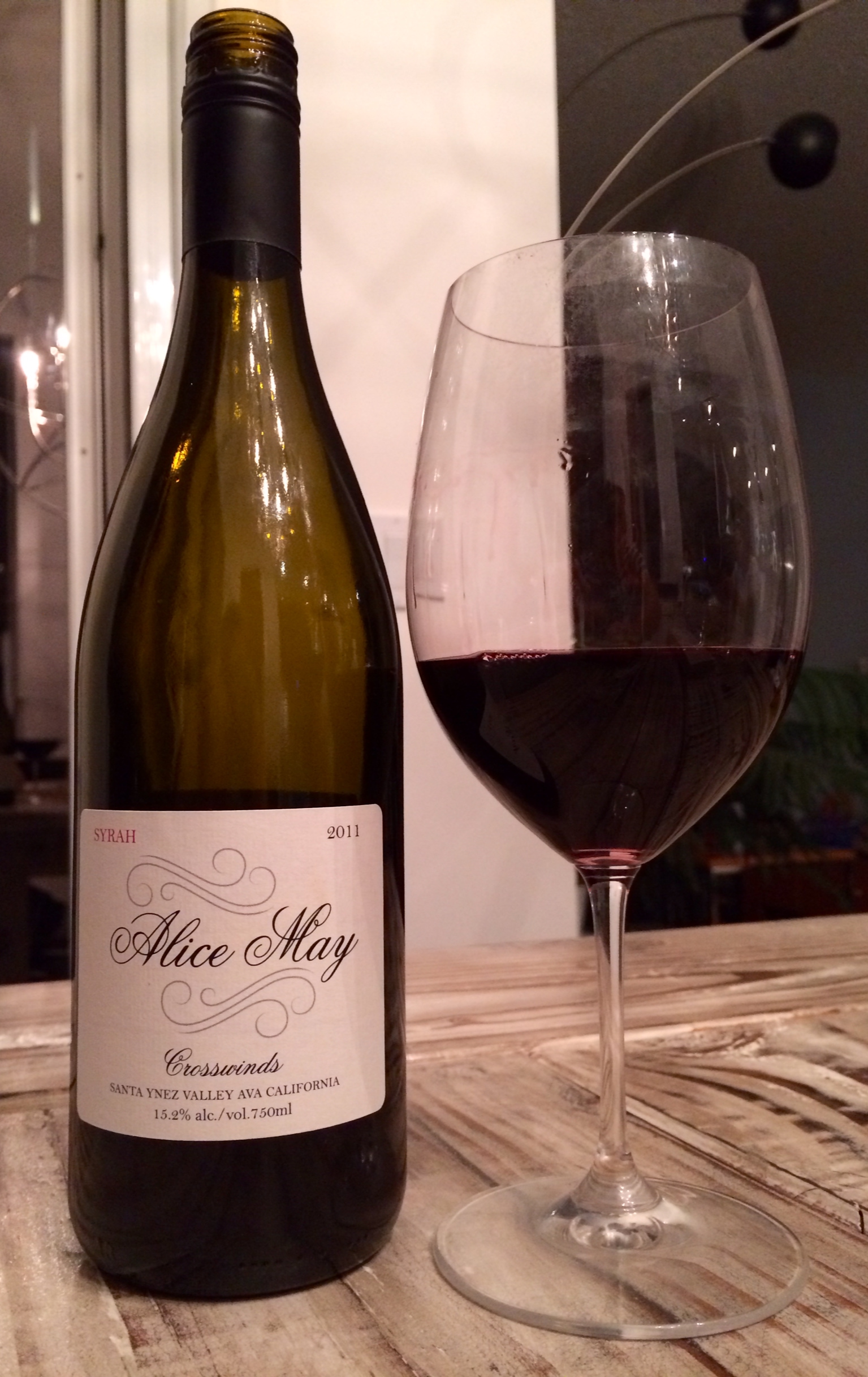
Wine Review: 2012 Alice May Crosswinds Syrah

13 08 2015

[This bottle was provided as a sample for review purposes.]

The sequel. Even more awesome.

I love when I have the chance on this site to track a wine’s development over successive vintages.  I love it even more when the wine in question has a strong local connection, something you don’t get to say very often when you’re based in Calgary.  Last year I had the chance to write up the inaugural release from Alice May Wines, a new label conceived by Calgary sommelier-turned-wine-agent Alex Good in collaboration with noted California winemaker McPrice Myers of Barrel 27 Winery.  Alice May’s stated focus was on Rhone-based varietals, and its 2011 Crosswinds Syrah was a silky, elegant Cote-Rotie style co-ferment of Syrah and Viognier that I repeatedly sought out and drank over the course of 2014.  Having exhausted my supply, I was happy to turn to the 2012 edition of the Crosswinds, and even happier that it carried the Alice May torch with aplomb. Read the rest of this entry »


Replacement Wine Review: 2012 Gerard Bertrand Grand Terroir Pic Saint Loup

6 08 2015

[This bottle was provided, for a second time, as a sample for review purposes.]

If at first you don't succeed...

If at first you don’t succeed…

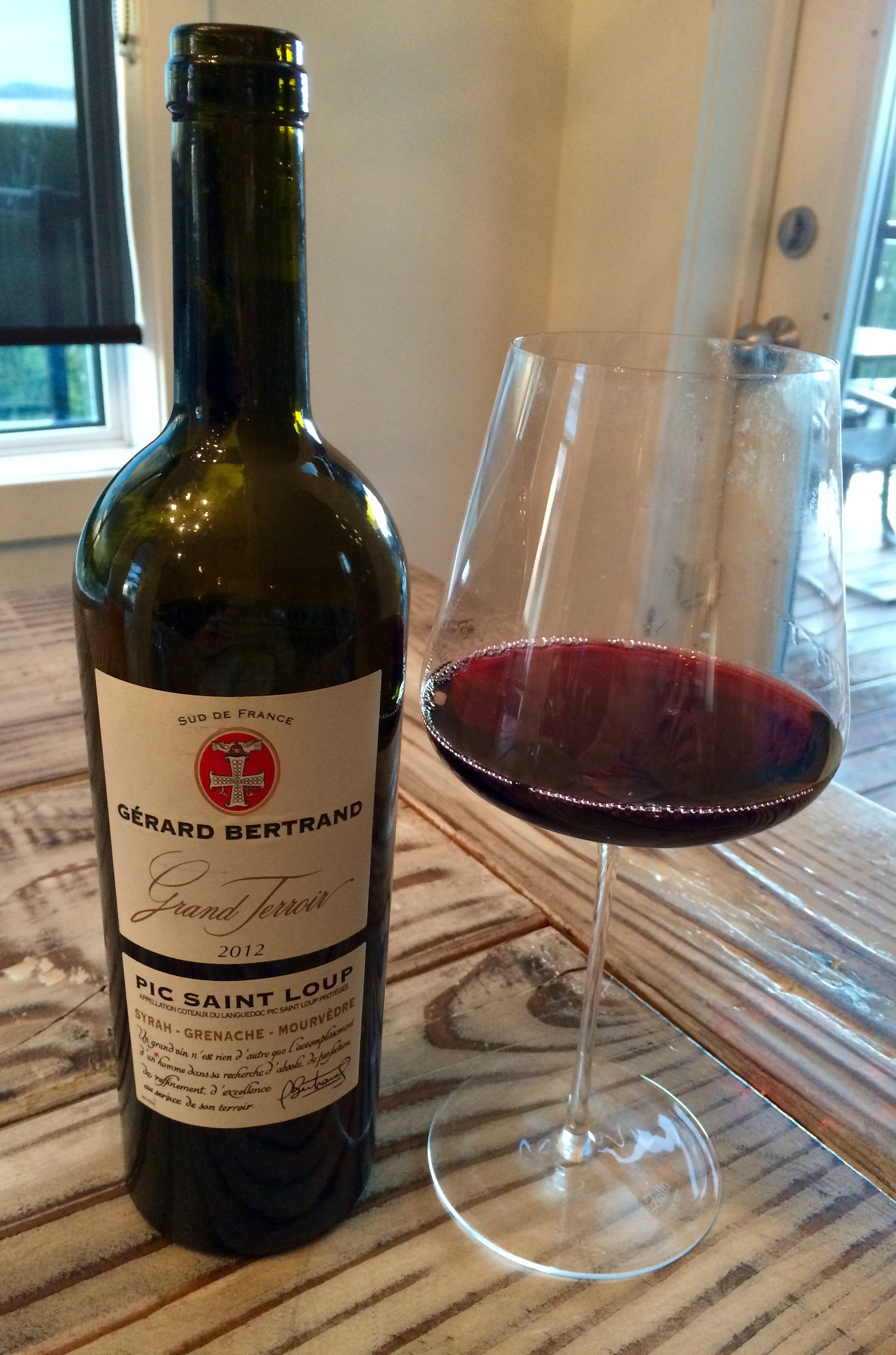
If you were reading this blog one week and two posts ago (and I’ll forgive you, if quietly resent you, if you haven’t), you will remember this bottle.  One of three contenders in a Languedoc-Roussillon Terroir Showdown, and arguably the favourite by virtue of coming from the most recognizable and lauded subregion that area has to offer (the excellently named Pic Saint Loup), this 2012 Gerard Bertrand offering instead had to be disqualified from the competition because the bottle I got was corked, affected by a musty, devious molecule called TCA that lent it a faint newspaper-left-out-in-a-Calgary-hailstorm smell and sapped it of its life and flavour.  But tonight will be different.  Tonight Pic Saint Loup gets its revenge, and its shot at glory.

Read the rest of this entry »


Calgary Wine Life: Vasse Felix Winemaker’s Dinner @ The Lake House

16 07 2015

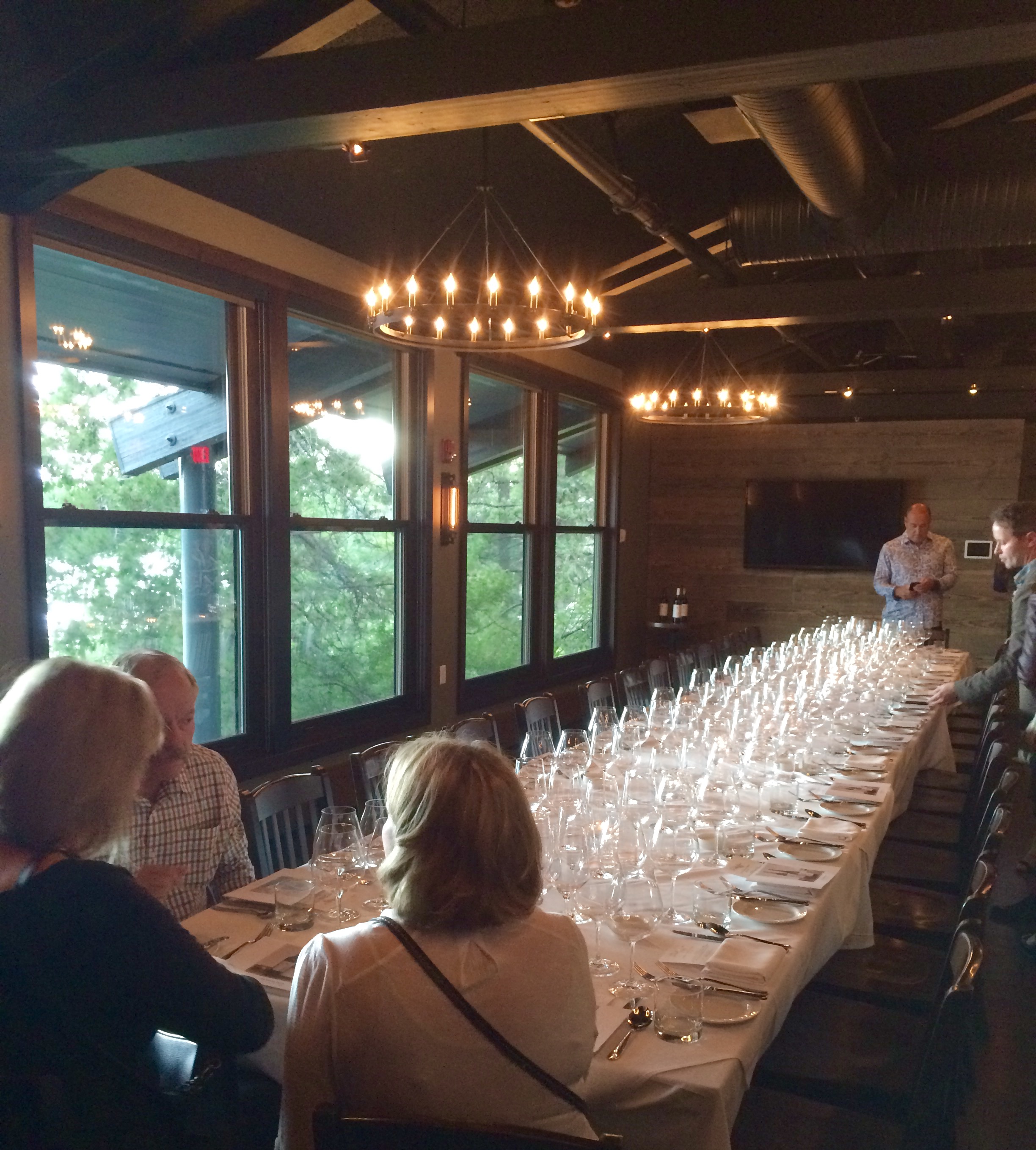
Let’s play word association.  I say:  “Australian wine”.  You immediately think — ?  You are probably lying if you don’t say “Shiraz”, and with that comes immediate images of big, lush, ripe, fruity, alcoholic reds, bursting with flavour and spice if lacking slightly in nuance.  The wine scene in Aus is certainly becoming more varied and complex as the years go on, but consumer memory changes slowly and initial impressions run deep.  That’s why one of the first instructions that Virginia Willcock, esteemed winemaker at southwestern Australia’s Vasse Felix winery, gave us about her wines was:  “Don’t call them Australian wines.  They’re not.”  At least not in the preconceived way we all think about them.

LakeHouseRoom

Vasse Felix is located in the Margaret River region, a 3 hour drive south of Perth, which is a city surrounded by, well, nothing.  Willcock calls it “the most isolated wine region in the world”, but what it lacks in proximity it makes up for in a much cooler, more temperate, maritime climate than the rest of the country, a growing season that is often compared to that in Bordeaux, and resulting wines that exhibit finesse, elegance and character, wholly unlike the fruit monsters on which Australia made its international name.  Vasse Felix is the first wine estate founded in Margaret River, established in 1967, and it produced the area’s first Cabernet Sauvignon in 1972.  It continues to specialize in Cabernet, and also in Chardonnay, both classic Margaret River varietals, and it does not produce any other types of wines.  As Willcock says, they elected to be the master of a couple trades instead of a jack of all of them (a lesson that many other New World wineries could be well served in learning). Read the rest of this entry »


Wine Review: Taittinger Nocturne Champagne (N.V.)

23 12 2014

[This bottle was provided as a sample for review purposes.]

You just can't look away.

You just can’t look away.

First things first:  this is a bit of a milestone occasion for this blog, as it marks the very first sparkling wine review in the near-250 published posts on Pop & Pour.  Actually, no — first things first:  would you take a look at this bottle!!  This thing is bling squared.  With New Year’s Eve on the horizon, Taittinger has released special “Disco” packaging of its normally slightly more sedate-looking Nocturne Champagne, and it’s about as celebratory as you can get…mine actually came with little disco ball ornaments attached.  Awesome, and totally fitting for this blog’s inaugural sparkler write-up festivities.

The Nocturne, as you may have guessed by its appearance, is a party Champagne.  It is built to be easily (and happily) consumed and shared in groups to round out an evening in style.  This is not at all to say that it’s lacking in substance, however, as the classic craftsmanship of the Taittinger name is still readily apparent.  Part of the Nocturne’s universal appeal is rooted in the fact that it receives a fairly hefty dosage (added liquid cane sugar after disgorgement), leaving some residual sweetness to lend heft and approachability to the wine’s complex flavours.  This may be the part of the review where you look at the bottle and say:  “Residual sugar?  Sweetness?  But doesn’t it say ‘Sec’ on the label?”  Um, yes…about that. Read the rest of this entry »


Wine Review: 2011 Carmen Gran Reserva Carmenere

19 11 2014

[This bottle was provided as a sample for review purposes.]

If someone made a movie about the story of Carmenere, I would watch it.

If someone made a movie about the story of Carmenere, I would watch it.

The story of Carmenere is one of my favourite stories in all of wine.  It starts, as many wine stories do, in France, where centuries ago Carmenere was one of the six varietals used to make red Bordeaux, along with Cabernets Sauvignon and Franc, Merlot, Petit Verdot and Malbec.  As French explorers set out to claim and colonize new territories outside of Europe, they often brought plantings of their national vines with them, introducing these grapes to foreign soils.  It turns out they were lucky they did, because when the phylloxera louse decimated the vineyards of Europe in the mid-19th century, it wiped out Carmenere in Bordeaux completely — today, there are only five red Bordeaux varietals.  Everyone thought that Carmenere had been tragically lost forever…and then it randomly showed up in Chile over a hundred years later.

On November 24th, 1994, the French ampelographer (actual meaning: one who identifies and classifies grapevines) Jean Michel Boursiquot was paying a visit to the Carmen vineyards in Chile when he noticed that the Merlot growing there wasn’t actually Merlot at all, but Carmenere.  The lost grape of Bordeaux had been growing in the Southern Hemisphere for more than century, but due to its vines’ and grapes’ uncanny resemblance to those of its Bordeaux cousin Merlot, everyone assumed it was the latter, particularly given the general understanding that Carmenere no longer existed.  This led to some extensive (and confusing) cross-planting of vineyards that proved extremely difficult to unwind.  Boursiquot’s epic discovery was a boon to world viticulture, and it gave Chile what it needed most at the end of the 20th century:  a wine identity, forged in what is now proudly recognized as the country’s national grape.  It was also a big help to the resulting wines:  Carmenere ripens weeks later than Merlot, and if picked early (due to mistaken identity) it can exhibit strong, and generally unpleasant, green pepper flavours. Read the rest of this entry »


Argentine Value Challenge: Punto Final

4 10 2014

[These bottles were provided as samples for review purposes.]

FullSizeRender_1

Look closely: Spanish tasting notes!

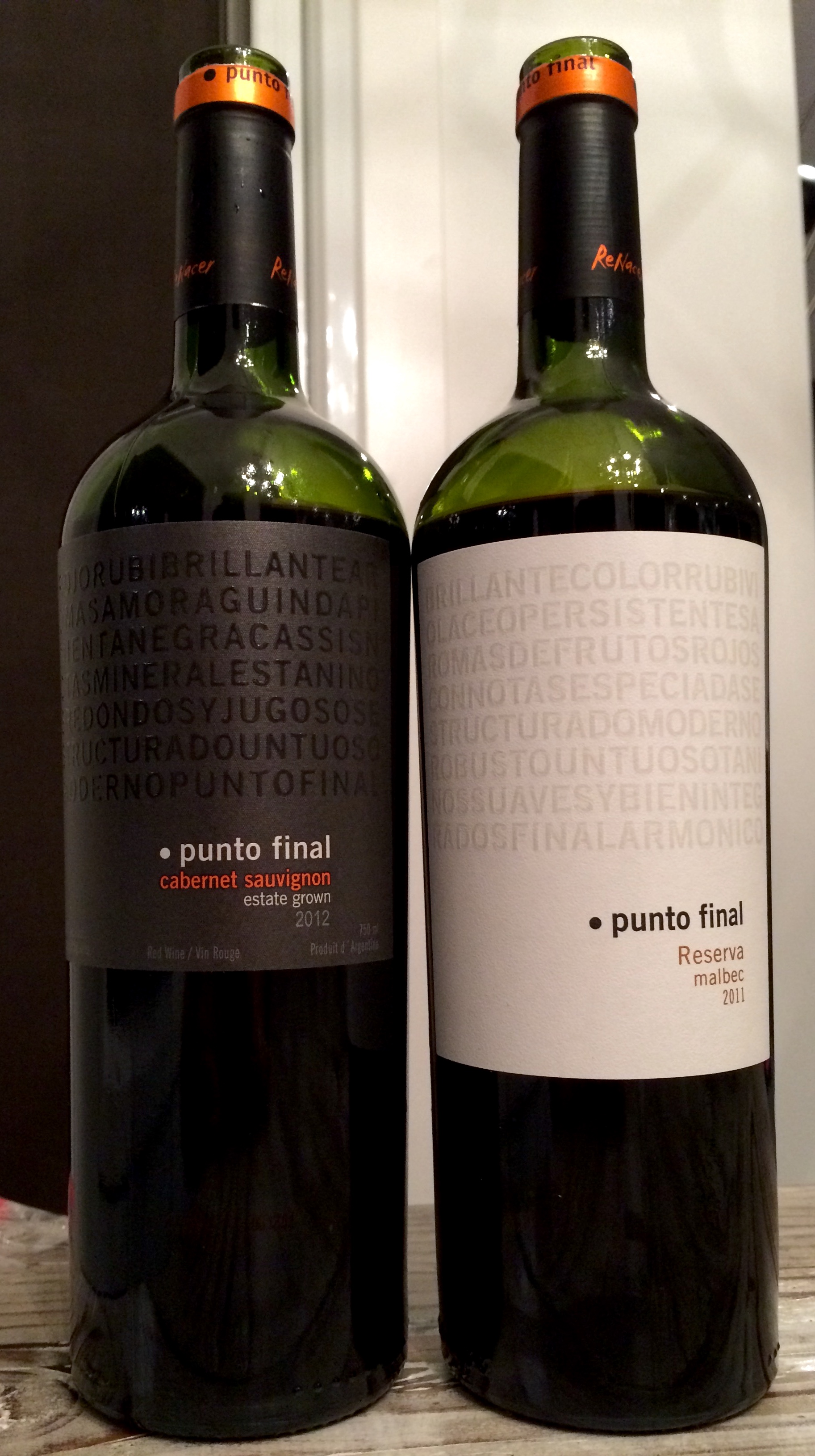
There’s a lingering question out there that will go a long way in determining the ultimate path of the nascent Argentinian wine industry:  what to go along with Malbec?  That particular Bordeaux transplant has become a global phenomenon up in the foothills of the Andes and the undisputed star of Argentina’s vinous revolution, but there are a number of grapes currently vying for the role of its trusty national sidekick.  For a while it seemed like there was a strong marketing push to obtain Malbec-like acceptance of Argentina’s most unique white, Torrontes; I recently read a Decanter tasting panel that argued forcefully that the country’s recent forays into Cabernet Franc were an absolute revelation and that this underappreciated varietal should assume the silver medal position among Argentinian producers, although the less exciting Bonarda currently occupies that slot in terms of vineyard acres planted.  And of course, there’s always Cabernet Sauvignon, the international behemoth, promising instant recognition and easy sales for anywhere warm enough for it to grow.  In my experience, if an Argentine wine is on the shelves here and it isn’t Malbec, it’s usually Cab.  And while the wine geek in me would love to see Franc seize the day, the realist in me knows that Sauvignon will be pretty tough to displace. Read the rest of this entry »


Calgary Wine Life: Torres Mas La Plana 40th Anniversary Tasting

16 07 2014

photo 4For the CEO of a global wine empire, Miguel Torres Maczassek is a pretty chill guy.  Soft-spoken yet jovial, the 5th-generation head of one of the wine world’s largest family businesses initially comes across as unassuming, but his passion for his multitude of intercontinental wine projects and his pride in the Torres family legacy shines through whenever he speaks.  Torres (the estate) has vineyards and properties across all of the major wine regions of Spain and many other countries, and Torres (the man) recently spent 3 years living in Chile running the family’s operations there, making connections with local growers and taking steps to preserve and revive some of the country’s oldest known varietals.  He was in Calgary recently to help celebrate the 40th anniversary of Torres’ flagship red, Mas La Plana, which I have had and enjoyed many times before and which is one of those rare premium wines that can still be found locally at a fairly reasonable ($50ish) price point.  We had the opportunity to track the evolution of this wine through four different decades, from the 1980s to the 2010s, and to witness firsthand the steps taken to fully realize the family’s vision for its top bottling. Read the rest of this entry »


Wine Review: 2011 Alice May Crosswinds Syrah

23 02 2014
Calgary-born, Cali-made.  YYC pride rise up!

Calgary-born, Cali-made. YYC pride rise up!

I was at the always-amazing Alloy Restaurant with my wife a few weeks ago, celebrating a rare night away from young children and talking to sommelier Alex Good about Riesling (because I basically talk to everybody about Riesling).  Suddenly he said:  “Hang on.  I have something for you to try.”  He returned with a glass of deeply coloured, powerfully aromatic, eminently interesting red.  “What is it?”  “It’s a Syrah/Viognier co-ferment from Santa Ynez Valley in California.  Cote-Rotie style.”  “Who’s the producer?”  “Well, me.”  It turns out that Good (who has since left Alloy to become a partner and sommelier at the equally excellent downtownfood), in his limited time away from the restaurant biz, had partnered with Cali winery Barrel 27 and its winemaker McPrice “Mac” Myers to create a new label geared toward artisanal, small-run, Rhone-influenced wine.  The 2011 Crosswinds Syrah is the inaugural effort of this collaboration, and although the grapes are all from California, the label name is a clear nod to the venture’s northern soul:  the Alice May is the name of the ship that became the title character’s funeral pyre in the classic Canadian poem The Cremation of Sam McGee.  Only 100 cases of the Crosswinds were made, almost all of which came to Alberta and most of which are now gone.  Syrah is my second vinous love after Riesling, and homegrown efforts like this are such rare finds in the Calgary wine world; both the wine and the story were so intriguing that I set out to find a bottle as soon as our meal was over.  I’ve gone back to find more multiple times since then.

Read the rest of this entry »


Calgary Wine Life: Wines of Portugal Tasting @ Market

7 11 2013

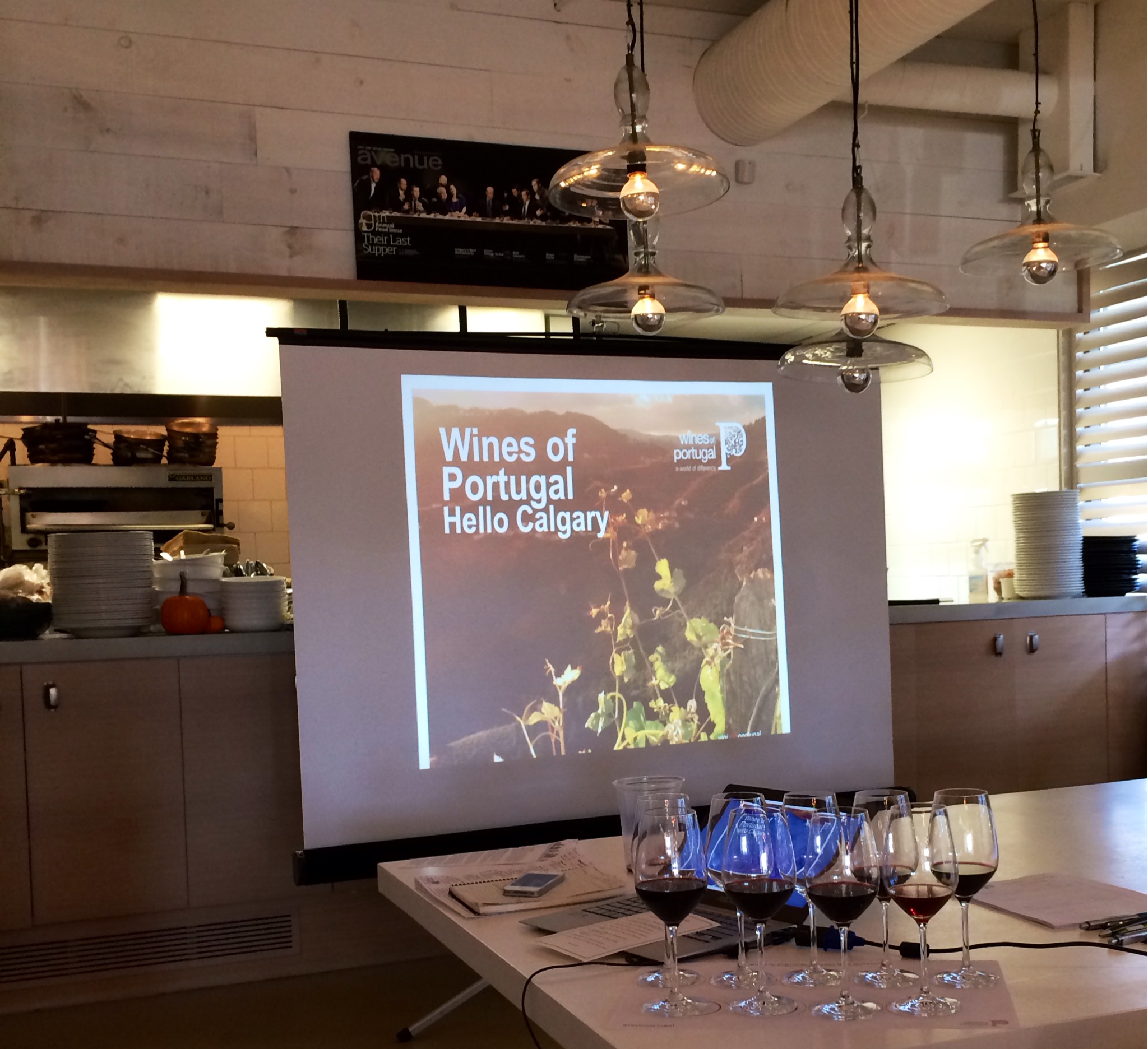
It appears to be Underappreciated Wine Region Month here at Pop & Pour.  Last week I was exposed to the new wave of bottlings coming out of the southern Italian island of Sicily; this week it was Portugal, another unheralded European wine area, that was aiming to bring its remarkable wines to the attention of international export markets.  I got the opportunity to sit in on a guided tasting put on by the Wines of Portugal and led by energetic and well-versed sommelier extraordinaire DJ Kearney, who brought us up to speed on everything from the number of indigenous grape varieties found in Portugal (250+) to the proper pronunciation of key Portuguese wine terms (hint:  if it ends in an E, don’t pronounce the E, no matter how much you want to).  The tasting was held at Market Restaurant on 17th Avenue, which I had never been to before but which proceeded to serve us an absolutely stellar three-course lunch that will be reason enough to bring me back very soon.

image-9

It was sort of fitting that I got to experience Portugal’s wine story after sitting in on Sicily’s, because the two regions have much in common.  Both are home to large numbers of local grape varietals that are barely found anywhere else, and both have made the conscious choice to embrace these lesser-known grapes and focus their quality production around them.  As a result of a lack of name recognition and a dearth of critical attention on these under-the-radar wines, both can offer tremendous value for money for those consumers brave enough to take the plunge (I think Portugal might win the worldwide gold medal for these kinds of bargains).  And both tend to focus more on wines that are blends of multiple different grapes as opposed to single varietal offerings, with Portuguese wine in particular almost always a group vinous effort as opposed to a solo act.  Kearney channeled her inner Wino Karl Marx when talking blending, urging us through these wines to shed the shackles of varietal typicity and embrace the communal symphony of these intrepid groups of local grapes (featuring reds Touriga Nacional, Touriga Franca, Tinta Roriz [aka Tempranillo] and Baga, and whites Alvarinho [aka Albarino], Arinto, Encruzado and many more) all working together to make something greater than themselves.

Read the rest of this entry »


Calgary Wine Life: Sicilian Master Class @ Theatre Junction Grand

31 10 2013

Quick:  name a Sicilian wine producer.  Did you say Planeta?  Me too.  Name another one.  To my embarrassment, I couldn’t.  My list of known Sicilian producers ends at one.  This fairly sizeable void in my wine knowledge is particularly galling because, believe it or not, Sicily is the biggest wine-producing region in Italy:  it actually produces more wine per year than Australia, more than Chile and Bordeaux combined.  So why does it continue to have such a low profile?  Because, up until recently, the wine produced was not generally of high quality and was often sold off in bulk to other parts of the country instead of bottled on its own.  Even now, less than 20% of Sicily’s annual production is bottled for individual sale, and only 5% or so comes from a legally designated DOC region.  But there is currently a quality revolution underway in Sicily, one that has been brewing since the 1980s and that has seen many longstanding producers forego high yields and the sale of their crops by the ton in favour of more meticulous growing and winemaking practices and the creation of better wines under their own labels.  This week I got the chance to witness this transformation midstream.

image-7

Read the rest of this entry »


Calgary Wine Life: The YYC Corkage Primer

25 07 2012

[Cross-posted at www.calgaryisawesome.com]

Time to BYOW, YYC. OK?

Corkage has been a hot topic in Canada recently, thanks to last week’s announcement from the British Columbia government (finally) allowing diners to bring their own bottles of wine into participating BC restaurants.  Here in Alberta, restaurants already have the ability to establish Bring Your Own Wine (BYOW) policies, and many have done so, generally charging a set per-bottle fee (called the corkage fee) in exchange for letting their guests arrive with their vino of choice.  Although this option is widely available in Calgary, it seems like it’s only rarely exercised, as most people either don’t know about the possibility of corkage or would prefer to trust in the carefully-selected wines that a restaurant puts on its own list.  While I usually fall into the latter category, there are certain times — when I have a certain bottle that I’ve been dying to open, when I’ve had a less-than-stellar past wine experience somewhere, or when I want to bring a Wine For An Occasion to celebrate something special — where corkage comes in really handy.  If you’re not sure about how the corkage process works, what the etiquette is around bringing your own bottle, and which places in Calgary offer BYOW service (and for how much), all your answers await below. Read the rest of this entry »


Calgary Wine Life: Vin Room with @TylerOnWine

11 12 2011

My real life, my wine life and my Twitter life collided awesomely this weekend, as I was lucky enough to spend Saturday afternoon tasting and discussing various wines with fellow vino blogger Tyler Philp over meat, cheese and tapas at Vin Room, located just south of downtown Calgary.  Tyler is the founder of North of 9 Fine Wine and its corresponding wine blog, an official Sommelier, and a prior PnP collaborator:  he’s the other half of the Tasting In Stereo simul-review posting that appeared on both our sites back in August, something that will hopefully be a semi-recurring PnP/North of 9 joint feature.  Outside of his vinous pursuits, Tyler is an Airbus pilot, and it was thanks to his day job that he had 24 hours or so to kill in YYC.  Given the chance to put a face to a Twitter handle, I jumped at the opportunity to meet for lunch.  But where to take a wine-obsessed visitor to my fine city?

Foreshadowing Cork Rating: 8/10 (The cork for our dessert wine below - love the horizontal writing, love the lion, love the cork.)

I opted for Vin Room on 4th Street and 23rd Avenue SW, partly because I’d never been before and wanted to try it, and partly because they’re probably the best bet in the city for getting a wide range of wines by the glass.  Even better, as we discovered, is that all the by-the-glass wines are also available in tasting-sized portions, which meant that instead of having 1 or 2 glasses over the course of lunch, I got to have 5 or 6 (without having to stumble home).  This “small glasses” approach worked amazingly with the small plates that made up Vin Room’s food menu:  you don’t normally expect to get to pair every dish of a tapas meal with a proper wine match, but believe me, it’s a treat.

Read the rest of this entry »