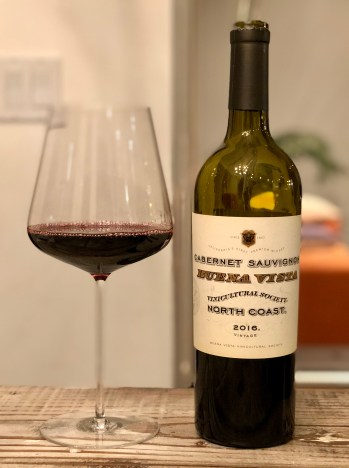
Wine Review: 2016 Buena Vista North Coast Cabernet Sauvignon

17 10 2018

By Peter Vetsch

[This bottle was provided as a sample for review purposes.]
IMG_8980

A rare sighting.

The $25 California Cabernet Sauvignon is an endangered species nowadays; once a stalwart gateway drug for luring novice wine drinkers into a lifetime of vinous enlightenment, it has now been superseded in that endeavour by numerous other New World crowd-pleasers that are managing to offer similarly accessible and overt pleasure at wallet-friendlier prices.  The combination of rising land costs, fire- and drought-inspired production difficulties and the utter shredding of the Canadian dollar as compared to the US greenback on world currency markets has more or less eliminated California as a source of solid value wine in our market.  Buena Vista Winery is trying to change that, but with this series of factors arrayed against it, it’s fighting an uphill battle.

I have previously written about the remarkable, riotous, barely credible but actually true history of Buena Vista, the proud owner of the label “first commercial winery in California”.  It is well worth refreshing your memory about, but the Coles Notes version must at least mention:  (1) Agoston Haraszthy, who may have been the first Hungarian to emigrate to the United States, who founded the winery and who essentially crammed six lifetimes of zaniness and adventure into one shortened 19th century thrill ride; (2) 1857, the year Haraszthy founded Buena Vista, part of a major ambition to establish high-quality vitis vinifera grapes in hospitable California soils; (3) Nicaragua, where Haraszthy fled barely a decade after Buena Vista was first established, with angry and misled company investors potentially at his heels; and (4) alligators, which apparently ate him there.  Never a dull moment at Buena Vista in the 1850s and 60s. Read the rest of this entry »


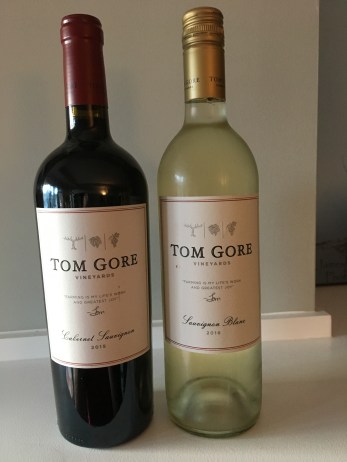
Wine Review: Tom Gore Vineyards, A Tale of Two Sauvignons

14 07 2018

By Raymond Lamontagne

[These bottles were provided as samples for review purposes.]IMG_1713

Cabernet Sauvignon remains the most widely grown quality wine grape in the world, so it is perhaps appropriate that in at least one regard, “Cab” started me off on the path to becoming a serious scholar of wine.  I had previously acquired a taste for certain Canadian Gewurtztraminers, spellbound by how a grape could smell and taste so exotic, although hard-won experience has taught me that many such wines recall one of those chemically augmented gym nuts who can flip a giant tire from a mining truck once or twice, only to catastrophically gas out immediately thereafter: initially powerful but ultimately quite flabby.  Rather wary of this focus, I then snagged a few wine books from a local book sale, thinking that this subject’s unique combination of history, geography, botany, technology, and gustatory delight would give my brain something new and compelling over which to obsess. I noticed right away that in these sundry tomes, blackcurrant or cassis was an aroma descriptor frequently associated with Cab. As someone who adores this particular flavour, I did further research. Not just cassis, but cedar, “cigar box” (I’ve always been intrigued by this one), blackberry, even vanilla and cola and chocolate cake. Wine smells like these things?! I was officially hooked, all this before even seriously tasting a Cab.

Once the actual drinking started in earnest, I rapidly encountered one of Cab’s parents: Sauvignon Blanc. My dad ordered a New Zealand example one nice evening in a Calgary steakhouse, as an aperitif, telling my mother:  “It’s one of those really grapefruity ones you like.” Grapefruit, you say? A cursory look at a tasting wheel for Sauvignon Blanc ultimately reveals a whole litany of “green” aromas, with these ultimately outnumbering the also prominent citrus and sometimes tropical fruits. There are classics like grass, gooseberry, and green bell pepper, along with rather more esoteric takes such as matcha, lemon grass, apple blossom, or even “cat pee”. Maybe we should stick with grapefruit or “tomato leaf”. Go crush and sniff a tomato leaf… You’ll probably get at least an inkling of pipi du chat, if nothing else in the form of a vague association with “funky” or “rank”. Some claim that this character, driven by organic compounds called thiols, is in fact a fault due to vineyard overproduction. Maybe so, although I experience cheap Sauvignon Blanc as something more akin to dilute lemonade in which a few broken fluorescent bulb filaments have been macerated, largely devoid of character across the board. A quick spray of thiols would often do this stuff a favour.

Sauvignon-Blanc-grape-variety-wine-aroma-profile-flavors-fruit-spices-Social-Vignerons

From http://socialvignerons.com/2015/12/10/infographics-guide-to-sauvignon-blanc-wine-grape-variety/.  This thing is comprehensive and rather fascinating…and there it is, cat pee, complete with schematic depiction.

So in addition to capturing aromas that I find pleasant (maybe at this point forget I mentioned cat pee), Cabernet Sauvignon and Sauvignon Blanc are both associated with formative memories in my quest to experience as much of the wine world as possible. Fitting then that I drew this assignment to review these two varietal bottlings, which interestingly enough hail from the first California wine label named after a grape grower.

Read the rest of this entry »


Wine Review: Red Blends of the Eternal Ice Age

20 03 2018

By Peter Vetsch

[These bottles were provided as samples for review purposes.]

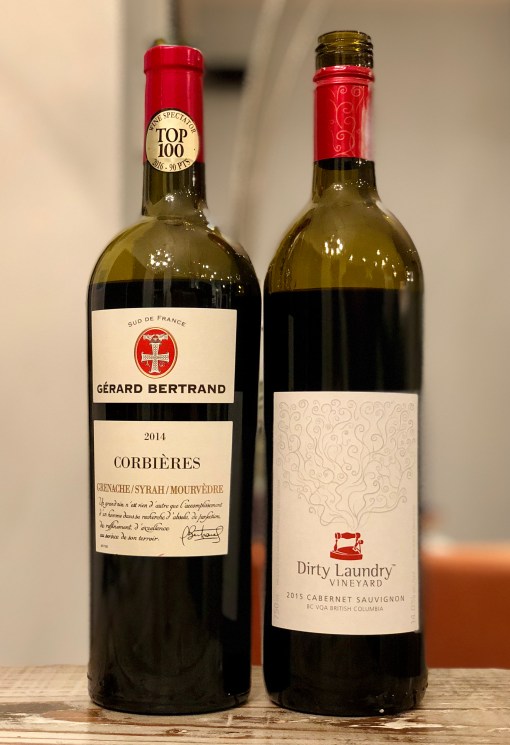
Happy first day of spring.  Spare me.  Yeah, I’ve seen all of the (obviously non-local) articles and Instagram pics and Twitter updates about new rosé and bubble releases and patio beers and T-shirt weather.  Meanwhile I have snowbanks bordering each side of my driveway that are taller than each of my children and still see the minus sign side the thermometer heading to work every morning.  It’s supposed to snow again on Thursday morning and there is no god and we are in some kind of forsaken meteorological time loop that will have no end.  So forget you, frizzy pink refreshing splashes and dainty Prosecco; I’m gearing up for blustery Armageddon, armed with a pair of full reds that scoff at the entire concept of spring.  I need to find joy somewhere, after all.

IMG_7747

Forget you, “spring”.

2014 Gerard Bertrand Corbieres (~$20)

I know from past experience that Gerard Bertrand is a value wine savant, and that his legend in the south of France is ever-growing.  I also knew that this particular bottle of Corbieres, part of his “Terroirs” regional collection of bottlings, hit the wine awards mother lode in 2016 by landing the #55 spot in the much-anticipated Wine Spectator Top 100 list — not bad for a $20 bottle from a little-known region.  What I didn’t know about Bertrand was that he was a prodigious professional rugby player before he followed in his family’s footsteps and turned to winemaking, even juggling a pro career with vigneron duties in the aftermath of his father’s death as he took over the reins of his ancestors’ business.  He has now hung up the cleats for good but brings some of his sport’s scrappiness to all of the wines that bear his name.   Read the rest of this entry »


Wine Review: Winter Warmers, Part 1

23 02 2018

By Dan Steeves

[These bottles were provided as samples for review purposes.]

The end of February is slowly approaching and we are less than a month away from the first day of spring. That means warmer weather is in our sights and we soon won’t have to deal with any more snow, right? That might be wishful thinking, but we can certainly hope it is the case! Until that warmer weather shows up and takes permanent residency in the prairies, we will need to keep staying warm and spending our evenings huddled around the fireplace with a nice glass of full-bodied red wine. Although I personally drink all types of wines all throughout the year (nobody should deprive themselves of rosé for months on end), there is no doubt that I enjoy more red wines over the cooler winter months, not only for the warming effects of a 15% ABV Cabernet Sauvignon, but also because we tend to eat more hearty full-flavoured comfort foods during this time and less light and refreshing fare.

To get you through the next month until you start seeing green on the ground, we have reviewed a few robust red wines that will be great at keeping you warm and satisfied until the spring flowers start blooming. We kick off this two-part series with reviews of great value reds from two regions known for their big red wines:  Bordeaux, France and the Colchagua Valley, Chile.

Read the rest of this entry »


Co-op Wines: The Social Collection, Bin 101

12 02 2018

By Peter Vetsch

[This bottle was provided as a sample for review purposes.]

IMG_7510

Get Social.

Negociant-style wines have long been a staple of the Old World wine economy:  instead of a winery planting, tending and harvesting a vineyard then using those estate-grown grapes to make wine, an enterprising producer or brand instead either buys grapes from a grower for use in their own winemaking or, more simply, buys already-made wine from a winery that is maturing in barrel or bottle and then sticks their own label on it. This may not accord with the most romantic notions of pastoral family-farmhouse wineries that automatically spring to mind when we think about the industry in the abstract, but it has a ton of advantages as a full-estate alternative, mostly tied to the division of labour.  To create and sell your own wine, you no longer need to own any land, purchase expensive wine-making equipment (or wine-aging vessels – do you have any idea how much oak barrels cost??) or have any winemaking education or expertise; you just need to get contact with the right subject-matter experts and have a vision for how to make it all come together cohesively.  The negociant approach drastically reduces barriers to entry in the wine production industry and also provides an additional market for those who grow grapes or operate winery facilities, and while it has always been a part of the industry in the New World, it now seems to be taking on an increased presence, particularly in the realm of branded grocery store wines.

IMG_7511

Ultra-transparent for a Cab!

This is actually not a new topic to this blog — a few years ago, I had the pleasure and challenge of trying to dig behind what was behind the cover label of the PC brand of wines, which resulted in some truly entertaining (if somewhat strange) juice.  Now Co-op Wine and Spirits has released its own lineup of sommelier-curated negociant wines called The Social Collection, sourced from around the world and targeted towards “the socialite and modern wine drinker”.  Translation, I think:  these are mainstream wines intended for easy enjoyment while still striving to properly represent their varietal and region at a wallet-friendly price.  I was sent a trio of examples from this new branding effort to taste and decided to make a group event out of it.  Dan and Ray will taste and report on a couple of subsequent Co-op releases later in the week, but I’m kicking things off tonight from where it all started for The Social Collection:  Bin 101. Read the rest of this entry »


Wine Review: 2012 Torres Mas La Plana

16 10 2017

[This bottle was provided as a sample for review purposes.]

IMG_6952

Cabernet royalty.

It’s Calgary municipal election night, so my plan was to put off this review until tomorrow.  Then I sat here for 10 minutes biting my fingernails and hitting “refresh” on the election results page on my phone every 60 seconds and realized that (1) the next four years of my civic life weren’t about to reveal themselves anytime soon and (2) I could use some guaranteed good news tonight regardless of political outcome.  And nothing screams “guaranteed good news” like the flagship wine of Miguel Torres, the most consistent larger-production winery I know.

If you have a photographic memory of this blog, you may remember that I have told the story of Mas La Plana once before; if you don’t, you can take solace in the fact that I almost didn’t remember this fact myself.  Nothing about this wine is quite as expected.  It is 100% Cabernet Sauvignon from Penedes, the heartland of Cava in eastern Spain near Barcelona, an area not remotely known for big red wines but blessed with numerous altitudes and microclimates that allow for pockets of warmth and create opportunity for special sites like the one that birthed this bottle.  It hails from a 29-hectare single vineyard planted before I was born, from Cab vines introduced to Spanish soil between 1964 and 1979 based on cuttings from numerous prior homes, including 1st Growth Bordeaux chateaux.  It looks strangely at home in a Burgundy bottle, unlike any other Cabernet Sauvignon I have seen on a shelf.

IMG_6955

Penedes was the first region in Spain to start using modern winemaking techniques like stainless steel temperature-controlled fermentation, and Torres uses them to great effect here to create a bottle that seamlessly communicates Spain’s history and potential to a global wine world, that imbues the Earth’s most ubiquitously successful commercial grape with the essence of the Torres family’s heartland.  Mas La Plana tells a story that was heard almost immediately, as the wine’s inaugural 1970 vintage beat out Chateau Latour and numerous other luminaries in the Cabernet category of French magazine Gault-Millau‘s 1979 Wine Olympics (which weirdly was the exact same competition that put Oregon Pinot Noir on the world map thanks to Eyrie Vineyards’ stellar showing against the best of Burgundy).  Yet it still retains its humble family roots:  its neck foil reads “Vinetum Paganicus”, a term sometimes used to designate top wines but which to the best of my meagre Latin translation ability appears to simply mean “vineyard of a village”. Read the rest of this entry »


Wine Review: Buena Vista Social Club

16 08 2017

[These bottles were provided as samples for review purposes.]

If there was a Most Interesting Man In The World designation for the history of wine, Agoston Haraszthy would be a strong contender for the crown.  I had previously come across his name in a book about the pioneering contributors of the California wine industry and had assumed that he was one of many 19th-century immigrants from Europe to the United States who brought Old World wine knowledge and tradition with him to his new home and helped it propagate.  And he was.  But his tale was anything but rote.

FullSizeRender-700

Haraszthy was born in Hungary to a noble family in 1812, later becoming known by the honorifics “Count” and “Colonel” even though he was technically neither.  He carved his own path throughout his life, stringing together a series of firsts that would be near-impossible to top in this day and age.  He was the first Hungarian to move and settle in the United States; the founder of the oldest village in Wisconsin (and the planter of some of the first grapevines there); the first town marshal and elected sheriff of San Diego; and the founder of the first commercial winery in California (more on that in a bit).  From the time he first arrived in the United States in 1840 to the time he left in 1868, he was at various times a mill owner, an author, a steamboat operator, a butcher, a member of the California State Assembly, and a gold refiner and assayer at the US Mint.

Read the rest of this entry »


Wine Reviews: Red ShowDownUnder

13 06 2017

[These bottles were provided as samples for review purposes.]

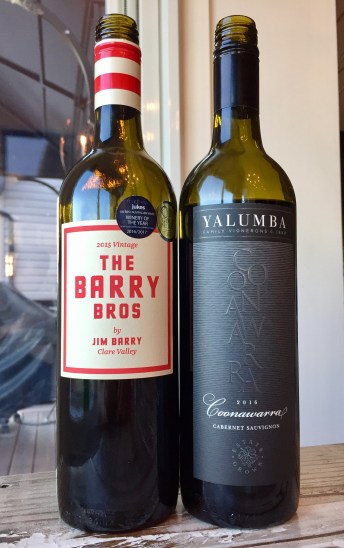
FullSizeRender-646I first got seriously into wine about 10 years ago, when the Australia Phenomenon was in its heyday and Argentinian Malbec was just a glint in some clever investor’s eye in Mendoza.  Yellow Tail Shiraz was my gateway drug, a fact that is assuredly true of more than one of you currently reading this as well.  Looking back now on the Australian wine scene then, there are still tons of similarities.  Critter wines, like it or not, are still a thing. On the quality pinnacle, the high-end wines from Down Under rocking people’s worlds in 2017 aren’t that different from those doing so in 2007.  But I’ve noticed a couple clear differences in the imports from Australia that have evolved over the last decade:  first, a welcome explosion of site-driven elegance from the cooler areas of the country, be it Pinot from Yarra or Mornington or bubbles from Tasmania or the laser purity of some of the post-modern wines coming out of the Adelaide Hills.  Second, a new focus on bottles like the ones below, step-up bottlings, a shade above entry-level in price and a world above the critters in authenticity and quality.  The $20-$30 tier of wines has never had stronger representation on our shelves from Australia than it does currently, as more and more producers zone in on these bottles as the best way to build a lasting relationship of trust with consumers as opposed to an $11 fling.

So what better way to celebrate how far Australia has come as a mature wine producer, and how far I’ve come in my 10 years of Yellow Tail-catalyzed oenophilia, than by lining up two step-up bottles, each from highly respected multi-generational family wineries and legendary regions, and tasting them side-by-side?  It’s not about picking a winner — the mere fact that the exercise is possible is a win in and of itself — but I’m sure that won’t stop Jim Barry and Yalumba from exerting full effort in this battle of reds under screwcap.  Let the showdown from Down Under begin. Read the rest of this entry »


Burrowing Owl Fall Release Set

12 11 2016

[These bottles were provided as samples for review purposes.]

Burrowing Owl Fall Release Week is quickly becoming one of the highlights of the Pop & Pour blogging calendar.  The winery is highly engaged with consumers and media alike and  is ahead of the game in terms of finding new ways to get its wines into the collective consciousness, and its renown is expanding well beyond its home province of BC as a result.  When the season’s current releases arrive in Calgary around harvest time, I’m ready to do my small part to spread the word.  Bring on the new vintages!

fullsizerender-462

A glorious Pop & Pour fall tradition.

Burrowing Owl is an Okanagan Valley stalwart, and it’s become such a ubiquitous part of the region that it’s easy to forget the winery is less than 20 years old.  The story started in 1993, when founder Jim Wyse replanted a series of vineyards between Oliver and Osoyoos in the extreme southern Okanagan.  There were no immediate plans to build a winery, but Wyse’s vision expanded once he saw the quality of the new grapes.  Burrowing Owl’s first vintage was 1997, and construction on the gravity-flow winery and massive underground cellar on the property was completed in 1998.

fullsizerender-468

 Initially focused on Cabernet Sauvignon, Merlot, Chardonnay and Pinot Gris planted on a single 130-acre site, Burrowing Owl is now up to 14 different planted varietals on 170 acres of estate vineyards in three different sites. It is no accident that the winery is named after the rare underground-nesting owl that was declared extinct in British Columbia in 1980 but is now back on the upswing due to the dedicated conservation efforts of a small group of individuals:  Wyse is one of those individuals, having contributed significant amounts of both time and money to the burrowing owl’s preservation.

fullsizerender-472

Stelvin Rating: 8/10 (Love the colour, love the side pattern and smoothness; not a huge fan of the top embossing.)

 This year I was fortunate enough to have the opportunity to try a sextet of different bottles from the Burrowing Owl 2013 and 2014 vintages, including return engagements with a couple of wines I had in last year’s releases, the Cabernet Sauvignon and the particularly eye-opening Syrah.  Let’s see how the fall 2016 lineup compared, starting with my introduction to one of Burrowing Owl’s founding whites:  Chardonnay.

Read the rest of this entry »


2013 Emiliana Novas Gran Reserva Carmenere/Cabernet Sauvignon

13 10 2016

[This bottle was provided as a sample for review purposes.]

fullsizerender-430

Chile: home of Carmenere and inexpensive quality.

If you were starting up a wine venture today and were looking to maintain high quality but stretch your viticultural buck as far as possible, you would almost certainly go to Chile.  While braver souls are now starting to venture to the more extreme climatic and geographical parts of the country in search of cutting-edge lands and the flavour potency and complexity that can come with them, those who stick to Chile’s warm central valley find themselves in something close to a grape-grower’s paradise:  warm, mild, consistent growing seasons, refreshing cooling breezes at night off the surrounding mountains and a relative lack of vineyard pests.  Since the Southern Hemispheric nation is fairly segregated from the rest of the world’s vineyard (with its closest main viticultural neighbour, Argentina, walled off by the Andes), it has managed to keep itself free from the devastating vineyard louse phylloxera, which has ravaged vines almost everywhere else and has required the bulk of the world’s wineries to graft their vines onto resistant North American rootstocks to allow their crops to survive.

What does all that mean from a commercial perspective?  It means that you can have a vineyard with a lot of beneficial, normally highly costly or dangerous features — organic viticulture, no pesticides or herbicides, own-rooted vines — without the associated price tag or risk of crop loss.  That allows you to make bottles like this one, a single-vineyard wine from 25 year-old vines planted on their own rootstocks, farmed organically and then hand-harvested, and then sell it to export markets at a shade over $15 a bottle.  That combination of price and input quality is basically impossible in the majority of the wine world. Read the rest of this entry »


Return of The Mules: Torres Summer Values

12 06 2016

[These bottles were provided as samples for review purposes.]

It’s been so long since I sat down and wrote a straightforward normal wine review that I’m having trouble remembering how to start one.  Thankfully, I’m aided by an old PnP standby:  if they’re not there already, the Torres family of wines has to be close to the record for largest number of individual write-ups on this site, aided in part by their broad-based dual-continent operation and vast lineup but mostly by their consistent ability to deliver quality and identity for less than you’d expect.  I made the mistake last year of prejudging their “Las Mulas” line of entry-level Chilean wines by its lighthearted name and beast of burden on the label, only to be reminded by the emphatically delicious Las Mulas Rose that Torres takes all its wines seriously.  This year, with the Sauvignon Blanc and Cabernet Sauvignon from the Las Mulas brand, I will not make the same error twice.

FullSizeRender-375

The wines for Las Mulas come from Chile’s warm, flat and fertile Central Valley, where the benign climate and the absence of most common vine diseases make it the country’s most productive and most popular grape-growing region.  This can be both a good thing and a bad thing:  obviously getting your crop to ripen without heroic efforts is a benefit, but wine grapes specifically tend to derive much of their flavour concentration and character from having to struggle a bit to grow, and when they’re deprived of that opportunity to strive the results in the glass can be flat and uninteresting.  To combat the Central Valley’s generosity, Torres planted the Las Mulas grapes on nutrient-poor soils and entirely avoided the use of herbicides or pesticides (the vineyard sites are certified organic).  The vineyards are wholly hand-harvested, with nary a machine in sight, making this New World wine done in old school ways…yet somehow still hovering around the $15 CAD mark on the shelf.  Each of the offerings below cleared by (pre-primed) expectations for that price point with ease. Read the rest of this entry »


Wine Review: Jim Barry Value Red Showdown

13 01 2016

[These bottles were provided as samples for review purposes.]

I'm not making up the vertical/horizontal label dichotomy, right?  Totally something thematic there.

I’m not making up the vertical/horizontal label dichotomy, right? Totally something thematic there.

Australian wine is in sort of a weird place right now.  I first got into wine during the Great Shiraz Rush just over a decade ago, when critter wines ran rampant and the overtly ripe, sweet, boozy style and approachable branding of big-name Aussie Shiraz rolled over the global wine scene like a tsunami, spawning copycats galore and creating ripples that are only now just starting to settle.  The behemoth brands at the front of this wave are mostly still around today, and their bold, fruity, slightly concocted style certainly retains its share of popularity with casual drinkers, but the world has moved on to other phenomena and the scene in Australia seems caught in aftermath phase, not wanting to totally abandon what brought it to global prominence but understanding that its long-term prosperity is likely tied to being something more than liquor store filler.  The country is taking steps to avoid being a one-hit wonder, surprisingly churning out some of the best Riesling you’ve never tried, finding cooler pockets for Pinot Noir and (especially in Tasmania) sparkling wine, using its plentitude of remarkably old vines to its advantage, and dialling its Shiraz back a notch or two while still keeping it lush and appealing to New World palates.  It is also finding stronger and more quality-focused expressions of its value wines which are less industrial commodities and more genuine expressions of grape and place.  This is where Jim Barry comes in.

This family-owned producer is now run by second-generation executive winemaker Peter Barry, the son of eponymous founder Jim, who was the first qualified winemaker in South Australia’s Clare Valley, where the winery is based.  Its tailored lineup of wines runs the gamut from dynamite supermarket bargains (see below) to one of Australia’s very best and priciest bottles, The Armagh Shiraz (as experienced by me in one of my favourite tastings ever).  I was first converted to the Jim Barry cause a few years ago when I bought the Cover Drive Cabernet Sauvignon on a whim because of its circus-tent striping on the neck foil and the cricket player on the main label and was wowed by what I found inside.  I could be wrong, but by its participation in the JB value red duel below, I believe Cover Drive becomes the very first wine in PnP history to be reviewed in three separate vintages, following its write-ups here and here.  Can it hold off a spirited challenge from its neck-striped brother, the Lodge Hill Shiraz?  Let’s find out. Read the rest of this entry »


Multi-Wine Review: Calliope/Burrowing Owl Octet

24 11 2015

[These wines were provided as samples for review purposes.]

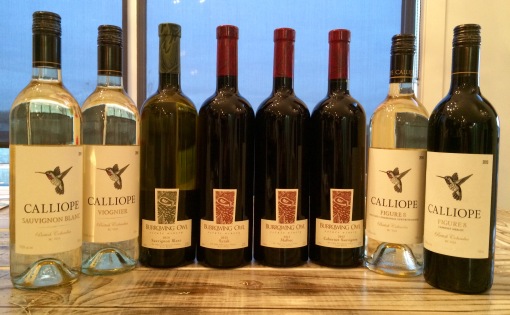
No time to spare for a huge intro tonight, as we have a whole whack of impressive Canadian wines to assess in what is sure to be a super-sized review.  I was fortunate enough to get the chance to taste through a series of recent releases from Okanagan stalwart Burrowing Owl, which is based in the scorching deep south of the Valley, near the US border in Oliver, British Columbia.  The tasting pack included a quartet of bottles from the parent winery and a quartet from its new offspring, Burrowing Owl’s second label Calliope Wines.  In keeping with the main estate’s unusual-bird-based theme, Calliope is named after a tiny hummingbird (Canada’s smallest bird) found in southern BC (not to be confused with the Greek muse or the steam organ of the same name).  According to its website, Calliope “is a full line of easy sipping, fruit-forward wines, designed to pair with casual lunches on the patio, or with contemporary cuisine”.  According to the pictures on the website, the wines also appear to pair with unnaturally beautiful Photoshopped women and neck beards.  Polite suggestion to Calliope:  Your wines are solid.  Your website is trying too hard.  It needs to relax.

FullSizeRender-169

I had often heard strong praise about the Burrowing Owl lineup from Wine People Who Know Things but hadn’t previously gotten around to experiencing it for myself, so getting to dive into a sizeable chunk of the portfolio all at once was an amazing way to get caught up on one of the brightest lights in Canadian wine.  Without further ado, here are eight mini wine reviews, starting with the second label and finishing with the main house (all prices based on Alberta retail).

Read the rest of this entry »


Border Crossing: Kaiken Ultra Wines

28 10 2015

[These bottles were provided as samples for review purposes.]

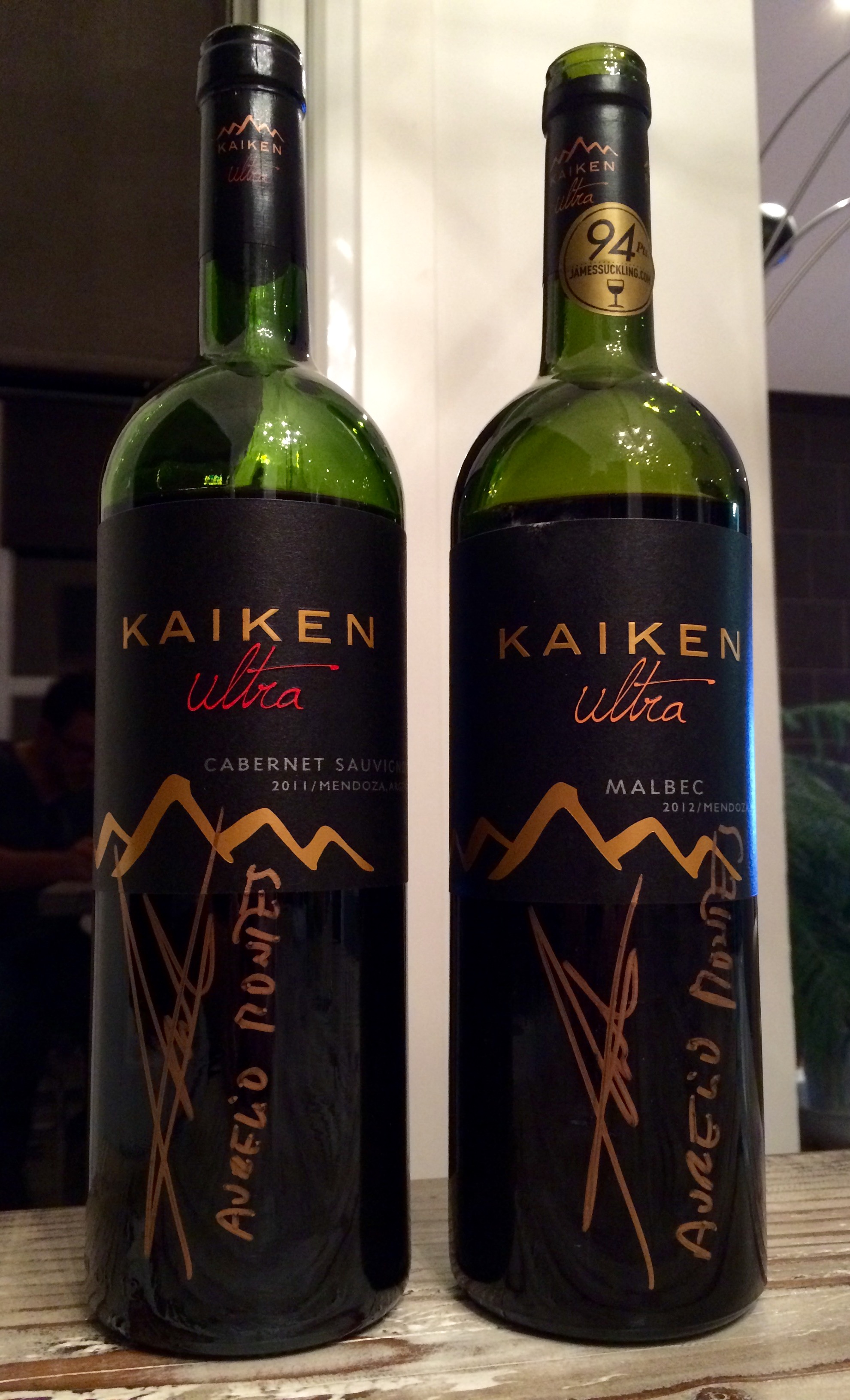
From Chile to Argentina with love.

From Chile to Argentina with love.

It’s not uncommon to see producers from other countries head to Argentina to create a second label or side project.  There’s lots to like about the South American nation as a startup hub, from truly unique altitude-induced terroir to surprising access to old-vine plantings to ultra-low input costs. What is unusual is for the immigrating winery to come from right next door:  Argentina’s skinny western neighbour Chile offers many of the same producer advantages and is often similarly sought after by wineries off the continent for new ventures, but you rarely see a producer from one of these countries set foot in the other to make wine.  That’s what makes these bottles interesting.

The Montes family is one of Chile’s pioneering wine clans, and its Vina Montes may be the country’s best known winery, churning out everything from weeknight wine champions to top-end stunners like Montes Folly, an unprecedented Syrah from Apalta that’s one of my favourite wines of all time.  Patriarch Aurelio Montes Sr. visited Argentina in 2001 and was immediately intrigued by the Andes-hugging Mendoza region; he wasted no time in deciding to expand operations there, starting up the Kaiken label in 2002.  The word “Kaiken” is an anglicized version of “Caiquen”, a type of wild goose that regularly travels over the Andes Mountains from Chile to Argentina, just like Montes himself.  Once the winery was up and running, he made the call to keep the winemaking in the family, recently naming his son Aurelio Montes Jr. as winemaker.  Kaiken owns three vineyards in Mendoza, two in and around the Lujan de Cuyo region near the town of Mendoza itself and one in the Uco Valley further south; one of the vineyards is fully biodynamic, a set of principles Kaiken is working to embrace. Read the rest of this entry »


Lebanese Duet: 2011 Reds from Chateau Ksara

26 05 2015

[These bottles were provided as samples for review purposes.]

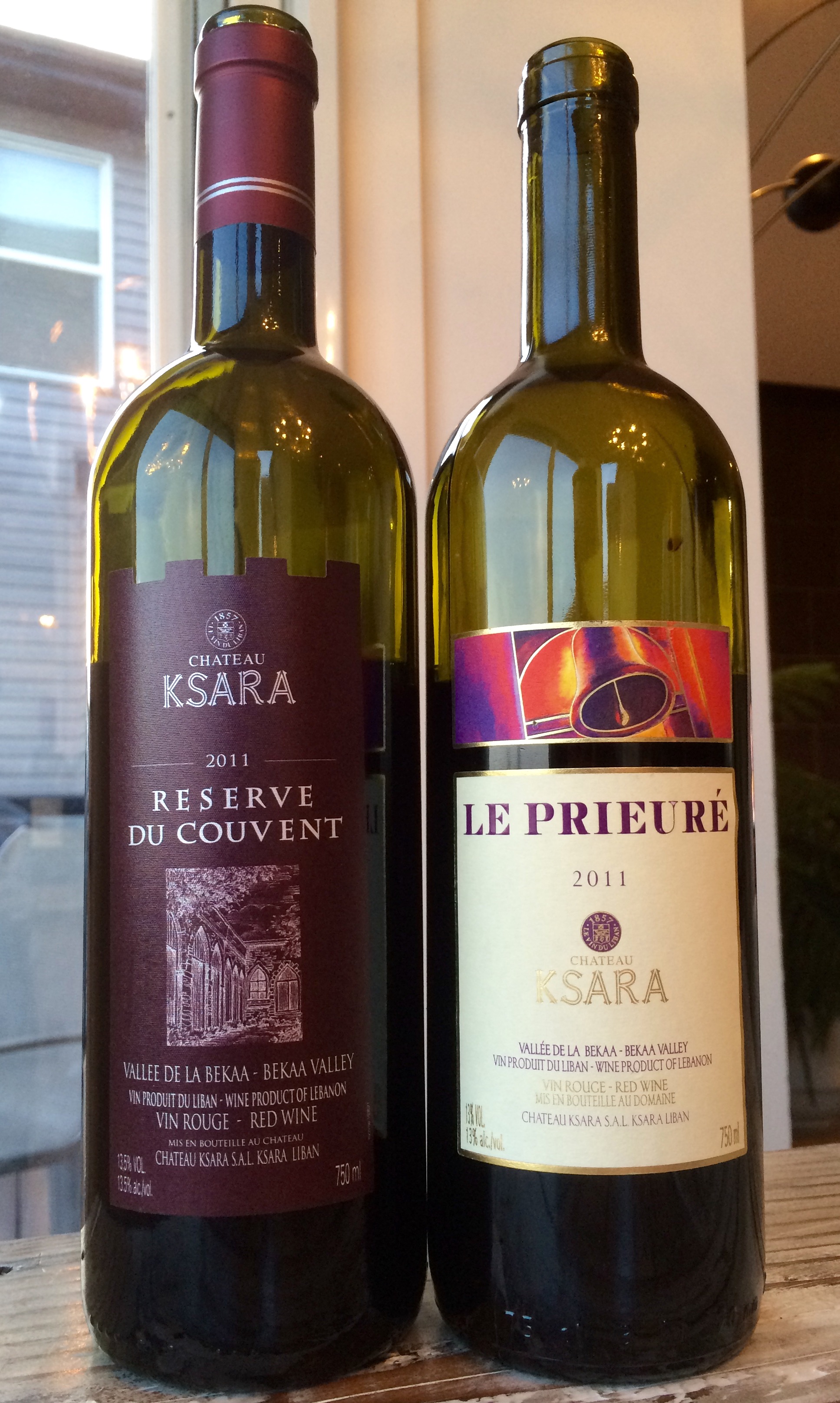
Lebanon?  Lebanon!

Lebanon? Lebanon!

The cool thing about being a wine lover is that it constantly invites you to broaden your horizons and seek out new sensory experiences.  The cool thing about running a wine blog is that sometimes those experiences come to you.  A few weeks ago, out of the blue, I got an email from the oldest winery in Lebanon, Chateau Ksara, a vinous institution that predates Canada by a good ten years (founded in 1857).  Even though their wines are not currently available in Alberta, they wanted me to try them.  Shortly afterward, the courier box arrived from Ontario, containing a duo of 2011 value reds, Ksara’s Reserve du Couvent and Le Prieure bottlings.  Each clocks in at around the $15 range (at the LCBO, at least), and each was a complete revelation to me of the strong state and developing identity of Lebanese wine. Read the rest of this entry »