Wine Review: 2012 Alice May Pathfinder Sauvignon Blanc

27 07 2014

[This bottle was provided as a sample for review purposes.]

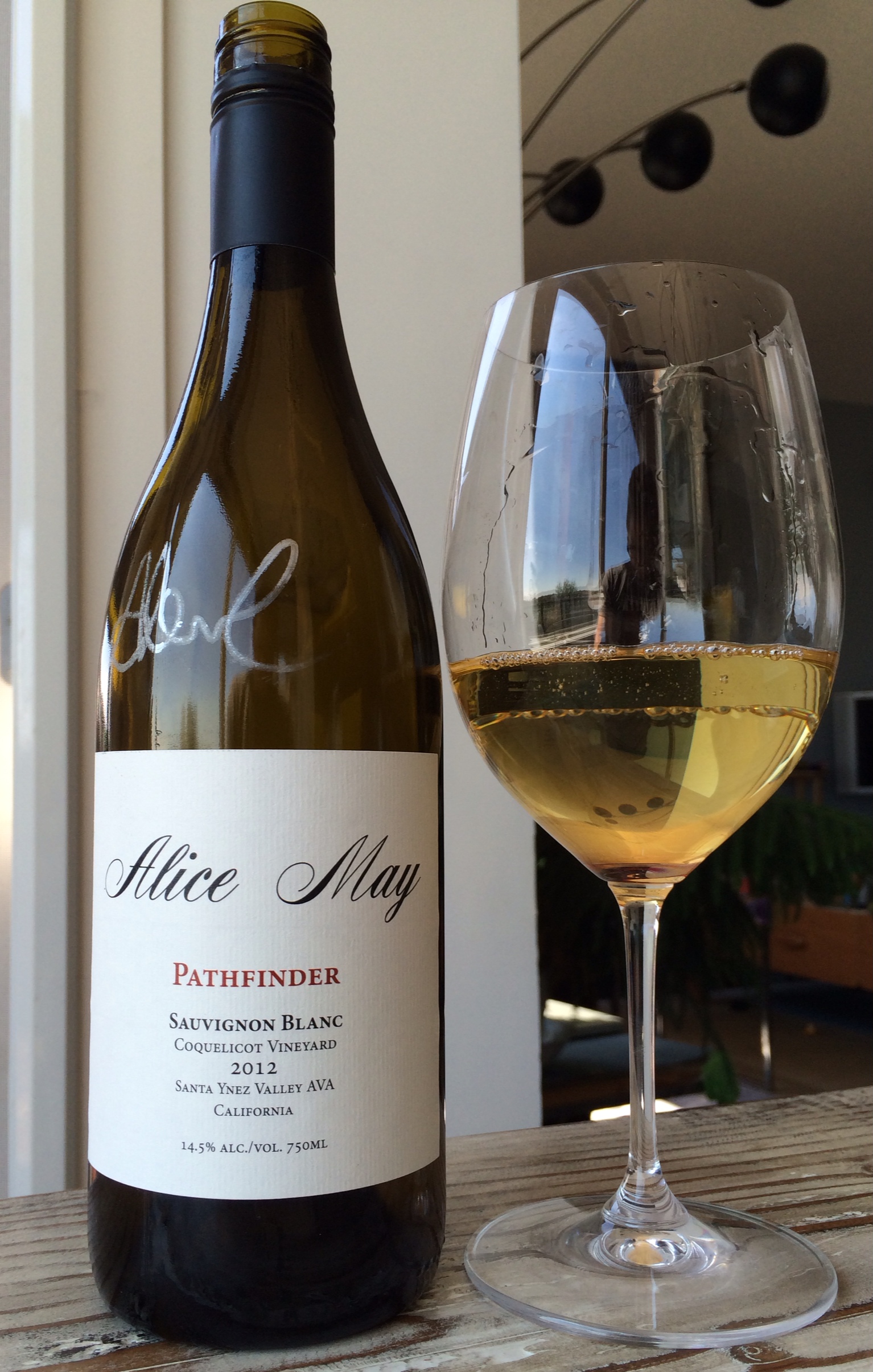
Cali grapes, Calgary soul.  This one sticks with you.

Cali grapes, Calgary soul. This one sticks with you.

Earlier this year I was first introduced to Alice May wines, made by Calgary sommelier Alex Good in collaboration with California stalwart producer Barrel 27, thanks to its Cote-Rotie inspired Crosswinds Syrah, which made me sit up and take notice of this new source of killer value wine with a local heart.  Alice May was (and still is) a label focused on the production of Rhone varietals in southern California’s Santa Barbara County, but this, their inaugural white release, has a different French homeland:  Sauvignon Blanc is found both in white Bordeaux (blended with Semillon and Muscadelle) and in Sancerre and Pouilly-Fume in the Loire Valley (where it is a single varietal star).  While this may not have been Good’s initially planned direction for his Pathfinder wine (which will be made of the much more Rhone-y Grenache Blanc and Roussanne as of next year), he got the proverbial offer he couldn’t refuse to take some prime Sauvignon from the highly esteemed Coquelicot Vineyard in the Santa Ynez Valley and he ran with it.  Coquelicot is a cooler climate site situated right close to the Pacific Ocean almost due west from Los Angeles, biodynamically farmed by a top vineyard manager and churning out powerful yet balanced fruit full of character.  And it shows. Read the rest of this entry »


Calgary Wine Life: Torres Mas La Plana 40th Anniversary Tasting

16 07 2014

photo 4For the CEO of a global wine empire, Miguel Torres Maczassek is a pretty chill guy.  Soft-spoken yet jovial, the 5th-generation head of one of the wine world’s largest family businesses initially comes across as unassuming, but his passion for his multitude of intercontinental wine projects and his pride in the Torres family legacy shines through whenever he speaks.  Torres (the estate) has vineyards and properties across all of the major wine regions of Spain and many other countries, and Torres (the man) recently spent 3 years living in Chile running the family’s operations there, making connections with local growers and taking steps to preserve and revive some of the country’s oldest known varietals.  He was in Calgary recently to help celebrate the 40th anniversary of Torres’ flagship red, Mas La Plana, which I have had and enjoyed many times before and which is one of those rare premium wines that can still be found locally at a fairly reasonable ($50ish) price point.  We had the opportunity to track the evolution of this wine through four different decades, from the 1980s to the 2010s, and to witness firsthand the steps taken to fully realize the family’s vision for its top bottling. Read the rest of this entry »


Wine Review: 2013 Culmina Unicus

8 06 2014
There it is:  history in a (classically presented) bottle.  BC Gruner!!

There it is: history in a (classically presented) bottle. BC Gruner!!

In my last post, I celebrated an Old World country’s rich wine history.  In this one, I get a front row seat as a New World country, my own, takes a milestone step towards charting its own course.  I may be a little more excited about this development than is strictly necessary, but I’ve (seriously) been waiting and hoping for this moment for a few years.  Finally, fantastically, Gruner Veltliner has come to the Okanagan Valley.

If you’ve heard of Gruner before, chances are you’re either at least a semi-serious wine person or you’ve been bothered about it before by me.  I adore Gruner, which is the signature white grape of Austria and is rarely found elsewhere; given that Austrian wine doesn’t exactly fill retailers’ or importers’ heads with gleeful visions of dollar signs, there tragically tends to be much less of it around locally than its quality and value would otherwise dictate.  If you’ve never tried a bottle of Gruner Veltliner, it’s sort of like if a Riesling and a Chardonnay had a rebel baby.  It combines the powerful acidity and piercing minerality of Riesling with the luxurious, silky mouthfeel of Chardonnay, then takes a left turn and offers up a remarkable set of spicy, tangy and often downright wacky flavours all its own, from white pepper to rubber boots and elastic bands (all in a good way, I swear).  The result is a sensory experience unlike any other in wine, one that keeps you constantly engaged as you try to figure out what the hell is going on in your mouth.

One of the reasons that I have often thought that Gruner Veltliner might be able to find a second home in Canada is the climatic and geographic similarities between BC wine country and Gruner’s homeland:  northern Austria and southern BC share almost the exact same latitude (48.4 degrees North in Wachau, 49.1 degrees North in Oliver), the same continental climate and high day-night temperature shifts and, in places, similar soils.  Yet until now the Okanagan has churned out every conceivable white grape under the sun, but no GV.  Thankfully, Culmina has come to the rescue.  This new high-end venture from Don, Elaine and Sara Triggs (of Jackson-Triggs fame) is based on a philosophy that combines old-school attention to detail and minimalistic winemaking with new-school scientific advancement, especially as it relates to vineyard mapping and matching grapes to sites based on detailed soil, temperature and exposure analysis.  Check out the details at Culmina’s visually stunning website – they’re fascinating, if you’re the sort of person who finds micro-block mapping and soil pit analyses fascinating (which I am).

Read the rest of this entry »


Calgary Wine Life: 1863 Taylor Fladgate Port

6 06 2014

What happened in 1863?  Henry Ford was born.  The Battle of Gettysburg helped shape the course of the US Civil War.  Canada was 4 years away from becoming its own country.  And the grapes that went into the Port that I got to try this week were harvested.  There are times when I am reminded just how transportive wine is, how it can be a liquid chronicler of history.  This was one of those times.

Eighteen. Sixty. Three.

Eighteen. Sixty. Three.

It probably goes without saying that it’s exceedingly rare for a producer to release a wine after it has turned 150.  The centuries-old Port houses in Portugal would only have extremely limited quantities of reserves even half that old, which would in most cases be used in minute quantities to add flavour and complexity to the producers’ 40-year old tawny Port release (the 40 years on the label represents the average age of the multi-vintage wines in the bottled blend).  Taylor Fladgate has added to its own reserves over the years with select lots of high-end wood-aged Port from the 19th century, and when the quality of an ancient elixir is exceptional, it will occasionally decide to bottle and release it as a stand-alone offering.  That was the case with this single-harvest Port from one of the best vintages of the 19th century, 1863, which after a century and a half is just being taken out of barrel and readied for sale this fall.  When I say “barrel”, I’m referring to one of only two in existence:  Fladgate has but a lonely pair of barrels of the 1863, which will ultimately make less than 1,500 bottles of the Port for the entire world market.

Read the rest of this entry »


Longview Showdown: 2010 Devils Elbow Cabernet Sauvignon vs. 2010 Yakka Shiraz

18 03 2014

[These bottles were provided as samples for review purposes.]

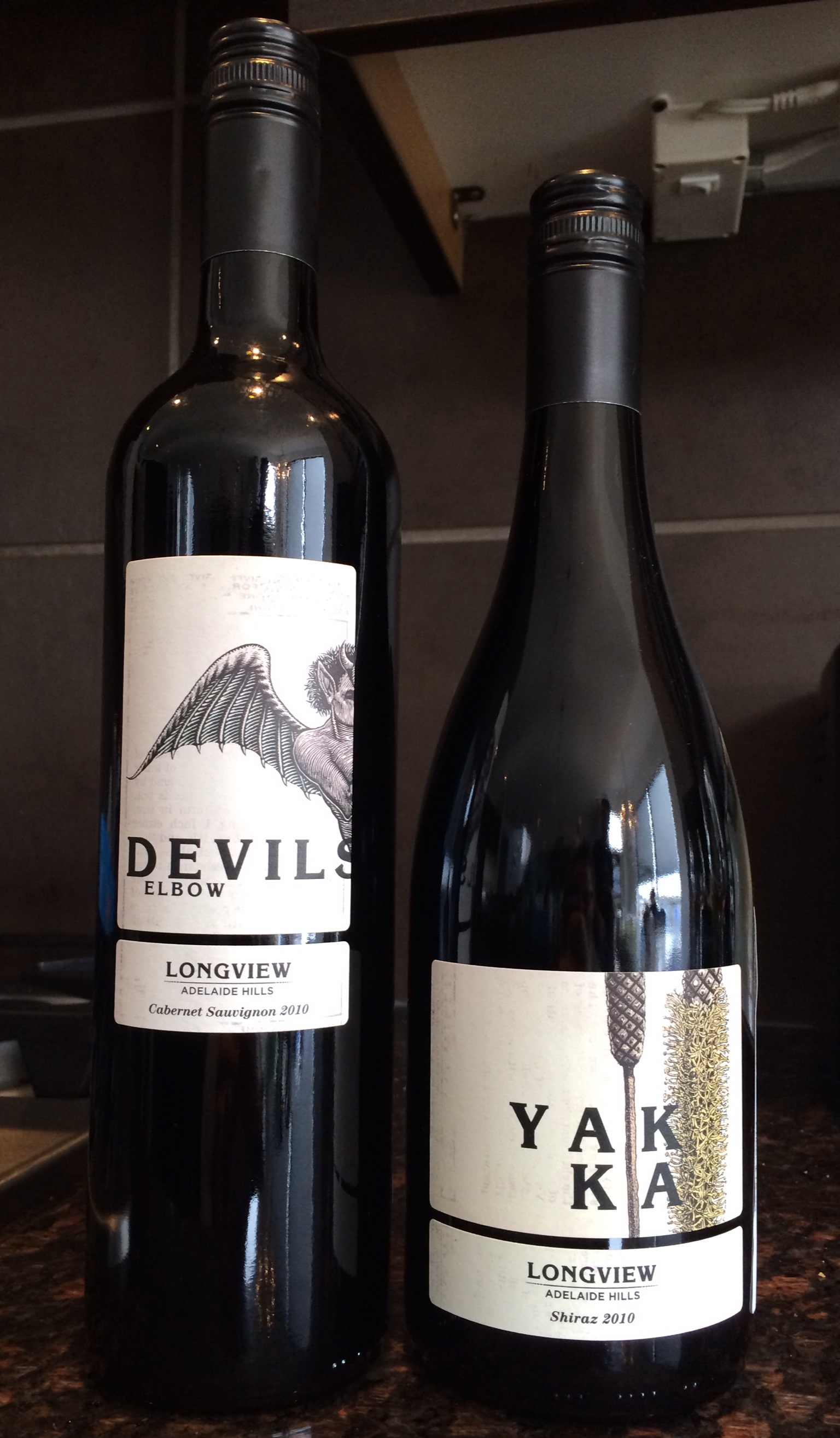
Cab. Shiraz. The ultimate battle.

Cab. Shiraz. The ultimate battle.

This is the kind of tasting opportunity that wine geeks drool over:  two bottles from the same producer (Longview), same region (Adelaide Hills in Australia), same vintage (2010) and same single vineyard (the aptly named Longview Vineyard), made using the same winemaking techniques (fermentation on skins, 18-20 months aging in French oak), differing only by their grape variety, Cab vs. Shiraz.  The Devils Elbow Cabernet Sauvignon was named after a treacherous hairpin turn in the windy road leading up the hills into Longview Vineyard; the Yakka Shiraz was named after a spiny prehistoric-looking plant that grows in it.  Both red offerings epitomize the New Australia now being unveiled to the wine world:  many recent efforts from Down Under try to sell themselves as a counterpoint to the stereotypical blowsy Aussie fruit bombs of years past, but these wines from Longview take that philosophy absolutely to the hilt, offering up balanced, restrained, nuanced flavours and a take on each grape that is dripping with Old World influence.  The similarities between the two reds are plentiful, but when poured side by side, the differences slowly emerge. Read the rest of this entry »


Wine Review: 2011 Alice May Crosswinds Syrah

23 02 2014
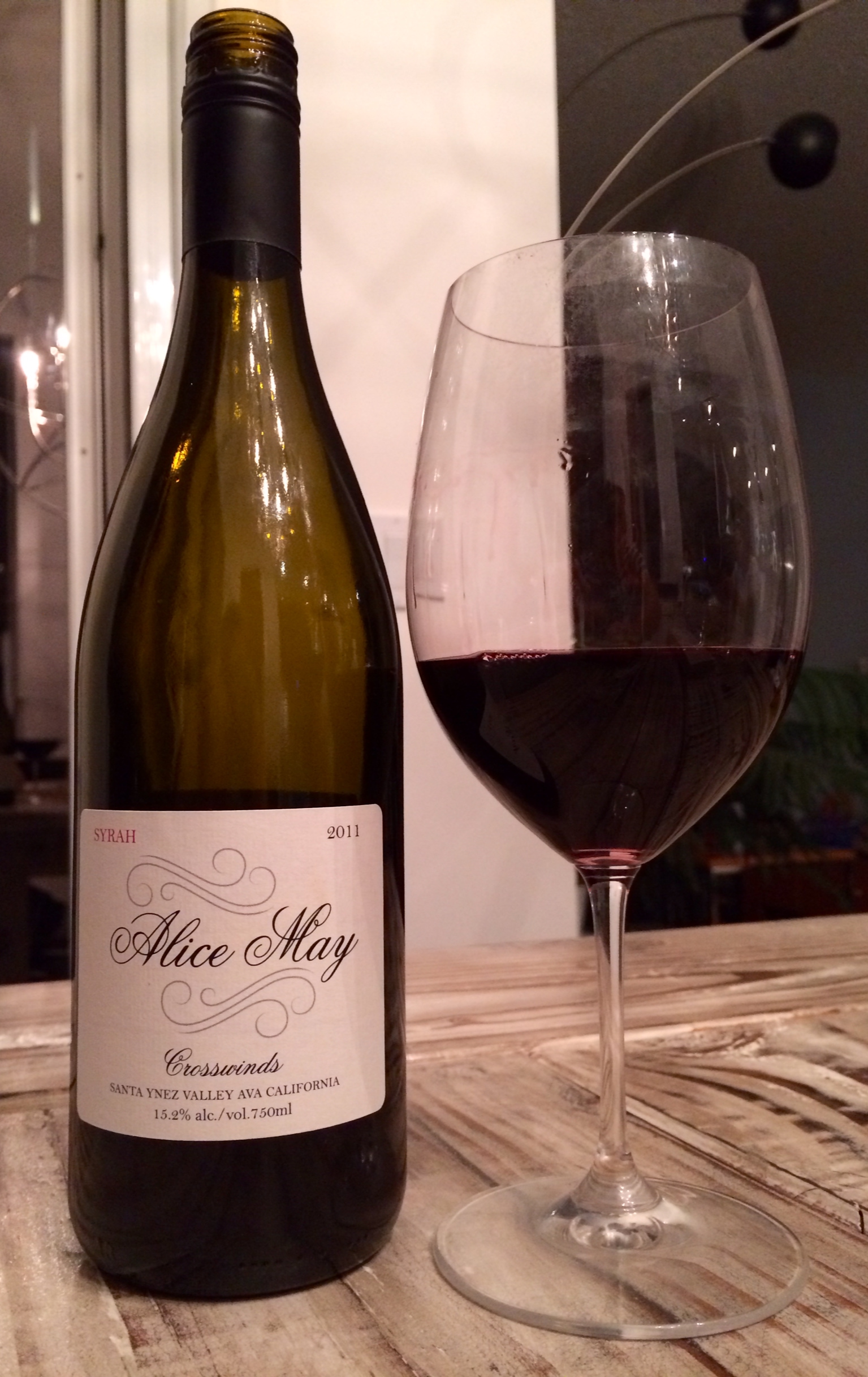
Calgary-born, Cali-made.  YYC pride rise up!

Calgary-born, Cali-made. YYC pride rise up!

I was at the always-amazing Alloy Restaurant with my wife a few weeks ago, celebrating a rare night away from young children and talking to sommelier Alex Good about Riesling (because I basically talk to everybody about Riesling).  Suddenly he said:  “Hang on.  I have something for you to try.”  He returned with a glass of deeply coloured, powerfully aromatic, eminently interesting red.  “What is it?”  “It’s a Syrah/Viognier co-ferment from Santa Ynez Valley in California.  Cote-Rotie style.”  “Who’s the producer?”  “Well, me.”  It turns out that Good (who has since left Alloy to become a partner and sommelier at the equally excellent downtownfood), in his limited time away from the restaurant biz, had partnered with Cali winery Barrel 27 and its winemaker McPrice “Mac” Myers to create a new label geared toward artisanal, small-run, Rhone-influenced wine.  The 2011 Crosswinds Syrah is the inaugural effort of this collaboration, and although the grapes are all from California, the label name is a clear nod to the venture’s northern soul:  the Alice May is the name of the ship that became the title character’s funeral pyre in the classic Canadian poem The Cremation of Sam McGee.  Only 100 cases of the Crosswinds were made, almost all of which came to Alberta and most of which are now gone.  Syrah is my second vinous love after Riesling, and homegrown efforts like this are such rare finds in the Calgary wine world; both the wine and the story were so intriguing that I set out to find a bottle as soon as our meal was over.  I’ve gone back to find more multiple times since then.

Read the rest of this entry »


Wine Review: 2011 Les Halos de Jupiter Cotes du Rhone

11 02 2014

[This bottle was provided as a sample for review purposes.]

You can take the emptiness of the bottle as a sign of how good this wine is.

You can take the emptiness of the bottle as a sign of how good this wine is.

It had all the hallmarks of a crappy week:  utterly frigid weather, lack of sleep due to a teething baby, tons of stuff to do at the office.  But everything changed yesterday afternoon when I had an unexpected visitor at work:  a courageous rep from The Wine Syndicate who braved the cold to drop off a box of 5 killer-looking wines for me to try.  One of them in particular caught my eye, a French red from the Southern Rhone with a decidedly un-French approach to branding.  It was the first vin de France I had ever seen with a planetary body on the label, and I knew as soon as I saw it that I was opening it that night.  As it turns out, I lucked out, because this is a comfort wine to the nth degree, the ideal way to warm up after plunging through gruesome winter on the way home.

Les Halos de Jupiter is a negociant operation (where grapes are sourced largely or entirely from vineyards not owned by the winery) overseen by French master consultant Philippe Cambie, who provides his expert touch to a number of famous Rhone labels and has taken this on as his own personal side project.  The obvious first question on my (and everyone’s) mind:  what’s with the name?  The label explains that Jupiter (in Roman mythology, the same as Zeus in Greek mythology) is the king of gods and humans, the head of the patriarchal family of deities.  It’s also the biggest planet in our solar system, and Halo is the closest of its rings.  Cambie believes that Grenache is the king of all grapes and the “natural leader of Rhone varietals”; it’s the Jupiter of viticulture, and its Halos are the various subregions of the Rhone Valley that best allow it to express itself.  If this were an SAT questionthe best SAT question ever, its answer would be Halos:Jupiter :: Rhone regions:Grenache.  Cambie’s Halos span the most prestigious areas of the Southern Rhone, from Chateauneuf-de-Pape to Gigondas and Vacqueyras, but they also extend to areas where hidden values can be found.  Cotes du Rhone is a catch-all appellation that basically covers all of the areas of the Rhone that aren’t scooped up by a sexier subregion, but this particular wine is a single vineyard offering grown at elevation just outside of the quality region of Rasteau, yielding top-end old vines Grenache without the CNDP price premium. Read the rest of this entry »


Calgary Wine Life: Wines of Portugal Tasting @ Market

7 11 2013

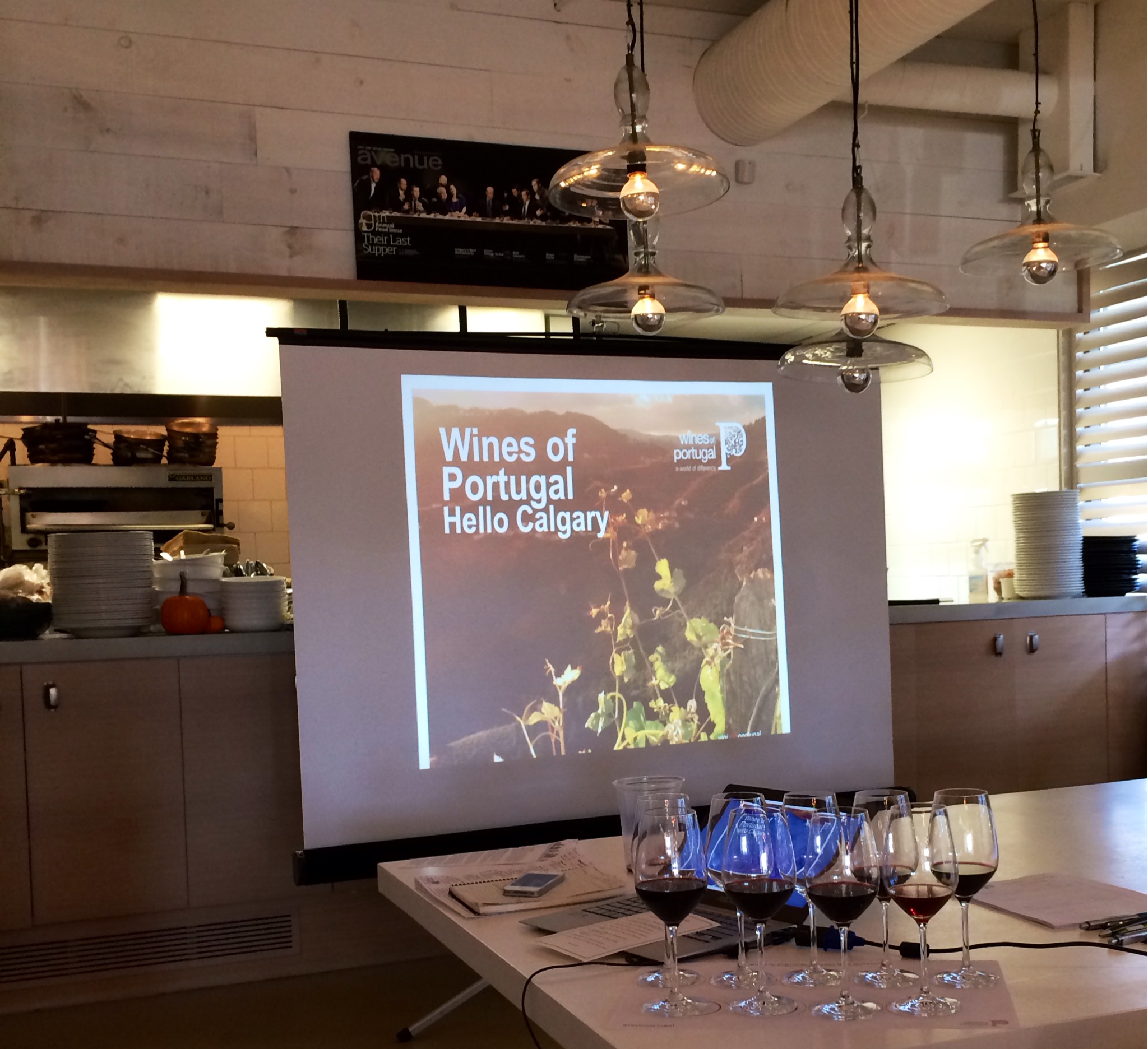
It appears to be Underappreciated Wine Region Month here at Pop & Pour.  Last week I was exposed to the new wave of bottlings coming out of the southern Italian island of Sicily; this week it was Portugal, another unheralded European wine area, that was aiming to bring its remarkable wines to the attention of international export markets.  I got the opportunity to sit in on a guided tasting put on by the Wines of Portugal and led by energetic and well-versed sommelier extraordinaire DJ Kearney, who brought us up to speed on everything from the number of indigenous grape varieties found in Portugal (250+) to the proper pronunciation of key Portuguese wine terms (hint:  if it ends in an E, don’t pronounce the E, no matter how much you want to).  The tasting was held at Market Restaurant on 17th Avenue, which I had never been to before but which proceeded to serve us an absolutely stellar three-course lunch that will be reason enough to bring me back very soon.

image-9

It was sort of fitting that I got to experience Portugal’s wine story after sitting in on Sicily’s, because the two regions have much in common.  Both are home to large numbers of local grape varietals that are barely found anywhere else, and both have made the conscious choice to embrace these lesser-known grapes and focus their quality production around them.  As a result of a lack of name recognition and a dearth of critical attention on these under-the-radar wines, both can offer tremendous value for money for those consumers brave enough to take the plunge (I think Portugal might win the worldwide gold medal for these kinds of bargains).  And both tend to focus more on wines that are blends of multiple different grapes as opposed to single varietal offerings, with Portuguese wine in particular almost always a group vinous effort as opposed to a solo act.  Kearney channeled her inner Wino Karl Marx when talking blending, urging us through these wines to shed the shackles of varietal typicity and embrace the communal symphony of these intrepid groups of local grapes (featuring reds Touriga Nacional, Touriga Franca, Tinta Roriz [aka Tempranillo] and Baga, and whites Alvarinho [aka Albarino], Arinto, Encruzado and many more) all working together to make something greater than themselves.

Read the rest of this entry »


Calgary Wine Life: Sicilian Master Class @ Theatre Junction Grand

31 10 2013

Quick:  name a Sicilian wine producer.  Did you say Planeta?  Me too.  Name another one.  To my embarrassment, I couldn’t.  My list of known Sicilian producers ends at one.  This fairly sizeable void in my wine knowledge is particularly galling because, believe it or not, Sicily is the biggest wine-producing region in Italy:  it actually produces more wine per year than Australia, more than Chile and Bordeaux combined.  So why does it continue to have such a low profile?  Because, up until recently, the wine produced was not generally of high quality and was often sold off in bulk to other parts of the country instead of bottled on its own.  Even now, less than 20% of Sicily’s annual production is bottled for individual sale, and only 5% or so comes from a legally designated DOC region.  But there is currently a quality revolution underway in Sicily, one that has been brewing since the 1980s and that has seen many longstanding producers forego high yields and the sale of their crops by the ton in favour of more meticulous growing and winemaking practices and the creation of better wines under their own labels.  This week I got the chance to witness this transformation midstream.

image-7

Read the rest of this entry »


Wine Review: 2007 Bodegas Montecillo Rioja Reserva

2 10 2013

[This bottle was provided as a sample for review purposes.]

I heart traditional Rioja.

I heart traditional Rioja.

The closest I’ve ever come to having a wine from my birth vintage (1980, by all accounts an absolutely terrible vintage everywhere, which explains why I can’t find any) was a bottle of 1981 Bodegas Montecillo Gran Reserva from Spain’s famed Rioja region, a bottle that I randomly stumbled upon with a friend at Co-op Crowfoot.  His birth year was 1982, so we decided that we’d split the difference and share the wine.  Montecillo is primarily a value-based producer whose wines steer clear from the ultra-expensive, but despite its non-insane price tag the 1981 was still gracefully present 32 years later, a shade past its peak consumption window but still a tremendously enjoyable drinking experience.  This longevity is partly due to Rioja’s traditional winemaking style and lengthy legally mandated aging periods:  for all wines designated as Gran Reservas, minimum 2 years aging in oak barrels and 5 years total aging is required before bottle release, and for Reservas, minimum 1 year oak aging and 3 years total aging is required.  This maturation process leaves the young wines exposed to air and leads to some flavour integration with the barrels themselves, resulting in finished wines that forego primary fruit flavours in favour of oak- and oxygen-induced secondary characteristics and complexity and that often have extraordinary staying power in the bottle.  While almost all wines are not meant to age, and while that maxim usually applies even more broadly to inexpensive wines, some traditional Rioja can be found on the shelves for bargain prices and can last for ages. Read the rest of this entry »


Calgary Wine Life: Cloudy Bay Winemaker Tasting at Alloy

26 09 2013

If you’re into New Zealand Sauvignon Blanc, you’ve heard of Cloudy Bay.  When I bought my first book about wine a few years ago, the first couple pages of the chapter on New Zealand were the story of this winery:  one of very few producers scattered across the Marlborough region of New Zealand in the mid-1980s, when nobody was paying any attention to NZ wine and nobody on the northern half of the globe was buying it, without any vineyards of its own, making Sauvignon Blanc in a style that has since become synonymous with the nation and the grape (crisp, aromatic, intense, herbaceous), exploding onto the international scene, and shining the spotlight of the wine world on this scenic region on the northern tip of the country’s South Island.  This isn’t ancient history:  New Zealand was an afterthought of a wine nation with only a small handful of producers at a point during my lifetime (I’m 33).  Now it has turned into a thriving and exciting contributor to the world of wine that is home to over 700 wineries, and in large part Cloudy Bay is to thank for this surge of success.  One of the main reasons that “New Zealand Sauvignon Blanc” possesses the same instant and tangible sense of identity in the psyche of wine drinkers as “Australian Shiraz” (or “Cali Cab”, or “German Riesling”, or “Argentinian Malbec”) is the work of this trendsetting producer that started small and turned itself into a national icon with a world-renowned style.

photo 1

In 2003, Cloudy Bay was purchased by luxury brand supergroup LVMH (Louis Vuitton Moet Hennessy), which was charged with maintaining the legacy of New Zealand’s most famous liquid export.  This responsibility is now in the capable hands of lead winemaker Tim Heath, who has spent the past 9 years at the winery trying to ensure that Cloudy Bay’s historic voice is as strong as ever within its wines while simultaneously helping them evolve and grow.  Heath recently made his inaugural journey to Canada to showcase his latest creations and discuss the impending release of Cloudy Bay’s 2013 Sauvignon Blanc (just put in bottle in August!), which should be out on the shelves in a matter of weeks.  I was fortunate enough to join him and a few others for a stellar lunch at Alloy, my favourite restaurant in town, to talk and taste New Zealand wine. Read the rest of this entry »


Wine Review: 2012 Stag’s Hollow Grenache

20 09 2013

[This bottle was provided as a sample for review purposes.]

You may be looking at history -- Canada's first 100% Grenache?

You may be looking at history — Canada’s first 100% Grenache?

I will spare you the details of why I haven’t posted in awhile; suffice to say that it involves multiple children under the age of 3, potty training, vomit, and the inexorable loss of sanity.  As a result of the above, these first 50 words have taken 25 minutes to write.  But I will not be deterred, because today is something bigger than you or I or the trials of parenting.  Today is International Grenache Day.  And today I get to write about a wine that I have followed from a distance for a long time, even though it is brand new to market.

I have recently come to realize and embrace that, when it comes to reds, I’m a Rhone guy.  I have adored Syrah for quite some time, but in the last few months I have become increasingly enamored with the southern French region’s other red offerings as well.  I tried with piqued curiosity my first varietal Carignan, the ’70s shag carpet of wine.  I devoured Mourvedres from Bandol to Washington State and back.  And I opened my heart to the joy and beauty of Grenache.  There may be other grapes that I enjoy more at their peak expressions, but I don’t know if there’s another grape out there that disappoints as seldom as Grenache does.  No matter how much it costs or where it’s from, it always hits the mark and is reliably bright and juicy and enjoyable.

But what it’s not, at least until now, is from Canada.  Grenache is generally a hot-climate grape, one that needs a lot of sun and a lot of warmth to ripen.  It’s best known in the Mediterranean climates of southern France and the arid deserts of Spain, occasionally popping up in the equally balmy South Australia or the equally parched eastern Washington.  In Canada, where every grape imaginable seems to be planted with hope somewhere, I had never heard of Grenache being grown, and certainly had never seen it being bottled on its own, until I happened to stumble on a Twitter mention of this project by Stag’s Hollow winemaker Dwight Sick.  I have been thoroughly intrigued by the idea of Okanagan Grenache ever since, and after some relentless cyber-stalking, I was lucky enough to snag a bottle of this inaugural experiment and see for myself how this warm weather red adapted to my home and native land. Read the rest of this entry »


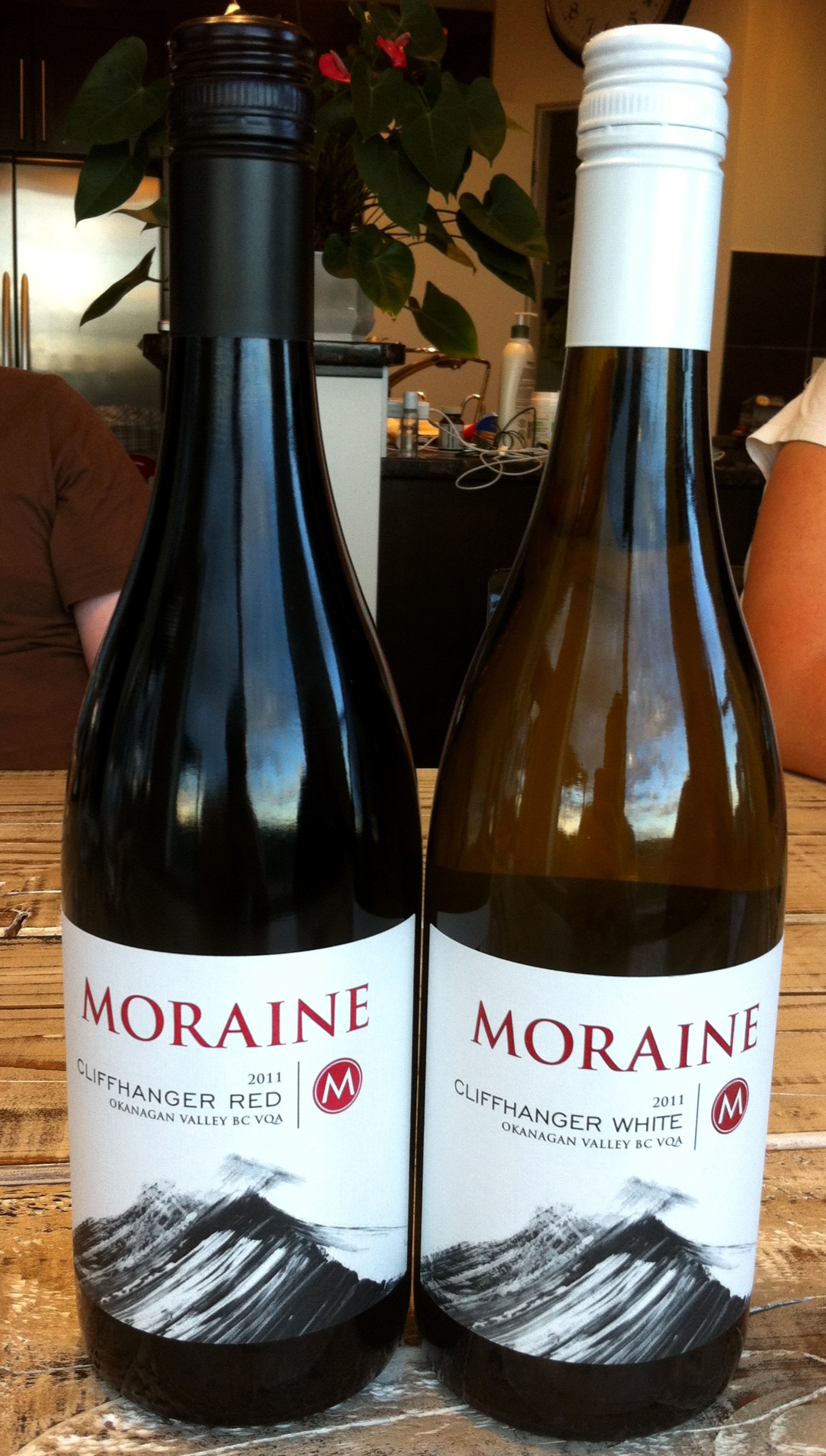
Wine Review: 2011 Moraine Winery Cliffhanger White & Red

26 06 2013

[These bottles were provided as samples for review purposes.]

Before I get started, let me first express both my condolences to anyone whose home or business has been impacted by the recent flooding in Calgary and my gratitude to the legions of municipal workers, police/fire/rescue crews and citizen volunteers who have worked tirelessly to repair and restore affected areas.  I think we’re all a little desensitized to disaster coverage that we see on the news, but when the areas underwater are streets in your own city where you’ve walked, shops that you’ve frequented, or the arena of the local team, the veil of distance gets ripped away and the footage quite literally hits home.  Hang in there, Calgary.
Welcome back, blogging.  It's been awhile.

Welcome back, blogging. It’s been awhile.

So you haven’t heard a lot from me in recent times, but I have marginally decent excuses for my prolonged blogging absence.  In the past couple months I have changed jobs, moving back into law firm life at a boutique shop recently founded by some former (and now current) colleagues, and I have also welcomed a new child into the world.  My second son Max was born on Fathers Day, and events both leading up to his birth and since his arrival have taken up most of my attention.  I therefore feel somewhat justified in playing the Major Life Events card in an attempt to excuse the rather ridiculous gap between PnP postings.  If my last 10 days has been any indication, I would expect more of the same down the road, but I will try to keep the blog moving forward, if only to ward off the comment spambots that have descended like hungry vultures in the past few weeks.  I’m not dead yet, Internet.

Anyway, on to the stars of today’s post, which are two wines from a relatively new Okanagan producer that I was lucky enough to try recently.  Moraine Winery is a recent addition to the renowned Naramata Bench subregion of the Okanagan, located just northeast of Penticton along the eastern shores of Lake Okanagan.  Naramata has gotten enough critical attention recently that many wineries with any trace of property there are trumpeting the affiliation with the area, even if the bulk of their vineyards lie elsewhere in BC.  Not so with Moraine:  each of its two vineyards, named Anastasia and Sophia after the owners’ two daughters, lie within the Naramata Bench itself, and all of the grapes for its wines come from these sites.  Moraine’s proprietors Oleg and Svetlana Aristarkhov relocated from Alberta to pursue their winegrowing dreams, so I like them already.
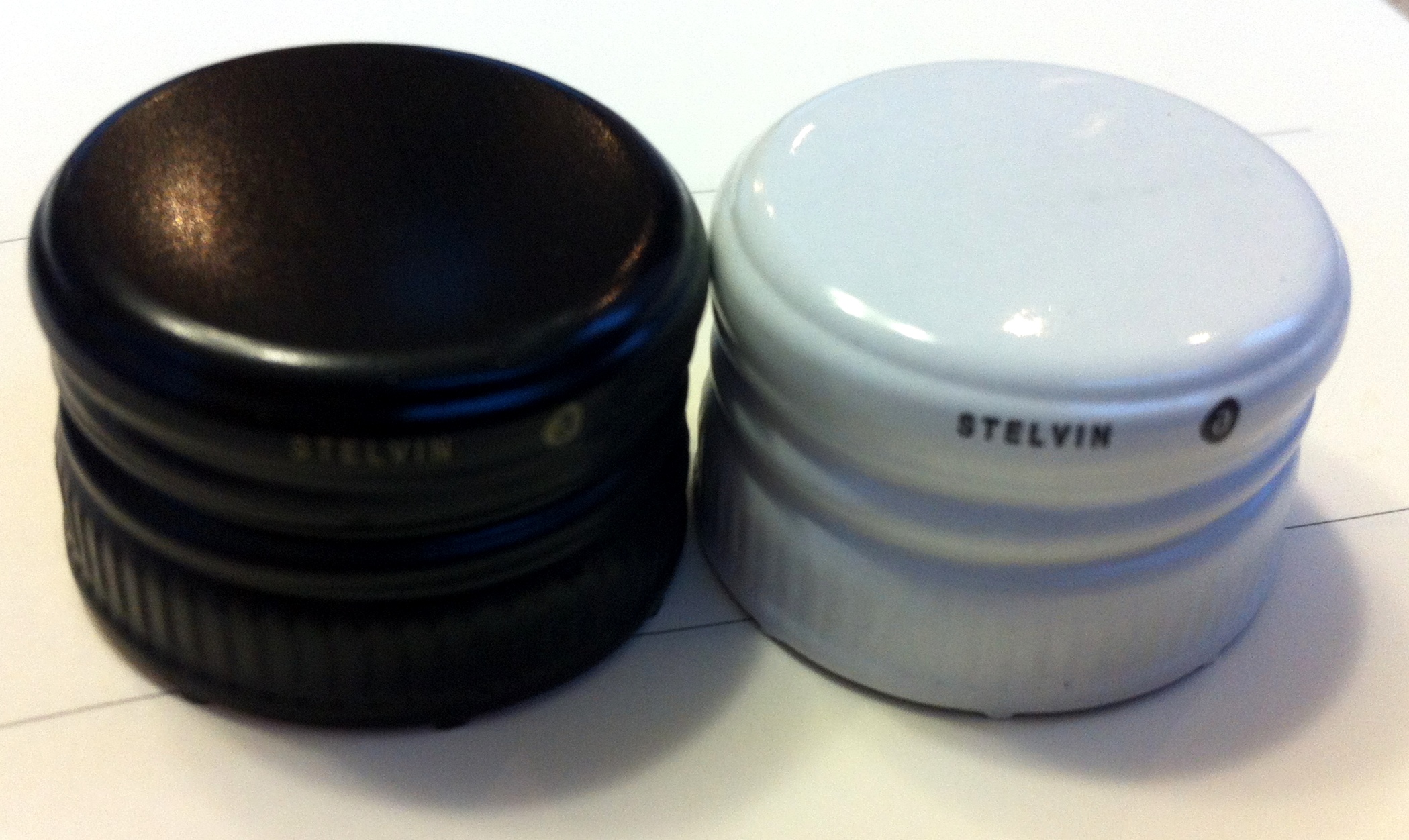
Stelvin Rating:  1/10 (Give me something to work with here...giant Ms next vintage?)

Stelvin Rating: 1/10 (Give me something to work with here…giant Ms next vintage?)

The Cliffhanger series of wines are Moraine’s entry level offerings, each likely checking in at under $20 retail in Alberta ($15 at the cellar door).  This is the price point at which Canadian wines tend to make me nervous, as it can often be challenging for an Okanagan or Niagara producer to put together a compelling, estate-grown, quality bottle for less than $20 given the land, labour and equipment costs and climatic challenges common to all Canadian wine regions.  Thankfully, both the 2011 Cliffhanger White and the 2011 Cliffhanger Red are strong and enjoyable introductory efforts from a producer that I’ll be watching going forward. Read the rest of this entry »


April Fools’ Day Tasting

3 04 2013

It all started with an offhand remark from my friend Tyler.  “Hey, you know what we should do?…”  It soon became a plan.  The lineup was decided, the wines were procured, and a date was chosen…really, the only date that fully suited an event like this.  On April 1st, we sat down, twisted off some caps and got down to drinking some of the most popular and reviled wines on the planet.  Happy April Fools’ Day, everyone.

Oh yes.

Oh yes.

I should pre-emptively intercede to point out that we didn’t just do this to be the online jerks who make fun of cheap wine.  Like it or not, the wines picked for this tasting are embedded in global drinking culture, are a gateway for many people to more serious bottles (the marijuana of table wines, I suppose) and have had a market position that can only be described as dominant.  As someone who has studied wine quite a bit over the past few years, I had heard a ton about all of them:  Baby Duck, Canada’s most successful retro sparkler.  Mateus, Portugal’s top export and once the world’s best-selling wine.  Gallo White Zinfandel, flagship of a wine “fad” that continues in full force to this day.  Black Tower and Blue Nun, continual influencers of global opinion of an entire country’s wine tradition.  And Naked Grape, one of the most likely local inheritors of the legacy of these cheap and cheerful drinks.  I had never tried a single one of these wines, and my desire to do so was more than just morbid curiosity.  I was hoping to discover both what has made these bottles so iconically popular for so long and whether the suspect reputations that preceded them into the tasting room were well-deserved.  Let’s find out.

Read the rest of this entry »


Calgary Wine Life: Cork & Canvas CPO Tasting @ Willow Park

6 03 2013

[Cross-posted at www.calgaryisawesome.com]

My two year-old son is going to his first symphony on Sunday.  Before the matinee performance of Peter and The Wolf, the Calgary Philharmonic Orchestra is putting on an Instrument Petting Zoo so that kids like mine who haven’t experienced live music can see and feel for themselves the difference between an oboe and a piccolo, a trombone and a timpani.  Our city’s remarkable orchestra is constantly innovating like this, striving to make symphonic music more accessible to a broader audience, whether it’s putting on these Symphony Sundays for smaller children or lending their arsenal of talents to performances of music from video games, The Lord of the Rings, or rock and roll bands like Queen.  This fun and unpretentious vibe extends to the CPO’s fundraising efforts as well:  if you want to, you can adopt your own member of the orchestra for a year, or book a concert for your child’s elementary school.  Or, like me, you can drink.

Photo1-162

Read the rest of this entry »