FEL Wines: Pinot Showdown

11 01 2015

[These bottles were provided as samples for review purposes.]

Happy New Year!  I took a bit of a holiday blogging break after 24 straight days of whisky-induced Advent madness in December, but I always had it in my mind to start up 2015 (and return to actually producing wine-related content on this wine blog) with these two bottles of California glory.  Although they come from what might technically be considered a new producer, their roots and history are inextricably linked to a California stalwart…and, as it turns out, to my home province of Alberta too.

Great wines, plus new wine glasses - to be the subject of a separate post.

Great wines, plus new wine glasses – to be the subject of a separate post.

FEL Wines came into being less than a year ago, in March 2014.  It is the brainchild of Cliff Lede, whose eponymous Napa Sauvignon Blanc helped renew my faith in the grape a month ago.  Lede is well known for creating those rarest of beasts, Napa Valley value wines, and he’s also a born-and-raised Albertan who is well known outside of the wine world as one of the owners and senior executives of the Ledcor Group, which was founded by his father (how the construction lawyer in me failed to mention that in the last review is beyond me).  FEL represents Lede’s foray outside of Napa’s welcoming confines and into the cooler climate areas of California, and it also seems to be underlaid by a personal passion:  FEL is so named for Cliff’s mother Francis Elsie Lede, who helped kindle his love of wine as a child. Read the rest of this entry »



Wine Review: 2013 Cliff Lede Sauvignon Blanc

4 12 2014

[This bottle was provided as a sample for review purposes.]

Sauv Blanc:  my reawakening continues.

Sauv Blanc: my reawakening continues.

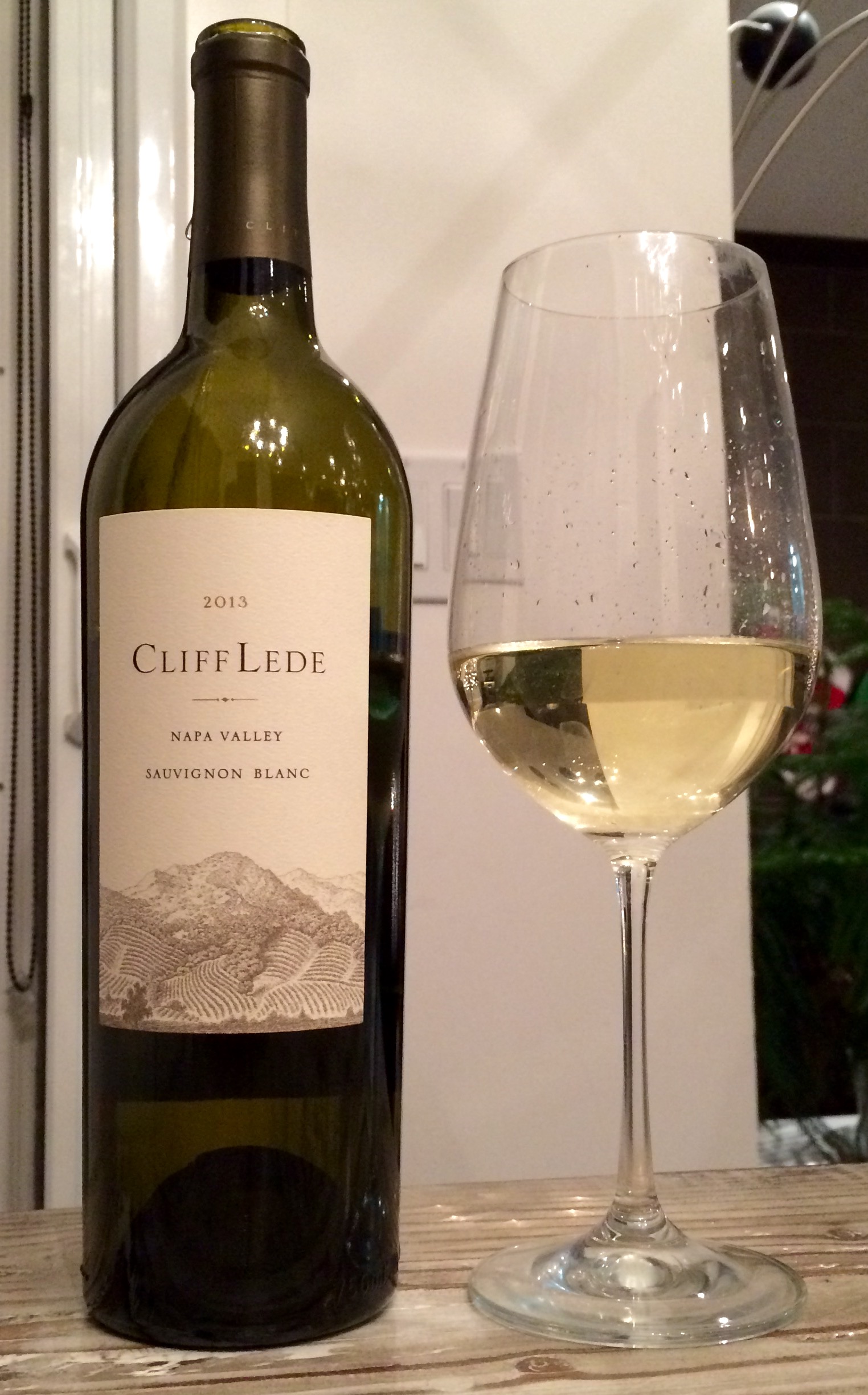
I’ve been experiencing a sort of Sauvignon Blanc renaissance lately.  For the longest time I all but ignored the grape:  I had tried and was clinically impressed but not emotionally roused by many of the SBs and blends of Bordeaux and the Loire; I had lapsed firmly into the camp of “if you’ve tried one New Zealand Sauv Blanc you’ve tried them all”; and I did not hold out much faith that California (too hot) or Canada (too nondescript) could work any magic with the varietal.  But wine, if you let it, has a funny way of pointing out the absurdity in rigidity and making sure your horizons are always boundless.  In the past few months I’ve been blown away by the remarkable and wildly original Greywacke Wild Ferment Sauvignon Blanc from Marlborough and equally amazed by the textural magic of the Alice May Pathfinder Sauvignon Blanc from Cali.  Now add a third one to the list:  the Cliff Lede Sauvignon Blanc, from Napa Valley of all places, not only offers a dynamite sensory experience but also seamlessly exudes a sense of place while doing so. Read the rest of this entry »


Wine Review: 2011 Carmen Gran Reserva Carmenere

19 11 2014

[This bottle was provided as a sample for review purposes.]

If someone made a movie about the story of Carmenere, I would watch it.

If someone made a movie about the story of Carmenere, I would watch it.

The story of Carmenere is one of my favourite stories in all of wine.  It starts, as many wine stories do, in France, where centuries ago Carmenere was one of the six varietals used to make red Bordeaux, along with Cabernets Sauvignon and Franc, Merlot, Petit Verdot and Malbec.  As French explorers set out to claim and colonize new territories outside of Europe, they often brought plantings of their national vines with them, introducing these grapes to foreign soils.  It turns out they were lucky they did, because when the phylloxera louse decimated the vineyards of Europe in the mid-19th century, it wiped out Carmenere in Bordeaux completely — today, there are only five red Bordeaux varietals.  Everyone thought that Carmenere had been tragically lost forever…and then it randomly showed up in Chile over a hundred years later.

On November 24th, 1994, the French ampelographer (actual meaning: one who identifies and classifies grapevines) Jean Michel Boursiquot was paying a visit to the Carmen vineyards in Chile when he noticed that the Merlot growing there wasn’t actually Merlot at all, but Carmenere.  The lost grape of Bordeaux had been growing in the Southern Hemisphere for more than century, but due to its vines’ and grapes’ uncanny resemblance to those of its Bordeaux cousin Merlot, everyone assumed it was the latter, particularly given the general understanding that Carmenere no longer existed.  This led to some extensive (and confusing) cross-planting of vineyards that proved extremely difficult to unwind.  Boursiquot’s epic discovery was a boon to world viticulture, and it gave Chile what it needed most at the end of the 20th century:  a wine identity, forged in what is now proudly recognized as the country’s national grape.  It was also a big help to the resulting wines:  Carmenere ripens weeks later than Merlot, and if picked early (due to mistaken identity) it can exhibit strong, and generally unpleasant, green pepper flavours. Read the rest of this entry »


Wine Review: 2013 Ravenswood Besieged

19 10 2014

[This bottle was provided as a sample for review purposes.]

Boo!

Boo!

Let me first say that I fully support theme wines, provided that they exhibit a little bit of effort and make some shred of sense.  Seasonal and holiday releases are just fine in my books as long as they’re somewhat consistent with a winery’s overall image and aren’t just a lazy cash grab.  A producer slapping a new red Christmas label on old stock just in time for the holiday season?  Not cool.  But a winery already named “Ravenswood” concocting an on-brand, original, spooky limited release bottling for Hallowe’en?  I’m in.

Imminently available in stores near you, the 2013 Ravenswood Besieged is a field blend of 7 different, slightly disparate, and never usually combined red grapes:  Petite Sirah (cool), Carignane (double cool), Zinfandel (the winery’s bread and butter), Syrah (my favourite), Barbera (what?), Alicante Bouschet (double what?) and Mourvedre (whew).  The percentages of each grape in the blend are not listed on the label and not currently available online, but by law the grapes listed earlier on a label have to comprise a larger portion of the blend than those listed later, so you can think of Besieged as being primarily made from the thematically similar (deep, dark, bold, structured) Petite Sirah and Carignane, with a bit of kitchen sink thrown in.  The wine is from grapes sourced all over Sonoma, including top subregions Alexander Valley, Dry Creek Valley, Russian River Valley and a couple other Valleys.  According to the winery, this release is called “Besieged” because pioneering winemaker Joel Paterson conceived of it “under a threatening sky besieged by rain clouds” as ravens cackled overhead, a seasonally appropriate vignette which also happens to be laid out on the bottle’s equally eerie label.  My vote for the name was “Nevermore”, but the ravens may have eaten my ballot. Read the rest of this entry »


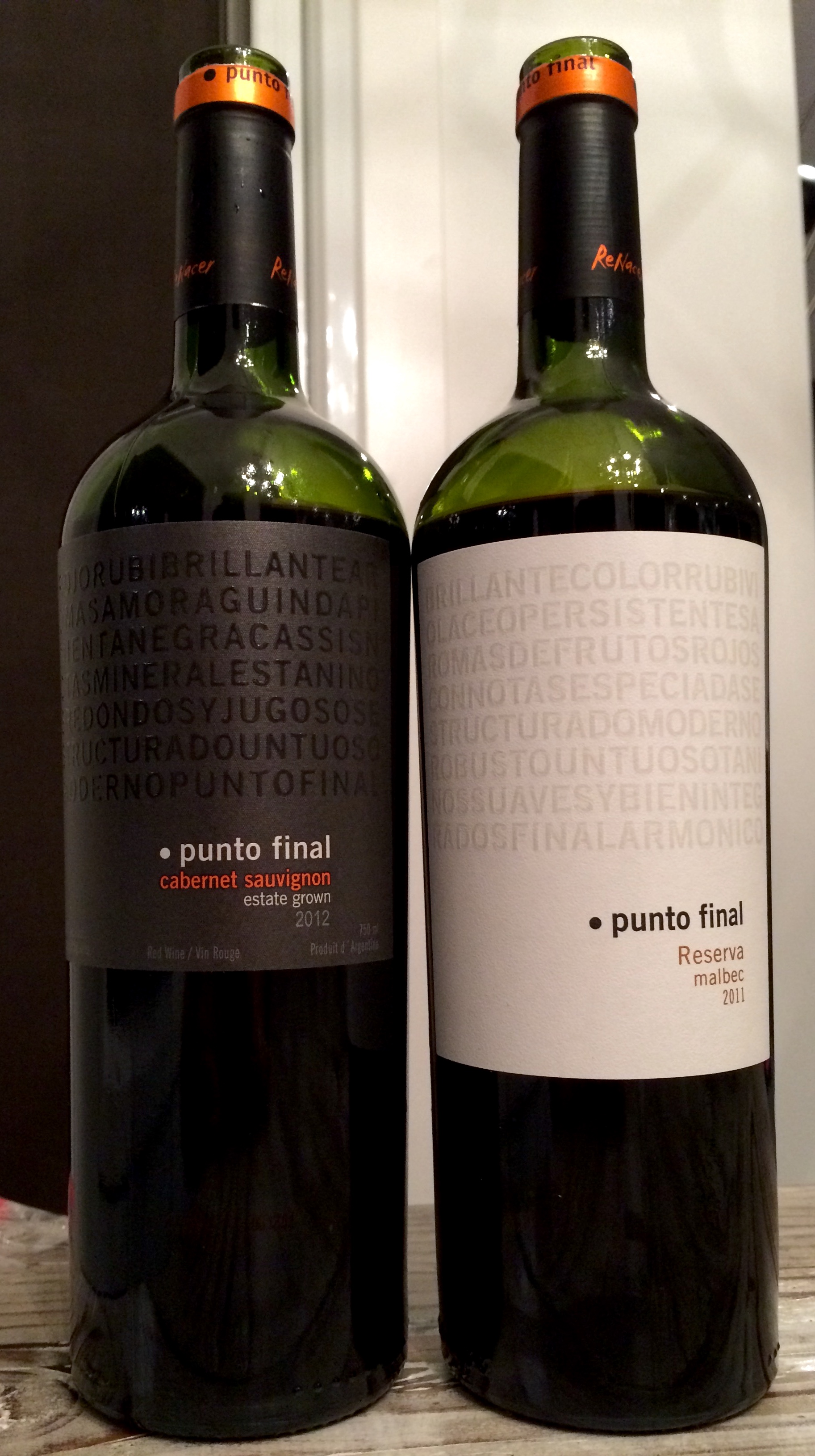
Argentine Value Challenge: Punto Final

4 10 2014

[These bottles were provided as samples for review purposes.]

FullSizeRender_1

Look closely: Spanish tasting notes!

There’s a lingering question out there that will go a long way in determining the ultimate path of the nascent Argentinian wine industry:  what to go along with Malbec?  That particular Bordeaux transplant has become a global phenomenon up in the foothills of the Andes and the undisputed star of Argentina’s vinous revolution, but there are a number of grapes currently vying for the role of its trusty national sidekick.  For a while it seemed like there was a strong marketing push to obtain Malbec-like acceptance of Argentina’s most unique white, Torrontes; I recently read a Decanter tasting panel that argued forcefully that the country’s recent forays into Cabernet Franc were an absolute revelation and that this underappreciated varietal should assume the silver medal position among Argentinian producers, although the less exciting Bonarda currently occupies that slot in terms of vineyard acres planted.  And of course, there’s always Cabernet Sauvignon, the international behemoth, promising instant recognition and easy sales for anywhere warm enough for it to grow.  In my experience, if an Argentine wine is on the shelves here and it isn’t Malbec, it’s usually Cab.  And while the wine geek in me would love to see Franc seize the day, the realist in me knows that Sauvignon will be pretty tough to displace. Read the rest of this entry »


Wine Review: 2012 Alice May Pathfinder Sauvignon Blanc

27 07 2014

[This bottle was provided as a sample for review purposes.]

Cali grapes, Calgary soul.  This one sticks with you.

Cali grapes, Calgary soul. This one sticks with you.

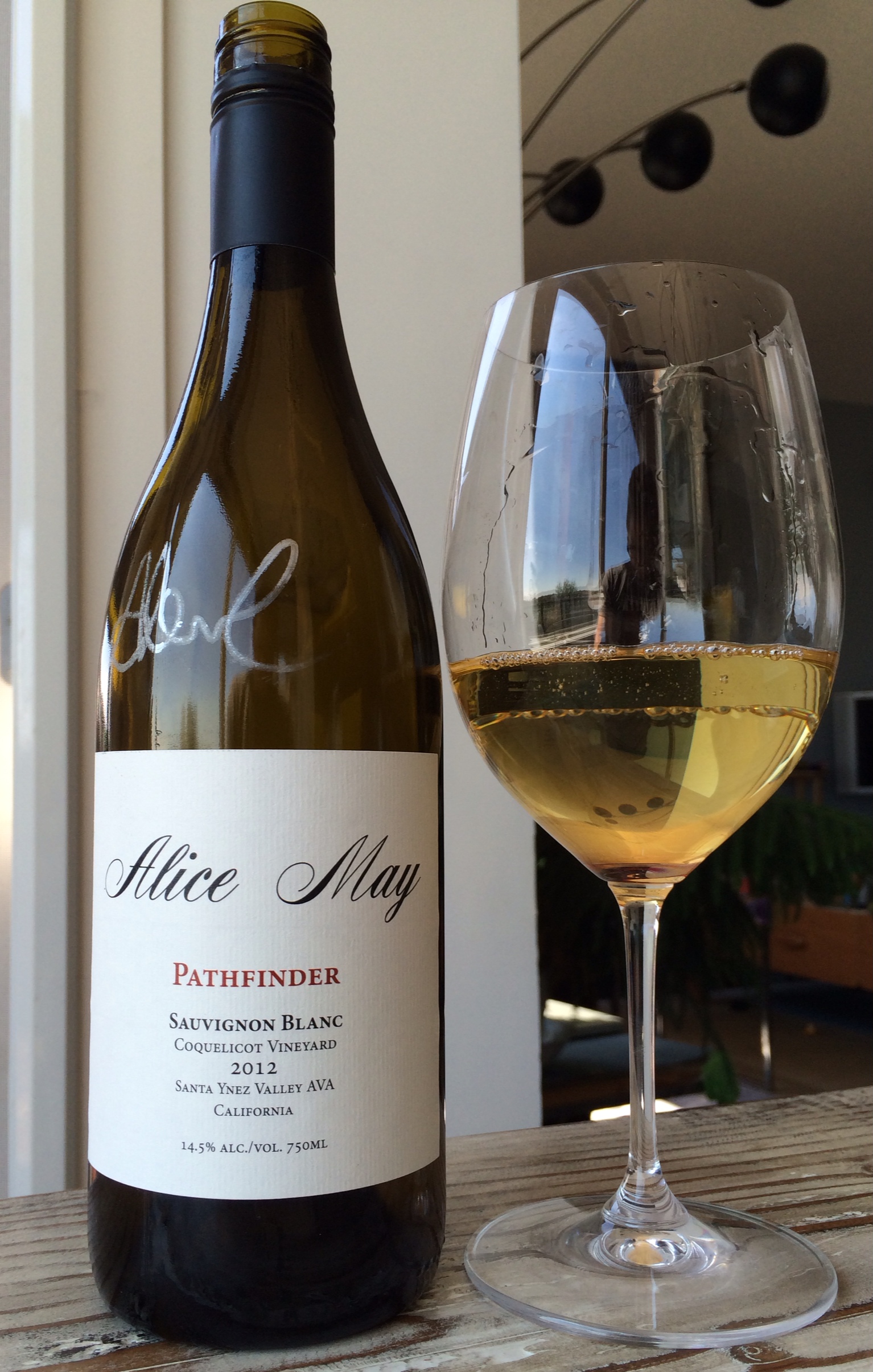
Earlier this year I was first introduced to Alice May wines, made by Calgary sommelier Alex Good in collaboration with California stalwart producer Barrel 27, thanks to its Cote-Rotie inspired Crosswinds Syrah, which made me sit up and take notice of this new source of killer value wine with a local heart.  Alice May was (and still is) a label focused on the production of Rhone varietals in southern California’s Santa Barbara County, but this, their inaugural white release, has a different French homeland:  Sauvignon Blanc is found both in white Bordeaux (blended with Semillon and Muscadelle) and in Sancerre and Pouilly-Fume in the Loire Valley (where it is a single varietal star).  While this may not have been Good’s initially planned direction for his Pathfinder wine (which will be made of the much more Rhone-y Grenache Blanc and Roussanne as of next year), he got the proverbial offer he couldn’t refuse to take some prime Sauvignon from the highly esteemed Coquelicot Vineyard in the Santa Ynez Valley and he ran with it.  Coquelicot is a cooler climate site situated right close to the Pacific Ocean almost due west from Los Angeles, biodynamically farmed by a top vineyard manager and churning out powerful yet balanced fruit full of character.  And it shows. Read the rest of this entry »


Calgary Wine Life: Torres Mas La Plana 40th Anniversary Tasting

16 07 2014

photo 4For the CEO of a global wine empire, Miguel Torres Maczassek is a pretty chill guy.  Soft-spoken yet jovial, the 5th-generation head of one of the wine world’s largest family businesses initially comes across as unassuming, but his passion for his multitude of intercontinental wine projects and his pride in the Torres family legacy shines through whenever he speaks.  Torres (the estate) has vineyards and properties across all of the major wine regions of Spain and many other countries, and Torres (the man) recently spent 3 years living in Chile running the family’s operations there, making connections with local growers and taking steps to preserve and revive some of the country’s oldest known varietals.  He was in Calgary recently to help celebrate the 40th anniversary of Torres’ flagship red, Mas La Plana, which I have had and enjoyed many times before and which is one of those rare premium wines that can still be found locally at a fairly reasonable ($50ish) price point.  We had the opportunity to track the evolution of this wine through four different decades, from the 1980s to the 2010s, and to witness firsthand the steps taken to fully realize the family’s vision for its top bottling. Read the rest of this entry »


Wine Review: 2013 Culmina Unicus

8 06 2014
There it is:  history in a (classically presented) bottle.  BC Gruner!!

There it is: history in a (classically presented) bottle. BC Gruner!!

In my last post, I celebrated an Old World country’s rich wine history.  In this one, I get a front row seat as a New World country, my own, takes a milestone step towards charting its own course.  I may be a little more excited about this development than is strictly necessary, but I’ve (seriously) been waiting and hoping for this moment for a few years.  Finally, fantastically, Gruner Veltliner has come to the Okanagan Valley.

If you’ve heard of Gruner before, chances are you’re either at least a semi-serious wine person or you’ve been bothered about it before by me.  I adore Gruner, which is the signature white grape of Austria and is rarely found elsewhere; given that Austrian wine doesn’t exactly fill retailers’ or importers’ heads with gleeful visions of dollar signs, there tragically tends to be much less of it around locally than its quality and value would otherwise dictate.  If you’ve never tried a bottle of Gruner Veltliner, it’s sort of like if a Riesling and a Chardonnay had a rebel baby.  It combines the powerful acidity and piercing minerality of Riesling with the luxurious, silky mouthfeel of Chardonnay, then takes a left turn and offers up a remarkable set of spicy, tangy and often downright wacky flavours all its own, from white pepper to rubber boots and elastic bands (all in a good way, I swear).  The result is a sensory experience unlike any other in wine, one that keeps you constantly engaged as you try to figure out what the hell is going on in your mouth.

One of the reasons that I have often thought that Gruner Veltliner might be able to find a second home in Canada is the climatic and geographic similarities between BC wine country and Gruner’s homeland:  northern Austria and southern BC share almost the exact same latitude (48.4 degrees North in Wachau, 49.1 degrees North in Oliver), the same continental climate and high day-night temperature shifts and, in places, similar soils.  Yet until now the Okanagan has churned out every conceivable white grape under the sun, but no GV.  Thankfully, Culmina has come to the rescue.  This new high-end venture from Don, Elaine and Sara Triggs (of Jackson-Triggs fame) is based on a philosophy that combines old-school attention to detail and minimalistic winemaking with new-school scientific advancement, especially as it relates to vineyard mapping and matching grapes to sites based on detailed soil, temperature and exposure analysis.  Check out the details at Culmina’s visually stunning website – they’re fascinating, if you’re the sort of person who finds micro-block mapping and soil pit analyses fascinating (which I am).

Read the rest of this entry »


Calgary Wine Life: 1863 Taylor Fladgate Port

6 06 2014

What happened in 1863?  Henry Ford was born.  The Battle of Gettysburg helped shape the course of the US Civil War.  Canada was 4 years away from becoming its own country.  And the grapes that went into the Port that I got to try this week were harvested.  There are times when I am reminded just how transportive wine is, how it can be a liquid chronicler of history.  This was one of those times.

Eighteen. Sixty. Three.

Eighteen. Sixty. Three.

It probably goes without saying that it’s exceedingly rare for a producer to release a wine after it has turned 150.  The centuries-old Port houses in Portugal would only have extremely limited quantities of reserves even half that old, which would in most cases be used in minute quantities to add flavour and complexity to the producers’ 40-year old tawny Port release (the 40 years on the label represents the average age of the multi-vintage wines in the bottled blend).  Taylor Fladgate has added to its own reserves over the years with select lots of high-end wood-aged Port from the 19th century, and when the quality of an ancient elixir is exceptional, it will occasionally decide to bottle and release it as a stand-alone offering.  That was the case with this single-harvest Port from one of the best vintages of the 19th century, 1863, which after a century and a half is just being taken out of barrel and readied for sale this fall.  When I say “barrel”, I’m referring to one of only two in existence:  Fladgate has but a lonely pair of barrels of the 1863, which will ultimately make less than 1,500 bottles of the Port for the entire world market.

Read the rest of this entry »


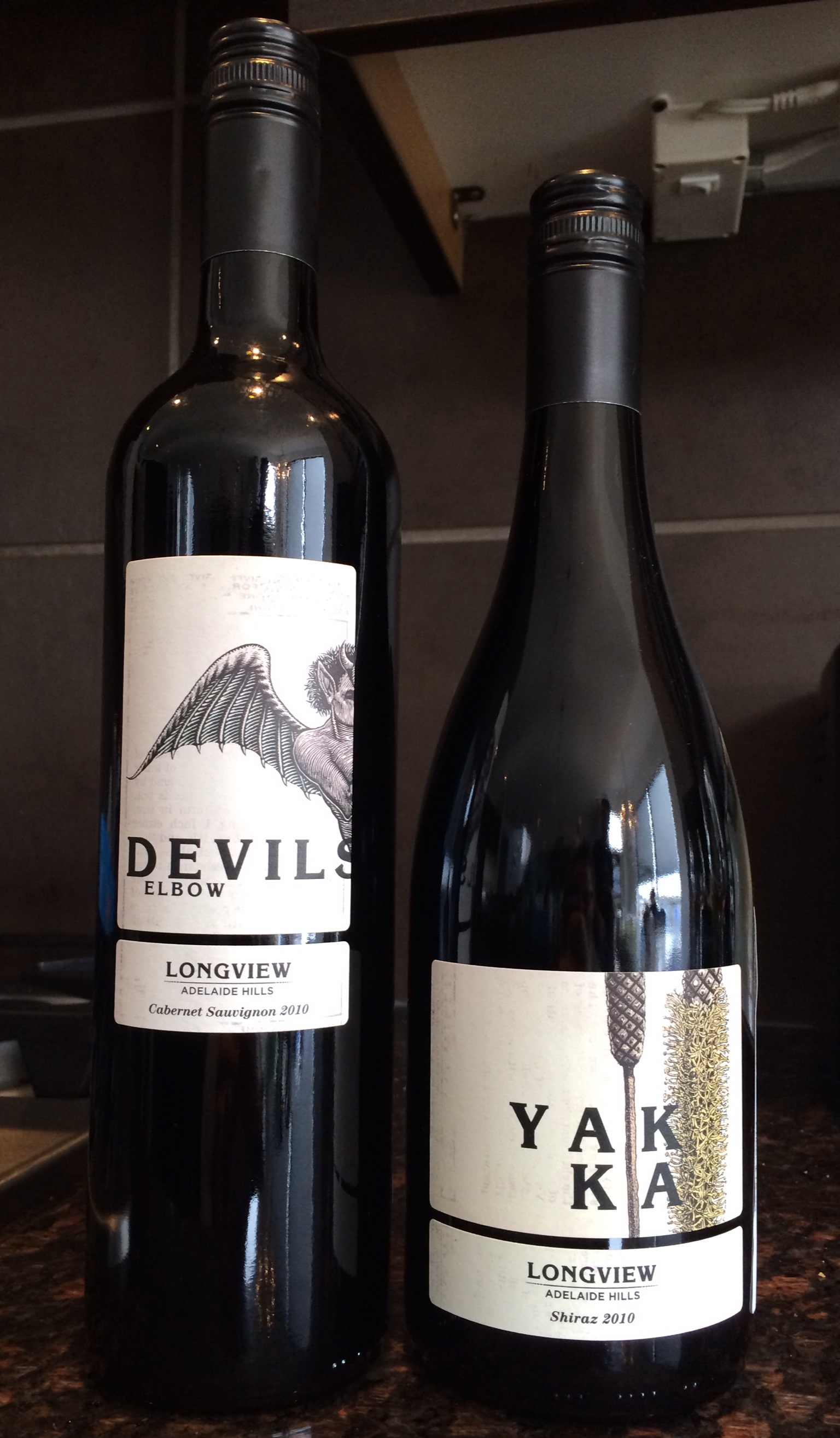
Longview Showdown: 2010 Devils Elbow Cabernet Sauvignon vs. 2010 Yakka Shiraz

18 03 2014

[These bottles were provided as samples for review purposes.]

Cab. Shiraz. The ultimate battle.

Cab. Shiraz. The ultimate battle.

This is the kind of tasting opportunity that wine geeks drool over:  two bottles from the same producer (Longview), same region (Adelaide Hills in Australia), same vintage (2010) and same single vineyard (the aptly named Longview Vineyard), made using the same winemaking techniques (fermentation on skins, 18-20 months aging in French oak), differing only by their grape variety, Cab vs. Shiraz.  The Devils Elbow Cabernet Sauvignon was named after a treacherous hairpin turn in the windy road leading up the hills into Longview Vineyard; the Yakka Shiraz was named after a spiny prehistoric-looking plant that grows in it.  Both red offerings epitomize the New Australia now being unveiled to the wine world:  many recent efforts from Down Under try to sell themselves as a counterpoint to the stereotypical blowsy Aussie fruit bombs of years past, but these wines from Longview take that philosophy absolutely to the hilt, offering up balanced, restrained, nuanced flavours and a take on each grape that is dripping with Old World influence.  The similarities between the two reds are plentiful, but when poured side by side, the differences slowly emerge. Read the rest of this entry »


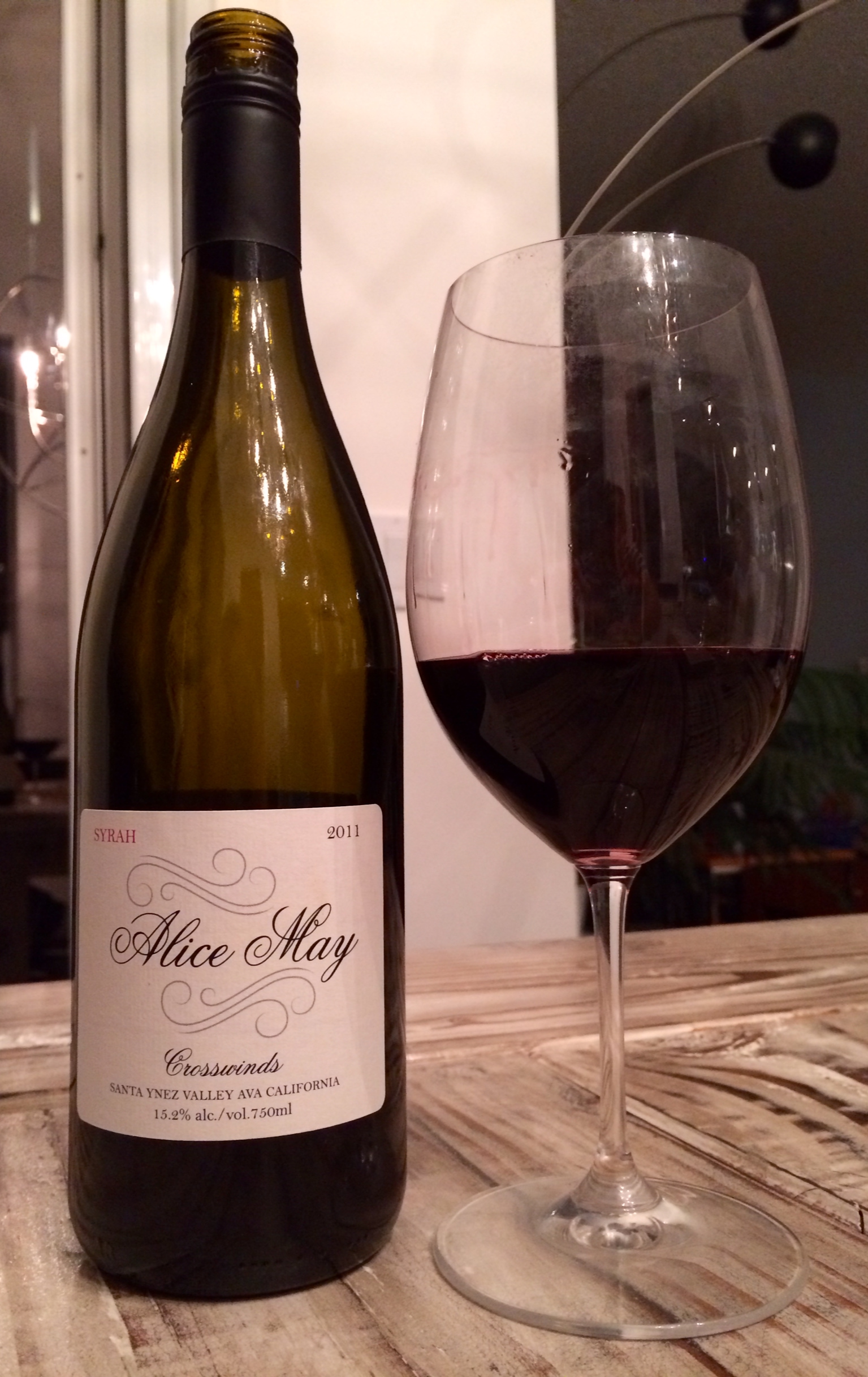
Wine Review: 2011 Alice May Crosswinds Syrah

23 02 2014
Calgary-born, Cali-made.  YYC pride rise up!

Calgary-born, Cali-made. YYC pride rise up!

I was at the always-amazing Alloy Restaurant with my wife a few weeks ago, celebrating a rare night away from young children and talking to sommelier Alex Good about Riesling (because I basically talk to everybody about Riesling).  Suddenly he said:  “Hang on.  I have something for you to try.”  He returned with a glass of deeply coloured, powerfully aromatic, eminently interesting red.  “What is it?”  “It’s a Syrah/Viognier co-ferment from Santa Ynez Valley in California.  Cote-Rotie style.”  “Who’s the producer?”  “Well, me.”  It turns out that Good (who has since left Alloy to become a partner and sommelier at the equally excellent downtownfood), in his limited time away from the restaurant biz, had partnered with Cali winery Barrel 27 and its winemaker McPrice “Mac” Myers to create a new label geared toward artisanal, small-run, Rhone-influenced wine.  The 2011 Crosswinds Syrah is the inaugural effort of this collaboration, and although the grapes are all from California, the label name is a clear nod to the venture’s northern soul:  the Alice May is the name of the ship that became the title character’s funeral pyre in the classic Canadian poem The Cremation of Sam McGee.  Only 100 cases of the Crosswinds were made, almost all of which came to Alberta and most of which are now gone.  Syrah is my second vinous love after Riesling, and homegrown efforts like this are such rare finds in the Calgary wine world; both the wine and the story were so intriguing that I set out to find a bottle as soon as our meal was over.  I’ve gone back to find more multiple times since then.

Read the rest of this entry »


Wine Review: 2011 Les Halos de Jupiter Cotes du Rhone

11 02 2014

[This bottle was provided as a sample for review purposes.]

You can take the emptiness of the bottle as a sign of how good this wine is.

You can take the emptiness of the bottle as a sign of how good this wine is.

It had all the hallmarks of a crappy week:  utterly frigid weather, lack of sleep due to a teething baby, tons of stuff to do at the office.  But everything changed yesterday afternoon when I had an unexpected visitor at work:  a courageous rep from The Wine Syndicate who braved the cold to drop off a box of 5 killer-looking wines for me to try.  One of them in particular caught my eye, a French red from the Southern Rhone with a decidedly un-French approach to branding.  It was the first vin de France I had ever seen with a planetary body on the label, and I knew as soon as I saw it that I was opening it that night.  As it turns out, I lucked out, because this is a comfort wine to the nth degree, the ideal way to warm up after plunging through gruesome winter on the way home.

Les Halos de Jupiter is a negociant operation (where grapes are sourced largely or entirely from vineyards not owned by the winery) overseen by French master consultant Philippe Cambie, who provides his expert touch to a number of famous Rhone labels and has taken this on as his own personal side project.  The obvious first question on my (and everyone’s) mind:  what’s with the name?  The label explains that Jupiter (in Roman mythology, the same as Zeus in Greek mythology) is the king of gods and humans, the head of the patriarchal family of deities.  It’s also the biggest planet in our solar system, and Halo is the closest of its rings.  Cambie believes that Grenache is the king of all grapes and the “natural leader of Rhone varietals”; it’s the Jupiter of viticulture, and its Halos are the various subregions of the Rhone Valley that best allow it to express itself.  If this were an SAT questionthe best SAT question ever, its answer would be Halos:Jupiter :: Rhone regions:Grenache.  Cambie’s Halos span the most prestigious areas of the Southern Rhone, from Chateauneuf-de-Pape to Gigondas and Vacqueyras, but they also extend to areas where hidden values can be found.  Cotes du Rhone is a catch-all appellation that basically covers all of the areas of the Rhone that aren’t scooped up by a sexier subregion, but this particular wine is a single vineyard offering grown at elevation just outside of the quality region of Rasteau, yielding top-end old vines Grenache without the CNDP price premium. Read the rest of this entry »


Calgary Wine Life: Wines of Portugal Tasting @ Market

7 11 2013

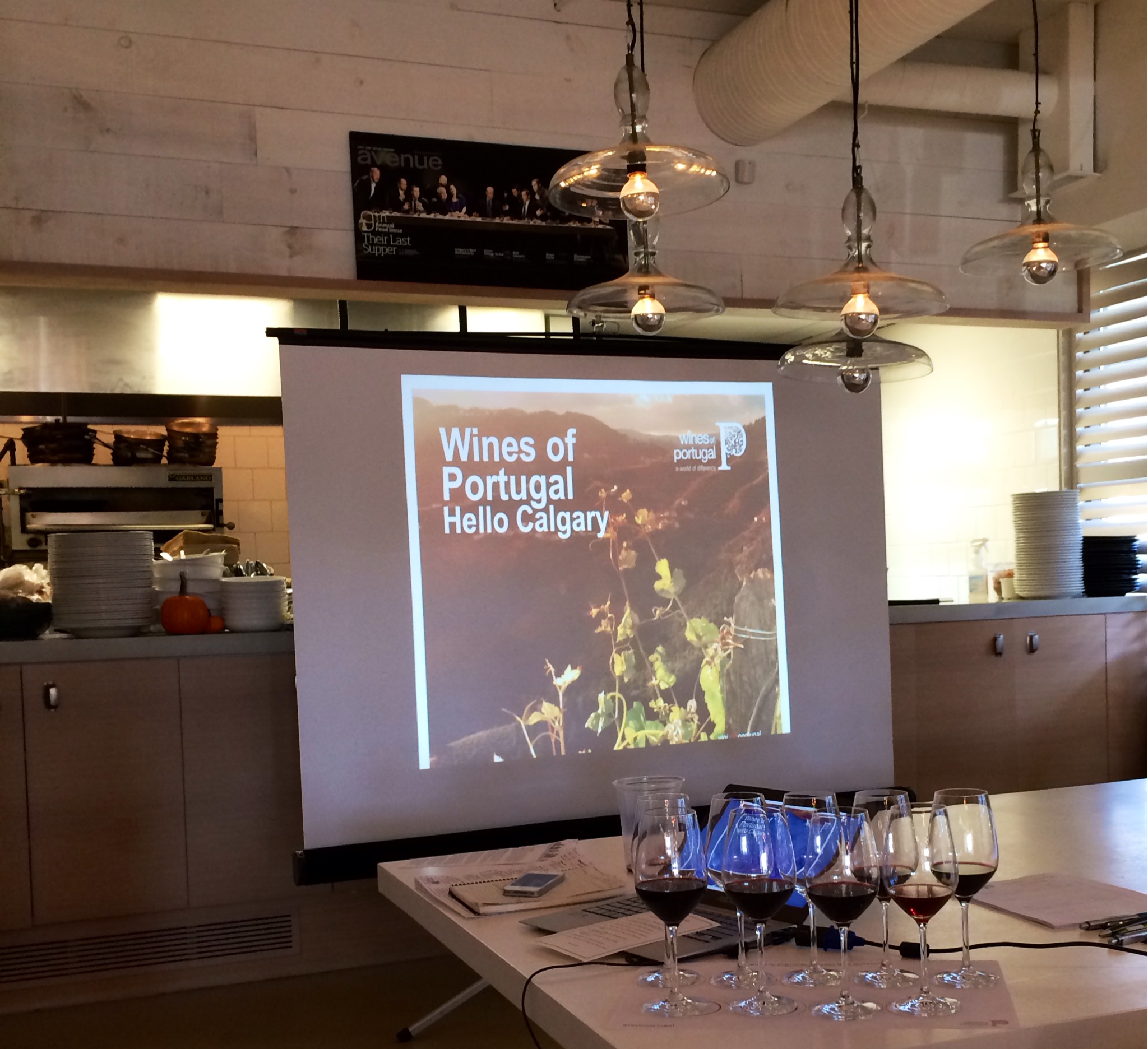
It appears to be Underappreciated Wine Region Month here at Pop & Pour.  Last week I was exposed to the new wave of bottlings coming out of the southern Italian island of Sicily; this week it was Portugal, another unheralded European wine area, that was aiming to bring its remarkable wines to the attention of international export markets.  I got the opportunity to sit in on a guided tasting put on by the Wines of Portugal and led by energetic and well-versed sommelier extraordinaire DJ Kearney, who brought us up to speed on everything from the number of indigenous grape varieties found in Portugal (250+) to the proper pronunciation of key Portuguese wine terms (hint:  if it ends in an E, don’t pronounce the E, no matter how much you want to).  The tasting was held at Market Restaurant on 17th Avenue, which I had never been to before but which proceeded to serve us an absolutely stellar three-course lunch that will be reason enough to bring me back very soon.

image-9

It was sort of fitting that I got to experience Portugal’s wine story after sitting in on Sicily’s, because the two regions have much in common.  Both are home to large numbers of local grape varietals that are barely found anywhere else, and both have made the conscious choice to embrace these lesser-known grapes and focus their quality production around them.  As a result of a lack of name recognition and a dearth of critical attention on these under-the-radar wines, both can offer tremendous value for money for those consumers brave enough to take the plunge (I think Portugal might win the worldwide gold medal for these kinds of bargains).  And both tend to focus more on wines that are blends of multiple different grapes as opposed to single varietal offerings, with Portuguese wine in particular almost always a group vinous effort as opposed to a solo act.  Kearney channeled her inner Wino Karl Marx when talking blending, urging us through these wines to shed the shackles of varietal typicity and embrace the communal symphony of these intrepid groups of local grapes (featuring reds Touriga Nacional, Touriga Franca, Tinta Roriz [aka Tempranillo] and Baga, and whites Alvarinho [aka Albarino], Arinto, Encruzado and many more) all working together to make something greater than themselves.

Read the rest of this entry »


Calgary Wine Life: Sicilian Master Class @ Theatre Junction Grand

31 10 2013

Quick:  name a Sicilian wine producer.  Did you say Planeta?  Me too.  Name another one.  To my embarrassment, I couldn’t.  My list of known Sicilian producers ends at one.  This fairly sizeable void in my wine knowledge is particularly galling because, believe it or not, Sicily is the biggest wine-producing region in Italy:  it actually produces more wine per year than Australia, more than Chile and Bordeaux combined.  So why does it continue to have such a low profile?  Because, up until recently, the wine produced was not generally of high quality and was often sold off in bulk to other parts of the country instead of bottled on its own.  Even now, less than 20% of Sicily’s annual production is bottled for individual sale, and only 5% or so comes from a legally designated DOC region.  But there is currently a quality revolution underway in Sicily, one that has been brewing since the 1980s and that has seen many longstanding producers forego high yields and the sale of their crops by the ton in favour of more meticulous growing and winemaking practices and the creation of better wines under their own labels.  This week I got the chance to witness this transformation midstream.

image-7

Read the rest of this entry »


Wine Review: 2012 Stag’s Hollow Grenache

20 09 2013

[This bottle was provided as a sample for review purposes.]

You may be looking at history -- Canada's first 100% Grenache?

You may be looking at history — Canada’s first 100% Grenache?

I will spare you the details of why I haven’t posted in awhile; suffice to say that it involves multiple children under the age of 3, potty training, vomit, and the inexorable loss of sanity.  As a result of the above, these first 50 words have taken 25 minutes to write.  But I will not be deterred, because today is something bigger than you or I or the trials of parenting.  Today is International Grenache Day.  And today I get to write about a wine that I have followed from a distance for a long time, even though it is brand new to market.

I have recently come to realize and embrace that, when it comes to reds, I’m a Rhone guy.  I have adored Syrah for quite some time, but in the last few months I have become increasingly enamored with the southern French region’s other red offerings as well.  I tried with piqued curiosity my first varietal Carignan, the ’70s shag carpet of wine.  I devoured Mourvedres from Bandol to Washington State and back.  And I opened my heart to the joy and beauty of Grenache.  There may be other grapes that I enjoy more at their peak expressions, but I don’t know if there’s another grape out there that disappoints as seldom as Grenache does.  No matter how much it costs or where it’s from, it always hits the mark and is reliably bright and juicy and enjoyable.

But what it’s not, at least until now, is from Canada.  Grenache is generally a hot-climate grape, one that needs a lot of sun and a lot of warmth to ripen.  It’s best known in the Mediterranean climates of southern France and the arid deserts of Spain, occasionally popping up in the equally balmy South Australia or the equally parched eastern Washington.  In Canada, where every grape imaginable seems to be planted with hope somewhere, I had never heard of Grenache being grown, and certainly had never seen it being bottled on its own, until I happened to stumble on a Twitter mention of this project by Stag’s Hollow winemaker Dwight Sick.  I have been thoroughly intrigued by the idea of Okanagan Grenache ever since, and after some relentless cyber-stalking, I was lucky enough to snag a bottle of this inaugural experiment and see for myself how this warm weather red adapted to my home and native land. Read the rest of this entry »