By Raymond Lamontagne
“Great wines taste like they come from somewhere. Lesser wines are interchangeable; they could have come from anywhere.” – Matt Kramer in “Making Sense of Wine”
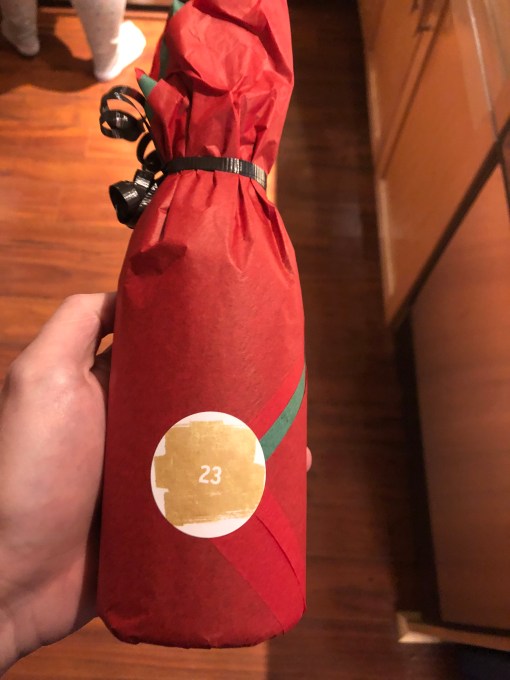
YES. Just yes. Last year we were universally astounded by the Ken Wright Cellars Shea Vineyard bottle from Day 17, a mind-blowing flashpoint of the sort you might not expect in a wine Advent calendar, even ones as carefully curated as these have been. I open today’s squat bottle almost reluctantly, flooded with fatigue and all kinds of associations that converge on how done I am with wine blogging, at least for a month or so, because DAMN, this is a labour of love but still requires fortitude in what is already a busy December for me… And poof. All that is gone, burnt away like a flammable fog suddenly detonated by a struck match. I remember why I love wine. My whoop of delight startles the cat in the den where my wine fridges live, and Ken Wright is BACK, baby. And it is not the cuvee from last year.
Ken Wright has been described by friends as a “brinksman”: someone who can pull off miracles just when it seems all hope is lost. Wrestling competitively from the 6th grade until his first year of college, Ken discovered wine while waiting tables in Kentucky, suggesting to the restaurant owner that they could likely sell more bottles if they knew how each wine actually tasted. A fascination with Burgundy and Pinot Noir was born, with Ken and his roommate Alan Holstein cutting their teeth on such bottlings as La Tache and Richebourg. I am trying to fathom the very notion of university students being able to afford such wines, and this only serves to reinforce the oft-present feeling that I was born in the wrong era. In any event, Ken gave up his pre-law studies to pursue enology and viticulture at the University of California, Davis. He struggled with the chemistry components of this program, although for the quiet but shrewd Ken that was no real obstacle when it came to learning how to make wine. He got by with a lot of help from his friends. Dying to leave California after concluding that the place was simply too hot for top-shelf Pinot Noir, Ken arrived in Oregon in 1985 with barrels of Cabernet Sauvignon to sell as the inaugural offerings of his own winery, Panther Creek. Selling such undocumented wine was illegal, but the silver-tongued Ken got a pass.
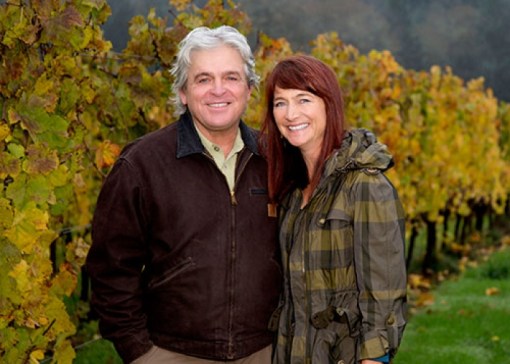
Alas, Panther Creek fell upon hard times and had to be sold. Ken got a divorce, fortunately an amicable one. Financial difficulties associated with the sale of Panther Creek got sorted, and Ken Wright Cellars was born in 1996. The mission? To showcase Pinot Noir from 13 single vineyard sites, wines with precise flavours and sharpshooter finesse, unencumbered by booziness or excesses of other structural components (tannins, acid). All wines are made using the same cellar regime, so that terroir is maximally accentuated and facilitating direct comparisons across the sites. Grapes are hand sorted and always de-stemmed, as Ken states that including the stems with these various sites yields wines that are too angular. Fermentation takes place in open vats, with the wines seeing around one year in new French oak barrels (albeit barrels specially treated with salt and hot water to mitigate resinous notes from the wood). Supple and seamless. “Grippy and tannic does not provide pleasure”, he says. Ken encouraged growers to farm for quality by paying them for each acre instead of by the ton. He introduced vertical shoot positioning in Oregon to expose grapes in the relatively cool climate to more sun. He continues to use research links between microbiological activity and soil quality to rehabilitate tired old sites such as Bryce, working closely with vineyard owners so the latter can sell quality fruit to wineries across the state. To top it all off, Ken himself petitioned growers to create six sub-appellations in the Willamette Valley: Yamhill-Carlton, Chehalem Mountains, Ribbon Ridge, Dundee Hills, McMinnville, and Eola-Amity Hills. Yes we Ken. Burgundy comes to Oregon.
 I should be careful with such statements. Oregon Pinot will probably have more bright fruit than your average Cote d’Or. But one cannot escape the comparison when it comes to such fine-grained mapping of vineyard sites. The 2015 Ken Wright Cellars Freedom Hill Vineyard Pinot Noir hails from a Willamette Valley AVA site said to yield the most firm and structured Pinots in the Ken Wright stable. Occupying a gentle southeasterly slope that is conducive to ripening, the soils are known as “bellpine”, a mixture of uplifted ancient seabed and siltstone that is said to contribute to the aforementioned structure in the wines, even as freshness is preserved. Ken states that such soils yield more floral and spicy characters in the finished wines, as compared to nearby volcanic soils that enhance fruit. One might be forgiven for wondering if this site manages to capture the best of both worlds.
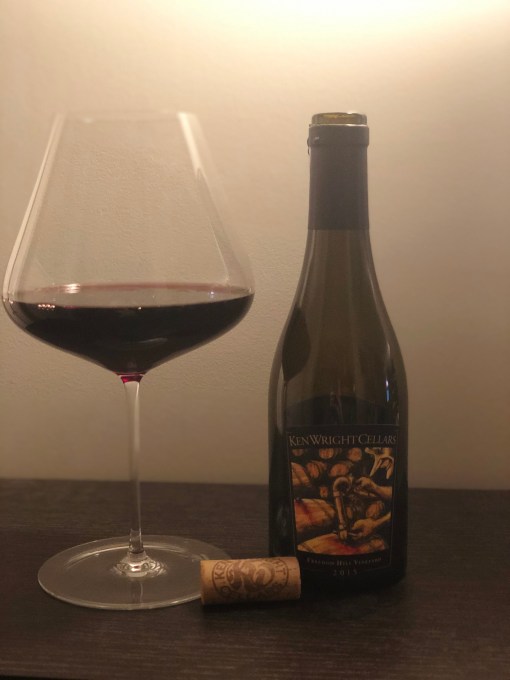
This is darker than expected colour-wise but not opaque. The nose does pop with Bing cherry and black raspberry, high-toned wild blueberry and plum, but there they are as advertised, a few floral squadrons filling the skies of my Burgundy Zalto glass with Thrills gum, Parma violet candies, lilacs, rose hips, iris, cinnamon toothpicks, allspice, cola, cinder blocks, warm pavement, and an earthy verdant wreath of Irish moss, English breakfast tea and old growth underbrush. Less cerebral and pretty than the Shea Vineyard, this is more bold and powerful, a Pinot Noir Tony Soprano…but do not confuse power with a lack of complexity. The finish lingers with watermelon Jolly Ranchers and a few dirty pan drippings. What more can I say? The calendar has probably peaked. I’ll see you fine folks next year, barring unforeseen circumstances. Bring it on home, Peter.
91+ points

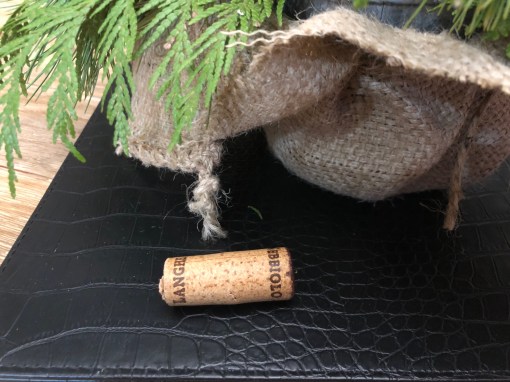
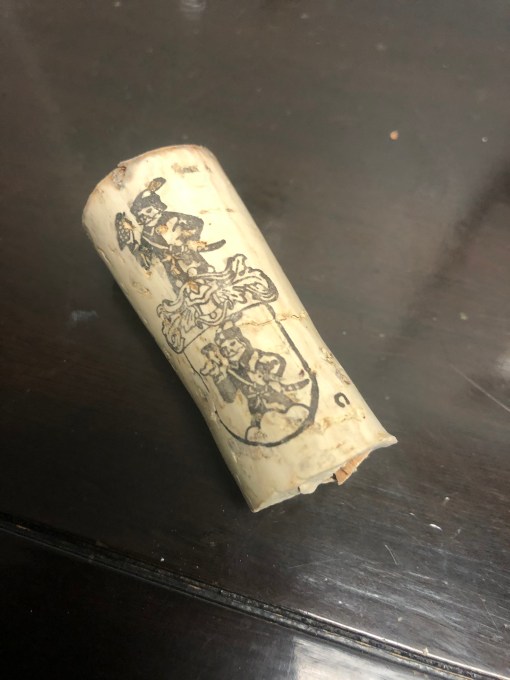
Cork Rating: 4/10 (Nomacorc plus washed-out graphic. Ken Wright has to do one thing wrong, I suppose.)


 I’m not implying that I’m disappointed. In fact, this appellation is a deliberate step up in quality from the Cotes du Rhone per se. In the late 1960s, several villages successfully petitioned to include their names on wine labels, in exchange for being willing to submit to higher quality standards. These included the requirement that Grenache must comprise not less than 50% of any given red wine, with a further 20% consisting of Syrah or Mourvèdre in any proprotion. A maximum of 20% of other authorized varieties is also permitted, with these including various obscurities permitted in Chateauneuf-du-Pape (Cinsault, Muscardin, Vaccarese, Terret Noir) along with Carignan. At this point, the Cotes du Rhone Villages appellation has expanded to nearly 10,000 hectares, making it the second largest appellation in the Southern Rhone, half of which can add the name of a specific village to the label. Twenty villages can do this at the present time. This is starting to get the feel of the Dodo Bird verdict from Alice In Wonderland, where “everyone has won and all must have prizes”. Further reinforcing this notion is the fact that the other half of the appellation can distinguish themselves from generic Cotes-du-Rhône by adding the term “village”, albeit without a more specific moniker. The present bottle falls into the latter category, although the producer would certainly take umbrage with the notion that their wines are somehow worse than those labelled Visan or Roaix.



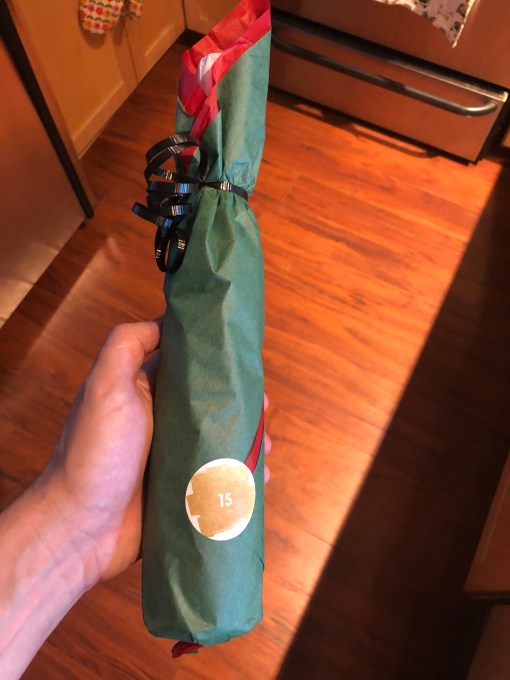 Wine importer and writing hero of mine Terry Theise captures the magic of this grape when he describes how this variety stole his heart. A single inexpensive off-dry Mosel Riesling produced by a large co-operative winery captivated and mesmerized, ultimately propelling him into a successful career and forever changing his view of a beverage. It is worth noting that he describes this fateful bottle as essentially supermarket plonk. That’s what Riesling is capable of: even the “bad” ones are pretty damn tasty, and completely obliterating the grape’s distinctive character via mass market commodity winemaking is actually quite challenging. This grape demands to be known, even if it doesn’t always carry a big stick. Riesling often prefers the ethereal, conveying something much deeper than mere bombastic pleasure. Perhaps the Mosel, home to Riesling vines for at least 500 years, is the quintessential expression of this soul.
















 cabernetdialectic (Raymond Lamontagne)
 Dan Steeves
 Peter Vetsch
 tylerderksen
 pop & pour