Wine Review: $21 Old World Supremacy

11 07 2017

[These bottles were provided as samples for review purposes.]

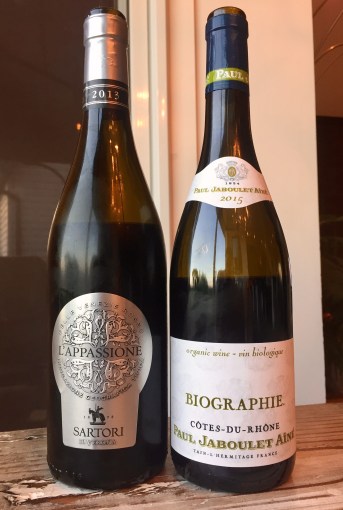
FullSizeRender-676This will be the last PnP post for a while – in a couple days I’ll be escaping the country on summer vacation and will not be thinking much at all about word counts or flavour descriptors while I’m gone.  Expect palm tree and sea turtle Instagram pictures and not much else until the end of the month.  I therefore felt compelled to send off July on the blog with a double-feature, a head-to-head review of two Old World value level wines with near-identical just-a-shade-over-$20 price tags and almost nothing else in common.  It’s Italy vs. France, a contest of different grapes, winemaking styles, vintages and approaches, with the main unifying links being longstanding traditional estates and a quest to over-deliver on quality for a supermarket price tag.  Enjoy the summer! Read the rest of this entry »


Calgary Wine Life: Gramercy Cellars Master Class @ Divino

26 05 2017
FullSizeRender-614

Greg Harrington, Gramercy Cellars

A month ago I had never been out to visit my all-time favourite winery, and they had not yet had the opportunity to come to Calgary for a tasting event.  Three weeks ago I finally made it out to Walla Walla for the first time, and among other amazing wine memories made, I paid a couple visits to my wine pinnacle, Gramercy Cellars, attending their Spring Release party on my birthday.  Almost immediately after I got off the plane in Washington State, I got an email inviting me to Gramercy’s first ever tasting Master Class back in Calgary, led by the winery’s founder and winemaker Greg Harrington.  That tasting was held this week at the marvellous Divino restaurant, and I left thinking that my next trip to Walla Walla couldn’t come fast enough.  It would be an understatement to say that this month has ticked a lot of boxes.

FullSizeRender-612Washington State has both the sun to grow big red grapes and the soil and climate to make them interesting.  The main wine areas are all in the southeastern part of the state, separated from lush, drizzly Seattle by the Cascade Mountain range, whose rain shadow blocks most of the coastal precipitation and creates a warm, dry canvas for grapevines to thrive.  The Walla Walla Valley, straddling the Washington/Oregon border, is bounded on the east side by another mountain range, the Blue Mountains, gaining both altitude and cool nightly winds off the slopes as a result.  Over millennia, the historically recurring Missoula floods have laid fine sandy soil, massive rocks and other alluvial deposits over an already-impressive volcanic basalt soil base.  Put all that together and you end up with an area that sees heat and sunlight during the day but features significant diurnal temperature drops at night, ideal for prolonging ripening and retaining acid in grapes; fine soils with intriguing mineral content that drain well and in which (thanks also to the cold winters) the vine scourge phylloxera cannot survive, allowing all vines to be planted on their own rootstocks; and a remarkable array of slopes, aspects, exposures and microclimates in a relatively concentrated area, letting farmers and producers match specific varietals with specific sites to maximize their potential.  In short, it screams winemaking opportunity.

FullSizeRender-616

The Gramercy winery and tasting room, Walla Walla.

And it screamed loud enough to bring Greg Harrington there.  Harrington, a Master Sommelier holding a prestigious position for a group of New York City restaurants, had a chance tasting of Walla Walla Syrah lead him to a trip to Washington State and then to a life-altering decision to change careers and time zones, all in the span of a couple years in the early 2000s.  After a crash course in winemaking and some assistance with grape sourcing from Washington wine pioneer Norm McKibben of Pepper Bridge in 2004, Gramercy Cellars came into existence and released its first vintage in 2005.  It has been honing its style and its craft since, continually looking for ways to sharpen its approach.  While Gramercy has always aimed for lower ripeness and alcohols and higher acid and longevity in their wines, as of 2014 it strove for further complexity by switching over to all native-yeast fermentation and introducing large square concrete tanks to its winemaking armada.  Future plans include going fully organic with its growers in the vineyard and gaining additional control on the farming side of the process, as evidenced by its recent acquisition of the well-regarded Forgotten Hills vineyard just south of Walla Walla.

FullSizeRender-617

Concrete.  Badass.

Greg Harrington spoke of these things and more across two riveting and information-packed hours with the Calgary wine trade, and at some point while we were at it we also found the time to taste through the bulk of Gramercy Cellars’ portfolio, starting off with the ultra-small production 2016 Picpoul (electric limes! on fire!) as we came in the door and not stopping until we had gone through FOUR consecutive groundbreaking Syrahs that firmly established Washington State’s place as a New World powerhouse.  Buckle up. Read the rest of this entry »


Entering The Hatch, Spring 2017

23 05 2017

[These bottles were provided as samples for review purposes.]

IMG_6146Ever since I first saw The Hatch’s avian-Thomas-Crown-Affair primary logo shortly after it opened a couple years ago, I have been sort of transfixed from a distance, finding both the winery and its artistic ethos strangely compelling despite knowing basically nothing about them.  Based out of a rustic-modern “shack from the future” in the heights of West Kelowna and sourcing grapes from across the Okanagan and Similkameen Valleys, The Hatch initially comes across (quite intentionally) more like an artists’ collective than a commercial winery, listing Salman Rushdie on its personnel page and expounding in esoteric wine-code about “Ross O” and B. Yanco” (I’ll give you a second to sort that one out).  They confidently found their visual style from the outset thanks to the remarkable imagery provided by local western Canadian artist Paul Morstad (who is also found on The Hatch’s personnel page, playing a banjo); once people have been drawn in by the graphics, it’s up to winemaker Jason Parkes to keep their attention.  The whole artistic cacophony and the simultaneously grand yet whimsical presentation lends The Hatch a jolt of personality that the generally strait-laced BC wine scene can happily use…but does the buzz extend to what’s in the bottle?  Happily, I got to find out.

FullSizeRender-601The Hatch releases its wines in stylistic series, of which I had the opportunity to experience two:  the mid-tier Hobo Series wines, featuring a panoply of hand-drawn labels of hobos (seriously) that risk making you cry thanks to their sheer beauty (also seriously), and the ambitious Black Swift Vineyards series wines, which collectively form an expansive single-vineyard project focused on the various facets of BC’s glorious dirt.  The wine, like the winery, was never boring. Read the rest of this entry »


Burrowing Owl Fall Release Set

12 11 2016

[These bottles were provided as samples for review purposes.]

Burrowing Owl Fall Release Week is quickly becoming one of the highlights of the Pop & Pour blogging calendar.  The winery is highly engaged with consumers and media alike and  is ahead of the game in terms of finding new ways to get its wines into the collective consciousness, and its renown is expanding well beyond its home province of BC as a result.  When the season’s current releases arrive in Calgary around harvest time, I’m ready to do my small part to spread the word.  Bring on the new vintages!

fullsizerender-462

A glorious Pop & Pour fall tradition.

Burrowing Owl is an Okanagan Valley stalwart, and it’s become such a ubiquitous part of the region that it’s easy to forget the winery is less than 20 years old.  The story started in 1993, when founder Jim Wyse replanted a series of vineyards between Oliver and Osoyoos in the extreme southern Okanagan.  There were no immediate plans to build a winery, but Wyse’s vision expanded once he saw the quality of the new grapes.  Burrowing Owl’s first vintage was 1997, and construction on the gravity-flow winery and massive underground cellar on the property was completed in 1998.

fullsizerender-468

 Initially focused on Cabernet Sauvignon, Merlot, Chardonnay and Pinot Gris planted on a single 130-acre site, Burrowing Owl is now up to 14 different planted varietals on 170 acres of estate vineyards in three different sites. It is no accident that the winery is named after the rare underground-nesting owl that was declared extinct in British Columbia in 1980 but is now back on the upswing due to the dedicated conservation efforts of a small group of individuals:  Wyse is one of those individuals, having contributed significant amounts of both time and money to the burrowing owl’s preservation.

fullsizerender-472

Stelvin Rating: 8/10 (Love the colour, love the side pattern and smoothness; not a huge fan of the top embossing.)

 This year I was fortunate enough to have the opportunity to try a sextet of different bottles from the Burrowing Owl 2013 and 2014 vintages, including return engagements with a couple of wines I had in last year’s releases, the Cabernet Sauvignon and the particularly eye-opening Syrah.  Let’s see how the fall 2016 lineup compared, starting with my introduction to one of Burrowing Owl’s founding whites:  Chardonnay.

Read the rest of this entry »


Domaines Paul Jaboulet Ainé: Parallele 45 Trio

6 07 2016

[These bottles were provided as samples for review purposes.]

There are not many producer names as synonymous with their home region as Jaboulet and France’s Rhone Valley.  From their pinnacle bottling La Chapelle from the world-renowned hill of Hermitage (which I have had once and vividly remember to this day) down through the rest of their lineup, the wines of Domaines Paul Jaboulet Ainé are known and revered the world over, although until recently they were decidedly under-represented in our market.  That has now thankfully changed, and Alberta once again has full access to some of the best wines the Rhone has to offer.

FullSizeRender-379

The Jaboulet winery was first started by Antoine Jaboulet in 1834, who then passed it to his two sons, Paul and Henri, to carry on his legacy.  Paul, the older son, gave the winery his name (the “Ainé” in “Domaines Paul Jaboulet Ainé” literally translates to “eldest”), and it stayed in the family for almost 175 years before finally being sold in 2006 to the Freys, a family of French winemakers with properties in Champagne and Bordeaux.  Caroline Frey (fittingly the eldest daughter of the family), who is now 37 and so was in her late 20s at the time of the acquisition, assumed the mantle of winemaker and has instituted sustainable vineyard practices and carried forward Jaboulet’s reputation for classic quality.

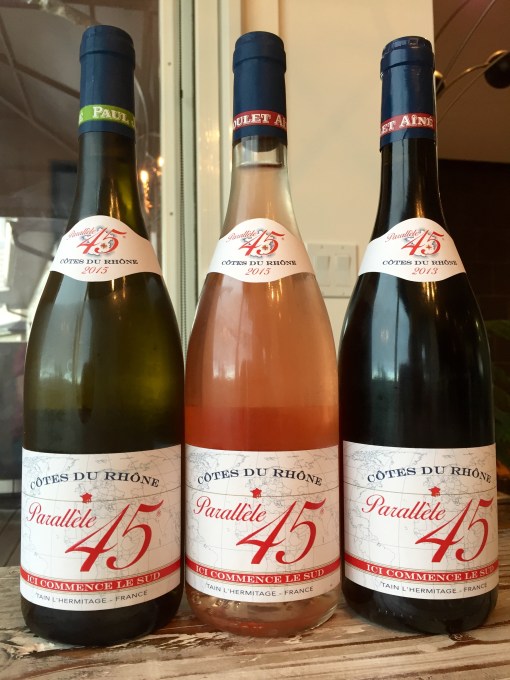
Parallele 45 is Jaboulet’s entry-level lineup of Cotes du Rhone wines, so named because the 45th parallel of northern latitude runs right through the Rhone Valley, bisects some of the Domaine’s vineyards and is only a couple kilometres from its cellars.  The bottles all bear an inscription found on a monument in the nearby village of Pont de l’Isere (which, and I am not making this up, is at 45.0040 degrees N latitude):  “Ici Commence Le Sud” – The South Starts Here.  Post de l’Isere looks to be on the southern edge of the Northern Rhone as opposed to the northern edge of the South, but the mantra still fits, and Jaboulet’s wines straddle both sides of the Valley.  I got to taste through the full Parallele 45 lineup – white, pink and red, all of which share the same $18ish wallet-friendly price tag – and see how well they carried forward the tradition of this great name. Read the rest of this entry »


Multi-Wine Review: Calliope/Burrowing Owl Octet

24 11 2015

[These wines were provided as samples for review purposes.]

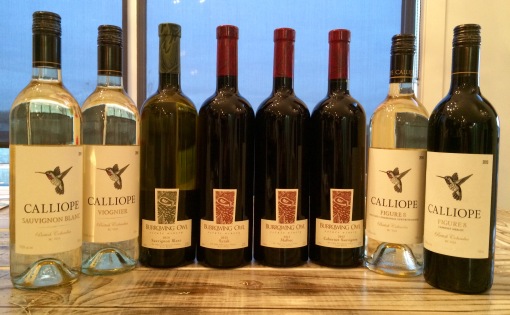
No time to spare for a huge intro tonight, as we have a whole whack of impressive Canadian wines to assess in what is sure to be a super-sized review.  I was fortunate enough to get the chance to taste through a series of recent releases from Okanagan stalwart Burrowing Owl, which is based in the scorching deep south of the Valley, near the US border in Oliver, British Columbia.  The tasting pack included a quartet of bottles from the parent winery and a quartet from its new offspring, Burrowing Owl’s second label Calliope Wines.  In keeping with the main estate’s unusual-bird-based theme, Calliope is named after a tiny hummingbird (Canada’s smallest bird) found in southern BC (not to be confused with the Greek muse or the steam organ of the same name).  According to its website, Calliope “is a full line of easy sipping, fruit-forward wines, designed to pair with casual lunches on the patio, or with contemporary cuisine”.  According to the pictures on the website, the wines also appear to pair with unnaturally beautiful Photoshopped women and neck beards.  Polite suggestion to Calliope:  Your wines are solid.  Your website is trying too hard.  It needs to relax.

FullSizeRender-169

I had often heard strong praise about the Burrowing Owl lineup from Wine People Who Know Things but hadn’t previously gotten around to experiencing it for myself, so getting to dive into a sizeable chunk of the portfolio all at once was an amazing way to get caught up on one of the brightest lights in Canadian wine.  Without further ado, here are eight mini wine reviews, starting with the second label and finishing with the main house (all prices based on Alberta retail).

Read the rest of this entry »


Wine Review: 2011 Bila-Haut L’Esquerda

23 09 2015

[This bottle was provided as a sample for review purposes.]

Bila-Haut: The label that can't miss.

Bila-Haut: The label that can’t miss.

What??  There’s another Bila-Haut?  Readers of this blog will know that I have long been a fan of the best-known wine from Rhone legend Michel Chapoutier’s Roussillon side project, the excellently named Occultum Lapidem, and I have also recently had the chance to enjoy their near-equally awesome rose.  But I had neither seen nor heard of this mustard-coloured addition to the Bila-Haut lineup, L’Esquerda, before being provided this bottle to try.  I won’t be forgetting it anytime soon.

Like the Occultum Lapidem, the Bila-Haut L’Esquerda is from a particular high-quality subregion of the Cotes du Roussillon Villages area in the extreme south of France, almost stepping into Spain.  While the Occultum Lapidem hails from the mouthful Cotes du Roussillon Villages Latour de France subregion, the L’Esquerda comes from a single vineyard nestled in its westerly neighbour, the nearly-as-wordy Cotes du Roussillon Village Lesquerde subregion, located slightly further inland from the Mediterranean Sea, immediately south of red dessert wine rock star zone Maury, and due west of another Roussillon sub-zone that’s gotten digital ink on this site lately, Tautavel.  The word “L’esquerda” is Catalan for “the fault in the rock” and is likely a nod to the nutrient-poor granitic soils of the area.  Mainly Syrah, but blended with Grenache and Carignan, L’Esquerda has basically the same varietal makeup as Occultum and is made in a very similar fashion:  from old-vine grapes (40+ years), with extended maceration periods post-fermentation (3-4 weeks) and with limited oak aging (10% or less of the blend sees a barrel).  No wonder there’s a family resemblance.

Read the rest of this entry »


Wine Review: 2012 Alice May Crosswinds Syrah

13 08 2015

[This bottle was provided as a sample for review purposes.]

The sequel. Even more awesome.

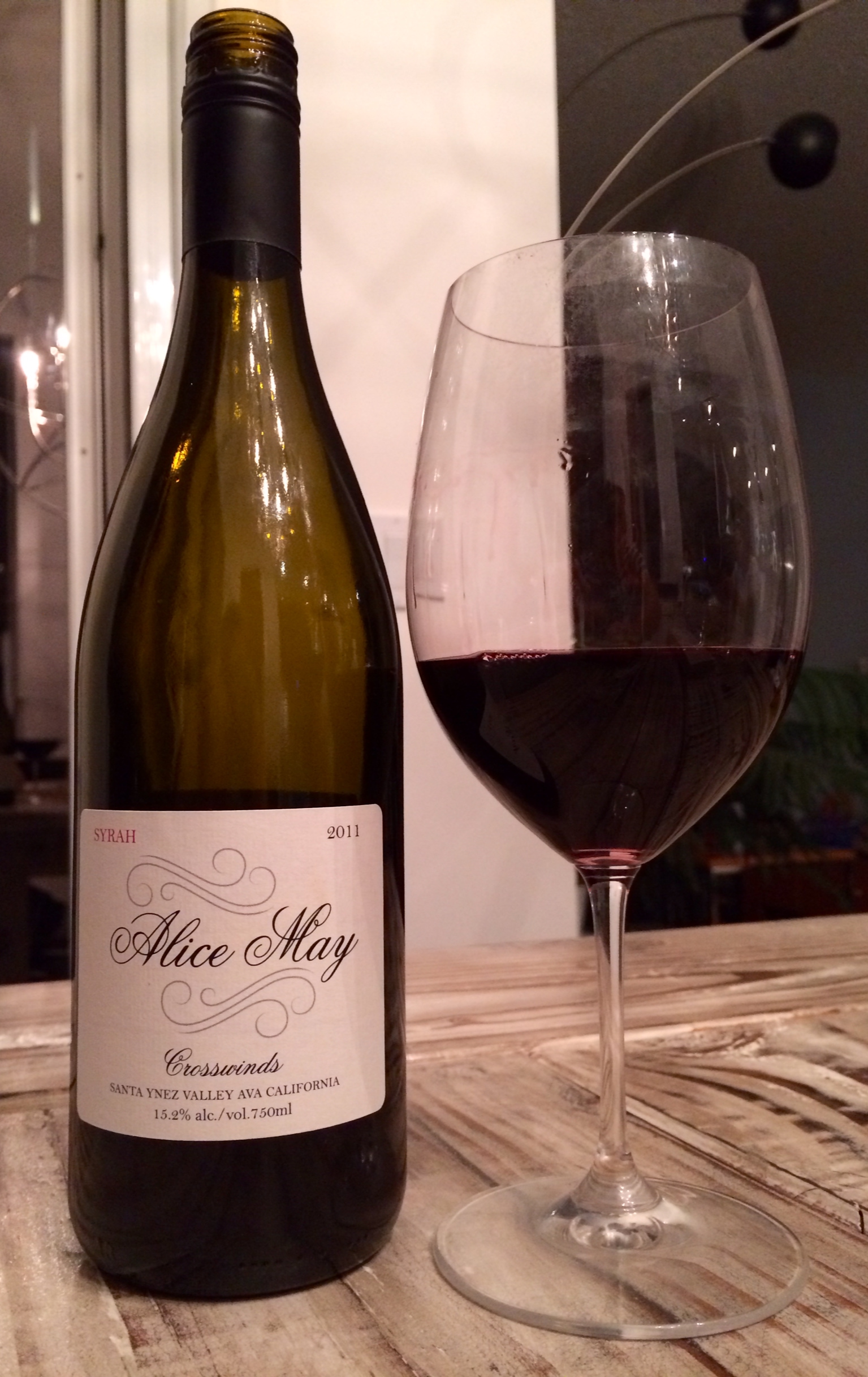
I love when I have the chance on this site to track a wine’s development over successive vintages.  I love it even more when the wine in question has a strong local connection, something you don’t get to say very often when you’re based in Calgary.  Last year I had the chance to write up the inaugural release from Alice May Wines, a new label conceived by Calgary sommelier-turned-wine-agent Alex Good in collaboration with noted California winemaker McPrice Myers of Barrel 27 Winery.  Alice May’s stated focus was on Rhone-based varietals, and its 2011 Crosswinds Syrah was a silky, elegant Cote-Rotie style co-ferment of Syrah and Viognier that I repeatedly sought out and drank over the course of 2014.  Having exhausted my supply, I was happy to turn to the 2012 edition of the Crosswinds, and even happier that it carried the Alice May torch with aplomb. Read the rest of this entry »


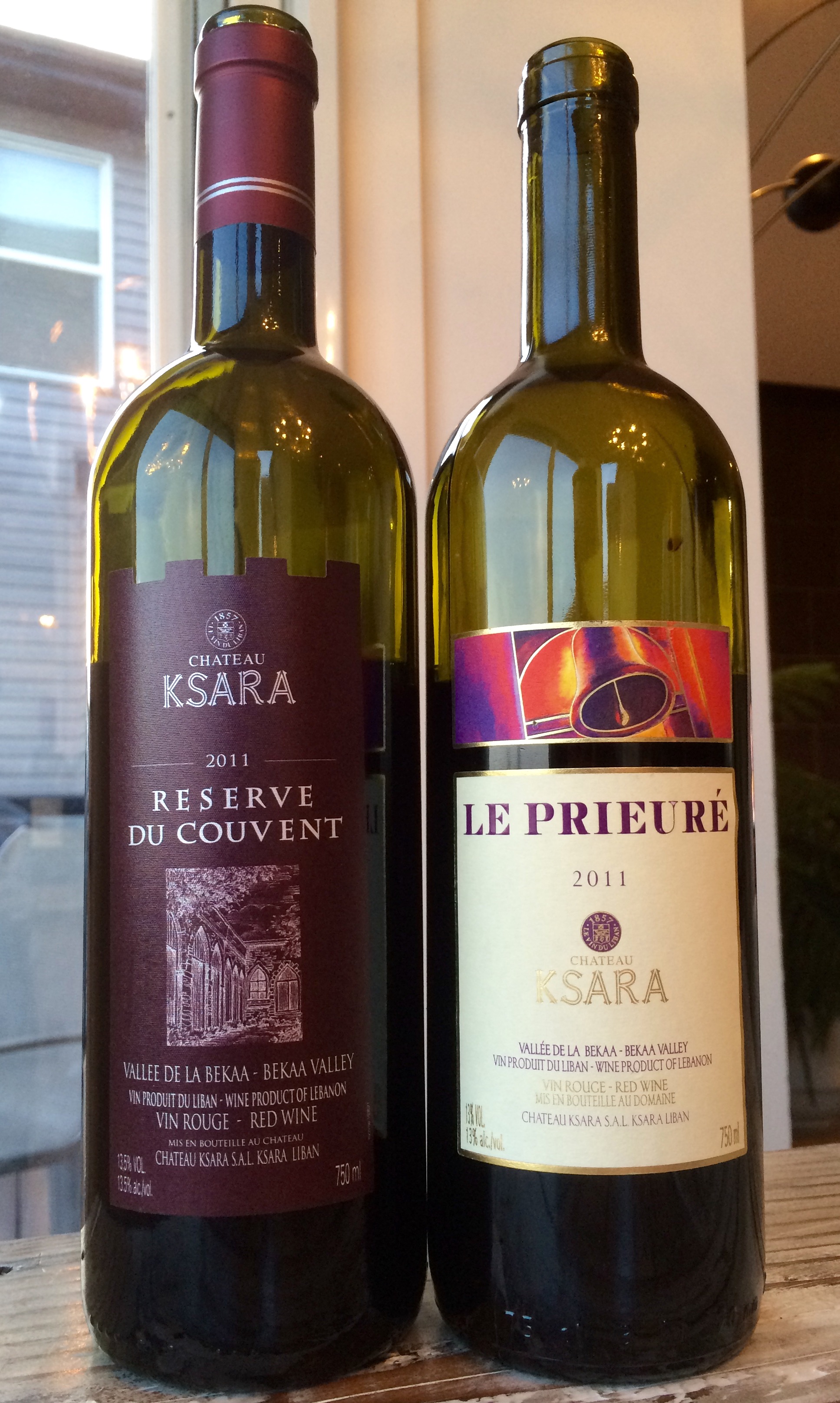
Lebanese Duet: 2011 Reds from Chateau Ksara

26 05 2015

[These bottles were provided as samples for review purposes.]

Lebanon?  Lebanon!

Lebanon? Lebanon!

The cool thing about being a wine lover is that it constantly invites you to broaden your horizons and seek out new sensory experiences.  The cool thing about running a wine blog is that sometimes those experiences come to you.  A few weeks ago, out of the blue, I got an email from the oldest winery in Lebanon, Chateau Ksara, a vinous institution that predates Canada by a good ten years (founded in 1857).  Even though their wines are not currently available in Alberta, they wanted me to try them.  Shortly afterward, the courier box arrived from Ontario, containing a duo of 2011 value reds, Ksara’s Reserve du Couvent and Le Prieure bottlings.  Each clocks in at around the $15 range (at the LCBO, at least), and each was a complete revelation to me of the strong state and developing identity of Lebanese wine. Read the rest of this entry »


Wine Review: 2011 Alice May Crosswinds Syrah

23 02 2014
Calgary-born, Cali-made.  YYC pride rise up!

Calgary-born, Cali-made. YYC pride rise up!

I was at the always-amazing Alloy Restaurant with my wife a few weeks ago, celebrating a rare night away from young children and talking to sommelier Alex Good about Riesling (because I basically talk to everybody about Riesling).  Suddenly he said:  “Hang on.  I have something for you to try.”  He returned with a glass of deeply coloured, powerfully aromatic, eminently interesting red.  “What is it?”  “It’s a Syrah/Viognier co-ferment from Santa Ynez Valley in California.  Cote-Rotie style.”  “Who’s the producer?”  “Well, me.”  It turns out that Good (who has since left Alloy to become a partner and sommelier at the equally excellent downtownfood), in his limited time away from the restaurant biz, had partnered with Cali winery Barrel 27 and its winemaker McPrice “Mac” Myers to create a new label geared toward artisanal, small-run, Rhone-influenced wine.  The 2011 Crosswinds Syrah is the inaugural effort of this collaboration, and although the grapes are all from California, the label name is a clear nod to the venture’s northern soul:  the Alice May is the name of the ship that became the title character’s funeral pyre in the classic Canadian poem The Cremation of Sam McGee.  Only 100 cases of the Crosswinds were made, almost all of which came to Alberta and most of which are now gone.  Syrah is my second vinous love after Riesling, and homegrown efforts like this are such rare finds in the Calgary wine world; both the wine and the story were so intriguing that I set out to find a bottle as soon as our meal was over.  I’ve gone back to find more multiple times since then.

Read the rest of this entry »


Wine Review: 2010 19 Crimes Shiraz Durif

19 09 2012

Looks like a Deadwood episode, tastes a fair bit better.

I’ve seen this bottle in every wine store I’ve been in over the past couple of months, so I presume it’s attracted some critical mass of popularity and is doing well for itself.  I didn’t buy it for that reason, however, or because of its admittedly compelling bottle frosting and showstopper labelling.  I bought it because I felt sure that the makeup of this red blend was some sort of elaborate winemaker’s pun.  19 Crimes is a mixture of Shiraz and Durif.  Shiraz, as I discussed in my last review, is the same grape as Syrah.  Durif also has a more commonly known alias; in North America and elsewhere, it’s usually called Petite Sirah.  So this wine is actually a Syrah/Petite Sirah blend…Syrahs of all sizes?  Not quite.  Petite Sirah is not a type or class of Syrah but a stand-alone grape variety…and while we’re at it, nothing about it is petite at all once it hits the glass:  its diminutive first name refers to the size of its grapes on the vine rather than its flavours or structure.  Since Petite Sirah’s grapes are smaller, this creates a larger ratio of skins to juice, and since the skins are where a red wine’s colour and tannin resides, this makes most Petite Sirahs deep, thick, opaque and massive.  But still not Syrahs.  Who said learning about wine was hard? Read the rest of this entry »


Wine Review: 2009 Prospect Winery Red Willow Shiraz

13 09 2012

[This bottle was provided as a sample for review purposes.]

They (thankfully) don’t make inexpensive Canadian wine like they used to.

Another day, another foray into the once-nebulous-and-terrifying world of inexpensive Canadian wine.  My connotations of this corner of the market harken back to my university days in Victoria a decade ago, when my roommate and I would stop by the nearest government-run liquor store to pick up a $17 magnum of something local and atrocious before having friends over for drinks.  I have only recently started to get over the stigma that built up in my brain due to the bad-wine headaches that ensued from those bottles, and I remain a touch leery whenever I see a bottle from BC or Ontario that dips below the $20 mark.  Thankfully for me, I recently received a vinous intervention in the form of a half-case sample of wines from the Okanagan’s Ganton & Larsen Prospect Winery, all of which clock in under the $20 threshold, and one of which particularly intrigued me:  this bottle of 2009 Red Willow Shiraz. Read the rest of this entry »


Wine Review: Sokol Blosser Evolution Red, 1st Ed.

26 05 2012

[This bottle was provided as a sample for review purposes.]

That familiar E, now in red form.

If you are at least a semi-regular wine drinker, chances are you’ve stumbled upon the white version of Evolution, a borderline-bizarre blend of 9 different grapes concocted by Oregon producer Sokol Blosser which has become the poster child of fun quality table wine.  White Evolution has been around for 15 years and counting, and this year it has been joined by a red counterpart out to accomplish the same mission using darker-skinned grapes.  Sokol Blosser is keeping the specific mix of grapes for this new wine a secret, revealing only that red Evolution is a Syrah-based blend, but a look at past SB red offerings can let us take an educated guess as to what might be in the bottle.  For the past few years, Sokol Blosser has made a sister red brand called Meditrina, which was a blend of Syrah, Pinot Noir and Zinfandel.  With the introduction of Evo red this year, Meditrina is no longer being made, and I would think there’s a better than even chance that the Syrah, Pinot and Zin grapes which were previously sourced for Meditrina may have found their way into this new label.  I almost hope this is true, because I found Meditrina quite enjoyable when it still existed, and tying it to the juggernaut Evolution brand would certainly help increase its exposure. Read the rest of this entry »


Wine Review: 2009 Beso de Vino Seleccion

22 02 2012

How many of you really needed to see full frontal bull nudity?

I’m sure the first thing the folks at Beso de Vino wanted me to see on this bottle was the 90-point score it received from Jay Miller of The Wine Advocate (which is likely why that number was posted front and centre on the neck in bigger font than the wine’s name).  Instead, the first thing I saw was:  testicles.  Yes, for reasons only known to a marketing department that should be immediately fired, BdV’s loveable mascot Antonio the Bull is drawn on the main label of the wine as a blatantly anatomically-correct stick figure.  Is it really necessary to showcase the animated gonads of a cartoon bull?  It has horns; I can already tell it’s a bull without any more explicit gender identification.  I don’t think the testicles add anything in particular to the artist’s rendition, and it’s not like the bull is really central to the wine or its faux back story (that Antonio kissed the wine and fell in love…not exactly deep stuff).  I am at a loss to explain this, but it’s hard to think of anything else when I look at the bottle.  Most unnecessarily X-rated critter wine ever. Read the rest of this entry »


WSET Celebratory Wine Review: 2007 Cayuse Cailloux Vineyard Syrah

6 02 2012

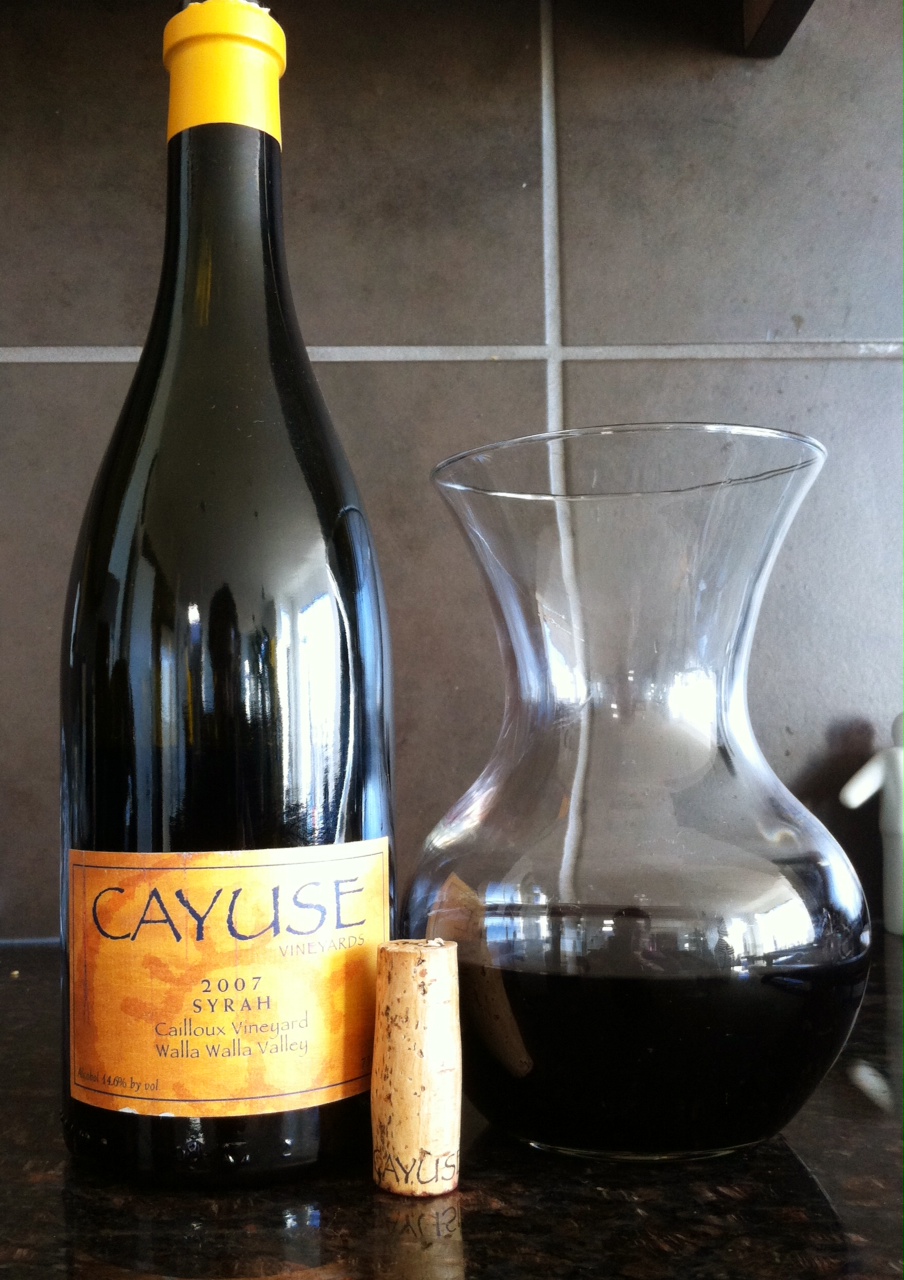
When people ask me what kind of wine I like, I'm going to pull out this pic.

Ever since I found out that I passed my WSET Advanced course last week, I’ve been wanting to break open something truly special to celebrate.  However, sickness intervened, so rather than crack a $100+ bottle and write stuff like “smells like nothing” and “my throat hurts” in a review, I decided to wait until the congestion clouds had cleared.  This weekend I pronounced myself fit to taste and rummaged through my cellar to find a suitable victory bottle, and as soon as I came to this one, I stopped thinking about any other.  However, it’s a bottle built for the long haul, so I was faced with the quandary that every wine lover about to pull the cork on an expensive bottle has had to face:  should I open the wine now so I can try it, or will I be undercutting its long-term potential by having it too early?  After getting some savvy advice from the amazingly-informed wine community on Twitter (thanks, @peterzachar and @nwtomlee!), I turned to Cayuse’s website for the final verdict.  On their FAQ page, there was a question that said:  “How soon can I open my wines?”  Cayuse’s answer?  “A Latin saying insists, ‘There are four reasons for drinking wine: the arrival of a friend; one’s present or future thirst; the excellence of the wine; or any other reason.'”  I opened the wine.

Read the rest of this entry »