By Raymond Lamontagne & Peter Vetsch
It has been a while since we’ve covered a tasting on this blog, thanks to a spate of Advent wines, Cellar Direct releases, and a number of other supplied bottles posted over the holidays and up through January. No rest for the wicked. This tasting is a particularly special way for us to get back into Calgary Wine Life. As evidenced by our unwavering coverage of the last three Bricks Wine Company Advent Calendars, we are staunch supporters of this local boutique shop, and although our attention tends to be drawn mostly to the wine shelves, Bricks also has a more-than-serviceable craft beer section. This is where the present tasting ties in (and no, it is not a beer tasting. Ray’s original blogging foray, “Dr. Beer”, shall remain deservedly consigned to the dust bin of history). Mike Maxwell, Bricks’ resident cicerone extraordinaire, is alas leaving the shop and moving on to the ambitious undertaking of running his own distribution agency, Nectar Imports, with a primary focus on beer but a robust toehold in wine as well. Mike is an exceptional human being, and we are excited to participate in his Bricks send-off by covering one of his agency’s first winery clients, Rosewood Estates.

Mike Maxwell, Nectar Imports.
The Rosewood story is a classic new Canadian origin tale. R.W. Roman was a passionate beekeeper and mead-maker from the Ukraine when he arrived in Ontario decades ago, where he continued to bee-keep in his adopted homeland alongside his son Eugene. Eugene wound up promising his wife Renata that one day they would start a winery together, after they both fell in love with Ontario’s beautiful Niagara-on-the-Lake region. The dream came true in 2003, when Eugene purchased the Renaceau Vineyard located in the Beamsville Bench VQA. This site features deep clay soils with some additional dolomite and limestone mixed in, the latter helping to provide some laser-beam focus to complement the sweet fruit aromas that clay typically yields. Breezes coming off of Lake Ontario provide a cooling influence to preserve fresh acidity in the grapes. Bordeaux varieties appreciate the long ripening season at Renaceau. In 2008 a second vineyard was added, the Blackjack or 21st St. Vineyard (sounds like a Springsteen song), a cooler site with better drainage in the 20 Mile Bench VQA . This one is ideally suited to Riesling, Chardonnay, and Pinot Noir.
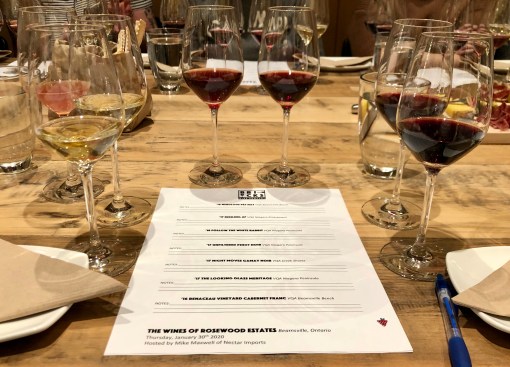
As the Rosewood team continues to be passionate about beekeeping, there is a strict emphasis on minimizing use of chemicals in the vineyards. Natural enemies of insect pests are encouraged to prosper, while the vines are managed by hand to foster the light exposure and airflow that discourage destructive fungi. There is an overarching emphasis on yield control, so that all batches of grapes are flavoursome and concentrated despite the winery’s overall cool-climate emphasis. Although not afraid of technology, the endgame for each Rosewood wine vision is “earth to bottle”, with minimal intervention. Natural wine? Sure, if these wines must be categorized.

We are greeted at the door with a glass of 2018 Rosewood Estates Nebulous Pet Nat (~$35), along with a well-intentioned warning that we might find this one a touch “weird”. It turns out that this 80% Gamay, 20% Pinot Noir ancestral-method sparking wine, which is bright and clear before the crown cap is removed and the built-in carbonation roils up the lees and clouds the mélange, is more accessible to our palates than expected, with punchy blood orange, strawberry liquorice, pink grapefruit and apricot notes leading the way, followed by (admittedly odder) green banana and smoky Hickory Sticks. Yeah, OK, somewhat weird. But pleasantly weird, and even intriguing in a relaxed, bucolic way. Let’s take a seat. Read the rest of this entry »







 I should be careful with such statements. Oregon Pinot will probably have more bright fruit than your average Cote d’Or. But one cannot escape the comparison when it comes to such fine-grained mapping of vineyard sites. The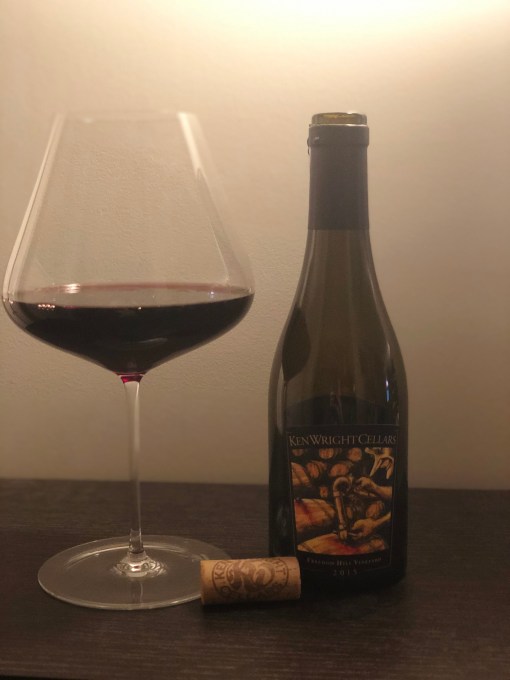








 I’m not implying that I’m disappointed. In fact, this appellation is a deliberate step up in quality from the Cotes du Rhone per se. In the late 1960s, several villages successfully petitioned to include their names on wine labels, in exchange for being willing to submit to higher quality standards. These included the requirement that Grenache must comprise not less than 50% of any given red wine, with a further 20% consisting of Syrah or Mourvèdre in any proprotion. A maximum of 20% of other authorized varieties is also permitted, with these including various obscurities permitted in Chateauneuf-du-Pape (Cinsault, Muscardin, Vaccarese, Terret Noir) along with Carignan. At this point, the Cotes du Rhone Villages appellation has expanded to nearly 10,000 hectares, making it the second largest appellation in the Southern Rhone, half of which can add the name of a specific village to the label. Twenty villages can do this at the present time. This is starting to get the feel of the Dodo Bird verdict from Alice In Wonderland, where “everyone has won and all must have prizes”. Further reinforcing this notion is the fact that the other half of the appellation can distinguish themselves from generic Cotes-du-Rhône by adding the term “village”, albeit without a more specific moniker. The present bottle falls into the latter category, although the producer would certainly take umbrage with the notion that their wines are somehow worse than those labelled Visan or Roaix.


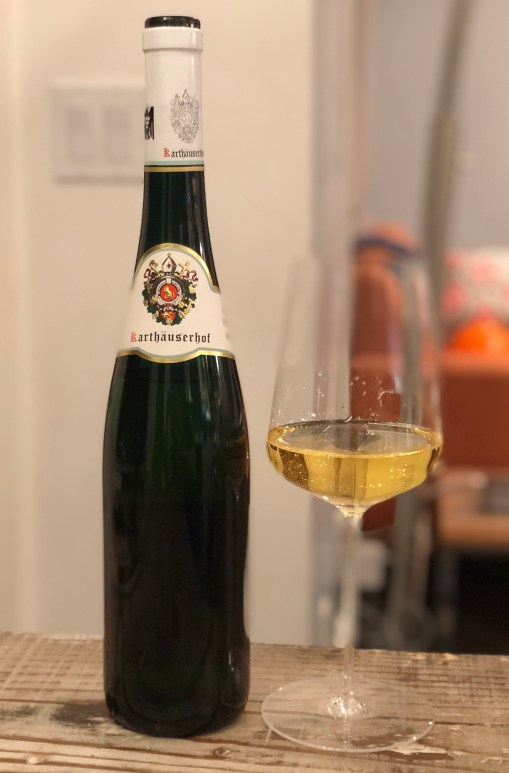
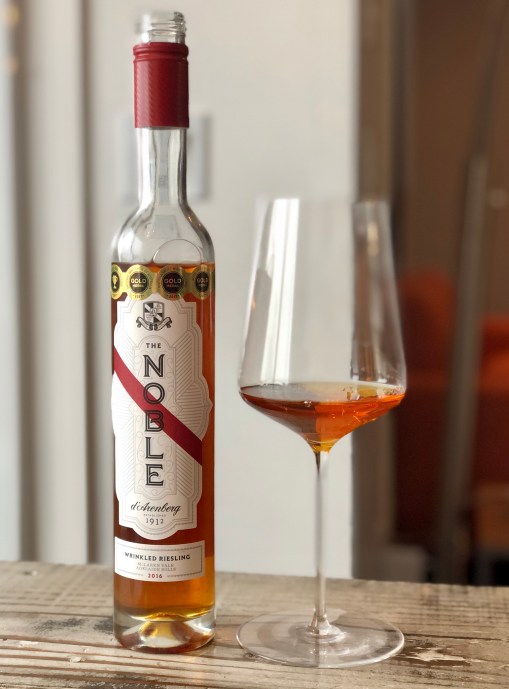
 Wine importer and writing hero of mine Terry Theise captures the magic of this grape when he describes how this variety stole his heart. A single inexpensive off-dry Mosel Riesling produced by a large co-operative winery captivated and mesmerized, ultimately propelling him into a successful career and forever changing his view of a beverage. It is worth noting that he describes this fateful bottle as essentially supermarket plonk. That’s what Riesling is capable of: even the “bad” ones are pretty damn tasty, and completely obliterating the grape’s distinctive character via mass market commodity winemaking is actually quite challenging. This grape demands to be known, even if it doesn’t always carry a big stick. Riesling often prefers the ethereal, conveying something much deeper than mere bombastic pleasure. Perhaps the Mosel, home to Riesling vines for at least 500 years, is the quintessential expression of this soul.








 cabernetdialectic (Raymond Lamontagne)
 Dan Steeves
 Peter Vetsch
 tylerderksen
 pop & pour