Multi-Wine Review: Calliope/Burrowing Owl Octet

24 11 2015

[These wines were provided as samples for review purposes.]

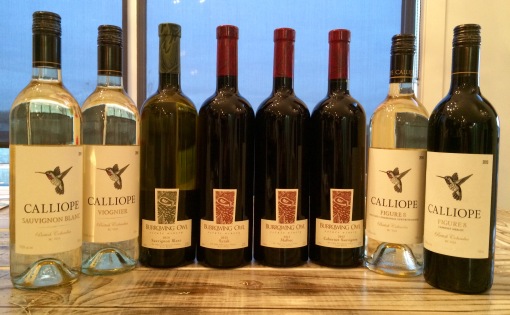
No time to spare for a huge intro tonight, as we have a whole whack of impressive Canadian wines to assess in what is sure to be a super-sized review.  I was fortunate enough to get the chance to taste through a series of recent releases from Okanagan stalwart Burrowing Owl, which is based in the scorching deep south of the Valley, near the US border in Oliver, British Columbia.  The tasting pack included a quartet of bottles from the parent winery and a quartet from its new offspring, Burrowing Owl’s second label Calliope Wines.  In keeping with the main estate’s unusual-bird-based theme, Calliope is named after a tiny hummingbird (Canada’s smallest bird) found in southern BC (not to be confused with the Greek muse or the steam organ of the same name).  According to its website, Calliope “is a full line of easy sipping, fruit-forward wines, designed to pair with casual lunches on the patio, or with contemporary cuisine”.  According to the pictures on the website, the wines also appear to pair with unnaturally beautiful Photoshopped women and neck beards.  Polite suggestion to Calliope:  Your wines are solid.  Your website is trying too hard.  It needs to relax.
FullSizeRender-169

I had often heard strong praise about the Burrowing Owl lineup from Wine People Who Know Things but hadn’t previously gotten around to experiencing it for myself, so getting to dive into a sizeable chunk of the portfolio all at once was an amazing way to get caught up on one of the brightest lights in Canadian wine.  Without further ado, here are eight mini wine reviews, starting with the second label and finishing with the main house (all prices based on Alberta retail).

Read the rest of this entry »


Wine Review: 2013 Culmina Unicus

8 06 2014
There it is:  history in a (classically presented) bottle.  BC Gruner!!

There it is: history in a (classically presented) bottle. BC Gruner!!

In my last post, I celebrated an Old World country’s rich wine history.  In this one, I get a front row seat as a New World country, my own, takes a milestone step towards charting its own course.  I may be a little more excited about this development than is strictly necessary, but I’ve (seriously) been waiting and hoping for this moment for a few years.  Finally, fantastically, Gruner Veltliner has come to the Okanagan Valley.

If you’ve heard of Gruner before, chances are you’re either at least a semi-serious wine person or you’ve been bothered about it before by me.  I adore Gruner, which is the signature white grape of Austria and is rarely found elsewhere; given that Austrian wine doesn’t exactly fill retailers’ or importers’ heads with gleeful visions of dollar signs, there tragically tends to be much less of it around locally than its quality and value would otherwise dictate.  If you’ve never tried a bottle of Gruner Veltliner, it’s sort of like if a Riesling and a Chardonnay had a rebel baby.  It combines the powerful acidity and piercing minerality of Riesling with the luxurious, silky mouthfeel of Chardonnay, then takes a left turn and offers up a remarkable set of spicy, tangy and often downright wacky flavours all its own, from white pepper to rubber boots and elastic bands (all in a good way, I swear).  The result is a sensory experience unlike any other in wine, one that keeps you constantly engaged as you try to figure out what the hell is going on in your mouth.

One of the reasons that I have often thought that Gruner Veltliner might be able to find a second home in Canada is the climatic and geographic similarities between BC wine country and Gruner’s homeland:  northern Austria and southern BC share almost the exact same latitude (48.4 degrees North in Wachau, 49.1 degrees North in Oliver), the same continental climate and high day-night temperature shifts and, in places, similar soils.  Yet until now the Okanagan has churned out every conceivable white grape under the sun, but no GV.  Thankfully, Culmina has come to the rescue.  This new high-end venture from Don, Elaine and Sara Triggs (of Jackson-Triggs fame) is based on a philosophy that combines old-school attention to detail and minimalistic winemaking with new-school scientific advancement, especially as it relates to vineyard mapping and matching grapes to sites based on detailed soil, temperature and exposure analysis.  Check out the details at Culmina’s visually stunning website – they’re fascinating, if you’re the sort of person who finds micro-block mapping and soil pit analyses fascinating (which I am).

Read the rest of this entry »


Wine Review: 2012 Stag’s Hollow Grenache

20 09 2013

[This bottle was provided as a sample for review purposes.]

You may be looking at history -- Canada's first 100% Grenache?

You may be looking at history — Canada’s first 100% Grenache?

I will spare you the details of why I haven’t posted in awhile; suffice to say that it involves multiple children under the age of 3, potty training, vomit, and the inexorable loss of sanity.  As a result of the above, these first 50 words have taken 25 minutes to write.  But I will not be deterred, because today is something bigger than you or I or the trials of parenting.  Today is International Grenache Day.  And today I get to write about a wine that I have followed from a distance for a long time, even though it is brand new to market.

I have recently come to realize and embrace that, when it comes to reds, I’m a Rhone guy.  I have adored Syrah for quite some time, but in the last few months I have become increasingly enamored with the southern French region’s other red offerings as well.  I tried with piqued curiosity my first varietal Carignan, the ’70s shag carpet of wine.  I devoured Mourvedres from Bandol to Washington State and back.  And I opened my heart to the joy and beauty of Grenache.  There may be other grapes that I enjoy more at their peak expressions, but I don’t know if there’s another grape out there that disappoints as seldom as Grenache does.  No matter how much it costs or where it’s from, it always hits the mark and is reliably bright and juicy and enjoyable.

But what it’s not, at least until now, is from Canada.  Grenache is generally a hot-climate grape, one that needs a lot of sun and a lot of warmth to ripen.  It’s best known in the Mediterranean climates of southern France and the arid deserts of Spain, occasionally popping up in the equally balmy South Australia or the equally parched eastern Washington.  In Canada, where every grape imaginable seems to be planted with hope somewhere, I had never heard of Grenache being grown, and certainly had never seen it being bottled on its own, until I happened to stumble on a Twitter mention of this project by Stag’s Hollow winemaker Dwight Sick.  I have been thoroughly intrigued by the idea of Okanagan Grenache ever since, and after some relentless cyber-stalking, I was lucky enough to snag a bottle of this inaugural experiment and see for myself how this warm weather red adapted to my home and native land. Read the rest of this entry »


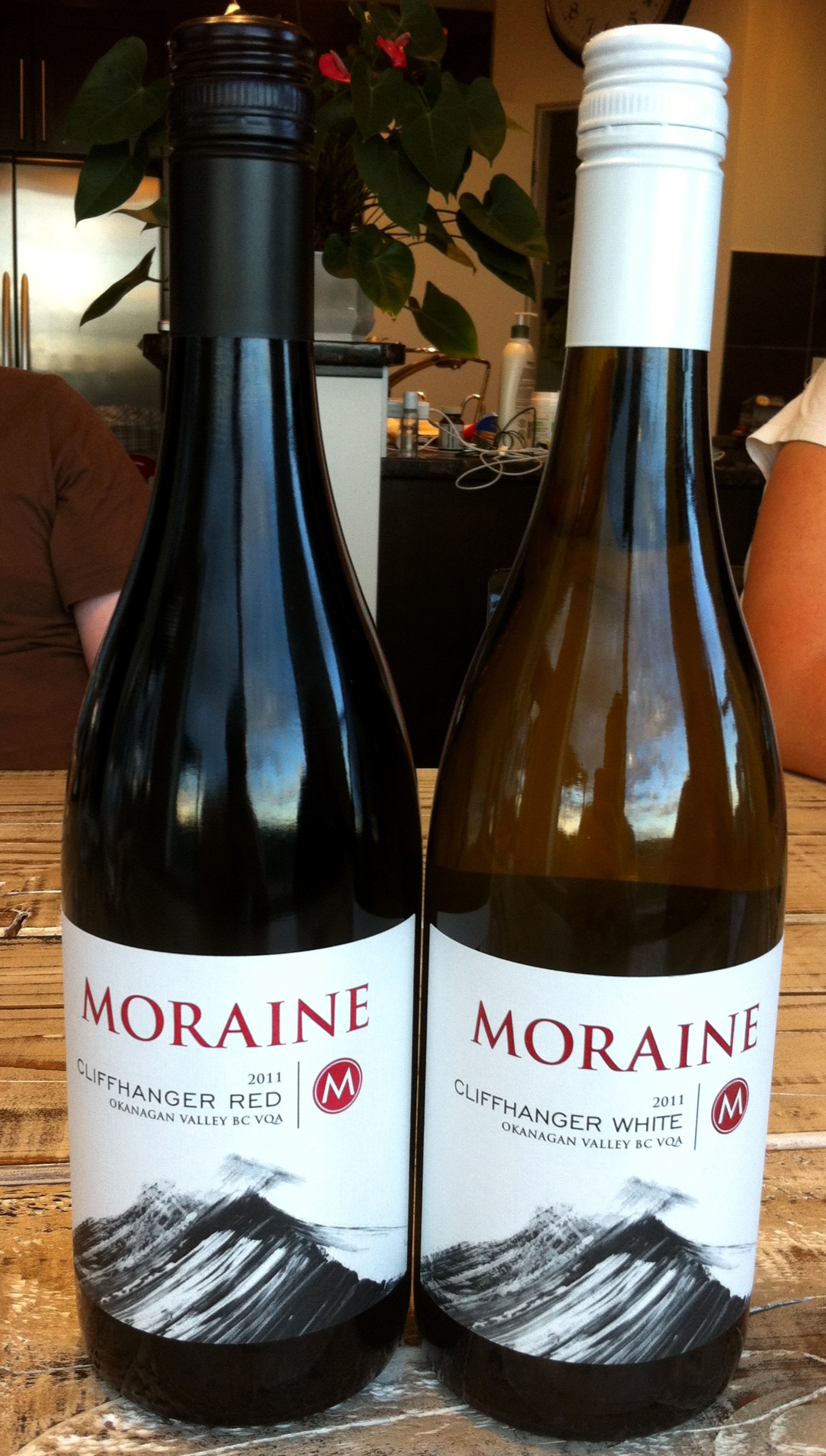
Wine Review: 2011 Moraine Winery Cliffhanger White & Red

26 06 2013

[These bottles were provided as samples for review purposes.]

Before I get started, let me first express both my condolences to anyone whose home or business has been impacted by the recent flooding in Calgary and my gratitude to the legions of municipal workers, police/fire/rescue crews and citizen volunteers who have worked tirelessly to repair and restore affected areas.  I think we’re all a little desensitized to disaster coverage that we see on the news, but when the areas underwater are streets in your own city where you’ve walked, shops that you’ve frequented, or the arena of the local team, the veil of distance gets ripped away and the footage quite literally hits home.  Hang in there, Calgary.

Welcome back, blogging.  It's been awhile.

Welcome back, blogging. It’s been awhile.

So you haven’t heard a lot from me in recent times, but I have marginally decent excuses for my prolonged blogging absence.  In the past couple months I have changed jobs, moving back into law firm life at a boutique shop recently founded by some former (and now current) colleagues, and I have also welcomed a new child into the world.  My second son Max was born on Fathers Day, and events both leading up to his birth and since his arrival have taken up most of my attention.  I therefore feel somewhat justified in playing the Major Life Events card in an attempt to excuse the rather ridiculous gap between PnP postings.  If my last 10 days has been any indication, I would expect more of the same down the road, but I will try to keep the blog moving forward, if only to ward off the comment spambots that have descended like hungry vultures in the past few weeks.  I’m not dead yet, Internet.

Anyway, on to the stars of today’s post, which are two wines from a relatively new Okanagan producer that I was lucky enough to try recently.  Moraine Winery is a recent addition to the renowned Naramata Bench subregion of the Okanagan, located just northeast of Penticton along the eastern shores of Lake Okanagan.  Naramata has gotten enough critical attention recently that many wineries with any trace of property there are trumpeting the affiliation with the area, even if the bulk of their vineyards lie elsewhere in BC.  Not so with Moraine:  each of its two vineyards, named Anastasia and Sophia after the owners’ two daughters, lie within the Naramata Bench itself, and all of the grapes for its wines come from these sites.  Moraine’s proprietors Oleg and Svetlana Aristarkhov relocated from Alberta to pursue their winegrowing dreams, so I like them already.

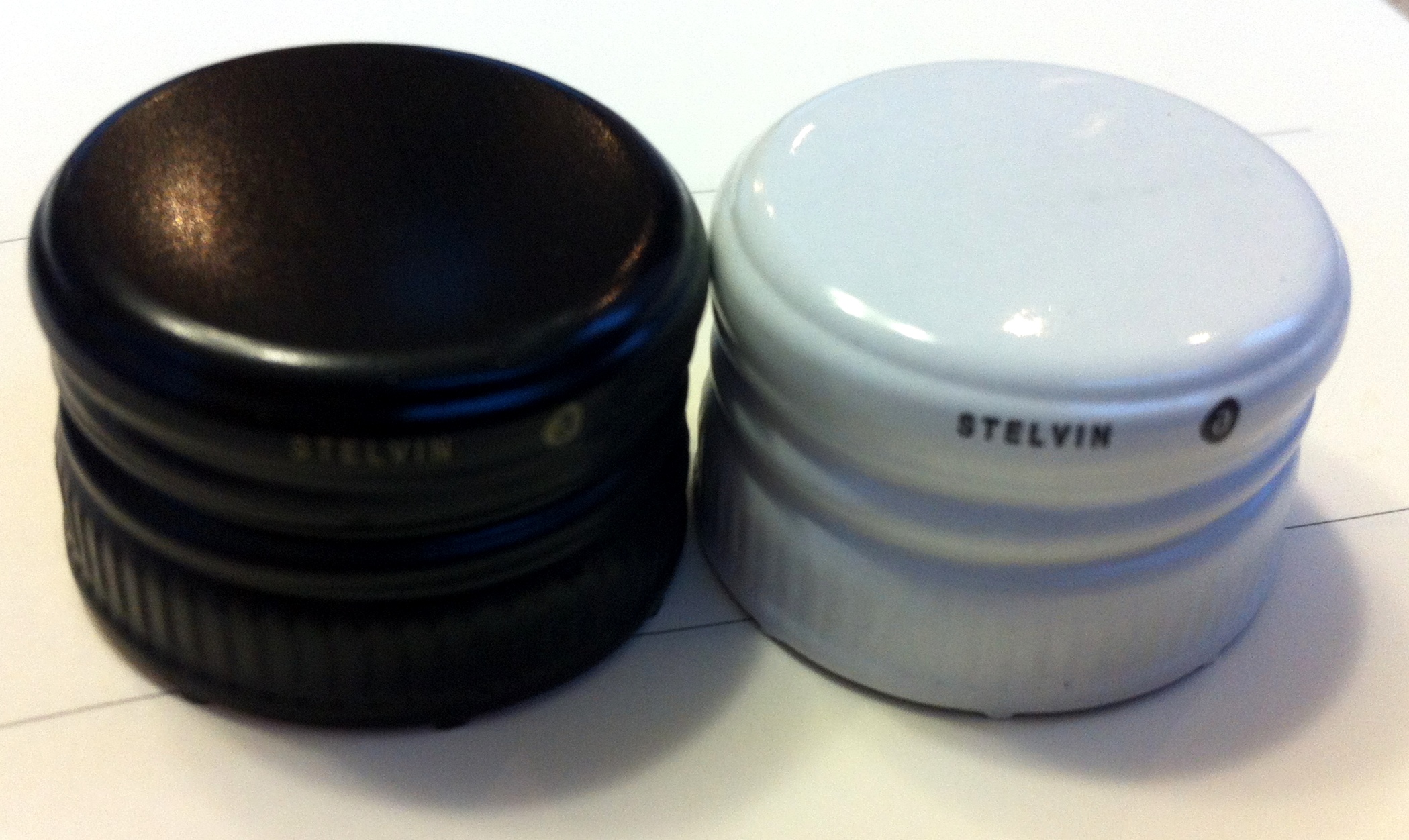
Stelvin Rating:  1/10 (Give me something to work with here...giant Ms next vintage?)

Stelvin Rating: 1/10 (Give me something to work with here…giant Ms next vintage?)

The Cliffhanger series of wines are Moraine’s entry level offerings, each likely checking in at under $20 retail in Alberta ($15 at the cellar door).  This is the price point at which Canadian wines tend to make me nervous, as it can often be challenging for an Okanagan or Niagara producer to put together a compelling, estate-grown, quality bottle for less than $20 given the land, labour and equipment costs and climatic challenges common to all Canadian wine regions.  Thankfully, both the 2011 Cliffhanger White and the 2011 Cliffhanger Red are strong and enjoyable introductory efforts from a producer that I’ll be watching going forward. Read the rest of this entry »


Wine Review: 2008 Cachet No. 01 by Stag’s Hollow

27 02 2013
There is no debate:  this is a baller-looking bottle of wine.

There is no debate: this is a baller-looking bottle of wine.

Apologies in advance to my local Alberta readers:  this review will be almost useless to you.  I have never seen this bottle in our fair province, or on a retail store anywhere else for that matter.  I got it for Christmas a couple years ago from a cousin-in-law out in Vancouver (thanks Brad!), was immediately impressed by the rap-video blinginess of its container (the bottle must weigh 2 pounds empty) and then discovered through research that it was created as part of a unique and forward-thinking experimental line of wines by stalwart Okanagan producer Stag’s Hollow.  The Cachet wines are limited edition blends of top quality grapes which are outside of the standard SH catalog; they are made once, as a small run in a single vintage, and then never replicated again.  So while this is the 2008 vintage of Cachet No. 01, there is no 2009 or 2010 bottling — the 1500 bottles (125 cases) of this wine from that single year are all there is.  I have no idea how this is commercially workable, but I find it fascinating.  These high-end one-off blends put the power in the hands of the winemaker to express a different vision with these specialty wines every year…or at least that was the plan.  As it turns out, only two Cachets have ever been made:  this one, and the sequel Cachet No. 02 (made from Grenache, Syrah, Viognier and Marsanne) that was released around the same time.  The world is still waiting on Cachet No. 03, and I’m sort of wondering whether the concept has died before it ever really got off the ground. Read the rest of this entry »


Wine Review: 2010 Mission Hill Martin’s Lane Pinot Noir

22 08 2012

[This bottle was provided as a sample for review purposes.]

As aptly pointed out by my 19 month old son: P!!!

It was with great sadness that I uncorked (OK, unscrewed) the last of the sample bottles that the Okanagan’s Mission Hill winery had sent my way.  When MH sent me their small-batch limited edition Martin’s Lane Riesling a few weeks ago, they included with it the Riesling’s vineyard twin, the inaugural release of the Martin’s Lane Pinot Noir.  This bottle of Pinot was many years in the making (the vineyard was planted in 1995), but MH held back on releasing it as a single-vineyard offering until the vines and the grapes were fully ready to show their stuff.  I laid out the story behind Martin’s Lane in my Riesling review, but to quickly recap, it’s a high-quality, steeply-sloped vineyard located right by Mission Hill’s winery property just outside of Kelowna, and it’s named as a tribute to MH proprietor Anthony von Mandl’s late father Martin.  Only 485 cases of this Pinot were produced, and this is the first bottle I’ve seen in this province, so unless you live near the winery, this bottle is probably hard to come by.  All the more reason to enjoy it if you have it! Read the rest of this entry »


Wine Review: 2010 Mission Hill Martin’s Lane Riesling

6 08 2012

[This bottle was provided as a sample for review purposes.]

R is for Riesling.

Time to issue the first official correction in PnP history.  When I reviewed Mission Hill’s Reserve-level Riesling back in June, I stated that the Reserve (the 2nd lowest of 4 quality levels of MH wines) was Mission Hill’s top-level Riesling, and I openly pined for the winery to put together a high-end single-vineyard Riesling that would really showcase what my favourite grape could do in Okanagan soil.  I said that if MH ever decided to release such a wine, I would be lining up to try it.  Shortly after posting, I received an e-mail from a representative at the winery that said something like:  “Well, actually, we already DO have a Riesling exactly like that…”, and a week later, this bottle showed up at my door.  In my defence, this particular Riesling doesn’t show up in the official portfolio of wines on the MH website, but as a devoted Riesling disciple, I still feel bad about not being aware of it, and I feel particularly bad about suggesting that it didn’t exist in front of an online audience.

Sorry Mission Hill — time to set the record straight. Read the rest of this entry »


The Mission Hill Pinot Olympics

17 07 2012

[The bottles below were provided as samples for review purposes.]

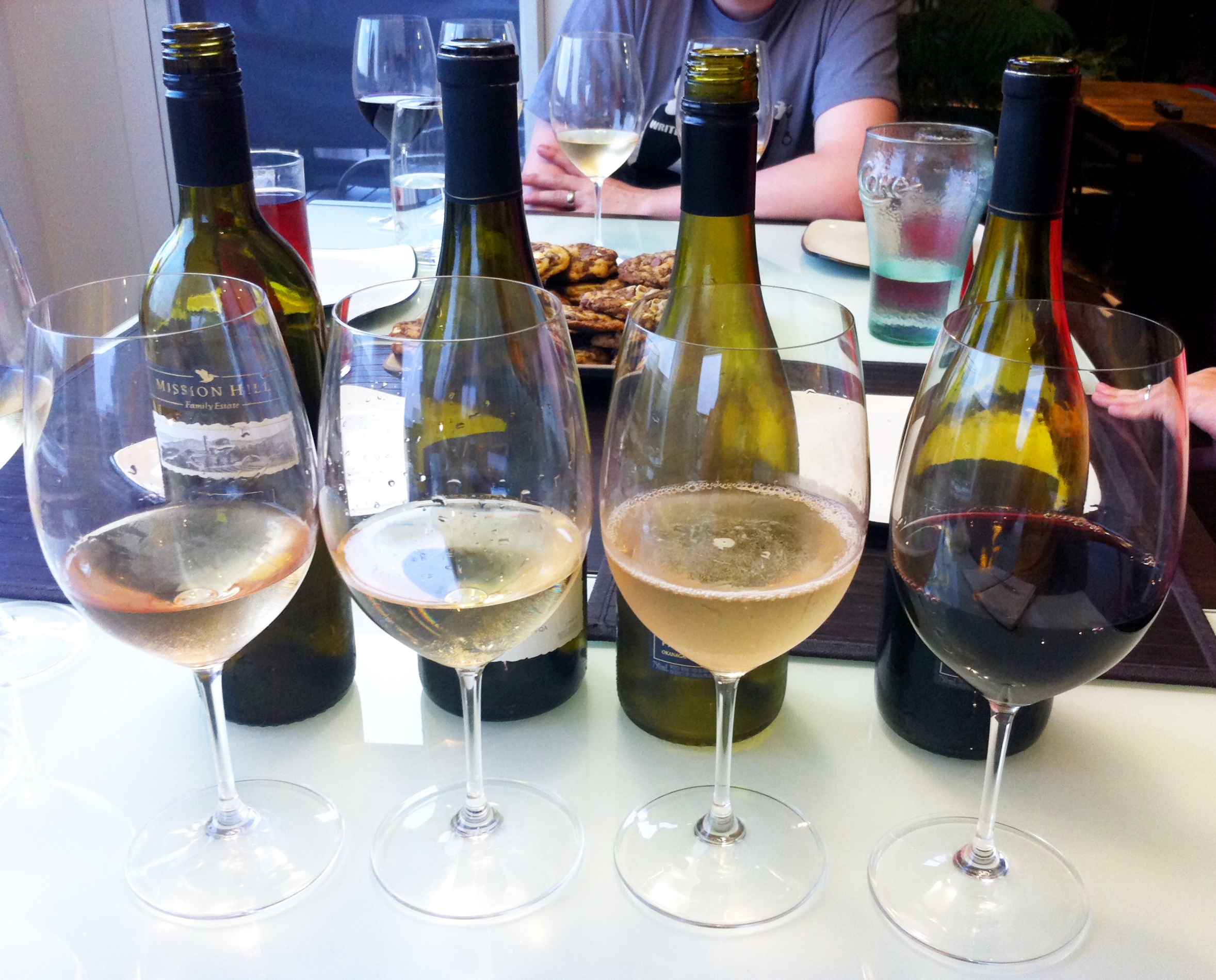
As tactfully mentioned by the disclaimer above, I recently received a mixed six-pack of sampler bottles from the good folks at Mission Hill Family Estate winery in the Okanagan Valley.  Two of these bottles, the 2011 Reserve Riesling and the 2011 Five Vineyards Sauvignon Blanc, have received separate PnP review treatment over the past couple of weeks:  see here and here for the full write-ups.  But I couldn’t bring myself to split up the other four bottles and rate them separately, because it was clear that they belonged together, bound as they were by a common provenance:  the family name Pinot.  Pinot Grigio, Pinot Gris, Pinot Blanc and Pinot Noir all sat side by side in the MH sample box like a monochromatic grape rainbow, their shared forename a reminder of their common genetic ancestor (Pinots Grigio and Gris are the same grape, and both PG and Pinot Blanc are mutations of Pinot Noir, which is well-known for being genetically unstable).  Since the fortunes of these bottles were clearly tied together, and since it’s July 2012 and our athletes are preparing to head off to London for the Summer Games, I did the only thing I could do and hosted the inaugural Mission Hill Pinot Olympiad at my house over the weekend.

In order: Grigio, Gris, Blanc, Noir. Let the Games begin.

Here’s how our game was played:  I invited over a couple of fellow wine enthusiasts, opened all four bottles of MH Pinot, and we tasted through the lineup and separately ranked each of the wines as against its peers, individually coming up with our gold, silver, bronze, and, um, whatever’s below bronze (lead? aluminum? tungsten?) medal choices.  I then added all of the placements together to come up with a cumulative judges’ score (for example, a wine ranked 1st, 2nd and 3rd by the three different judges would get a total score of 1 + 2 + 3 = 6); the lower the score, the better.  The lowest total score won the overall prize, which basically meant that the bottle was emptied the fastest.  We tasted the wines from whites to red, lightest to heaviest, and my notes below are in the same order.  Who emerged victorious?  Read on! Read the rest of this entry »


Wine Review: 2011 Mission Hill Reserve Riesling

25 06 2012

[This bottle was provided as a sample for review purposes.]

Canada, meet your new favourite grape.

If you’ve followed this blog for any length of time, you’ll be aware of my completely transparent devotion for Riesling, the top wine grape of all in my books and the star of the show in my favourite white-producing country, Germany.  It’s also a varietal that is starting to be developed more seriously in the major wine regions of my home nation of Canada, both in the Okanagan Valley in the west side of the country and the Niagara Peninsula in the east.  This comes as a huge relief to me:  we’re definitely still a country trying to find its identity wine-wise, and thanks to our climate and latitude it will always be a steep challenge for us to produce big reds in all but the most privileged sites, so one way to get recognition as a serious wine nation in an increasingly competitive market is to focus our energy and resources into developing the absolute best quality wine grapes that thrive in cooler, more marginal conditions.  That’s where Riesling comes in.  It creates some of the best, longest-lived wines in the world, but it also embraces sites at extreme wine-growing latitudes with colder average temperatures and shorter growing seasons…in fact, it reaches its apex in these types of locations.  I think Canada and Riesling are a vinous match made in heaven, so it was with great anticipation that I cracked this bottle, sent to me by one of BC’s largest producers, Mission Hill. Read the rest of this entry »


Wine Review: 2010 Dirty Laundry “Hush” Rosé

7 12 2011

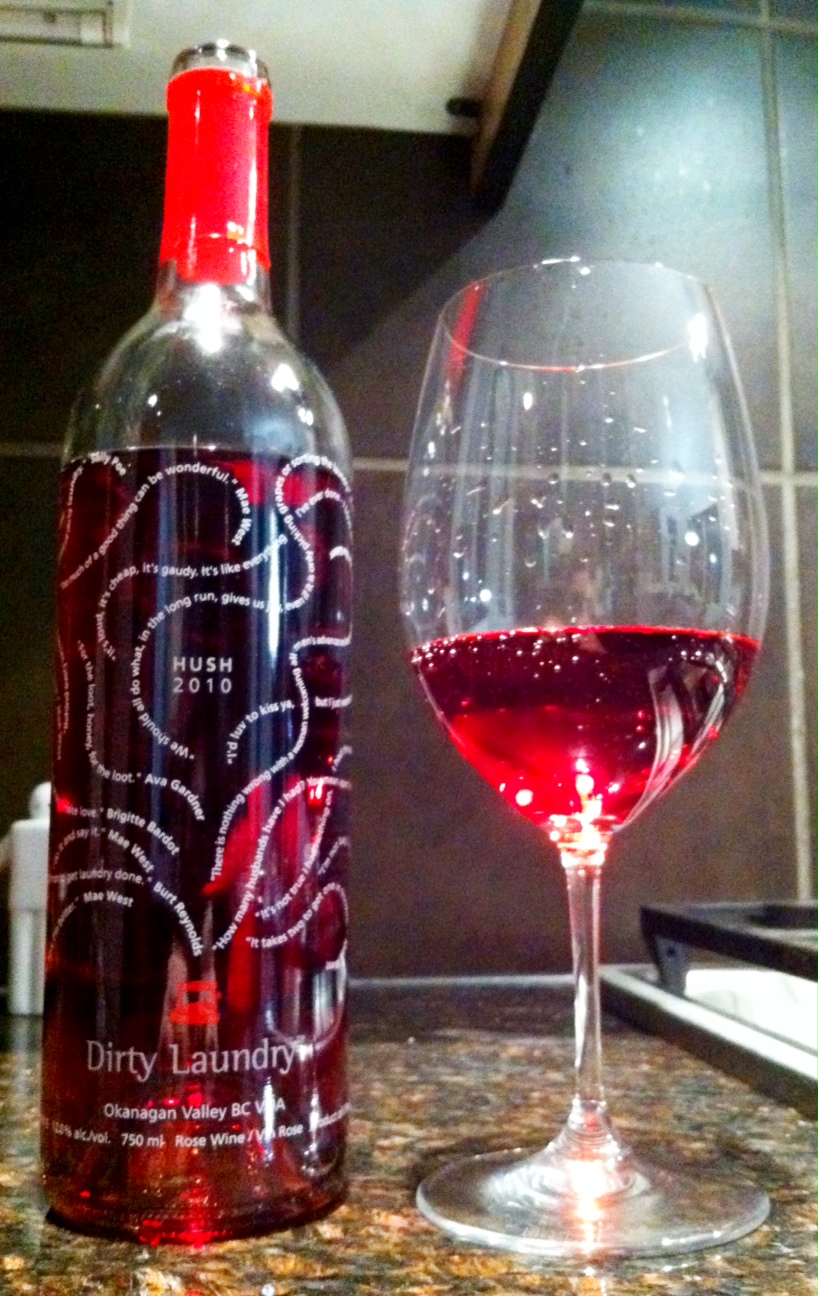
Maybe it's season-suitable after all -- it looks like a Christmas light. That's turned on.

I don’t drink as much rosé as I should.  Even though I know that most of it isn’t the sweet and insipid stuff of stereotype, whenever I’m in wine-buying mode there always seems to be something else on the shelf that pulls me in more.  In fact, I’m pretty sure that this, Wine Review #82, is Pop & Pour’s first rosé write-up.  Yikes.  I promise to do better in the future.

While this is PnP’s inaugural rosé feature, it’s the second wine from the Dirty Laundry winery in Summerland, BC that I’ve reviewed, and (thankfully) the first I haven’t been horribly disappointed in.  For those of you who missed the tale of my September visit to Dirty Laundry and my lack of admiration for their Madam’s Vines Gewürztraminer, click here for the full scoop.  This rosé was the only other wine I grabbed from DL, and the wine in their cellar-door tasting lineup that I liked the most, so I popped and poured tonight hoping for bigger and better things.

Read the rest of this entry »


Wine Review: 2010 Tantalus Riesling

23 11 2011

I feel like I’ve been remiss in not writing this review until now, seeing as how my visit to Tantalus might have been the highlight of my trip to the Okanagan in September.  I’ve been a fan of the winery (one of the few in Canada about which I can honestly make that claim) for awhile, and actually getting to go there and meet some of the people behind the eye-catching mask-labelled bottles only heightened my respect for who they are and what they do.  I was lucky enough to get a guided tour of both the vineyards and the winery from winemaker David Paterson — which is probably the only reason I was able to answer WSET Advanced exam questions about vertical shoot positioning and replacement cane pruning — and I left there as excited about wine as I’ve ever been.

Believe it or not, this is in a city. Did I mention I'm moving to Kelowna?

Unlike many Okanagan wineries which are based in the hotter, drier southern portion of the valley, Tantalus is located right within Kelowna’s city limits, in as pastoral a setting as possible given that the closest Starbucks is less than 10 minutes away.  All of their wines come from grapes grown directly on their estate, and on the rolling slopes of their vineyards they have planted Pinot Noir and a growing amount of Chardonnay; however, to me at least, they are synonymous with brilliant, high-quality Riesling.  They have some of the oldest Riesling vines in Canada (40+ years) on location, where Kelowna’s relatively cooler but lake-moderated climate is ideal for this hardy, late-ripening Germanic grape.  The winemaker has a clear vision about what he’s trying to achieve with this privileged source material, letting the fruit speak for itself and preserving natural acids, and consistently delivers on the site’s potential.  Although Tantalus also makes a reserve Old Vines Riesling from their decades-old vines (and is starting to experiment with sparkling Riesling as well), tonight’s wine is the producer’s base Riesling bottling, which packs more of a punch than anyone has a right to expect for the sub-$25 price.

Read the rest of this entry »


Wine Review: 2009 Painted Rock Chardonnay

21 09 2011

In wine, as in life, discrimination is wrong.

I’m experiencing a sort of Chardonnay renaissance right now. Like so many people, I had soured on the grape after a couple of initial bad experiences with cheap, gloppy, steroidally-oaked monsters that led me to believe that Chard was overrated and undeservedly well-known, the sellout of the white grape family. This, it turns out, is a tragically limited worldview that illustrates the dangers of drawing conclusions based on a small sample size; the problem wasn’t actually that I didn’t like Chardonnay (which is responsible for some of the best, most acclaimed and most expensive white wines in the world), but that I didn’t like bad Chardonnay (which, thankfully, isn’t a problem at all). I have started to distance myself from this rough start with the grape, and despite my previously-ingrained bias, I’ve been noticing that almost every single Chardonnay I’ve had recently has been, well, good. The oak-and-alcohol-bomb style previously so rampant throughout the New World is starting to recede, and the current movement in the world of Chardonnay seems to be more geared toward balance and allowing the flavours of the actual grape (rather than only the barrel it was aged in) to express themselves. This is a positive development for the Canadian wine industry, as this grape probably does its best work in cooler climates, retaining the structure that can be so easily lost in warmer zones yet still ripening even in shorter, colder growing seasons. I was therefore quite surprised during my recent trip to the Okanagan when one winery owner told me that they would be reining back their production of Chardonnay in favour of other white varietals — they made a tremendous, restrained yet flavourful Chard, but they were turning away from it because they thought that Pinot Gris could outsell it 5 to 1. My newfound appreciation for the world’s best-known white grape must have hit me then, because my first immediate thought was: “Has everybody gone nuts?”

Read the rest of this entry »


Wine Review: 2006 Inniskillin Cabernet Sauvignon

5 08 2011

$15 Canadian Cab...don't get me started.

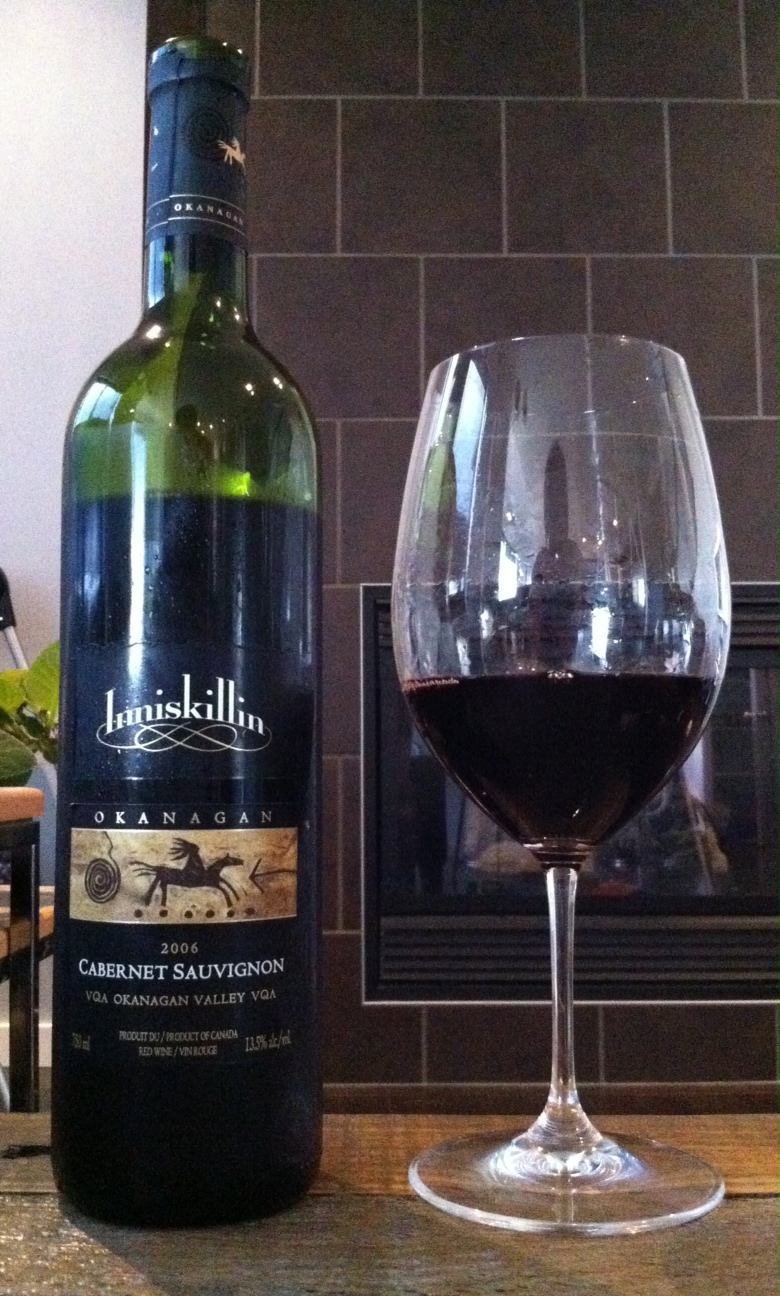
Oh, Canada…I had been starting to feel a glimmer of optimism about red wines from my home and native land after positive recent experiences with producers like Laughing Stock (Okanagan) and Tawse (Niagara), but just as I began to forget why Canadian reds have until recently been an endless source of frustration for me, tonight happened.  My consternation isn’t that these wines are terrible (though some are); it’s that too much of the wine industry here seems locked in to grapes and wines that we are hard pressed to make better than many other regions around the world.  Cabernet Sauvignon is a case in point.  Why take one of the most heat-loving, slow-ripening, warm-weather grapes out there and try to specialize in making single-varietal wines out of it north of the 49th parallel?  Why especially would you try to target the sub-$20 price range with your Cabs when better-situated producers with hotter weather and cheaper land from Chile, Argentina, Australia and California basically have that market covered?  Where is the global competitive advantage in that approach?  We need a new business plan. Read the rest of this entry »


Wine Review: 2006 Therapy Vineyards Superego

1 07 2011

A+ label art -- even cooler up close, AND appropriate Canada Day colouring.

Happy Canada Day, everyone!  I would have been remiss if I didn’t focus on a wine from my home and native land tonight, but that proved to be more of a challenge than I thought, as my cellar’s currently a little thin on the Canada front — out of the 90-odd bottles that I keep stored in an army of wine fridges in my basement, only two of them are from Canada.  One of them is a $15 Niagara Cabernet Sauvignon that I’m a little scared to open, and the other one is this bottle.  Fearing the patriotic retribution that might ensue if I rated a cheap Canadian wine 65 points on Canada Day, I instead went with this bottle, the 2006 Superego from Therapy Vineyards in the Okanagan Valley.  You may know Therapy from their ink-blot labels and punny wine names (Freudian Sip white blend, Pink Freud rosé, etc.); the Superego is their top red bottling, made from top quality grapes using stringent processes to be Therapy’s flagship wine.  As you can see in the picture to the left, it comes in an absolutely spectacular-looking bottle that rivals Chile’s Montes Folly Syrah as my favourite wine label art of all time.  I got this particular bottle from a fellow wine lover and a Therapy devotee (thanks Allison!) and have been holding it for the right occasion.  Happy 144th, Canada — tonight I pop and pour for you! Read the rest of this entry »