Cellar Direct: Underdog Whites

27 03 2018

By Peter Vetsch

[These bottles were provided as samples for review purposes.]

IMG_7833Close-following Pop & Pour adherents (if such things exist) will have been waiting for this moment for a couple of months.  In my last write-up about the tremendous Euro-tacular wine offerings of Cellar Direct, I teased that the two Italian reds going head-to-head in that review were not the only bottles (or colours) from that country that Cellar Direct had sent my way, but I opted to hold back the indigenous Italian white wine from that set so that it could shine in an all-white duet in a later post.  Well, here we are, and tonight’s 100% Arneis lead-off hitter is joined in the batting order by a rather mysterious and off-grid white Burgundy (to the extent that anything Burgundy can be considered off-grid), each bottle a tantalizing find that proves both that even famous regions have hidden values and that you often need some expert assistance to find that value needle in the prestige haystack.  If Cellar Direct is anything, they are that Old World value sherpa, leading you to consistent quality at credible price points over and over again.  Their streak of never sending me a bad bottle lives on. Read the rest of this entry »


PnP Panel Tasting: Quench! Wines BC Portfolio

1 02 2018

[These bottles were provided as samples for review purposes.]

First, some exciting news:  I’m happy to announce that Pop & Pour Wine Advent 2017 authors Raymond Lamontagne and Dan Steeves are officially going to be sticking around as regular contributors on the blog, bringing their expertise and exuberance to a screen near you and formally making PnP a joint venture from this point forward.  I’m hoping that this will allow the site to be less tied to my schedule and to have a greater presence around events and bottles that interest you (or that interest us, at least – hopefully they will interest you too).  And what better way to go from a solo gig to a group gig than having a panel tasting?

IMG_7474

A highly worthy BC lineup for our first PnP Panel Tasting.

Here’s how we play our game.  Dan, Ray and I got together to jointly taste a (remarkable) set of wines; we discussed while we tried each wine, but we evaluated and scored each bottle separately and independently, without sharing our final assessment until all scores were locked in.  We divvied up the writing duties, but rather than average out the scores or try to come to a numerical consensus, we preserved each person’s score for each bottle to give you a sense as to the level of divergence in the room through the course of the tasting.  Hopefully this will be the first of many such panel reviews, but if you have any thoughts as to the format or results, leave a comment or send me a message and let me know!

The focus of this inaugural Pop & Pour panel tasting was a sextet of offerings from Quench! Wines, a Vancouver Island-based agency exclusively focused on the burgeoning British Columbia production scene.  We got to taste a pair of wines each from three critically acclaimed Okanagan producers:  Terravista, Bella and Fairview Cellars.  You could not have put together three more divergent groups of wines if you tried, a testament to the diversity that is possible in the Okanagan Valley, particularly since each distinct grouping aptly highlighted a different element of the potential of the region.  I got to lead things off. Read the rest of this entry »


Bricks Wine Advent Calendar 2017: Day 21

21 12 2017

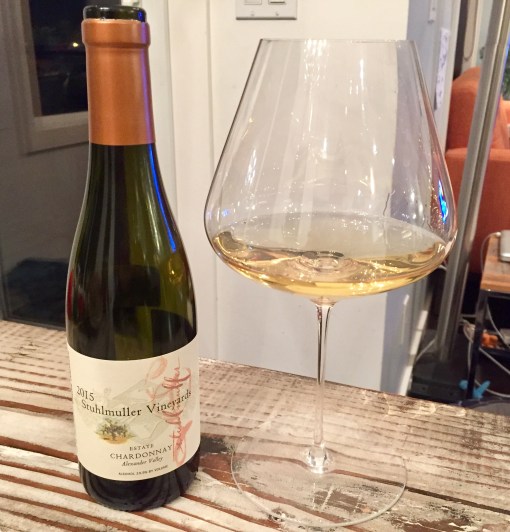
This is my second last wine post of Advent 2017:  the coming two days will see Dan and Ray post their Bricks calendar wrap-ups, and the next time you hear from me will be on Christmas Eve, for the grand half-bottle Advent finale.  It’s almost hard to believe our countdown to Christmas is almost done; it’s almost harder to believe that I actually survived it (though perhaps I shouldn’t say that yet).  And Bricks appears determined to send me off in style, because Day 21’s wrapping comes off to reveal an absolute firecracker of a Chardonnay:  the 2015 Stuhlmuller Vineyards from Sonoma’s Alexander Valley.  I think this grape is still in a down phase when it comes to much of the consumer world, but we seem to be entering a period where many of the regions previously responsible for Chard’s worst oaky boozy excesses have started to dial it in just right, at least on the quality wine side of the spectrum.  And there is no better representative of this evolution than California.

IMG_7307

Stuhlmuller Vineyards was founded by a husband and wife team who got their start in 1982 growing and supplying grapes to neighbouring wineries.  They didn’t become a full-fledged estate winery until 2000 but have already developed a reputation in the crowded California wine scene, particularly for Chardonnay, which makes up over half of its acreage.  The Alexander Valley is in the northeast corner of Sonoma, inland from the coast and due north of the better-known Russian River Ralley; its eponymous Russian River runs up and along the eastern edge of Stuhlmuller’s vineyards in Alexander’s southwest corner, where it and the Russian River Valley come together with Dry Creek Valley.  Much like Napa, the grape-growing conditions in the Alexander Valley are helped by two separate ocean-induced effects:  morning fog coursing in daily through the Chalk Hill gap, and cool nights spurred by ocean breezes, both of which provide the grapes relief from the scorching California heat, help preserve precious acidity and lead to more balanced ripening.  This bottle shows the results of all that climatic effort, clocking in at 13.9% abv.

IMG_7308

Cork Rating:  3/10 (Friendly advice – no phone numbers or websites on corks. This has both.)

This is Stuhlmuller’s “entry-level” Chardonnay, but it’s clear from the start that no shortage of care went into its creation.  It was fermented sur lie (on its spent yeast cells) over 8 months and matured in French oak, mostly small-barrel barriques but only 5% new.  It is a rich golden colour in the glass and finds that perfect harmony between Chardonnay’s careful fruit and oak’s at-times exuberant influence, mixing fresh pear, peach and Granny Smith apple pie with ginger chews, almond shortbread, oatmeal cookies and rubber boots.  Simultaneously full and cutting on the palate, the Stuhlmuller’s oak-aided roundness is run through with a table saw of slicing acidity.  It is beautifully poised on the tongue without losing the weight and body that is a defining feature of Chardonnay, a honeyed swirl of caramel apple, white flowers and a bracing quality on the finish like a cool sea breeze.  Refined and restrained but still California in essence — exactly what New World Chardonnay should be.

92 points


Bricks Wine Advent Calendar 2017: Day 18

18 12 2017

For those few brave stragglers who have stuck with us through this dual Advent adventure, we are three-quarters of the way there.  This is the last wine of the third of four columns of the Bricks Wine Advent crate:  we are a week from Christmas and six wines from having to pick our own bottles again for dinner.  Tonight’s bottle is a bit of a double-take wine, a Canadian split that is five years back-vintage for an offering that currently retails for around $20 for a full bottle (out east, at least).  It’s not often that I get a chance to see how value-priced local wines stand up to a bit of time, though I would love to hear the story of how Bricks came across this as a calendar opportunity.

IMG_7282

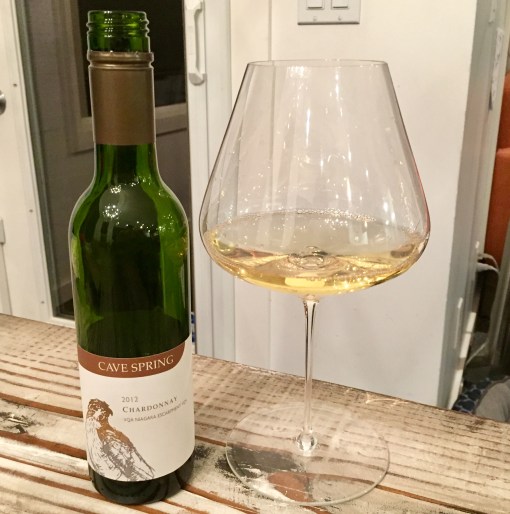
“This” is the 2012 Cave Spring Chardonnay from the Niagara Escarpment region.  The winery was the first to plant vinifera grapes in Niagara and among the first to recognize the vinous potential of the region.  It was also the first in Niagara to tack on its own spa as a tourist attraction, making it an early leader at recognizing the area’s business potential as well.  The Niagara Escarpment line of wines represents the second of four tiers of Cave Spring wines, where grapes are sourced from multiple different vineyards within the subregion; the most interesting part of this wine is that it appears to be a blend of standard Chardonnay grapes with Chardonnay Musqué, an aromatic, floral, spicy mutation of the varietal that adds some olfactory punch to what can otherwise be a fairly neutral grape.

IMG_7280

RED wine???

One thing about half-bottles is that they accelerate a wine’s aging curve, because (1) oxygen is the primary thing that matures (and ultimately degrades) a wine and (2) there is a greater ratio of oxygen to wine in a 375 mL split because the ullage (the space between the wine and the cork at the top of the bottle) is the same for all sizes of wine.  This 2012 is therefore further advanced in its life than a standard bottle would likely be, and it’s starting to show.  The wine is a shimmering lemon-gold colour in the glass and showcases its multi-clone blend in a musky, tutti-frutti nose of honeydew, Meyer lemon and cantaloupe, accented by remnants of once-toasty oak and sulphur-y struck matches.  Medium-bodied, with still-present scruffy barrel tannin and fading acidity, this Chardonnay is not quite sure where it is on the palate:  the fruit has kind of gone to a murky place, the oak has resolved to a pastry crust/vanillin glaze, and the wine overall seems to have one foot each in two different stages of development, clinging to the remains of its youth while also giving in to the inevitability of age.  I think it likely would have stood out more a couple of years ago, but it remains a solid expression of what Niagara Chardonnay can do at a wallet-friendly price.

87+ points

IMG_7281

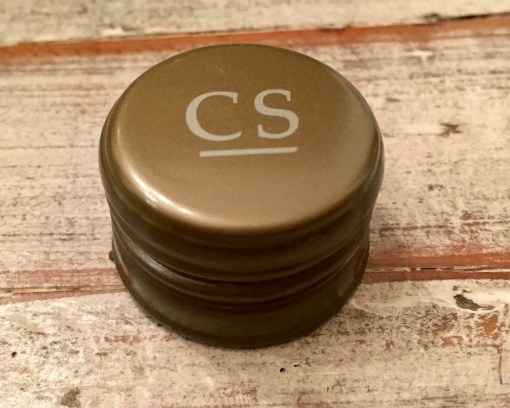
Steven Rating:  6/10 (Dig the colour, but there’s only so high I can go with two underlined letters.)


Calgary Wine Life: Catena Virtual Tasting with Laura Catena

26 08 2017

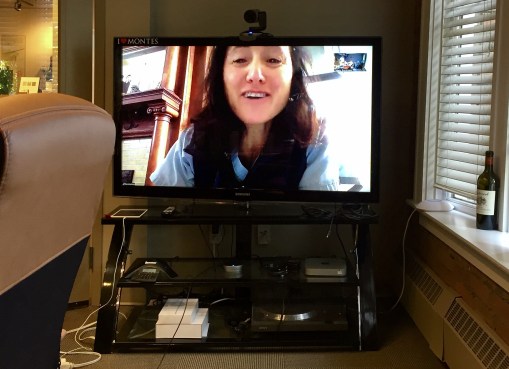
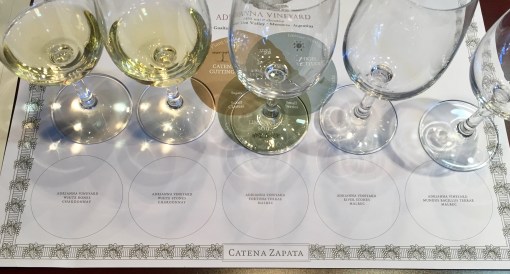
Laura Catena is my wine hero.  Her list of credentials reads as if it must have been accomplished by at least two people over the course of long, full lives:  fourth-generation winery owner, global Argentinian wine ambassador, Harvard magna cum laude, Stanford medical school grad, San Francisco emergency room and pediatric emergency doctor, multilingual published author, viticultural researcher and innovator.  And these parallel tracks of success are not a story of a mid-life career switch; she has been excelling in one of the most challenging careers in medicine and continuing her family’s proud wine legacy simultaneously, on two different continents, since she was in her early 20s.  As I have a hard time juggling more normal professional work demands and writing a weekly wine blog in the same city, I hold Dr. Catena in some degree of awe, as an example of what purpose and passion truly can accomplish in a single lifespan.

FullSizeRender-711

Argentina has long been highly ranked on global lists of national wine consumption, made up as it is of a high percentage of European immigrants and their descendants, who brought with them an imbued wine culture and the know-how to introduce vines and winemaking practices to their new home.  One such voyager was Nicola Catena, Laura’s great-grandfather, who came to Argentina from Italy in 1902, at age 18, and planted his first vineyard, which became the origin of Bodega Catena Zapata.  However, it was Laura’s father Nicolas, two generations later, who brought the winery to the world’s attention and ended up bringing the whole country along with him.

FullSizeRender-710

Nicolas travelled to California in the 1980s, shortly after the Judgment of Paris tasting in 1976, where Napa Valley Cabernet and Chardonnay were first thrust into the global spotlight after besting top Bordeaux and Burgundies in a surprising blind tasting that went viral.  He met up with Robert Mondavi, perhaps the man most insatiably driven to keep California’s star burning ever more brightly, and was inspired by the quality and ambition in this burgeoning rogue wine nation.  Convinced that Argentina could follow the same path to prominence and be the equal of California (not to mention France) in quality, Nicolas Catena returned home, sold the domestic-consumption table wine portion of the family winery, and zeroed in his focus on quality wines for export, aiming to “put Argentina on the map as a grand cru” for world wine.  He spent years studying climate patterns and geology and gradually came to realize that the most popular vineyard areas in Argentina at the time were mostly too warm for quality wine production.  He had two choices for cooler planting zones:  south, away from the Equator, or up, into the Andes.  He went up, and Argentina’s wine fates rose with him. Read the rest of this entry »


Wine Review: Buena Vista Social Club

16 08 2017

[These bottles were provided as samples for review purposes.]

If there was a Most Interesting Man In The World designation for the history of wine, Agoston Haraszthy would be a strong contender for the crown.  I had previously come across his name in a book about the pioneering contributors of the California wine industry and had assumed that he was one of many 19th-century immigrants from Europe to the United States who brought Old World wine knowledge and tradition with him to his new home and helped it propagate.  And he was.  But his tale was anything but rote.

FullSizeRender-700

Haraszthy was born in Hungary to a noble family in 1812, later becoming known by the honorifics “Count” and “Colonel” even though he was technically neither.  He carved his own path throughout his life, stringing together a series of firsts that would be near-impossible to top in this day and age.  He was the first Hungarian to move and settle in the United States; the founder of the oldest village in Wisconsin (and the planter of some of the first grapevines there); the first town marshal and elected sheriff of San Diego; and the founder of the first commercial winery in California (more on that in a bit).  From the time he first arrived in the United States in 1840 to the time he left in 1868, he was at various times a mill owner, an author, a steamboat operator, a butcher, a member of the California State Assembly, and a gold refiner and assayer at the US Mint.

Read the rest of this entry »


Calgary Wine Life: Checkmate Chardonnay Global Challenge @ Sub Rosa

6 06 2017
FullSizeRender-640

Anthony Gismondi.

Checkmate Artisanal Winery has no shortage of vision or ambition.  It is both a newcomer to the Okanagan wine scene and the oldest of old hands, founded by Mission Hill proprietor Anthony von Mandl after his purchase of a pre-existing winery (Antelope Ridge, just west of Oliver) and some of its vineyards back in 2012.  Thanks in part to von Mandl’s existing land holdings, Checkmate began its life with elite sources of fruit from five top-tier vineyard parcels, the youngest of which is just shy of 20 years old and the oldest of which are some of the most senior in the country.  The vineyards scatter across the southern Okanagan:  there are two near the winery on the Okanagan’s first-ever formal sub-appellation, the Golden Mile Bench, two across the highway to the east on the neighbouring Black Sage Bench, and one literally 30 feet from the Canada/US border southeast of Osoyoos.  The fruit they produce is reflective of Checkmate’s quality vision and laser focus:  the winery makes SIX different Chardonnays and FOUR separate Merlots, and nothing else.  Their price is reflective of von Mandl’s burning ambition to elevate Canadian wine:  the Chardonnays range from $80 to $125 a bottle and the Merlots all clock in at $85.  It is probably safe to say that this country hasn’t yet seen a winery like this.

At the controls of this super-premium venture is winemaker and general manager Phil McGahan, who began his working life as a lawyer (I knew I liked him when I met him for some reason) and then switched gears and did winemaking stints in Australia’s Hunter Valley and for Sonoma cult Pinot and Chardonnay producer Williams Selyem before being lured north by Checkmate’s potential and master plan.  If your first reaction to the idea of a winemaker leaving California for Canada is surprise (or disbelief), McGahan went to great lengths to point to the Okanagan’s location vis-a-vis southern California as a selling feature:  with world temperatures rising in past decades, he saw Canada as being well-placed as a grape-growing region going forward, perhaps even better than existing warmer-climate regions that may soon find themselves outside of the ideal range for viticulture.  The Okanagan’s combination of (very) long summer days, extensive sunlight and substantial diurnal temperature shifts are proving increasingly attractive to grapes now tended with more careful farming practices, all of which makes up for the area’s shorter growing season.

FullSizeRender-635

The Checkmate wines are created with a quality focus from start to finish, consistent with the raison d’être of the winery.  The Chardonnay grapes are handpicked starting at 3:00 a.m., when it’s cooler, and the fruit is then stored in a cool room at 4 degrees Celsius for 24 hours before being hand-sorted and gently whole-bunch pressed.  Long and slow ferments ensue, mostly with wild yeasts to tease out additional flavours, after which the wines spend 16 months in barrel for better oak integration, with lees stirring towards the end before the Chardonnay is bottled unfined and unfiltered.  All six Chardonnays are made in the same fashion, leaving any distinctions or divergences in their flavour profile to be explained by the story of their site.

So how do you convince the buying public that not just one but SIX Okanagan Chardonnays are worth $80 or more a bottle, and that what is coming out of British Columbia currently can suit up with the best in the world?  You line them up with the world, don’t tell anyone which is which, and let the public see for itself.  That’s what happened this week in the James Bond villain subterranean lair that is Sub Rosa, the quasi-secret underground speakeasy beneath The Guild restaurant on Stephen Avenue, where Canadian wine luminary Anthony Gismondi and winemaker Phil McGahan led a curious crowd through a Judgment-of-Paris style blind tasting of ten Chardonnays, all at similar price points, six of which were Checkmate’s new 2014 releases and four of which were various international heavy hitters.  We had 30 panicky minutes to taste through the full set of wines and rank our favourites, after which each wine’s identity was revealed.  What did this experiment say about the present and future of cult, super-premium, site-specific Canadian Chardonnay?  Read on. Read the rest of this entry »


Burrowing Owl Spring Releases

16 05 2017

[These bottles were provided as samples for review purposes.]

Some people chart the seasons using a calendar; others look to the melting snow and the first robins to mark the start of spring.  For me and this blog, the new season only arrives when the box of new releases from Burrowing Owl is delivered and tasted.  I can now happily announce:  spring is here.

FullSizeRender-592

OK, yes, I had a glass of the Chardonnay before the tasting started.  I regret nothing.

Burrowing Owl is one of the few Canadian wineries that has been consistently able to juggle both quantity and quality, producing 35,000 cases annually from 16 different varietals grown across 170 acres and three different estate vineyard sites encircling the scorching southern Okanagan hubs of Oliver and Osoyoos.  It is likely best known for its Bordeaux varietals, but also makes room in its vineyard sites for less expected offerings like Tempranillo and Viognier, not to mention a killer Syrah that is proof of concept of the region’s suitability for the grape.  Burrowing Owl’s two largest vineyards are scant minutes away from the US border, on western-facing slopes angling down towards the temperature-modulating Lake Osoyoos, which both restrains the Okanagan desert heat during the day and extends it at night.  The third is due west of Oliver, in the neighbouring Similkameen Valley, using its proximity to Keremeos Mountain to help grow Bordeaux whites Semillon and Sauvignon Blanc, where 2017’s spring releases conveniently start. Read the rest of this entry »


Introducing: Roserock Drouhin Oregon

5 01 2017

[These bottles were provided as samples for review purposes.]

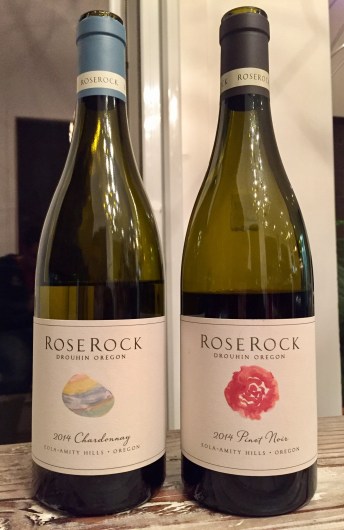
fullsizerender-526

New vineyard, new venture, new heights.

Maison Joseph Drouhin has been a Burgundy mainstay for over a century, but third-generation proprietor Robert Drouhin discovered a kindred spirit location in Oregon close to 40 years ago when he arranged a Judgment of Paris-esque blind tasting competition between a group of classic red Burgundies and some upstart USA Pinot Noirs back in 1979.  At a time when almost nobody even knew that Oregon was producing quality wine and all American hopes were seemingly based on the performance of the California contingent, it was “Papa Pinot” David Lett’s Eyrie Vineyards Oregon Pinot Noir that lapped the New World field in the tasting, placing 2nd overall behind only Drouhin’s own 1959 Chambolle-Musigny, an exalted Burgundy from a top vineyard.  Within less than a decade from this revelatory event, Drouhin had bought land in Oregon’s Dundee Hills (a subregion within the large Willamette Valley located almost equidistant from Portland and the Pacific Ocean) to plant to Pinot and had assigned his own children to carry the family legacy across the ocean, naming his daughter Veronique as winemaker and his son Philippe as viticulturist, positions both still hold at Domaine Drouhin Oregon today.

Fast forward a quarter century.  Drouhin Oregon has established itself as one of the premium producers of the Willamette Valley had has become firmly entrenched in the Oregon community.  On the lookout for additional top vineyard lands outside of Dundee Hills, it never quite comes across what it is seeking…until the Roserock vineyard comes up for sale.  Roserock is located due south of Dundee, right in the centre of Willamette in the well-regarded Eola-Amity Hills subregion, about a half hour south of Portland and just west of the state capital, Salem.  It is replete with features that would make any winery’s ears perk up:  complex, well-draining volcanic soils; high (for Oregon) temperature-controlling elevation, perched between 550-750 feet above sea level; sited in the middle of a wind corridor channelling cool Pacific air right through the vines, maintaining acidity and prolonging ripening.

fullsizerender-527

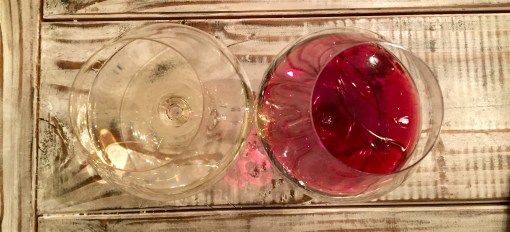
Roserock was planted to 111 acres of Pinot Noir and 11 acres of Chardonnay, Oregon’s (and Burgundy’s) signature grapes and had previously supplied fruit not only to Drouhin but to a laundry list of Willamette’s bright lights, including Soter, Argyle and King.  Drouhin pounced on it, acquiring the entire vineyard in December 2013 in its most significant transaction since starting up business on this continent.  This was not just a blip on the radar of a global wine power:  it single-handedly almost doubled Drouhin Oregon’s vineyard land holdings in the state, and it led to the creation of a new standalone Drouhin brand dedicated to the preservation and celebration of Roserock’s unique identity.  2014 was the inaugural vintage of this new label, and the first Roserock Drouhin Oregon Chardonnay and Pinot Noir make it eminently clear why this vineyard deserves to stand on its own. Read the rest of this entry »


Burrowing Owl Fall Release Set

12 11 2016

[These bottles were provided as samples for review purposes.]

Burrowing Owl Fall Release Week is quickly becoming one of the highlights of the Pop & Pour blogging calendar.  The winery is highly engaged with consumers and media alike and  is ahead of the game in terms of finding new ways to get its wines into the collective consciousness, and its renown is expanding well beyond its home province of BC as a result.  When the season’s current releases arrive in Calgary around harvest time, I’m ready to do my small part to spread the word.  Bring on the new vintages!

fullsizerender-462

A glorious Pop & Pour fall tradition.

Burrowing Owl is an Okanagan Valley stalwart, and it’s become such a ubiquitous part of the region that it’s easy to forget the winery is less than 20 years old.  The story started in 1993, when founder Jim Wyse replanted a series of vineyards between Oliver and Osoyoos in the extreme southern Okanagan.  There were no immediate plans to build a winery, but Wyse’s vision expanded once he saw the quality of the new grapes.  Burrowing Owl’s first vintage was 1997, and construction on the gravity-flow winery and massive underground cellar on the property was completed in 1998.

fullsizerender-468

 Initially focused on Cabernet Sauvignon, Merlot, Chardonnay and Pinot Gris planted on a single 130-acre site, Burrowing Owl is now up to 14 different planted varietals on 170 acres of estate vineyards in three different sites. It is no accident that the winery is named after the rare underground-nesting owl that was declared extinct in British Columbia in 1980 but is now back on the upswing due to the dedicated conservation efforts of a small group of individuals:  Wyse is one of those individuals, having contributed significant amounts of both time and money to the burrowing owl’s preservation.

fullsizerender-472

Stelvin Rating: 8/10 (Love the colour, love the side pattern and smoothness; not a huge fan of the top embossing.)

 This year I was fortunate enough to have the opportunity to try a sextet of different bottles from the Burrowing Owl 2013 and 2014 vintages, including return engagements with a couple of wines I had in last year’s releases, the Cabernet Sauvignon and the particularly eye-opening Syrah.  Let’s see how the fall 2016 lineup compared, starting with my introduction to one of Burrowing Owl’s founding whites:  Chardonnay.

Read the rest of this entry »


2013 Nugan Estate Third Generation Chardonnay

28 10 2016

[This bottle was provided as a sample for review purposes.]

fullsizerender-455

Nice to see some work go into a value label design.

If you were on the hunt for the largest subnational designated wine region in the world, the gargantuan South Eastern Australia appellation might be your first and last stop.  While most demarcated wine appellations gain their distinction by having a set of physical characteristics or surroundings in common — climate, soil, terrain, aspect, varietal — this one is intentionally celebrated for its internal differences.  Spanning five separate states within Australia (Queensland, New South Wales, South Australia, Victoria and even Tasmania) and covering the bulk of the prime vine-growing area in the country, South Eastern Australia is an umbrella region created to permit the blending of grapes from a variety of disparate conditions across a vast geographic area into a single appellation-level wine.  While the scorching Barossa Valley may have nothing in common with the cool, maritime Yarra Valley 800 kilometres away, producers under the SE Australia label can pick and choose grape characteristics from each (like rich fruit in Barossa and juicy acidity from Yarra) and meld them together to create a more balanced, interesting blend.  Australia has long been a wine nation that does not frown on cross-regional blending (the country’s top grape, Penfolds Grange, is such a blend), and when used correctly, it can allow for producers to put out well-made and eminently drinkable wines and surprisingly accessible prices. Read the rest of this entry »


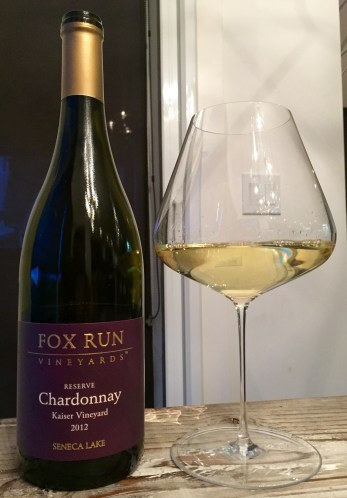
2012 Fox Run Vineyards Reserve Chardonnay

8 09 2016

[This bottle was provided as a sample for review purposes.]

fullsizerender-406

The ultimate value Chardonnay? Quite possibly.

Casting my eyes on this maroon label sends me back down memory lane, to what seems like forever ago but was really only about three and a half months.  In May I was lucky enough to pay a visit to the beautiful and unspoiled Finger Lakes region in central New York State – you may remember this because I basically wrote a Lonely Planet book about the area on this site when I got back.  Our very last winery on that winery-intensive voyage was one I already knew well thanks to its expanding presence in the wine scene in Calgary some 3,600 km away:  Fox Run Vineyards, which has acted both as a gateway drug and as a proud brand ambassador for the Finger Lakes in Alberta.  They have taken to this role so well that one of their whites was an official bottle of choice at the Calgary Stampede this year; can’t get much more YYC than that.  

Fox Run is made up of 50 acres of estate vineyards due south of Geneva, New York, on the western shores of Seneca Lake, the largest and deepest of the long, thin Finger Lakes.  The site was previously a long-time dairy farm, but grapes were first planted there in 1984, with a winemaking facility following in 1990.  Present owner Scott Osborn took over in 1993 and has been a fixture since, and the crazy thing is that he isn’t even the biggest example of the winery’s clear commitment to continuity:  vineyard manager John Kaiser was responsible for first developing the vineyards back in 1984 and is still there today – I met both men when I was there.  Winemaker Peter Bell is 21 years into his Fox Run career, and Sales Manager Dan Mitchell, who is more or less a permanent resident of Canada at this point after forging a successful new northern market for the FLX over the past few years, has been there for 12.  They are a family at this point, and it shows.     Read the rest of this entry »


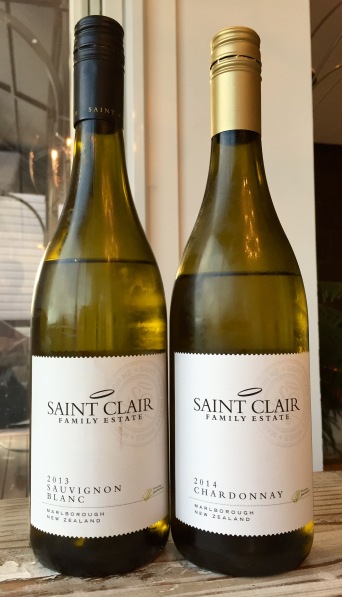
Saint Clair Family Estate – Marlborough Battle

11 08 2016

[These bottles were provided as samples for review purposes.]

FullSizeRender-392When you’re in a brand new wine shop or liquor store looking at a string of unfamiliar sub-$20 labels and hoping not to take a step too far wrong, the word “Marlborough” should be a huge source of relief to you.  It is the name of New Zealand’s most famous wine region, and more than maybe any other star region on Earth whose bottles you can still grab without a price cringe, it offers a very high quality floor, a strong baseline that offers confidence that even the lower-end offerings on the shelf will be somewhat well-put-together.  Marlborough, located on the northern tip of New Zealand’s South Island, is most renowned as the birthplace of Sauvignon Blanc’s most distinctive New World expression, that zingy, grassy, refreshingly searing style that almost anybody under 30 now associates with the grape.  Producers there have locked down on that mythical combination of quality, quantity and value that make Marlborough the safest, if at times one of the more redundant, “I’ve-never-had-this-bottle-before” picks out there.

A relatively new region on the global scale, Marlborough has been on the world’s radar since the mid-1980s, but the owners of Saint Clair Family Estate have been at the wine game longer than that.  Neal and Judy Ibbotson have been grape-growers on their estate since 1978, but previously sold off their crops to other wineries and didn’t decide to start making wine themselves until 1994.  They opted for the name “Saint Clair” for their winery because their vineyard property was initially settled by a James Sinclair back in the day; the added words “Family Estate” are not just lip service, as all three of their children are currently involved in various aspects of the business, with one of them even designing the wines’ labels.

This is an intriguing tasting, pitting Marlborough’s bread and butter Sauvignon Blanc against another white grape that’s starting to gain acclaim in the area, Chardonnay.  Enough acclaim to unseat the viticultural ruler of the region?  Let’s find out. Read the rest of this entry »


FLX: Finger Lakes Extravaganza – Part VI

29 05 2016

Well, we made it.  When I started this trip recap I wasn’t thinking it would be a 15,000-word Greek epic, but that’s what happens when an area has so many stories to tell that so many people may not have heard.  To retrace your steps:

Finger Lakes Intro & Conclusions
Part I – Long Island, Hudson River, Dr. Frank
Part II – Keuka Spring, Chateau Lafayette Reneau
Part III – Red Newt, Knapp Winery
Part IV – Hermann J. Wiemer, Lamoreaux Landing
Part V – Boundary Breaks, Anthony Road

FullSizeRender-366

Our last winery visit was probably also our most anticlimactic, but only because it felt for many reasons like Fox Run Vineyards had been with us all along.  In many ways Fox Run was the catalyst for our whole trip, the Finger Lakes producer with the deepest and most established Alberta presence, to the point where its unoaked Doyle Vineyard Chardonnay was recently selected as the official on-venue house white of the 2016 Calgary Stampede.  A key piece of the winery had literally accompanied us on nearly every stop of our grand FLX winery bus tour:  Sales Manager Dan Mitchell had given us the scoop and filled in the blanks about the region and the wineries who hosted us, never once seeking to undermine any one of them in favour of his own employer, delivering honest yet community-minded feedback that gave us a better sense of what the Finger Lakes were all about than any tasting room.  Winemaker Peter Bell was almost a mythical figure, his impact and his protégées spread across the entire region, his reputation eagerly preceding him even though he is certainly not the kind of person who would revel in it. Read the rest of this entry »


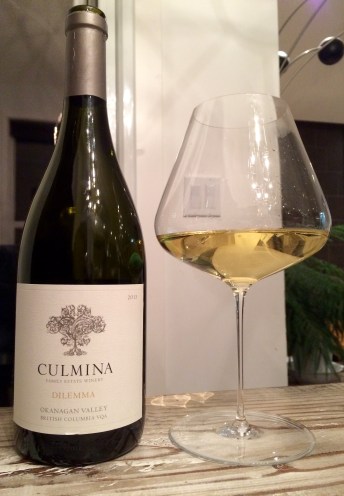
Wine Review: 2013 Culmina Dilemma

7 01 2016

[This bottle was provided as a sample for review purposes.]

Great story, great wine.  And check out the sick Zalto Burgundy glasses I got for Christmas!

Great story, great wine. And check out the sick Zalto Burgundy glasses I got for Christmas!

Back in the saddle, and back to wine, for 2016!  I hope everyone had a happy and restful holiday season; I had a relaxing blog-free week and a half following my arduous 25-day whisky Advent marathon but am raring to start the new year of PnP off right, so I opted for a bottle that I highly suspected would be good.  Suspicions:  confirmed.

Culmina is one of Canada’s top wineries in my books and one of the most compelling stories on the Okanagan wine scene.  A spare-no-expense passion project spearheaded by iconic proprietor Don Triggs (the Triggs from Jackson-Triggs) and his family, Culmina has only been around for a few years, but through careful site study and selection and meticulous planting, it has been churning out wines of intrigue and quality from its inception.  I have previously waxed on about the winery and a number of its bottlings here and here , but this is my first time writing about what could very well end up being the crown jewel of its portfolio, the Dilemma Chardonnay.  I hope it’s not my last.

Read the rest of this entry »