Bricks Wine Advent Calendar 2019: Day 8

8 12 2019

By Raymond Lamontagne

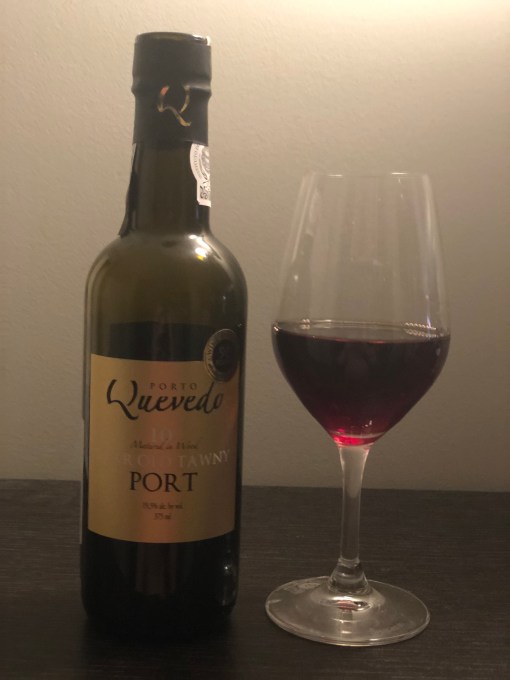
We begin week 2 of this Advent blogging saga with a bang, at least if you love Port. I will admit to being rather intimidated by this fortified wine style when I first started learning about wine. I had a vague recollection of trying Port for dessert years ago, long before any explicit attempts to develop an educated palate, and thought it tasted like NyQuil. I’m guessing this was a relatively inexpensive ruby example, one blended to match a particular house style and designed for early drinking. Since those dark times, and with the benefit of a few technical tastings under my belt (a few of those are detailed on this very blog), I’ve become an aficionado of good quality vintage Ports and tawnies. They remain a rare treat, but one much appreciated. I unwrap this bottle, see the phrase “10 Year Old Tawny Port”, and my mind is immediately jubilant with associations of toffee, nuts, and other sundry warm and festive sugarplum tastiness.

IMG_1348

All Ports are made by fermenting grapes (usually red) for a relatively brief period, typically to the point of around 5-6% ABV, at which point a neutral grape spirit known as aguardente is used to arrest the fermentation, boosting the alcohol content but also leaving residual sugar in the wine. At this juncture the “what type of Port am I making” decision tree becomes more complicated, and here our focus must be on tawny Port. These wines are aged in old wooden barrels called pipes, during which time exposure to oxygen and evaporation occur. This oxidation mellows the wine into a golden brown hue over time, and also imparts nutty flavours that distinguish tawnies from ruby and vintage ports. Although vintage tawny Ports do exist (they are called colheitas and are sublime), entry level tawnies are blends of different vintages, with most of the component wines being aged at least 3 years and then combined to yield a desired house style. Above this quality tier are bottles like the present one that carry an indication of age. Note that the age indication is in fact a “target age” based on desired characteristics in the wine: these aged tawnies still represent a blend of several vintages, and the Port house is looking to provide a wine that tastes characteristically like it has been aging for 10 years in barrel, for instance. Sure, some of the wine in the blend is legitimately quite old, but not necessarily all. It might help to think about the designated age as an “average” age, although technically even that is not correct. The basic notion is that a 10 year old tawny should be fruitier and less complex than a 40 year old tawny.
IMG_1349

You might now understand why I found this topic daunting when first learning about it. Despair not, for if these technical details threatened to put you to sleep, a half bottle of 19.5% ABV fortified wine should be just the thing to perk you up. Perhaps more compelling is the story of Porto Quevedo, a relatively small family winery based in the Douro. Historically families such as the Quevedos grew grapes and made wine that was sold  to merchants based in Vila Nova de Gaia, with such wines likely used as blending components by the larger houses. However, in 1986 legislation changed to allow growers and individual wineries to export their wines directly to the retailer. Oscar, a lawyer and notary by trade, first bought vineyards in 1977. After several years of helping his father João to make Port, in 1990 he built his own winery and was finally able to nurture his true passion, with son Oscar Jr. handling the business side of things and soccer-hating daughter Claudia (I hear ya) formerly handling the winemaking (she still helps with blending). The winery has a wonderful website and even a blog that is imbued with a real down-to-earth, non-pretentious human touch, right down to inviting critical commentary on the wines. Challenge accepted.

IMG_1350

Stopper Rating: 1/10 (oh, COME ON!!!)

The Porto Quevedo 10 Year Old Tawny Port is comprised of Touriga Franca (25%), Tinta Roriz (aka Tempranillo; 25%), Touriga Nacional (5%), Tinto Cão (5%), Tinta Barroca (20%), and other grapes (20%; over 100 grapes are sanctioned for Port production, including many rarities). Interestingly, the fermentation is described as “slow”, perhaps relative to other Ports. This is notably brickish in colour for a 10 year old tawny. The nose initially flashes some bright and fruity character, recalling maraschino cherries, raspberry jam, dried apricot, burnt orange peel, and pumpkin pie filling, with some nuttiness (pecans, chestnuts, sesame snap) and caramel that meld into a nice facsimile of Turtles candy. The palate largely echoes this array of aromas but is not purely sweet, with a gritty underlay of graphite, red rubber utility ball, and the ashy white ghosts of charcoal briquettes. With further air over the course of about an hour (hey, it’s a Sunday night, I’m sipping over here!), the palate softens to a more silky fine texture, and further oxidized characters emerge: sultanas/raisin or molasses pie, figs, ginger snaps, and a general deepening of the smooth toffee vibe. I like how this stitches together over time, with the wine showing better if you are patient.

88+ points


Bricks Wine Advent Calendar 2019: Day 6

6 12 2019

By Raymond Lamontagne

Oh, California Cab. As one of the world’s benchmark wine styles, victor over Bordeaux in the infamous 1976 Judgment of Paris tasting, this will of course have a place in any wine Advent calendar worth its salt. I also cannot prevent my mind from conjuring up such pejoratives as “overly oaked”, “heavily extracted”, “boozy”, and even “Mega Purple“. I will concede that for many consumers at the time, and many even now, massive size is a virtue. Fortunately a sea change began in the 2000s. A much-needed shift started taking place, from a winemaking culture focused largely on harnessing a technical wine science to yield a consistent product to please the average consumer, towards a “grassroots” middle path where science still matters but is now free to marry more European notions such as restraint, finesse and elegance, and even the notion that reasonable vintage variation can add interest and pleasure to the wine-drinking experience. It is no longer safe to make black and white assumptions about the monolithic nature of Cali Cabernet, and wineries like Starmont have played a key role in this paradigm shift.

IMG_1338

The name Starmont originally graced a bottle of Carneros Chardonnay in 1989. From there the name grew into a full-fledged brand, relocating from its original home with the more established Merryvale brand to the Stanly Ranch property, home to a couple of quality Carneros vineyard sites. Although the wines are no longer produced at a “green” facility built at one of these sites (that facility was sold this year), the commitment to sustainability remains. Although best known for Chardonnay and Pinot Noir, Starmont does not shy away from Merlot or Syrah. There is an interest in seeing how each varietal does in its place, whether said place is the Stanly Ranch itself, the Carneros AVA, or the broader Napa Valley and North Coast AVAs, and this interest in terroir may have something to do with one of the men at the helm.

Starmont winemaker Jeff Crawford was born in Alaska but has managed to become superbly well-travelled, picking up bits and pieces of winemaking knowledge from places as far-flung as Greece. His general approach is to use his travels and reading to cram his brain with as much history, winemaking philosophy, technical acumen, and tasting experiences as possible. His unceasing quest has led to equipment upgrades at the winery, yet Jeff wishes Starmont to remain a “microcosm” of the Carneros region: a source of even-handed, balanced yet structured wines that can still convey some degree of subtlety.

IMG_1342

The 2017 Starmont North Coast Cabernet Sauvignon is bottled under the very broad North Coast AVA appellation, with the grapes hailing from vineyards across the northern part of the state (41% Sonoma, 37% Lake, 13% Napa, 9% Mendocino). The wine is 81% Cabernet Sauvignon, 11% Petite Syrah, and 8% Merlot. This blending approach renders much of the philosophy behind terroir irrelevant for this particular bottle, unless the concept of site specificity is somehow extended to rather large tracts of land that exist as legal entities rather than embodying bona-fide “climats”. Nevertheless, the goal here was to obtain a mix of sites that reveals restraint in the final execution. Handpicked, hand sorted, and de-stemmed fruit was not crushed at the winery, leaving over 90% of the berries whole. This approach, if you were wondering, can prolong fermentation, as sugar release from the berries is delayed. This gives winemakers more control over the process, and can also enhance fruitiness and yield a more delicate, silky texture in the finished wine. After a cold pre-soak, the wine spends an average of 14 days fermenting on the skins and is then aged for 15 months in a combination of American and French oak (30% new).

IMG_1343

Stelvin Rating: 6/10 (hey, this is a decent Stelvin: vinous colour, nice font.)

This is indeed pretty silky in the mouth, with a supple, velvet-like latticework of tannins reinforcing a rather light-bodied frame. The aromas do tick all the right boxes: blackcurrant (duh!), some cool climate black cherry, even maybe red cherry Nibs, Aero bar, Swiss mocha instant coffee mix, nutmeg, MacIntosh’s toffee, very slight red pepper flake and well-worn cedar plank. The oak notes I am pulling off this are assertive but not overly intrusive. All of the ripe yet fresh fruit is powdered with graphite and waves goodbye with a medium-duration plume of oaked red currant jelly. An efficient, seamless purple elegance, one that you will likely enjoy but that is unlikely to provide total recall a year from now.

88+ points


Bricks Wine Advent Calendar 2019: Day 5

5 12 2019

By Peter Vetsch

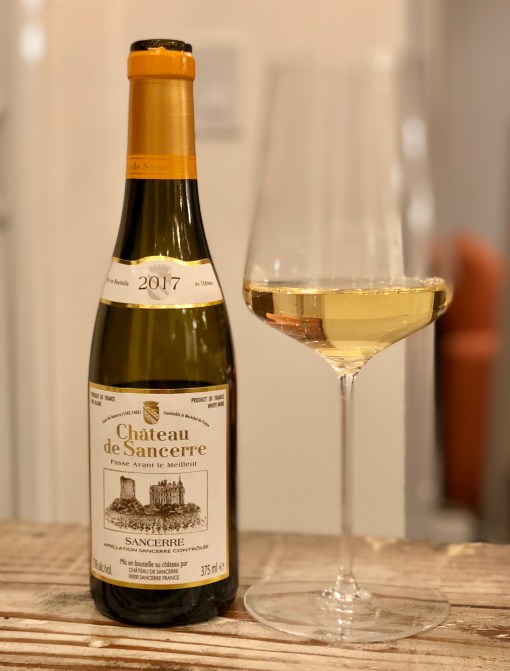
I think it’s safe to say that we’ve migrated into our “classics” phase of the 2019 Half-Bottle Wine Advent calendar.  After Canadian bubbles, German red crossings and New York cans, yesterday’s Chianti Classico signalled a bit of a vibe shift, and tonight’s offering got the message loud and clear and has continued the trend.  You don’t get more throwback textbook Old World than Sancerre, a region that has stood the test of time but also run the fairweather gamut of popular opinion over the past few decades.  If this was the 1982 Half-Bottle Advent Calendar, it might be entirely composed of Sancerre; fifteen years before or after might have seen Sancerre wholly excommunicated.  Now it’s making a cautious return, seeking to reclaim (or maybe just re-assert) its status as the spiritual home of Sauvignon Blanc.

IMG_1055

Sancerre is one of the most easterly sub-regions of the long, thin, west-to-east Loire Valley, which ultimately connects to the Atlantic Ocean but extends all the way to the dead centre of France on its other end.  Monks first planted vines in Sancerre in the 11th or 12th centuries, and subsequent swaths of royalty ensured that its sought-after wines were always available in their courts.  While currently most known as a (if not THE) key French site for Sauvignon Blanc, which now makes up 80% of all plantings in the region, it was previously home to considerably more Pinot Noir and Gamay, the latter of which was ravaged by a phylloxera outbreak in the 19th century and was replanted with Sauvignon.  Pinot retains 20% of the acreage in Sancerre, but this is now firmly a white wine region, and tonight’s bottle has its name all over it.

IMG_1059

I don’t know whether to call this the 2017 Chateau de Sancerre or the 2017 Chateau de Sancerre Sancerre.  It seems completely ridiculous to use the name twice, but I’ve never come across a producer whose name was the name of its region before.  (Chateau de Bordeaux and Domaine de Bourgogne, you missed your chance.)  The Chateau appears quite aware of its unique nomenclature, boasting in almost all of the available online literature, not to mention the back label of this bottle, that it is the “only wine which can be marketed under this exclusive name”.  Well…no kidding?  Isn’t that the case for EVERY SINGLE WINERY on Earth?  You don’t get a lot of non-Beringer wines marketed under the “exclusive name” of Beringer, thanks to the rather handy world of intellectual property law.  But whatever.  The Chateau de Sancerre is actually a Chateau, a castle (re)built in 1879 in the heart of the vineyards of the region, which was purchased in 1919 by Louis Alexandre Marnier-Lapostolle and is still owned by the Marnier-Lapostolle company a century later.  Its name is more familiar than you might think, as Louis Alexandre was also the inventor of Grand Marnier (speaking of exclusive names).

IMG_1060

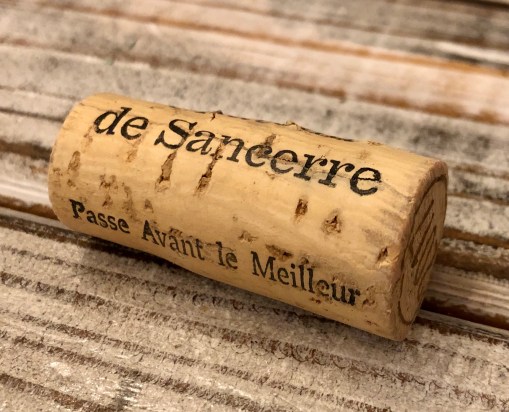
Cork Rating:  6.5/10 (Pretty boring cork, but I love the swag associated with the tagline “Pass before the best.”  Badass.)

This particular bottling is 100% Sauvignon Blanc, as one might expect, and emerges a deeper lemon colour than I had anticipated given its utter lack of oak contact.  Meyer lemon, salted lime (inching towards margarita), Fuzzy Peaches, Tums, rock dust and straw/dried grass sing a stately yet playful aromatic song…until you sip and the hammer comes down.  The Sancerre Sancerre is bright and instantly alive on the palate but extraordinarily tart, like Sprite if you removed all of the sugar.  Tonic water, (very) green apple, citrus peel, flint and a torrent of biting, punishing acid lead into a chalky, icy, mineral finish that oddly dries out the mouth as it scrubs it clean.  An emphatic and almost angry wine, vociferously expressing its turf in defiance.  Sorry for the IP jokes?

88- points


Bricks Wine Advent Calendar 2019: Day 3

3 12 2019

By Peter Vetsch

Three days into this year’s half-bottle extravaganza and we haven’t seen a standard-shaped Bordeaux or Burgundy bottle yet.  First off was the reinforced bubbles bottle, followed by the Germanic flute (which trickily held a red), and tonight it became immediately clear that the streak was going to continue.  Can we roll with the punches?  Yes we can.

IMG_1047

This is also the third straight day that I’ve peeled off the tissue paper to find a familiar friendly face:  Day 1’s Tawse has been my go-to Ontario stalwart for years, Day 2’s K.H. Schneider makes the best goddamn Dornfelder in the world, and Day 3’s can is brought to you by the wonderful, hospitable, salt-of-the-earth people at Fox Run Vineyards, from New York State’s gorgeous Finger Lakes area, a winery and a region that I was lucky enough to visit back in 2016.  That was the same year that this wine — sort of — was named the feature white of the Calgary Stampede.  Meet the Fox Run Vineyards On The Run Unoaked Chardonnay, can edition.

IMG_1050

Fox Run is a New York State institution.  This pastoral property on the western shores of Seneca Lake was originally a dairy farm before grapes were first planted there in 1984.  Fast forward 35 years and the winery now owns 50 acres of east-sloping vineyards and focuses on crafting a wide variety of estate wines under the watchful guidance of longtime winemaker Peter Bell.  While they rightly take pride in their excellent Riesling lineup, their Chardonnays are in my mind an equal part of their house identity, both the spritely unoaked Doyle Family Chardonnay and the marvellous barrel-fermented Kaiser Vineyard Chardonnay.  I believe that this can is made up of the former, although the can itself gives away no hints of its specific identity.  The can also strangely does not indicate a vintage, perhaps to avoid the annoyance of having to re-print can labels for each successive harvest; however, I am told that it is most likely not a NV wine and is instead probably the 2018 edition of the Doyle.  This is excellent news, because it means that it is likely also 8% Traminette, a lovably bizarre, slightly soapy, melony hybrid whose vinifera parent is Gewürztraminer (hence the name), which is normally added to the Doyle Chardonnay as a minority blending partner to rev up its personality.  (Fox Run also makes a varietal Traminette, which you absolutely must buy if you ever get the chance.  Traminette is amazing.)

IMG_1051

Cork Rating:  I don’t know what the hell I’m supposed to do with this.  2/10.  Nice tab.

First impressions:  spritz!  The release from the can causes multitudes of tiny bubbles to cling to the sides of my glass for a good ten minutes while a reductive matchsticks and smoke aroma blows off.  What remains is a chiselled aromatic profile of fresh lemon, smoked lime, honeydew, wet grass, pina colada and something oddly like boxed cake powder or Premium Plus soup crackers, the latter two of which I will credit to the Traminette.  The olfactory intrigue does not arise due to any lees stirring or barrel contact, of which there was none — Fox Run built the Doyle in as linear a fashion as possible, save only for the incorporation of this Chardonnay’s mischievous blending brother.  The regimented cool-climate style takes over on the crisp, lean, precise palate, whose relatively neutral flavours of Asian pear, underripe white peach, river rocks and chalk dust are energized by a tight line of acidity that is not undercut by any excess in body or weight.  I almost think this would have been better off being drunk straight out of the can as opposed to splayed out in a Burgundy glass — it is a straight-shot linear wine well-suited to patios and campsites, its low alcohol and pH priming it to provide immediate refreshment, but its mission not extending to unfolding in layers over time.  That said, its consistency and focus are a continual joy with each successive vintage, and, it turns out, with any given container.

87+ points


Bricks Wine Advent Calendar 2019: Day 2

2 12 2019

by Raymond Lamontagne

After yesterday’s solid start, my anticipation is running high. It turns out that anticipation and trepidation can co-exist in equal measure. How am I going to keep up with all these blogs? The same way I kept up the last two years, I suppose, via doses of careful scheduling and an iron resolve to do what I love: drink wine. As Peter mentioned, this year’s Bricks Wine Advent offering looks like a particularly diverse mélange of different bottle shapes and even alternative packages. The wrapping for Day 2 conceals another distinct bottle shape, this one lanky and elongate. This can only be a flute, speaking to its Germanic (or at least Germanic-influenced) origins.

IMG_1327

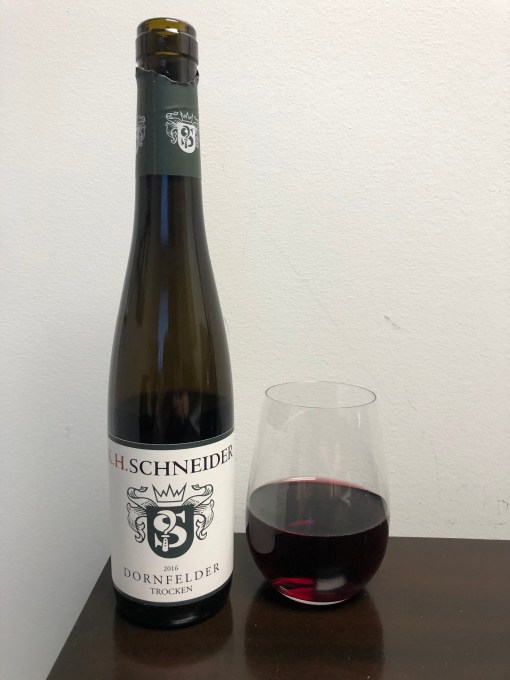
Voila. K.H. Schneider! This happens to be one of my all-time favourite German producers from the Nahe, a region whose stony soils continue to provide much inspiration; Nahe winemakers walk a stylistically taut rope between the cool mineral elegance of the Mosel and the riper fruits of the Pfalz and Rheinhessen. To be transparent, there are a few of us here in Calgary who will vociferously imbibe anything and everything K.H. Schneider. I justify this stance by appealing to winemaker Andi Schneider’s emphasis on organic viticulture and spontaneous fermentations, an approach that yields truly honest, authentic wines of place. Increasingly I am inclined to agree with Terry Theise when he argues that such authenticity is a quality criterion that must come before other important yardsticks such as balance and intensity. If the terroir Andi farms is a vinyl record, his deft “low intervention” winemaking touch is the phonograph needle that precisely decodes the soil’s music for our drinking pleasure. But do take note: this is not the expected Riesling. It is something much, much stranger. Are we, team Schneider, being pranked?

I love it already. Dornfelder was created in 1955 by German viticulturalist August Herold. As you can see from the diagram above, Dornfelder is in fact a cross between crosses (!), with some pretty big names among the original four parents. It has been suggested that Dornfelder has genes from every black grape grown in Germany up until its creation.  A rare example of a successful man-made crossing (note that it is not a hybrid, as all parent stock is vinifera), Dornfelder is less obscure that you might think, in recent years becoming the second-most planted black wine grape in Germany. Vigorous and high yielding, Dornfelder also has something that its ancestors Trollinger and Blauer Portugieser do not: loads and loads of colour due to high levels of pigments called anthrocyanins. Dornfelder stands alone in Germany for its ability to make wines that are almost black in their deep purple intensity, with a soft texture, decent acidity, and characteristic aromas that conjure up dark berries, cherries, and more unique herbal/spice notes that some compare to bitters. Unlike many grapes used predominantly as colouring ingredients, this one has its own rather assertive flavor profile. Dornfelder even made inroads into the United States, Canada, and South America. Have you ever been this excited about a viticultural cross? I thought not.

IMG_1328

The 2016 K.H. Schenider Dornfelder Trocken half-bottle features a particularly crumbly stubborn cork, or at least mine did. Ultimately worth the effort. This is dark purple alright, but not completely opaque. The nose conjures up all sorts of underripe blackberry and huckleberry for me right out of the gate, but a balancing woodsy halo of dried violets, allspice, clove, fennel seeds, rosemary, rhubarb, stinging nettles, crushed gravel, and (yes indeed) herbal bitters (orange peel? quinine?), which prevents this from being anywhere near histrionic. Fruits much redder (cherry Nibs, strawberry, cranberry) begin to wink through the strange blueberry-bog-meets-baroque-darkness that was my initial impression. The acidity is buoyant but far from cutting, and the tannins form a light powder. My mind keeps coming back to cough syrup: give this a decent chill to mitigate this effect, unless of course you dig this sort of thing. And don’t get me wrong, this could very well be the world’s greatest Dornfelder, or at least the prettiest. Although I would have to try a few more exemplars to firm up that take, this is clearly winking at me. It is pleasantly odd to feel that a bottle of Dornfelder is an old friend. Thank you August Herold.

89+ points

IMG_1329

Cork Rating: 3/10 (putting aside the difficulties I had extracting this, I like the font but am otherwise underwhelmed, if that’s a word.)


Bricks Wine Advent Calendar 2019: Day 1

1 12 2019

By Peter Vetsch

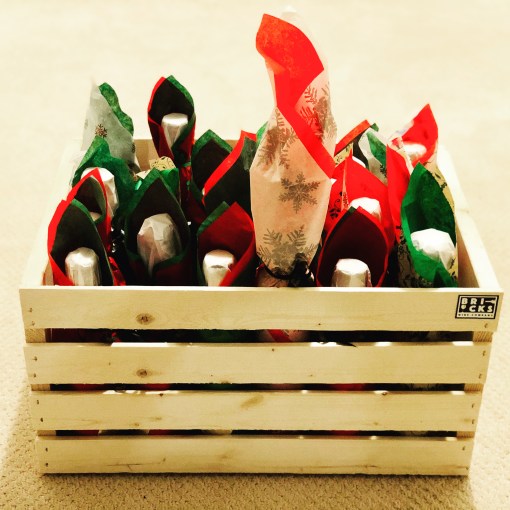
And we’re off.  This marks the SIXTH straight year that this site has run a daily play-by-play blog of a boozy Advent calendar (sometimes more than one at once, which inevitably leads to massive regret on my part).  For the last couple years, this has included following along with the wonderfully diverse Bricks Wine Company Half-Bottle Advent Calendar, a concept long considered and now gloriously fulfilled, finding new range with each passing year.  This marks the third annual edition of the Bricks calendar, and if the shapes and tops of the various gift-wrapped 375 mL entrants into this year’s Advent derby are any indication, we may be in for our most intriguing field yet.

DFF6609D-E2CF-4B8F-8CB2-40E947C6DC21

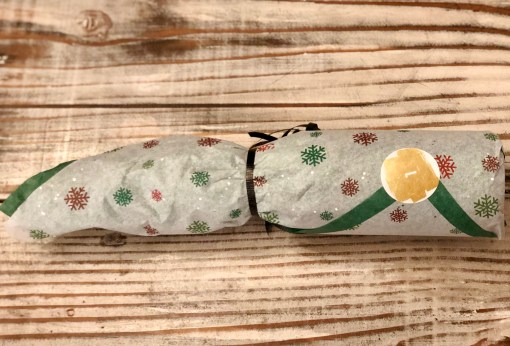
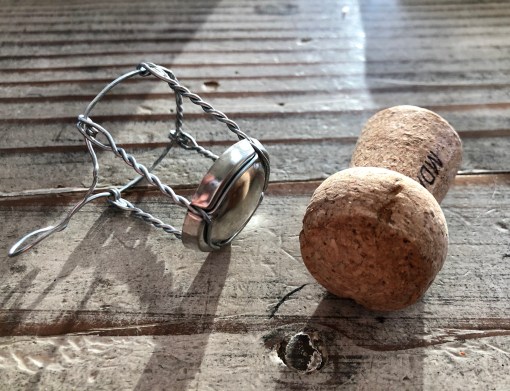
Case in point:  Day 1.  That is NOT a standard screwcap or neck foil that I feel under the wrapping paper.  The prior Bricks calendars have always ended off with bubbles on Day 24, but the wire cage and jumbo pressure-withstanding cork protruding from the gift wrap of this inaugural 2019 offering suggests that this year’s calendar may well be starting off with them too.  And so it is, as the tissue paper falls away to reveal…a hell of a good start.

IMG_1038

The 2016 Tawse Spark Brut hails from my personal favourite winery in Ontario, one that has won the prestigious award for Canada’s Winery of the Year four times (including an impressive three-peat from 2010 through 2012) despite only being 18 years old.  Tawse is a family-owned organic and biodynamic estate that is heavily focused on Burgundian grapes Chardonnay and Pinot Noir (to such an extent that founder and owner Moray Tawse also has a project in Burgundy itself, a collaboration with the renowned Pascal Marchand called, unoriginally, Marchand-Tawse), although it first came to my notice for remarkable Riesling and Cabernet Franc.  Tawse’s focus in the vineyard is to make each swath of vines a complete self-sustaining ecosystem, one that is constantly in balance without the need for any chemicals or external artificial additives to do the balancing.  Animals play a major role in this effort, including chickens (who eat vineyard bugs), sheep (who eat away the lower vine leaves, exposing the grapes to more sunlight) and horses (who are used in lieu of tractors so as to avoid excessive soil compaction).

IMG_1041

The Spark Brut is a traditional-method Champagne-style sparkling wine, made by inducing a secondary fermentation of a previously made still wine within a sealed bottle, which traps escaping CO2 within the resulting wine that is created and allows it extensive contact with the dead yeast cells that remain after the bubble-inducing effort is successful, creating a myriad of textures and flavours not otherwise found in the world of wine.  This offering is made from a surprising 44% Pinot Gris in addition to Champagne stalwarts Pinot Noir (31%) and Chardonnay (25%).  Pinot Gris does not often get the Champagne treatment anywhere outside of Alsace, but Tawse sees fit to elevate it alongside its more renowned Pinot cousin; each of the varietals here are yield-thinned and hand-harvested, then left on lees for 12 months after secondary fermentation before a slight touch of sweetness is added back ahead of bottling.  Each grape used in this wine hails from a different Tawse vineyard, including the Chardonnay, harvested from the mighty Quarry Road (anyone who has had the Tawse Quarry Road Vineyard Chardonnay will understand my singling it out).

IMG_1042

Cork Rating:  1/10 (Shiner cork AND shiner wire cage?  I thought this was Advent!!)

Day 1 emerges an extremely pale lemon colour amidst a steady stream of tiny bubbles, their size and energy a clear indicator of the traditional method at work.  The aromas are pleasantly vibrant for a Champagne-style wine, perhaps a sign of what Pinot Gris can add to a bubble party:  banana leaf, lime curd and honeydew, swirling across southern biscuits and struck match.  Instantly drying on the tongue, the Spark’s lees-induced flavours stand firm and take precedence over the fruit, reasserting the dominance of its winemaking method and erasing any perceptible trace of residual sugar; elastic bands and sourdough bread stretch over tangy melon, tangerine and Granny Smith apple, lending heft and gravitas to an otherwise-playful wine.  This is not ragingly complex, but it’s crispy and approachable and delicious, the kind of thing you would use to kick off a party that sees you crush 24 bottles in 24 days.  Here’s to another wine Advent.

88+ points


12 Days of Vinebox: Day 12

5 01 2019

By Peter Vetsch

Well, we’ve done it:  scaled the top of a 24-day Advent mountain, and without pausing for breath, immediately continued up to the summit of the second 12-day Vinebox mountain perched directly on top of it.  36 straight days of blogging later, here we are, weary and satisfied and very ready not to write about any goddamned thing tomorrow.  And we end the 12 Days of Vinebox with the wine that maybe surprised me the most in the lineup, not because there’s anything particularly weird about it (although in this age of wine weird-offs marked by escalating departures from the norm, maybe strait-laced in-its-lane Left Bank Bordeaux qualifies as odd in a post-hipster-irony sort of way), but because it appears to be a library offering.  This 2011 Chateau Hourbanon Medoc is easily the oldest wine in our set of test tubes, proving that even back-vintage wines can be relocated and settle peacefully in their new skinny Vinebox homes.

IMG_9584

I gently chided Vinebox yesterday for not supplying much information along with their wines, but tonight’s offering solves that problem itself by way of an information-packed, if insanely disorganized, producer website, wherein the current proprietor of Chateau Hourbanon tells you absolutely everything you would want to know about the history and current philosophy of the estate in nine different potential languages.  I find this sheer earnest desire to share and educate highly welcoming.  Thanks to this glorious fount of information, I can advise that Chateau Hourbanon has long been highly regarded — it was classified as a Cru Bourgeois (or its pre-official predecessor) back in the 19th century — but the subsequent 100 years were not as kind to it, and when reformed dentist Remi Delayat purchased it in 1974 it was all but abandoned, its winery buildings in complete disrepair.  Delayat made it his personal mission to rehabilitate the estate, and after his premature death in 1981 his widow Nicole carried on the quest, followed by  their son, current proprietor and website content-master Hugh, who now manages the estate’s 13 hectares of vines.  In the current more formalistic classification of the Cru Bourgeois wineries, Chateau Hourbanon’s name remains on the list. Read the rest of this entry »


Bricks Wine Advent Calendar 2018: Day 21

21 12 2018

By Peter Vetsch

I will admit it, Advent team:  I am nearing the end of my blogging rope.  The culmination of the calendar, Christmas shopping, pre-holiday work deadlines and child sport activities has me completely drained, so as half-bottle Advent peaks to its climax, I am beginning to wear down.  Nevertheless, we aren’t about to stop with the end so near.  We fight with words and persevere.

IMG_9490

So out of the wrapping paper tonight comes…ANOTHER Pinot?  That oddly makes three in five days, after Monday’s Day 17 Ken Wright Oregon masterpiece and Wednesday’s Day 19 Cristom Oregon encore.  This one is…not from Oregon, I guess?  That’s not entirely fair.  If I had pulled this from the calendar on Day 4, or in the midst of the weird run of 2013s, I suspect I would have been pretty psyched about it.  The 2016 Shaw + Smith Pinot Noir from Adelaide Hills is a $50+ bottle retail, from an exciting new-wave producer known for quality.

The winery was founded in 1989 by Michael Hill Smith and his cousin Martin Shaw, both of whom were impeccably credentialed for the venture:  Smith was initially part of the family ownership of Yalumba before being bought out in 1986, and is also a Cordon Bleu-trained chef and Australia’s first-ever Master of Wine, while Shaw was himself a well-known wine consultant who was sought after by many producers needing winemaking assistance.  They grounded their venture in the chilly Adelaide Hills, which is in central-southern Australia near Barossa but 4 degrees cooler on average during the day and a whopping 8 degrees cooler at night, allowing for longer, gentler ripening and the preservation of precious grape acidity.  Grapes have been planted here for two centuries, but it wasn’t until my lifetime that viticulture really came alive on a global scale (not that I can take any credit).  “Higher, colder, wetter” is how Shaw + Smith summarize their Mount Lofty Ranges subregion as compared to nearby Barossa; while only a half hour from coastal Adelaide, it is at 700 metres above sea level…things go up in a hurry. Read the rest of this entry »


Bricks Wine Advent Calendar 2018: Day 20

20 12 2018

By Peter Vetsch

From the very first day I bought this year’s Bricks Half-Bottle Advent Calendar, it was eminently clear that one of these neatly wrapped things was not like the others.  This is that thing:

IMG_9474

Why settle for a half-bottle when you can have a full can?  Although alternative wine packaging has developed quite the stigma over the years (whether cans, or bag-in-box, or tetra-packs, or anything other than tall glass bottles), and although it has often been relegated to the purview of forgettable plonk, a few forward-thinking and quality-minded producers are slowly starting to try to take it back.  As a huge proponent of wines in novel containers, I think wines in cans are utterly brilliant.  Cans offer a number of advantages over bottles:

  1. Aluminum is much, much lighter than glass, which saves on shipping costs (often charged by weight), takes less energy to transport and at least theoretically should reduce the shelf price of the product accordingly.
  2. Cans are fully opaque and do not let any damaging UV light through to the wine (which can cause chemical reactions and form sulphurous compounds within the wine that are notably unpleasant).  Glass, on the other hand, especially CLEAR glass…
  3. A sealed can allows no oxygen penetration into the wine and thus acts as a foolproof preservative.  There’s a reason why all your bomb shelter food is canned.
  4. No corks mean no risk of cork taint and closure-based wine spoilage.  Away, TCA!
  5. Cans are easily portable and allow for casual (and, as needed, discreet) enjoyment wherever you happen to be.

The increase of halfway-decent wines in cans is one of the best vinous developments of the decade, and the inclusion of this one in the calendar is at least partially indicative of the growing popular acceptance of the can as a wine-holding medium.  Not a moment too soon. Read the rest of this entry »


Bricks Wine Advent Calendar 2018: Day 19

19 12 2018

By Raymond Lamontagne

Well, well. We appear to have ourselves an Advent “Battle of Oregon” this year… of sorts. After the current favourite for “2018 wine of the calendar” made its presence felt a mere two days ago, another iconic Oregon Pinot Noir comes out swinging. The present bottle, the 2016 Cristom Vineyards Mt. Jefferson Cuvee, keeps taking the crown in an annual Wine & Spirits poll to identify the “#1 Pinot Noir in America’s Best Restaurants” (five wins in total). However, most fascinating to me is that this wine represents a very different vinification philosophy from the Ken Wright approach from Day 17. Wright bottles a single-vineyard Pinot Noir from 13 different sites in the northern Willamette Valley. His overriding goal is capture the unique character of each plot. At Cristom, however, blending reigns supreme. Although the winemaking approach is informed by a traditional Burgundian ethos, grower and owner Tom Gerrie and winemaker Steve Doerner believe that the Willamette shows best when grapes from different sites are woven together into a tapestry, as opposed to enjoyed as single strands.IMG_2469

Steve Doerner had previously spent 15 years crafting world class Pinot Noirs with Josh Jensen at Calera, on remote Mount Harlan in California. Although this collaboration was fruitful, Jensen, a staunch advocate of site specificity much like Ken Wright, retained ultimate control over the winemaking. Doerner began to tire of working in such an isolated, lonely locale and was unable to persuade Jensen that blending could afford possibilities that single vineyard wines could not. As he told wine historian Paul Lukacs, “I just liked the idea of making something better, something more complete, than any of its components”. Doerner found the freedom he was seeking when he moved to Oregon and began working with Tom’s father, Paul Gerrie. The Gerrie family considers Doerner to be a blending ninja, a man able to sculpt characterful wines using grapes from all five of Cristom’s estate vineyards as well as quality sites from nearby in the Willamette Valley. Doerner makes the entry level Mt. Jefferson Cuvee first, tasting wines from the different plots and then synthesizing the finished wine using a non-obsessive, intuitive approach based on his tasting instincts alone: “I don’t agonize over it at that point. I just try to make the best I can.” Cristom does make site-specific bottlings, as the market is of course enamoured with terroir, and the Gerries are understandably proud of their estate vineyards. However, each year’s blend is the first priority, with consistency from vintage to vintage the final goal. Read the rest of this entry »


Bricks Wine Advent Calendar 2018: Day 18

18 12 2018

By Peter Vetsch

Well, any wine was going to have its hands full tonight, following on the heels of the toughest act to follow so far in the 2018 calendar, last night’s masterpiece single-vineyard Pinot Noir from Ken Wright.  Like a schedule loss on the second night of a back-to-back home-and-home set in the NHL, Bricks may have strategically selected what I would guess is the least expensive bottle in the whole calendar ($15ish for a full bottle) to take one for the team right after we all revelled in the most expensive bottle in the calendar.  The Advent backup goalie in this case is the 2016 Ram’s Leap Semillon Sauvignon Blanc from New South Wales, Australia, a bottle that continues what is now a Bricks Advent tradition of vinous animals leaping, after the highly tasty Frog’s Leap Zin from 2017.  Stag’s Leap next year?  Most definitely.

IMG_9462

Ram’s Leap is part of the Canonbah Bridge range of wines, a producer with which I was not previously familiar, possibly because the place where their estate vineyard is planted is not even a recognized wine region!  It forms part of the broader appellation of New South Wales, but so does 30% of the Australian wine industry.  The 80-acre vineyard was strategically planted on an old riverbed in the middle of a 30,000-acre sheep farm near Warren, slightly west of the Hunter Valley, a couple hours northwest of Sydney.  Half of the plantings are Shiraz, and the other half are, well, everything else:  Merlot, Grenache, Mourvedre, Semillon, Verdelho, Chardonnay and Tempranillo.  It remains the only commercial vineyard in this highly arid area, with scorching hot days and cool nights that facilitate the practice of organic viticulture (there are no plant-attacking fungi, mildews or moulds in the desert, so less need for herbicides).  Canonbah Bridge takes their organic principles one step further by aiming to avoid any intervention with the vineyard soils whatsoever:  no tilling, all weeding (and much fertilizing) performed via wandering sheep service, cover crops preventing the spread of unwanted plant life, etc. Read the rest of this entry »


Bricks Wine Advent Calendar 2018: Day 17

17 12 2018

By Peter Vetsch

I can often tell how much I like a wine by how many notes I take.  Even when it doesn’t hit me at first how much I am taken by a bottle, I’ll suddenly look down and a whole notebook page is filled up of musings and guesswork and random sensory impressions, the various threads through which I eventually try to sort out the essence of the wine and how it speaks to me.  On blog days where the bottle doesn’t have much to say, or doesn’t quite spur the imagination, the pen moves very slowly.  Tonight I have three pages of notes in about 30 minutes, and I had to stop myself from writing more so that I could post this early enough for people to actually read it.  This was the first bottle in Advent history that had me autonomically exclaim “WOW.”, reflex-like, as soon as I opened the bottle.  I had never had a Ken Wright Pinot Noir before, but I was very well aware the level of quality it represented.  For my first bottle to be his 2015 Shea Vineyard, from the now-famous plot that he almost single-handedly put on the map, can’t be more perfect.  Welcome to the last week of the calendar, which almost surely can’t get better than this.

IMG_9452

Ken Wright was first exposed to wine as a waiter and student in Kentucky, and the regular staff tastings at his part-time job soon led to a complete change of vocation and an enrolment in the prestigious UC Davis viticulture program in California.  He spent close to a decade in the state honing his craft, but a single visit to Oregon in 1976 convinced him that his destiny lay there, where he felt North America’s pinnacle expressions of Pinot Noir could be made.  He loaded up his family and all his earthly belongings and founded his first Oregon winery in 1986 (Panther Creek Cellars, which still exists today, though Wright has since sold it), then his eponymous winery in 1994, which focuses entirely on single-vineyard expressions, mostly of Pinot Noir, from 13 different vineyard sites.  Shea Vineyard, the home of tonight’s bottle, is in the Yamhill-Carlton AVA in the northern part of the Willamette Valley, a sub-AVA that Ken helped define and create (along with five others) back in 2004.  Ken also established his winery’s tasting room in the heart of the small town of Carlton, echoing his belief in the power of site for his grapes by connecting his business directly to their land of origin.  His was the first winery to take root in Carlton, and it has now been joined by a large tasting room in the town’s old train station. Read the rest of this entry »


Bricks Wine Advent Calendar 2018: Day 13

13 12 2018

By Peter Vetsch

Rioja!  I stand to be corrected, but I believe this is the first bottle of Rioja in which we have ever partaken in an Advent calendar…thus my Groundhog Day Advent 2018 curse comes to an end and I get to dive into something sui generis to close out my blogging week.  In.  After last night’s more eclectic offering, tonight seems as safe and comforting as a St. Bernard with a collar barrel of brandy, and it barely misses continuing the 2013 vintage trend we’ve seen a lot of over the past week, although the 2014 vintage designation on this bottle suggests it’s a year beyond the likely current vintage of this wine.  “This wine”, in this case, is the 2014 Bodegas Franco-Espanolas Bordon Rioja Crianza, which is a mouthful to say, let alone type.  But as with so many things wine-related, the name tells a story.

IMG_9421

If you were reaching for your Spanish phrasebook or your Google Translate bookmark, I will save you the trouble:  yes, the producer’s name actually DOES mean “The French-Spanish Winery”.  The winery was founded back in 1890, when a great deal many Frenchmen in the viticulture and viniculture industries were fleeing a country where their livelihoods were literally being eaten away by the phylloxera louse, a scourge that absolutely decimated the vineyards of entire regions in France before the antidote of grafting native vitis vinifera vines onto American bug-resistant vine rootstocks was discovered.  One such Frenchman was Bordelais (and remarkably French-sounding) Frederick Saurat Anglade, who was one of many winemakers from Bordeaux to find refuge in Rioja and then like it so much that he decided to stay.  Along with Spanish partners, he founded his multinational bodegas, perched in prime territory on the banks of the Ebro River, which has since grown into one of Rioja’s biggest.

IMG_9423

This might be the first old-school wine from Rioja that I’ve seen use varietal labelling, but there’s the word “Tempranillo” plain as day on the front label.  This dose of consumer informational assistance is not quite as helpful as it seems, because the 2014 Bordon Crianza is actually only 80% Tempranillo and 20% Garnacha.  Close enough?  The wine spends 15 months in the traditional Riojan staple, American oak barrels (which the winery website is kind enough to advise come from the oak haven of Ohio), followed by additional time (minimum one year) in bottle before release in satisfaction of its legal “Crianza” designation aging requirements.

IMG_8353

Cork Rating:  5.5/10 (Amazing coverage and graphics, but major deduction for being, by FAR, the shortest cork of December to date – see corkscrew evidence above.)

The result of this regimented aging process is a gorgeous rich ruby hue and a slate of classic Spanish aromas, from tobacco and new leather jackets to wet beach, smoked meat/chorizo and cedar with quietly fresh purple fruit overlaid with the dried red berry rendition most commonly associated with 100+ year-old Riojan wineries.  Bright and juicy, the Crianza hums with vibrant acid, its luxuriant round fruitiness a nod to modern influence but its wood-aided papery tannin and its cigar smoke, dust and char flavours a throwback to the good old days.  The two eras of this legendary region dance together marvellously here, and to this day I still haven’t met a Rioja I didn’t like.

90 points


Bricks Wine Advent Calendar 2018: Day 9

9 12 2018

By Peter Vetsch

Before getting into tonight’s wine, allow me a brief moment of self-reflection.  I realized partway through the current Advent blogging blitz that one of these recent half-bottle calendar posts marked the 500th piece of posted content in Pop & Pour’s history.  I have been writing this blog since March 2011, and never in my wildest dreams did I think it would reach half a thousand articles.  So much has changed in my life, my work and my family since then, but PnP has remained a constant, and it has been immensely gratifying to see it grow and expand with new writers, each with their own new approaches and perspectives.  It has been even more gratifying to have people engage with the site and remind me that I’m not just writing into a vacuum, screaming into the void.  See you all in a few years at post #1000, I hope.

IMG_9410

Back to tonight.  After Ray enjoyed consecutive new takes from Moldova (of all places) and cool-climate Cali, I jump back into the fray and seem to continue the Advent 2017 nostalgia tour, with yet another bottle that takes me right back to last year around this time.  Day 8 of 2017 was the 2012 Chante Cigale Chateauneuf-du-Pape, a bottle that I felt was already markedly past its prime, a surprising disappointment from a top-end region.  Tonight brings another five year-old half-bottle from CNDP, this time the 2013 Domaine de Cristia Chateauneuf-du-Pape, from which I hope for better things.

IMG_9411

This family estate started 70 years ago with 2 hectares’ worth of Grenache plantings owned by founder Etienne Grangean.  Etienne’s son expanded the property and added Syrah and Mourvedre to the varietal mix a few decades later (although Grenache remains 85% of the total acreage), and a decade ago Etienne’s two grandchildren came on board.  Now the Domaine has 58 hectares under vine, 20 of which are in Chateauneuf-du-Pape proper, in the eastern sandier part of the appellation. The parcels there face northeast, away from the afternoon sun, promising slower ripening and longer hang-time.  Domaine de Cristia was certified organic in 2008 and use no chemical fertilizers, pesticides or herbicides in its vineyards; it also focuses on indigenous yeast fermentation in the cellar, at lower temperatures in an effort to preserve freshness.  “Of prime importance are finesse and elegance”, says their website.  Sounds good to me, but the proof, as always, is in the bottle. Read the rest of this entry »


Bricks Wine Advent Calendar 2018: Day 5

5 12 2018

By Peter Vetsch

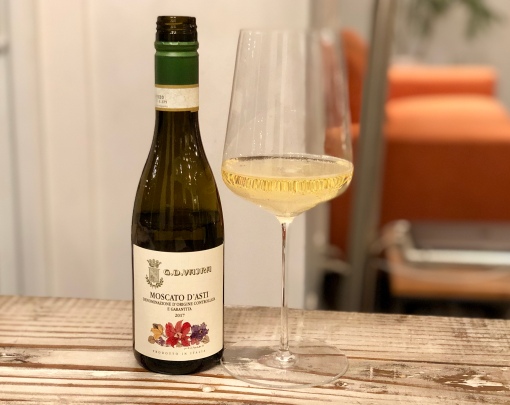
Once more into the breach, my friends, and on Day 5 of Advent 2018, once more into the bag of Advent 2017 synonyms:  a Moscato d’Asti from a strong producer, much like last year’s Day 10.  That wine (I maintain to this day) struggled with some bottle condition issues, and I am happy to say that this one is clean as a whistle and full of youthful spirit. It is the 2017 G.D Vajra Moscato d’Asti, and spawns stories of history, of production method, of flavour.  Which to tell first?

IMG_9367

Let’s start from the start, I suppose…which it turns out is much more recent than I expected.  Despite its highly traditional-seeming name and labelling, G.D Vajra is barely 45 years old, a complete baby by the standards of Barolo, founded in 1972 (albeit from family vineyards from a couple decades earlier) with its first commercial vintage not released until 1978.  It is named after founder Aldo Vajra’s father and was started because, in Fresh Prince of Bel-Air style, Aldo participated in a student protest revolt in the city where he lived at age 15 and was thereafter immediately sent out to the Barolo countryside to live with his grandfather on a farm for the summer, away from the sway of proletariat rebellion.  That summer in Barolo (as it likely would for all of us) triggered a deep and abiding passion for wine, which ultimately resulted in the bottle here before us.  One little fight and his mom got scared…

IMG_9369

My favourite thing about Moscato d’Asti, apart from its dangerous low-alcohol crushability, is the trivia behind how it’s made.  It is one of the few types of sparkling (or frizzante, in this case – lightly sparkling) wines that do not go through two fermentations:  one to vinify a dry base wine, the other to re-ferment that wine with additional yeast and sugar to create the bubbles.  Instead, it combines both processes into one through a highly ingenious process called the Asti method.  Fermentation begins as per usual, but in a pressurized steel tank that is sealed off from air partway through the process, with the result that the carbon dioxide that is a fermentation byproduct cannot escape the tank and is trapped in the wine.  Then, when the half-bubbly wine is still quite sweet and considerable amounts of yeast and sugar remain that would normally continue to make sweet magic and craft a higher-alcohol dry wine, the tank and the wine inside are chilled to near-freezing to halt fermentation (yeast don’t like cold much).  The yeast is then filtered out of the tank while it is still under pressure (so that fermentation with the remaining sugar does not continue when the wine warms back up) and the wine is bottled under pressure — only lightly bubbly, at 5-6% alcohol and with a bunch of residual sugar.  Brilliant.

IMG_8726

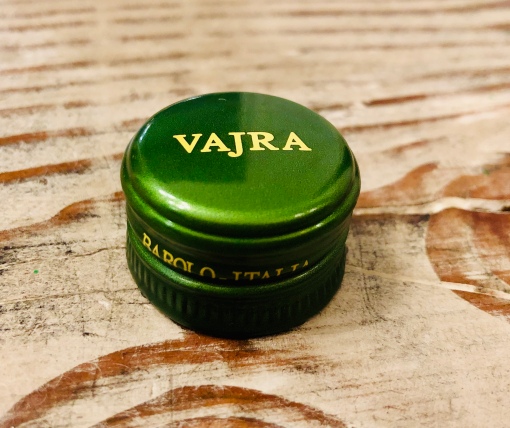
Stelvin Rating:  8/10 (That green is just beautiful, especially in person, and the powdery sheen works.)

This particular Moscato hails from a single vineyard in the perfectly named commune of Mango, located on a steep slope at elevation in the Moscato d’Asti region.  It is a gleeful tropical fruit salad on the nose:  mango (of course), kiwi, canned oranges and pears, banana leaf, star fruit, and onward down the orchard Rolodex, spiked with gobs of potpourri and spring flowers and chemically Alka Seltzer and city pool chlorine.  Lush and quite notably sweet, even for Moscato standards, it is lent a sense of airiness due to its sloshy frizzy bubbles, which are not quite as penetrating or scouring as you might anticipate, a product of the not-quite-sparkling frizzante fermentation process (which is also why this can be bottled in a normal bottle and closure as opposed to a thicker Champagne-style bottle — it’s under a lot less pressure).  All I can taste is pineapple Life Savers, cream soda and every single flavour of Gummy Worm on overdrive.  The finish is slightly cloying, thanks to acid that doesn’t quite stretch all the way to the end of the line and can’t quite balance out the Moscato’s immense sweetness.

As a beverage, this is freaking delicious.  It took no time at all for the entire half-bottle to disappear.  As a wine, I wouldn’t rank it among the top Moscatos I’ve had because the rest of the wine can’t quite keep up with the sugar levels, leading to things getting a little bit flouncy.  But it’s hard to be too unhappy after a couple glasses of Moscato.

87 points