Wine Review: 2007 Cogno Barbera d’Alba Bricco Dei Merli

16 05 2011

So the label's beige, coral pink and orange? It HAS to be good!

I haven’t had a Barbera in awhile, but it’s one of my all-time favourite red grapes, so it’s high time to change that trend.  Barbera is mainly grown in the Piedmont region in northwest Italy, which is much (much much) more famous for the Nebbiolo-based wines from Barolo and Barbaresco, which are some of Italy’s most prestigious and expensive.  While Nebbiolo is the show-dog grape of the region, Barbera is the lovable mutt who sleeps beside your bed at night; Nebbiolo is deep, complex, layered and pedigreed, while Barbera is rustic, juicy, fun and earthy.  Although Nebbiolo is what generates the most cash for winemakers in Piedmont, Barbera is what they drink at night.  Barbera is a great intro grape for those people who want to start learning what European wines are all about but have been used to the overt fruitiness of California and Australia:  it features ripe red fruit flavours that are eminently drinkable but also has the underlying flavours of the land and the ground common in the Old World, all thrown together with a bit of wildness, some colouring outside the lines.  All this, usually, for $15-$25 a bottle. Read the rest of this entry »


3 Cool Free Wine Apps

15 05 2011

Wine information is everywhere.  If you know where to look, it’s easier to learn about wine now than it has ever been:  if you grab the right books and magazines, go to the right shops, visit the right websites (say, a friendly neighbourhood wine blog), or if you have a smartphone, download the right apps, you can bring the world of wine to you with relatively little effort.  You shouldn’t feel like you have to completely immerse yourself in wine learning unless you have a genuine interest in doing so, but a little bit of knowledge will go a long way towards demystifying restaurant wine lists and crossing the thresholds of wine boutiques without intimidation.  I’ve previously discussed three great wine books that would make a great starting point to your wine education; tonight I’m going 21st century and looking at three killer wine apps that cost nothing but provide a ton of information and entertainment about everybody’s favourite topic. Read the rest of this entry »


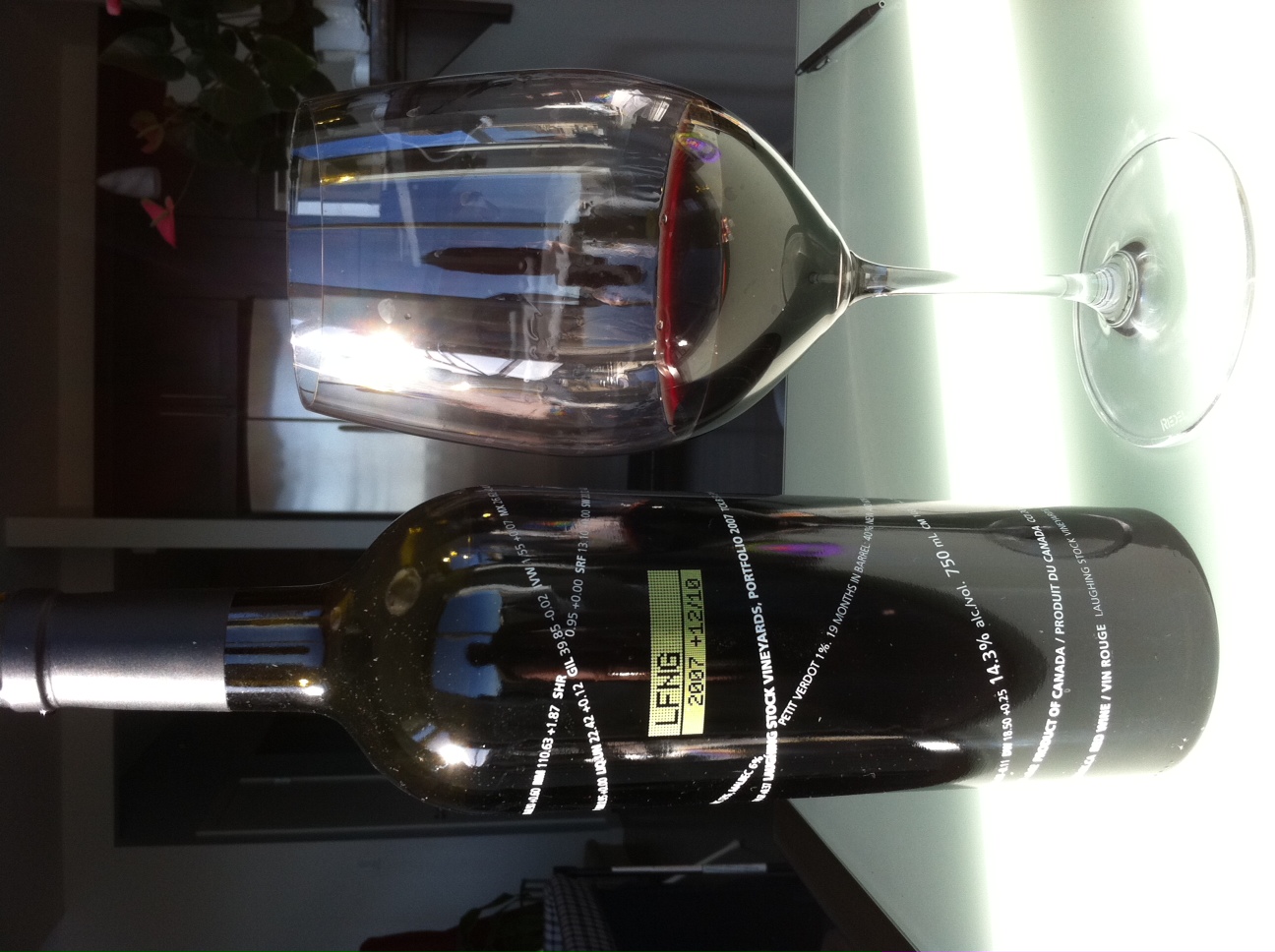
Wine Review: 2007 Laughing Stock Portfolio

12 05 2011

Attention-grabbing headline:  This is the best bottle of Canadian red wine I’ve ever had.

Charter member of my Canadian Wine Hall of Fame.

This wine has everything going for it:  great back story, great marketing, great product.  Laughing Stock Vineyards is located in (on?) the Naramata Bench, one of the most prestigious and quality-driven areas of British Columbia’s Okanagan Valley wine region.  The winery’s name comes from the fact that its two proprietors both once had successful careers in the financial/investment sector before giving them up to pursue their vinicultural dreams, thus opening themselves up to failure and ridicule if things didn’t go well (note: if you want to win my heart, make your winery name a pun).  Their cleverly-designed bottles reflect their past lives, and they’re not just empty packaging for what’s inside — the juice lives up to the allure of its container. Read the rest of this entry »


The Basics: Restaurant Wine Service

11 05 2011

The 2011 Pop & Pour. A fine choice.

Anyone who has ordered a bottle of wine in a restaurant knows that there’s a specific series of steps that are inevitably followed by the wait staff before you’re left alone with your vino of choice.  Depending on your point of view, this process is either a charming ritual that enhances the dining experience or one of the ways to justify a 150%+ markup on a $30 bottle of wine.  If you’ve never heard the rationale behind each part of the restaurant wine service regime, this procedure might cause you unnecessary stress during what should be a relaxing night out, so here are the main things that happen after you place your wine order and how you should react to them: Read the rest of this entry »


Wine Review: 2010 H. Stagnari Chardonnay “De Virginia”

10 05 2011

Brian from Ferocious Grape doesn’t owe me money.

When I was somewhat skeptical (read: incredulous) about the idea of paying over $20 for a Chardonnay from the vinuous hotbed of Uruguay as he was suggesting, we made a bet:  if I tried the wine and gave it less than 85 points on PnP, he’d buy it back from me.  Always one to step up to a challenge and jump at the chance of drinking guaranteed wine from random South American countries, I grabbed the bottle and made plans to crack it ASAP.  After a weekend of extravagant wine drinking, I thought there was no better way to get my palate down to Earth than with a solid bottle of Uruguaian Chardonnay… Read the rest of this entry »


Roving Wine Review(s): Saturday Night Tasting

8 05 2011

There was no PnP post last night, because instead of pounding something out on my keyboard for the blog, I was out doing “field research”.  It started at Brava Bistro on 17th Avenue (try the potato and honey flatbread!), ultimately ended up at a friend’s place downtown, and was the kind of research where no notes are taken, many glasses are emptied, and the recollection of wines past is not quite as sharp as expected the next day.  That said, we had enough interesting and incredible wines that I would be remiss not to pass along at least something about what we enjoyed.  The night’s wines were cracked in this order (Editor’s Note:  I am not counting the half bottle of Hello Kitty sparkling Italian rosé [don’t ask] that worked its way into the lineup at the end of the night and was, to put it kindly, an utter abomination): Read the rest of this entry »


Wine Review: 2006 Cakebread Cabernet Sauvignon

6 05 2011

Happy birthday to me!

OK, time to get serious and prepare yourself for the most expensive wine in PnP’s young history!  It was my birthday yesterday, which automatically meant a bottle out of the “good” wine fridge.  That turned out to be the 2006 Cakebread Cab, which I got for Christmas a couple years ago from my wonderful in-laws (did your in-laws ever give you high-end wine for Christmas?  I didn’t think so).  Cakebread is a renowned producer from Napa Valley, the vinicultural heart of California, and I’ve been a big fan of theirs for a long time.  One of my first ever epiphany wine experiences that opened my eyes to the world of fine wine involved a Cakebread, and since then I’ve tried a number of their offerings and have even been to visit the winery and taken part in a tasting there (highly recommended if you’re ever in the area).  Like many Napa producers, Cakebread makes a lot of different wines but hangs its hat on its Cabernet Sauvignon; this Cab was made from grapes sourced from a variety of locations within Napa Valley and retails for close to $100 CDN, so I was very interested to see how it fared. Read the rest of this entry »


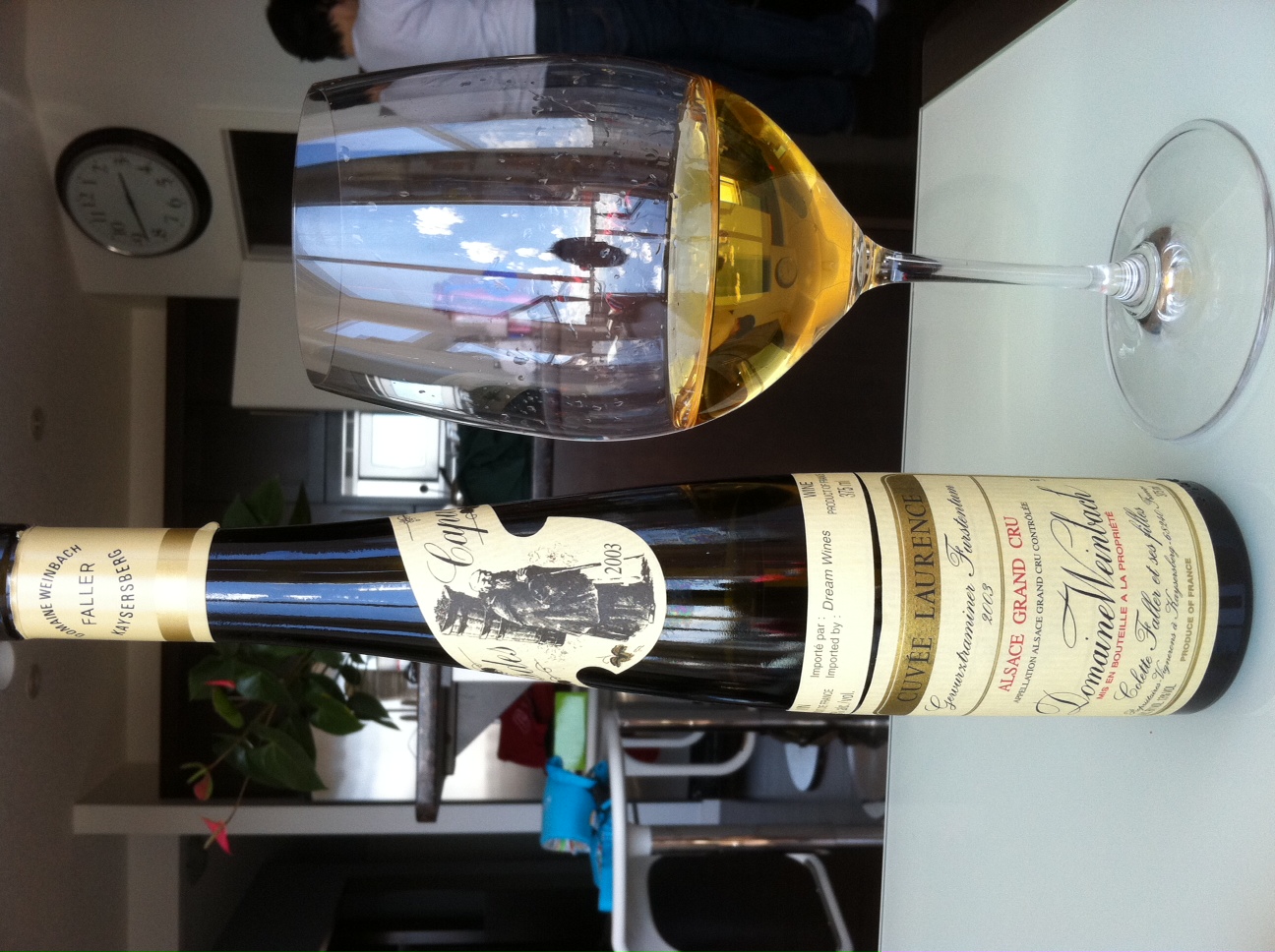
Wine Review: 2003 Domaine Weinbach Cuvee Laurence Gewurztraminer Furstentum Grand Cru (375 mL)

1 05 2011

Grand Cru, baby. That's how we roll.

I don’t usually buy wines and then drink them immediately, but I couldn’t bring myself to wait on this one.  I was in Aspen Wine & Spirits yesterday to see what was on special when I noticed these half-bottles of back-vintage Alsatian Grand Cru Gewurztraminer selling for $28.  Like many other older wines available at AW&S, these used to be inventory of another wine store that went under a little while ago; as these library wines near their peak drinking window and the urgency to sell them increases, their prices drop accordingly.  I was told that the $28 selling price for the Weinbach was close to the store’s cost and that these half-bottles usually run around the $50 mark at normal retail prices.  I bought one about 0.02 seconds later. Read the rest of this entry »


Wine Review: 2007 KWV Cathedral Cellar Cabernet Sauvignon

29 04 2011

Welcome to a special all-request edition of PnP!  For a few weeks now, loyal subscriber S has been asking me to find and review a South African wine, particularly one made by producers KWV or Robertson.  I am nothing if not (eventually) responsive, and I cling to blog subscribers like grim death, so last weekend when I was at Highlander North Hill I sauntered over to the South Africa section and jumped on the only KWV I could see, the 2007 Cathedral Cellar Cabernet Sauvignon.  The wine was bargain priced at $15 (including tax!), and since I don’t drink much SA wine, I was curious to see what it would deliver compared to Californian, Australian, Spanish or Italian wines in the same price range. Read the rest of this entry »


The Basics: How To Store Wine

27 04 2011

I’ve mentioned previously that around 95% of all wine on the market is meant to be popped and poured (blog product placement totally intentional) within 6 months of purchase.  For these wines, unless you keep them in the trunk of your car or directly over top of your stove, storage conditions probably won’t be a huge concern.  However, for wines that are intended to be aged, or for any wine that you want to try and keep in optimal condition, storage techniques become much more important.  Proper storage helps ensure that your $20 (or $50, or $200) bottle of wine will give you your money’s worth and show itself as well as possible when you do pull the cork; best of all, you don’t need a high-tech humidity-controlled cellar to keep your wines in good shape.  If you follow these basic storage rules, you will be ahead of the wine-aging game: Read the rest of this entry »


Wine Review: 2005 Wegeler Winkeler Hasensprung Riesling Spatlese Trocken

26 04 2011

Everyone needs a little Riesling in their life.

What better way to inaugurate popandpour.ca than with my favourite kind of wine?  This German Riesling was previously featured in this post from the PnP archives about how to decipher German wine labels; if you’ve read it, you now know that this Riesling from producer Weingut (“wine estate”) Wegeler is from the Hasensprung (“hare’s leap”) vineyard near the town of Winkel in the Rheingau wine region of south-central Germany.  It’s been classified with the Spätlese (“late harvest”) ripeness designation, meaning the grapes were picked at a slightly riper level than the baseline Kabinett level for top-quality German wines, but it’s also a Trocken (dry) wine, which means that there will be very little if any residual sugar left in it.  The word “Trocken” is a key hint on this bottle, because most Spätlese wines are at least somewhat sweet, but those stated to be Trocken definitely won’t be.  So before you deride all German Rieslings for being too sweet for your palate, take a closer look at the label! Read the rest of this entry »


New Address!

25 04 2011

As of tonight, I am officially legit:  I have ditched the blogtacular domain name, shelled out $24 and registered the shiny new web address for Pop & Pour:

www.popandpour.ca

The old WordPress site address should still continue to work, but when you have the best the Canadian Internet Registration Authority has to offer at your fingertips, why live in the past?  Update your records, tell your friends, and be sure to check out the new (but in all other respects totally the same) popandpour.ca tomorrow for another wine review.  Hint:  tomorrow’s wine (half of which I had tonight) is one of the few bottles whose picture has been featured in a PnP article without me actually opening and drinking it…until now.

Time to go sign up $24 worth of advertising!


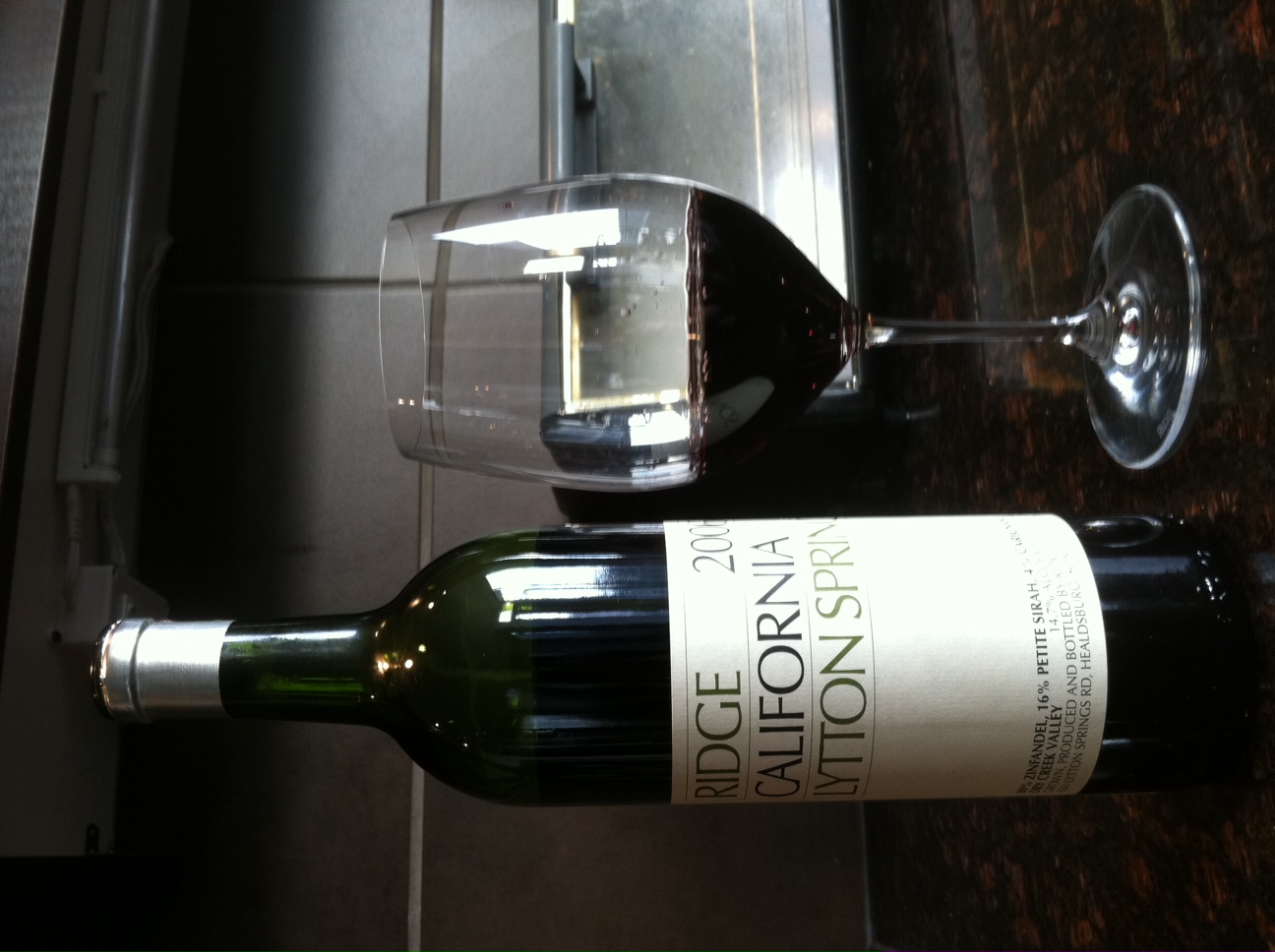
Wine Review: 2006 Ridge Lytton Springs

24 04 2011

Zinfandel! When made right, still one of my favourite reds.

Happy Easter everybody!!  Special occasions call for special wine, and on this Easter weekend I turned to Ridge, a classic California producer who is giving serious attention to a grape that’s often treated too frivolously:  Zinfandel.  If any of you reading this just said “Hang on, I thought Zinfandel was white?”, banish that thought from your head forever.  While an ocean of blush jug wine has been created bearing the name “White Zinfandel”, Zin is actually a red grape.  What makes White Zinfandel white (or, more accurately, slightly pink) is that when it is made, the fermenting juice is only left in contact with the grapes’ skins for a very short time, after which it is quickly separated so that the skins can’t pass on much of their dark colour to the finished wine (thus preventing it from being red).  White Zinfandel is a cheap, uninteresting, bastardized version of a varietal that, when shown the proper care, can create some of the truest versions of American red wine out there.  The US (especially California) is the predominant producer of Zin in the world; Zinfandel really only shows up elsewhere around the globe in southern Italy, where it is known as Primitivo. Read the rest of this entry »


Tips & Tricks: Wine’s Building Blocks and How To Detect Them

22 04 2011

For those loyal PnP readers (if such a thing exists), some of this will cover ground trekked out before in previous posts, but I thought it would be useful to get all of this info in one place.  Describing the smells and flavours of wine is inevitably a subjective experience, since we all process aromas and tastes differently, but that doesn’t mean that every description about wine is solely in the eye of the beholder.  Every wine has a number of objectively-discernable components that form the architecture of the overall wine; even if reasonable minds can differ about a wine’s flavour profile, they should generally come to common ground when discussing these vinicultural building blocks.  Here are the key components of a wine and how to pick them out of your glass: Read the rest of this entry »


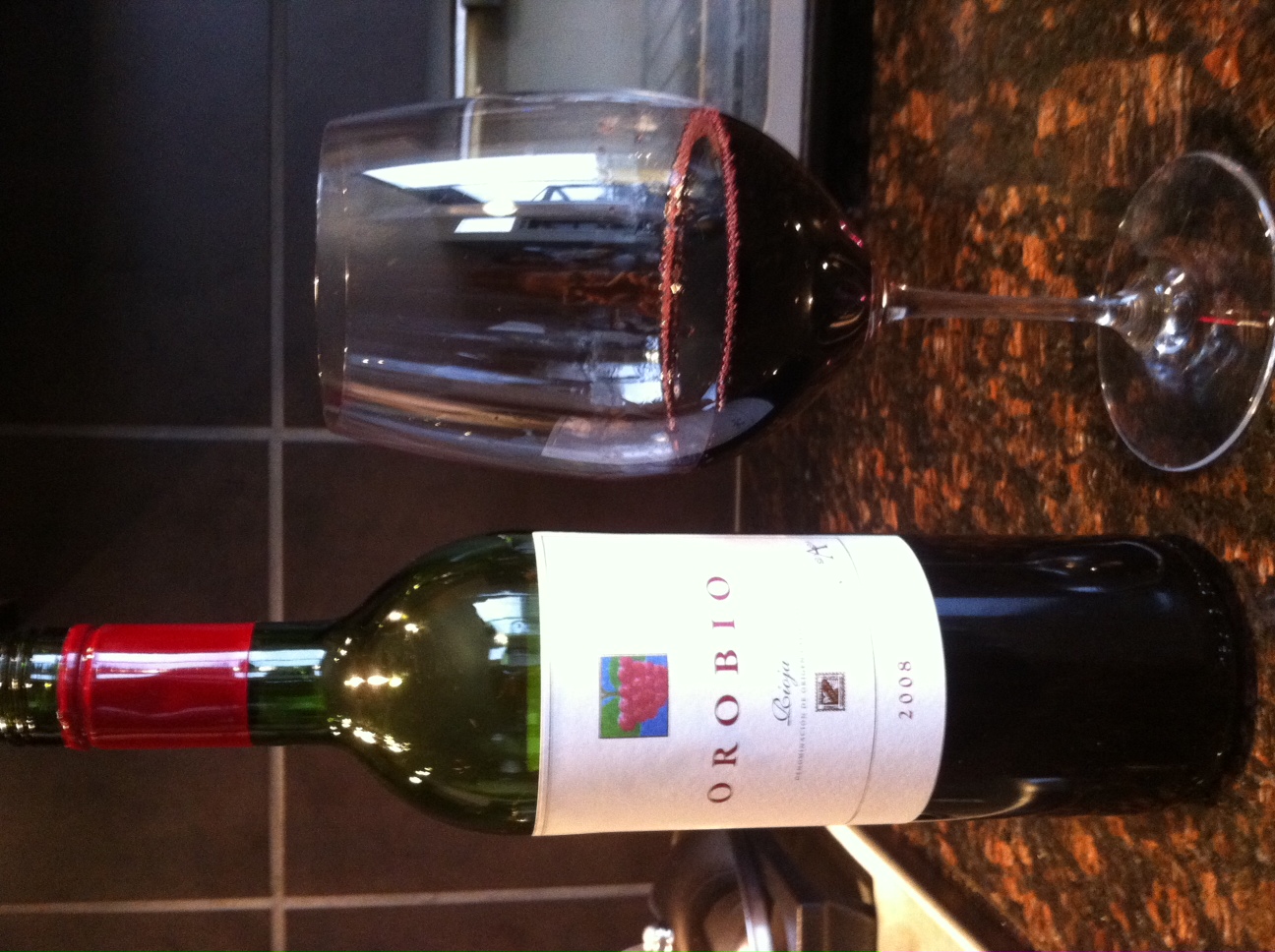
Wine Review: 2008 Artadi Orobio

21 04 2011

I love it when cheap wine overdelivers!

Sometimes low expectations will get you everywhere.  This was one of those wines that I bought, stuck in my wine fridge and then intentionally avoided drinking for many many months because I didn’t think it would be very good.  Even on nights when I just wanted something cheap and cheerful to wash down dinner, I always managed to make this the 2nd or 3rd option, so it sat there, lonely and neglected, until I finally decided to put it out of its misery tonight.  I don’t know exactly why my outlook was so dim; maybe it’s because there’s something jarring about seeing a wine from Rioja, the most renowned and traditional wine region in Spain, with a screwtop (not that there’s anything wrong with screwtop wines — the screwtop, a.k.a. Stelvin closure, actually does a better job preserving wine than a cork does).  Maybe it’s because the label is so blasé.  Whatever the reason, I was all geared up to have a bad wine experience tonight, but instead the little screwtop that could totally came through for me. Read the rest of this entry »