PnP Featured in Culinaire Magazine!

4 09 2015

Well, after over four years of blogging and nearly 300 posts, it has happened:  I have been photographed going down a slide in a tot lot with a magnum of Riesling for a real life magazine.  Culinaire Magazine, a fantastic monthly publication focused on all parts of Calgary’s thriving food and beverage scene, has a monthly feature on the inside of its back cover called “Open That Bottle”, where a local personality is profiled and discusses a special bottle in their cellar that they’re saving for a specific occasion.  For the September 2015 issue, I was honoured to get the call and share the story of my favourite kind of wine, from my favourite vineyard, that I’m holding for one of my favourite people in the world:  my son Max.  See the story below:

If for some reason the media link above doesn’t work, the online version of the article can be found on the Culinaire website here.  Also in the September issue (it was a good issue!) was a joint article about drinking boldly and dodging the usual suspect grapes that I wrote with YYC Wine’s Adrian Bryksa, which you can read here:

Stuff like this doesn’t happen without people like you taking the time to find and read what I write on here, so I am eternally grateful to everyone who has supported this site.  Never did I think that this little passion project would turn up in a magazine; I can’t wait to see where it goes next.  Thank you!!
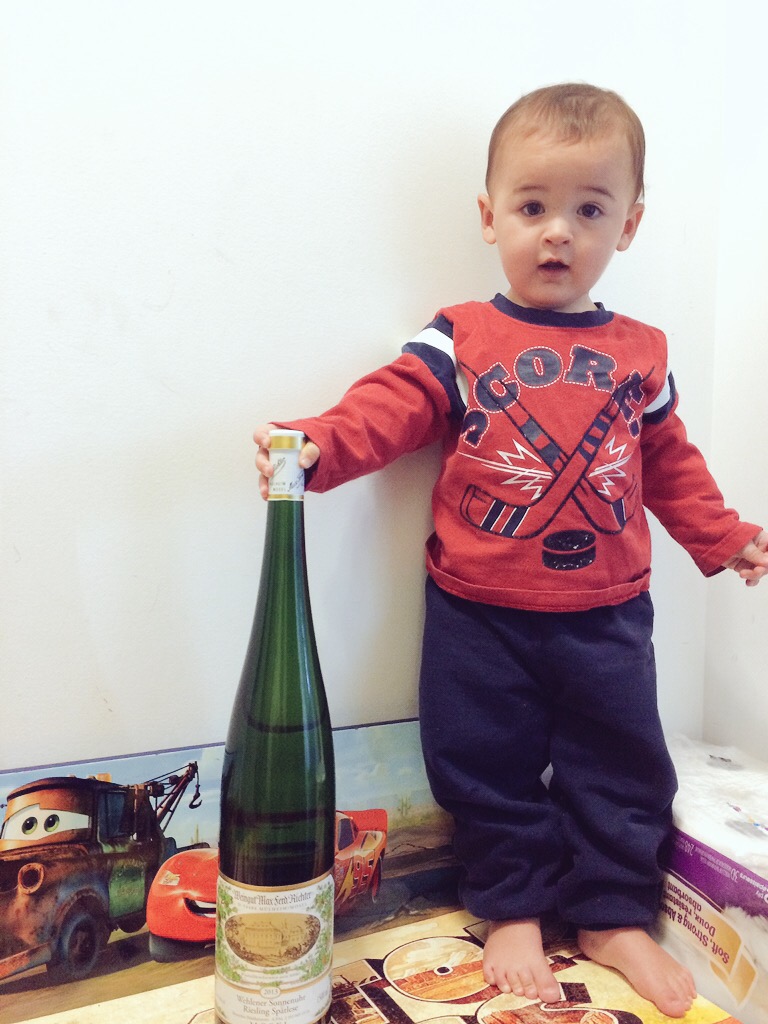
Max at 16 months, with his birth year mag, October 2014.

Max at 16 months, with his birth year magnum, October 2014.


The Great Coravin Test, Part 4: Final Thoughts (For Now)

26 08 2015
No Girls Grenache by the glass?  Don't mind if I do!

No Girls Grenache by the glass? Don’t mind if I do!

The sun has shone a little less brightly this week (and not just due to wildfire smoke blocking out the sky) – I had to return my borrowed Coravin, leaving an empty spot on my counter and a needle-sized hole in my heart.  Apart from testing out the device on the three bottles of wine the agent provided to me (adventures catalogued in Part 1, Part 2 and Part 3 of this post miniseries), I also went to town last week on a few bottles from my cellar, including a couple of the pricy variety in case you were wondering about my level of Coravin confidence.  Most importantly, I re-accessed the 2012 Tabali Pinot Noir from Chile that acted so strangely I last time I Coravinned my bottle samples just to make sure that all was still well, and it was fresh as a daisy and exactly how I remembered it on first opening, confirming that the Coravin’s preservation record remained fully intact.

I thought I’d end my Coravin saga with a few closing thoughts on the pros and cons of scooping the device for yourself and on whether the amazing features of this wine access wonder-machine justifies its hefty $400ish price tag, particularly for individual wine lovers.  First, the most obvious pro:  there is nothing like this anywhere.  It is literally in a class of its own in the wine preservation game, to the point where it’s almost not fair to call it a preservation device at all:  you don’t have to worry about preserving the wine when you never expose it to the elements in the first place.  You’re not using it to stave off inevitable oxygen decay for a few days or a couple weeks; you’re using it to stop the oxygen time clock from even starting, so that you can drink a bottle from your cellar a glass at a time over any length of time that you want, even years.  That’s just mind-blowing.  Even after using the thing for a month, it’s hard to wrap my head around just how much of a game-changer it is. Read the rest of this entry »


The Great Coravin Test, Part 3: Two Weeks In

2 08 2015

OK, so to recap:

  • I got lent a Coravin and figured out how to use it (Part 1).
  • On July 17th, I accessed three different bottles – a white and two reds – via Coravin and wrote up control tasting notes (Part 2).
  • Exactly two weeks later, on July 31st, I Coravinned the bottles again to see how they were doing.  Now the real fun begins (Part 3, right now).

FullSizeRender-91Some brief methodological notes:  after tasting the bottles on July 17th, I put them back in my cellar as if they were brand new – on their sides, no special treatment.  They stayed there till the 31st, when I gave them a brief chill before accessing them again.  I took detailed tasting notes without looking at my initial set of notes and then compared the two sets after the fact to see if the descriptions were similar and if any notable changes to the wines had taken place.  After the second round of tasting, the bottles are all about half full, and they have been put back in my cellar until I pull them out again for the grand finale of this Coravin experiment six months from now.  So how did the wines do?  Is the Coravin all it’s cracked up to be?  Let’s get to it, again:

Read the rest of this entry »


The Great Coravin Test, Part 2: Initial Tasting Report

23 07 2015

The journey continues.

The journey continues.

If you missed Part 1 of this soon-to-be-epic tale, wherein I got a Coravin to borrow and figured out how to use it, you can click here to get caught up.  This post will set the control for my test of the Coravin’s wine-preserving prowess, documenting my initial tasting impressions of three different bottles that I was provided along with the device so that I could give it a spin:  one white, one lighter red and one fuller red.  I actually tasted these last Friday, July 17th, so that’s the point from which the preservation clock starts ticking.  I will taste them all again in a couple of weeks and report back, and then again in a few months to see just how far the magic of the Coravin can stretch.  Word of warning if you ever try this yourself:  when you have a tool that lets you taste as many wines and access as many bottles as you want in a night without pulling a cork, you end up drinking a LOT of wine.  Duly noted.  On to the wines — be sure to check back in two weeks to see how they’re doing!

Read the rest of this entry »


The Great Coravin Test, Part 1

19 07 2015
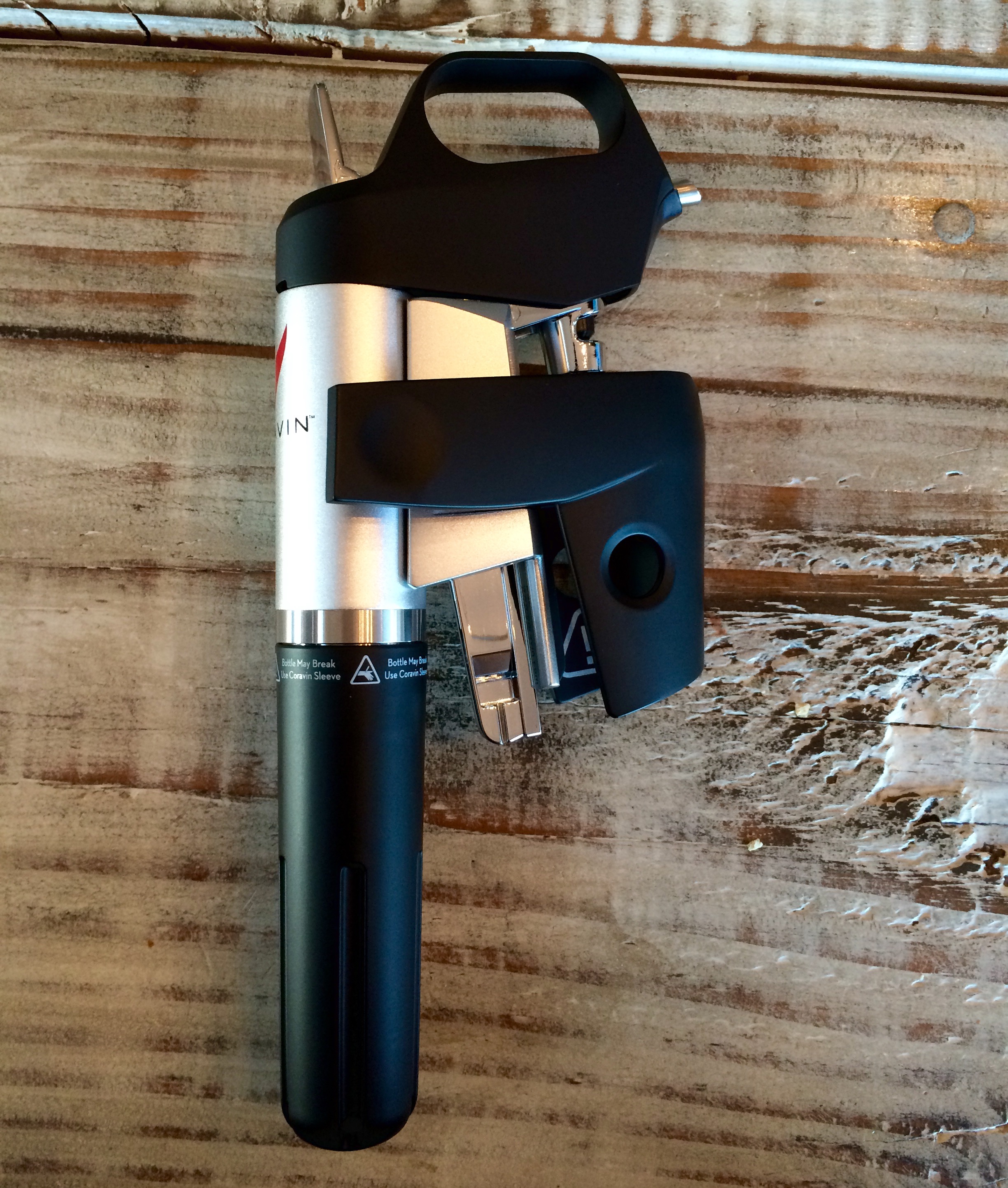
Ladies and gentlemen:  the future.

Ladies and gentlemen: the future.

It is an age-old problem:  what to do with the rest of a bottle of wine if it isn’t all consumed in an evening?  Unless being used to let tight young wines breathe, oxygen is generally the enemy of wine, and once the atmosphere gets its claws on the liquid in a bottle, the results aren’t pretty:  the wine gets flat and stale, brightness and flavours fade, and any distinguishing characteristics are quickly lost.  You can help slow this aerobic inevitability by putting the wine in the fridge overnight, but I always still noticed a difference in the bottle the next day, a slight but undeniable decline.

There have been a few standard approaches invented for dealing with the leftover wine oxygen problem, each effective to different extents.  You can buy a vacuum pump that fits into the opening of the bottle and (at least theoretically) manually sucks out the offending oxygen, leaving a decay-free zone inside the bottle.  This may sort of work at times for short durations IF the pump actually makes an airtight seal with the bottle, which it often doesn’t.  You can instead opt for a separate narrow storage vessel that has a sort of buoy-like floatation device engineered to exactly match the interior circumference of the container; you pour your wine in, plop the float on top and add a lid for good measure, keeping the surface of the wine from any immediate interaction with oxygen.  This is better and more consistent than the vacuum for short stints (I have one, the Savino, which I use for weeknight wines) but not that trustworthy for more than a day or two.  Then there’s the gold standard:  argon.  You pump a little argon gas into the heel of your bottle (from a purchased canister or a fancier system like my Pek Preservino) and, since it’s inert but heavier than air, it forms a harmless protective layer over top of the wine that prevents oxygen from accessing it.  I have left a wine under argon in the fridge for a week and it’s been good as new.

FullSizeRender-71These preservation systems all tackle the problem of wine degradation from different angles, and yet they all share one key thing in common that puts a ceiling on their effectiveness:  they all start with an open bottle of wine.  No matter what tricks you try to keep oxygen away from your precious liquid, once you pop that cork and pour that first glass, you have exposed your wine to the air and the decay clock starts ticking.

But what if you didn’t HAVE to open the bottle?  Could wine be preserved indefinitely if you could somehow access it while keeping its bottle fortress intact?  Enter the Coravin. Read the rest of this entry »


Posting Delays (a.k.a. Infirmary Report)

5 01 2013

This was not in the plans.  I had intended to take a week or so off from blogging at the start of the holiday season and then get right back into posting after Christmas; I was mulling over year-end reviews, 2013 wine resolutions and other chronologically appropriate pieces, and I have a sample wine waiting in the wings that I was really excited about delving into.  Then the black cloud of sickness settled over my household, afflicting every member of my family (even the dog) one by one.  I’m the only person who has managed to avoid coming down with the cold and flu that all of Calgary seems to have at the moment, but my attentions have been steered away from the computer for a couple of weeks now.  I’m also going out of town next week for work (anyone have any recommendations for a cool place to have a great glass of wine in Pasadena?), which means it will likely be a calendar month between Pop & Pour articles.  Sorry about that.  Rest assured that I am still alive and kicking and have not given up blogging forever, and check back mid-month for actual new content.  Happy New Year everyone!


The Mission Hill Pinot Olympics

17 07 2012

[The bottles below were provided as samples for review purposes.]

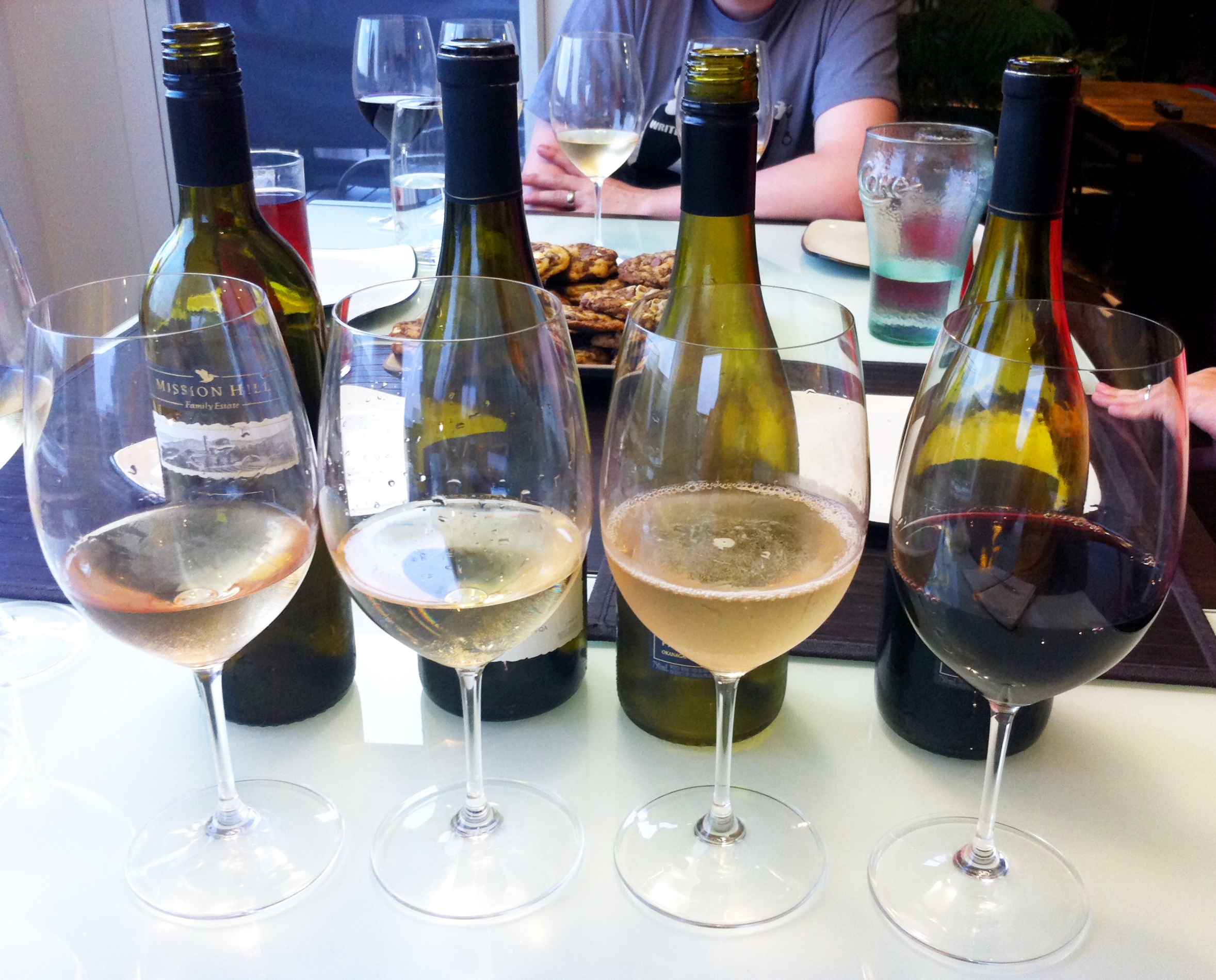
As tactfully mentioned by the disclaimer above, I recently received a mixed six-pack of sampler bottles from the good folks at Mission Hill Family Estate winery in the Okanagan Valley.  Two of these bottles, the 2011 Reserve Riesling and the 2011 Five Vineyards Sauvignon Blanc, have received separate PnP review treatment over the past couple of weeks:  see here and here for the full write-ups.  But I couldn’t bring myself to split up the other four bottles and rate them separately, because it was clear that they belonged together, bound as they were by a common provenance:  the family name Pinot.  Pinot Grigio, Pinot Gris, Pinot Blanc and Pinot Noir all sat side by side in the MH sample box like a monochromatic grape rainbow, their shared forename a reminder of their common genetic ancestor (Pinots Grigio and Gris are the same grape, and both PG and Pinot Blanc are mutations of Pinot Noir, which is well-known for being genetically unstable).  Since the fortunes of these bottles were clearly tied together, and since it’s July 2012 and our athletes are preparing to head off to London for the Summer Games, I did the only thing I could do and hosted the inaugural Mission Hill Pinot Olympiad at my house over the weekend.

In order: Grigio, Gris, Blanc, Noir. Let the Games begin.

Here’s how our game was played:  I invited over a couple of fellow wine enthusiasts, opened all four bottles of MH Pinot, and we tasted through the lineup and separately ranked each of the wines as against its peers, individually coming up with our gold, silver, bronze, and, um, whatever’s below bronze (lead? aluminum? tungsten?) medal choices.  I then added all of the placements together to come up with a cumulative judges’ score (for example, a wine ranked 1st, 2nd and 3rd by the three different judges would get a total score of 1 + 2 + 3 = 6); the lower the score, the better.  The lowest total score won the overall prize, which basically meant that the bottle was emptied the fastest.  We tasted the wines from whites to red, lightest to heaviest, and my notes below are in the same order.  Who emerged victorious?  Read on! Read the rest of this entry »


“The Wine Is Sound”

21 05 2012

A great bottle, particularly on a restaurant list for $85!

I’ve been travelling quite a bit for work lately (hence the limited and sporadic nature of my posting in May).  This past week I was in southern Ontario for a couple days and had the chance to eat dinner with some colleagues at a fantastic modern and wine-centric restaurant in downtown Toronto.  The place was built around wine, with a massive temperature-controlled cellar, multiple sommeliers on staff and a huge list of hundreds of bottles covering all points of the vinous spectrum.  Even better, instead of marking up their wines to 2 or 3 times retail price as per restaurant standards, this place took a unique approach to their pricing, tacking a fixed $25 markup onto their cost for each wine on their list and charging only that nominally-increased price to diners.  They basically offered their entire wine cellar to consumers at corkage prices, which is a phenomenal selling feature and an idea that I hope gains greater traction across the fine dining industry in the near future.  As I will describe below, the actual service of the wine was also a thing to behold, with every step from cellar to table carefully handled by a trained sommelier.  It was the epitome of restaurant wine experience…but as I left the place, the only thing I kept coming back to was one little thing the sommelier said as he handed me my glass. Read the rest of this entry »


Burgundy: White Tasting, Part IV

26 04 2012

OK, time to bring this long and winding road of a tasting review to a close.  I had set this up so that we’d end on a high note with the most prestigious bottles in the tasting, the illustrious Grand Crus, but for reasons outside their control, the drinking experience ended up being somewhat anticlimactic.  And no, it wasn’t because we were 10 bottles in by this point.  That’s what made the next morning anticlimactic.

FOURTH FLIGHT

A.k.a. over $300 worth of wine that really shouldn't be open yet.

Grand Cru vineyards are the rarest, best-positioned, most historic, highest-quality growing areas in all of Burgundy…or at least their classification is meant to reflect as much.  As you might expect, Grand Crus come in very limited numbers (only 32 in the Cote d’Or, according to my friend the Internet) and they produce minute quantities of wine each year with prices to match their prestige and scarcity.  I didn’t have the overflowing bank account to go too crazy and delve into the elite of white Burgundian GCs — the series of adjoining Grand Crus bearing the “Montrachet” name, including Le Montrachet, Batard-Montrachet, Bienvenues-Batard-Montrachet, etc. are almost certainly the creme de la creme of white Burgundy, but they’re also a hilarious pipe dream in my current circumstances — so instead I turned my focus to two wines from the well-regarded but much cheaper Grand Cru of Corton-Charlemagne.  Unfortunately, both bottles were from relatively recent vintages, and we quickly discovered that, with great white Burgundy, time is your ally. Read the rest of this entry »


Burgundy: White Tasting, Part III

23 04 2012

When you spend hundreds of dollars over multiple months to build a tasting, you stretch out the write-up as much as possible.  To read the introductory entry in this Chardonnay-fuelled marathon, click here.  To read about the jump from basic Bourgogne Blanc to village-level bottlings, click here.  To read about the exciting ascent into the mystical and expensive world of Premier Cru white Burgundy, well, keep reading.

THIRD FLIGHT

Time to hit up the big leagues.

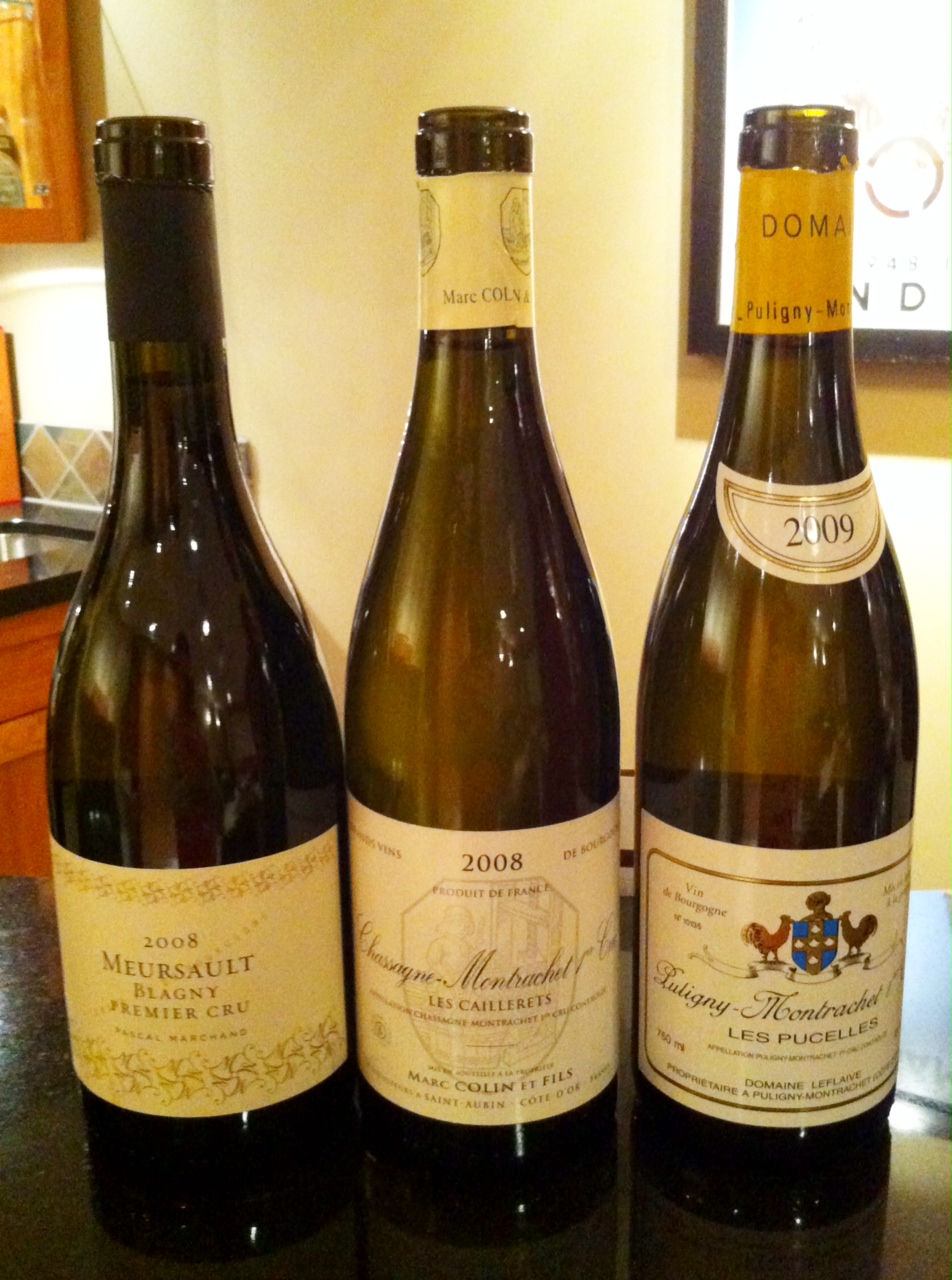
Now we officially move from the wines that you might pop open on a Friday or Saturday if you feel deserving after a hard week to the wines that you agonize over opening until just the right spot in their drinking window and just the right occasion because you know your budget won’t easily permit a replacement.  The combined retail cost of the flight of 3 village-level white Burgundies was about $180; the combined retail cost of the 3 Premier Crus below is almost double that, $340.  This is why I didn’t buy any other wine from January until April.  In the third flight of the evening we continued to highlight the top white Burgundy villages of Meursault, Chassagne-Montrachet and Puligny-Montrachet, and instead of village bottlings made from grapes that could be sourced from anywhere in the adjoining area, we narrowed our focus and opened a bottle from each sub-region made from grapes grown in a particular highly-regarded Premier Cru vineyard near the village in question.  Every inch of land in Burgundy’s famed Cote d’Or region has been analyzed and classified over centuries, and those areas with the best soils, slopes, exposure to sunlight, drainage and growing conditions were isolated as Premier Cru or Grand Cru.  That’s what we’re getting into:  hundreds of years of liquid history. Read the rest of this entry »


Burgundy: White Tasting, Part II

19 04 2012

If you missed the inaugural entry about my dozen-bottle, Bourgogne-Blanc-to-Grand Cru, no-holds-barred white Burgundy tasting, check out my write up of four 2009 Bourgogne Blancs of varying levels of quality and corked-ness here.  Tonight we’re jumping right into Flight #2.

SECOND FLIGHT

Slightly out of order: from left to right, Wines 1, 3, 2.

From the basic Bourgognes, we move up one quality level and correspondingly narrow our regional focus with three village-level wines, so called because the village closest to the vineyards where each wine’s grapes were grown is the prominent identifying feature of the classification.  Even though Burgundy is a relatively small wine region (the Cote d’Or, the key quality area in the heart of the region, is only around 40 km long and in most spots less than 2 km wide), each of the main wine villages rests on slightly different soils and lies on slightly different aspects, which result in wines with clearly identifiable local identities.  I’ve read about the flavour differences among the various villages, but this was my first chance to experience them myself.  The plan was to open a bottle each from the three most well-known white wine villages in Burgundy:  Meursault, Chassagne-Montrachet and Puligny-Montrachet.  However, after checking in with at least half a dozen prominent Calgary wine stores and being unable to locate a village-level Chassagne anywhere, I had to sub it out for Plan B:  a village wine from the nearby town of Saint-Aubin, which certainly doesn’t have the reputation of its more illustrious neighbour but which has been known to produce solid whites at (relative) value prices.  Would it stand up with the best Chardonnay spots in Burgundy?  Um, not so much. Read the rest of this entry »


Burgundy: White Tasting, Part I

12 04 2012

It begins: the first 4 of a dozen hopefully-representative white Burgundies.

I acknowledge that it’s definitely been awhile.  I spent my evenings last week cleaning out my basement, then took the Easter weekend off, then faced a total loss of home Internet for a few days, all of which added up to a blog-less streak of epic proportions…sorry about that.  To make it up to you, instead of posting a lonely wine review tonight, I’m diving back into action with the first instalment of a multi-part writeup showcasing the results of the long-planned white Burgundy tasting that I’ve had in the works since January and that fulfills a 2012 New Year’s Resolution of mine.  More on the planning behind the tasting and the rationale for the various wines selected here.

To summarize for those of you who don’t feel like clicking on the link above, the goal of the tasting was to open bottles from the four main Burgundy quality classifications (Bourgogne Blanc, village level, Premier Cru, Grand Cru), spanning  some of the key sub-regions for Burgundian whites (Puligny-Montrachet, Chassagne-Montrachet, Meursault, Corton-Charlemagne), to see how the wines from each of the sub-areas differed from those from others and how the wines from the same sub-areas varied from producer to producer and between quality levels.  I will vouch from experience that delving to the bottom of these analytical quandaries required a lot of drinking.  Such is life.

Cork Ratings for wines 1-3: 2.5/10, 6.5/10, 5/10. Meh.

There were 12 bottles open for the tasting and an esteemed panel of four judges with glasses at the ready; we tried the wines in four flights grouped by quality classification, going in ascending order from the base Bourgogne Blancs to the Grand Crus.  My actual tasting notes from the first flight are below, and the write-ups of the other three flights will be coming soon to an Internet near you.  At the end of the day, while the tasting didn’t instantly reveal the inner mysteries of Burgundy to me, it was a useful (and highly entertaining) crash course on a region that I haven’t spent nearly enough time getting to know. Read the rest of this entry »


Coming on Monday: Tasting In Stereo, Part II!

17 03 2012

It’s been a few months since the inaugural edition of Tasting In Stereo, a multi-blog collaboration with online wine writer extraordinaire Tyler Philp, founder of North of 9 Fine Wine, that saw us each separately drink a pre-selected bottle, write up our own thoughts independently of each other, and then simultaneously publish our reviews at a set time to give our loyal readers two perspectives on the wine for the price of one.  Our first crack at this blogs-colliding concept back in August proved what a valuable tool it was:  we reviewed the 2008 Sister’s Run Shiraz from Australia’s Barossa Valley and had fairly contrary impressions of the bottle, but discovered after the fact the context that explained and justified our disparate points of view.  Tyler wasn’t a fan of the Shiraz and thought it was overly jammy and alcoholic…because he drank it outside on a hot, sunny evening on his patio.  I thought the Sister’s Run was a remarkable bargain that offered great fruit without going overboard…because I drink my reds colder than most people and had this one after it sat for about 30 minutes in my fridge.  The whole simul-review turned out to be a cautionary tale about the impact that service temperature can have on any given wine, which was a pretty unexpectedly cool result.

Tyler's site -- click the pic to visit. Well worth the trip!

And now, 6 months or so later, we’re doing it again.  Join us on Monday, March 19th at 9:00 p.m. Mountain time, when we will simultaneously unveil on our respective sites our write-ups of the latest lucky bottle we’ve chosen for double scrutiny.  I won’t tell you what the bottle is, but I’ll say that it’s German, which means I’m almost guaranteed to be very happy with it.  Hopefully Tyler isn’t as biased by Teutonic wine-love and can act as everyone’s voice of reason…you’ll just have to check back Monday to find out!


Burgundy: The Drinking Plan

14 03 2012

Burgundy, I haven't forgotten about you.

At the start of 2012 I waxed poetic about my newfound commitment to drink more Burgundy this year.  Two days later, I followed that up with a momentum-sustaining red Burgundy review of the 2009 Alex Gambal “Cuvee Les Deux Papis” Bourgogne Rouge.  I have since gone over two months without drinking or mentioning Burgundy at all.  What gives?  Am I like one of those New Year’s Resolution fitness disciples who goes to one workout on January 2nd and then gets back on the couch?  Not exactly.  Have I been turned off of the Burgundy quest since early January?  Nope.  Am I quietly getting the pieces put together on a massive mind-blowing Burgundian wine journey of epic proportions?  Oh yes.

My original idea about how to start drinking more Burgundy was to, well, start drinking more Burgundy:  head to the France section of various wine shops, buy a few bottles, crack them, write about them.  But when I asked Highlander Wine & Spirits’ Matt Browman for advice on how to approach his favourite wine region, he got me thinking in a more structured fashion.  His Burgundy drinking plan contemplated village-by-village comparisons of wines from high-quality producers across the entire hierarchy  of the area’s wine classification system…but more importantly, it called for all of the all of the test subject wines to be opened AT THE SAME TIME.  Faster than you could say “Burgundy tasting party”, I was on board.  It’s taken me until now to source (and pay for) the various bottles going into the tasting, but next weekend I’ll have a dozen bottles of top-notch Burgundy open and the wait will definitely be worth it.  Here are the official details of the Matt Browman Burgundy Drinking Plan in case you ever feel like trying this yourself: Read the rest of this entry »


Happy Anniversary, PnP

12 03 2012

I'm reasonably sure that both birthday and anniversary pics are applicable.

I guess it’s sort of trite to wish yourself a happy anniversary, and borderline creepy to do so to a non-sentient website that you’ve created, but here we are.  This past Friday, March 9th, was exactly one year from the date of my very first post on Pop & Pour.  The brevity of that piece (something that got lost along the way) didn’t conceal my evident ignorance about what I was getting myself into and my indecision about what I wanted this site to be.  152 posts, 730 tags and 181 comments later, it’s turned into more than I ever could have hoped.  By big-game Internet standards it’s still a tiny operation, a blip on the search engine radar, but I initially didn’t know if I’d keep up my posting beyond the first couple of weeks, and I especially didn’t know if what I put out there would be picked up by anybody.  Twelve months later, I’m psyched that there are people who actually read this blog (I was at a very good friend’s wedding this past weekend, and when I was introduced to the groom’s mom, the first thing she said to me was that she was a regular PnP reader!  Thanks Chris!) and humbled by the opportunities that have come my way because of it (my monthly calgaryisawesome.com column, as well as a sweet new gig that will be announced shortly).  Here are a few insider Pop & Pour stats, accurate as of today thanks to the crack team at the WordPress Analytics Department, detailing some of the numbers behind PnP’s first year: Read the rest of this entry »