Calgary Wine Life: Taylor Fladgate 1966 Single Harvest Port Release

17 02 2016

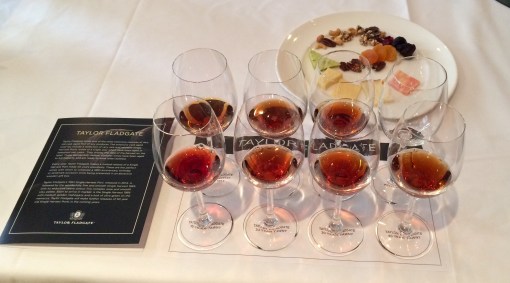
There are tastings and there are TASTINGS; this one deserves capitalization.  To celebrate the impending release of Taylor Fladgate’s 1966 Single Harvest Port to the Alberta market (coming next month to a store near you!), this 50 year-old wine was opened up at a special release event this afternoon along with its older siblings the 1964 and 1965.  153 combined years of Port later, I had a good day.

FullSizeRender-230

By way of quick refresher, Port is a fortified wine made from (usually) a blend of grapes grown in the Douro region in northern Portugal.  The grapes are crushed and at first fermented just like dry table wine, but halfway through the fermentation, when there is still considerable sugar left in the grape juice that has yet to be converted to alcohol, the juice is spiked with 70% abv grape brandy, which kills the yeast, stops the fermentation and (obviously) increases the alcohol level of the now-finished wine, resulting in a sweet, fruity, 20-ish% abv Port.  All Port is made in this way, but how each Port ends up looking, smelling and tasting after you open the bottle depends largely on how it is matured.

Ruby Ports, blends from multiple vintages made for early consumption, get a couple of years of barrel age and are bottled young and fruity.  Vintage Ports, single-year wines released only in top years, get a similar barrel treatment but are so dense and concentrated that they are intended to age for years or decades in bottle before they are opened.  Tawny Ports, also multi-year blends, are aged oxidatively in barrels until they are ready for release, with air exposure leading to their brownish colour, mellow texture and nutty, caramel-y flavours. The Port Wine Institute only allows Tawny Ports to be bottled with an age designation of 10, 20, 30 or 40 Years, with the number denoting the average age of the wines in the blend.
FullSizeRender-229

When a Tawny Port is made from grapes of a single year’s harvest, it is known as a Colheita, a single vintage Tawny.  “Colheita” (pronounced “Kohl-YAY-tah”) is the Portuguese word for “harvest”, and to obtain this designation, any one-year Tawny must be aged at least 7 years in barrel before bottling.  Taylor Fladgate, thanks to a fortuitous acquisition of another Port house with significant back-vintage reserves, started a program three years ago for the annual release of a special Very Old Single Harvest (Colheita) Port on its 50th anniversary.  In 2014 they released the 1964 Colheita, followed by the 1965 in 2015 and now this year’s 1966.  If you know anybody celebrating a 50th birthday or anniversary in 2016, I know what you can get them. Read the rest of this entry »



PnP Featured in Culinaire Magazine!

4 09 2015

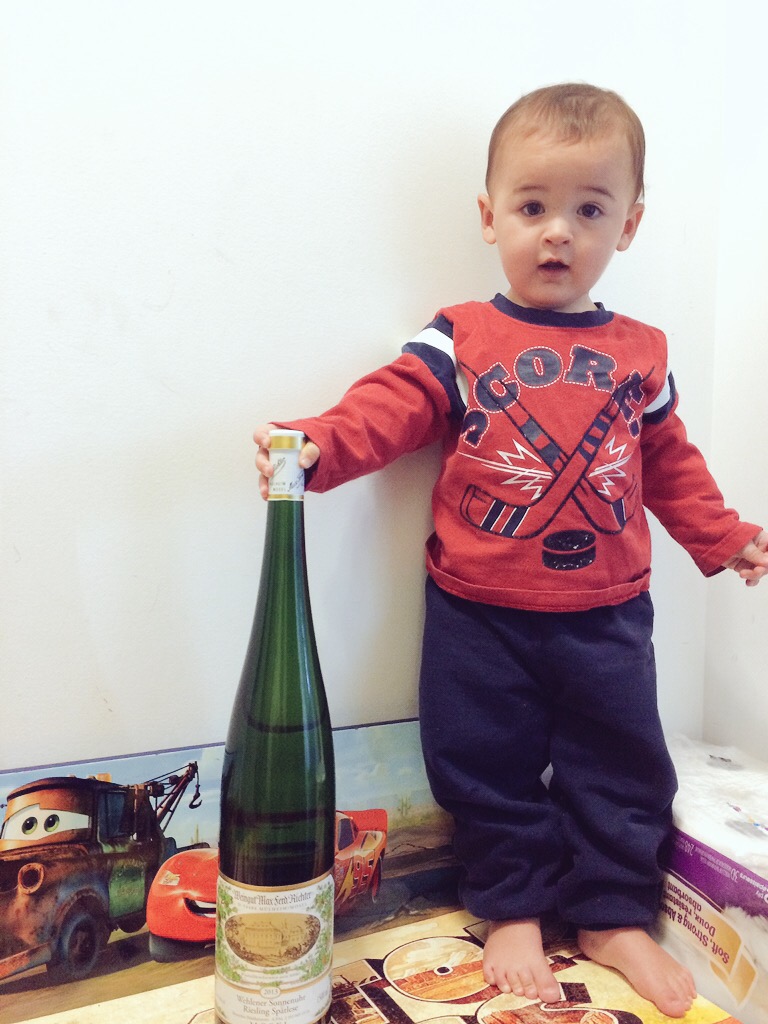
Well, after over four years of blogging and nearly 300 posts, it has happened:  I have been photographed going down a slide in a tot lot with a magnum of Riesling for a real life magazine.  Culinaire Magazine, a fantastic monthly publication focused on all parts of Calgary’s thriving food and beverage scene, has a monthly feature on the inside of its back cover called “Open That Bottle”, where a local personality is profiled and discusses a special bottle in their cellar that they’re saving for a specific occasion.  For the September 2015 issue, I was honoured to get the call and share the story of my favourite kind of wine, from my favourite vineyard, that I’m holding for one of my favourite people in the world:  my son Max.  See the story below:

If for some reason the media link above doesn’t work, the online version of the article can be found on the Culinaire website here.  Also in the September issue (it was a good issue!) was a joint article about drinking boldly and dodging the usual suspect grapes that I wrote with YYC Wine’s Adrian Bryksa, which you can read here:

Stuff like this doesn’t happen without people like you taking the time to find and read what I write on here, so I am eternally grateful to everyone who has supported this site.  Never did I think that this little passion project would turn up in a magazine; I can’t wait to see where it goes next.  Thank you!!

Max at 16 months, with his birth year mag, October 2014.

Max at 16 months, with his birth year magnum, October 2014.


Canada’s Natural Wine Club: Cellar Direct

1 09 2015

[These bottles were provided as samples for review purposes.]

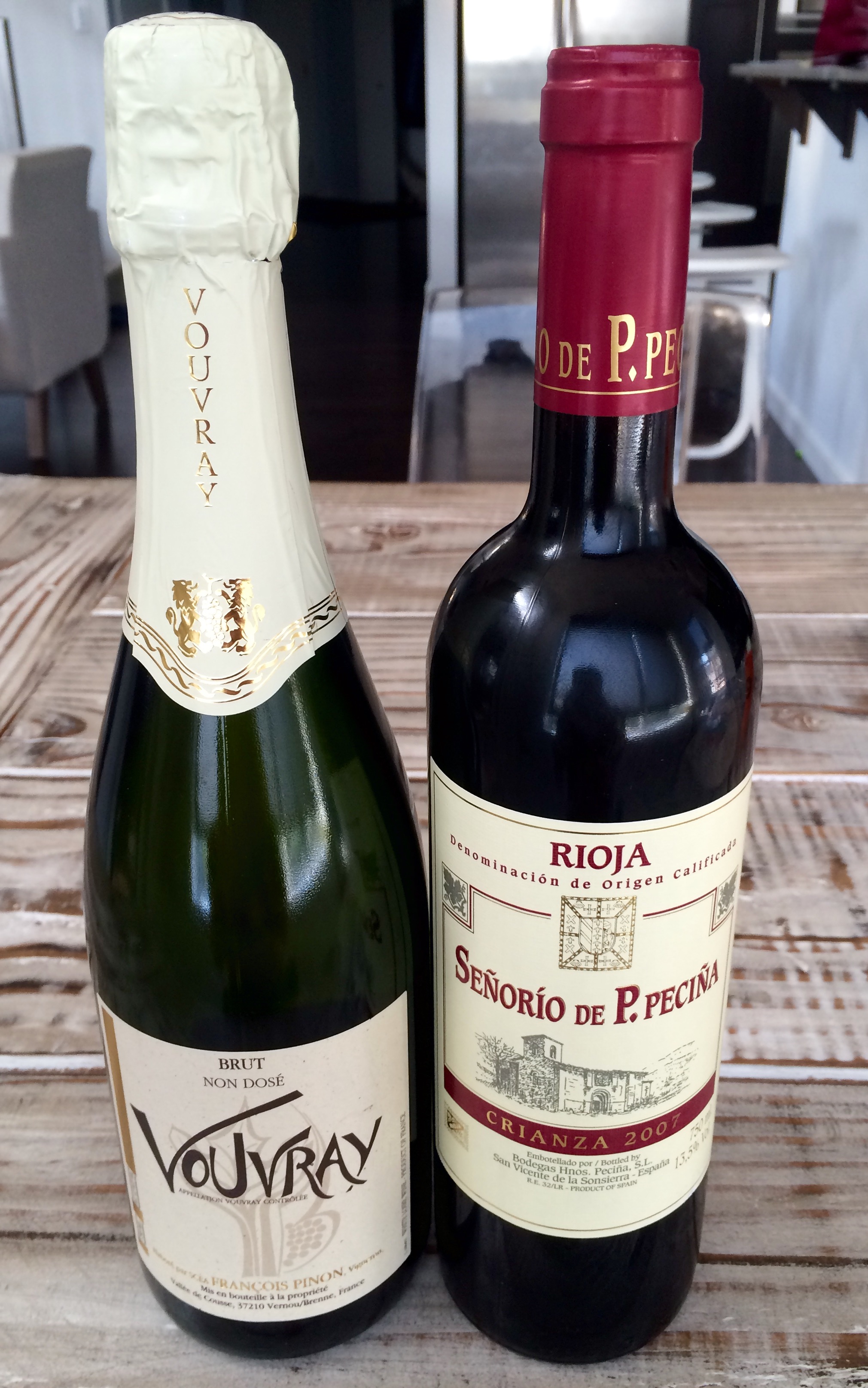
FullSizeRender-118It was not like any other sample box I have received.  This two-bottle sample pack showed up in a container that could have easily fit a full case of wine with room to spare.  Puzzled, I broke into the box to discover the wine inside was surrounded on all sides by multiple inches of insulated styrofoam, like I was being shipped radioactive isotopes instead of a European red and white.  The bottles in the centre of the box were encased in even more styrofoam, and sitting in between them was a liqui-gel cryopack, like the kind you would use to keep your camping cooler cold.  After a multi-day, interprovincial Canada Post voyage, the icepack was still completely frozen.  And the wine?  Precisely at cellar temperature fresh off the delivery truck, a constant, perfect 13 degrees Celsius.  As it turns out, Cellar Direct doesn’t just ship their wines out in a way that ensures temperature stability; it also imports them in from producers in a rigidly temperature-controlled manner too.  They officially had my attention. Read the rest of this entry »


Calgary Wine Life: Vasse Felix Winemaker’s Dinner @ The Lake House

16 07 2015

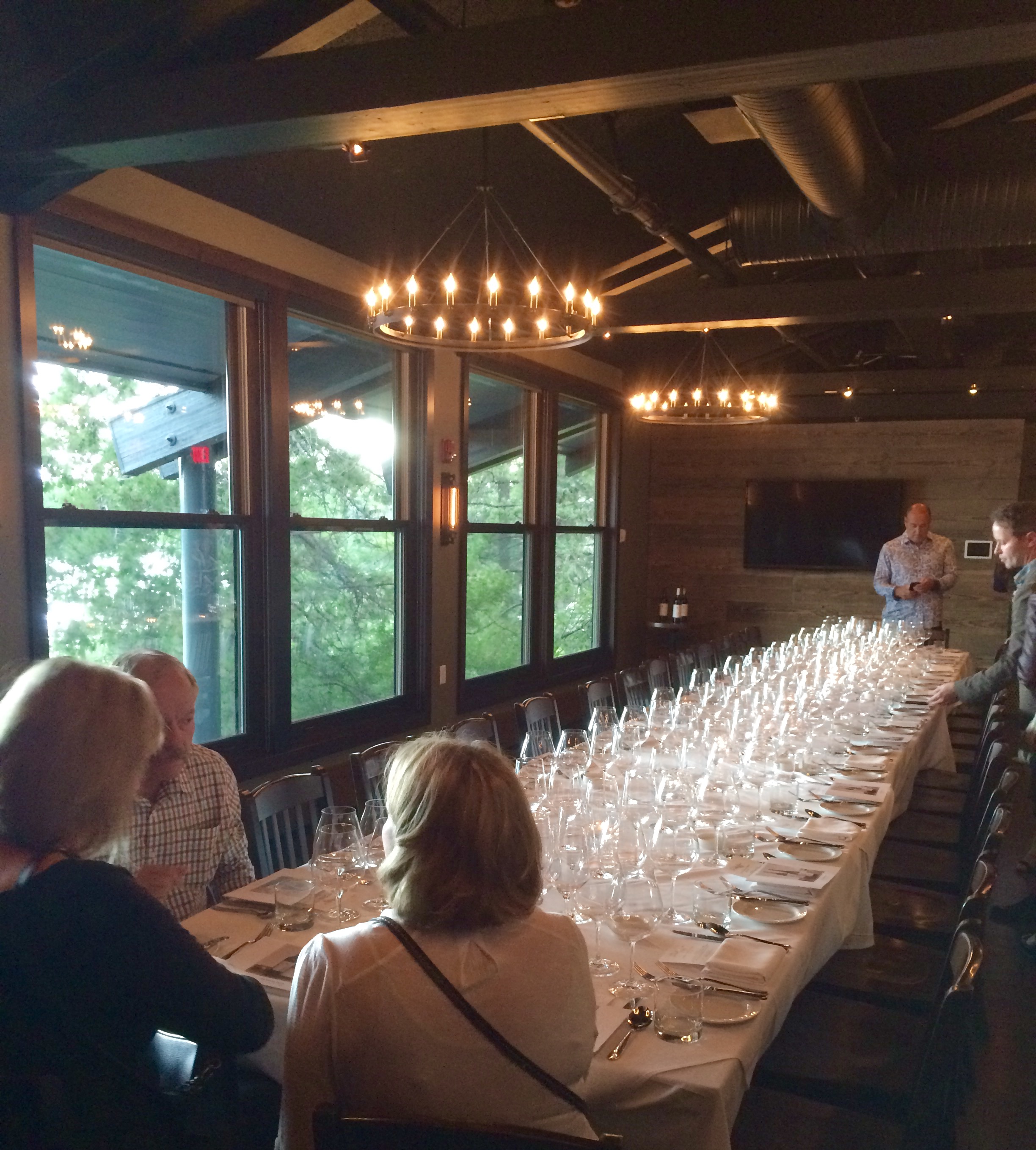
Let’s play word association.  I say:  “Australian wine”.  You immediately think — ?  You are probably lying if you don’t say “Shiraz”, and with that comes immediate images of big, lush, ripe, fruity, alcoholic reds, bursting with flavour and spice if lacking slightly in nuance.  The wine scene in Aus is certainly becoming more varied and complex as the years go on, but consumer memory changes slowly and initial impressions run deep.  That’s why one of the first instructions that Virginia Willcock, esteemed winemaker at southwestern Australia’s Vasse Felix winery, gave us about her wines was:  “Don’t call them Australian wines.  They’re not.”  At least not in the preconceived way we all think about them.

LakeHouseRoom

Vasse Felix is located in the Margaret River region, a 3 hour drive south of Perth, which is a city surrounded by, well, nothing.  Willcock calls it “the most isolated wine region in the world”, but what it lacks in proximity it makes up for in a much cooler, more temperate, maritime climate than the rest of the country, a growing season that is often compared to that in Bordeaux, and resulting wines that exhibit finesse, elegance and character, wholly unlike the fruit monsters on which Australia made its international name.  Vasse Felix is the first wine estate founded in Margaret River, established in 1967, and it produced the area’s first Cabernet Sauvignon in 1972.  It continues to specialize in Cabernet, and also in Chardonnay, both classic Margaret River varietals, and it does not produce any other types of wines.  As Willcock says, they elected to be the master of a couple trades instead of a jack of all of them (a lesson that many other New World wineries could be well served in learning). Read the rest of this entry »


Calgary Wine Life: Culmina Tasting with Don Triggs

5 06 2015
Don Triggs, visionary owner of Culmina.

Don Triggs, visionary owner of Culmina.

Okanagan wines are coming of age, and Don Triggs is helping to get them there.  More and more, producers from British Columbia’s top wine region are ceasing to be satisfied with being locally successful and a tourist charm; they are after quality, seeking distinction, looking to carve out an international identity.  Triggs’ current wine venture, Culmina Family Estate Winery, is a manifestation of this quest to be better.  In the past few years, Triggs has meticulously engaged in soil mapping and analysis of the 43(!) micro-blocks of terroir in his estate vineyards; he has relentlessly, and successfully, helped lobby for the creation of a new delimited sub-appellation (the first sub-geographical indicator in BC) for the Golden Mile Bench, an east-facing angled strip of land stretching southward from Oliver; and he has made Culmina’s winery facilities the most technologically advanced in the area.  This dedication to elevating the level of the Okanagan’s wine game is starting to show in the bottle.

Read the rest of this entry »


Calgary Wine Life: Cakebread Tasting with Dennis Cakebread

15 04 2015

I have long held a soft spot for Cakebread Cellars wines, dating back to when my knowledge and interest in wine were in their infancy.  At the end of my articling year a decade ago, my co-workers and I were out at a nice dinner courteously paid for by our firm the night before we were to find out who would be hired back after articles.  There was suitably fancy wine to go with the upscale meal at our group’s aptly named Last Supper, but the only bottle I remember from that night came after dessert, when a couple wine-loving fellow students ordered a bottle of Cakebread Sauvignon Blanc to the table.  I know (now) that this isn’t Cakebread’s go-to grape or claim to fame, but it stopped me in my tracks.  I had never had a wine like it.  It was instantly memorable and made me understand how people could invest so much time, attention and money in the enjoyment of fine wine, which I have now spent the last ten years doing myself.  When I was in Napa a few years ago I made sure to stop by Cakebread (and have matching wine glasses at home to prove it), all because of that one bottle of Sauvignon Blanc.  So when I got invited a few weeks back to taste through a lineup of Cakebread’s wines with its VP and second-generation owner Dennis Cakebread, my wine life flashed in front of my eyes a little bit.  It was like coming full circle.

FullSizeRender-52

Read the rest of this entry »


Calgary Wine Life: Greywacke Tasting with Kevin Judd

7 10 2014

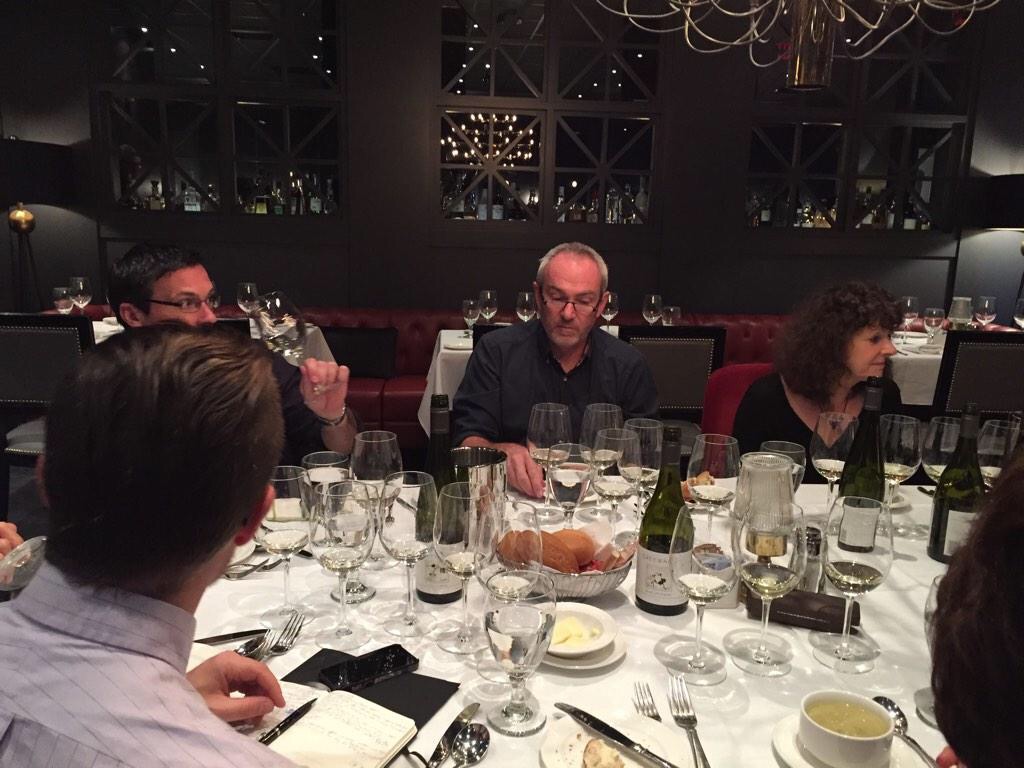
Kevin Judd is a New Zealand visionary, a trailblazer who has left a permanent imprint on the nation’s young wine culture.  As the founding winemaker of Cloudy Bay, now the near-ubiquitous signpost for the sharp, tangy, herbal style of Sauvignon Blanc that is instantly recognizable in the glass, Judd pioneered a flavour profile for New Zealand’s signature grape that put the country on the world wine map.  He helmed the ship at Cloudy Bay for 25 years, taking it from an unknown producer in an anonymous wine nation to a whirlwind New World phenomenon, the crown jewel of a Sauvignon Blanc revolution that saw millions of bottles fly off the shelves.

IMG_2063

After Cloudy Bay was sold to luxury brand behemoth LVMH (whose wine portfolio includes such luminaries as Krug, Dom Perignon, Chateau d’Yquem and Cheval Blanc, upper-crusters all), Judd finally realized a lifelong dream of starting his own label and making wines in a manner that best suited his palate:  riper batches of fruit, slightly softer acid, yet retaining all of the structure and complexity that a cooler climate can provide.  He called the new venture Greywacke, a name he had quietly reserved 15 years earlier while waiting for his opportunity:  the word (pronounced “grey-wacky”) refers to the grey sandstone rocks that are commonly strewn across New Zealand’s vineyards.

Read the rest of this entry »


Calgary Wine Life: Torres Mas La Plana 40th Anniversary Tasting

16 07 2014

photo 4For the CEO of a global wine empire, Miguel Torres Maczassek is a pretty chill guy.  Soft-spoken yet jovial, the 5th-generation head of one of the wine world’s largest family businesses initially comes across as unassuming, but his passion for his multitude of intercontinental wine projects and his pride in the Torres family legacy shines through whenever he speaks.  Torres (the estate) has vineyards and properties across all of the major wine regions of Spain and many other countries, and Torres (the man) recently spent 3 years living in Chile running the family’s operations there, making connections with local growers and taking steps to preserve and revive some of the country’s oldest known varietals.  He was in Calgary recently to help celebrate the 40th anniversary of Torres’ flagship red, Mas La Plana, which I have had and enjoyed many times before and which is one of those rare premium wines that can still be found locally at a fairly reasonable ($50ish) price point.  We had the opportunity to track the evolution of this wine through four different decades, from the 1980s to the 2010s, and to witness firsthand the steps taken to fully realize the family’s vision for its top bottling. Read the rest of this entry »


Calgary Wine Life: 1863 Taylor Fladgate Port

6 06 2014

What happened in 1863?  Henry Ford was born.  The Battle of Gettysburg helped shape the course of the US Civil War.  Canada was 4 years away from becoming its own country.  And the grapes that went into the Port that I got to try this week were harvested.  There are times when I am reminded just how transportive wine is, how it can be a liquid chronicler of history.  This was one of those times.

Eighteen. Sixty. Three.

Eighteen. Sixty. Three.

It probably goes without saying that it’s exceedingly rare for a producer to release a wine after it has turned 150.  The centuries-old Port houses in Portugal would only have extremely limited quantities of reserves even half that old, which would in most cases be used in minute quantities to add flavour and complexity to the producers’ 40-year old tawny Port release (the 40 years on the label represents the average age of the multi-vintage wines in the bottled blend).  Taylor Fladgate has added to its own reserves over the years with select lots of high-end wood-aged Port from the 19th century, and when the quality of an ancient elixir is exceptional, it will occasionally decide to bottle and release it as a stand-alone offering.  That was the case with this single-harvest Port from one of the best vintages of the 19th century, 1863, which after a century and a half is just being taken out of barrel and readied for sale this fall.  When I say “barrel”, I’m referring to one of only two in existence:  Fladgate has but a lonely pair of barrels of the 1863, which will ultimately make less than 1,500 bottles of the Port for the entire world market.

Read the rest of this entry »


Calgary Wine Life: Wines of Portugal Tasting @ Market

7 11 2013

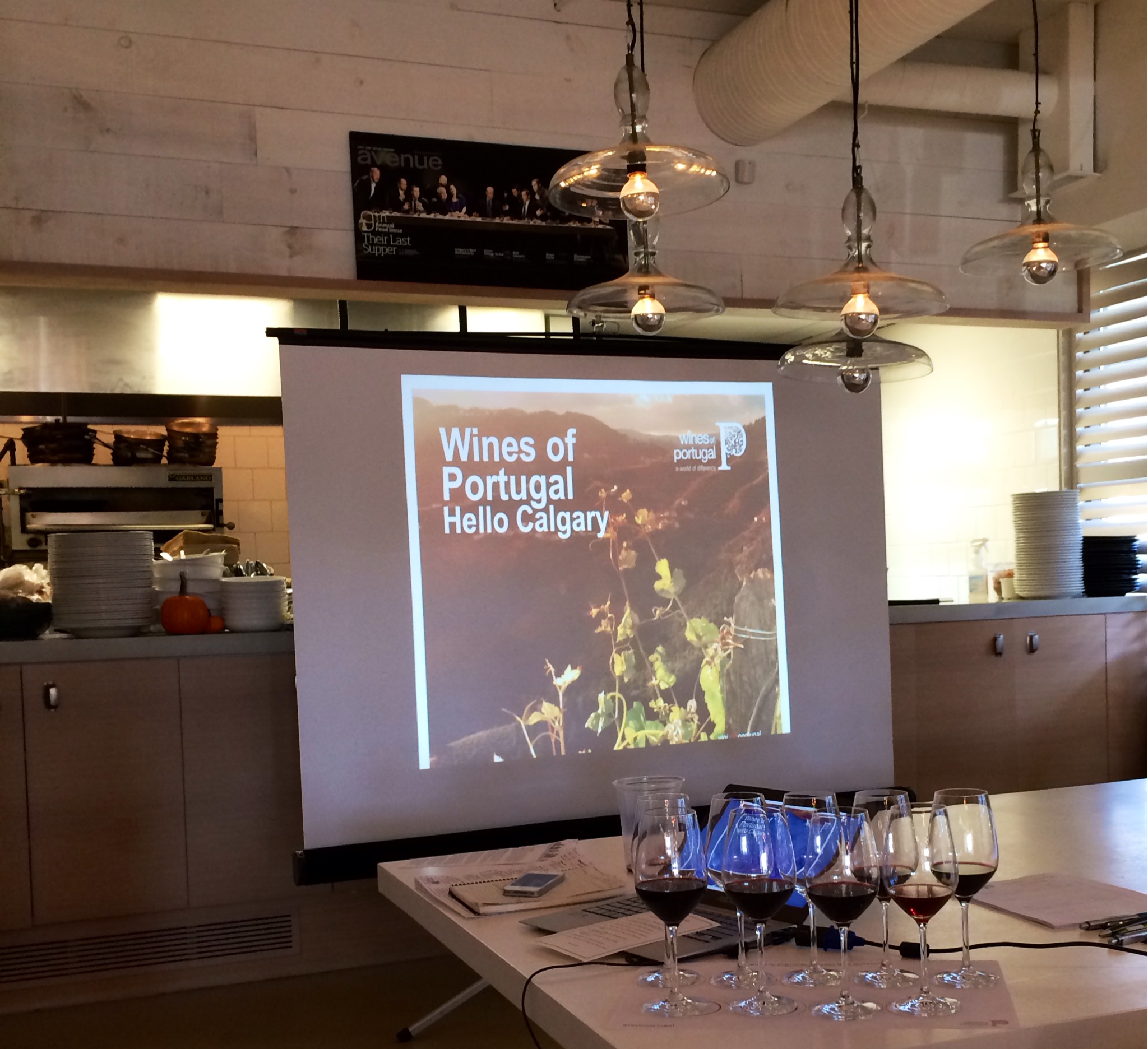
It appears to be Underappreciated Wine Region Month here at Pop & Pour.  Last week I was exposed to the new wave of bottlings coming out of the southern Italian island of Sicily; this week it was Portugal, another unheralded European wine area, that was aiming to bring its remarkable wines to the attention of international export markets.  I got the opportunity to sit in on a guided tasting put on by the Wines of Portugal and led by energetic and well-versed sommelier extraordinaire DJ Kearney, who brought us up to speed on everything from the number of indigenous grape varieties found in Portugal (250+) to the proper pronunciation of key Portuguese wine terms (hint:  if it ends in an E, don’t pronounce the E, no matter how much you want to).  The tasting was held at Market Restaurant on 17th Avenue, which I had never been to before but which proceeded to serve us an absolutely stellar three-course lunch that will be reason enough to bring me back very soon.

image-9

It was sort of fitting that I got to experience Portugal’s wine story after sitting in on Sicily’s, because the two regions have much in common.  Both are home to large numbers of local grape varietals that are barely found anywhere else, and both have made the conscious choice to embrace these lesser-known grapes and focus their quality production around them.  As a result of a lack of name recognition and a dearth of critical attention on these under-the-radar wines, both can offer tremendous value for money for those consumers brave enough to take the plunge (I think Portugal might win the worldwide gold medal for these kinds of bargains).  And both tend to focus more on wines that are blends of multiple different grapes as opposed to single varietal offerings, with Portuguese wine in particular almost always a group vinous effort as opposed to a solo act.  Kearney channeled her inner Wino Karl Marx when talking blending, urging us through these wines to shed the shackles of varietal typicity and embrace the communal symphony of these intrepid groups of local grapes (featuring reds Touriga Nacional, Touriga Franca, Tinta Roriz [aka Tempranillo] and Baga, and whites Alvarinho [aka Albarino], Arinto, Encruzado and many more) all working together to make something greater than themselves.

Read the rest of this entry »


Calgary Wine Life: Sicilian Master Class @ Theatre Junction Grand

31 10 2013

Quick:  name a Sicilian wine producer.  Did you say Planeta?  Me too.  Name another one.  To my embarrassment, I couldn’t.  My list of known Sicilian producers ends at one.  This fairly sizeable void in my wine knowledge is particularly galling because, believe it or not, Sicily is the biggest wine-producing region in Italy:  it actually produces more wine per year than Australia, more than Chile and Bordeaux combined.  So why does it continue to have such a low profile?  Because, up until recently, the wine produced was not generally of high quality and was often sold off in bulk to other parts of the country instead of bottled on its own.  Even now, less than 20% of Sicily’s annual production is bottled for individual sale, and only 5% or so comes from a legally designated DOC region.  But there is currently a quality revolution underway in Sicily, one that has been brewing since the 1980s and that has seen many longstanding producers forego high yields and the sale of their crops by the ton in favour of more meticulous growing and winemaking practices and the creation of better wines under their own labels.  This week I got the chance to witness this transformation midstream.

image-7

Read the rest of this entry »


Calgary Wine Life: Cloudy Bay Winemaker Tasting at Alloy

26 09 2013

If you’re into New Zealand Sauvignon Blanc, you’ve heard of Cloudy Bay.  When I bought my first book about wine a few years ago, the first couple pages of the chapter on New Zealand were the story of this winery:  one of very few producers scattered across the Marlborough region of New Zealand in the mid-1980s, when nobody was paying any attention to NZ wine and nobody on the northern half of the globe was buying it, without any vineyards of its own, making Sauvignon Blanc in a style that has since become synonymous with the nation and the grape (crisp, aromatic, intense, herbaceous), exploding onto the international scene, and shining the spotlight of the wine world on this scenic region on the northern tip of the country’s South Island.  This isn’t ancient history:  New Zealand was an afterthought of a wine nation with only a small handful of producers at a point during my lifetime (I’m 33).  Now it has turned into a thriving and exciting contributor to the world of wine that is home to over 700 wineries, and in large part Cloudy Bay is to thank for this surge of success.  One of the main reasons that “New Zealand Sauvignon Blanc” possesses the same instant and tangible sense of identity in the psyche of wine drinkers as “Australian Shiraz” (or “Cali Cab”, or “German Riesling”, or “Argentinian Malbec”) is the work of this trendsetting producer that started small and turned itself into a national icon with a world-renowned style.

photo 1

In 2003, Cloudy Bay was purchased by luxury brand supergroup LVMH (Louis Vuitton Moet Hennessy), which was charged with maintaining the legacy of New Zealand’s most famous liquid export.  This responsibility is now in the capable hands of lead winemaker Tim Heath, who has spent the past 9 years at the winery trying to ensure that Cloudy Bay’s historic voice is as strong as ever within its wines while simultaneously helping them evolve and grow.  Heath recently made his inaugural journey to Canada to showcase his latest creations and discuss the impending release of Cloudy Bay’s 2013 Sauvignon Blanc (just put in bottle in August!), which should be out on the shelves in a matter of weeks.  I was fortunate enough to join him and a few others for a stellar lunch at Alloy, my favourite restaurant in town, to talk and taste New Zealand wine. Read the rest of this entry »


Calgary Wine Life: Cork & Canvas CPO Tasting @ Willow Park

6 03 2013

[Cross-posted at www.calgaryisawesome.com]

My two year-old son is going to his first symphony on Sunday.  Before the matinee performance of Peter and The Wolf, the Calgary Philharmonic Orchestra is putting on an Instrument Petting Zoo so that kids like mine who haven’t experienced live music can see and feel for themselves the difference between an oboe and a piccolo, a trombone and a timpani.  Our city’s remarkable orchestra is constantly innovating like this, striving to make symphonic music more accessible to a broader audience, whether it’s putting on these Symphony Sundays for smaller children or lending their arsenal of talents to performances of music from video games, The Lord of the Rings, or rock and roll bands like Queen.  This fun and unpretentious vibe extends to the CPO’s fundraising efforts as well:  if you want to, you can adopt your own member of the orchestra for a year, or book a concert for your child’s elementary school.  Or, like me, you can drink.

Photo1-162

Read the rest of this entry »


Calgary Wine Life: Taste With Piero Lanza of Poggerino

17 02 2013

[Cross-posted at www.calgaryisawesome.com]

There’s nothing quite like listening to winemakers talk about their own wines.  You can learn a lot about a wine by reading labels, going to websites, talking to shopkeepers and (of course) reading blogs and online reviews, but nothing gets you inside the soul of a wine faster than hearing the person who created it talk about what led up to its birth.  On Valentine’s Day, a few of us were treated to this rarefied experience at Vine Arts on 1st Street and 13th Avenue SW, where Wine Boy Imports presented an interactive tasting with Piero Lanza, co-owner and winemaker at Fattoria Poggerino in Tuscany, Italy.  Lanza led us through his entire lineup of classically inspired wines and made most of us mentally pencil in a trip to central Italy at some point in the future.

Photo1-157

Poggerino is first and foremost a family venture:  it was purchased by Piero’s grandfather in 1940, and he and his sister are the third generation of Lanzas to work on the property.  The estate is comprised of 43 hectares of land, although only 12 hectares are planted to vines (11 to Sangiovese, 1 to Merlot), with the rest largely covered in forest.  Lanza described the relatively narrow spread of the vineyards as “human-sized”, stating that he preferred to keep the operation on a scale that allowed him to personally work on all the crops and “speak to my vines”.  His passion for maintaining, preserving and expressing the essence of the land is powerfully sincere and has led Poggerino to be both organic and biodynamic in its vineyard practices.  “This land is mine on a piece of paper, but it’s really for everybody”, Lanza explains; many of his decisions with respect to the handling of his crops paint him as a steward for future generations.  He is focused on ensuring that the soils where his vines grow are constantly teeming with life and that the grapes themselves are merely one part of a thriving ecosystem instead of a single disruptive force that creates imbalance with its surroundings.  Given Lanza’s dedication to the land, it is not surprising that his winemaking style is devoted to reflecting the unique footprint of the soil through its grapes.  He keeps any intervention in the cellar to a minimum and aims to produce wines of elegance and intensity without excess concentration, keeping them fresh and food-friendly.  In his words, “I work hard to produce simple wines.”  We were lucky enough to try 5 of them, each somewhat different from the others, but all reflecting a common origin. Read the rest of this entry »


Calgary Wine Life: Meet Alberta Winestein

30 01 2013

[Cross-posted at www.calgaryisawesome.com]

AlbertaWinestein_logoJPGHow much of your 2012 Christmas shopping did you do online?  In my case, the answer comes perilously close to “all of it”.  No malls to brave, no parking to find, no bags to carry, just page after page of every imaginable type of gift easily accessible from the comfort of my house — it’s hard to see the downside.  The Internet has increasingly become my retail destination of choice, and over the past few years I have purchased any number of things online:  books, movies, furniture, shares, even (sort of) a dog.  But wine?  Forget about it, at least in Alberta.  While e-commerce has started to become an important part of the wine industry in the US, there has been almost a total vacuum in the local market, with no retailers offering a comprehensive online ordering platform and no other service providers stepping up to fill the void…until now.  With its formal launch earlier this month, Alberta Winestein (http://www.albertawinestein.com) is making online wine ordering a reality in our province and is seeking to bring high quality boutique products to every corner of Alberta.

The idea is a simple but powerful one:  find some way to connect the scores of wine buyers across the province to the wares of some of Calgary’s most respected and prestigious shops, to the benefit of all parties.  After a couple years of intense planning, Alberta Winestein founder and CEO Guillaume Bedard is now ready to implement his strategy to realize this goal.  “As a consumer, it was difficult and time-consuming to know what unique products were offered in Alberta from all the best boutique retailers,” Bedard explains.  “We dreamed of a way to ease our search while using state of the art e-commerce services.  We then realized that boutique retailers are themselves under increasing pressure from large surface retailers and are now facing greater competition than ever while trying to address a growing market demand.  That is when Alberta Winestein went from concept to reality:  a central e-commerce platform for amazing boutique retailers in order to ease the purchasing process for consumers.” Read the rest of this entry »