Calgary Wine Life: Weingut Hiedler Tasting @ Bricks Wine Co.

26 06 2017

FullSizeRender-664

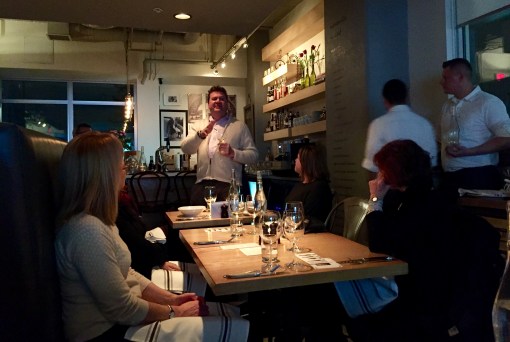
Ludwig Hiedler Jr.

When Ludwig Hiedler Jr. speaks, generations of knowledge echo in his words.  His career has spanned many years of education and experience, multiple shifts in approach, and innumerable hours spent questioning how to create and reveal the truest form of a wine.  He at first chafed against the layers of tradition quietly imposed on him like sediment by his ancestors, and pushed back against them by experimenting in all facets of his self-described “artisanal, emotional” winemaking style, only to eventually discover his own truth where it always was, embedded within his family’s values and legacy.  He is 24 years old.

Ludwig Jr., his father Ludwig Sr. and his brother Dietmar now collectively guide the course of Weingut Hiedler, which has been producing wine in northern Austria’s Kamptal region since 1856, longer than Canada has existed as a country.  Ludwig Jr. represents the fifth generation of Hiedlers to take on winemaking duties at the estate, steering the winery into the future with a nod back into the past, through sustainable chemical-free practices in the vineyard, next to no use of oak for maturation, and wines made as a pure reflection of site and vintage, with no stylistic or flavour preconceptions guiding the journey to the finished product and limited intervention during fermentation.  Hiedler uses native yeasts to ferment all of his wines, but in an interesting way:  he allows the ambient yeasts around the winery to do some of the work during fermentation, but has also harnessed certain selections of these native strains with which he also inoculates the fermenting must, propelling the ferment forward without introducing any element external to the winery.
FullSizeRender-660

Weingut Hiedler is a small piece of a 1,000+ year tradition of winemaking in Austria, and is part of a group of quality-focused producers working on taking the generational knowledge built up and passed down about vineyard sites, soils, aspects and qualities and creating a (long-overdue) formal comprehensive set of vineyard classifications for the country.  The Österreichische Traditionsweinguter (or the ÖTW for short, which translates to “Traditional Austrian Winemakers” and is roughly equivalent to Germany’s VDP) has identified a number of top “Erste Lage” (first growth) vineyards which they hope to see formalized at law in the future, bringing Burgundian rigour to Austrian soils.  Hiedler’s philosophy strives for longevity, tranquility, wisdom, harmony and elegance in its wines, a vision symbolized by the owl that graces its labels and has quickly become the most recognizable visual reference to the estate.

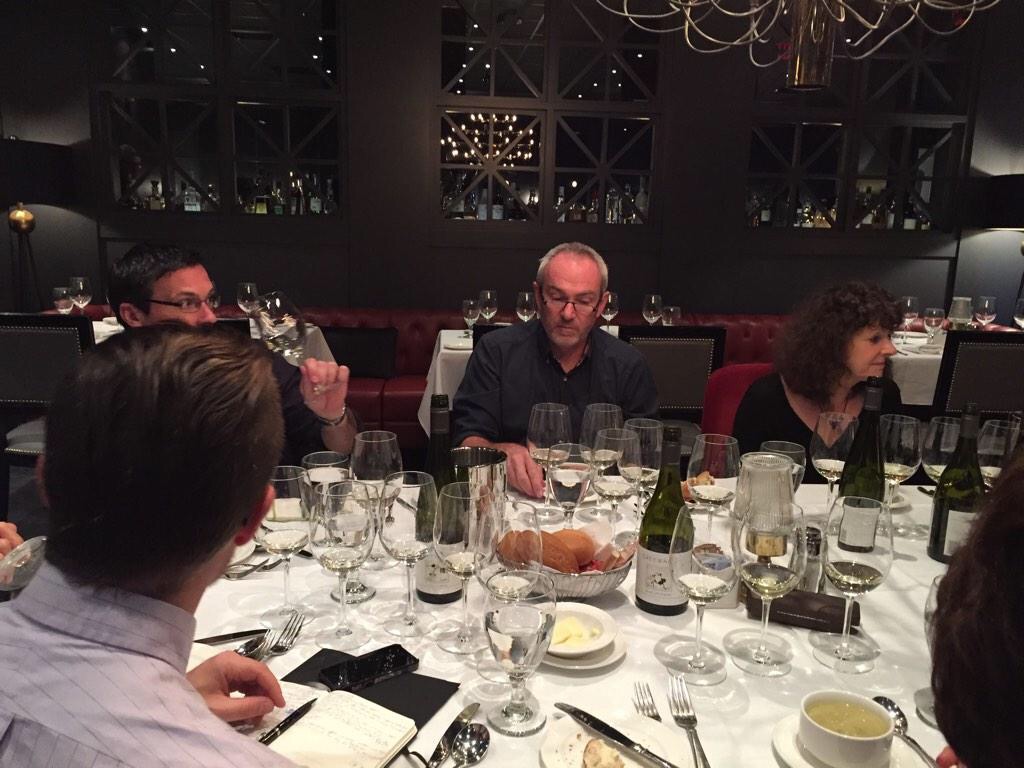
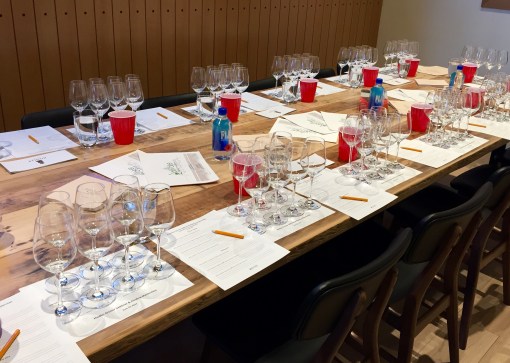
This was Ludwig Hiedler Jr.’s first ever trip to Canada, and his last stop in a hectic North American travel schedule before he returned to winemaking duties in Austria.  Before embarking on a transoceanic flight home, he graciously led us through a remarkable Gruner Veltliner and Riesling Masterclass at one of Calgary’s most impressive boutiques, Inglewood’s Bricks Wine Company.  Through four Gruners and three Rieslings, we got a clear sense of what Ludwig and Weingut Hiedler were all about, yet I still left thinking that there are many more undiscovered layers to both the man and the winery, to be unveiled in the coming decades of Hiedler releases. Read the rest of this entry »


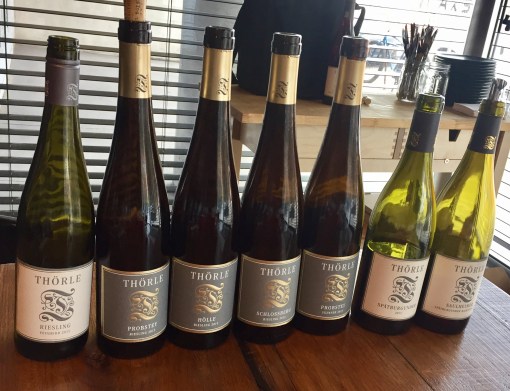


Calgary Wine Life: Weingut Thörle Tasting @ Vine Arts

2 06 2017
IMG_6203

Christoph Thörle

It’s been a bit of a banner wine week, seven days tailored to the precise preferences of my palate.  My personal favourite types of red and white wine are Washington Syrah and German Riesling respectively, and late May has seen visionary producers specializing in each of these areas visit our fair city.  My Washington wine prayers were answered last week when Greg Harrington of Gramercy Cellars put on a remarkable Master Class in Calgary; this week it was Germany’s turn, thanks to an eye-opening portfolio tasting put on by the dynamic Christoph Thörle of the eponymous Weingut Thörle, from the global home of Riesling’s Rheinhessen region.  Through four different earth-shattering Rieslings and seven total wines, Thörle took us through what must be some of the world’s best expressions of my first vinous love.

If you say the word “Rheinhessen” to a wine person, the tenor of their reaction might be a generational one.  The region, located in west-central Germany, due south of Rheingau and southwest of Frankfurt, is the largest in the country in terms of planted acres and is tailor-made for grape-growing:  it’s dry, sunny and relatively warm, with limestone-based soils overlaid by a variety of alluvial deposits, as long ago it was largely part of an underwater seabed.  Rheinhessen once had a reputation to match its physical advantages, and was long considered one of the pinnacle areas of German viniculture.  But a mid-20th-century flirtation with new lab-crossing grape varieties and mass-market, quantity-focused bottlings turned into a 1970s and 80s Liebfraumilch obsession that saw lesser varietals dominate much of the vineyard area and Blue Nun and Black Tower nearly obliterate the world’s prior impressions of German wine.  If you stopped paying attention to Rheinhessen then (as many did), you will have missed out on what’s going there now:  a quiet quality renaissance, and a return to the right grapes properly planted and tended on the right sites, perhaps not better personified than by Christoph Thörle and his brother Johannes.

FullSizeRender-626

They took over the operation of the Thörle family winery in 2006, when Christoph was just 22 and Johannes 24.  Together they have overseen an expansion of the estate’s vineyard holdings and a corresponding increase in annual production, paired with a return to simple, hands-off viticulture and winemaking practices:  no pesticides or herbicides in the vineyards, multiple-pass harvests, all natural yeasts and no additives in the cellar, minimal sulphur at bottling.  Weingut Thörle now has 80 acres of vine holdings, remarkably spread over 100+ different vineyard parcels but largely centered around the town of Saulheim in north-central Rheinhessen.  The area features a wide array of different slopes, soils and sun exposures, allowing for the production of multiple different varietals, and Saulheim itself is surrounded by Thörle’s three crown-jewel vineyards:  Probstey, Schlossberg and Hölle.

Thörle has been generating increasing acclaim for both its white (Riesling, Silvaner, Chardonnay and more) and red (Pinot Noir, known Germanically as Spätburgunder) wines and made its glorious entrance into the Alberta market last year.  Now some new offerings are on their way to the province, and we were fortunate enough to have Christoph talk us through most of them, including a few bottles that might change your perspective on, well, everything. Read the rest of this entry »


Entering The Hatch, Spring 2017

23 05 2017

[These bottles were provided as samples for review purposes.]

IMG_6146Ever since I first saw The Hatch’s avian-Thomas-Crown-Affair primary logo shortly after it opened a couple years ago, I have been sort of transfixed from a distance, finding both the winery and its artistic ethos strangely compelling despite knowing basically nothing about them.  Based out of a rustic-modern “shack from the future” in the heights of West Kelowna and sourcing grapes from across the Okanagan and Similkameen Valleys, The Hatch initially comes across (quite intentionally) more like an artists’ collective than a commercial winery, listing Salman Rushdie on its personnel page and expounding in esoteric wine-code about “Ross O” and B. Yanco” (I’ll give you a second to sort that one out).  They confidently found their visual style from the outset thanks to the remarkable imagery provided by local western Canadian artist Paul Morstad (who is also found on The Hatch’s personnel page, playing a banjo); once people have been drawn in by the graphics, it’s up to winemaker Jason Parkes to keep their attention.  The whole artistic cacophony and the simultaneously grand yet whimsical presentation lends The Hatch a jolt of personality that the generally strait-laced BC wine scene can happily use…but does the buzz extend to what’s in the bottle?  Happily, I got to find out.

FullSizeRender-601The Hatch releases its wines in stylistic series, of which I had the opportunity to experience two:  the mid-tier Hobo Series wines, featuring a panoply of hand-drawn labels of hobos (seriously) that risk making you cry thanks to their sheer beauty (also seriously), and the ambitious Black Swift Vineyards series wines, which collectively form an expansive single-vineyard project focused on the various facets of BC’s glorious dirt.  The wine, like the winery, was never boring. Read the rest of this entry »


Calgary Wine Life: Pierre Sparr Tasting @ Cassis Bistro

3 02 2017

Can there be any major French wine region more overlooked and underrated than Alsace?  It has all the frozen-in-time charm of Burgundy, with picturesque centuries-old villages dotting rolling hillsides of vineyards, and all the stately history of Bordeaux, but without the matching dose of self-importance.  Add in a dash of international conflict (the region has passed back and forth between France and Germany many times in the course of modern history) and a pinch of consumer friendliness (unlike almost anywhere else in France, Alsatian wines are all varietally labelled so everyone can easily see the grape that’s in the bottle) and you’d think you’d have a sensation.  But perhaps due to its location, tucked away in the northeastern corner of France, or to its primary focus on white grapes and prevailing Germanic influence, Alsace doesn’t get the hero’s welcome internationally that its fellow French stalwarts do, often left unexplored and misunderstood by New World consumers.  Thankfully, Bernard Sparr and others are out to set things right.

fullsizerender-554

Maison Pierre Sparr, 9th generation.

Bernard is part of the NINTH generation of the Sparr family that it carrying forward the legacy of Maison Pierre Sparr, the Alsatian house named after his grandfather but rooted in a winemaking family going back to 1680 (there’s that history I was talking about).  Pierre persevered through the ravaging of his domaine and vineyards in World War II, expanding the business and passing on a thriving enterprise to his two sons.  Bernard is the son of one of those scions, Rene Sparr, learning the rigours of blind tasting and the rhythms of the family winery from an early age.  Now he is helping expand the profile of the domaine overseas, settled in Quebec and taking on the role of North American ambassador for Pierre Sparr.  He is almost continually on the road, but despite the weariness of travel and an unfortunate cold that sapped his sense of smell, he was a warm and gracious host on Wednesday night, leading a cozy group through a lineup of French wines whose unifying trait was show-stopping value.

fullsizerender-549

In addition to directing international sales for the family domaine, Sparr also arranges for a small portfolio of like-minded tiny-production French producers to find their way into North America.  A few of these joined him for his visit to Calgary, so to accompany an absolutely marvellous five-course meal at Cassis Bistro, we were treated to a mixture of Pierre Sparr classics and intriguing finds from other regions, starting with a rosé with a distinct connection to a PnP favourite… Read the rest of this entry »


Cellar Direct: German Riesling Powerhouses

3 11 2016

[These bottles were provided as samples for review purposes.]

fullsizerender-458

Serious wine, serious value.

You owe it to yourself to drink more German Riesling.  You may not know it yet, but you do.  I know the idea of turning to something German doesn’t conjure up the same (somewhat oversold) feelings of art or romance that something French or Italian might, but I’m here to tell you that startling clarity, absolute transparency and unfailing precision can be much sexier than you give them credit for.

And I know, I know – you don’t like sweet wine and all German wine is sweet, right?  Except (1) your palate may be more attuned to sweetness than you expect, and (2) no, no it’s not.  In fact, some German Rieslings are as dry as a bone, often helpfully highlighted by the label indicator “trocken”. A “trocken” designation doesn’t necessarily mean that there will be no residual sugar left in the wine, but any that remains will be minimal (9 grams per litre or less) and the wine will taste dry, thanks to a helpful assist from German Riesling’s often raging levels of scouring acidity.  Another hint of dryness in German whites is (relatively) elevated levels of alcohol, since this is an indication that the bulk of the sugars in the grapes have been converted to alcohol during fermentation instead of left in the finished wine.  Generally speaking, if it’s 10.5%-11% abv or higher, it probably won’t taste sweet (and frankly, even if there is some discernible sweetness, you will probably welcome it given how much else will be going on.  Trust me.) Read the rest of this entry »


FLX: Finger Lakes Extravaganza – Part V

28 05 2016

Roll call for the previous chapters in this saga:

Finger Lakes Intro & Conclusions
Part I – Long Island, Hudson River, Dr. Frank
Part II – Keuka Spring, Chateau Lafayette Reneau
Part III – Red Newt, Knapp Winery
Part IV – Hermann J. Wiemer, Lamoreaux Landing

FullSizeRender-357

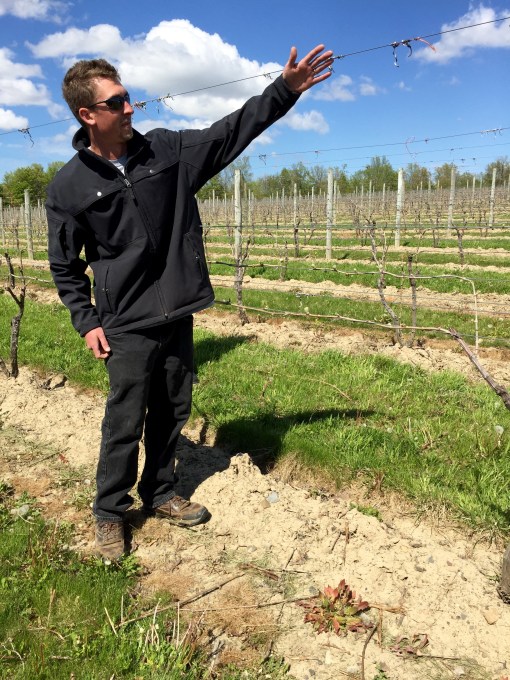
Kees Stapel, Boundary Breaks Vineyard

Ten wineries into our multi-day tasting tour of the Finger Lakes, we continued along the eastern shoreline of Seneca Lake for a different kind of meeting with a different kind of winery.  Rather than gather around a tasting room counter with a winemaker, we were told to head out to the vines at Boundary Breaks Vineyard for a grape-growing lesson with the winery’s conscientious viticulturist, Vineyard Manager Kees Stapel.  He is such an integral part of what Boundary Breaks is all about that he is the very first person listed and pictured in the list of personnel on the winery website; owner and president Bruce Murray doesn’t mention himself at all.  This unusual (but laudable) level of marketing focus on the vineyard team is partly because Boundary Breaks is a winery without a winemaker:  it was founded based on its vineyard, planted in 2008 to four different Riesling clones on an ideal sloped, breezy, sunny, west-facing site arcing gently downward to the lake.  It only makes Riesling and focuses its energies on only five different bottlings, which are presently vinified by Red Newt winemaker and FLX Riesling star Kelby James Russell. Read the rest of this entry »


FLX: Finger Lakes Extravaganza – Part III

24 05 2016

In case you missed the prequels, click here:

Finger Lakes Intro & Conclusions
Part I – Long Island, Hudson River, Dr. Frank
Part II – Keuka Spring, Chateau Lafayette Reneau

We remained on eastern Seneca after the morning views of Chateau Lafayette Reneau, taking a quick jaunt north to one of the best-known new-era Finger Lakes wineries, Red Newt Cellars Winery & Bistro.  I first read about the growth of Red Newt’s legend around the same time it experienced its greatest tragedy, in 2011, when co-founder and executive chef Debra Whiting was killed in a car accident.  Her husband, Red Newt founding winemaker David Whiting, forged on, turning the winery into one of the few in the Finger Lakes with an international reputation.  He remains in charge as Red Newt’s president, but has recently turned the winemaking reins over to a cerebral, unassuming twentysomething who might already be one of the best Riesling winemakers in North America:  Kelby James Russell, a homecoming son now squarely on the global Riesling vanguard.

FullSizeRender-339

David Whiting and Kelby James Russell, Red Newt.

Russell was born and raised in and around the Finger Lakes area but found a good reason to leave:  Harvard.  He graduated with a major in Government (poli sci grads unite!) and a minor in Economics but then sought a job in orchestra management to soothe an ongoing passion for music.  A trip to Italy ignited a love of wine, however, and Russell returned home to work a harvest with Fox Run Vineyards in 2009.  After three years there and an equal number of off-season harvests in the Southern Hemisphere (Marlborough, Tasmania and Barossa), he moved to Red Newt to assume the head winemaker mantle at the venerable age of 25 and almost immediately started pushing the boundaries of New World Riesling. Read the rest of this entry »


Wine Review: Pewsey Vale’s Regal Rieslings

16 03 2016

[These bottles were provided as samples for review purposes.]

FullSizeRender-262

I believe, Eden Valley. I believe.

I’ve talked before about how valuable comparative tastings can be.  Want to understand what Malbec tastes like, or what makes California Cabernet different from the same grape grown in Bordeaux, or what oak aging does to Chardonnay?  Don’t buy one bottle and drink it in isolation; buy two or three, which belong to your target group or establish your desired contrast, and have them together.  In this case my research question was:  how does Australian Riesling age, and what happens to it when it does?  My sample set was about as perfect as you can get:  two Rieslings from a star region (Eden Valley), from the same producer (Riesling expert Pewsey Vale), even from the same VINEYARD, separated only by six years of bottle age and the winery’s Museum Reserve library release program.  The results were phenomenal.

The Pewsey Vale Vineyard in the cool and elevated (and thus strangely named) Eden Valley, located northeast of Adelaide and right beside and above the Shiraz mecca (and actual valley) Barossa Valley, is a specialized Riesling-only shrine, exactly what you would see in the textbook description of a great Riesling site:  cooler climate (brought on in this case by its 500m altitude), poor rocky soils, hilly landscape.  The vineyard is 169 years old and has the distinction of being the very first spot planted to grapes in the area; when it was first planted in 1847, those inaugural vines included a few plantings of Riesling.  After the vineyard fell into disuse and disrepair, subsequent owners recognized its potential and single-planted the whole vineyard to Riesling in the 1960s, using cuttings from those first 19th century Riesling vines to do so.  Today all of Pewsey Vale Vineyard’s plantings have been propagated from those original 1847 vines. Read the rest of this entry »


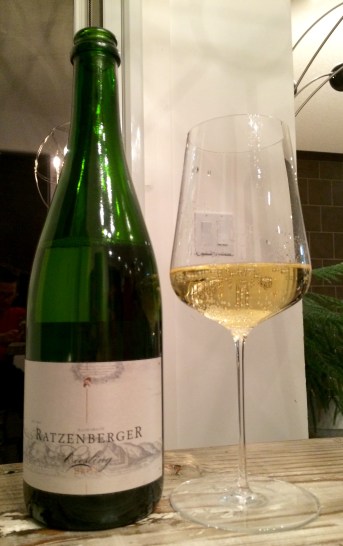
Wine Review: 2008 Ratzenberger Bacharacher Riesling Sekt Brut

13 12 2015

[This bottle was provided as a sample for review purposes.]

Redefining the world of German bubbly.

Redefining the world of German bubbly.

What’s this?  A wine review?  Isn’t this a whisky blog now?  OK, I probably deserved that.  But Advent only comes around once per year, and since no one yet has taken up the torch of my idea to find 24 good half-bottles and make a Wine Advent Calendar, this is what you get instead.  For those wine lovers out there just dying for the calendar to turn to January, this one’s to tide you over.

This bottle is another selection from Cellar Direct (cellardirect.ca), the online Canadian Natural Wine Club that allows people from all over the country to have high-quality, artisanal, naturally made wines shipped to their door via an array of tailored subscription packages ranging from $40 to $80 per month depending on your location and the package selected.  Since I last wrote about the service back in September, it has revamped its website, introduced an offer of two free bonus bottles for every 24-bottle annual subscription, and added an online shop (which will be operational in January) where Cellar Direct members can order more of their favourite bottles over and above their subscription.  It has also gotten rave reviews in BC, where price increases and regulatory chaos have otherwise made reasonably priced access to many good wines a pipe dream.

The one thing I can so far say for sure about Cellar Direct is that its selections are not fooling around; each of the three bottles I’ve now had the chance to try from their library have been of exceptional quality and proud ambassadors of where they’re from.  These are wines from somewhere as opposed to wines that could be from anywhere, and this gets all the more impressive given that this latest wine is a bottle of Sekt.  Nobody usually makes quality and terroir proclamations about Sekt (German sparkling wine), and for good reason:  most Sekt doesn’t deserve it.  In fact, it’s hard to say anything specific about Sekt as a category because it might be the least regulated category of Old World wine I’ve come across.  German wine law doesn’t mandate that Sekt be made of any particular types of grapes; it doesn’t even require those grapes to be from Germany; and it doesn’t require the wine to attain its bubbles any particular way.  Sekt is required to be at least 10% abv, but after that, all bets are off. Read the rest of this entry »


Wine Review: 2014 Plan B Riesling “OD”

14 09 2015

[This bottle was provided as a sample for review purposes.]

Riesling, it's been too long.

Riesling, it’s been too long.

Wow, HOW long has it been since I’ve reviewed a Riesling on here?  Seven months??  What is wrong with me?  I have let my favourite grape down.  Time to make amends, and I have definitely found the right bottle for the job, from probably the most underrated country in the world for good Riesling:  Australia.  This New World nation, home of terrifying spiders and monster Shiraz, is probably not the first place you think of for elegant, aromatic, cool-climate whites, but there are pockets of land in this otherwise mostly barren desert, moderated by altitude or coastal proximity or both, in which Germany’s most prized vinous export thrives.

This particular Riesling hails from the relatively obscure Frankland River region, known to me as one of the only producing areas in western Australia not called Margaret River that’s getting any play internationally.  While Margaret River sits right on Australia’s western coast, just south of Perth, Frankland River is a little farther east and inland and is a sub-zone of Australia’s largest singular wine region, the questionably named Great Southern region.  (As you can see here, it is much more west than south in the national scheme of things, and most of the country’s wine regions are actually located further south than it is.  It had better actually be Great there.)  The gents at Plan B Wines seem to be on a mission to make the wine biz loose and fun again while still producing great quality product from top sites, a task that I would suggest is perfectly suited to Australians.  Their website at planbwines.com is well worth a visit and contains some incredible illustration work done by the winemaker himself; just watch that you don’t Canadianize the URL or slip up on Google and go to planb.ca, northern Internet home of the morning after pill.  You have been warned. Read the rest of this entry »


PnP Featured in Culinaire Magazine!

4 09 2015

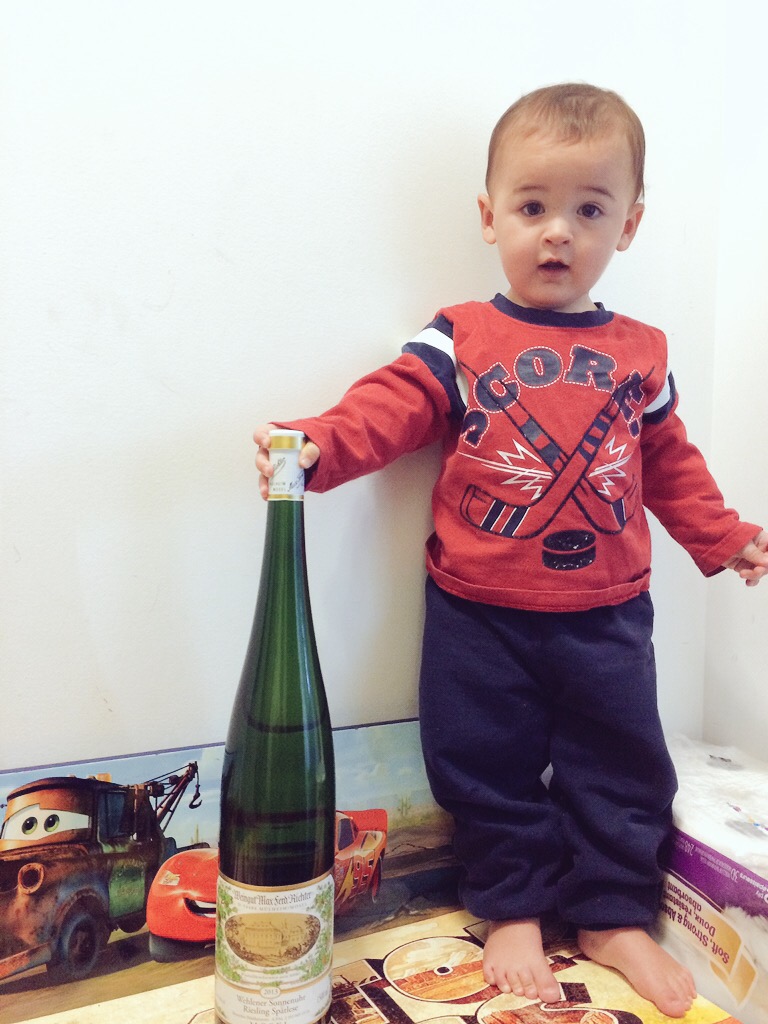
Well, after over four years of blogging and nearly 300 posts, it has happened:  I have been photographed going down a slide in a tot lot with a magnum of Riesling for a real life magazine.  Culinaire Magazine, a fantastic monthly publication focused on all parts of Calgary’s thriving food and beverage scene, has a monthly feature on the inside of its back cover called “Open That Bottle”, where a local personality is profiled and discusses a special bottle in their cellar that they’re saving for a specific occasion.  For the September 2015 issue, I was honoured to get the call and share the story of my favourite kind of wine, from my favourite vineyard, that I’m holding for one of my favourite people in the world:  my son Max.  See the story below:

If for some reason the media link above doesn’t work, the online version of the article can be found on the Culinaire website here.  Also in the September issue (it was a good issue!) was a joint article about drinking boldly and dodging the usual suspect grapes that I wrote with YYC Wine’s Adrian Bryksa, which you can read here:

Stuff like this doesn’t happen without people like you taking the time to find and read what I write on here, so I am eternally grateful to everyone who has supported this site.  Never did I think that this little passion project would turn up in a magazine; I can’t wait to see where it goes next.  Thank you!!

Max at 16 months, with his birth year mag, October 2014.

Max at 16 months, with his birth year magnum, October 2014.


Wine Review: 2013 Kung Fu Girl Riesling

24 02 2015
Third time's the charm?

Third time’s the charm?

This is the first review that I’ve written in a long time just because I want to – no tastings on which to report or samples to analyze, no obligations or deadlines, just me and a good bottle from the cellar.  If you know me at all, you would probably think that this would lead to a write-up about Riesling or about Washington State.  So…Washington State Riesling, anyone?

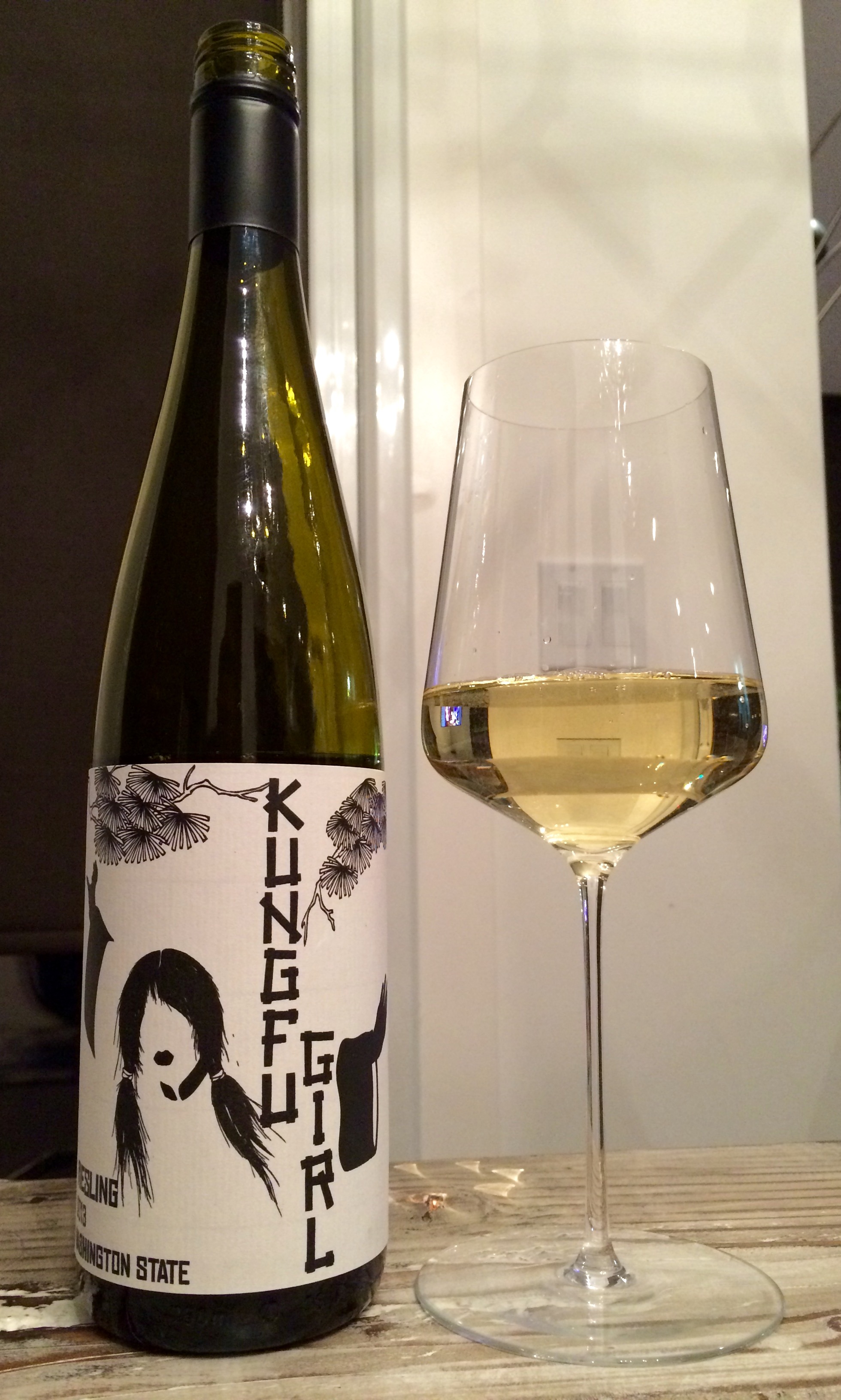
But not just any Washington State Riesling – THE Washington State Riesling.  This bottle is as close to a sure thing as you can find in the world of wine, especially the portion of that world that you can find at Costco or Superstore.  I have been buying (and gulping down) Kung Fu Girl Riesling for years and singing its praises for almost as long; it’s no coincidence that this wine now becomes the very first bottle to be reviewed on Pop & Pour in THREE different vintages, following the 2010 in April 2011 and the 2011 in July 2012.  Like its predecessors, the ’13 Kung Fu Girl is produced by Washington wine visionary (and Sammy Hagar lookalike) Charles Smith from one of Washington State’s northernmost vineyard sites, the Evergreen Vineyard.  This is one of North America’s top sites for Riesling, a large, cool climate and elevated vineyard in a zone that is in the process of becoming its very own brand new AVA, the Ancient Lakes region.  Unlike the desert that forms the bulk of Washington State’s wine scene, Evergreen and the Ancient Lakes are a perfect spot for growing crisp, balanced Riesling. Read the rest of this entry »


Calgary Wine Life: Greywacke Tasting with Kevin Judd

7 10 2014

Kevin Judd is a New Zealand visionary, a trailblazer who has left a permanent imprint on the nation’s young wine culture.  As the founding winemaker of Cloudy Bay, now the near-ubiquitous signpost for the sharp, tangy, herbal style of Sauvignon Blanc that is instantly recognizable in the glass, Judd pioneered a flavour profile for New Zealand’s signature grape that put the country on the world wine map.  He helmed the ship at Cloudy Bay for 25 years, taking it from an unknown producer in an anonymous wine nation to a whirlwind New World phenomenon, the crown jewel of a Sauvignon Blanc revolution that saw millions of bottles fly off the shelves.

IMG_2063

After Cloudy Bay was sold to luxury brand behemoth LVMH (whose wine portfolio includes such luminaries as Krug, Dom Perignon, Chateau d’Yquem and Cheval Blanc, upper-crusters all), Judd finally realized a lifelong dream of starting his own label and making wines in a manner that best suited his palate:  riper batches of fruit, slightly softer acid, yet retaining all of the structure and complexity that a cooler climate can provide.  He called the new venture Greywacke, a name he had quietly reserved 15 years earlier while waiting for his opportunity:  the word (pronounced “grey-wacky”) refers to the grey sandstone rocks that are commonly strewn across New Zealand’s vineyards.

Read the rest of this entry »


The Prospect Winery White Showdown

5 11 2012

[The bottles below were provided as samples for review purposes.]

The competitors.

Over the past few weeks I have become quite a fan of BC’s Ganton & Larsen Prospect Winery.  I have long retained a lingering suspicion about any bottle of inexpensive Canadian wine, fearing that elements both natural (shortened and uneven growing seasons/smaller ripening windows) and economic (high land costs in winegrowing areas/little access to cheap labour) would inevitably combine to make it impossible for a homegrown bottle to compete for my $15 Tuesday Night Bottle attention with those bastions of cheap and cheerful wine:  Australia, Argentina, California, Chile, Spain.  While I am increasingly convinced that we’re in the midst of a quality revolution in Canadian wine, I saw little hope that it would trickle down to the entry-level bottles in any winery’s lineup.  Then I got sent a six-pack sampler from the folks behind the Prospect Winery, an Okanagan producer with ownership ties to the more famous Mission Hill and a focus on the budget-conscious end of the retail shelf.  First a remarkably complex Shiraz and then a substantial Merlot captured my attention as each were downed with surprise and admiration and made the subject of solo reviews.  Left in the sampler box were four whites from Prospect’s 2011 vintage:  Pinot Grigio, Sauvignon Blanc, Riesling and Chardonnay.  Quicker than you could say “easy excuse for a tasting”, I knew what had to be done.  I rounded up my tasting panel from this summer’s Mission Hill Pinot Olympics and we went to work on a head-to-head-to-head-to-head showdown of Prospect Winery’s whites. Read the rest of this entry »


Wine Review: 2010 Mission Hill Martin’s Lane Riesling

6 08 2012

[This bottle was provided as a sample for review purposes.]

R is for Riesling.

Time to issue the first official correction in PnP history.  When I reviewed Mission Hill’s Reserve-level Riesling back in June, I stated that the Reserve (the 2nd lowest of 4 quality levels of MH wines) was Mission Hill’s top-level Riesling, and I openly pined for the winery to put together a high-end single-vineyard Riesling that would really showcase what my favourite grape could do in Okanagan soil.  I said that if MH ever decided to release such a wine, I would be lining up to try it.  Shortly after posting, I received an e-mail from a representative at the winery that said something like:  “Well, actually, we already DO have a Riesling exactly like that…”, and a week later, this bottle showed up at my door.  In my defence, this particular Riesling doesn’t show up in the official portfolio of wines on the MH website, but as a devoted Riesling disciple, I still feel bad about not being aware of it, and I feel particularly bad about suggesting that it didn’t exist in front of an online audience.

Sorry Mission Hill — time to set the record straight. Read the rest of this entry »