PnP – Now on FB!

6 06 2016

After a half decade of technological procrastination, Pop & Pour has finally properly joined the Internet age and now has its very own Facebook page – you can access it here for reviews and other content:

https://www.facebook.com/popandpour

It is still in early development but will be expanded further in the coming weeks.  In the meantime, if you are a fan of the blog, I would be thrilled if you would be willing to Like and Share the page in Facebook – it would be very much appreciated.  New reviews coming this week!

img_08461


FLX: Finger Lakes Extravaganza – Part VI

29 05 2016

Well, we made it.  When I started this trip recap I wasn’t thinking it would be a 15,000-word Greek epic, but that’s what happens when an area has so many stories to tell that so many people may not have heard.  To retrace your steps:

Finger Lakes Intro & Conclusions
Part I – Long Island, Hudson River, Dr. Frank
Part II – Keuka Spring, Chateau Lafayette Reneau
Part III – Red Newt, Knapp Winery
Part IV – Hermann J. Wiemer, Lamoreaux Landing
Part V – Boundary Breaks, Anthony Road

FullSizeRender-366

Our last winery visit was probably also our most anticlimactic, but only because it felt for many reasons like Fox Run Vineyards had been with us all along.  In many ways Fox Run was the catalyst for our whole trip, the Finger Lakes producer with the deepest and most established Alberta presence, to the point where its unoaked Doyle Vineyard Chardonnay was recently selected as the official on-venue house white of the 2016 Calgary Stampede.  A key piece of the winery had literally accompanied us on nearly every stop of our grand FLX winery bus tour:  Sales Manager Dan Mitchell had given us the scoop and filled in the blanks about the region and the wineries who hosted us, never once seeking to undermine any one of them in favour of his own employer, delivering honest yet community-minded feedback that gave us a better sense of what the Finger Lakes were all about than any tasting room.  Winemaker Peter Bell was almost a mythical figure, his impact and his protégées spread across the entire region, his reputation eagerly preceding him even though he is certainly not the kind of person who would revel in it. Read the rest of this entry »


FLX: Finger Lakes Extravaganza – Part V

28 05 2016

Roll call for the previous chapters in this saga:

Finger Lakes Intro & Conclusions
Part I – Long Island, Hudson River, Dr. Frank
Part II – Keuka Spring, Chateau Lafayette Reneau
Part III – Red Newt, Knapp Winery
Part IV – Hermann J. Wiemer, Lamoreaux Landing

FullSizeRender-357

Kees Stapel, Boundary Breaks Vineyard

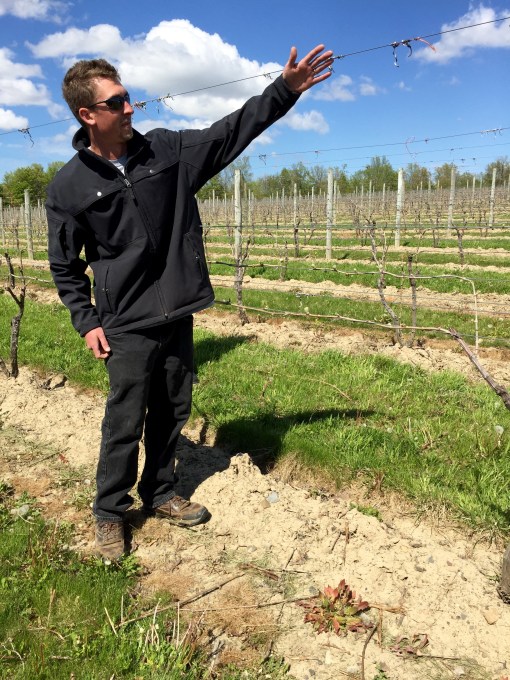
Ten wineries into our multi-day tasting tour of the Finger Lakes, we continued along the eastern shoreline of Seneca Lake for a different kind of meeting with a different kind of winery.  Rather than gather around a tasting room counter with a winemaker, we were told to head out to the vines at Boundary Breaks Vineyard for a grape-growing lesson with the winery’s conscientious viticulturist, Vineyard Manager Kees Stapel.  He is such an integral part of what Boundary Breaks is all about that he is the very first person listed and pictured in the list of personnel on the winery website; owner and president Bruce Murray doesn’t mention himself at all.  This unusual (but laudable) level of marketing focus on the vineyard team is partly because Boundary Breaks is a winery without a winemaker:  it was founded based on its vineyard, planted in 2008 to four different Riesling clones on an ideal sloped, breezy, sunny, west-facing site arcing gently downward to the lake.  It only makes Riesling and focuses its energies on only five different bottlings, which are presently vinified by Red Newt winemaker and FLX Riesling star Kelby James Russell. Read the rest of this entry »


FLX: Finger Lakes Extravaganza – Part IV

27 05 2016

To start from the start of this tale of adventure, click in order:

Finger Lakes Intro & Conclusions
Part I – Long Island, Hudson River, Dr. Frank
Part II – Keuka Spring, Chateau Lafayette Reneau
Part III – Red Newt, Knapp Winery

IMG_4441

The morning of Tasting Day 3 started at the home of another FLX pioneer.  If you had heard of two Finger Lakes wineries before this travelogue (travelblogue?), I would be willing to bet they were Dr. Konstantin Frank (which we visited in Part I) and Hermann J. Wiemer Vineyard, another winery started by a European immigrant to the FLX with a prescient belief in the potential of vinifera grapes in the region.  In this case, Hermann Wiemer came to New York State from Bernkastel, Germany, about as close to Riesling Mecca as you can get in the world, and he was convinced that both he and his national grape could be successful transplants in the region.  He planted his first Riesling vineyard, the eponymous HJW Vineyard, on the western shores of Seneca Lake in 1976 and established his winery right beside it in 1979.  Thirty-seven years later, there we were. Read the rest of this entry »


FLX: Finger Lakes Extravaganza – Part III

24 05 2016

In case you missed the prequels, click here:

Finger Lakes Intro & Conclusions
Part I – Long Island, Hudson River, Dr. Frank
Part II – Keuka Spring, Chateau Lafayette Reneau

We remained on eastern Seneca after the morning views of Chateau Lafayette Reneau, taking a quick jaunt north to one of the best-known new-era Finger Lakes wineries, Red Newt Cellars Winery & Bistro.  I first read about the growth of Red Newt’s legend around the same time it experienced its greatest tragedy, in 2011, when co-founder and executive chef Debra Whiting was killed in a car accident.  Her husband, Red Newt founding winemaker David Whiting, forged on, turning the winery into one of the few in the Finger Lakes with an international reputation.  He remains in charge as Red Newt’s president, but has recently turned the winemaking reins over to a cerebral, unassuming twentysomething who might already be one of the best Riesling winemakers in North America:  Kelby James Russell, a homecoming son now squarely on the global Riesling vanguard.

FullSizeRender-339

David Whiting and Kelby James Russell, Red Newt.

Russell was born and raised in and around the Finger Lakes area but found a good reason to leave:  Harvard.  He graduated with a major in Government (poli sci grads unite!) and a minor in Economics but then sought a job in orchestra management to soothe an ongoing passion for music.  A trip to Italy ignited a love of wine, however, and Russell returned home to work a harvest with Fox Run Vineyards in 2009.  After three years there and an equal number of off-season harvests in the Southern Hemisphere (Marlborough, Tasmania and Barossa), he moved to Red Newt to assume the head winemaker mantle at the venerable age of 25 and almost immediately started pushing the boundaries of New World Riesling. Read the rest of this entry »


FLX: Finger Lakes Extravaganza – Part II

23 05 2016

In case you missed the previous chapters of this tale, check out the Intro & Conclusions from my Finger Lakes trip here and Part I of the tasting journey here.

FullSizeRender-326

August Deimel, Keuka Spring Vineyards

After leaving the western shores of Keuka Lake and the bar-setting wines of Dr. Konstantin Frank, we did a loop around the lake and landed at our only other Keuka stop, the aptly named Keuka Spring Vineyards.  If Dr. Frank was a reverential nod to the Finger Lakes’ past, Keuka Spring was a thrilling glimpse at its future, primarily thanks to its young, supremely talented and boundary-pushing winemaker August Deimel.  We were fortunate enough to have him lead us through a tasting of both current releases in the front of the house and experimental tank samples in the back, throughout which the only sound other than August’s compelling narrative was that of paradigms shifting. Read the rest of this entry »


FLX: Finger Lakes Extravaganza – Part I

22 05 2016

If you’re a fan of stage-setting or want a little more background info about what the Finger Lakes are all about, start here with this intro post.  Otherwise read on for the first breakdown of what went down over our four days of visiting and tasting in FLX, NY.

FullSizeRender-321

We ironically spent our first actual tasting in the Finger Lakes trying New York State wines from anywhere but.  We disembarked at the beautiful New York Wine and Culinary Center in Canandaigua, on the northern shores of the lake of the same name, which featured a built-in tasting classroom, professional learning kitchen, bistro and wine shop. There we tasted and were educated about a variety of wines from two other major New York AVAs, the Hudson River region due north of NYC and the Long Island AVA on the eastern half of Long Island.  Two winery representatives made a long early-morning trek to guide us through their wares. Read the rest of this entry »


FLX: Finger Lakes Extravaganza – Intro & Conclusions

21 05 2016

I am freshly returned from a five-day trek out to the Finger Lakes wine region in central New York State, so named for the 11 long, thin, appendage-like bodies of water stretching north to south between Rochester on the left and Syracuse on the right.  I travelled with two importers, two retailers, three sommeliers, a restauranteur and a widely published local print journalist.  We ventured up and down both shores of three different lakes, visited 13 wineries, tasted over 150 different local wines (of which I hastily scribbled written notes for about 120) and dined or drank with half a dozen different winemakers.  And we all returned with newfound understanding, appreciation and excitement for a region that is set to explode into the world’s quality wine consciousness, if it hasn’t already.

IMG_4358

I didn’t first read about the Finger Lakes until about five years ago; I don’t remember seeing a bottle of FLX wine on a Calgary wine shelf until a couple years after that, and there was certainly no such thing as Finger Lakes selection in Alberta retail until last year.  Chances are that if you haven’t stumbled onto those few rare bottles in the market, the region is still largely a black box to you.  So even though my head is bursting with thoughts, impressions and memories aching to be shared, stories dying to be told, I’m going to pump the brakes a bit and start from the start.  Then, partly because I’m impatient and partly because it will set the stage for the more detail-oriented recaps to come, I’m going to jump ahead to the end and offer up a few conclusions about where the Finger Lakes are right now and where they might be headed. Read the rest of this entry »


NZSB Playoff Challenge

4 05 2016

[These bottles were provided as samples for review purposes.]

FullSizeRender-306

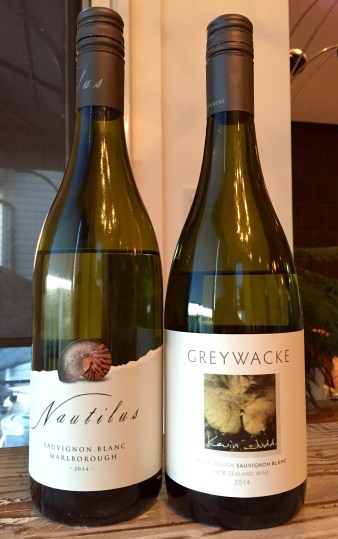
Two enter, one leaves. Well, actually zero leave; there were no leftovers.

I need very little reason to open and taste two bottles side by side, especially when their comparison can tell me even more about them and where they’re from.  Somebody decided that Friday, May 6th would be known as Sauv Blanc Day (or #SauvBlanc Day, to be more accurate, even though it makes no sense to put a space in a hashtag), although this is a fact not without controversy, as others seem to have settled on April 24th for International Sauvignon Blanc celebration.  We can all agree that some time within this two-week window would be a great opportunity to open some Sauv Blanc, and with the playoffs upon us in two of the four major professional sports leagues, my dining table was also primed for a showdown of some sort.  Enter the titans.

These two bottles are excellent references for each other, as both are from the same vintage (2014, a shorter growing season with a wet harvest), the same country (New Zealand), the same region (Marlborough, the kickstarter of the NZ wine industry and of global New Era Sauv Blanc) and the same grape (the aforementioned SB).  Flavour and textural differences thus largely stem from slight climatic and geographic alterations at the vineyard level and minor distinctions in winemaking choices by the producers, as well as whatever cosmic forces make good wines end up just so.  Going in, I have to admit I was leaning toward the 2014 Greywacke Sauvignon Blanc as the likely favourite; this winery, run by former Cloudy Bay winemaker Kevin Judd (who literally put New Zealand on the world wine map with a now-ubiquitous tropical/herbaceous style of Sauv Blanc), now turns out deeply personal, characterful expressions of the grape year after year.  They are no stranger to love from this blog.  But strange things can happen in the playoffs.  Onward. Read the rest of this entry »


Desert Hills Estate Six Pack

25 04 2016

[These bottles were provided as samples for review purposes.]

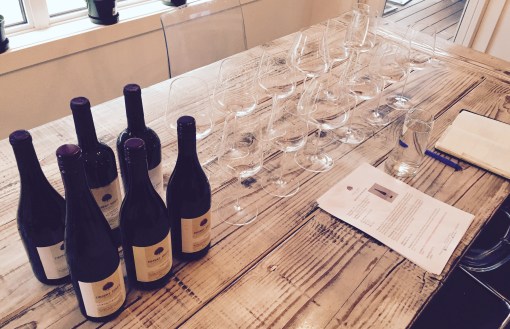
One of the things I love seeing most in Canadian wine nowadays is a renewed sense of focus on locating, separating and promoting quality subregions within an overall wine area, those special geological or climatic zones that yield wines with a distinct character and personality.  Anyone reading this in Europe right now may be incredulous at any such modern quest for discrete sub-terroir, as this process took place in many Old World growing regions up to a millennium ago.  We have a bit of catching up to do, and now we’re doing it.

FullSizeRender-298

This is critical for regions like British Columbia’s Okanagan Valley, which currently sees almost all wines coming out of it released under that general appellation name.  If you’ve ever stood in the breeze by the lake in Kelowna in August, and then stood in raging parched inferno of the Osoyoos desert two hours later, you’ll understand why “Okanagan Valley” doesn’t exactly capture any of the nuance of those two highly individual experiences.  Last year saw big news on the BC subregion front, as the Golden Mile Bench, a stretch of slope just west of the highway running from Oliver south to Osoyoos, became the province’s first ever recognized sub-geographical indication, meaning you’ll start seeing that name on bottles released this year in place of (or in addition to) the broader Okanagan designation.
FullSizeRender-296

If you walk east from the Golden Mile Bench and cross the highway, on the other side of the road you’ll find another slope, angled west, with extremely hot days and surprisingly cool nights, where vines grow on highly sandy soils that run hundreds of feet deep and require irrigation to retain hydration.  This is the Black Sage Bench, another obvious BC candidate for subregional distinction and home to some of Canada’s top wineries.  On the southern end of the Bench, nestled between Okanagan luminaries Black Hills and Burrowing Owl, is Desert Hills Estate Winery, a family-run producer founded by the three Toor brothers and focused largely on wines made from their aptly named estate vineyard, the Three Boys Vineyard, purchased in 1989.  The first released production from the vineyard was in 1996, and now, 20 years later, Desert Hills is solidly entrenched in the Okanagan wine world and making a renewed push into the Alberta market. Read the rest of this entry »


Meat (!) Review: Carnivore Club

16 04 2016

[The following meat was provided as a sample for review purposes.]

We are living in a golden age of things you can get delivered to your house in a box on a monthly basis.  Whatever your inclination, there is probably a monthly mail subscription service for it.  Wine?  Naturally.  Tea?  Of course.  Last year I was part of one offering a regular postal helping of socks.

Meat?

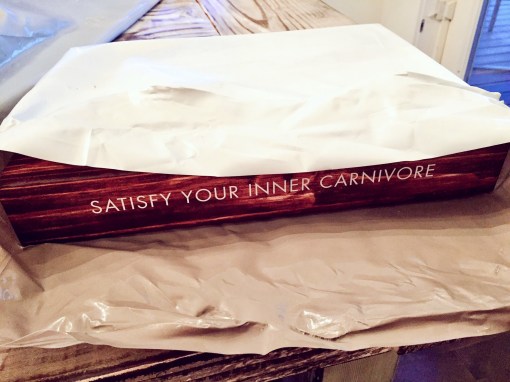
FullSizeRender-281

There is now.

FullSizeRender-282

I know what you’re thinking:  (1) YES!!  MEAT IN THE MAIL!!! …and then, a couple seconds later, (2) …um, meat in the mail?  Can they DO that?  When the meat in question is salt-cured and vacuum-sealed and perfectly capable of remaining consumable after a multi-day cross-country trek, they certainly can.  “They” in this case is Carnivore Club, a phenomenally named meat curation agency that sources an incredible array of farm-to-table meats from an ever-rotating rolodex of local suppliers and puts them on your doorstop in a faux-wooden box.  For $50/month (including shipping), you get about as much meat as your arteries can handle on a monthly basis (in this particular case, it was about 2 pounds’ worth), all made with love from top-end sources.  Dreams really do come true. Read the rest of this entry »


Wine Review: 2012 Jim Barry The McRae Wood Shiraz

5 04 2016

[This bottle was provided as a sample for review purposes.]

FullSizeRender-272

Serious, serious Shiraz.

I decided to have a good start to the week.  I usually hew to the age-old rule of opening nice stuff on weekends but sticking to the cheaper end of the cellar on Monday, but yesterday I said to hell with it:  forget convention, I’m opening something fun.  This led me to the upper echelon of my sample rack, and to one of the better Australian Shirazes I’ve ever had, Jim Barry’s The McRae Wood.  Excellent Monday decision.

Jim Barry’s wines are no stranger to this blog – I’ve reviewed his highly impressive entry-level Cab and Shiraz and his mind-blowing, Grange-challenging top-end Shiraz The Armagh.  This bottle is closer to the latter than the former, a reserve-level Shiraz clocking in at around $60 and often known as The Armagh’s little brother.  Jim Barry is based out of the Clare Valley in South Australia, an elevated and cooler-climate region due north of Adelaide and just northwest of Big Shiraz Mecca, the Barossa Valley.  Clare is best known as Riesling country and is about as stylistically different from the Barossa as you can get by travelling 100 km or so, producing leaner, less ripe and more elegant wines and rethinking what it means to be an Aussie Shiraz as a result.  The McRae Wood Shiraz is sourced from a special single vineyard in the Clare Valley, a 70-acre plot of land that Jim Barry purchased from his neighbour Duncan McRae Wood in 1964 to plant his very first Shiraz vineyard.  This eponymous bottling honouring the initial owner of the land was first released in 1992, making this the 20th anniversary vintage of The McRae Wood. Read the rest of this entry »


Wine Review: 2012 Torres Celeste Crianza

29 03 2016
FullSizeRender-268

Mysterious heavens. Mysterious brown bottle.

I must admit that the weekly sale flyer from my neighbourhood Solo Liquor store doesn’t usually flood me with inspiration,  but this past week, nestled in its pages amongst the Barefoots and the Yellow Tails, was an offer that made me make a special trip down the block.  The current edition (and 10th anniversary vintage) of Torres’ Celeste Crianza, a 100% Tempranillo bottling from the famed Ribera del Duero region in north-central Spain, was on sale for $17.99, down from its usual $26ish.  I now regret buying only one at that price.  It’s becoming harder and harder with the sordid state of the Canadian dollar to find a well-made go-to bottle of wine for under $20, but for one glorious long weekend, this one easily fit the bill.

Torres is as trustworthy a wine name as there is at this kind of price point.  I’ve had a wide range of their offerings over the past couple of years, some of which ($15 Chilean rose?) did not necessarily spike my expectations going in, but all of which delivered quality, character, consistency and obscene value, to the point where I now seek them out in junk mail flyers.  They are a Spanish family-based winery, but their headquarters are in the far east of the country, in Catalunya near Barcelona; Celeste is their first bottling from Ribera del Duero.  Made from grapes grown in the upper reaches of the region, at close to 900 metres of elevation where they are exposed to blisteringly hot days but remarkably chilly nights, the Celeste is able to offer up full fruit ripeness without coming across as loose or flabby.  The wine’s name and label emphasize the celestial, showcasing the heavenly bodies on display nightly above the elevated vineyard which keep watch over the crop. Read the rest of this entry »


Wine Review: Pewsey Vale’s Regal Rieslings

16 03 2016

[These bottles were provided as samples for review purposes.]

FullSizeRender-262

I believe, Eden Valley. I believe.

I’ve talked before about how valuable comparative tastings can be.  Want to understand what Malbec tastes like, or what makes California Cabernet different from the same grape grown in Bordeaux, or what oak aging does to Chardonnay?  Don’t buy one bottle and drink it in isolation; buy two or three, which belong to your target group or establish your desired contrast, and have them together.  In this case my research question was:  how does Australian Riesling age, and what happens to it when it does?  My sample set was about as perfect as you can get:  two Rieslings from a star region (Eden Valley), from the same producer (Riesling expert Pewsey Vale), even from the same VINEYARD, separated only by six years of bottle age and the winery’s Museum Reserve library release program.  The results were phenomenal.

The Pewsey Vale Vineyard in the cool and elevated (and thus strangely named) Eden Valley, located northeast of Adelaide and right beside and above the Shiraz mecca (and actual valley) Barossa Valley, is a specialized Riesling-only shrine, exactly what you would see in the textbook description of a great Riesling site:  cooler climate (brought on in this case by its 500m altitude), poor rocky soils, hilly landscape.  The vineyard is 169 years old and has the distinction of being the very first spot planted to grapes in the area; when it was first planted in 1847, those inaugural vines included a few plantings of Riesling.  After the vineyard fell into disuse and disrepair, subsequent owners recognized its potential and single-planted the whole vineyard to Riesling in the 1960s, using cuttings from those first 19th century Riesling vines to do so.  Today all of Pewsey Vale Vineyard’s plantings have been propagated from those original 1847 vines. Read the rest of this entry »


Whisky Review: Aberfeldy 16 Year

10 03 2016

[This bottle was provided as a sample for review purposes.]

If you’re John Dewar & Sons, whisky arm of the global Bacardi empire and well-known large blend label, and you’re sitting on five hitherto unheralded but longstanding Scotch whisky distilleries waiting their turn in the single malt spotlight, how do you introduce them into a crowded, conservative, brand-dominated marketplace?  How do you leverage their old-school authenticity and stores of matured stock in a spirit category largely controlled by blends and Glens?  You turn their relative anonymity into mystery and you pique curiosity, like this:

https://www.youtube.com/watch?v=cQ730rTxYJc

Tell me that isn’t marketing mastery.  I actually heard about this project before I was sent a bottle and wanted to give these whiskies a try on sheer force of good branding alone, which is not exactly a forte of the staid Scotch whisky scene.  Then when I got the chance to give these malts a try, the deal was that not one bottle but two would go out:  one addressed to me, from John Dewar & Sons, and one addressed to a person of my choice, from me.  Genius.  I was hugely pumped about this distillery I had never previously heard of before the bottles even landed.

FullSizeRender-251

Read the rest of this entry »