Bricks Wine Advent Calendar 2019: Day 24

24 12 2019

By Peter Vetsch

Another year, another Advent, another calendar complete, and another December blogging marathon brought to the finish line.  After 24 days and 24 different half-bottles, I am left partly eager to again regain access to my own cellar and my own agency in terms of nightly wine selections, but mostly impressed at the tremendous range and consistent quality of the 2019 Bricks Advent Calendar.  For my money, this third edition of Bricks’ December crate was by far the best to date, with no bottle (other than the one impacted by the Chateauneuf-du-Pape curse, a mystic force beyond mortal defences) a disappointment and all of them compellingly showcasing their varietal and region with admirable typicity, all for a price tag averaging a shade under $20 per split.  That’s not an easy feat, but it was accomplished with flair — mark me down for next year’s calendar already.

IMG_1137

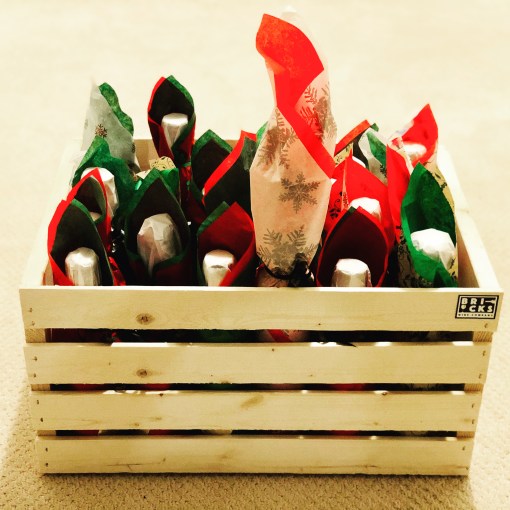
Our annual Pop & Pour Advent tradition is to wrap up our calendar coverage with each author’s Advent podium wines, as well as a dark horse candidate that particularly captured their attention.  In order to ensure neutrality and avoid cross-contamination of opinions, all three of us separately wrote down and submitted our lists; any overlaps (and there were many) are a testament to the wines involved and not a function of any groupthink.  If you had a Bricks calendar for 2019 and have been following along, let us know your top 3 wines in the comments below!  Without further ado, our list of winners:

Ray Lamontagne’s Top 3 Wines

  1. 2015 Ken Wright Cellars Freedom Hill Vineyard Pinot Noir (Day 23):  A  pure, seamless meld of power and complexity.
  2. 2016 Kettle Valley Winery Pinot Gris (Day 11):  The freshest side of orange wine.
  3. 2017 Robert Biale Vineyards “Royal Punishers” Petite Sirah (Day 14):  A purple behemoth that is not without subtleties.
  4. DARK HORSE — Porto Quevedo 10 Year Old Tawny Port (Day 8):  An old style from a small yet classic house.

IMG_1138

Tyler Derksen’s Top 3 Wines

  1. 2015 Ken Wright Cellars Freedom Hill Vineyard Pinot Noir (Day 23):  Bold yet structured, this wine delivered at every level.  Perhaps a bit predictable after last year’s Top 3 lists from Peter and Ray, but this bottle deserves the top spot.
  2. 2016 Kettle Valley Winery Pinot Gris (Day 11):  Easily the biggest surprise of the calendar for me.  Mild disappointment (I’m not a huge fan of Pinot Gris) turned a complete 180 when I brought the glass to my nose.  Wonderfully balanced, this exemplifies what orange wine can be when done right.
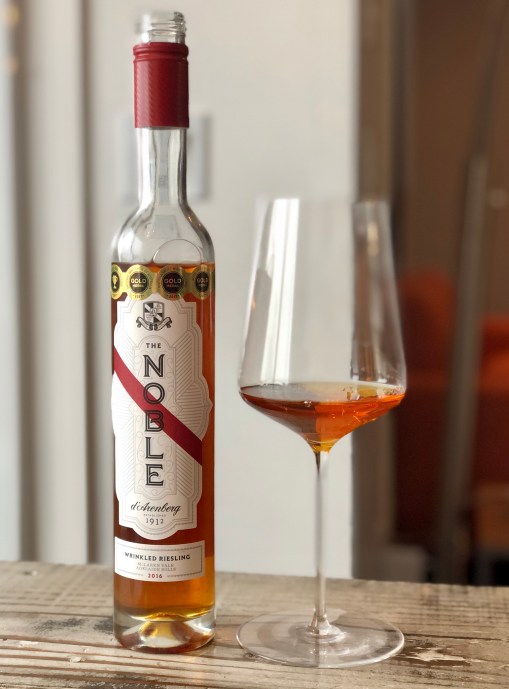
  3. 2016 d’Arenberg “The Noble” Wrinkled Riesling (Day 22):  This made my list for pure hedonistic pleasure.  It may not be perfectly balanced, but a flower-shop nose keeps this from being one-note.
  4. DARK HORSE — 2017 Robert Biale Vineyards “Royal Punishers” Petite Sirah (Day 14):  This was definitely in the running for the podium until the last few days.  Evilly dark, the myriad of notes on the nose and palate made this both delicious and interesting.
IMG_1141

My Top 3 Wines

  1. 2015 Ken Wright Cellars Freedom Hill Vineyard Pinot Noir (Day 23):  A Ken Wright back-to-back calendar sweep.  He takes no Advent prisoners.  The biggest point of intrigue this year was the remarkably stark difference between this dark, rocky Freedom Hill Pinot and last calendar’s bright, elegant Shea Vineyard Pinot, especially since each hail from the same 2015 vintage!  Terroir indeed.
  2. 2016 Kettle Valley Winery Pinot Gris (Day 11):  Probably my most memorable calendar wine, that perfect combination of orange wine’s bitter phenolics and white wine’s purity of fruit.
  3. 2017 Robert Biale Vineyards “Royal Punishers” Petite Sirah (Day 14):  A true statement of identity, and a clarion call of Petite Sirah’s suitability in California.  A deep, dense, gritty, lasting experience.
  4. DARK HORSE — 2016 K.H. Schenider Dornfelder Trocken (Day 2):  The World’s Best Dornfelder™ is an old friend whose acquaintance I made a while ago, but it never ceases to thrill and impress.  Each successive bottle is a reminder of the potential of this grape when grown in the right spots and handled the right way.

IMG_1140

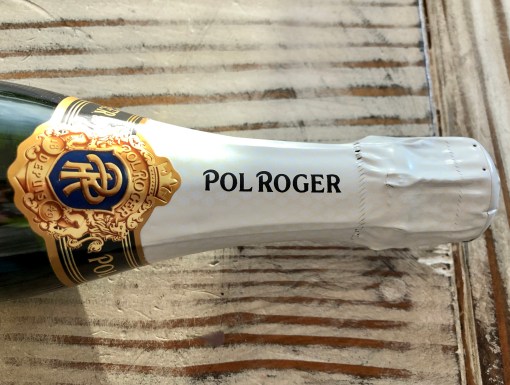
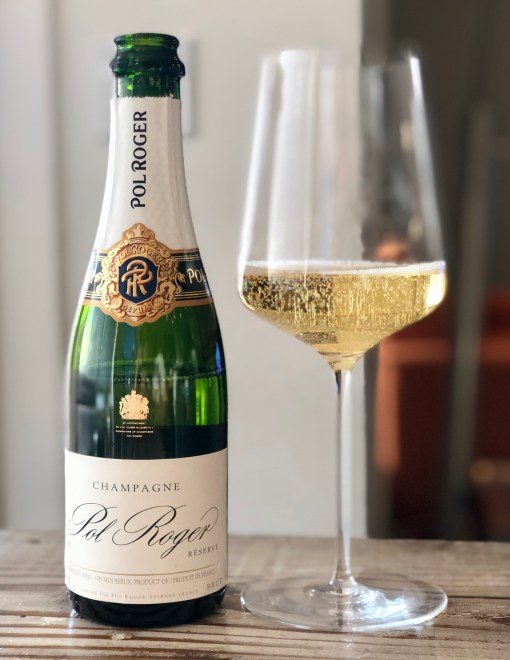
All I know is that I will be heading out and grabbing some Ken Wright (full bottle versions) during Boxing Week — no Advent calendar will ever be the same unless he’s involved.  As Advent reaches its zenith, consistent with Bricks tradition, we finish off the long and winding road of the calendar with both a toast to the journey of the past 24 days and a half-bottle of bubbles to allow us to make it.  Tonight’s wrapping paper slips off to reveal the Pol Roger Brut Reserve NV, probably the most compelling sparkler to grace a calendar to date, from one of my favourite Champagne houses.  I first tried Pol Roger in WSET class, where it was held up as an exemplar of what classic Champagne should resemble.  This Reserve version of Roger’s standard NV Brut bottling takes its status as comparison reference seriously:  it is a roughly equal blend of all three grapes of Champagne (Pinot Noir, Pinot Meunier and Chardonnay), with 25% of older reserve wines from Pol Roger’s cellars added to the base vintage (2013 or 2014, if I had to guess).  After blending, secondary fermentation and disgorgement takes place 33 metres below ground after regular hand-riddling and around 4 years maturation on lees.
IMG_1145

Our collective Christmas Eve present is a deep straw colour run through with millions of racy pinpoint bubbles that continue their ascent to the top of the glass even after over an hour’s worth of exposure to air.  The eager and festive nose combines vanilla bean, tapioca, butter croissant, lemon drop, black jujube, aloe and toasted almond, albeit in a more focused and chiselled way than the largely confectionary descriptors might suggest.  Rich and almost custardy on the tongue, the Brut Reserve is firmly structured on rails of electric acidity, the only thing restraining the expansive flavours of salted butter, charred lime, matchsticks, Golden Delicious apple, crystallized ginger and fresh caramel.  An extended persistent finish allows for plenty of reflection on where are now are and how far we have come.  A delightful toast to the season, to the upcoming joys of tomorrow morning, and to the sheer lazy pleasure of not having to blog for the rest of the month!  Merry Christmas, all.  Until next Advent.

90- points

IMG_1142

Cork Rating:  7.5/10 (I love the little “PR” logos ringing the metal cork cap. Classy and classic.)


Bricks Wine Advent Calendar 2019: Day 22

22 12 2019

By Peter Vetsch

Here’s a crazy stat:  this is my FIVE HUNDREDTH published post for Pop & Pour.  The blog itself passed this threshold some time ago thanks to the remarkable contributions of Ray and Tyler in recent years (as brilliantly evidenced by their kick-ass daily Advent coverage this month), but this is my personal milestone post.  It’s been close to nine years since I started this blog with limited direction or aspiration, as a vehicle for a passion I didn’t fully know how to express.  I don’t know what I was expecting out of it, but to still be dutifully doing it so many years later (and to have at minimum elevated myself to a self-professed connoisseur on boozy Advent calendars while I’m at it) probably already surpasses any initial blogging goals.  Thanks for reading along; if it wasn’t for you, this probably wouldn’t still be happening.

IMG_1118

Perhaps Bricks cosmically knew that this was going to be a more monumental night of blogging, or perhaps I subconsciously lined up my name on the Advent schedule to align with the one bottle in this year’s calendar that was definitively not like the others, but it became apparent almost immediately that this was not a standard half-bottle of wine.  First, it was taller than a standard-sized 750 mL bottle (!!), a good 3-4 inches taller than any other bottle in the Bricks crate.  Second, it was slender throughout, a thin lengthy cylinder without curves.  Before the wrapping even came off, only one style of half-bottle seemed to fit:  dessert wine.  But it wasn’t in a Germanic flute shape or a standard Bordeaux bottle, and I had my doubts that the calendar would culminate in ice wine, sooo…what’s left?

IMG_1123

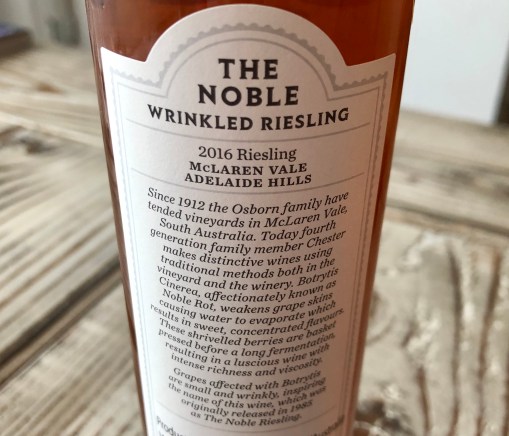
The 2016 d’Arenberg “The Noble” Wrinkled Riesling, that’s what; a continuation of Australia’s surprisingly rich tradition of sweet winemaking.  This particular bottling began by pure circumstance:  in 1985, one of d’Arenberg’s Riesling vineyards was discovered to have become infected with the beneficial mould botrytis cinerea, which grows on the surface of the grape berries and gradually leaches the water out of them, leaving them shrivelled, dehydrated, fuzzy and rather gross-looking but internally composed of ultra-sweet, ultra-concentrated, ultra-flavourful essence (all of the acids and sugars and flavours of the grape, without the extra water to dilute them) that when vinified creates the most majestic sweet wines known to man (for my money, anyway).  There’s nothing to be done when you discover botrytis but to (1) make wine out of the result and then (2) try to duplicate the conditions to have it show up again next year:  humidity, especially fog, in the morning, followed by sun and drier conditions later on, so that the cinerea fungus attaches to the grapes but does not accelerate into full-blown grey rot.  It is a difficult balancing exercise that results in precious little wine (imagine pressing and vinifying juice out of a raisin to understand why), but the reward is emphatically worth the risk and the effort.

IMG_1120

Size comparison: a standard 750 mL bottle (L) and this freakishly tall half-bottle (R).

After their initial accidental introduction to the world of botrytized winemaking, d’Arenberg has become something of an old hand at it, now producing three different nobly rotted dessert wines under their “The Noble” lineup.  This bottling used to simply be known as The Noble Riesling before later being revised to the Wrinkled Riesling to reflect the physique of the grapes after botrytis has had its way.  I would have loved to be in the marketing meeting where that decision was made.  Not that I have any doubt about d’Arenberg or its branding, all of which is specifically selected to tell a story.  The winery is named for the maiden name of founder Frank Osborn’s wife Helen, who died tragically immediately after childbirth at the age of 31; the child who was born healthy just before this event was Frank and Helen’s son Francis d’Arenberg Osborn, who everyone simply called d’Arry, partly in honour of his mother’s lineage.  It was d’Arry who give the winery its current name (in 1959, well after Frank started growing grapes in 1912, or making wine in 1928), as well as its distinctive red label stripe on a white background, representative of the crimson and white striped school tie that d’Arry wore in college.  The d’Arenberg coat of arms features that stripe, a symbol of fertility, a bunch of grapes, and the motto “Vinum Vita Est” — “Wine Is Life”.  Says it all.

IMG_1125

Stelvin Rating: 9/10 (The colour, the coat of arms, the motto – pure poetry.)
Every single one of d’Arenberg’s myriad of wines is fermented via traditional basket press, including this one, and all the reds are foot-trodden to this day.  The Wrinkled Riesling is a 50/50 blend of McLaren Vale and Adelaide Hills Riesling, hence the dual-appellation labelling that I’m not sure I’ve ever previously seen on any bottle.  The tech specs beggar belief:  a 2.98 pH and 10.8 g/L of Titratable Acid run smack dab into an astonishing 253.3 g/L of residual sugar at 9.5% ABV — this was surely the alcohol level where the fermenting yeasts simply gave up and died in such a densely sweet environment.  This is unbelievably viscous emerging from the bottle, like motor oil, and eventually settles in the glass a majestic steeped-tea-meets-maple-syrup deep amber colour.  Then the fireworks begin.

IMG_1126

An explosion of florals is the first sensation I record — Easter lily, daisy, marigold, daffodil.  Then comes the cavalcade of dessert aromas, in rapid-fire fashion:  key lime pie, Fuzzy Peaches, manuka honey, marmalade.  This intoxicating mixture is cut only by that telltale orange peel, lemongrass, apple cider vinegar citric/herbal tang that botrytis cinerea leaves behind at the scene of the crime, the calling card of its dehydration caper.  After I resign myself to the fact that I can’t possibly drink this all in one sitting, I settle into its exquisite, eye-opening sweetness and its sensual lusciousness, sliding in slow motion down the throat and coating every square inch with layers of lemon curd, salted caramel, rosehips, dried mango, apricot and pineapple upside-down cake, still pulsating for at least a minute after I swallow.  The recorded acid is elevated, but it is barely present in the field, not quite able to maintain a sense of liveliness in the face of the torrent of glorious sugar.  This leads to a slight yet growing sense of heaviness as the wine warms up and the sips multiply, so enjoy in moderation…but that can be the hardest thing to do when what’s in the glass is this unspeakably delicious.  Two days left and we’re headed to a crescendo.

90- points


Bricks Wine Advent Calendar 2019: Day 19

19 12 2019

By Peter Vetsch

Some New World sites are unlike anything that came before them, with no obvious comparator from the Old World to help tell their story; Australia’s Barossa Valley and Washington’s Rocks District of Milton-Freewater are good examples of places that, to me at least, don’t taste like anything except themselves.  Other non-European regions have a clear cross-reference to a classic vinifera haunt, a reasonable facsimile in the Old World that allows for an easy introduction.  Think the Willamette Valley and Burgundy.  Australia’s Margaret River falls in the latter camp, and has the benefit of two different European doppelgängers:  its Cabernet-based reds are routinely compared to those of Bordeaux, but its other specialty, Chardonnay, is very Burgundian in essence, combining acid and texture and a regal sort of presence in a way that makes you understand why this recently maligned grape remains at or near the pinnacle of white wine expressions.  I have a massive soft spot for the wines of Margaret River, so it was with great delight that Day 19 was revealed to have come all the way from Down Under.

IMG_1104

Voyager Estate was one of the first wineries to be established in Margaret River, located south of Perth in the southwest corner of Australia.  Its first vineyards were planted in 1978, a decade or so after the inaugural winery in the region saw its start.  Voyager now has five different estate vineyards spanning roughly 110 hectares, all located in a privileged position:  in the Stevens Valley, a spit of land that protrudes directly out into the Indian Ocean, to the point where its vineyards are surrounded by water on three sides, in the so-called “Golden Triangle” of Chardonnay, according to James Halliday.  Voyager is one point of the triangle; its neighbours Leeuwin Estate (along with Vasse Felix’s Heytesbury, the makers of the finest Margaret River Chard I’ve had to date, courtesy of its Artist Series) and Cape Mentelle form the other two.  The vineyards in this area have the benefit of taking root in the oldest soils in the country, gravel-based lands dating back thousands of millions of years (!!), and being kept cool by continuous swirling breezes that help prevent rot and allow for longer hang time.
IMG_1108

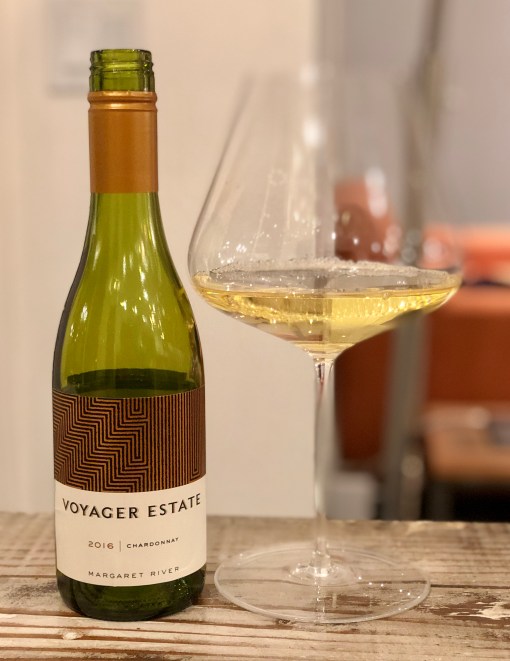
The team at Voyager is meticulous to near-OCD levels in the vineyard, striving for absolute uniformity in each block of vines:  careful pruning aims for the exact same number of buds, shoots and bunches per vine to ensure even and contemporaneous ripeness.  The winery is serious about its non-interventionist approach and its goal to express the purity of its soils, which plays out across all steps of the planting, picking and winemaking process:  the vineyards are organic (or in the process of converting thereto), all fruit is from estate plantings, all grapes are hand-harvested, all fermentation is with natural yeasts, and the winery has recently become carbon neutral.  Tonight’s offering, the 2016 Voyager Estate Chardonnay, spent just under a year in tight-grained French oak barrels with only partial malolactic fermentation in an effort to hit that intoxicating combination of texture and acid that only this grape can do justice.

IMG_1109

Stelvin Rating:  6/10 (This screwcap is weirdly difficult to photograph in focus, but it’s a Stelvin + in my book.  I should really fix that dent in the table.)

Everything starts out in highly promising fashion:  the wine is a brilliant gleaming lemon-gold colour as it hits the glass and starts beaming aromas before my nose is even halfway there.  It is a Burgundian dream aromatically, toasty chestnuts (open fire included), coconut crisps, pecan pie and popcorn kernels joyously interweaving with lemon curd, fresh pear and apple crisp fruit.  There was some consensus amongst our Advent blogging group that this might be pretty close to the nose of the calendar so far.  Then a few seams start showing.  The acid is vicious but almost hyperactive, like a tiny lapdog constantly nipping at your ankles.  The broad, full texture seems like a disparate entity, hitting just a touch out of rhythm, almost like you’re drinking two wines at once.  It’s a vertigo-inducing feeling, like a bassist that’s half a beat behind the rest of the band.  Smoke, custard, bananas Foster, lemon meringue and toffee notes play an enticing song, but I’m too stuck wondering why the tempo isn’t in sync to be able to fully sink into it.  I know this is a winery of impeccable credentials, and I can tell this Chardonnay has all of the elements of a winner, but despite being delicious it currently comes across a little bit scattered.  By this point in the calendar, I feel the same way.

88- points


Bricks Wine Advent Calendar 2019: Day 17

17 12 2019

By Peter Vetsch

Ladies and gentlemen, there is a week left in Advent.  As our December wine journey starts wending its way to the finish line, Tyler yesterday rightly complimented the calendar on its diversity and variety to date, commenting on how every day has been a fresh and exciting adventure to a different place, grape or style.  Perhaps that triggered the jinx, or perhaps we fell into a trap set by the 7s, but tonight’s Day 17 reveals a strikingly familiar face, one just seen back on Day 7:  Clarence Dillon’s Clarendelle.  Whereas our first week of Advent ended with the Clarendelle red, our last week of the calendar starts with the 2018 Clarendelle Bordeaux Blanc.

IMG_1094

Tyler covered the history of Clarendelle in detail in Day 7’s entry, noting that it was a recent effort of Clarence Dillon Wines to create a brand-based and price-conscious Bordeaux wine “inspired by Haut-Brion”, another winery forming part of the Dillon empire, with some help from the Haut-Brion winemaking team.  I’m not sure I fully buy this motto, which is notably plastered on this half-bottle’s front label; “inspired by Haut-Brion” is largely code for “I also own Haut-Brion and can say this without being sued”.  That said, if I owned Haut-Brion I would probably put its name on everything else I owned too.  The man who purchased the great First Growth in 1935 has a few impressive buys on his resume:  a legendary financier, Dillon pulled the Goodyear company out of receivership, and then later bought Dodge, and then Chrysler, all within the span of six years and all before dropping 2,300,000 francs on Haut-Brion.  He was basically the Monopoly man.  His son, also named Clarence Dillon, was the US Secretary of the Treasury and the Ambassador to France.  And the prince of Luxembourg is in the family tree somewhere.  You get the idea.

IMG_1097

White wines used to make up half of Bordeaux’s production not even 60 years ago; now they are less than 10%, as a combination of soil-based vineyard replanting and shifting consumer tastes have seen the region focus more and more on Cab- and Merlot-based red blends.  Most of Bordeaux’s whites are blends of Sauvignon Blanc and Semillon, with a smattering of Muscadelle here and there (I initially thought these three were the only permitted white grapes of Bordeaux, only to be roundly corrected by the following Rolodex of allowable white varietals:  Sauvignon Gris, Ugni Blanc, Colombard, Merlot Blanc (??), Ondenc and Mauzac [at least possibly made-up], Albarino, Petit Manseng and Liliorila).  There are less than 1,000 hectares of Muscadelle planted in all of Bordeaux, the bulk of which is used as a floral-accented blending component to sweet wines like Sauternes. It is a delicate, fragile and discreet grape, not known for prominence either in any part of its flavour profile or in any notable white Bordeaux blends.  Its name notwithstanding, it is not related at all to the Muscat grape family, instead arriving on the scene as a crossing between an unknown vinifera parent and Gouais Blanc, a grape that’s utterly un-noteworthy on its own but has some remarkable procreation skills, acting as parent for a large swath of vinifera grapes (like Chardonnay) that we currently know and love.

IMG_1099

I mention all of this because my first thought when I saw the blend composition on this bottle, uttered out loud in spite of myself, was:  “That is a sh*t ton of Muscadelle.”  The Clarendelle website helpfully advises that they sometimes add “a touch of Muscadelle in certain vintages” of their Bordeaux Blanc; the 2018 vintage is 42% Semillon, 30% Sauvignon Blanc and 28% Muscadelle.  I have never seen that much Muscadelle in a single wine ever (although there is apparently a 100% Muscadelle Bordeaux Blanc out there, which I now must track down).  The combo of Muscadelle and Semillon means that 70% of this white is made up of restrained, reticent varietals — can the Sauvignon Blanc minority pump up the volume and bring out the extrovert in this wine?  (Spoiler: no.)

IMG_1098

Cork Rating:  5.5/10 (Elegant font and graphics, although the composites aren’t my favourites.)

The 2018 Clarendelle is a pale but vibrant lemon colour and emerges elegantly if cautiously in the glass.  Its strikingly alpine, floral nose conjures up crystal clear images of that mountaintop field of flowers in every Sound of Music poster or Ricola commercial, honey-lemon Halls meets honeysuckle meets liquid nitrogen, with hints of crystallized pineapple lurking around the edges.  This delicate Swiss chorus is joined on the palate by white grape (maybe Muscadelle is like Muscat in actually bringing out grape flavours), pear, tonic water, lime popsicle, rock dust and white tea flavours, laced with a touch of Semillon’s lanolin, the acid quietly tremulous as if unsure where to cut in.  The overall combination is pleasantly neutral, if sort of self-effacing as a result, the wine not really flashing its personality until a finish that lasts way longer than you might expect.  Haut-Brion it is not (percentage of Muscadelle in the 2018 Haut-Brion Blanc:  0%), but as far as introductory signposts to Bordeaux blanc go, it strikes the right chords, if in a slightly tentative manner.

87+ points


Bricks Wine Advent Calendar 2019: Day 12

12 12 2019

By Peter Vetsch

Halfway!!  As I picked up bottle #12 of the Bricks half-bottle lineup and noted that my yearly Advent crate was starting to look considerably more spacious than it once did, the thought briefly flickered that I should celebrate getting this far.  And as soon as I held the bottle in my hand, I knew that the calendar was giving me my wish.  It was heavier, heftier, thicker, the top oddly bulbous beneath the wrapping paper.  Bubbles.  Again.  I started off this year’s Advent adventure with some excellent Ontario fizz, and I’m scheduled to be on deck for December 24th, when the Bricks calendar has finished off for the past two years with more sparkling wine, so I am apparently the 2019 bubbles guy.  I do Advent bubbles like Ray does Advent Austria.  Bring it.

IMG_1082

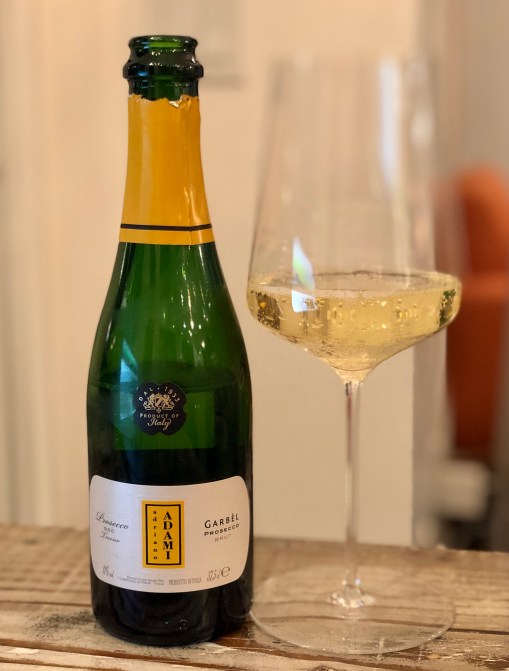
The halfway point celebration wine is perhaps slightly more ubiquitous and within-the-lines than the starting line Tawse Spark, featuring the sparkling wine that now seems globally inescapable:  Prosecco.  Hailing from a rather vast area encompassing both the Veneto and Friuli regions in northeast Italy, and made from the Glera grape (which used to be confusingly called “Prosecco” as well, because Italians responsible for wine designations love confusing people), Prosecco has recently exploded in popularity, in part because it’s tremendously inexpensive as compared to Champagne, in part because its cheaper and volume-friendly pressurized tank secondary fermentation process (the Charmat process) results in no yeasty autolytic flavour characteristics that can be challenging for casual drinkers, and in part because the trade body there knows a thing or two about marketing.  The wines are almost uniformly pleasant, crisp and inoffensive, although higher quality offerings exist:  within the broader Prosecco DOC there are four much smaller area-focused DOCGs, the most well-known of which is Prosecco Conegliano Valdobbiadene Superiore DOCG.  Tonight’s bottle, the Adriano Adami “Garbel” Prosecco Brut, comes from a middle-ground subregion, Prosecco Treviso DOC, located in the heart of the region and just beneath all of the DOCGs.

IMG_1084

When I say “beneath”, I mean both “south of” and “below”, as the DOCG vineyards tend to be on steep green hillsides, with Treviso a bit lower in the foothills.  The Adami family was one of the pioneering growers in Valdobbiadene, but third-generation owners and brothers Armando and Franco Adami have expanded the winery’s foothold and boosted their production to 750,000 bottles annually, about 25% of which is from estate vineyards and the rest from trusted growers.  The Adamis have recognized the quasi-flatland Treviso roots of this particular bottling by having the label stretch similarly flat and horizontal, “to indicate the origin of the grapes from vineyards on the plain”; all of Adami’s other labels are oriented vertically (portrait as opposed to landscape), but this one stretches out to the horizon.  The name “Garbel” is a word from the local dialect for a dry, light, crisp, fresh drink, their goal and approach for this style of wine.

IMG_1085

The Garbel first undergoes temperature-controlled fermentation in stainless steel and then surprisingly gets 3 months of lees contact in tank before being shuttled off to a second and much larger pressurized steel tank for secondary fermentation, whose date (the “Presa di spuma”) is noted on every bottle (in this case, April 2018).  At 13 g/L of residual sugar and 3.2 pH, it is as primed to party as any good Riesling, straining at the very edge of its “Brut” designation.  The wine’s pale lemon colour is accompanied by a cascade of larger, foamier bubbles and clipped aromas of lime zest, green apple, white flowers, cardboard and wildflower honey.  Piquant acidity is turbo-boosted by flailing bubbles, tiny pinprick daggers across the tongue, energetically propelling straight-line Asian pear, honeydew and starfruit flavours laced with a slight bruised-apple mealiness but stopping somewhat abruptly on a finish that reminds me most of pennies in a mall fountain.  2019 Advent has yet to provide a sub-par offering, although this one feels more like a supporting player than a star.

87- points

IMG_1086

Cork Rating:  7/10 (Love the “a d r i a n o  A D A M I” encircling the cork as a mirror of the logo, complete with rectangle border. You never see bubble corks get fancy.)


Bricks Wine Advent Calendar 2019: Day 11

11 12 2019

By Peter Vetsch

It’s been six days since I have made an Advent wine post, which is almost assuredly the longest Advent blogging break I’ve had in half a decade.  (We won’t talk about the separate full wine review that I published in the meantime, as I prefer to bask in my pretend meandering pace of blogging life.)  Ray and Tyler have done yeoman’s work in the meantime on an array of bottles from the great classic regions and grapes of the world:  Cali Cab and Chardonnay, Bordeaux, Rioja, Port.  This year’s Bricks calendar has done an excellent job canvassing pinpoint takes on the top appellations of wine’s illustrious history.  Surely my return to the fray will yield a similar textbook treasure.

IMG_1076

Um.

Just when the calendar is expected to keep zigging, it zags, and right into an area and grape that I have never found overly compelling in combination.  I don’t pretend to own an encyclopedic knowledge of British Columbia Pinot Gris, but in my experience with it, it has always struck me as a sort of afterthought grape in the province, the kind that you can fairly easily wring some nondescript quasi-tropical tutti fruitti flavour out of and sell for $18 in the tasting room to maintain cash flow year over year.  The great Pinot Gris wines of Alsace, southern Germany (Grauburgunder 4ever!) or even Oregon can be thrillingly rich and savoury and complex, but there is not a ton of striving for greatness with this particular varietal in my home and native land, with the primary focus of the local industry on other, more intriguing vinous options.  So I readied myself for a limpid and forgettable white patio blast, and then…

IMG_1077

Um.

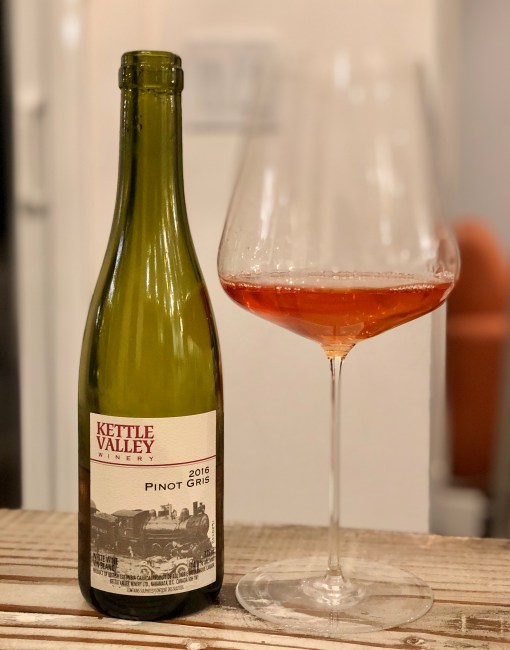
You may think that this is a rosé.  It certainly looks like one.  But the “White Wine” identifier on the bottle label and the 100% Pinot Gris composition of the wine make this impossible; rosé wines must hail from red (or partly red) grapes.  This is an orange wine, a white wine made like a red, where the juice from the crushed grapes is allowed to sit in contact with the skins before or during fermentation and pull out colour, flavour and tannin.  This increasingly popular (or re-popularized, since orange wines date back almost to the start of winemaking history) style of white usually results in wines that are golden or slightly amber in colour, not the brilliant rose gold/bronzed salmon blaze of glory seen in the glass here, because most white wine skins don’t have a ton of pigment to them.  Not so Pinot Gris, whose very name (“grey”) is a nod to the surprising darkness of the grapes’ skins:

37010425430_df9f8751e9_b

Pinot Gris.  Photo Credit: Rod Heywood. (https://www.flickr.com/photos/15511924@N03/37010425430)

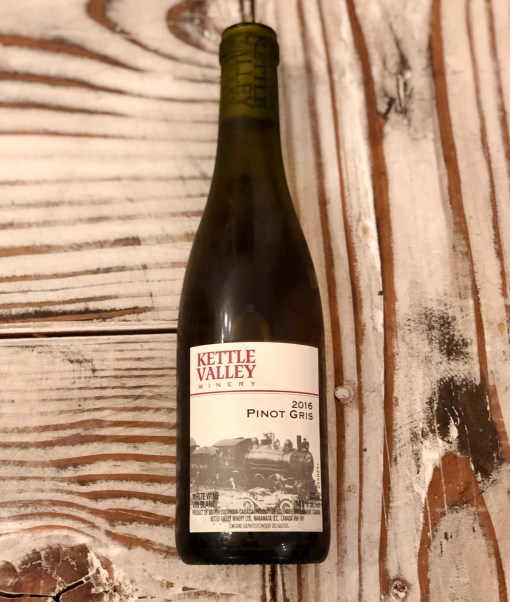
This depth of colour allows for all sorts of interesting orange wine possibilities, including the one brought to us by a Naramata Bench pioneer tonight:  the 2016 Kettle Valley Winery Pinot Gris.  Kettle Valley’s owner/winemakers Tim Watts and Bob Ferguson started out as home winemaking hobbyists before they decided to put an academic background in geology to use and plant their own vineyard.  They were one of the first to plant in Naramata in 1987, and shortly afterward became the third ever licensed winery in the region.  Nearly thirty vintages later, they might be one of the quietest under-the-radar names on the Bench, making a vast assortment of wines, from Merlot/Pinot blends to Zinfandel to solera-style reds; however, they focus equally on the classics, particularly their North Stars, Pinot Noir and Chardonnay.  Orange Pinot Gris slides right into the menagerie.

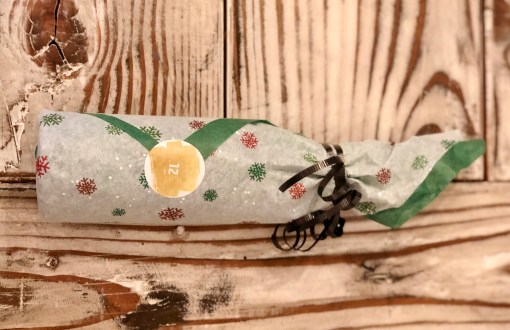
IMG_1075

The first thing I noticed about this wine was its general “Product of British Columbia” designation in lieu of an appellation name.  This is because the grapes for this Pinot Gris come from multiple different vineyards across more than one recognized wine appellation:  grapes from Okanagan Valley subregions Summerland, Naramata, Okanagan Falls, Penticton and Oliver have variously been employed in the blend over the years, but also grapes from a couple different spots in the neighbouring Similkameen Valley, with the resulting cross-regional mix therefore required to take on the broader provincial designation.  The second thing I noticed was the hefty 14% ABV, the product of these Pinot Gris grapes being harvested into November after a lengthy ripening period and a ton of hang time.  The grapes were crushed and then left to soak for 2-3 days on Pinot Gris’ hyper-pigmented skins before a fermentation that took place partly in barrel and partly in steel tanks.

IMG_1078

Cork Rating:  2/10 (I hereby ban the inclusion of any phone numbers or websites on corks.  Will that work?  Put a train on here or something, guys.)

This is a back-vintage version of the Kettle Valley Pinot Gris, as they have recently released the 2018 version to market, but the bit of extra time in bottle has not slowed this  racy deep pink and copper powerhouse one bit.  The amount of skin contact was expertly timed so as to provide additional complexity and structure without the corresponding bitterness or oxidation that can leach the freshness out of some orange wines (often on purpose).  Piercing aromas of kids multivitamin, freeze-dried watermelon, orange Life Savers and sweet pea are startling in their purity, accented but not hindered by more eclectic notes of salt and vinegar chips and parchment.  This is shockingly vivid, the acid buoyant, the dainty but subtly scrubby tannin providing a three-dimensional tasting experience; tangerine, apricot, public pool and lemon-lime Gatorade (or more accurately its equivalent Gatorgum, if that still exists) strut across the tongue and remain anchored there long after you swallow, demanding that you check your premises and not prematurely abandon hope in any given grape’s potential in a region.  You can keep your Bordeaux and your Riojas — this is currently the wine of the calendar for me.

90+ points


Cellar Direct Winter Wines: Lo Sang del Pais

7 12 2019

By Peter Vetsch

[This bottle was provided as a sample for review purposes.]

It’s been a little over a year since we featured a wine from Cellar Direct on PnP, and in the meantime the first pan-Canadian artisanal wine club has been busy behind the scenes, preparing its next suite of offers and tweaking its approach in order to maximize buying efficiency and aim for the best of both worlds in the online wine purchasing sphere:  time-limited features and repeat buying capability.  Once a week, on Saturday, Cellar Direct will release a new offer on its website and to its mailing list.  Offered bottles are available in multiples of 3 and can be shipped across Canada, with any such transport taking place in temperature-controlled trucks to avoid any damage to the wines in transit due to extreme heat or cold.  Full case purchases of a single wine attract discounts off the standard offer price and the most effective shipping rates, but buyers can also accumulate 3-packs or 6-packs of different wines and have them shipped together.  Once an offer week comes to an end, any remaining bottles left over from the offer can still be purchased from the online shop at Cellar Direct’s website, so if a particular order bowls you over, there may be a chance to get more.  Did I mention they ship across Canada?  Readers in government liquor monopoly provinces, take note — this is your chance at freedom.

IMG_1008

The first of Cellar Direct’s new offers dropped today, and to mark the occasion we are bringing you a contemporaneous review of the bottle now available for online purchase everywhere in the country.  We will be doing the same thing over the next five Saturdays (yes, even through Wine Advent, because we’re crazy), so feel free to check out our notes on the weekly wine to assist in your buying decisions.  The inaugural Cellar Direct release of this new offer season is one that rang a few distant bells, but it took some digging through the Pop & Pour archives to find out why. Read the rest of this entry »


Bricks Wine Advent Calendar 2019: Day 5

5 12 2019

By Peter Vetsch

I think it’s safe to say that we’ve migrated into our “classics” phase of the 2019 Half-Bottle Wine Advent calendar.  After Canadian bubbles, German red crossings and New York cans, yesterday’s Chianti Classico signalled a bit of a vibe shift, and tonight’s offering got the message loud and clear and has continued the trend.  You don’t get more throwback textbook Old World than Sancerre, a region that has stood the test of time but also run the fairweather gamut of popular opinion over the past few decades.  If this was the 1982 Half-Bottle Advent Calendar, it might be entirely composed of Sancerre; fifteen years before or after might have seen Sancerre wholly excommunicated.  Now it’s making a cautious return, seeking to reclaim (or maybe just re-assert) its status as the spiritual home of Sauvignon Blanc.

IMG_1055

Sancerre is one of the most easterly sub-regions of the long, thin, west-to-east Loire Valley, which ultimately connects to the Atlantic Ocean but extends all the way to the dead centre of France on its other end.  Monks first planted vines in Sancerre in the 11th or 12th centuries, and subsequent swaths of royalty ensured that its sought-after wines were always available in their courts.  While currently most known as a (if not THE) key French site for Sauvignon Blanc, which now makes up 80% of all plantings in the region, it was previously home to considerably more Pinot Noir and Gamay, the latter of which was ravaged by a phylloxera outbreak in the 19th century and was replanted with Sauvignon.  Pinot retains 20% of the acreage in Sancerre, but this is now firmly a white wine region, and tonight’s bottle has its name all over it.

IMG_1059

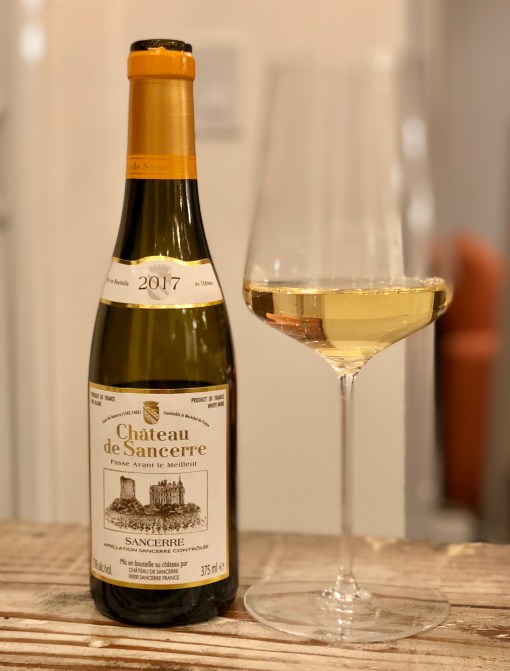
I don’t know whether to call this the 2017 Chateau de Sancerre or the 2017 Chateau de Sancerre Sancerre.  It seems completely ridiculous to use the name twice, but I’ve never come across a producer whose name was the name of its region before.  (Chateau de Bordeaux and Domaine de Bourgogne, you missed your chance.)  The Chateau appears quite aware of its unique nomenclature, boasting in almost all of the available online literature, not to mention the back label of this bottle, that it is the “only wine which can be marketed under this exclusive name”.  Well…no kidding?  Isn’t that the case for EVERY SINGLE WINERY on Earth?  You don’t get a lot of non-Beringer wines marketed under the “exclusive name” of Beringer, thanks to the rather handy world of intellectual property law.  But whatever.  The Chateau de Sancerre is actually a Chateau, a castle (re)built in 1879 in the heart of the vineyards of the region, which was purchased in 1919 by Louis Alexandre Marnier-Lapostolle and is still owned by the Marnier-Lapostolle company a century later.  Its name is more familiar than you might think, as Louis Alexandre was also the inventor of Grand Marnier (speaking of exclusive names).

IMG_1060

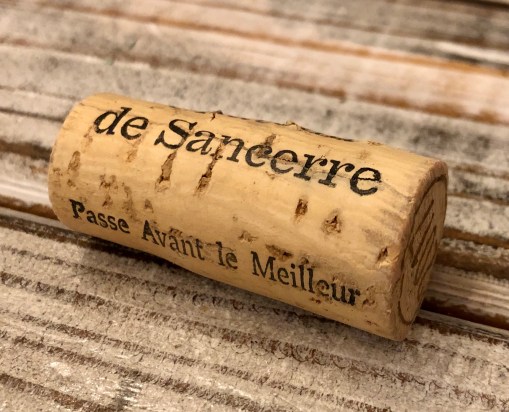
Cork Rating:  6.5/10 (Pretty boring cork, but I love the swag associated with the tagline “Pass before the best.”  Badass.)

This particular bottling is 100% Sauvignon Blanc, as one might expect, and emerges a deeper lemon colour than I had anticipated given its utter lack of oak contact.  Meyer lemon, salted lime (inching towards margarita), Fuzzy Peaches, Tums, rock dust and straw/dried grass sing a stately yet playful aromatic song…until you sip and the hammer comes down.  The Sancerre Sancerre is bright and instantly alive on the palate but extraordinarily tart, like Sprite if you removed all of the sugar.  Tonic water, (very) green apple, citrus peel, flint and a torrent of biting, punishing acid lead into a chalky, icy, mineral finish that oddly dries out the mouth as it scrubs it clean.  An emphatic and almost angry wine, vociferously expressing its turf in defiance.  Sorry for the IP jokes?

88- points


Bricks Wine Advent Calendar 2019: Day 3

3 12 2019

By Peter Vetsch

Three days into this year’s half-bottle extravaganza and we haven’t seen a standard-shaped Bordeaux or Burgundy bottle yet.  First off was the reinforced bubbles bottle, followed by the Germanic flute (which trickily held a red), and tonight it became immediately clear that the streak was going to continue.  Can we roll with the punches?  Yes we can.

IMG_1047

This is also the third straight day that I’ve peeled off the tissue paper to find a familiar friendly face:  Day 1’s Tawse has been my go-to Ontario stalwart for years, Day 2’s K.H. Schneider makes the best goddamn Dornfelder in the world, and Day 3’s can is brought to you by the wonderful, hospitable, salt-of-the-earth people at Fox Run Vineyards, from New York State’s gorgeous Finger Lakes area, a winery and a region that I was lucky enough to visit back in 2016.  That was the same year that this wine — sort of — was named the feature white of the Calgary Stampede.  Meet the Fox Run Vineyards On The Run Unoaked Chardonnay, can edition.

IMG_1050

Fox Run is a New York State institution.  This pastoral property on the western shores of Seneca Lake was originally a dairy farm before grapes were first planted there in 1984.  Fast forward 35 years and the winery now owns 50 acres of east-sloping vineyards and focuses on crafting a wide variety of estate wines under the watchful guidance of longtime winemaker Peter Bell.  While they rightly take pride in their excellent Riesling lineup, their Chardonnays are in my mind an equal part of their house identity, both the spritely unoaked Doyle Family Chardonnay and the marvellous barrel-fermented Kaiser Vineyard Chardonnay.  I believe that this can is made up of the former, although the can itself gives away no hints of its specific identity.  The can also strangely does not indicate a vintage, perhaps to avoid the annoyance of having to re-print can labels for each successive harvest; however, I am told that it is most likely not a NV wine and is instead probably the 2018 edition of the Doyle.  This is excellent news, because it means that it is likely also 8% Traminette, a lovably bizarre, slightly soapy, melony hybrid whose vinifera parent is Gewürztraminer (hence the name), which is normally added to the Doyle Chardonnay as a minority blending partner to rev up its personality.  (Fox Run also makes a varietal Traminette, which you absolutely must buy if you ever get the chance.  Traminette is amazing.)

IMG_1051

Cork Rating:  I don’t know what the hell I’m supposed to do with this.  2/10.  Nice tab.

First impressions:  spritz!  The release from the can causes multitudes of tiny bubbles to cling to the sides of my glass for a good ten minutes while a reductive matchsticks and smoke aroma blows off.  What remains is a chiselled aromatic profile of fresh lemon, smoked lime, honeydew, wet grass, pina colada and something oddly like boxed cake powder or Premium Plus soup crackers, the latter two of which I will credit to the Traminette.  The olfactory intrigue does not arise due to any lees stirring or barrel contact, of which there was none — Fox Run built the Doyle in as linear a fashion as possible, save only for the incorporation of this Chardonnay’s mischievous blending brother.  The regimented cool-climate style takes over on the crisp, lean, precise palate, whose relatively neutral flavours of Asian pear, underripe white peach, river rocks and chalk dust are energized by a tight line of acidity that is not undercut by any excess in body or weight.  I almost think this would have been better off being drunk straight out of the can as opposed to splayed out in a Burgundy glass — it is a straight-shot linear wine well-suited to patios and campsites, its low alcohol and pH priming it to provide immediate refreshment, but its mission not extending to unfolding in layers over time.  That said, its consistency and focus are a continual joy with each successive vintage, and, it turns out, with any given container.

87+ points


Bricks Wine Advent Calendar 2019: Day 1

1 12 2019

By Peter Vetsch

And we’re off.  This marks the SIXTH straight year that this site has run a daily play-by-play blog of a boozy Advent calendar (sometimes more than one at once, which inevitably leads to massive regret on my part).  For the last couple years, this has included following along with the wonderfully diverse Bricks Wine Company Half-Bottle Advent Calendar, a concept long considered and now gloriously fulfilled, finding new range with each passing year.  This marks the third annual edition of the Bricks calendar, and if the shapes and tops of the various gift-wrapped 375 mL entrants into this year’s Advent derby are any indication, we may be in for our most intriguing field yet.

DFF6609D-E2CF-4B8F-8CB2-40E947C6DC21

Case in point:  Day 1.  That is NOT a standard screwcap or neck foil that I feel under the wrapping paper.  The prior Bricks calendars have always ended off with bubbles on Day 24, but the wire cage and jumbo pressure-withstanding cork protruding from the gift wrap of this inaugural 2019 offering suggests that this year’s calendar may well be starting off with them too.  And so it is, as the tissue paper falls away to reveal…a hell of a good start.

IMG_1038

The 2016 Tawse Spark Brut hails from my personal favourite winery in Ontario, one that has won the prestigious award for Canada’s Winery of the Year four times (including an impressive three-peat from 2010 through 2012) despite only being 18 years old.  Tawse is a family-owned organic and biodynamic estate that is heavily focused on Burgundian grapes Chardonnay and Pinot Noir (to such an extent that founder and owner Moray Tawse also has a project in Burgundy itself, a collaboration with the renowned Pascal Marchand called, unoriginally, Marchand-Tawse), although it first came to my notice for remarkable Riesling and Cabernet Franc.  Tawse’s focus in the vineyard is to make each swath of vines a complete self-sustaining ecosystem, one that is constantly in balance without the need for any chemicals or external artificial additives to do the balancing.  Animals play a major role in this effort, including chickens (who eat vineyard bugs), sheep (who eat away the lower vine leaves, exposing the grapes to more sunlight) and horses (who are used in lieu of tractors so as to avoid excessive soil compaction).

IMG_1041

The Spark Brut is a traditional-method Champagne-style sparkling wine, made by inducing a secondary fermentation of a previously made still wine within a sealed bottle, which traps escaping CO2 within the resulting wine that is created and allows it extensive contact with the dead yeast cells that remain after the bubble-inducing effort is successful, creating a myriad of textures and flavours not otherwise found in the world of wine.  This offering is made from a surprising 44% Pinot Gris in addition to Champagne stalwarts Pinot Noir (31%) and Chardonnay (25%).  Pinot Gris does not often get the Champagne treatment anywhere outside of Alsace, but Tawse sees fit to elevate it alongside its more renowned Pinot cousin; each of the varietals here are yield-thinned and hand-harvested, then left on lees for 12 months after secondary fermentation before a slight touch of sweetness is added back ahead of bottling.  Each grape used in this wine hails from a different Tawse vineyard, including the Chardonnay, harvested from the mighty Quarry Road (anyone who has had the Tawse Quarry Road Vineyard Chardonnay will understand my singling it out).

IMG_1042

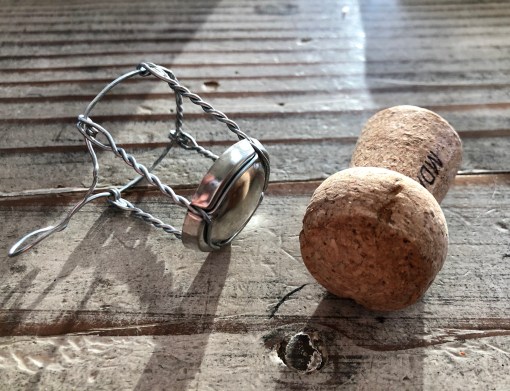
Cork Rating:  1/10 (Shiner cork AND shiner wire cage?  I thought this was Advent!!)

Day 1 emerges an extremely pale lemon colour amidst a steady stream of tiny bubbles, their size and energy a clear indicator of the traditional method at work.  The aromas are pleasantly vibrant for a Champagne-style wine, perhaps a sign of what Pinot Gris can add to a bubble party:  banana leaf, lime curd and honeydew, swirling across southern biscuits and struck match.  Instantly drying on the tongue, the Spark’s lees-induced flavours stand firm and take precedence over the fruit, reasserting the dominance of its winemaking method and erasing any perceptible trace of residual sugar; elastic bands and sourdough bread stretch over tangy melon, tangerine and Granny Smith apple, lending heft and gravitas to an otherwise-playful wine.  This is not ragingly complex, but it’s crispy and approachable and delicious, the kind of thing you would use to kick off a party that sees you crush 24 bottles in 24 days.  Here’s to another wine Advent.

88+ points


Yalumba: Introducing Samuel’s Collection, Part II

23 11 2019

By Peter Vetsch

[These wines were provided as samples for review purposes.]

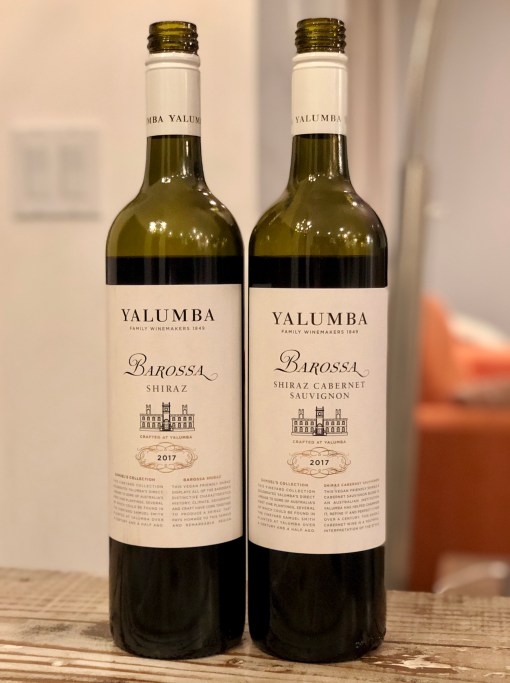
Having already acquainted myself with the first half of Yalumba’s newly compiled seven-wine Samuel’s Collection (and made a mental note to track down the other whites in the Collection beyond the Viognier, as Eden Valley Chardonnay and Roussanne sound glorious), I was eagerly awaiting my turn on the back nine of this reorganized and rebranded assembly of mid-level bottlings, which for the first time let the Barossa’s calling card take centre stage.

IMG_0993

Each of the Yalumba Barossa Shiraz and Barossa Shiraz Cabernet Sauvignon previously went by different monikers, aimed towards different audiences just emerging from the critter wine wave:  the former was known as the “Patchwork Shiraz”, while the latter was called “The Scribbler”.  At some point it was rightly decided that a more serious veneer and a highlight of place better suited these focused, linear wines than a kitschy name and the playful marketing that rode the length of the first Aussie wine trend; the outside of the bottle now more accurately reflects the liquid within.  Bring on the Shirazes. Read the rest of this entry »


Yalumba: Introducing Samuel’s Collection, Part I

19 11 2019

By Peter Vetsch

[These bottles were provided as samples for review purposes.]

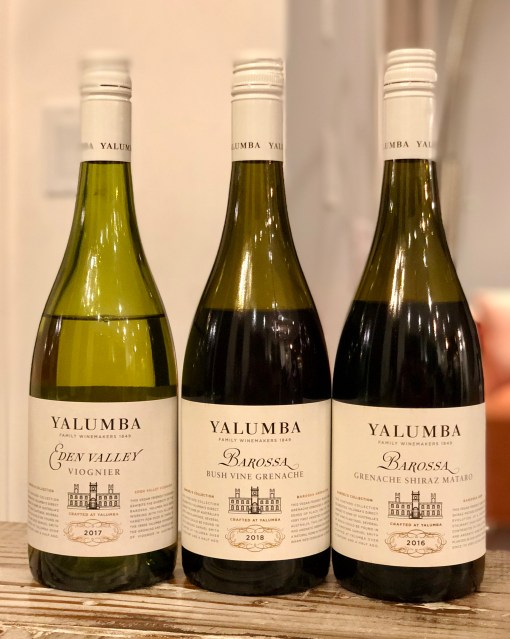
Yalumba is tidying things up a bit.  The Barossa stalwart, now on its 5th generation of family ownership dating back to 1849, traces itself back almost the entire length of the history of its region (whose first Shiraz vines were planted in 1847).  But 170 years of growth and development later, Yalumba’s impressive lineup of wines was starting to lack some internal organizational cohesion, with some forming part of a demarcated grouping or collection (the wildly successful Y Series being a key example of why this can be a boon to consumers) and others standing on their own, without clear delineation as to their place in the company hierarchy.  This would not be much of an issue for a smaller-scale producer, but when you make 52 different bottlings, it’s nice to know where things fit.  Enter Samuel’s Collection.

IMG_0973

This new mid-tier range is both a corporate reorg and a celebration, a way for a number of excellent but disparate Yalumba offerings to find a home as a tasteful homage to the winery’s founder Samuel Smith.  The Collection, featuring all-new clean, modern label art, features seven wines:  four reds from the Barossa Valley and three whites from the neighbouring Eden Valley.  The reds (Bush Vine Grenache, GSM, Shiraz, Shiraz Cab) all share measured ripeness, fermentation using ambient yeasts and a more lithe, transparent take on what can be a region known for muscle-flexing; the whites (Viognier, Roussanne, Chardonnay) are all similarly streamlined takes on sultry grapes, rooted in Eden’s cooler weather and acid spine.  I have had prior vintages of both of tonight’s reds, known back then as the Old Bush Vine Grenache and The Strapper GSM, and their packaging and branding was so divergent that it looked like they came from different wineries.  No longer.  The threads that unite now take centre stage…even the price, as every wine in the new Samuel’s Collection should hit the shelf at a $25ish mark.  As will be seen below, it is a group worth seeking out. Read the rest of this entry »


Amulet Wines: Vinous Talismans

6 11 2019

By Peter Vetsch

[These bottles were provided as samples for review purposes.]

When the intrepid Dwight Sick left his longtime position as winemaker at Stags Hollow Winery and took up the same role at the Naramata’s Moraine Winery, he took two things with him:  (1) a trailblazing sense of adventure, forcing drinkers to check their premises regarding which grapes can work best in the Okanagan Valley, and (2) access to the best and most established plantings of Grenache in Canada, from the Kiln House Vineyard near Penticton.  That combination could never lie dormant for too long.  Sick helped plant the Kiln House Grenache vines over a decade ago, and he nurtured them into the Okanagan’s first bottling of varietal Grenache after years of effort and patience.  It didn’t seem right to let the red Rhone dream die, so soon after it had been realized.  So Sick didn’t.

IMG_0902

Enter Amulet Wines:  a special new side project that Sick has undertaken in collaboration with Dylan and Penelope Roche of the thrilling recent Okanagan venture Roche Wines, fulfilling a vision 15 years in the making.  Amulet is focused solely on Okanagan-grown Rhone varietals, a lesser-known but burgeoning (and shockingly effective) subset of British Columbia’s melting pot of grape influences.  The inaugural Amulet release is a duo of bottlings, both blends, both heavily featuring the Kiln House Vineyard, both aimed at proving that Canada is (or at least can be) a New World Rhone haven.  As Dwight Sick was one of the first to make me believe the truth of this latter proposition, I was eager to see how far an entire brand focused on this goal, and inspired by his vision, could carry it.

IMG_0903

First things first:  god damn are these visually commanding bottles of wine.  I don’t know how gripped I am by the “good versus evil” thematics that pervade the Amulet branding, but I am entirely enthralled by the bottles themselves, which harken back somewhat to Sick’s old Cachet bottlings from Stag’s Hollow in their transparent monochrome-and-red colour scheme.  However, what particularly elevates these new offerings are their centrepieces:  the curved golden metal coins emanating from the heart of each bottle, which are apparently replicas of Elizabethan-era “Gold Angel” coins, depicting St. Michael slaying a dragon, that were carried or worn as amulets to ward off evil.  Whatever these coins added to the overall production cost of the bottles, it was worth it — they are simply stunning.  I tried to pry mine off the bottles once they were empty, but to no avail.  I’ll look for a dragon next time.  Were the wines equally as compelling as their packaging? Read the rest of this entry »


Volcanic Hills II: Eruptive Reds

13 10 2019

By Peter Vetsch

[These bottles were provided as samples for review purposes.]

The Volcanic Hills story is a charmingly Canadian one.  Founder Sarwan Gidda’s father Mehtab moved to the Okanagan Valley from East Punjab, India in 1958 with his wife and children, becoming the first Indo-Canadian family to settle in West Kelowna.  After a few years, Mehtab and family were some of the most prolific apple farmers in the valley, but from the late 1970s onward, slowly but surely, their agricultural vision began to drift to grapes.  Ray’s excellent introduction to Volcanic Hills Estate Winery outlined how Sarwan took the next step from grape farming to wine production in the 2000s, and how his children are now helping to carry on this burgeoning family legacy.

IMG_0829

Volcanic Hills is largely a grower-producer, making the bulk of its portfolio from its own 68 acres of estate vineyards in the West Kelowna area, carrying on the Gidda family’s initial farming mission.  Not only are all of VH’s Chardonnay, Pinot Gris, Gewürztraminer, Gamay, Pinot Noir, Riesling, Zweigelt (yes, Zweigelt) and Marechal Foch (oh yes, Foch) wines made from 100% estate fruit, but all such grapes are own-rooted, planted on their own original rootstocks as opposed to being grafted onto disease- and pest-resistant rootstocks from non-vinifera species, as is the case with the bulk of wine grapes worldwide.  However, while the other two posts in this producer series will focus largely on what Volcanic Hills can do with its own fruit, the four reds below are exceptions to the VH rule and are instead sourced from warmer climes with longer growing seasons which can reliably ripen them.  The Giddas have contracts with other growers in Oliver and Osoyoos from which they obtain their Bordeaux reds and their Syrah, all of which are on offer at the winery for well under $30.  The price points of the entire Volcanic Hills library are such that John Schreiner was moved to name a recent article about them “Wines You Can Afford”.  But price is only one part of the equation; do they deliver for what they cost? Read the rest of this entry »


PnP Panel Tasting: Weird Canada – BC Carmenere Supremacy (Plus Special Guests)

21 09 2019

By Peter Vetsch & Raymond Lamontagne

It all started with Carmenere.  It snowballed from there.

IMG_0786

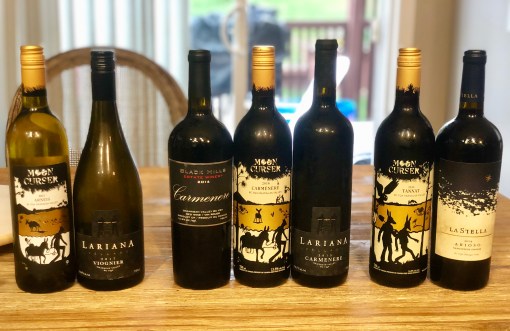
Sometime last year we became aware that there was at least one winery growing and making Carmenere in the Okanagan.  (I am now aware that this has been the case since at least 2005, but allow me my joy of discovery nonetheless.)  Then we were told of another.  And then another.  Then we decided, emphatically though without particular reason, that we MUST gather and taste all of these Canadian Carmeneres, even though we had no real plan for achieving this goal — it will not surprise you to learn that these idiosyncratic bottles are small-production, not in the Alberta market and often produced for winery club members only.  Then one such winery club member, who I had never previously met, happened to be IN the Okanagan while chatting with us about this now-fanatical obsession and picked up a couple of the Carms for us, along with some of the other weird vinous glory you will see below.  Then another local benefactor, who I had also never met, traded us the final piece of our Carmenere puzzle from her cellar.  Thanks to the kindness of electronic friends, we now had ourselves a proper comparative tasting, an honest-to-goodness BC Carmenere showdown.  The first ever?  I can hardly believe it myself.

IMG_0791

The Carm contenders:  Black Hills Estate Winery, which normally plays it fairly strait-laced but which allowed itself a foray into the wacky with this Club-only offering; Moon Curser Vineyards, whose entire portfolio is dedicated to oddities like this which fall outside of the Canadian mainstream (stay tuned for a future Panel Tasting when we dive into their Touriga Nacional and Dolcetto, among others); and Lariana Cellars, which has made Carmenere its signature red and a focal point of its streamlined offerings.  In addition to the main event wines, we couldn’t help but test-drive some other intriguing bottles from these producers, as well as a…Canadian Brunello?  Frankly, if you start a tasting premise at “Canadian Carmenere”, why stop there?  Tyler, Ray and I were born for this.  Bring it on. Read the rest of this entry »