Bricks Wine Advent Calendar 2018: Day 2

2 12 2018

By Peter Vetsch

Day 2.  The spirit is still strong, the Advent joy still coursing through my veins, and now the Christmas decor is up and running in my household, so we are officially in the season.  I’m not sure what I was expecting when peeling back the wrapping paper on the sophomore bottle of this calendar, but Cru Bourgeois Bourdeaux wasn’t it.  This could bode well.  Let’s find out.

IMG_9349

Chateau Caronne Ste. Gemme was THIS close to the big time.  As far as global wine locales go, it is quite nicely situated in Bordeaux’s esteemed Haut-Medoc region, but through a misfortune of cartography it fell a scant 500 metres from where they drew the border for the much more esteemed sub-zone of St. Julien, home of legendary classed-growths Leoville-Las Cases, Ducru-Beaucaillou, Leoville-Barton, Gruaud-Larose, Langoa-Barton and other pricy hyphenated estates.  Its vineyards are actually right beside Gruaud-Larose’s, but on the other side of the appellation tracks and thus on the outside looking in of the 1855 Classification and Bordeaux’s power hierarchy.

IMG_9351

That said, it’s not the legendary estates where the bargains are found; it’s their neighbours.  Caronne Ste. Gemme has been owned by the same family since 1900, but in the last 25 years the current generation of owners has overseen a quality explosion thanks in part to a renewed focus on their 45 hectares of Gruaud-adjacent estate vineyards, planted on a mound of Cabernet Sauvignon-friendly gravel over sandstone.  The wines are fittingly largely Cab (60%), rounded out by Merlot (34%) and Petit Verdot (6%) and see around a year in barrique (20-25% new barrel) and further time in bottle before release.
IMG_1455

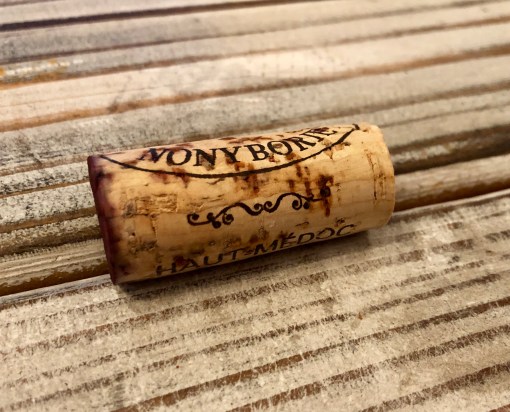
Cork Rating:  3/10 (Better idea: put the CHATEAU name on the cork, not the proprietor’s name.)

This is SUCH a textbook, classic Bordeaux.  The 2014 Ste. Gemme is a deep thick ruby-purple colour and smells as though it’s just starting to trace the contours of its aging curve:  blackberry and blackcurrant fruit, tomato leaf, juniper, new pennies (back when those were a thing), pink erasers, campfire embers and topsoil.  An interesting beam of supporting raspberry red joins the chorus once the wine hits the tongue, joined by pipe tobacco, cedar shavings, moss and leather, surrounded by still-scratchy tannins that frame rather than block the flavour symphony.  This is a wine that could simply be nothing else.  It is a dream tasting wine, because it purely and accurately displays exactly what it is without overdoing it; varietal and regional typicity squared.  The Bordeaux that I own I’m trying to age, so I haven’t cracked a bottle of youthful Bordeaux in some time.  This makes the argument that I should, while simultaneously making me mull over what it might taste like in another 5 or 10 years.  Value Bordeaux, I have found you.

89+ points


Bricks Wine Advent Calendar 2018: Day 1

1 12 2018

By Peter Vetsch

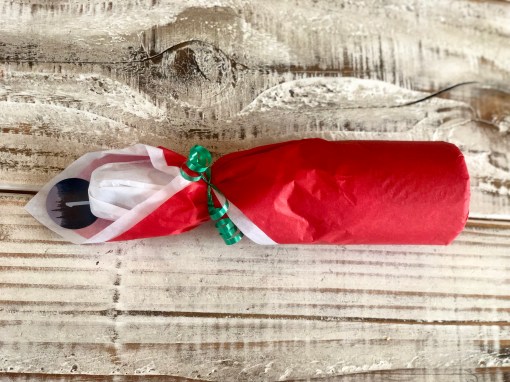
It is again the most wonderful time of the year, and the busiest time in the Pop & Pour blogging calendar — booze Advent.  For the second year in a row, we will be live-blogging every 375 mL day of the Bricks Half-Bottle Wine Advent Calendar, from today until Christmas Eve (following which we will immediately start blogging the 12 Days of Vinebox Christmas beginning Christmas Day…because, well, we’re crazy like that).  Last year, Bricks Advent began with a bubbly bang, so I was wondering if this year might start the same way; I was quite thrilled not only to find out that it did indeed, but that the bubbles in question were already indelibly seared into my memory, a monument to possibly the single greatest moment of my 2018.

IMG_9339

It begins…

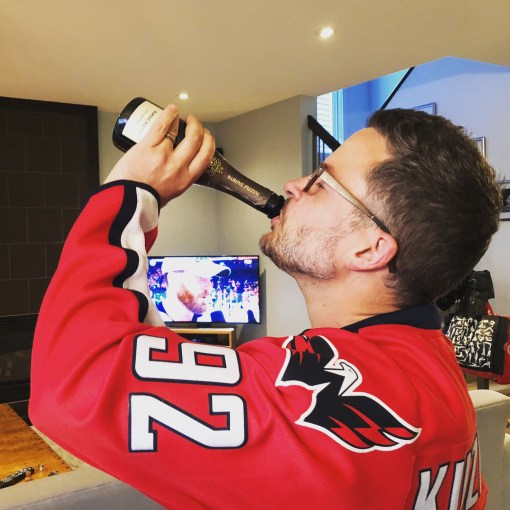
I am a Washington Capitals fan.  Always have been.  I don’t know why.  I was born in 1980 in Gretzky-era Edmonton, to Edmonton-area parents, and from the age of 3 or so, from the time I understood what hockey was, Washington was my team.  Those of you with a passing knowledge of NHL hockey will understand that this was not previously a recipe for contentment.  Washington went from being what is still the worst expansion team in the history of the NHL (8-67-5 record in 1974) to being good-but-not-good-enough to being that team whose heart always got broken in a more novel and unbelievable way every playoffs to being that flashy run-and-gun early-Ovechkin squad that “didn’t know how to win” to being clearly the best team in the NHL until it really mattered to being past their window for success.  They pushed all their chips in the season before last, loaded up their team for their last shot at glory – and lost.  To Pittsburgh.  Again.  Last season was supposed to be the start of a slow descent back into irrelevance.  Until it wasn’t.  On June 7th, I watched in tearful disbelief as my team, that I watched fail over and over for 38 years, somehow won it all and raised the Stanley Cup, the culmination of a literal lifetime dream.  I promptly reached for the first bottle — or half-bottle — of bubbles I could find.

IMG_8313

And lo and behold, 6 months later, I peel back the Day 1 2018 Advent wrapping paper, and am greeted with:  my Stanley Cup wine.  I am instantly transported back to watching Ovechkin shrug off the doubt and unfair criticism of the hockey world and hoist the Cup over his head, screaming in triumph.  I remember the stream of excited messages filling my phone, the post-game interviews, the order of players who got their turn to lift the Cup, as soon as I see the label.  Wine, man.  Barone Pizzini and I will forever be connected because of that finally-captured moment of glory. Read the rest of this entry »


Bricks Wine Advent Calendar 2017: Day 7

7 12 2017

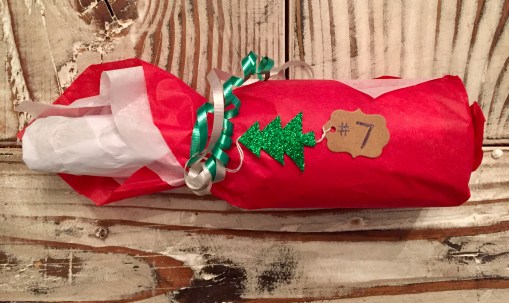
In the first sign of undeniable Advent progress, we have finished the first six-pack column of the Bricks Wine Advent Calendar crate and are heading into the second.  Hard to believe that Advent is already 25% over, apart from living 12 posts from 4 different people over the last 6 days and thinking about repeating that pattern 3 more times.  The folks who compiled this calendar obviously have a love of the classics, as the first week of half-bottles, apart from the inaugural Canadian-sparkling-Gamay curveball and the glorious interlude into Austrian Gruner on Day 3, has been like reading the chapter titles of a Top Wines of the World textbook:  Brunello, Beaujolais Cru, Marlborough Sauvignon Blanc, Burgundy.  And if you look for the regional chapter title for pink wine, you will probably end up in Provence.  And if you end up in Provence, there is a greater likelihood you will find this wine than any other.

IMG_7191

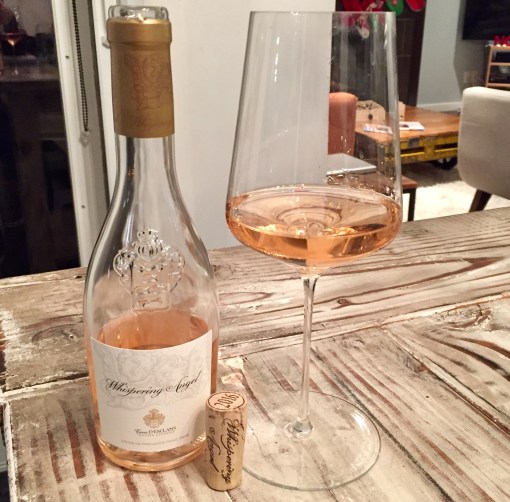
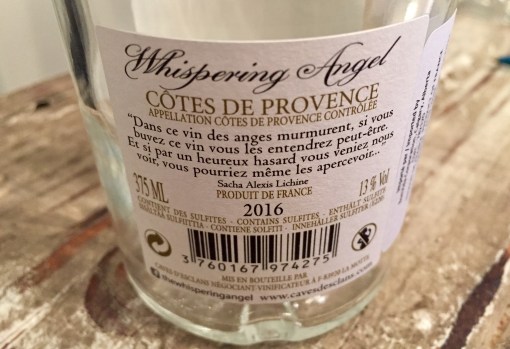
Whispering Angel is a behemoth.  The Chateau d’Esclans estate was struggling when Bordelais Sacha Lichine bought it in 2006, inheriting vineyards in disrepair but featuring 80-90 year-old Grenache vines and a production with no market presence.  Lichine, looking out on the sunny French Riviera from his estate, identified a gap in the market:  heavy, sweeter white-Zinfandel-style rosé could not quench your beachfront thirst on a scorching day.  He conceived of rosé as a serious wine, made clean and light and dry, meant to disappear at resorts and in backyards with the drinkers scarcely noticing, pausing only to reach for the next bottle.  Whispering Angel, released the following vintage, went from 13,000 cases to over 375,000 cases of production within a decade.  If you’re counting at home, that’s 4.6 MILLION BOTTLES of the current 2016 vintage, sourced from a full 500 hectares of grapes from d’Esclans estate fruit as well as a swath of neighbouring vineyards.  To understand just how much of a thing it now is, you can now buy Whispering Angel gummy bears…that is, you could until they all sold out.

IMG_7193

Cork Rating:  5.5/10 (A perfectly cromulent cork.)

Whispering Angel has its formula down cold:  a blend of Grenache, Rolle (a.k.a. Vermentino – a white grape) and Cinsault, crushed and briefly macerated at very cool temperatures to prevent oxidation and preserve fresh flavours, fermented in stainless steel tanks and served icy cold, ideally on a yacht.  It succeeds, and continues to pull in critical acclaim despite becoming its own commercial empire, because the formula works:  it is both tremendously refreshing and carefully unobtrusive, thirst-quenching yet generally unmemorable.  It is a super pale farmed-salmon colour in the glass and delivers up citric aromas of lemon pulp, pink grapefruit and unripe peach, dusted with ginger and an herbal greenness like basil or chives and overlaid with a chalky minerality.  Its lithe, svelte body brings a splash of bracing freshness, like new snow, and ghostly notes of strawberry, tangerine, copper and lemon-lime, finishing tart thanks to straight lines of potent acidity.  It executes its mission to perfection and has spawned a thousand imitators, but for me the rosé category has lost a bit of its sense of interest as a result.

89- points

IMG_7195


Bricks Wine Advent Calendar 2017: Day 5

5 12 2017

By Dan Steeves

As a loyal reader and follower of Pop & Pour for the past few years, it is a great honour to have the privilege to contribute to the blog today! I am often reminded of how great the wine community is in YYC; how generous people are, and how so many people enjoy talking, experiencing, and sharing wine with each other. Today marks my first attempt at wine blogging, and I’m hoping the community goes easy on me!

img_4687

The streak of great wines continues on Day 5 of the Bricks Wine Advent Calendar with a delicious Sauvignon Blanc from Spy Valley Wines, based in the Marlborough region of New Zealand. Sauvignon Blanc is the heart of the New Zealand wine industry and the Marlborough region (located at the North end of the South Island) is where the majority of it hails from.  A combination of close proximity to the ocean, protective mountain ranges, high diurnal temperature variation (temperature change between day and night), and plenty of sunlight, all provide the Marlborough vineyards a long ripening time and help preserve the flavours and acidity in the grapes. When it comes to New World SB, there is no doubt that New Zealand is at the top of the podium.

Spy Valley Wines is a relative newcomer in the wine world, choosing to cultivate land in the Waihopai and Wairau valleys of Marlborough back in 1993. The winery gets its name due to its close proximity to an actual spy base (an international satellite communications monitoring facility) and they take their clandestine efforts seriously. It may not be noticeable at first (which is the whole point) but see if you can locate and decipher the secret codes found on the bottle and closure. You won’t need an enigma machine but you might want to use this website for help.

img_4691

Sleek and simple design with integrated Morse code on the label and screw cap! 🙂

Upon opening this wine and taking the first sniff, it is no secret what the wine is and where it is from. The wine has a clean nose with intense aromas of lime, grapefruit, melon, lychee, grass, and the telltale bell pepper. New Zealand Sauvignon Blanc is known for having bright and fresh citrus and tropical aromas as well as a green herbaceous side and this wine displays both, just as it should. On the palate, the wine has crisp acidity that gives a little zing on the tip of your tongue and shows flavours of lemon, lime, grapefruit pith, and green bell pepper. The wine displays a slight creamy texture, perhaps due to the 8% of the wine that is barrel fermented, but it is still light on its toes like a stealthy agent on duty.

88 points

Thanks to Bricks for introducing me to a beautiful wine. Another successful day of the Bricks Wine Advent Calendar completed!

2-Isobutyl-3-methoxypyrazine.svg

3-isobutyl-2-methoxypyrazine – aka Pyrazines – the compound responsible for the bell pepper aroma in wines can be found in many Bordeaux wines (Sauvignon Blanc, Cabernet Sauvignon, Cabernet Franc, Merlot, etc.) and is detectable in very low concentrations