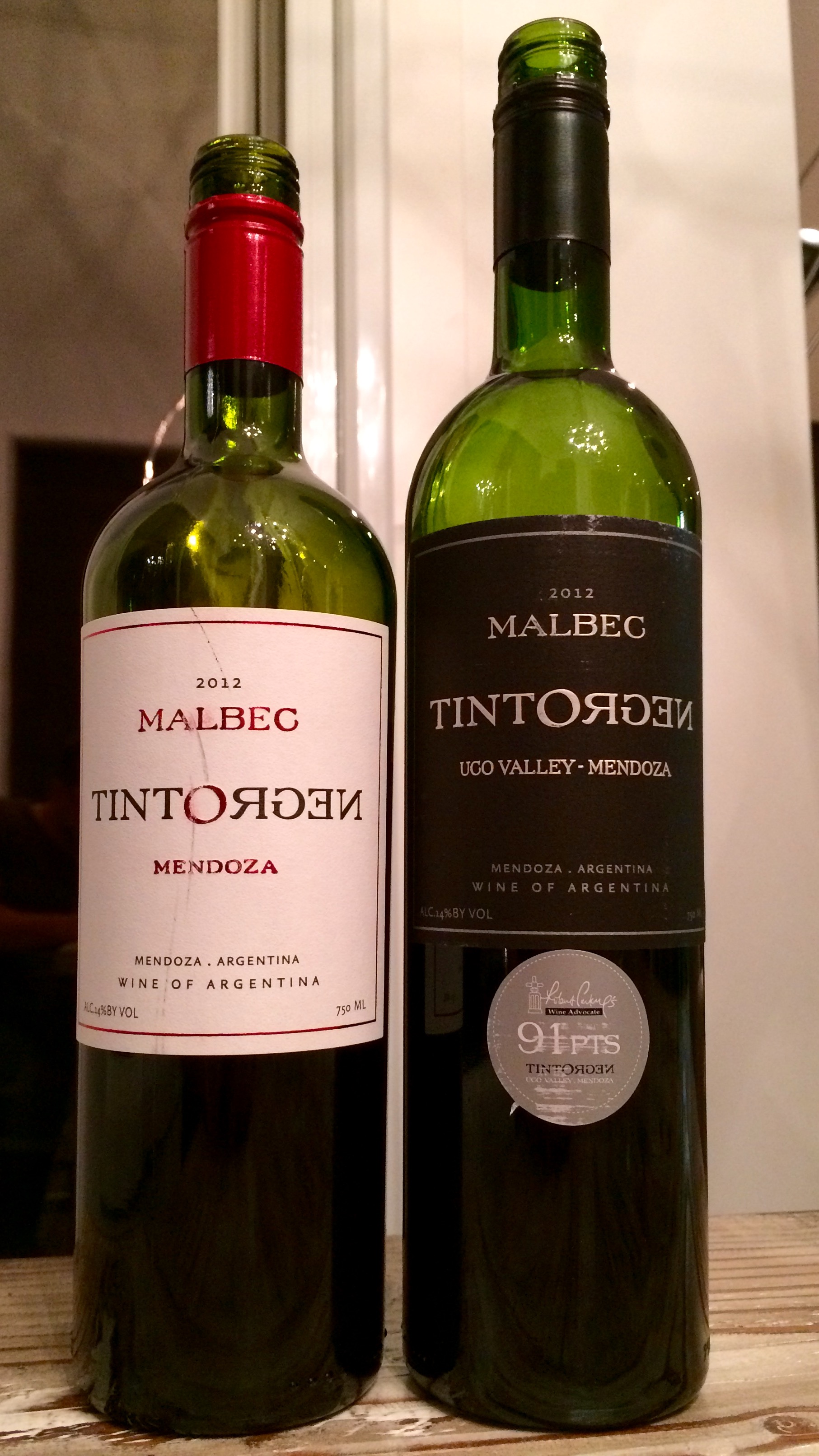
Border Crossing: Kaiken Ultra Wines

28 10 2015

[These bottles were provided as samples for review purposes.]

From Chile to Argentina with love.

From Chile to Argentina with love.

It’s not uncommon to see producers from other countries head to Argentina to create a second label or side project.  There’s lots to like about the South American nation as a startup hub, from truly unique altitude-induced terroir to surprising access to old-vine plantings to ultra-low input costs. What is unusual is for the immigrating winery to come from right next door:  Argentina’s skinny western neighbour Chile offers many of the same producer advantages and is often similarly sought after by wineries off the continent for new ventures, but you rarely see a producer from one of these countries set foot in the other to make wine.  That’s what makes these bottles interesting.

The Montes family is one of Chile’s pioneering wine clans, and its Vina Montes may be the country’s best known winery, churning out everything from weeknight wine champions to top-end stunners like Montes Folly, an unprecedented Syrah from Apalta that’s one of my favourite wines of all time.  Patriarch Aurelio Montes Sr. visited Argentina in 2001 and was immediately intrigued by the Andes-hugging Mendoza region; he wasted no time in deciding to expand operations there, starting up the Kaiken label in 2002.  The word “Kaiken” is an anglicized version of “Caiquen”, a type of wild goose that regularly travels over the Andes Mountains from Chile to Argentina, just like Montes himself.  Once the winery was up and running, he made the call to keep the winemaking in the family, recently naming his son Aurelio Montes Jr. as winemaker.  Kaiken owns three vineyards in Mendoza, two in and around the Lujan de Cuyo region near the town of Mendoza itself and one in the Uco Valley further south; one of the vineyards is fully biodynamic, a set of principles Kaiken is working to embrace. Read the rest of this entry »


Side By Side: 2012 Tinto Negro Malbec x2

7 10 2015

[These bottles were provided as samples for review purposes.]
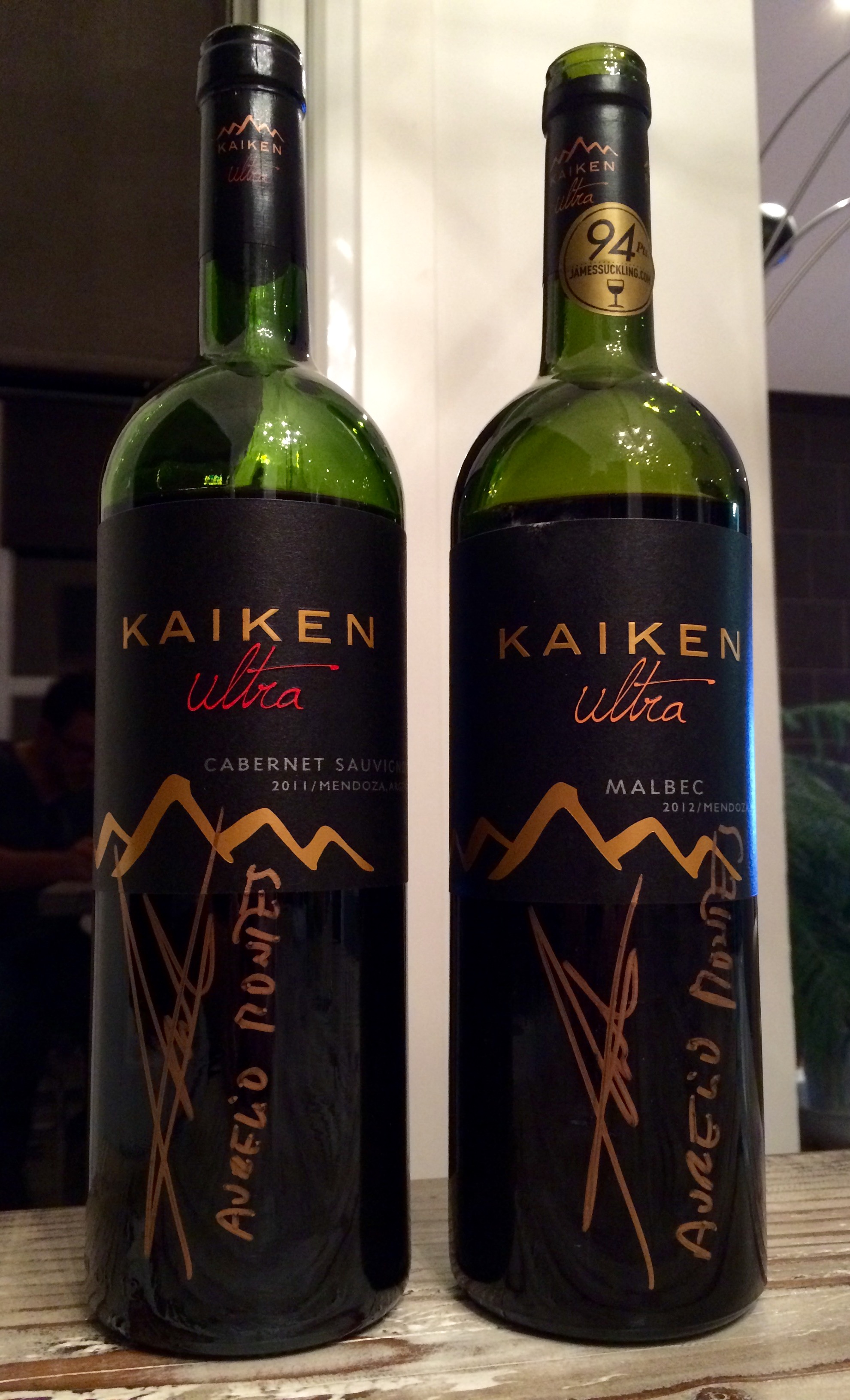
Malbec vs. Malbec.  Mendoza Civil War.

Malbec vs. Malbec. Mendoza Civil War.

Forgive me if you’ve heard me say this before, but:  comparative tastings are the best.  You can learn a lot about wine by taking your time over a single bottle, properly assessing what’s inside and picking out colour and smell and flavour notes common to a country, region or grape.  You can learn way more about wine by doing this to two similar bottles at the same time, with almost the same characteristics, but for a single isolated variable:  same wine, different vintage; same producer, different grape; same grape, different country.  You pick up a whole bunch of what makes them the same, but you can also focus on the impact that primary thing that makes them different and see firsthand the tremendous effect that every single input going into a wine has on the finished product.  You learn from both the commonalities and the distinctions.  Plus you end up with two open bottles of wine, which generally always leads to a good night.

In this case, the similarities are massive and the differences apparently slight, but the impact remains noteworthy.  These two bottles are from the same producer (Tinto Negro, founded by the ex-vineyard manager and wine education director of renowned Argentinian winery Bodega Catena Zapata), the same country (Argentina), the same grape (Malbec), the same vintage (2012) and even the same region (Mendoza, Malbec’s New World spiritual home nestled in the foothills of the Andes).  However, the first bottle, the 2012 Tinto Negro Mendoza Malbec, is an entry-level regional bottling, and the second bottle, the 2012 Tinto Negro Uco Valley Malbec, is from the next quality tier up, a sub-regional bottling from the Uco Valley sub-zone in southwestern Mendoza.  Apart from their divergent price points, you might have a hard time differentiating them in the store, but does this little sourcing difference make a difference?  When you taste them side by side, oh yes. Read the rest of this entry »


Malbec World Day Challenge: Luigi Bosca Showdown

17 04 2015

[These bottles were provided as samples for review purposes.]

Malbec World Day Challenge contenders.

Malbec World Day Challenge contenders.

Happy Malbec World Day everyone!  If you weren’t previously aware, April 17th was declared an international day of Malbec celebration by the Wines of Argentina back in 2011 in commemoration of the date back in 1853 when the Argentine government submitted a bill to the legislature for the formation of a School of Agriculture and with the objective of boosting and diversifying the country’s wine industry.  The bill quickly became law and led directly to the introduction of the Malbec grape (among other French varietals) to Argentine soils by noted agronomist Michel Aime Pouget.  The rest, as they say, was history.  You might know Argentine Malbec as something of a recent trend, but it’s been a presence in the country for longer than Canada has existed as a nation, and one of the reasons it was well-positioned to take the world by storm in the 2000s was the wealth of remarkable wine infrastructure already present in Argentina, old-vine Malbec vineyards that had been planted a century earlier.  This is actually my second recent brush with a country feting its ex-French national varietal:  I helped Chile celebrate World Carmenere Day back in November.  If any other parts of South America have grape holidays they want broadcast (International Tannat Day, Uruguay?), I’m totally there. Read the rest of this entry »


Argentine Value Challenge: Punto Final

4 10 2014

[These bottles were provided as samples for review purposes.]

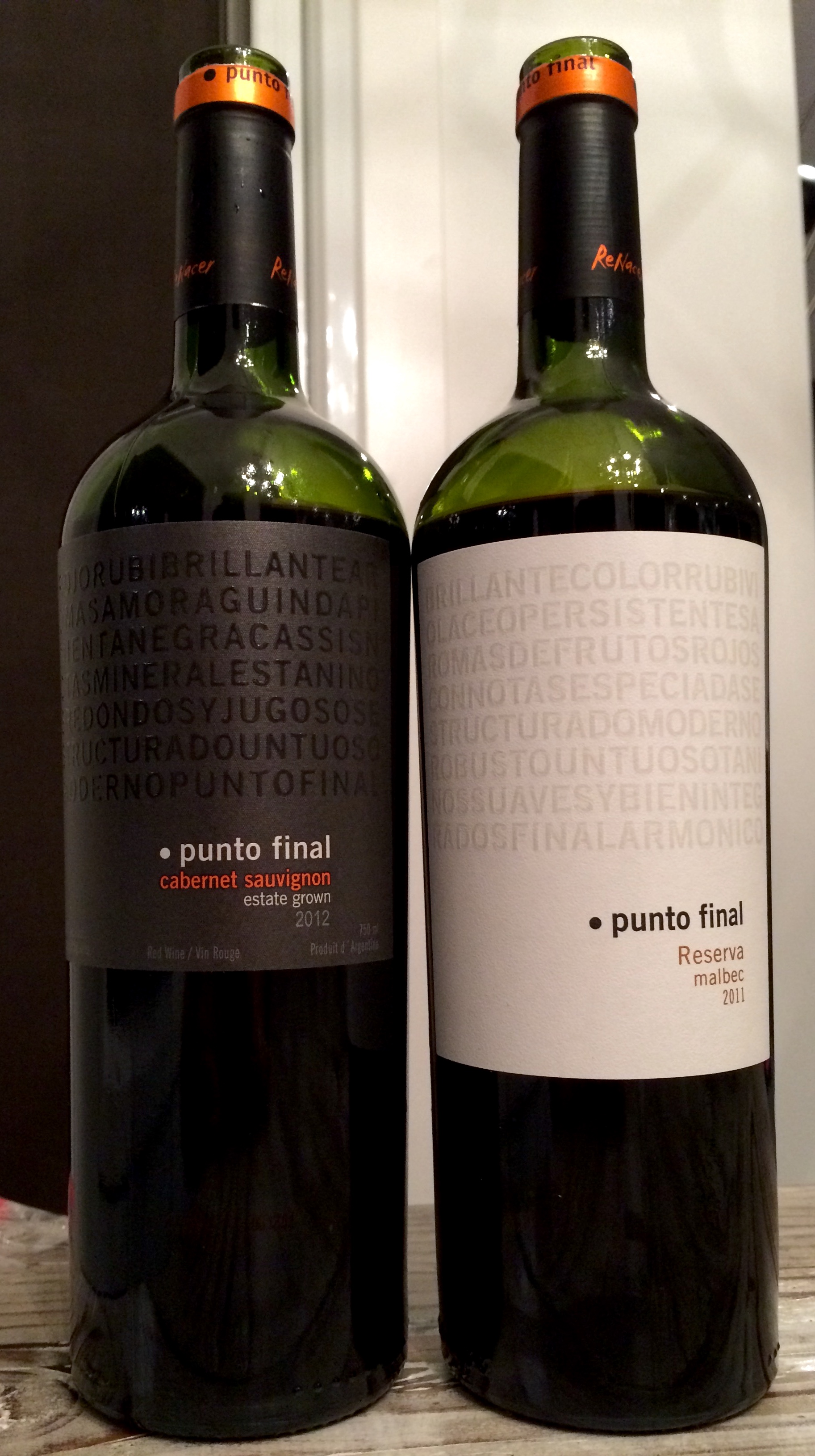
FullSizeRender_1

Look closely: Spanish tasting notes!

There’s a lingering question out there that will go a long way in determining the ultimate path of the nascent Argentinian wine industry:  what to go along with Malbec?  That particular Bordeaux transplant has become a global phenomenon up in the foothills of the Andes and the undisputed star of Argentina’s vinous revolution, but there are a number of grapes currently vying for the role of its trusty national sidekick.  For a while it seemed like there was a strong marketing push to obtain Malbec-like acceptance of Argentina’s most unique white, Torrontes; I recently read a Decanter tasting panel that argued forcefully that the country’s recent forays into Cabernet Franc were an absolute revelation and that this underappreciated varietal should assume the silver medal position among Argentinian producers, although the less exciting Bonarda currently occupies that slot in terms of vineyard acres planted.  And of course, there’s always Cabernet Sauvignon, the international behemoth, promising instant recognition and easy sales for anywhere warm enough for it to grow.  In my experience, if an Argentine wine is on the shelves here and it isn’t Malbec, it’s usually Cab.  And while the wine geek in me would love to see Franc seize the day, the realist in me knows that Sauvignon will be pretty tough to displace. Read the rest of this entry »


Wine Review: 2010 Dona Paula “Los Cardos” Malbec

1 02 2012

Marketing note: maybe don't name your wine after a weed.

Many apologies for the blog radio silence over the past few days:  after weeks of avoiding it, I finally ended up catching the sinus/chest cold that every single person in Calgary currently has, so I had to shut down my wine consumption until I was more or less healthy.  The worst has now passed, but I still have a bit of residual congestion, so be warned in advance that the following review could be completely inaccurate…but it’s free, so what do you care?

Malbec!  I have no idea how this is possible, but this is the very first Malbec that has been the feature of its own PnP review.  The grape that has been a part of the blend in red Bordeaux wines for centuries but that has taken the drinking world by storm in the last decade with its single-varietal Argentinian incarnation is definitely the Shiraz of the 2000s, the new red wine that offers such an inexpensive and enjoyable experience that it has put a previously-ignored winemaking country on the vinous map.  I haven’t been avoiding it on purpose — like everyone, I’m a fan of a good Malbec — but after a couple sips of this wine, I knew I was going to regret making it my initial foray into the grape.

Read the rest of this entry »


Tips & Tricks: Pairing Wine With Chocolate, Part 2

12 10 2011

5 bottles of wine, 5 pounds of chocolate: let the extravagance begin!

In Part 1 of PnP’s review of potentially stellar wine and chocolate matches (click here to read it if you missed it), we went through the boring stuff:  general wine/food pairing rules, hand-wringing about how chocolate was going to be a difficult match for most wines, and intellectual guesstimating about what bottles actually might stand a chance at being a good pairing.  If you want to save yourself 1500 words or so, I thought a sweet intense red dessert wine seemed like the best choco-match but committed myself to testing out some dry reds too in the name of exploration; given the hypothesis that fruity, intense, not overly tannic reds would win the day, I decided to give Europe the cold shoulder and stick to the New World for dinner wines.  With all the hard academic stuff out of the way, last night I got to the fun part:  sitting down with some good friends, opening an insane amount of high-end chocolate, cracking 5 bottles of wine (and a bottle of beer for good measure) and doing 4+ hours of taste testing, just for you.  Huge thanks to the noses, palates, knowledge and intuition of my trusted friends Brian, Tyler and Farrell, whose impressions and conclusions are all over this post and without whom this exercise would have seemed much more lonely and pathetic.

Our official choco-pairing tasting lineup featured a California Cabernet Sauvignon, a Washington State Malbec, a Niagara Cabernet Franc, a dessert wine from Banyuls in Southern France, a vintage Port and a dark craft beer.  I’m going to write up our experiences with the 3 dry reds tonight and leave you in suspense about the dessert reds and the beer for a couple more days…like every moderately good movie idea, I’m stringing this out for at least two sequels.  The only unfortunate part about this approach is that you may be too depressed after reading the below to want to come back for Part 3, so I will foreshadow a bit and promise that the wine/chocolate matchups DO get better.  Just not tonight. Read the rest of this entry »