Burrowing Owl Fall Release Set

12 11 2016

[These bottles were provided as samples for review purposes.]

Burrowing Owl Fall Release Week is quickly becoming one of the highlights of the Pop & Pour blogging calendar.  The winery is highly engaged with consumers and media alike and  is ahead of the game in terms of finding new ways to get its wines into the collective consciousness, and its renown is expanding well beyond its home province of BC as a result.  When the season’s current releases arrive in Calgary around harvest time, I’m ready to do my small part to spread the word.  Bring on the new vintages!

fullsizerender-462

A glorious Pop & Pour fall tradition.

Burrowing Owl is an Okanagan Valley stalwart, and it’s become such a ubiquitous part of the region that it’s easy to forget the winery is less than 20 years old.  The story started in 1993, when founder Jim Wyse replanted a series of vineyards between Oliver and Osoyoos in the extreme southern Okanagan.  There were no immediate plans to build a winery, but Wyse’s vision expanded once he saw the quality of the new grapes.  Burrowing Owl’s first vintage was 1997, and construction on the gravity-flow winery and massive underground cellar on the property was completed in 1998.

fullsizerender-468

 Initially focused on Cabernet Sauvignon, Merlot, Chardonnay and Pinot Gris planted on a single 130-acre site, Burrowing Owl is now up to 14 different planted varietals on 170 acres of estate vineyards in three different sites. It is no accident that the winery is named after the rare underground-nesting owl that was declared extinct in British Columbia in 1980 but is now back on the upswing due to the dedicated conservation efforts of a small group of individuals:  Wyse is one of those individuals, having contributed significant amounts of both time and money to the burrowing owl’s preservation.

fullsizerender-472

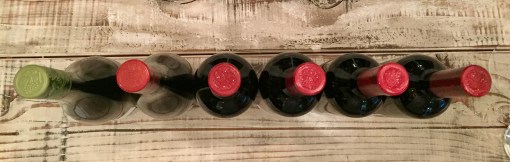
Stelvin Rating: 8/10 (Love the colour, love the side pattern and smoothness; not a huge fan of the top embossing.)

 This year I was fortunate enough to have the opportunity to try a sextet of different bottles from the Burrowing Owl 2013 and 2014 vintages, including return engagements with a couple of wines I had in last year’s releases, the Cabernet Sauvignon and the particularly eye-opening Syrah.  Let’s see how the fall 2016 lineup compared, starting with my introduction to one of Burrowing Owl’s founding whites:  Chardonnay.

Read the rest of this entry »


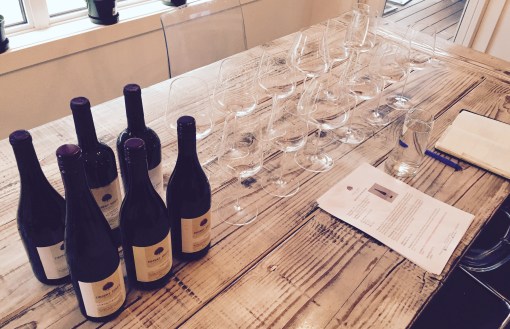
Desert Hills Estate Six Pack

25 04 2016

[These bottles were provided as samples for review purposes.]

One of the things I love seeing most in Canadian wine nowadays is a renewed sense of focus on locating, separating and promoting quality subregions within an overall wine area, those special geological or climatic zones that yield wines with a distinct character and personality.  Anyone reading this in Europe right now may be incredulous at any such modern quest for discrete sub-terroir, as this process took place in many Old World growing regions up to a millennium ago.  We have a bit of catching up to do, and now we’re doing it.

FullSizeRender-298

This is critical for regions like British Columbia’s Okanagan Valley, which currently sees almost all wines coming out of it released under that general appellation name.  If you’ve ever stood in the breeze by the lake in Kelowna in August, and then stood in raging parched inferno of the Osoyoos desert two hours later, you’ll understand why “Okanagan Valley” doesn’t exactly capture any of the nuance of those two highly individual experiences.  Last year saw big news on the BC subregion front, as the Golden Mile Bench, a stretch of slope just west of the highway running from Oliver south to Osoyoos, became the province’s first ever recognized sub-geographical indication, meaning you’ll start seeing that name on bottles released this year in place of (or in addition to) the broader Okanagan designation.

FullSizeRender-296

If you walk east from the Golden Mile Bench and cross the highway, on the other side of the road you’ll find another slope, angled west, with extremely hot days and surprisingly cool nights, where vines grow on highly sandy soils that run hundreds of feet deep and require irrigation to retain hydration.  This is the Black Sage Bench, another obvious BC candidate for subregional distinction and home to some of Canada’s top wineries.  On the southern end of the Bench, nestled between Okanagan luminaries Black Hills and Burrowing Owl, is Desert Hills Estate Winery, a family-run producer founded by the three Toor brothers and focused largely on wines made from their aptly named estate vineyard, the Three Boys Vineyard, purchased in 1989.  The first released production from the vineyard was in 1996, and now, 20 years later, Desert Hills is solidly entrenched in the Okanagan wine world and making a renewed push into the Alberta market. Read the rest of this entry »


Wine Review: 2013 Culmina Dilemma

7 01 2016

[This bottle was provided as a sample for review purposes.]

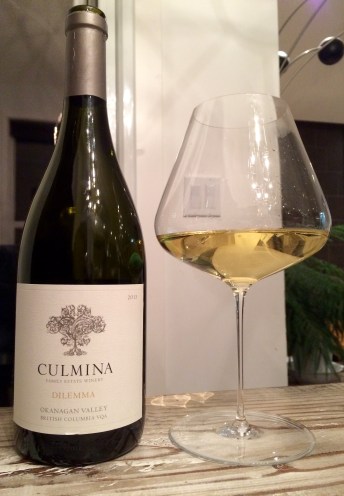
Great story, great wine.  And check out the sick Zalto Burgundy glasses I got for Christmas!

Great story, great wine. And check out the sick Zalto Burgundy glasses I got for Christmas!

Back in the saddle, and back to wine, for 2016!  I hope everyone had a happy and restful holiday season; I had a relaxing blog-free week and a half following my arduous 25-day whisky Advent marathon but am raring to start the new year of PnP off right, so I opted for a bottle that I highly suspected would be good.  Suspicions:  confirmed.

Culmina is one of Canada’s top wineries in my books and one of the most compelling stories on the Okanagan wine scene.  A spare-no-expense passion project spearheaded by iconic proprietor Don Triggs (the Triggs from Jackson-Triggs) and his family, Culmina has only been around for a few years, but through careful site study and selection and meticulous planting, it has been churning out wines of intrigue and quality from its inception.  I have previously waxed on about the winery and a number of its bottlings here and here , but this is my first time writing about what could very well end up being the crown jewel of its portfolio, the Dilemma Chardonnay.  I hope it’s not my last.

Read the rest of this entry »


Wine Review: 2013 Culmina Unicus

8 06 2014
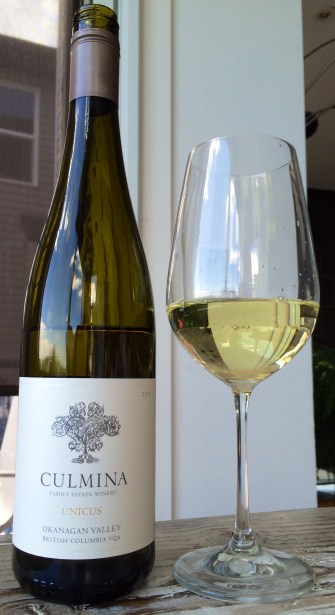
There it is:  history in a (classically presented) bottle.  BC Gruner!!

There it is: history in a (classically presented) bottle. BC Gruner!!

In my last post, I celebrated an Old World country’s rich wine history.  In this one, I get a front row seat as a New World country, my own, takes a milestone step towards charting its own course.  I may be a little more excited about this development than is strictly necessary, but I’ve (seriously) been waiting and hoping for this moment for a few years.  Finally, fantastically, Gruner Veltliner has come to the Okanagan Valley.

If you’ve heard of Gruner before, chances are you’re either at least a semi-serious wine person or you’ve been bothered about it before by me.  I adore Gruner, which is the signature white grape of Austria and is rarely found elsewhere; given that Austrian wine doesn’t exactly fill retailers’ or importers’ heads with gleeful visions of dollar signs, there tragically tends to be much less of it around locally than its quality and value would otherwise dictate.  If you’ve never tried a bottle of Gruner Veltliner, it’s sort of like if a Riesling and a Chardonnay had a rebel baby.  It combines the powerful acidity and piercing minerality of Riesling with the luxurious, silky mouthfeel of Chardonnay, then takes a left turn and offers up a remarkable set of spicy, tangy and often downright wacky flavours all its own, from white pepper to rubber boots and elastic bands (all in a good way, I swear).  The result is a sensory experience unlike any other in wine, one that keeps you constantly engaged as you try to figure out what the hell is going on in your mouth.

One of the reasons that I have often thought that Gruner Veltliner might be able to find a second home in Canada is the climatic and geographic similarities between BC wine country and Gruner’s homeland:  northern Austria and southern BC share almost the exact same latitude (48.4 degrees North in Wachau, 49.1 degrees North in Oliver), the same continental climate and high day-night temperature shifts and, in places, similar soils.  Yet until now the Okanagan has churned out every conceivable white grape under the sun, but no GV.  Thankfully, Culmina has come to the rescue.  This new high-end venture from Don, Elaine and Sara Triggs (of Jackson-Triggs fame) is based on a philosophy that combines old-school attention to detail and minimalistic winemaking with new-school scientific advancement, especially as it relates to vineyard mapping and matching grapes to sites based on detailed soil, temperature and exposure analysis.  Check out the details at Culmina’s visually stunning website – they’re fascinating, if you’re the sort of person who finds micro-block mapping and soil pit analyses fascinating (which I am).

Read the rest of this entry »


Wine Review: 2010 Painted Rock Chardonnay

3 02 2012

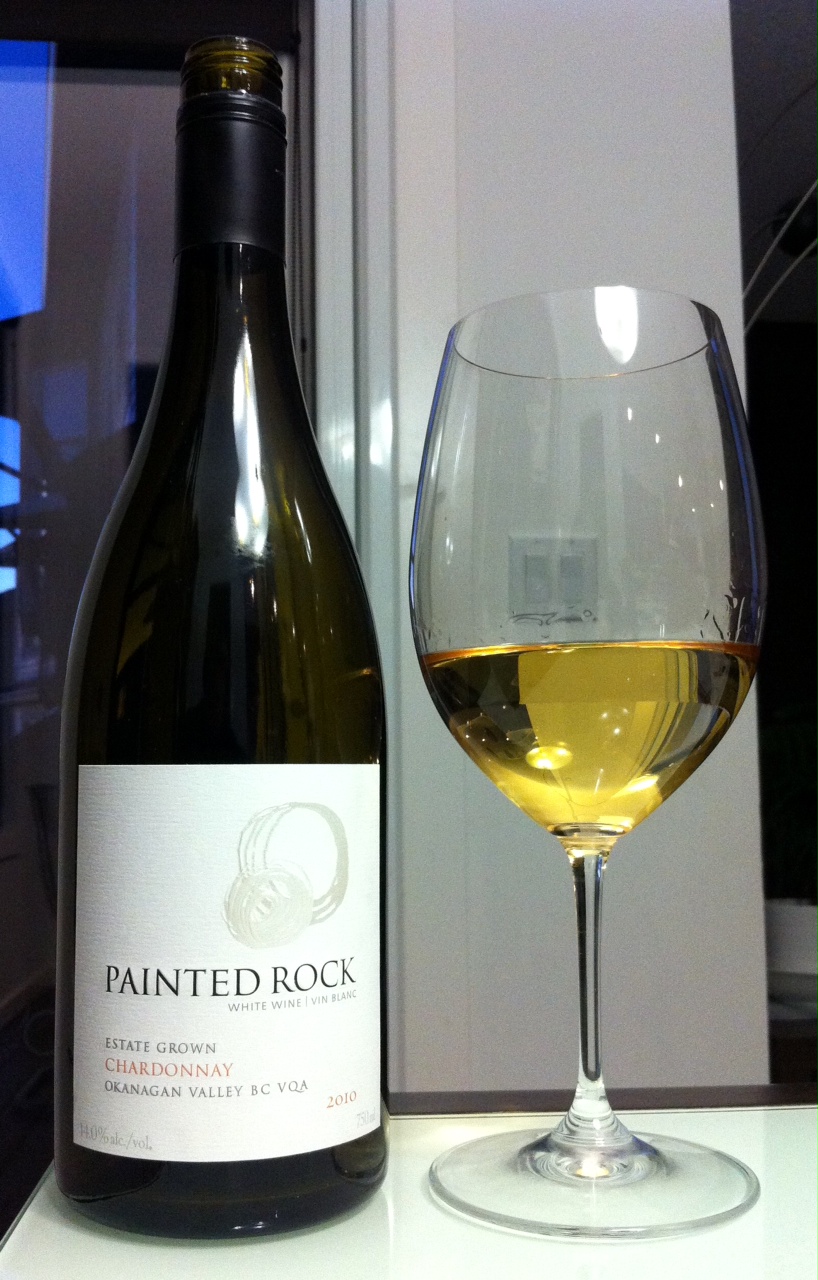
Although a newer vintage than the 2009, it's still like going back in time.

The coolest thing about this blog having been around awhile, other than the fact that I’ve miraculously managed to regularly publish an Internet wine blog for the better part of a year, is that I’m starting to come across second vintages in the bottles I open:  current vintage wines whose predecessors I have previously featured on PnP.  Case in point:  the 2010 Painted Rock Chardonnay from the Okanagan Valley, which is probably already facing an uphill battle in this review due to monstrously high expectations because I totally loved the 2009 PR Chard back in September.  I think Painted Rock is a producer on the forefront of the Canadian wine scene, one that is starting to show that we don’t have to settle for local wines that only measure up as against their neighbours, but that can also stand tall on the international market.  While PR focuses primarily on red wine, their lone white is a testament to the wonders of cool-climate Chardonnay, and I thought enough about the ’09 vintage that I absolutely loaded up on the 2010 as soon as it became available.

Read the rest of this entry »


Wine Review: 2010 Dirty Laundry “Madam’s Vines” Gewurztraminer

16 09 2011

The folks at Dirty Laundry are marketing geniuses.

I love the sign at the bottom right that says "Scenic Outlook: That Way". "Really?! Where?"

They have their own unique story — namely, that the current site of the winery used to be home to a laundromat that illicitly doubled as a brothel during the Gold Rush era — and they stick to it with rigorous discipline in absolutely everything they do, from their wine names to their label art, winery decor to gift shop souvenirs (yes, there’s a gift shop).  All of their production and sales efforts are relentlessly to brand, and the secretly naughty tale of the brand generates a lot of interest; before my recent trip to the Okanagan, DL was one of the places I was told I absolutely had to see.  So one day we ventured out to Summerland, a half hour southwest of Kelowna, and drove up (and up, and up) a series of winding backcountry roads until we found it, high up in the hills above the town overlooking the Lake.  We were treated to a thoroughly modern tasting room, with a brand new gorgeous outdoor patio (complete with giant clothespins and lingerie gently swaying in the breeze) and an amazing view of the surrounding area.  However, amidst all the winks to its shady past and seamless self-promotion, Dirty Laundry got slack about one thing:  the wine. Read the rest of this entry »


Wine Review: 2006 Therapy Vineyards Superego

1 07 2011

A+ label art -- even cooler up close, AND appropriate Canada Day colouring.

Happy Canada Day, everyone!  I would have been remiss if I didn’t focus on a wine from my home and native land tonight, but that proved to be more of a challenge than I thought, as my cellar’s currently a little thin on the Canada front — out of the 90-odd bottles that I keep stored in an army of wine fridges in my basement, only two of them are from Canada.  One of them is a $15 Niagara Cabernet Sauvignon that I’m a little scared to open, and the other one is this bottle.  Fearing the patriotic retribution that might ensue if I rated a cheap Canadian wine 65 points on Canada Day, I instead went with this bottle, the 2006 Superego from Therapy Vineyards in the Okanagan Valley.  You may know Therapy from their ink-blot labels and punny wine names (Freudian Sip white blend, Pink Freud rosé, etc.); the Superego is their top red bottling, made from top quality grapes using stringent processes to be Therapy’s flagship wine.  As you can see in the picture to the left, it comes in an absolutely spectacular-looking bottle that rivals Chile’s Montes Folly Syrah as my favourite wine label art of all time.  I got this particular bottle from a fellow wine lover and a Therapy devotee (thanks Allison!) and have been holding it for the right occasion.  Happy 144th, Canada — tonight I pop and pour for you! Read the rest of this entry »


Wine Review: 2007 Laughing Stock Portfolio

12 05 2011

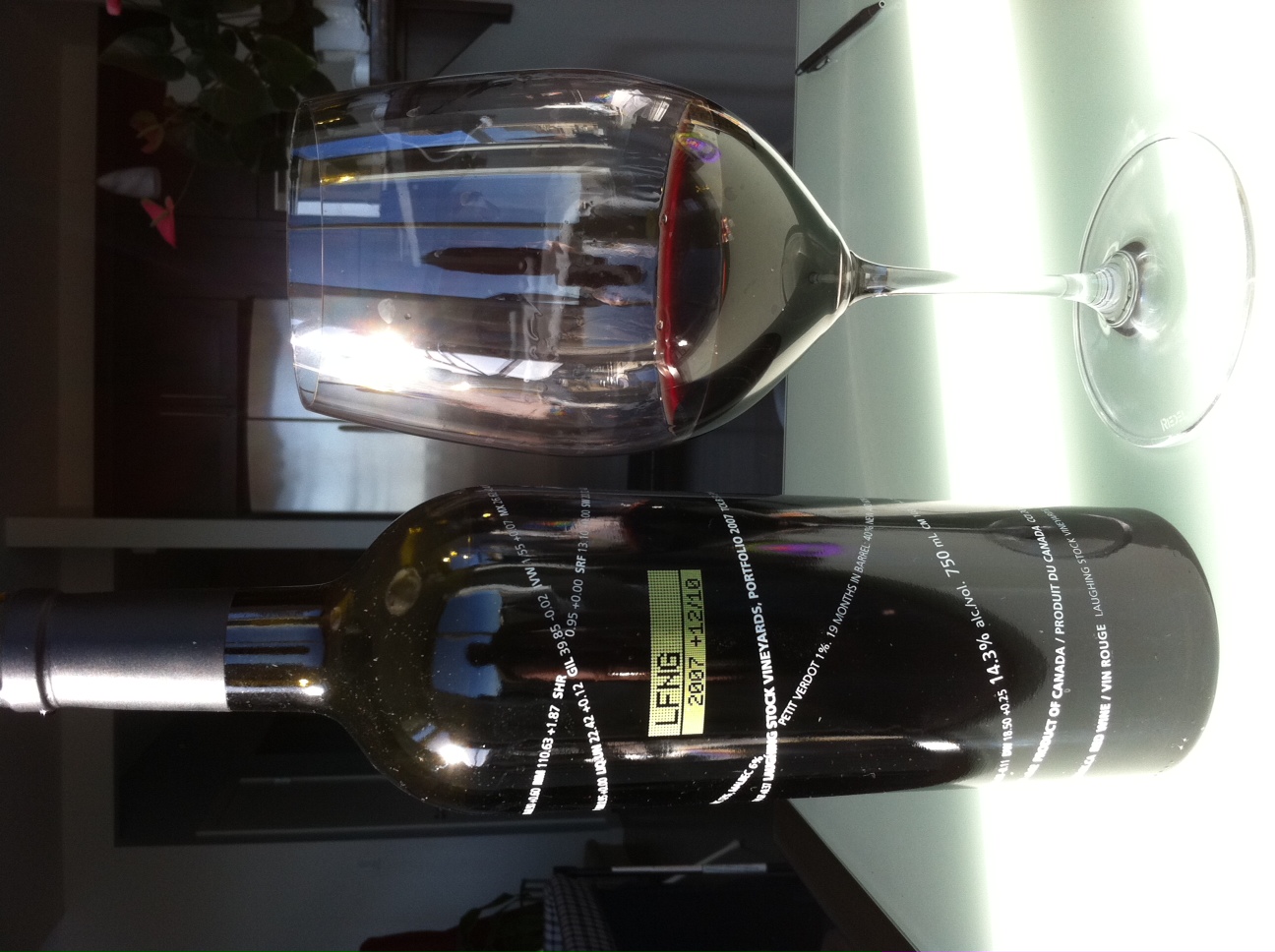
Attention-grabbing headline:  This is the best bottle of Canadian red wine I’ve ever had.

Charter member of my Canadian Wine Hall of Fame.

This wine has everything going for it:  great back story, great marketing, great product.  Laughing Stock Vineyards is located in (on?) the Naramata Bench, one of the most prestigious and quality-driven areas of British Columbia’s Okanagan Valley wine region.  The winery’s name comes from the fact that its two proprietors both once had successful careers in the financial/investment sector before giving them up to pursue their vinicultural dreams, thus opening themselves up to failure and ridicule if things didn’t go well (note: if you want to win my heart, make your winery name a pun).  Their cleverly-designed bottles reflect their past lives, and they’re not just empty packaging for what’s inside — the juice lives up to the allure of its container. Read the rest of this entry »